Archive | 2026/04/17

Izrael wysadza mosty w Libanie i szykuje wielką operację lądową. “To dopiero początek”

Zniszczone budynki po izraelskim ataku na południowe przedmieścia Bejrutu, , Liban, 7 marca 2026 r. (Fot. REUTERS/Stringer)


Izrael wysadza mosty w Libanie i szykuje wielką operację lądową. “To dopiero początek”

Marta Urzędowska


Libańczycy boją się, że niszczenie mostów na rzece Litani jest początkiem wielkiej wojny lądowej i długotrwałej okupacji.

Wojsko izraelskie tłumaczy, że, wysadzając mosty, chce utrudnić Hezbollahowi przemieszczanie ludzi i broni na tereny przy granicy z Izraelem. Jednocześnie jednak odcina cywilom drogę ucieczki i dopływ pomocy humanitarnej.

– To nic innego jak preludium do inwazji lądowej, polityka zbiorowego karania cywilów, element podejrzanego spisku, by rozszerzyć obecność Izraelczyków w Libanie – mówił w niedzielę libański prezydent Michel Aoun. – Branie na cel mostów na rzece Litani, ważnej arterii dla ruchu cywilów, stanowi próbę przecięcia połączenia między terenami na południu a resztą libańskiego terytorium i przeszkadza w dostarczaniu pomocy humanitarnej – dodał.

Aoun wezwał społeczność międzynarodową, głównie Radę Bezpieczeństwa ONZ, by podjęła “natychmiastowe środki odstraszające Izrael od tych ataków”.

Izrael: Nasilamy operacje lądowe i naloty. Na dłużej

Izrael nie zamierza jednak zaprzestać swoich działań. Dowódca izraelskiej armii gen. Eyl Zamir podkreślił, że Izrael zamierza nasilić operacje lądowe i naloty, przy czym będą to działania długotrwałe. – Nasze działania w Libanie dopiero się zaczynają – stwierdził Zamir. – Hezbollah jest najważniejszym sprzymierzeńcem irańskiego terrorystycznego reżimu i zrobił ogromny błąd, przyłączając się do kampanii przeciwko Izraelowi. Ta decyzja słono kosztuje samą grupę, ale też cały Liban – dodał.

Kilka godzin po tym oświadczeniu izraelskie siły zbombardowały most w pobliżu Kasmije, położony na jednej z głównych dróg łączących południe z centrum kraju, niedaleko miasta Tyr na wybrzeżu. To już piąty most na rzece Litani wysadzony od początku obecnej konfrontacji rozpoczętej 2 marca.

Wojna w Libanie – element wielkiej regionalnej eskalacji

W kolejnym oświadczeniu, wydanym już po wysadzeniu mostu, izraelska armia poinformowała, że „organizacja terrorystyczna Hezbollah wykorzystywała go do przewożenia tysięcy sztuk broni, rakiet i wyrzutni, a także do przeprowadzania ataków terrorystycznych wymierzonych w izraelskich żołnierzy i cywilów”. Jednocześnie wojskowi zapewniają, że wysadzili most, by „zapobiec krzywdzeniu cywilów izraelskich i libańskich”.

Hezbollah rzeczywiście wykorzystuje mosty do transportu swoich bojowników. Izraelczycy szacują, że blisko tysiąc terrorystów z elitarnej jednostki Hezbollahu, Siły Radwana, przekroczyło rzekę, zmierzając do południowego Libanu, by walczyć z izraelskimi żołnierzami na miejscu.

Jednak mostów używają też libańscy cywile do przemieszczania się po kraju, w tym uciekający dziś z południa na północ uchodźcy.

Izraelczycy niszczą cele na południu Libanu w ramach wojny, jaka toczy się w regionie od trzech tygodni. Zaczęła się 28 lutego, kiedy Izrael i USA zaatakowały Iran. Od tego czasu regularnie bombardują irańskie cele, na co Iran odpowiada, śląc pociski na Izrael i kraje Zatoki Perskiej. Jednocześnie cała konfrontacja mocno odbija się na Libanie. Miejscowi terroryści z Hezbollahu już dwa dni po pierwszych atakach na Iran zaczęli ostrzeliwać północ Izraela w ramach solidarności ze swoimi sponsorami z Teheranu.

W odpowiedzi Izrael prowadzi w Libanie potężne działania wojenne – bombarduje cele Hezbollahu w Bejrucie, na południu i wschodzie Libanu, a od kilku dni prowadzi też na miejscu ofensywę lądową. Od początku obecnej eskalacji zginęło już ponad tysiąc Libańczyków, wśród nich ponad sto dzieci i kilkudziesięciu pracowników służby zdrowia.

Izraelczycy chcą stosować w Libanie taktykę ze Strefy Gazy

Dziś ofensywa lądowa ma zostać znacznie poszerzona, stąd wysadzanie mostów i bombardowanie budynków, które może wykorzystywać Hezbollah. Izraelska armia gromadzi też na granicy siły znacznie większe od tych wysłanych do Libanu w czasie poprzedniej konfrontacji. Co nie znaczy, że izraelskich żołnierzy nie było wcześniej w Libanie – pozostali na miejscu od poprzednich dużych starć na linii Izrael-Hezbollah z przełomu lat 2024 i 2025, faktycznie okupując kilka przygranicznych miejscowości.

Jednocześnie Izraelczycy regularnie wydają nakazy ewakuacji dla mieszkańców południowego Libanu, których setki tysięcy uciekły już na północ. Armia od razu informuje, że Libańczycy nie będą mogli wrócić do domu, aż sytuacja na północy Izraela się uspokoi.

– Jeśli te mosty zostaną zniszczone, a tereny na południe od Litani odizolowane od reszty kraju, cierpienie cywilów będzie ogromne. To będzie katastrofa. Osoby mieszkające na południu stracą dostęp do pomocy, żywności, leków

– wylicza w rozmowie z Reutersem Ramzi Kaiss, ekspert od Libanu w Human Rights Watch.

Przy poprzednich konfrontacjach nakazy ewakuacji nie były tak szeroko zakrojone. Obecne przypominają te ze Strefy Gazy, wykorzystywane regularnie w czasie wojny Izraela z Hamasem. Minister obrony Izraela Israel Katz potwierdza w oświadczeniach, że izraelska armia będzie dziś stosować w Libanie te same metody, co w Gazie, gdzie w ciągu dwóch lat Izraelczycy doprowadzili do wyludnienia ogromnych połaci enklawy i utworzyli w niej kontrolowane przez armię strefy bezpieczeństwa, poważnie ograniczając Palestyńczykom przemieszczanie się.

Będzie długotrwała okupacja Libanu? Poprzednia skończyła się utworzeniem Hezbollahu

Niszczenie mostów, które faktycznie oznacza odcięcie południa od reszty Libanu, w połączeniu ze zwiększoną obecnością izraelskich żołnierzy w kraju i kolejnymi wojskami czekającymi na granicy na rozkaz do ataku, budzi obawy, że Izrael szykuje się do wielkiej lądowej ofensywy, utworzenia kontrolowanej przez izraelską armię strefy buforowej na południu i długotrwałej okupacji Libanu.

Nie byłaby to pierwsza tego typu akcja: próbując zapobiegać atakom palestyńskich grup prowadzonym z południa Libanu, Izraelczycy okupowali tamte rejony od lat 80. do 2000 r., co skończyło się utworzeniem w Libanie Hezbollahu. Celem grupy od początku było wypędzenie okupanta z kraju i zniszczenie państwa Izrael, a przy okazji – szerzenie ideologii irańskiego sponsora.

Izrael pozostaje nieustannie w stanie wojny z Hezbollahem, jednak w ciągu ostatnich lat konflikt rozgorzał ponownie. Odkąd w Strefie Gazy wybuchła wojna, libańscy terroryści, solidaryzując się z Hamasem, ostrzeliwali Izrael, co doprowadziło do wielkiej eskalacji w kolejnym roku. A choć Izraelowi w ciągu kilku miesięcy bombardowań udało się zabić szefa grupy Hassana Nasrallaha, innych ważnych liderów i tysiące bojowników, a także poważnie osłabić potencjał wojenny terrorystów, dziś, od początku nowej eskalacji na linii USA-Izrael-Iran, Hezbollah pokazuje, że nadal pozostaje potężny. A libański rząd, dysponujący słabą armią, nie jest w stanie zmusić potężnej Partii Boga do złożenia broni.

Jeszcze w ostatnią niedzielę (22 marca) premier Libanu Nawaf Salam w rozmowie z saudyjskim kanałem telewizyjnym Al-Hadas zapewniał, że nie przestanie próbować doprowadzić do rozbrojenia Hezbollahu. – Każda rakieta odpalana przez Hezbollah oznacza kolejnych 10 tys. uchodźców – przyznał, podkreślając jednocześnie, że izraelska decyzja o wysadzeniu mostów oznacza „katastrofę” dla libańskich cywilów.


Redagowała Ludmiła Anannikova


Zawartość publikowanych artykułów i materiałów nie reprezentuje poglądów ani opinii Reunion’68,
ani też webmastera Blogu Reunion’68, chyba ze jest to wyraźnie zaznaczone.
Twoje uwagi, linki, własne artykuły lub wiadomości prześlij na adres:
webmaster@reunion68.com

Netanyahu: Opportunity for historic peace deal with Lebanon


Netanyahu: Opportunity for historic peace deal with Lebanon

Steve Linde


The prime minister spoke before Israel and Lebanon began a 10-day ceasefire.

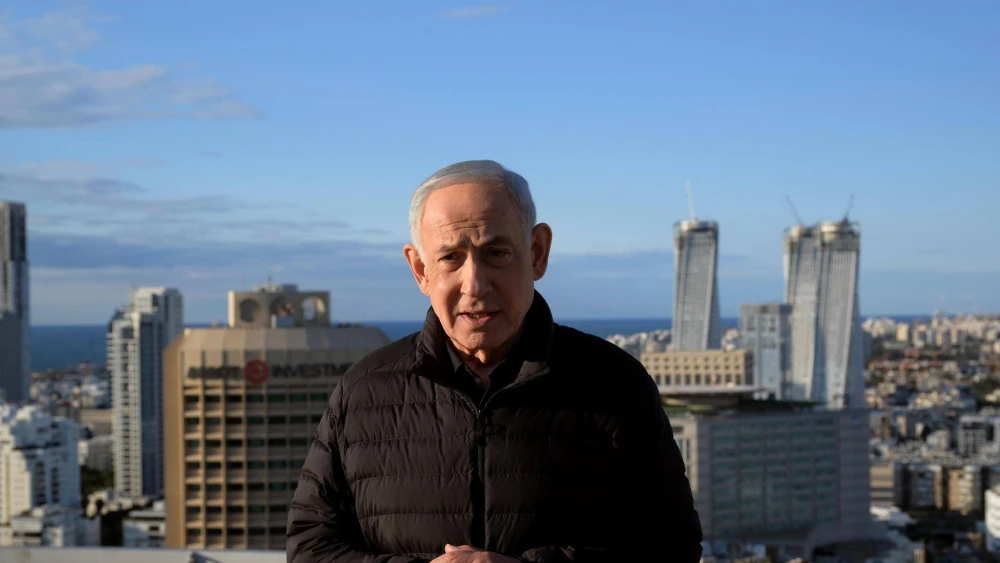
Israeli Prime Minister Benjamin Netanyahu on the roof at the Kirya military headquarters in Tel Aviv, March 1, 2026. Credit: Avi Ohayon/GPO.

Israeli Prime Minister Benjamin Netanyahu said on Thursday evening that a potential diplomatic breakthrough with Lebanon could lead to a peace agreement, while emphasizing that any progress would require the disarmament of Hezbollah.

Israel and Lebanon agreed to a 10-day ceasefire on Thursday following calls between U.S. President Donald Trump and the leaders of each country, Netanyahu and Lebanese President Joseph Aoun.

“We have an opportunity to forge a historic peace agreement with Lebanon,” Netanyahu said in a statement translated from Hebrew. “President Trump intends to invite me and the president of Lebanon to try to advance this agreement.”

After Trump announced the truce on social media, the State Department released a statement detailing the agreement between the sides.

“Israel and Lebanon will implement a cessation of hostilities” beginning at 5 p.m. Eastern on April 16 for “an initial period of 10 days, as a gesture of goodwill by the government of Israel, intended to enable good-faith negotiations toward a permanent security and peace agreement between Israel and Lebanon,” the statement said.

In his remarks in Hebrew broadcast on Israeli media, Netanyahu said this opportunity exists because, during the “War of Redemption,” Israel had fundamentally changed the balance of power in Lebanon, including the elimination of Hezbollah leader Hassan Nasrallah.

“We activated the pagers. We eliminated the massive arsenal of 150,000 rockets and missiles that Nasrallah prepared to destroy Israel’s cities. We eliminated Nasrallah,” he said. “This balance has shifted to such an extent that over the past month, we began receiving calls from Lebanon to hold direct peace talks between us,” the prime minister said. “This is something that hasn’t happened in over 40 years.”

Explaining why he had agreed to a 10-day ceasefire called for by Trump, Netanyahu said, “I answered that call and I agreed to a timeout, or more accurately, a temporary 10-day ceasefire, to try and advance the agreement we began discussing during the meeting of ambassadors in Washington.”

Rejected Hezbollah’s preconditions

The Israeli and Lebanese ambassadors to the United States agreed on Tuesday that their countries would hold direct negotiations following the first meeting between the two sides since 1993.

Netanyahu said Israel had two fundamental demands for peace talks with Lebanon: “First, the disarmament of Hezbollah. Second, a sustainable peace agreement, peace through strength.”

He stressed that Israel had rejected Hezbollah’s preconditions for a truce.

“To achieve this ceasefire, Hezbollah insisted on two conditions: First, that Israel must withdraw from all Lebanese territory, back to the international border. Second, a ceasefire based on the ‘quiet for quiet’ model. I agreed to neither of these, and indeed, those two conditions are not being met,” he said.

Israel is remaining in Lebanon in a reinforced security buffer zone,” the prime minister insisted.

“This is a security buffer that starts at the sea and continues to Mount Dov and the foothills of Mount Hermon, up to the Syrian border,” he said. “This is a security strip 10 kilometers deep, which is much stronger, more intense, more continuous, and more solid than what we had previously. That is where we are, and we are not leaving.”

“This allows us, first and foremost, to block the danger of an invasion into our communities, and secondly, it allows us to prevent direct anti-tank fire into the communities. The residents are now protected from these two dangers,” he added. “Of course, there are still problems; They still have rockets left. We will have to deal with that as well, as part of the progress toward a security agreement and a sustainable peace treaty.”

On the ceasefire with Iran, Netanyahu said, “I have spoken with President Trump over these last two days, and he told me he is tremendously determined to continue the naval blockade and to bring about the dismantling of Iran’s nuclear capability, what remains of it.

“He is not giving up on this. He is certain he can eliminate this threat once and for all, continuing the great things we have done together,” the prime minister said. “Of course, we will also handle the missile threat and the enrichment capability. I will not elaborate. These are two very important moves that can fundamentally change our security and diplomatic situation for years to come.

“With God’s help, we will act, and with God’s help, we will succeed,” Netanyahu said.


Steve Linde, the JNS features editor, is a former editor-in-chief of The Jerusalem Report and The Jerusalem Post and a former director at Kol Yisrael, Israel Radio’s English News. Born in Harare, Zimbabwe, he grew up in Durban, South Africa and has graduate degrees in sociology and journalism, the latter from the University of California at Berkeley. He made aliyah in 1988, served in the IDF Artillery Corps and lives in Jerusalem.


Zawartość publikowanych artykułów i materiałów nie reprezentuje poglądów ani opinii Reunion’68,
ani też webmastera Blogu Reunion’68, chyba ze jest to wyraźnie zaznaczone.
Twoje uwagi, linki, własne artykuły lub wiadomości prześlij na adres:
webmaster@reunion68.com


New York’s Bruce Blakeman Vows to Protect Jews, Combat Anti-Israel Policies if Elected Governor


New York’s Bruce Blakeman Vows to Protect Jews, Combat Anti-Israel Policies if Elected Governor

Corey Walker


Nassau County Executive Bruce Blakeman and Legislator Mazi Pilip join business and real estate leaders to invite New York City entrepreneurs, brokers, educational institutions, and residents who want to relocate to Nassau County following the election of Democratic Socialist Mayor-Elect Zohran Mamdani on Nov. 7, 2025, in Mineola, New York. Photo: Michael Nigro/Sipa USA Reuters Connect

Nassau County Executive Bruce Blakeman, the Republican gubernatorial candidate in New York, is outlining an aggressive law-and-order platform centered in part on combating antisemitism and defending Israel as he surges in the polls with the campaign season heating up.

In responses to a series of policy questions presented by The Algemeiner, Blakeman pointed to his record in Nassau County, home to a large Jewish population, as a model for how he would govern statewide. He argued that stricter enforcement and a tougher stance on protests have helped prevent unrest seen elsewhere in the region.

“In Nassau we have not permitted the lawless rioting that has threatened the safety and security of the Jewish community in New York City and on college campuses,” Blakeman said, adding that demonstrators who break the law must “face arrest” and that local policies banning face coverings during protests have helped deter violence.

“As the leader of Nassau County, home to 1.5 million people, of which almost 300,000 identify as Jewish, I have made protecting the Jewish community a priority,” Blakeman told The Algemeiner.

“These professional paid agitators know that in Nassau they face arrest if they break the law,” he said, adding that Nassau has “made it illegal for them to wear masks for them to hide their identities.”

Concealing one’s identity with face masks became a common feature of the pro-Hamas, anti-Israel demonstrations that erupted on college campuses across the US, as well as in the streets of New York, during the Gaza war.

Blakeman’s comments come amid heightened concern over antisemitic incidents in New York and nationally, an issue that has become increasingly central in state and local political debates.

Blakeman, who was first elected Nassau County executive in 2021 and won reelection last year, has repeatedly taken aim at New York City Mayor Zohran Mamdani, accusing him of promoting anti-Israel positions and rhetoric he described as dangerous to Jewish communities.

When asked whether he would use the governor’s office to counter potential anti-Israel actions by New York City leadership, Blakeman pointed to his past support for anti-boycott measures targeting the Jewish state. As a former Hempstead councilman, he sponsored what he described as the nation’s first anti-BDS law in 2016, using the acronym for the boycott, divestment, and sanctions movement against the Jewish state.

“As governor, I will push for the New York State Legislature to pass similar legislation statewide,” Blakeman said, criticizing Democrats — including incumbent Gov. Kathy Hochul, who he is vying to unseat — for not advancing such measures into law.

“Currently, it is only an executive order because the left wing of the Democrat party will not allow a vote,” Blakeman added. “Kathy Hochul lacks the political courage to push for the law. That will change with me as governor.”

The BDS movement seeks to isolate Israel on the international stage as the first step toward its elimination. Leaders of the movement have repeatedly stated their goal is to destroy the world’s only Jewish state.

Blakeman dismissed the possibility that Mamdani, who has described Israel’s Prime Minister Benjamin Netanyahu as a war criminal and vowed to arrest him if he visits New York, could take legal action against Israeli officials, stating unequivocally that the mayor “will not arrest” Netanyahu. 

Blakeman also weighed in on controversies involving academic and extensive business ties to Israel. He rejected calls by some activists to sever ties between New York City and the Cornell Tech campus, which was developed in partnership with Israel’s Technion.

“I believe that act would be illegal and it will not happen when I am governor,” the candidate said. 

Blakeman, who previously worked as a lawyer, argued that any attempt to remove or isolate the campus would be unlawful and contrary to principles of academic freedom. “Israeli technology is good for business and good for New York,” Blakeman said, adding that the state should embrace innovation from Israel’s tech sector.

Similarly, Blakeman criticized efforts that, he said, push out companies with Israeli ties, referencing a drone manufacturer that recently departed the Brooklyn Navy Yard. He echoed comments from Democratic Assemblyman Kalman Yeger, who called such moves economically harmful.

“Boycotting Israel or companies that do business with Israel is illegal in New York,” Blakeman said, suggesting he would enforce those laws more aggressively as governor.

On the question of whether New York City could divest from Israel bonds, Blakeman argued that such authority does not rest with city leadership. He did not outline specific steps he would take but indicated opposition to any such move.

Blakeman drew a direct line between criticism of Israel and antisemitism, saying that denying Israel’s right to exist as a Jewish state constitutes a “fundamentally antisemitic position.” He said that Mamdani, an avowed anti-Zionist who has accused the Jewish state of enacting “apartheid” and committing “genocide” against the Palestinians, of holding such views and said that rhetoric targeting Israel can endanger Jewish communities more broadly.

“Mamdani denies Israel’s right to exist as a Jewish State. What he is saying is that other peoples have a right to a homeland but the Jewish people do not. That is a fundamentally antisemitic position,” he said. 

“Mamdani’s continued hateful rhetoric against Israel endangers the Jewish community,” Blakeman continued.

He also criticized Democrats for what he described as support for Mamdani, a democratic socialist, framing the issue as a broader divide within the party over policy toward Israel.

“It is shocking to me that Democrats like the governor support an antisemitic figure like Mamdani,” he said, referring to Hochul’s endorsement of Mamdani during last year’s mayoral election.

Jewish New Yorkers and supporters of Israel more broadly have worried that Mamdani will weaponize his power as mayor to enact anti-Israel and antisemitic policies. Spectators argue that the election of a pro-Israel governor could serve as a useful bulwark against a city government with an increasingly hostile posture against Israel.

Blakeman’s comments to The Algemeiner highlight a growing fault line in New York politics, where debates over Israel, antisemitism, and public safety are increasingly intersecting with partisan divides. As tensions continue to rise, candidates across the political spectrum are staking out positions that could shape the state’s political landscape heading into the next election cycle.

Blakeman’s comments also come at a time when he has been surging in the polls just over seventh months out from the Nov. 3 election.

In just the past month, Hochul’s lead over Blakeman dropped 7 points, according to new Siena University poll released on Tuesday. The data showed Hochul holding a 13-point lead over Blakeman, 47 percent to 34 percent, but in February the margin was much wider, 51 to 31 percent.

According to Siena pollster Steven Greenberg, independents are mainly responsible for the narrowing gap.

“Interestingly, Hochul’s standing with New Yorkers is essentially the same as last month – a small plurality views her favorably, and a small majority approves of the job she’s doing as governor – as is Blakeman’s, yet the race between the two has tightened a little,” Greenberg said in a statement. “Three-quarters of Democrats continue to support Hochul, and more than three-quarters of Republicans continue to support Blakeman, but now independents favor Blakeman by seven points, after siding with Hochul by five points.”

Interestingly, New York City is one place where Blakeman made up ground.

“While Hochul maintains very narrow leads upstate and in the downstate suburbs, her lead in New York City fell from 46 points, 63 percent to 17 percent, last month to 29 points, 54 percent to 25 percent, today,” Greenberg added. “Is that movement or merely noise? Let’s see what happens next month after the budget and as the campaign unfolds.”

Days earlier, new internal polling released by Blakeman showed him within single digits of Hochul, trailing 52 percent to 43 percent in New York, a staunchly Democratic state.


Zawartość publikowanych artykułów i materiałów nie reprezentuje poglądów ani opinii Reunion’68,
ani też webmastera Blogu Reunion’68, chyba ze jest to wyraźnie zaznaczone.
Twoje uwagi, linki, własne artykuły lub wiadomości prześlij na adres:
webmaster@reunion68.com