
Archive | April 2016

Chrześcijańska mniejszość Izraela

Chrześcijańska mniejszość Izraela

Shadi Khalloul Tłumaczenie: Małgorzata Koraszewska
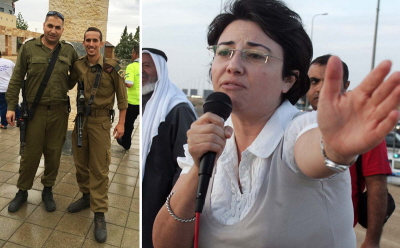

 Major IDF Ehab Szlajan (z lewej) jest chrześcijaninem aramejskim z Nazaretu i założycielem Chrześcijańskiego Forum Rekrutacyjnego, które zachęca izraelskich chrześcijan aramejskich do służby w armii. Muzułmańsko-arabska członkini Knessetu, Haneen Zoabi (po prawej) groziła niedawno przedstawicielom chrześcijan izraelskich, odrzucając ich oświadczenie, że są odrębną grupą etniczną aramejsko-chrześcijańską, i nalegając na wmuszenie im tożsamości arabskiej i palestyńskiej.Major IDF Ehab Szlajan (z lewej) jest chrześcijaninem aramejskim z Nazaretu i założycielem Chrześcijańskiego Forum Rekrutacyjnego, które zachęca izraelskich chrześcijan aramejskich do służby w armii. Muzułmańsko-arabska członkini Knessetu, Haneen Zoabi (po prawej) groziła niedawno przedstawicielom chrześcijan izraelskich, odrzucając ich oświadczenie, że są odrębną grupą etniczną aramejsko-chrześcijańską, i nalegając na wmuszenie im tożsamości arabskiej i palestyńskiej.


Izrael uznał w zeszłym roku istnienie w swoich granicach grupy chrześcijan – “Aramejczyków”; jest to coś, czego nigdy nie zrobił ani nie zrobi żaden naród arabski lub muzułmański na Bliskim Wschodzie. Izrael uznał odrębną grupę etniczną i religijną: rdzenny lud starodawnego Żyznego Półksiężyca.

Ich język – aramejski – był językiem, którym mówił Jezus na stulecia zanim islam pojawił się w tym regionie.

Izrael nie tylko wspiera chrześcijan i inne mniejszości – Druzów, muzułmanów, bahajów, wszystkich – ale daje im pełne prawa obywatelskie, wolność i możliwość pokojowego istnienia oraz praktykowania swojej wiary według własnego uznania, ale także możliwość rozwoju jako mniejszość z wszystkimi implikacjami różnic kulturowych. Na przykład, Arabowie są mile widziani w Izraelskich Siłach Obronnych (IDF), ale w odróżnieniu od Żydów nie podlegają obowiązkowi służby wojskowej. Pierwszy premier Izrael, Dawid Ben Gurion, nie chciał, by Arabowie czuli, że są zobowiązani do walki ze swoimi „braćmi”.

W Izraelu członkowie mniejszości chrześcijańskiej i muzułmańskiej pełnią wszelkiego rodzaju wysokie funkcje – tak samo jak każdy żydowski Izraelczyk, który pragnie zrobić karierę. Chrześcijanin maronita, Salim Jubran, jest sędzią Sądu Najwyższego.

Wbrew propagandzie nie ma tam żadnego “apartheidu” i żadnych dróg, po których mogą podróżować tylko Żydzi. Takie drogi są w Arabii Saudyjskiej i są one prawdziwymi drogami apartheidu, ponieważ tylko muzułmanie mogą podróżować nimi do Mekki.

Ponadto Izrael robi to w sąsiedztwie, w którym większość jego sąsiadów – często najbardziej brutalnych wrogów ludzkości – pragnie starcia Izraela z powierzchni ziemi i często robi co może, by to pragnienie urzeczywistnić. Niestety, dołącza do tego wielu Europejczyków. Wszyscy widzieli niedawne próby Unii Europejskiej wykończenia Izraela ekonomicznie przez oznakowanie towarów wyprodukowanych na terytoriach spornych. To żądanie, którego nie stawia się żadnemu innemu krajowi ze spornymi granicami, w rzeczywistości szkodzi jakimkolwiek perspektywom na pokój, który może nadejść tylko ze współpracy.

Ci Europejczycy nikogo nie nabierają. Ich przebiegle sadystyczne, zadufane „kary” dla Izraela wyłącznie pozbawią tysiące Palestyńczyków dobrze płatnej pracy, jakiej bardzo potrzebują; te nakazy pchną również Palestyńczyków, którzy właśnie stali się bezrobotnymi, do biura zatrudnienia ostatniego ratunku: islamskiego ekstremizmu i terroryzmu. Jak na ironię, ci Europejczycy dla zaspokojenie swojego pragnienia zaszkodzenia Żydom przez udawanie, że pomagają Palestyńczykom, w rzeczywistości tworzą nowych terrorystów, którzy później pojawią się w Europie i pokażą im, co myślą o takich hipokrytach.

W regionie dyskutuje się szeroko o tym, jak Europejczycy po cichu także chcą zmiecenia Izraela i mają nadzieję, że ich nowe prawa w połączeniu ze starą przemocą arabską załatwią sprawę. W ten sposób Europejczycy mogą udawać sami przed sobą, że „nie mieli z tym nic wspólnego”. Ci Europejczycy powinni wiedzieć, że nie udaje im się nikogo nabrać.

Tymczasem Izrael mimo tego, że musi radzić sobie z frontami europejskim i amerykańskim, jak również z często ludobójczymi groźbami muzułmańskimi, nadal aktywnie wzmacnia swoje społeczności mniejszościowe przez wiele rozmaitych, sponsorowanych przez państwo programów. Wśród nich jest pięcioletni plan rozwoju społeczności Arabów izraelskich i innych mniejszości przyjęty przez rząd 30 grudnia 2015 r., który będzie kosztował 15 miliardów szekli (z grubsza 4 miliardy dolarów). Minister ds. równości społecznej, Gila Gamliel z partii Likud, jest odpowiedzialna za realizację tego planu. Niesłusznie demonizowany premier Netanjahu od kilka lat prowadzi “Urząd Rozwoju Ekonomicznego Sektorów Arabskiego, Druzyjskiego i Czerkieskiego”. Na jego czele stoi Arab, muzułmanin, Aiman Saif, który zarządza pokaźnym budżetem 7 miliardów szekli (z grubsza 1,8 miliarda dolarów), przeznaczonym głównie dla różnych arabskich miast i wsi, gdzie został zużyty na rozwój nowoczesnej infrastruktury, edukacje itp. Reszta została przeznaczona na pomoc wsiom chrześcijańskim w Galilei.

Arabowie mają własny departament w Ministerstwie Edukacji, na którego czele stoi Arab, Abdalla Chateeb, który także zarządza znacznym budżetem 900 milionów szekli (230 milionów dolarów).

Chrześcijanie, jak również wszystkie inne mniejszości, rozumieją dzisiaj, że służba w armii izraelskiej jest zasadnicza dla ich integracji w Izraelu. Wielu chrześcijan i członków innych mniejszości w Izraelu podziela te same obawy: coraz lepiej rozumieją, że w tym regionie Izrael jest jedyną wyspą bezpieczeństwa, która daje im wolność i prawa demokratyczne. Społeczność muzułmańskich Arabów w Izraelu, jak również chrześcijan i innych społeczności arabskojęzycznych, widzi tragiczny los swoich braci w Syrii, Iraku, Libanie i innych krajach arabskich. Muzułmanie zabijający muzułmanów; fanatyczne grupy muzułmańskie zabijające chrześcijan, wykorzeniające ich, podrzynające im gardła, palące ich żywcem, topiące ich w klatkach i, oczywiście, krzyżujące ich, nawet ich małe dzieci. Mniejszości w Izraelu są tego bardzo świadome. Nie mogą również zrozumieć, dlaczego nikt nie piętnuje tych złoczyńców. Obawiają się, że dewastacja rozszerzy się najpierw na świętą ziemię Izraela, a potem na Europę.

Ta obawa jest jednym z powodów wzrostu liczby chrześcijan wstępujących do IDF: 30% rekrutacji jest na bazie dobrowolności; podczas gdy ogólnie w społeczności żydowskiej liczba ta wynosi 75% na bazie obligatoryjnej. Dzisiaj także ponad tysiąc muzułmańskich Arabów służy w IDF.

Wszyscy znamy niebezpieczeństwo, jakie stanowią fanatyczne grupy islamskich dżihadystów, takie jak Hamas, i czujemy się jeszcze bardziej zobowiązani do bronienia samotnego państwa pluralistycznego.

Społeczność, do której należę, chrześcijan aramejskich, ma aramejsko-fenickie korzenie etniczne oraz język i była pierwotnie osiedlona w Syrii, Libanie i Iraku. W ciągu 1400 lat po podboju islamskim, chrześcijanie aramejscy zostali zmuszeni do mówienia po arabsku, a później do ucieczki ze swoich domów w Syrii i Iraku. Nie mają żadnego statusu w państwach arabskich i islamskich rządzonych w większości według prawa szariatu. Chrześcijanie aramejscy nie mają także żadnego statusu w Autonomii Palestyńskiej, która rządzi teraz Judeą i Samarią.

Jesteśmy świadomi tego, że niektóre grupy chrześcijańskie, takie jak Sabeel, Kairos Palestine i inne pod butem Autonomii Palestyńskiej, nadal odczuwają potrzebę płacenia słownej daniny arabsko-muzułmańskim panom, którzy ich podbili.

Jerozolima jest otwarta dla wszystkich. Nie zawsze tak jednak było, szczególnie pod władzą Jordanii do 1967 r. Żydzi nie tylko mieli zakaz wstępu, ale z cmentarza żydowskiego na Górze Oliwnej zabrano 38 tysięcy kamieni nagrobnych i użyto ich jako materiału budowlanego między innymi do jordańskich latryn.

Muzułmańsko-arabscy członkowie izraelskiego Knesetu odrzucają prawo chrześcijan do zachowania ich unikatowego dziedzictwa. 5 lutego 2014 r. członkini Knesetu, Haneen Zoabi z partii Zjednoczona Lista Arabska groziła przedstawicielom chrześcijan izraelskich, którzy lobbowali w Komisji Zatrudnienia Knesetu na rzecz prawa, pozwalającego na dodanie przedstawicieli chrześcijan do komisji równości zatrudnienia w Ministerstwie Gospodarki. Zoabi odrzuciła ich oświadczenie, że są odrębną grupą etniczną chrześcijan aramejskich. Nalegała na wmuszenie im tożsamości arabskiej i palestyńskiej. Ta tożsamość była oczywiście równie fałszywa, jak gdybyśmy my, chrześcijanie, nalegali, by Arabowie nazywali siebie Indianami. Prawo zostało uchwalone mimo wysiłków Zoabi i jej kolegów dzięki koalicji członków Knesetu – z olbrzymią większością posłów żydowskich głosujących za jego przyjęciem.

Ten incydent ilustruje, jak niektórzy Arabscy muzułmanie izraelscy, żądając od swoich żydowskich sąsiadów pomocy w zachowaniu własnego dziedzictwa muzułmańsko-arabskiego, zabraniają tych samych praw innym mniejszościom etnicznym.

Zamiast tego próbują narzucić arabizację i islamizaję groźbami przemocy. Na przykład, we wrześniu 2014 r. chrześcijankę aramejską, kapitana IDF Areen Szaabi, prześladowała grupa arabskich aktywistów w Nazarecie. Grozili jej okrzykami “Allahu Akbar” [“Allah jest Wiekszy!”], a w nocy pocięli opony jej samochodu.

Major IDF Ehab Szlajan, aramejski chrześcijanin z Nazaretu i założyciel Chrześcijańskiego Forum Rekrutacyjnego, znalazł rano w sierpniu 2015 r. flagę palestyńską zatkniętą przed jego domem. W wigilię, 24 grudnia 2014 r. 30 rzucających kamieniami i butelkami muzułmanów zaatakowało chrześcijańskiego żołnierza, 19-letniego Madżd Rawaszdi i jego dom.

Wszystko to jest najwyższą hipokryzją pomieszaną z rasizmem.

W oficjalnych życzeniach świątecznych dla chrześcijan izraelskich 24 grudnia 2012 r. premier Netanjahu powiedział:

“Mniejszości w Izraelu, włącznie z ponad milionem obywateli, którzy są Arabami, zawsze mieli pełne prawa obywatelskie. Rząd Izraela nigdy nie będzie tolerował dyskryminacji kobiet. Chrześcijańska populacja Izraela zawsze będzie miała wolność praktykowania swojej wiary. To jest jedyne miejsce na Bliskim Wschodzie, gdzie chrześcijanie mają pełną wolność praktykowania swojej wiary. Nie muszą się bać, nie muszą uciekać. W czasie, kiedy chrześcijanie są pod oblężeniem w tak wielu miejscach, w tak wielu krajach na Bliskim Wschodzie, jestem dumny, że chrześcijanie izraelscy mają swobodę praktykowania swojej wiary i że w Izraelu jest kwitnąca społeczność chrześcijańska”.

Chrześcijanie i inne mniejszości w Izraelu prosperują i wzrastają liczebnie, podczas gdy w innych krajach na Bliskim Wschodzie, włącznie z Autonomią Palestyńską, bardzo cierpią z powodu ruchów islamskich i prześladowań – aż zostaną zmuszeni do zniknięcia.
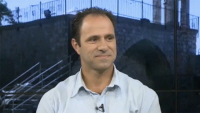

Shadi Khalloul – Jest założycielem Ruchu Aramejskiego. Studiował w Las Vegas na University of Nevada. Był oficerem w IDF w stopniu kapitana. Jest również przedsiębiorcą i kandydatem na posła.


twoje uwagi, linki, wlasne artykuly, lub wiadomosci przeslij do: webmaster@reunion68.com



The Lie of Academic Free Speech

The Lie of Academic Free Speech

Richard L. Cravatts


How campus brownshirts make sure only one side is heard in the Israeli/Palestinian debate.

When GOP presidential candidate Donald Trump’s March 11th rally at the University of Chicago Pavilion was shut down last week by hundreds of leftist protestors, comprised of activists from Moveon.org, Black Lives Matter, Muslim groups, and even unrepentant domestic terrorist Bill Ayers, the morally indignant protestors had one purpose: to disrupt the event, prevent Trump supporters from hearing the candidate’s speech, and, most importantly, suppress Trump’s ideas and beliefs. Having already decided the Mr. Trump was a veritable racist, Islamophobe, and neo-Nazi, the mob of rioters—inside and outside of the venue—took it upon themselves to decide that Trump, and those who share his vision and ideas, do not even have the right to express their opinions, that their views have been deemed unacceptable by the self-appointed moral arbiters of our day.

The disturbing campaign to suppress speech which is purportedly hurtful, unpleasant, or morally-distasteful—a sample of which was evident at the Chicago rally—is, for anyone following what is happening on campuses, a troubling and recurrent pattern of behavior by some of the same ideologues who shut down Trump: “progressive” leftists and “social justice” advocates from Muslim-led pro-Palestinian groups. Coalescing around the Israeli/Palestinian conflict, this unholy alliance has been formed in a libelous and vituperative campaign to demonize Israel, attack pro-Israel individuals, and to promote a relentless campaign against Israel in the form of the boycott, divestment, and sanctions (BDS) movement. As the ideological assault against Israel and Jews intensified on university campuses, and pro-Israel individuals began answering back to their ideological opponents, the student groups leading the pro-Palestinian charge (including such groups as the radical Students for Justice in Palestine (SJP)) decided that their tactic of unrelenting demonization of Israel was insufficient, and the best way to optimize the propaganda effect of their anti-Israel message was also to suppress or obscure opposing views.

The pronouncements of these groups are now frequently defined by the baleful whining of these ideological bullies intent on having only their views aired while suppressing the contradictory views of others. In fact, a leaked memorandum from the Binghamton University Students for Justice in Palestine chapter revealed that members would be required to never even engage in dialogue with pro-Israel groups on their campus, they would be prohibited from “engaging in any form of official collaboration, cooperation, or event co-sponsorship with [pro-Israel] student organizations and groups,” and SJP members “shall in no manner engage in any form of official collaboration with any student group which actively opposes the cause of Palestinian liberation nor with groups which have aided and abetted Zionist student organizations,” meaning, of course, that the so-called intellectual debate that universities purport to promote in exactly this type of discussion will never take place when SJP is involved.

And because they cannot win an honest, open ideological debate about the Israeli/Palestinian conflict because they deal almost exclusively in misrepresentations and untruths (the allegation of Israeli apartheid, as the central example), just as the anti-Trump protestors wished to accomplish, SJP has characteristically tried to insure that no pro-Israel voices are heard, either by disrupting or shutting down pro-Israel events and speakers or urging administrators to disinvite speakers they deem to be Islamophobic, too pro-Israel, or critical of their own tactics and activism.

The thuggish substitution of event disruption and the shutting down of other people’s speech for what is supposed to be two-sided academic dialogue and debate occurs with increased regularity, and marks another, more pernicious, aspect of the campus campaign against Israel, Zionism, and Jews.

At University of California, Davis this month, for example, George Deek, a Jaffa-born Arab Christian, planned to give a speech entitled “The Art of Middle East Diplomacy,” when some 30 pro-Palestinian activists stood up and blocked Deek with banners and took over the event by screaming “From the River to the Sea, Palestine will be free,” meaning an Arab state in place of present-day Israel, and chanting such toxic ditties as “long live the Intifada,” “Allahu Akbar,” and “When Palestine is occupied, resistance is justified,” ghoulish calls for the murder of Jews, and “Israel is anti-Black” and “Palestine will be free, fight white supremacy,” an intellectually clumsy way of trying to frame Israel as a racist state.

In February, Bassam Eid, a Palestinian himself and the founder of the Palestinian Human Rights Monitoring Group, witnessed very startlingly how nothing positive said about Israel is allowed to be heard, even from such a credible, though unsual, source as a Palestinian. During his speech, in which he was critical of Hamas and the Palestinian Authority for their failure to seek peace, Eid was verbally attacked by a student attendee, who said in Arabic, “Dr. Bassam, do not dare talk about us [Palestinians] anymore. You have shamed our God … you’ve shamed us, disgraced us, you are a traitor, you are a traitor, in the name of God you are a traitor … You are worse than the Jews and we will hunt you down and find you in every place, be prepared . . . .” When it became obvious that his speech could would not be able to continue uninterrupted, Eid cancelled the event and had to be escorted off site by the police.

Last November, the University of Minnesota Law School sponsored a lecture by Hebrew University professor Moshe Halbertal, an expert on Israel’s military code of ethics, entitled “Protecting Civilians: Moral Challenges of Asymmetric Warfare.” The lecture was delayed for 30 minutes by the unruly heckling and chants of some 100 protestors from the Minnesota Anti-War Committee and Students for Justice in Palestine (SJP), who indignantly rose from the audience, interrupted, and accused Halbertal of war crimes and complicity in the 2014 Gaza incursion.

Also in November, as yet another example, the University of Texas at Austin’s Institute for Israeli Studies hosted an event with Stanford University’s Dr. Gil-Li Vardi, who was to present a study on “The Origin of a Species: The Birth of the Israeli Defense Forces’ Military Culture.” At the event, twelve members of a so-called “Palestine Solidarity Committee,” intent on disrupting the speech, created a human wall in the back of the room with the purpose of not allowing the event to begin. The anti-Israel activists tried, without the benefit of actually knowing what the speaker would say, to prevent her from presenting her viewpoint by shrieking out such taunts as, “You are a former IDF soldier, we do not listen to you.”

Sometimes the silencing of pro-Israel voices is more subtle, but no less pernicious. A pro-Israel student group at Columbia University, Artists 4 Israel, were denied the opportunity to express views during Israeli Apartheid Week, during which the SJP chapter had erected their version of a mock “apartheid wall,” emblazoned with anti-Israel slogans and symbols. To counter the display with a pro-Israel one, Artists 4 Israel had set up a 15-foot inflatable figure, a “pro-Israel Pinocchio,” replete with a long nose and a sign that read “‘Apartheid’ Week Compassion Abuse” as an effective, sardonic swipe at SJP’s toxic campaign. The chair and vice chair of Columbia’s student government, who not coincidentally are members of Columbia’s SJP chapter and pro-BDS activists, ordered the removal of the Pinocchio figure, offering the disingenuous justification that Pinocchio’s long nose might be construed as anti-Semitic and that the pump used to inflate the figure was too loud for use on the Columbia grounds.

The university officials and student groups who now try to suppress all thought of which they disapprove, and who publicly proclaim their desire for campuses where there will be vigorous discourse, on contentious issues, from many points of view, but allow the expression of only “acceptable” opinions, couched in the language of human rights and social justice—all of these individuals have sacrificed one of the core values for which the university exists. In their zeal to be inclusive, and to recognize the needs and aspirations of victim groups, they have pretended to foster inquiry, but they have actually stifled and retarded it. And, as this otherwise noble purpose for the university has devolved, the first victim in the corruption of academic free speech has, unfortunately, been the truth.


twoje uwagi, linki, wlasne artykuly, lub wiadomosci przeslij do: webmaster@reunion68.com


Anti-Israelism as a mutation of anti-Semitism

Beyond paranoia: Anti-Israelism as a mutation of anti-Semitism

Dr. Manfred Gerstenfeld


Interview with Monique Schwarz, filmmaker, whose shocking documentary will jab viewers out of their complacency on what is happening around them. Sadly, it takes courage to tell the truth about today’s anti-Semitism.

“Recently my new documentary Beyond Paranoia was released. It tells how close anti-Semitism and anti-Israelism are. My original observations on this similarity go back to 1987 during the first Intifada. I was then living in Australia.

“I noticed that there were consistent terms being applied in describing Israel. These were often pejorative and emotional. They included expressions such as that Jews control the world and that the Israel Lobby controls the American President. I then became very aware that anti-Israel and anti-Zionist comments and attitudes were getting increasingly stronger throughout the world.”

Monique Schwarz is an Australian filmmaker who has been involved in the production and distribution of independent documentary films for the last thirty years. One of her movies Mamadrama – The Jewish Mother in Cinema, released in 2001 had very wide international television, theatrical and educational distribution, and is still being screened today.

Schwarz says: “This initial awareness gradually made me want to make a movie about how comments made about Israel and Zionism overlapped with the old traditional anti-Semitism, something I had experienced myself. I was born in Switzerland during the Holocaust to survivor parents and immigrated to Australia in 1950 from France.

“To expose the hatred of Israel I wanted to make a documentary which, in addition to pictures, would include interviews with experts. They could describe and analyze the various aspects of the overlay of anti-Israelism and anti-Semitism. They could illustrate how the main classic hate motifs have mutated and are then used against Israel. That seemed to me the best way to address both Jewish and non-Jewish audiences.

‘At the time, and still in many circles today the conventional wisdom is that anti-Zionist and anti-Israel comments are common criticism, which in an open society is acceptable. I approached people for funding the proposed film which elucidates the connection between anti-Semitism and anti-Israelism. Yet both Jewish and non-Jewish funding bodies commented that this view was extreme.

“They would thus not fund this outlook, however much it is based in reality. No one said ‘We won’t fund you because the idea is not interesting, or because we already have a film like this.’

“After the release of Mamadrama I started to work on Beyond Paranoia. I wanted this movie to send the key message that dangerous anti-Semitism is very much alive in the form of anti-Israelism.

“My co-producer Benzion Tidhar and I planned for a film shot on 16 mm film with a full crew. We realized however that money would not be forthcoming, and thus could not afford that budget. Yet I found the way Israel was portrayed in the world increasingly intolerable. Benzion and I decided that we had go ahead with the film at our own expense. It was almost a moral imperative. We sacrificed many things that make daily life a little more comfortable.

“I bought a Professional Video camera. We decided that we would do the production work ourselves, which video cameras allow you to do. Benzion did the sound, and I did camera and direction. Previously on my films, I had always worked as a director and sometimes I had also done some camera work, and as the producer/writer. This would help us as we could keep the costs down. Despite our economies, we have received many compliments on the film’s professionalism.

“The editor and I decided that Beyond Paranoia had to be visually shocking. It includes harsh Holocaust pictures. The music is tense and disturbing, almost like a horror movie soundtrack. This was deliberate, because we wanted to jab viewers out of their complacency,

“The interviewees gave a broad picture of how anti-Semitism developed, what its key motifs are and how these return in anti-Israelism. All people I wanted to interview for the film agreed, with one exception. A Muslim Israeli Arab decided for his own security that he could not be in this documentary. A number of interviewees did not end up in the final cut of the film. That is uncomfortable for me and probably disappointing for them. Yet it is the nature of filmmaking.

A Muslim Israeli Arab decided for his own security that he could not be in this documentary.

“The Israeli premiere was screened in February 2016 at the Jerusalem Cinematheque. We made it as a memorial tribute to the leading anti-Semitism scholar Prof. Robert Wistrich, who suddenly passed away last year. I found him very inspirational in our conversations and he is an important interviewee in the film.

“From the various interviews I learned several important things. The most dramatic was that the similarity in anti-Semitism and anti-Israelism, which I had observed more than ten years ago had increased even further. I also had never before seen clearly the common elements in Christian, Muslim and Nazi anti-Semitism. Nor did I realize the degree to which important elements of Nazism are inherent in the ideology of many Arab countries.

“Many people have told me how courageous I was for making this film. Most disturbingly these reactions underline the constraints on the freedom of expression in contemporary society.”

Disclosure: the author is interviewed in Beyond Paranoia


Dr. Manfred Gerstenfeld
The writer has been a long-term adviser on strategy issues to the boards of several major multinational corporations in Europe and North America.He is board member and former chairman of the Jerusalem Center for Public Affairs and recipient of the LIfetime Achievement Award (2012) of the Journal for the Study of Anti-Semitism.


twoje uwagi, linki, wlasne artykuly, lub wiadomosci przeslij do: webmaster@reunion68.com



Zwiedź wystawę Muzeum POLIN z tabletem lub smartfonem


Zwiedź wystawę Muzeum POLIN z tabletem lub smartfonem


Muzeum Historii Żydów Polskich - zdjęcie nagłówkowe

Co nowego w Muzeum POLIN?

na zdjęciu widzimy fragment wystawy stałej muzeum - galerię Paradisus Iudaeorum

Wirtualny spacer po wystawie stałej

Zapraszamy na wirtualny spacer po wystawie stałej Muzeum POLIN. Mamy dla Was kilka propozycji ścieżek zwiedzania, a każda z nich prezentuje osobny temat i umożliwia zwiedzenie wystawy pod określonym kątem.

Wśród nich znajduje się także ścieżka Tysiąc lat w godzinę stworzona z myślą o zwiedzających, którzy chcą zapoznać się tylko z najważniejszymi punktami ekspozycji. Dzięki naszej stronie można poznać wystawę stałą, nie ruszając się z domu, lub pobrać ścieżkę zwiedzania na urządzenie mobilne i przyjść na wystawę, by zwiedzić ją zgodnie z sugerowaną trasą.

Więcej informacji 


Po wojnie. II edycja Polin Meeting Point

Już po raz drugi zapraszamy studentów z Polski, Niemiec i Izraela do udziału w międzynarodowej letniej szkole Polin Meeting Point. Program skierowany jest do osób zainteresowanych badaniem historii okresu powojennego w perspektywie porównawczej i dialogiem międzykulturowym. Interdyscyplinarny charakter programu pozwoli uczestnikom na otwartą dyskusję z rówieśnikami i zaproszonymi wykładowcami z trzech krajów.

W tym roku skupimy się na temacie powojennej odbudowy: tworzenia na nowo powojennej tożsamości w Polsce, Niemczech i budowania państwowości Izraela. Wykorzystamy do tego m.in. osobiste relacje świadków, poznając przy tym metody pracy ze świadectwami historii mówionej. Wspólnie z zaproszonymi ekspertami z Polski, Izraela i Niemiec będziemy dyskutować m.in. o odradzaniu się żydowskiej społeczności, zmaganiach z doświadczeniem Holokaustu, problemie powojennej przemocy oraz sporach o kształt nowej rzeczywistości. Program odbędzie się w Warszawie w dniach 16–31 lipca 2016 roku.

Więcej informacji


„Przynoszę rzecz, przynoszę historię. Rozmowy z darczyńcami” – spotkanie autorskie

7 kwietnia, godz. 18.00, wstęp wolny

Zapraszamy na spotkanie z autorami książki poświęconej darczyńcom muzeum – kilkuset osobom z całego świata, które przekazały do zbiorów muzeum obiekty i opowieści związane z historią polskich Żydów. Podczas spotkania wyświetlimy także reportaż Kolekcja oraz wybrane fragmenty relacji filmowych z darczyńcami.

Wydarzenie tłumaczone na Polski Język Migowy.

Więcej informacji


Darmowy wstęp na wystawę Franka Stelli 9 i 10 kwietnia z najnowszym numerem “Zwierciadła”

Tylko z najnowszym wydaniem miesięcznika “Zwierciadło” bezpłatny wstęp na wystawę czasową Frank Stella i synagogi dawnej Polski w dniach 9 kwietnia o godz. 11 i 10 kwietnia o godz. 14.

Projekt Żydowskie Dziedzictwo Kulturowe jest realizowany dzięki wsparciu udzielonemu z funduszy norweskich i EOG przez Islandię, Liechtenstein i Norwegię.

Muzeum Historii Żydów Polskich – wspólna instytucja kultury

Muzeum wspierają darczyńcy z Polski i ze świata


Projekt Żydowskie Dziedzictwo Kulturowe jest realizowany dzięki wsparciu udzielonemu z funduszy norweskich i EOG przez Islandię, Liechtenstein i Norwegię.

Muzeum Historii Żydów Polskich – wspólna instytucja kultury


twoje uwagi, linki, wlasne artykuly, lub wiadomosci przeslij do: webmaster@reunion68.com


Alaska Airlines and the Jews of Yemen

Alaska Airlines and the Jews of Yemen

Joe Spier


Alaska Airlines and the Jews of YemenDespite enormous danger, 28 Alaska Airlines pilots made some 380 flights and airlifted 48,818 refugees to Israel

The story of the modern exodus of “Beta Israel” the Jews of Ethiopia during Operations Moses and Solomon, which together airlifted some 22,000 Ethiopian Jews to Israel, is well known. Less well known is the dramatic exodus of over 48,000 Jews from Yemen. Almost unknown is the role played by Alaska Airlines.

No one knows for certain when the first Jews came to Yemen. Local legend has them being sent as traders by King Solomon. In any event, Jews have lived in Yemen for many centuries. In that poverty-stricken country, the Jews were the poorest and lowest of citizens living in contempt and on sufferance as dhimmis. However, in their synagogues and schools, they taught their children to learn and write Hebrew. They never forgot their faith, protected the traditions, observed the Sabbath and passed the Torah and Talmud to each succeeding generation.

For the Jews life in Yemen became intolerable.

Following World War I, when Yemen became independent, life in that Muslim country for the Jews became intolerable. Anti-Semitic laws were revived; Jews were not permitted to walk on pavements; in court a Jew’s evidence was not accepted against a Muslim’s; Jewish orphans had to be converted to Islam. Some Jews were able to escape to Palestine but most were trapped.

From Despair to Danger

In 1947, following the United Nations vote to partition Palestine, the situation of the Jews in Yemen turned from despair to physical danger. Arab rioters in the adjacent port of Aden, then a British Crown colony and now part of Yemen, killed 82 Jews and torched the Jewish quarter. The establishment of the State of Israel on May 14, 1948 and Israel’s War of Independence increasingly endangered the Yemeni Jews as it did in all Arab countries. It was not, however, until May 1949, when the Imam of Yemen unexpectedly agreed to permit all Jews to leave his country that they were able to flee. They longed to return to Zion if only they had the means. At that time, slightly over 49,000 Jews lived in Yemen.

As the War of Independence ended in early 1949, Israel was devastated and virtually bankrupt. Notwithstanding, David Ben-Gurion, Israel’s first Prime Minister, defying logic and the advice of his economic advisors, ordered the immediate and rapid “Ingathering of the Exiles”. Where would Israel get the money? “Go to the Jews in the Diaspora and ask them for the money,” Ben-Gurion answered the skeptics.

Airplanes Needed

Egypt had closed the Suez Canal to the Jews of Yemen; they would have to be transported by air to Israel. The American Jewish Joint Distribution Committee (JDC), the international Jewish humanitarian aid organization, agreed to fund the Yemenite exodus and organize the airlift, but they needed aircraft.

Alaska Airlines was founded in 1932 when Mac McGee purchased a used three passenger Stinson and started an air charter business in Alaska. With the arrival of James Wooten as president in 1947, the airline began to purchase surplus planes from the U.S. Government and within a year became the world’s largest charter airline.

It would take at least $50,000 to set up the charter, cash that the Airline did not have

The JDC approached Wooten and asked if Alaska Airlines would agree to accept the Yemen airlift. Wooten wanted Alaska Air to take on the mission of mercy but Ray Marshall, Chairman of the Board, was cool. Marshall felt the deal was a waste of the Airline’s time and money. It would take at least $50,000 to set up the charter, cash that the Airline did not have. Marshall insisted that Wooten front the funds himself.

Wooten raised the $50,000 by borrowing it from a travel agency associated with the JDC. The contract was signed and Operation On Wings of Eagles, more popularly known by its nickname, Operation Magic Carpet commenced.

On the Wings of Eagles

As Yemen would not permit the Jewish refugees to be flown out of their country, Britain had agreed to the establishment of a transit camp in the adjoining Crown Colony of Aden from which the airlift could commence. Alaska Airlines set up its base in Asmara, Eritrea with their ground crew, pilots and aircraft, – DC-4s and C-46s. The arrangement was to fly from their base in Asmara to Aden each morning, pick up their passengers in Aden and refuel. Thence fly up the Red Sea and Gulf of Aqaba to the airport in Tel Aviv, unload the refugees, fly to the safety of Cyprus for the night and return to their base in Asmara at dawn, before starting all over again. The round trip would take about 20 hours.

Yeminite Jews returning to Israel as
part of Operation Magic Carpet in 1949
The aircraft as configured could not carry enough passengers or sufficient fuel. So the planes were modified by replacing the regular airline seats with rows of benches and fitting extra fuel tanks down the length of the fuselages between the benches. Aircraft intended to carry 50 passengers could now carry 120 and fuel would last a skinny extra one hour.


Read more: Alaska Airlines and the Jews of Yemen


twoje uwagi, linki, wlasne artykuly, lub wiadomosci przeslij do: webmaster@reunion68.com