Archive | April 2016

Open Letter to the Edinburgh University Students’ Association

Gatestone InstituteOpen Letter to the Edinburgh University Students’ Association

Denis MacEoin


  • No one holds meetings to call for reform in Islamic states. Instead, people like yourselves pass resolutions condemning the only country that defends those rights for all its citizens and visitors.
  • If your government in Scotland or the UK banned books, imprisoned journalists, censored films, or prohibited campus meetings, you would be rightly outraged. You depend on free libraries, uncensored (though never unbiased) newspapers and journals, and direct access to the Internet. None of those freedoms exists in any Muslim country. Not in Egypt, not in Jordan, not in Saudi Arabia, not in Iran, not in Pakistan.
  • Israel is, in every respect, a free society. When you support the Palestinians exclusively, you offer support to censorship and state control of expression. You need to think about this very carefully, because otherwise you reveal yourselves to be hypocrites of the first order. To attack a country that defends the rights you demand for yourselves and your friends is morally unforgivable.
  • There are no apartheid laws in Israel. Arabs (both Muslims and Christians) in Israel have the same voting rights as Jews, have political parties of their own, serve as members of parliament, serve on the Supreme Court and other courts, are diplomats, lawyers, military officers, scientists, academics, and anything else they wish.
  • “Those who know what real apartheid is, as I know, know that there is nothing in Israel that looks like apartheid. … There is a widespread allegation, really a slander, that Israel is an apartheid state. That notion is simply wrong. It is inaccurate and it is malicious.” — Kenneth Rasalabe Joseph Meshoe, President of the African Christian Democratic Party in South Africa.

Dear Students,

As a concerned Edinburgh graduate, I write you with a sense of déjà vu, as I have done this before.
I want to restate and expand on my objections to your 2016 motion and resolution to boycott the Jewish state of Israel. Let me put that a little differently: the only liberal parliamentary democracy in the Middle East, one of the very few genuine democracies in the world today. I would like all of you to read this; only your willingness to do so, at least to listen to the arguments of others, will justify your claim to be intelligent young people studying at a world-class university.

At Edinburgh, I qualified with a first-class MA in Persian, Arabic and Islamic History, and went on to Cambridge, where I took a PhD in Persian Studies, dealing with a religious and historical topic in 19th-century Iran. After that, I taught Arabic-English translation and Islamic Civilization at a university in Morocco, then Arabic and Islamic Studies at Newcastle University in the UK. Later I accepted an invitation to join the Gatestone Institute as a Distinguished Senior Fellow. There, I research and write on subjects relating to Islam, the Middle East and Israel. I have written about forty books, think tank reports, and a long list of articles on these topics.

I only write the above to explain that I am adequately qualified to address you on the topic of the Israel-Palestinian struggle. It embarrasses me to say that your grounds for passing a boycott motion are unworthy of anyone who claims to be well educated, intelligent, or well informed. Sadly, the reasons given in your resolution are childish, ignorant, and based on nothing but a series of lies or at best misunderstandings. If you stop reading at this point, I call you out as traitors to the most basic principles of academic work: the need for open dialogue, critical debate, and readiness to change one’s opinions in the presence of evidence. If you cannot abide by those principles, you are not fit to be at university at all. If your self-righteousness and your conviction that you are utterly right all the time cannot be changed, you will never understand what it is to take part in any intellectual debate. This is a letter that I hope many of you will read, in the hope that you are not frightened by dissenting opinion.

So, let me begin with some simple points. I assume that most or all of you are feminists, that most or all of you insist on women’s rights and equal status for men and women worldwide. Now, as we are in some measure talking about the Middle East and the Islamic world, it is probably not necessary to spell out to you that no Arab country and no Islamic nation gives full rights to women, and that many openly oppress their female citizens. Forced veiling; beatings, floggings or stonings to death; women who have been raped treated as adulteresses and stoned; the legal status of half a man; bans on travel without permission from a man; women forbidden to drive cars, honour killings of women, female genital mutilation (FGM) of young girls, and non-consensual divorce are commonplace.

I would have thought you might pass a resolution about Saudi Arabia, Iran, Pakistan, Afghanistan, Bangladesh, Somalia or somewhere similar. But instead, you pass boycott motions about Israel. In Israel, men and women have equal status under law. Muslim women are free to wear veils and many do, but no woman is ever arrested or fined if she prefers not to wear one. Honour killings or FGM are punishable offences under Israeli law, but few take place. Women in Israel — Christians, Arabs and Jews — are free to walk on the beach in swimsuits, to go dancing in nightclubs, to live with male or female partners with or without marriage, to serve in the army, navy and air force, and to enter any profession, in or out of the government, for which they are qualified. They receive equal justice under law. They live lives identical to yours in free Western countries. So, if you are feminists, why do you sanction Israel and leave brutal misogynist regimes without a word of criticism? Does that seem like hypocrisy to you? It certainly seems so to me.

You probably all support rights for LGBTQ communities. Perhaps you take part in gay rights parades, no doubt some of you are either gay or have gay friends, and none of you would tolerate psychological or physical abuse directed against people of diverse sexuality. But take a look at Arab countries and Islamic countries. In Gaza and the West Bank, they kill homosexuals by throwing them off roofs or beat them to death. In Iran, they hang them. In Saudi Arabia, they behead them. Under the Islamic State, they also throw them from roofs. Not a single Islamic country gives any rights whatever to gay men and women, to transsexuals or transvestites. In the Middle East, tens of thousands of gay people live in fear. But no one ever marches against these places, writes petitions demanding gay rights, or passes boycott resolutions against them.

In Israel, gay pride marches take place in Tel Aviv and Jerusalem. There are no laws forbidding homosexuality. Tel Aviv has been described as the gay capital of the world. The Israeli army does not sanction soldiers who are gay. Israeli law protects people of all sexual orientations — and it does so because it is a country based on full human rights for all its citizens. This is not “pinkwashing”: using gay rights to cover up other abuses. It is gay rights in practice, which is why many Arab and Iranian gay people flee to Israel. Providing such protection only serves to make Israel even more hated by many countries surrounding it and even many farther away. This too is hypocrisy, pure and simple. To attack a country that defends the rights you demand for yourselves and your friends is morally unforgivable.

You probably agree that all people should be free to worship and practise their religion openly, or not, under the protection of the law. And you all probably agree that religious people and atheists also should have the right to live freely, without persecution. No Arab or Islamic state offers that sort of protection. In Iraq and Syria, in Gaza and the West Bank, Christians have been killed in huge numbers or driven out. In Egypt, the indigenous population of Coptic Christians suffers severe persecution and sees its churches destroyed. In Iran, Christians are regularly arrested, and the country’s largest indigenous religious minority, the Baha’is, are openly persecuted. Baha’is are hanged, imprisoned, denied access to education, forbidden to work in any profession. Their holy places throughout the country have been systematically bulldozed and sometimes mosques have been built on the sites.

In Israel, the Christian community is the only one anywhere in the Middle East to have grown in numbers since 1948. All the holy places of all religions — Muslim, Jewish, Christian — are actively protected under the Law for the Protection of Holy Places. The Baha’i religion has its World Centre (a UNESCO World Heritage Site) in Haifa, and its two holiest shrines there and outside the city of Acco. Pilgrims come from around the world. The Baha’is are among the most hated people for Muslims everywhere. But not in Israel. Yet no one marches to defend the religious rights of Baha’is in the Islamic world; no one brings petitions to the Iranian embassy to protect them or others from persecution; no one holds meetings to call for reform in Islamic states. Instead, people like yourselves pass resolutions condemning the only country that defends those rights for all its citizens and visitors. By siding with the persecutors and sneering at the only country that since its inception has actually implemented all human rights, you show nothing but contempt for those rights. That is not just sad, it is despicable.

You are students, young people with your minds open to new sensations, new information, new questions, a galaxy of differing opinions, learning how to weigh and balance your own assumptions and those of others. You have access to the most amazing technologies and sources of information — resources that simply did not exist earlier. In order to access all this, you require freedom of speech, a world without censorship, a free press, the right to protest, and to question received opinion. If your government in Scotland or the UK banned books, imprisoned journalists, censored films, or prohibited campus meetings, you would be rightly outraged. You would march to defend those freedoms were there a threat to take them away. You depend on free libraries, uncensored newspapers and journals, and direct access to the Internet.

None of those freedoms exists in any Muslim country. Not in Egypt, not in Jordan, not in Saudi Arabia, not in Iran, not in Pakistan. Censorship is rife, secular views are everywhere condemned. Freethinking bloggers such as Raif Badawi in Saudi Arabia, several in Bangladesh, and many in Iran have been imprisoned, sentenced (in Badawi’s case) to lashes, or (in Bangladesh) assassinated. The majority of newspapers in these countries are state-owned. Books are banned and burned across the region. Television stations are closed down for the pettiest of reasons, as happened recently in Egypt to MP Tawfiq Okasha. There is no freedom of speech in Gaza or under the Palestinian Authority, and those who breach the rules are, as often as not, found with a bullet in their head.

Israel has as much freedom of speech as the UK, France, Germany, Denmark, the United States, Canada, Australia or any other Western democracy. The only restrictions on the press are those relating to national security — as in all democracies. Anti-Israel NGOs operate freely in Israel, anti-Israel articles appear daily in the press, notably in the left-wing newspaper Haaretz. Arab politicians speak against Israeli policy daily in parliament or in interviews with the press. When arrests are made, Jewish extremists are as likely to be charged as Arabs. Israel is, in every respect, a free society. Yet you choose to condemn it. By doing so, you condemn the very freedoms you yourselves benefit from in your ivory towers in Scotland. And when you support the Palestinians exclusively, you offer support to censorship and state control of expression. You need to think about this carefully, because otherwise you reveal yourselves to be hypocrites of the first order.

Let me take this one step further. Are you aware that your motion is anti-Semitic? I want you to think about this carefully, too. What, you may ask, does boycotting Israel have to do with hating Jews? You are, I do not doubt, fiercely anti-racist, and for that I strongly commend you. Racism is still an ugly feature of modern life, not only in the West, but across a swath of other countries. It is ironic in the extreme, therefore, that your boycott motion was presented by the BME [Black and Minority Ethnic] Liberation Group. Ironic, because anti-Semitism has been and remains one of the most poisonous and genocidal forms of racist hatred. Across Europe, anti-Semitism is growing to levels reminiscent to that of the 1930s. The 2015 figure for anti-Semitic incidents was 53% higher than for 2014. Jews are leaving Europe and taking refuge elsewhere, most of them in Israel.

Fair criticism of Israel is not anti-Semitic. But exaggerated, libellous, and false criticism most certainly is. That is not my opinion, but the view of several major bodies dedicated to anti-racist work. At the university level, the Regents of the University of California, along with many other American universities, have just condemned anti-Zionism as anti-Semitic. Another official body you should know and recognize, the European Monitoring Centre on Racism and Xenophobia, has the following as their working definition of anti-Semitism:

Antisemitism is a certain perception of Jews, which may be expressed as hatred toward Jews. Rhetorical and physical manifestations of antisemitism are directed toward Jewish or non-Jewish individuals and/or their property, toward Jewish community institutions and religious facilities.

In addition, such manifestations could also target the state of Israel, conceived as a Jewish collectivity. Antisemitism frequently charges Jews with conspiring to harm humanity, and it is often used to blame Jews for “why things go wrong.” It is expressed in speech, writing, visual forms and action, and employs sinister stereotypes and negative character traits.
Contemporary examples of antisemitism in public life, the media, schools, the workplace, and in the religious sphere could, taking into account the overall context, include, but are not limited to:

  • Calling for, aiding, or justifying the killing or harming of Jews in the name of a radical ideology or an extremist view of religion.
  • Making mendacious, dehumanizing, demonizing, or stereotypical allegations about Jews as such or the power of Jews as collective — such as, especially but not exclusively, the myth about a world Jewish conspiracy or of Jews controlling the media, economy, government or other societal institutions.
  • Accusing Jews as a people of being responsible for real or imagined wrongdoing committed by a single Jewish person or group, or even for acts committed by non-Jews.
  • Denying the fact, scope, mechanisms (e.g. gas chambers) or intentionality of the genocide of the Jewish people at the hands of National Socialist Germany and its supporters and accomplices during World War II (the Holocaust). Accusing the Jews as a people, or Israel as a state, of inventing or exaggerating the Holocaust.
  • Accusing Jewish citizens of being more loyal to Israel, or to the alleged priorities of Jews worldwide, than to the interests of their own nations.

Read more : Open Letter to the Edinburgh University Students’ Association


twoje uwagi, linki, wlasne artykuly, lub wiadomosci przeslij do: webmaster@reunion68.com



Pierwszy seder w Hotelu Marriott organizowany przez Gminę żydowską w Warszawie


Pierwszy seder w Hotelu Marriott organizowany przez Gminę żydowską w Warszawie

Drodzy

w przyszłym tygodniu zaczyna się święto Pesach.
Kilkoro z nas zapisało się już na pierwszy seder w Hotelu Marriott organizowany przez Gminę żydowską w Warszawie.
Poprosiliśmy, by Drugie Pokolenie miało tam wspólny stół.

Poniżej (oraz w załączniku) informacja o zapisach (każdy indywidualnie). Jeśli chcemy spędzić ten wieczór razem, nie zapomnijcie, wysyłając potwierdzenie wpłaty również w mailu napisać, że prosicie o miejsce przy stole drugopokoleniowym. W sederze może uczestniczy każdy, nie tylko członek Gminy.

Elżbieta Magenheim


Pesach 5776

We cordially invite you to take part in the Passover seders organized by the Jewish Community of Warsaw on 22 and 23 April at the Marriott Hotel, the Jewish Community of Warsaw’s Kosher Canteen and at the Besamim Restaurant (Polin Museum).

We kindly informaca_pesach.jpgm that in order to buy membership ­priced tickets for the seders the Jewish Community’s membership dues for the year 2016 need to be paid as well. Membership dues can be paid (50 PLN, pensioners: 30 PLN) in cash at the Community’s cash register („KASA”) that operates on Tuesdays from 8:00 to 10:00 hrs and Thursdays from 15:00 to 17:00 hrs or by bank transfer to the account number: 90 1240 1066 1111 0000 0006 3904.

First Seder – 22 April at 20.15 hrs at the Marriott Hotel (Jerozolimskie Avenue 65/79)
Second Seder – 23 April at 20.30 hrs at the Kosher Canteen (Twarda 6 Street)

Sign up for the seders at the Marriott Hotel and the Kosher Canteen is possible at the Rabbi Michael Schudrich’s Office (Twarda 6 Street, Nożyk Synagogue building, 2nd floor, room 23) on the following dates:
• 12.04 – 15.04 from 9:00 to 11:00 hrs
• 18.04 – from 11:00 to 13:00 hrs and from 16:00 to 19:00 hrs
• 19.04 – 20.04 from 9:00 to 11:00 hrs and from 16:00 to 19:00 hrs
• 21.04 – from 16:00 to 19:00 hrs

For more details write to: zapisy@jewish.org.plThis e-mail address is being protected from spambots. You need JavaScript enabled to view itor call 22 624 14 84 at the above mentioned office hours.

Ticket prices:
• Children under the age of 3 – free of charge;
• Children aged 6 to 13 – 25 PLN;
• Seniors – Jewish Community members – 40 PLN;
• Students ( Jewish Community members) and youth aged 14-18 – 40 PLN
• Jewish Community members – 50 PLN;
• Every Jewish Community member is allowed to invite one non- member (of the immediate family) for the price of a member ticket – 50 PLN;
• Non-members, adults– 100 zł
• Non-members’ children (up to the age of 18)– 50 zł

NOTE: Payment methods:
1. Bank transfer to the Community’s account: 90 1240 1066 1111 0000 0006 3904
2. Cash at the Rabbi’s Office

NOTE:
1. The guest list will close on Wednesday 20 April at 15:00 hrs. Those wanting to sign up after that date (i.e. on Wednesday after 15:00 or on Thursday) will be charged an additional payment of 15 PLN.
2. Meals should be paid for BEFORE the start of Passover.
3. No booking will be made via telephone.
4. When signing up please remember to have your valid Jewish Community membership card and students their valid student’s ID. Payments can be made through a bank transfer. Instructions follow.
5. In the bank transfer title write: Pesach 2016 and the names of the guests the tickets are for, the category of the ticket (member, non- member, child, etc.) and each person’s choice of main course(vegetarian- vegetables only, vegetarian-fish or meat). 6. Bank tranfer confirmation should be sent in a form of scan or pdf. to:zapisy@jewish.org.plThis e-mail address is being protected from spambots. You need JavaScript enabled to view itor to the fax number 22 652 28 05 – don’t forget to add a contact (email and phone number) of the payer, as we will need to confirm the receipt of the payment.
7.The deadline for sending bank transfer confirmations is Tuesday(19.04) until the end of the day; cash can be paid until Wednesday (20.04) by 15:00 hours. Those wanting to sign up after the deadline should note that the available payment method is CASH ONLY at the Rabbi’s Office.
8. No payments will be accepted at the Marriott Hotel or at the Kosher Canteen.
9. Non-attendance at the Seder will not be treated as a basis for refund.
10. Those interested in transferring their ticket to the name of another person are requested to contact the Rabbi’s Office by Wednesday (20.04) by 15:00 hrs. After that deadline transferring Seder tickets to another person will not be possible.

Pesach in Ec CHaim Synagogue

22 APRIL (Friday), EREV OF PASSOVER
19:00 Kabbalat Shabbat, Maariv
20:00 Community Seder at the Marriott Hotel or Passover Seders at our homes

23 APRIL (Saturday), PASSOVER
10.00 Shacharit
10-­13 Shabbat School for Children
13:00 Lunch (20 PLN)
18:00  Seder at the Besamim Restaurant (Polin Museum, 6 Anielewicza St)

Sign­up for the Seder will close on 19 April

Ticket prices
50 PLN ­ Ec Chaim member with a paid membership due for the year 2015 (with one accompanying person paying 60 PLN)
60 PLN ­ Jewish Community member (with one accompanying person paying 60 PLN)
80 PLN guests

Account number: 66 1240 1066 1111 0010 3135 7763, also available at www.ecchaim.org.We kindly request you to send us bank transfer statements and your choice of the main course (salmon or vegetarian) to: chawura@jewish.org.pl This e-mail address is being protected from spambots. You need JavaScript enabled to view it.

Pozostałe sedery w Warszawie:
Gmina Żydowska w Warszawie organizuje również : 23 kwietnia w Kuchni Koszernej GWŻ (informacja w załączniku)
Ec Chaim w Restauracji Besamim (Muzeum Polin) 23 kwietnia, więcej http://www.ecchaim.org/#!student-life/c11m6;
Chabad Polska 22 kwietnia godz. 19.30 w Hotelu Bristol, ul. Krakowskie Przedmieście 42/44, zapisy do 20 kwietnia office@chabad.org.pl
Beit Warszawa, 22 kwietnia godz. 19.00, Wiertnicza 113, w opłata 105/55 zł, rejestracja office@beit.org.pl, tel. 22 885 26 38I


twoje uwagi, linki, wlasne artykuly, lub wiadomosci przeslij do: webmaster@reunion68.com



Miedzeszyn – sanatorium im. Medema

Miedzeszyn – sanatorium im. Medema

Jerzy S. Majewski


Z dawnego sanatorium nie przetrwało już nic. Zostało specjalnie zburzone kilka lat po wydarzeniach 1968 r. 32 lata wcześniej Aleksander Ford nakręcił o nim fabularyzowany film dokumentalny “Droga Młodych”

Współczesnego widza film Forda śmieszy dydaktyką. Dla badaczy dziejów przedwojennej Warszawy jest jednak niezwykłym dokumentem. Z sanatorium założonego przez żydowskich działaczy socjalistycznych przetrwało zaledwie kilka zdjęć.

Za to w filmie Forda miejsce to na nowo ożywa. Wchodzimy do wnętrz, śledzimy sanatoryjne losy dzieci, słuchamy ich występów w języku żydowskim i polskim.

Dziecięca republika

W filmie do Żydowskiego Sanatorium Dziecięcego im. Włodzimierza Medema w Miedzeszynie przybywają biedne żydowskie dzieci. Pochodzą z małych miasteczek i zatłoczonych do nieprzytomności zaułków warszawskiej Dzielnicy Północnej (dzisiejszy Muranów i okolice). Sanatorium to miejsce pełne słońca, zagubione pośród zielonych łąk, piaszczystych wydm, brzozowych zagajników i sosen linii otwockiej.

Tu dzieci zagrożone gruźlicą miały odzyskiwać nie tylko zdrowie, ale też zmieniać świadomość – z zahukanych dzieciaków wychowywanych w ortodoksyjnych środowiskach żydowskich stawać się pionierami walki o lepszy, socjalistyczny świat. “Letnisko Miedzeszyn szczególnie nadaje się dla dzieci wątłych i anemicznych” – czytamy w informatorze “Letniska Falenickie” z 1938 r.

Czytaj wiecej tu: Miedzeszyn – sanatorium im. Medema

Informacja dotycząca wpłat:

Europejski Instytut Kultury – fundacja
Biuro: ul. Stefana Bryły 1/61, 02-685 Warszawa
numery KRS 0000239588, NIP: 677-236-39-87, REGON: 121848216

Wplaty w Polsce:
Konto bankowe: 50 1090 1870 0000 0001 3130 1227 Bank Zachodni WBK

* * *

Wpłaty z zagranicy:

SWIFT WBKPPLPP
BIG WBKPPLPP
PL 50 1090 1870 0000 0001 3130 1227
EUROPEJSKI INSTYTUT KULTURY

Wpłaty prosimy opatrzyć adnotacją „Sanatorium Medema

download

Download the PDF file .


twoje uwagi, linki, wlasne artykuly, lub wiadomosci przeslij do: webmaster@reunion68.com



The Religion of Colonialism

The Religion of Colonialism

Daniel Greenfield


Why you can’t “colonize” Palestine.

At Israeli Apartheid Week, campus haters claim to be fighting “colonialism” by fighting Jews. Columbia University’s Center for Palestine Studies, dedicated to a country that doesn’t exist and which has produced nothing worth studying except terrorism, features diatribes such as Abdul Rahim al-Shaikh’s Palestine Re-Covered: Reading a Settler Colonial Landscape”. This word salad is a toxic stew of historical revisionism being used to justify the Muslim settler colonization of the indigenous Jewish population.

Colonialism is CPS’ favorite word. When Israeli social workers remove abused children from Muslim homes, that’s colonialism. Israeli farms are a form of environmental “colonialism”. When non-profits aren’t representative enough, it’s the fault of the “Israeli settler-colonial regime.” If it rains on Thursday, it’s caused by “colonialism,” preferably of the “Israeli Zionist colonial settler regime” variety.

But you can’t colonize colonizers. The Muslim population in Israel is a foreign colonist population. The indigenous Jewish population can resettle its own country, but it can’t colonize it.

Not even if you accuse Jews of being a “super-double-secret settler colonial regime.”

Muslims invaded, conquered and settled Israel. They forced their language and laws on the population. That’s the definition of colonialism. You can’t colonize and then complain that you’re being colonized when the natives take back the power that you stole from them.

There are Muslims in Israel for the same reason that there are Muslims in India. They are the remnants of a Muslim colonial regime that displaced and oppressed the indigenous non-Muslim population.

There are no serious historical arguments to be made against any of this.

The Muslim conquests and invasions are well-documented. The Muslim settlements fit every historical template of colonialism complete with importing a foreign population and social system that was imposed on the native population. Until they began losing wars to the indigenous Jewish population, the Muslim settlers were not ashamed of their colonial past, they gloried in it. Their historical legacy was based on seizing indigenous sites, appropriating them and renaming them after the new conquerors.

The only reason there’s a debate about the Temple Mount is because Caliph Omar conquered Jerusalem and ordered a mosque built on a holy Jewish site. The only reason there’s a debate about East Jerusalem is because invading Muslim armies seized half the city in 1948, bombed synagogues and ethnically cleansed the Jewish population to achieve an artificial Muslim settler majority. The only Muslim claim to Jerusalem or to any other part of Israel is based purely on the enterprise of colonial violence.

There is no Muslim claim to Israel based on anything other than colonialism, invasion and settlement.

Israel is littered with Omar mosques, including one built in the courtyard of the Church of the Holy Sepulchre, because Islam is a colonial entity whose mosques testify to their invasive origins by celebrating colonialism as their true religion. The faith of Islam is the sworn religion of the sword.

Islam is a religion of colonialism that spread through invasion, settlement and conquest. Its caliphs, from the original invaders, including Omar, to the current Caliph of ISIS, wielded and wield religious authority in the service of the Islamic colonial enterprise.

Allah is the patron deity of colonialism. Jihad is just colonialism in Arabic. Islamic theology is nothing but the manifest destiny of the Muslim conquest of the world, colonial settler enterprises dressed up in the filmy trappings of religion appropriated from the culture of conquered Jewish and Christian minorities. Muslim terrorism is a reactionary colonial response to the liberation movements of the indigenous Jewish population.

Even “Allahu Akbar” did not originate as a religious sentiment. It does not mean “God is Great”, as it is often mistranslated. It was Mohammed’s taunt to the Jews he was ethnically cleansing. His purge of a minority group proved that “Allah was Greater.” Islamic colonialism is used to demonstrate the existence of Allah. And the best way to worship Allah is through the colonialism of the Jihad.

Islam would not have existed without colonialism. It still can’t exist without it. That is why the violence continues. The only way to end the violence is for Muslims to reject their theology of colonialism.

But instead of taking ownership of their real history, the Muslim settler population evades its guilt through propaganda by claiming to be the victims of colonialism by the indigenous Jewish population. This twisted historical revisionism is backed by bizarre nonsense such as claiming that Jesus was a Palestinian or that the Arabs are descended from the Philistines. The Muslim settlers insist on continuing to celebrate colonialism while claiming to be an indigenous population that was always living in Israel.

You can have one or the other. You can have your mosques celebrating the conquest and suppression of the indigenous population or your claims of being the indigenous population. But you can’t switch from being the indigenous population to being its conquerors whenever it suits your pseudo-historical narrative. You can’t claim to be the Philistines, the Jews and their Islamic conquerors at the same time.

From its Roman origins, Palestine has always been a colonial fantasy of remaking Israel by erasing its original Jewish identity. The Arab mercenaries who were deployed by the Romans in that original colonial enterprise continued it by becoming self-employed conquerors for their own colonial empire. The name Palestine remains a linguistic settlement for reimagining a country without a people and a past as a blank slate on which the colonial identity of the invaders can be written anew.

That is still the role that the Palestine myth and mythology serves.

Abdul Rahim al-Shaikh complains about “linguistic colonialism”. When Muslims rename the Spring of Elisha, a Jewish biblical figure, Ein as-Sultan in honor of an Islamic colonial ruler, that’s linguistic colonialism. When Jews restore the original indigenous names that Jewish sites held before Muslim colonialism, that’s not colonization. It’s the exact opposite. It’s decolonization.

Promoting mythical claims of a Palestinian state isn’t decolonization, it’s colonization. Or recolonization.

Advocates for “Palestine” are not fighting colonialism, but promoting it. They are advocating for a discredited Muslim settler fantasy and against the indigenous Jewish population of Israel.

Abdul Rahim al-Shaikh complains about “geographic amnesia” among “Palestinians”. There’s no geographic amnesia because you can’t remember what never existed. There’s only paramnesia because there was never a country named Palestine.

Palestine has no history. It has no people. It has no borders. It has never been anything except a colonial invention. It is a name used by a variety of foreign settlers operating on behalf of colonial empires.

You can’t colonize Palestine. How can you colonize a colonial myth? You can only decolonize it.

Every Jewish home built on land formerly under the control of the Caliphs is decolonization and decaliphization. When Jews ascend the Temple Mount, they are also engaging in decolonization and decaliphization. When the liberation forces of the Jewish indigenous population shoot a Jihadist colonist fighting to impose yet another Islamic State on Israel, that too is decolonization and decaliphization.

Resistance to Islamic terrorism is resistance to colonialism. And Jews have the longest history of resisting the Islamic State under its various Caliphs throughout history. Israel is still resisting the colonialist Jihadist plans for the restorations of the Caliphate. Zionism is a machine that kills Islamic colonialism.

The existence of Israel not only means the decolonization of Abdul Rahim al-Shaikh’s imaginary colonial fantasies of “Palestine,” but inspires resistance in peoples struggling against Islamic colonialism throughout the region, from the Copts to the Berbers to secular intellectuals fighting for freedom.

Islamic colonialism has always been defeated, whether at the Gates of Vienna or in the Sinai Desert. Its colonial fantasies are false and will be defeated as many times as it takes, whether in the form of Palestine or ISIS.


Daniel Greenfield, a Shillman Journalism Fellow at the Freedom Center, is a New York writer focusing on radical Islam.


twoje uwagi, linki, wlasne artykuly, lub wiadomosci przeslij do: webmaster@reunion68.com


Jeszcze jeden sąd nad Judaszem

Jeszcze jeden sąd nad Judaszem

Karzyna Andersz


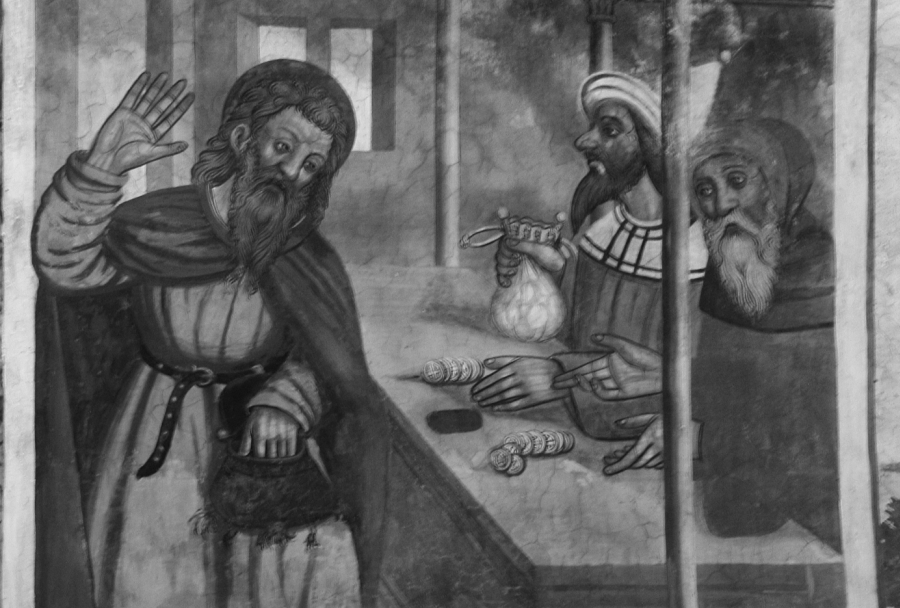
Judasz. Fragment fresków z XVI wieku z kościoła Saint Sébastien w Plampinet we Francji

Szmuel Asz, bohater najnowszej powieści Oza, mówi o Judaszu „pierwszy i ostatni prawdziwy chrześcijanin”. Jego spojrzenie na postać, która od stuleci funkcjonuje w kulturze jako synonim zdrajcy, jest łagodne, a przede wszystkim pełne zrozumienia. Dalekie temu, jakie wypływa z tekstów ewangelicznych; bliskie „Ewangelii Judasza”, sensacyjnemu apokryfowi odkrytemu niecałe 40 lat temu, a odczytanemu dopiero w 2006 r. Zresztą po hebrajsku Oz swoją książkę zatytułował „Ha-besora al pi Jehuda” – Ewangelia według Judasza.

Judasz, jakiego znamy, to postać budząca odrazę. Choć żaden z ewangelicznych opisów nie wspomina o satysfakcji, jaką uknuty podstępek i śmierć Jezusa miałyby przynieść Judaszowi, a widać raczej targające nim wyrzuty sumienia, to jednak błąd wydaje się być niewybaczalny. Według Ewangelii Mateusza, kiedy Judasz z przerażeniem odkrywa, że wydał „krew niewinną”, popełnia samobójstwo.

Szczery żal Judasza i bezsilność w obliczu czynu, który popełnił, nie powodują, że kształtujące się chrześcijaństwo patrzy na jego postać przychylniej. Nienawiść z osoby samego apostoła-bogobójcy wkrótce przelewa się na wszystkich, którzy, tak jak on, Jezusa odrzucili. Ojcowie Kościoła, tacy jak św. Hieronim (347-420) i św. Jan Chryzostom (349-407) jako pierwsi zaczynają łączyć postać Judasza – chciwego zdrajcy Jezusa – z Żydami jako ogółem osób, które w mesjasza nie uwierzyły. Sztuka sakralna tylko taki obraz utrwala. W przedstawieniach Ostatniej Wieczerzy Judasz wygląda inaczej niż pozostali apostołowie. Ma czarne włosy, śniadą karnację. Pozostali – włosy kasztanowe, czasami nawet blond. A przecież wszyscy byli Żydami zamieszkującymi tę samą szerokość geograficzną – dlaczego któryś z nich miałby aż tak wyróżniać się swoją fizjonomią?

Kultura ludowa, silnie związana z katolicyzmem, motyw Judasza arcy-Żyda chętnie podjęła i eksploatowała w sposób, który prowokował wybuchy nienawiści wobec wyznawców judaizmu. Centrum Badań nad Zagładą Żydów przy Polskiej Akademii Nauk przywołuje relację świadka mordu na Żydach w Gniewczynie Trynieckiej, który próbuje dociec jego przyczyn. Dowiadujemy się, że nienawiść do Żydów była we wsi skutecznie podsycana kultywowanymi przez mieszkańców ludowymi zwyczajami. Judasz, z workiem na pieniądze przywiązanym do pasa, pojawiał się jako jedna z postaci odgrywanych przez kolędników. Religijne kobiety miały zachęcać do bicia go miotłą, bo było to „zasługą przed Panem Jezusem”. Apogeum nienawiści wobec Judasza, a raczej identyfikowanych z nim Żydów zamieszkujących wieś, przypadało na okres przedwielkanocny. Skradzione wcześniej Żydom ubrania służyły do wykonania kukły, którą wieszano przed oknami żydowskich rodzin. „W tym czasie Żydzi, bojąc się aktów napaści inspirowanych liturgią i kazaniami wielkopiątkowymi, wcześniej niż zwykle zamykali okiennice i nie wychodzili z domów” podaje relacja.

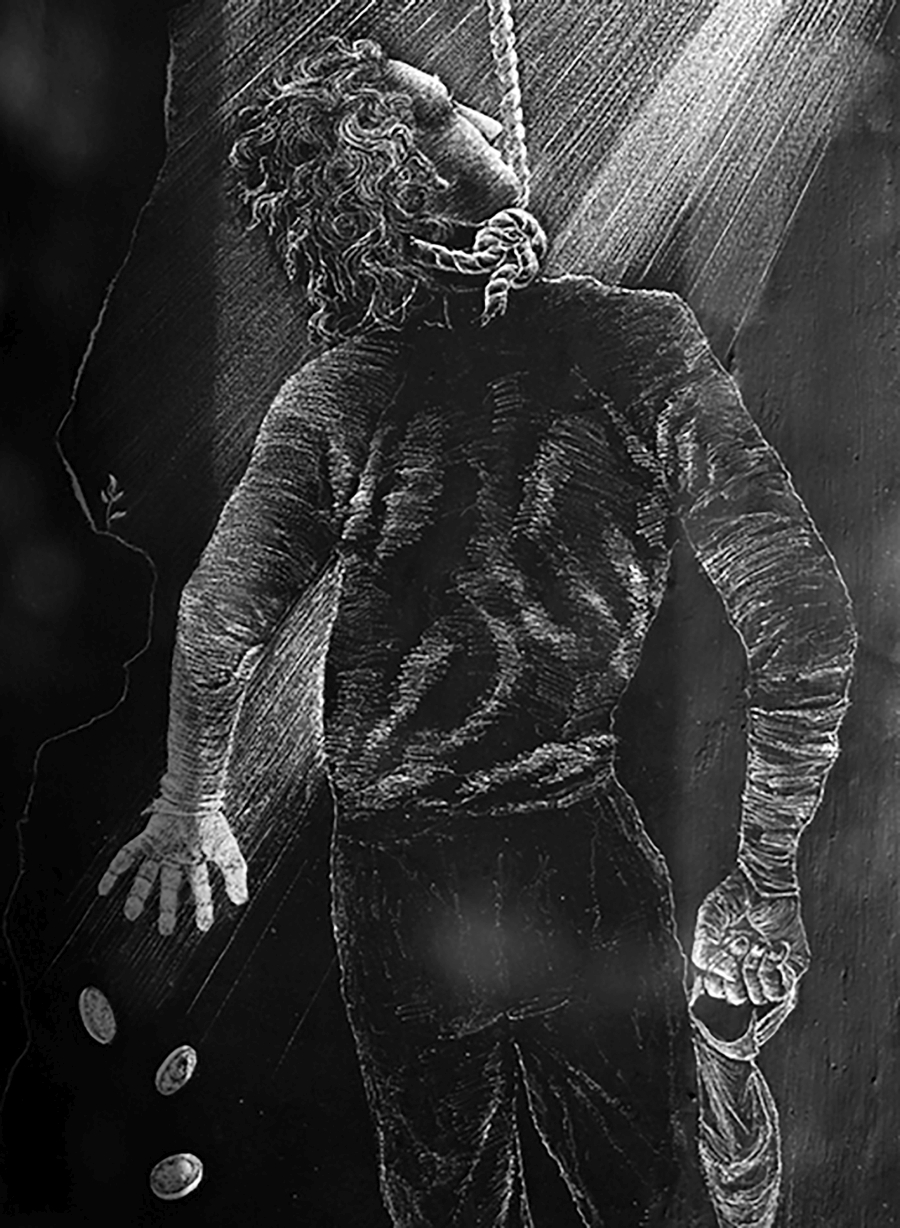
Dla próby zrozumienia i potraktowania Judasza bardziej po ludzku w Kościele nie było miejsca, także w sensie zupełnie dosłownym. Kiedy brytyjski artysta Laurence Whistler zaproponował w latach 80. ubiegłego wieku dodanie w oknach kościoła św. Mikołaja w hrabstwie Dorset witraża przedstawiającego Judasza, parafianie i kościelni hierarchowie zdecydowanie się temu sprzeciwili. Praca przedstawiająca sylwetkę powieszonego apostoła, z którego ręki wypadały monety, przemieniające się w rozkwitające kwiaty, przez prawie 30 lat zdeponowana była w lokalnym muzeum. Dopiero w 2013 r. roku władze parafii zdecydowały się zamontować witraż tak, aby był widoczny tylko z zewnątrz. „Okno przebaczenia”, jak nazywał je Whistler, miało pokazywać, że także Judasz w momencie śmierci nie został potępiony przez Boga.

Chrześcijaństwu trudno było przeprowadzić dyskusję, w której podjęto by próbę zastanowienia się, czy motywacja Judasza mogła być inna niż zła wola czy chciwość. Już dawno temu ustalono, że 30 srebrników nie było kwotą oszołamiającą, a miała ona raczej wymiar symboliczny, bo pojawiała się zarówno w Księdze Wyjścia i u proroka Zachariasza.

Tym bardziej szokujący wydał się tekst gnostyckiej „Ewangelii Judasza”, która sugerowała, że Jezus nie tylko dobrze wiedział o intencjach Judasza, ale i uważał go za swojego najlepszego ucznia, mówiąc, że przewyższy wszystkich pozostałych ofiarowując „człowieka, który go nosi”. Z postaci zdegradowanej, Judasz stałby się bohaterem – gdyby tylko „Ewangelia Judasza” została uznana za pismo natchnione, równorzędne innym Ewangeliom.

Kiedy ukazał się przetłumaczony tekst „Ewangelii” (National Geographic Society miało zapłacić milion dolarów za wyłączność publikacji), przełomu jednak nie było. Choć sama idea, by jednoznacznie nie skazywać Judasza na potępienie, a spojrzeć na niego jako osobę, która wolę boską jedynie wypełniała, nie wydaje się szczególnie niebezpieczna dla fundamentów wiary katolickiej, to jednak trzeba podkreślić, że Kościół tekst „Ewangelii Judasza” z całą stanowczością odrzuca. Jak pisze ks. prof. Mariusz Rosik w książce „Archeolog czyta Biblię”, powodów ku temu jest kilka. Przede wszystkim nie zachowały się informacje, które świadczyłby o używaniu tekstu w liturgii, ani nawet o powszechnej wiedzy o jego istnieniu. Po drugie, tekst, żeby został uzany za kanoniczny, musiałby zostać napisany przez samego apostoła albo jego ucznia. Jak wiadomo z opisów innych ewangelistów Judasz powiesił się tuż po śmierci Jezusa, a tekst jego rzekomej Ewangelii datowany jest na rok około 150. Po trzecie, tekst nie prezentuje tak zwanej „budującej treści”, która jest kolejnym wyznacznikiem pism natchnionych. „Ewangelia Judasza” jest zatem dla chrześcijan interesująca ze względu na obraz gnostycyzmu z niej wypływający, ale nie jako tekst, który dodałby coś do ich zrozumienia historii śmierci Jezusa.

Według gnostyków, jak pisze we wstępie do krytycznego wydania „Ewangelii” ks. prof. Wincenty Myszor, Judasz „przyczynił się do zbawienia, przyczyniając się do śmierci Chrystusa”. Był więc postacią przez nich zupełnie inaczej postrzeganą, bo to, co zrobił, miało wymiar jednoznacznie pozytywny. Brzmi to trochę tak, jakby Judasz chciał swoim działaniem przyśpieszyć nadejście zbawienia, a może „Mesjasza teraz” (posługując się hasłem chabadników).

Szmuel Asz, bohater książki Oza, widzi Judasza jako osobę niezachwianej wiary. To on, jako jedyny pośród uczniów, którymi targały wątpliwości, i bardziej zresztą niż sam Jezus, wierzy, że jego śmierć objawi to, na co wszyscy czekają. Zatraca się w swoim planie. Chce cudu spektakularnego, dokonanego na oczach mieszkańców Jerozolimy, wspiera (a może nawet trochę ponagla) swojego nauczyciela. „Judasz jest zatem autorem, impresariem, reżyserem i producentem widowiska ukrzyżowania” – konkluduje Szmuel. Judasz cały czas chciał dobrze i kochał Jezusa ponad wszystko. Dopiero, kiedy ten umarł na krzyżu, doszła do niego tragiczna prawda. Ale wtedy było już za późno.

Fragment Ewangelii Judasza

Bohater Oza nie osądza Judasza, w jego przekonaniu jest on postacią nie mniej tragiczną niż Jezus, który traci przez niego życie. Czyste intencje nie są jednak usprawiedliwieniem w oczach znawców Nowego Testementu, zarówno żydowskich jak i katolickich. Profesor Amy-Jill Levine z amerykańskiego Duke University twierdzi, że nawet „fakt, że Judasz został predestynowany do wydania Jezusa, nie uwalnia go od odpowiedzialności”. Ks. prof. Mariusz Rosik pisze natomiast: „Naturą grzechu Judasza była pycha. Przedłożył swoje własne plany ponad plany Boże”. Greckie pojęcie hybris zdaje się do tej tragedii bardzo pasować.

CZYTAJ WIĘCEJ O NOWEJ KSIĄŻCE AMOSA OZA „JUDASZ”

Apokryficzna „Ewangelia Judasza” nie opowiada losów apostoła po pojmaniu Jezusa. Kończy się słowami: „Judasz wziął pieniądze i wydał go im” (tł. Wincenty Myszor). Nie ma tam miejsca na opisy takie jak u Ewangelistów, którzy przypisują Judaszowi chciwość (Mateusz), uznają Judasza za owładniętego przez szatana (Łukasz i Jan), albo mówią o nim jako złodzieju (Jan). Być może to właśnie dzięki nim Judasz został uznany „przez setki milionów ludzi na pięciu kontynentach, i to przez tysiące lat, za najbardziej typowego Żyda. Przy tym najbardziej obmierzłego i godnego pogardy. Za żywe ucieleśnienie zdrady i żydowskości, a także związku żydowskości ze zdradą”, jak pisze Oz.

A gdyby rzeczywiście okazało się, że Judasz nie był chciwym zdrajcą, a wiernym, wybranym uczniem Jezusa, jak sugeruje „Ewangelia Judasza”? Pojawiają się czasem głosy, że gdyby tekst był bardziej znany wśród chrześcijan, pomógłby walczyć z antyżydowskimi postawami. Prof. Levine nie zgadza się z taką opinią. „W Nowym Testamencie są fragmenty nie mające nic wspólnego z Judaszem, a przez niektórych mimo wszystko interpretowane w sposób antyżydowski”- twierdzi uczona. Może jest więc tak, jak w „Judaszu” mówi stary Gerszom Wald: „Wszyscy jesteśmy Judaszami. Nawet za osiemdziesiąt pokoleń wszyscy nimi będziemy”. Niezależnie od przemyśleń bohaterów Oza i tekstu „Ewangelii Judasza”. ∎


 Prenumerata
Prenumerata na 2016 rok kosztuje 90 zł i obejmuje dziesięć numerów w języku polskim oraz jeden numer w języku angielskim wydawany na koniec 2016 roku. Prenumerata zagraniczna kosztuje 190 zł.

Bieżące oraz angielskie wydanie „Chiduszu” można kupić w CIŻ CAFE przy ulicy Włodkowica 9 we Wrocławiu, w Żydowskim Instytucie Historycznym oraz w MHŻP POLIN w Warszawie w cenie 9 zł (polskie) 30 zł (angielskie).

Pojedyncze numery można również zamówić mailowo pod adresem office @ chidusz.com w cenie 15 zł (w języku polskim), oraz 30 zł (w języku angielskim). Wysyłka zagraniczna kosztuje: 20 zł (wydanie polskie) 40 zł (wydanie angielskie).

W najbliższym czasie „Chidusz” będzie dostępny w sieci salonów EMPIK, o czym niezwłocznie poinformujemy.

Numery archiwalne (jeżeli nakład nie został wyczerpany) można zakupić w cenie 20 zł (za jedną sztukę) mailowo: office[at]chidusz.com

Życzymy przyjemnej lektury!


twoje uwagi, linki, wlasne artykuly, lub wiadomosci przeslij do: webmaster@reunion68.com