Archive | December 2016

Oslo widziane przez pryzmat honoru i hańby

Oslo widziane przez pryzmat honoru i hańby

Richard Landes
Tłumaczenie: Małgorzata Koraszewska
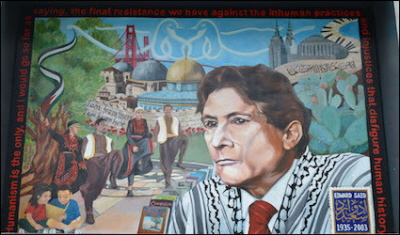

Na zdjęciu palestyński mural z Edwardem Saidem. Said skupił wokół siebie wielu akolitów ideologii “postkolonializmu” reprezentujących wszystkie dziedziny nauk społecznych. Jednakże zachodni uczeni i dziennikarze idący śladami Saida niedoceniali znaczenia dominującej w społeczeństwach muzułmańskich kultury honoru i wstydu i jej wpływu na formy religijności, zjawiska zamazanego przez Saida przy pomocy pogardliwego pojęcia „orientalizmu”.Na zdjęciu palestyński mural z Edwardem Saidem. Said skupił wokół siebie wielu akolitów ideologii “postkolonializmu” reprezentujących wszystkie dziedziny nauk społecznych. Jednakże zachodni uczeni i dziennikarze idący śladami Saida niedoceniali znaczenia dominującej w społeczeństwach muzułmańskich kultury honoru i wstydu i jej wpływu na formy religijności, zjawiska zamazanego przez Saida przy pomocy pogardliwego pojęcia „orientalizmu”

Niewiele niepowodzeń lepiej ilustruje szaleństwo ignorowania dynamiki “honor-hańba” niż “proces pokojowy” w Oslo, którego logika opierała się na zasadzie „ziemia za pokój”: Izrael ceduje ziemię na rzecz Palestyńczyków (większość Zachodniego Brzegu i Gazy), by mogli stworzyć niepodległe państwo; Palestyńczycy zakopują topór wojenny, ponieważ dostają to, czego podobno chcą, bez potrzeby wojny.

Tak więc zakładano, że Palestyńczycy przejdą od zdefiniowanego w ich statutach zobowiązania do odzyskania arabskiego i muzułmańskiego honoru przez wymazanie hańby, jaką jest Izrael, do gotowości zaakceptowania prawomocnego istnienia Izraela. Wiara w taką zmianę opierała się na przekonaniu, że to obiecane ustępstwo na rzecz Izraela da Palestyńczykom to, „czego pragną”, a mianowicie wolność rządzenia sobą w pokoju i godności. Wydawało się to tak oczywistą wygraną dla obu stron, że Gavin Esler z BBC powiedział, że „można to było rozwiązać przez e-mail”[32].

Czego architekci Oslo i ich zachodni sympatycy zupełnie nie wzięli pod uwagę, to łańcucha, który trzymał przewodniczącego Organizacji Wyzwolenia Palestyny (OWP), Jasera Arafata w jego rodzinnym świecie honoru. Ten brak zrozumienia nie tylko dominował w kręgach zachodnich (które nie były zagrożone przez takie ryzykowne przedsięwzięcie), ale także w izraelskich kręgach politycznych i wywiadowczych, które miały wiele do stracenia. Jest jasne, że nie tylko kierownictwo polityczne Izraela było zakładnikiem tej urojonej koncepcji, że rozpoczęła się era pokoju z Autonomią Palestyńską; wywiad wojskowy i służba bezpieczeństwa Szin Bet miały kłopoty z wyzwoleniem się z tego samego przekonania. Oficerowie wywiadu nie zawsze pozwalali niepokojącym faktom, by zakłócały ich różowe postrzeganie rzeczywistości[33].

Tylko to, że analitycy zachodni i izraelscy nie potrafili tego dostrzec, nie oznaczało, że prawa honoru-hańby przestały działać. Po uroczystym podpisaniu umowy na trawniku Białego Domu przewodniczący OWP, Arafat, stał się obiektem natężonej wrogości ze strony arabskich i muzułmańskich grup honoru za zhańbienie siebie, swojego ludu, wszystkich Arabów i wszystkich muzułmanów. Kiedy przybył do Gazy w lipcu 1994 r., Hamas stanowczo go potępił: „Jego wizyta jest haniebna i poniżająca, bo dzieje się w cieniu okupacji i w cieniu upokarzającej kapitulacji Arafata przed rządem wroga i przed jego wolą. Nie da się przedstawić porażki jako zwycięstwa”[34]. Edward Said, dumny członek Palestyńskiej Rady Narodowej, quasi-parlamentu OWP, powtarzał to samo co mówił Hamas: kompromisy pociągnęły za sobą upokarzający i „degradujący… akt złożenia hołdu… kapitulację”, która stworzyła stan „bezwolnej służalczości… haniebnie poddając się Izraelowi”[35]. Tak więc ten „postkolonialny” intelektualista mówił językiem gry o sumie zerowej, plemiennym językiem arabskiego i muzułmańskiego honoru-hańby, atakując negocjacje jako haniebne; to był ten sam język, którego unikali ludzie Zachodu, bo mogliby „orientalizować Orient”.

Niemniej sam Arafat używał tego samego języka honoru-hańby po arabsku od momentu podpisania porozumień i przyznania Nagrody Nobla[36].

Sześć miesięcy po powrocie z Tunezji w lipcu 1994 r. na terytoria, które w wyniku porozumienia znalazły się pod panowaniem Palestyńczyków, Arafat bronił swojej polityki przed współwyznawcami muzułmańskimi w Afryce Południowej, nie przez mówienie o “pokoju odważnych”[37], ale przez powołanie się an Traktat Mahometa z Hudajbija, podpisany w sytuacji słabości, zerwany w sytuacji siły. Dla Arabów przekonanych do procesu z Oslo, był to koń trojański, nie zaś (koniecznie) upokarzające ustępstwo; plan honorowej wojny, nie zaś haniebnego pokoju[38]. W kulturach, w których dla honoru “to, co zostało zabrane siłą, musi zostać odebrane siłą”, wszelkie negocjacje są haniebne i tchórzliwe[39].

Ogólnie, dziennikarze i politycy zachodni, włącznie z “obozem pokojowym” w Izraelu, ignorowali wielokrotne przywoływanie Hudajbija[40] przez Arafata. Orędownicy pokoju uważali je za wybieg mający na celu uspokojenie opinii publicznej (co samo w sobie warte jest zastanowienia) i pozostawali przekonani, że w końcu bardziej dojrzałe wezwania społeczności międzynarodowej przeciągną Arafata na stronę rozumowania o wyniku pozytywnym dla obu stron. Praktykujący “dziennikarstwo pokoju” w Izraelu, zazwyczaj świadomie unikali przekazywania zniechęcających informacji, a szczególnie mówienia o znaczeniu Hudajbija[41]. W liczących 800 stron wspomnieniach o fiasku Oslo Dennis Ross, wysłannik USA na Bliski Wschód, który był najgłębiej zaangażowany w negocjacje z przywództwem palestyńskim, nie mówi ani słowa o kontrowersji wokół Hudajbija, mimo tego, że sprawa zgadzała się z jego oceną problematycznego zachowania Arafata i jego „nieprzygotowaniu swoich ludzi na kompromisy niezbędne dla pokoju”[42]. W rzeczywistości grzechem Arafata nie było zaniechanie ale aktywność: systematycznie przygotowywał swoją ludność do wojny tuż pod nosem Izraelczyków i Zachodu.

Zamiast rozważyć implikacje ewidentnych dowodów wiarołomności, ci, którzy popierali proces, atakowali każdego, kto zwracał na nie uwagę. Council on American-Islamic Relations (CAIR), tak zwana organizacja muzułmańskich praw obywatelskich z więzami z tym samym Bractwem Muzułmańskim, którego gałęzią jest Hamas, prowadziła atak w imię obrony reputacji Proroka Mahometa. Daniel Pipes pisał wielokrotnie o przemówieniu Arafata w Johannesburgu, o znaczeniu Traktatu z Hudajbija i o kłopotach, w jakie wpadali ludzie Zachodu, którzy poruszali ten temat. Mimo jego skrupulatnej dokumentacji w opisie historycznym, Pipes wywołał wściekłe potępienia i wczesne oskarżenie o “islamofobię[43].

Krzyki protestu w zasadzie powstrzymały krytyków od badania dowodów budzących wzrastający niepokój działań. Zamiast tego entuzjaści pokoju uważali Arafata i kierownictwo palestyńskie za pełnoprawnych, nowoczesnych partnerów, którzy chcą dobra własnego narodu i którym można ufać, że dotrzymają zobowiązań. Większość sądziła, że Arafat, kiedy nadarzy się okazja, wybierze niedoskonałą sytuację o sumie pozytywnej, wygraną dla obu stron, zamiast gry o sumie zerowej – wszystko lub nic – jeden wygrywa, drugi przegrywa. „Wierzyli” w przywódców palestyńskich i zawstydzali każdego, kto odważył się sugerować, że Palestyńczycy nadal trzymają się kurczowo atawistycznego pragnienia zemsty. Tak więc, kiedy Jerozolima i Waszyngton przygotowywali się do wielkiego finału procesu pokojowego w Camp David latem 2000 r., media Arafata przygotowywały Palestyńczyków na wojnę[44]. I żaden z kluczowych decydentów nie zwracał na to najmniejszej uwagi.

Niezdolność zrozumienia dynamiki zachowania honoru (poprzez walkę z Izraelem) i unikania hańby (spowodowanej pójściem na kompromis z Izraelem) od początku skazało Oslo na porażkę. Ludzie zaangażowani w ten proces, którzy sądzili, że byli “tak blisko” i że gdyby tylko Izrael dał trochę więcej, udałoby się, zostali zwyczajnie wykiwani[45]. Dla palestyńskich decydentów nigdy nic nie było „blisko”. Także pomyślna umowa doprowadziłaby do wojny. Istotnie, według tej logiki, im lepsza dla Palestyńczyków umowa – tj. „słabszy” Izrael – tym więcej agresji towarzyszyłoby wprowadzaniu jej w życie[46].

Od redakcji: Jest to fragment znacznie dłuższego artykułu z Medforum. Link do całości jest w angielskim.
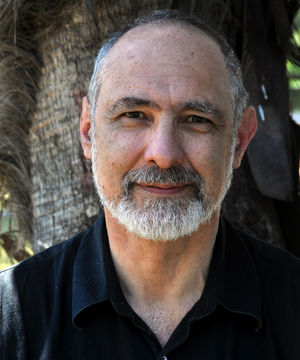

Richard Allen Landes

Amerykański historyk, wykładowca na Boston University, dyrektor bostońskiego Center for Millennial Studies. Autor szeregu książek o średniowieczu i ruchach apokaliptycznych. Obserwator konfliktu na Bliskim Wschodzie (to on ukuł pojęcie „Pallywood” na wyprodukowane ze statystami filmy mające być „dowodami” przeciwko Izraelowi). Jest również autorem dwuczęściowej druzgoczącej analizy tzw. „Raportu Goldstone’a”.
“Goldstone’s Gaza Report, Part I: A Failure of Intelligence”, Middle East Review of International Affairs (MERIA), January 2010.
“Goldstone’s Gaza Report, Part II: A Miscarriage of Human Rights,” Middle East Review of International Affairs (MERIA), January 2010.


twoje uwagi, linki, wlasne artykuly, lub wiadomosci przeslij do: webmaster@reunion68.com



How Germany smuggled ‘the most grisly of weapons’

How Germany smuggled ‘the most grisly of weapons’ – Vladimir Lenin – back into Russia

Robert Fulford


Vladimir Ilyich Ulianov (1870-1924) better known as Lenin (6th-R) addresses his supporters celebrating in October1918 in Moscow the first anniversary of Bolshevik revolution.Vladimir Ilyich Ulianov (1870-1924) better known as Lenin (6th-R) addresses his supporters celebrating in October1918 in Moscow the first anniversary of Bolshevik revolution.

Readers of history are always fascinated by those events that seem unimportant at first but end up shaping reality. In the winter of 2016-2017 we are approaching the centenary of the most famous such event, the return of Vladimir Ilich Lenin from exile.

It began as the Kaiser’s generals realized they were losing the war against Britain, France, Canada and other allies — and American troops were on their way. But to the Germans, the immediate problem was Russia. In the Triple Entente, Russia was on the side of the West, so Germany had to fight a two-front war. They couldn’t consolidate their armies in a single force that would overwhelm France and Britain.

German spies reported that many Russians wanted to withdraw from the war with its casualties and food shortages. At the same time, British and French diplomats were doing their best to hold the alliance together.

Soviet Communist leader Joseph Stalin (1879 – 1953), right, with Soviet leader Vladimir Ilyich Lenin (1870 – 1924), in Gorky (Nizhny Novgorod / PhotoCredit Keystone/Getty)

Winston Churchill, in his dramatic prose, later summed up the decision of the Germans: “They turned upon Russia the most grisly of weapons. They transported Lenin in a sealed truck like a plague bacillus from Switzerland to Russia.”

Lenin was already a formidable socialist leader but he was exiled from Russia by a tsarist court. The Germans hoped that if they could smuggle him back into Russia, he might take control and end his country’s part in the war. They did, and he did, and under his direction the Soviet Union was born.

The Germans organized the railway cars for the journey, protected by a squad of their own troops. The journey took eight days and stretched 3,200 k.m. Lenin treated it as his private office, frequently calling meetings to give orders about everything from food to when toilet breaks should be taken. Catherine Merridale, an expert on Russian history, has recently written a convincing, highly readable book about the trip, Lenin on the Train (Holt).

A dodgy air hung over the whole business. Widespread talk of revolution sometimes produces hucksters who wonder what’s in it for them. In this story the huckster is a Russian named Alexander Parvus, a low-rent leftist journalist.

Arrested by the Russian police for his minor part in the 1905 revolution, he was sentenced to Siberia and escaped to Germany. Having met and talked to Lenin, Trotsky and other revolutionaries, he decided he was an expert on Russian socialism. Soon he was briefing the German foreign ministry, for a fee, while also reporting to the revolutionaries. The Germans gave him money to pass along to various Russian socialists, so that they could create unrest. He diverted enough of it to become affluent.

Lenin had been living in exile, in Zurich, planning how he would some day put into practice the principles of Karl Marx. After Tsar Nicholas II was forced to abdicate and a Provisional Government took shaky control of Russia, Lenin grew deeply frustrated. It looked as if history was running away from him. He read in the papers about liberal reforms, but that meant Russia was heading for parliamentary democracy, postponing the violent revolution it needed, in his view. Lenin had nothing to do except organize the Swiss socialists and dream about smashing Zurich’s chic restaurants.

At that point Alexander Parvus came to him with a proposition. The Germans would finance and manage a trip to Russia. Lenin bargained. How many colleagues could he take with him? (About 30.) Parvus apparently believed that if everything worked out, Lenin would give him a good job in the new Russia. But Lenin had his suspicions and gave him nothing. Parvus never saw Russia again. He died in Germany.

When they arrived in Finland, the last passport-check before Russia, Lenin was alarmed that soldiers on the Russian side were backed up by British allied troops. A British officer, who knew about Lenin, sent a wire to the provisional government, suggesting it would be a mistake to admit him. He got a reply that Russia was now a democratic society and of course Lenin, a Russian citizen, could be admitted. Harold Gruner was an MI-5 officer on duty that night. He played for time while hoping some sensible decision would be made.

He strip-searched Lenin, examined his books and papers and asked “what-is-your-business” questions. Britain’s ambassador in Stockholm had suggested Lenin be admitted in the normal way. As a junior officer, Gruner felt he had to comply. For years after, colleagues teased him for “locking the stable door while the horse was out, or rather in.” Gruner tried to forget the whole nasty business but Lenin didn’t forget. He ordered Gruner shot as soon as he took power in Russia, according to Merridale. But Lenin’s orders weren’t followed as quickly then as later. In 1918 Gruner joined the unsuccessful British intervention against the Bolsheviks in Siberia. Merridale adds an ironic coda: “Gruner notched up not one but two heroic failures, for which a grateful George V awarded him an OBE.”

In a narrow sense, the project was a success. Lenin, once deposited in Russia, became the dominant figure in the post-tsarist state, eventually making peace. But that only meant that Germany managed to lose the war on one front rather than two.

And in the east, Lenin created a more dangerous enemy. When Hitler attacked Russia in 1941, the Soviets fought back with such tremendous effect that they destroyed much of Germany and made colonies out of five nearby nations. They even added a chunk of Germany to their portfolio of properties and maintained their empire for half a century. But then, as Merridale says, Lenin’s journey was the scheme of a Great Power, and when Great Powers try something like this, they always get it wrong.


twoje uwagi, linki, wlasne artykuly, lub wiadomosci przeslij do: webmaster@reunion68.com


Writer apologizes for defending Obama’s Israel policy

Writer apologizes for defending Obama’s Israel policy

Fox News     Fox News


Bloomberg View columnist Eli Lake explains why he is now apologizing for the times he defended President Obama to his pro-Israel friends

twoje uwagi, linki, wlasne artykuly, lub wiadomosci przeslij do: webmaster@reunion68.com


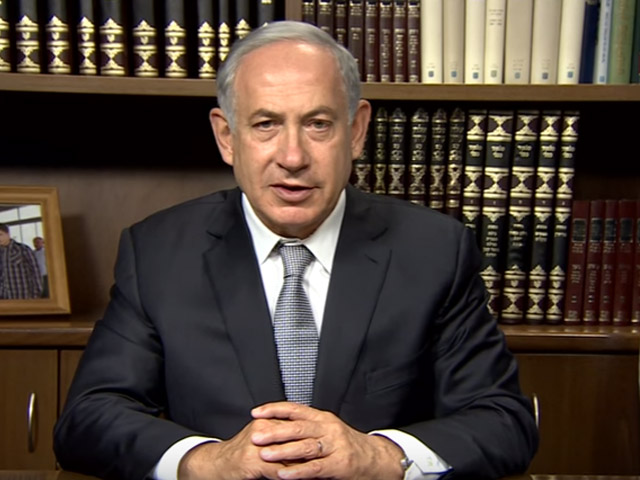
PM Netanyahu’s statement in response to US Secretary of State Kerry’s speech

PM Netanyahu’s statement in response to US Secretary of State Kerry’s speech

Prmie Minister Benjamin NetanyahuPrmie Minister Benjamin Netanyahu

28 Dec 2016

Palestinian rejection of Israel and support for terror are what the nations of the world should focus on if they truly want to advance peace, and I can only express my regret and say that it’s a shame that Secretary Kerry does not see this simple truth.

(Communicated by the Prime Minister’s Media Adviser)

Prime Minister Benjamin Netanyahu, this evening (Wednesday, 28 December 2016), issued the following statement in response to US Secretary of State John Kerry’s speech:

“Before why I explain why this speech was so disappointing to millions of Israelis, I want to say that Israel is deeply grateful to the United States of America, to successive American administrations, to the American Congress, to the American people. We’re grateful for the support Israel has received over many, many decades. Our alliance is based on shared values, shared interests, a sense of shared destiny and a partnership that has endured differences of opinions between our two governments over the best way to advance peace and stability in the Middle East. I have no doubt that our alliance will endure the profound disagreement we have had with the Obama Administration and will become even stronger in the future.

But now I must express my deep disappointment with the speech today of John Kerry – a speech that was almost as unbalanced as the anti-Israel resolution passed at the UN last week. In a speech ostensibly about peace between Israelis and Palestinians, Secretary Kerry paid lip service to the unremitting campaign of terrorism that has been waged by the Palestinians against the Jewish state for nearly a century.

What he did was to spend most of his speech blaming Israel for the lack of peace by passionately condemning a policy of enabling Jews to live in their historic homeland and in their eternal capital, Jerusalem.

Hundreds of suicide bombings, thousand, tens of thousands of rockets, millions of Israelis in bomb shelters are not throwaway lines in a speech; they’re the realities that the people of Israel had to endure because of mistaken policies, policies that at the time won the thunderous applause of the world. I don’t seek applause; I seek the security, and peace, and prosperity and the future of the Jewish state. The Jewish people have sought their place under the sun for 3,000 years, and we’re not about to be swayed by mistaken policies that have caused great, great damage.

Israelis do not need to be lectured about the importance of peace by foreign leaders. Israel’s hand has been extended in peace to its neighbors from day one, from its very first day. We’ve prayed for peace, we’ve worked for it every day since then. And thousands of Israeli families have made the ultimate sacrifice to defend our country and advance peace.

My family has been one of them; there are many, many others.

No one wants peace more than the people of Israel. Israel remains committed to resolving the outstanding differences between us and the Palestinians through direct negotiations. This is how we made peace with Egypt; this is how we made peace with Jordan; it’s the only way we’ll make peace with the Palestinians. That has always been Israel’s policy; that has always been America’s policy.

Here’s what President Obama himself said at the UN in 2011. He said: ‘Peace is hard work. Peace will not come through statements and resolutions at the United Nations. If it were that easy, it would have been accomplished by now.’

That’s what President Obama said, and he was right. And until last week this was repeated over and over again as American policy. Secretary Kerry said that the United States cannot vote against its own policy. But that’s exactly what it did at the UN, and that’s why Israel opposed last week’s Security Council resolution, because it effectively calls the Western Wall ‘occupied Palestinian Territory,’ because it encourages boycotts and sanctions against Israel – that’s what it effectively does, and because it reflects a radical shift in US policy towards the Palestinians on final status issues – those issues that we always agreed, the US and Israel, have to be negotiated directly, face to face without preconditions.

That shift happened despite the Palestinians walking away from peace and from peace offers time and time again, despite their refusal to even negotiate peace for the past eight years, and despite the Palestinian Authority inculcating a culture of hatred towards Israel in an entire generation of young Palestinians.

Israel looks forward to working with President-elect Trump and with the American Congress, Democrats and Republicans alike, to mitigate the damage that this resolution has done and ultimately, to repeal it.

Israel hopes that the outgoing Obama Administration will prevent any more damage being done to Israel at the UN in its waning days. I wish I could be comforted by the promise that the US says we will not bring any more resolutions to the UN. That’s what they said about the previous resolution. We have it on absolutely incontestable evidence that the United States organized, advanced and brought this resolution to the United Nations Security Council. We’ll share that information with the incoming administration. Some of it is sensitive, it’s all true. You saw some of it in the protocol released in an Egyptian paper. There’s plenty more; it’s the tip of the iceberg.

So they say, but we didn’t bring it. And they could take John Kerry’s speech with the six points. It could be raised in the French international conference a few days from now and then brought to the UN. So France will bring it, or Sweden – not a noted friend of Israel – could bring it. And the United States could say, well, we can’t vote against our own policy, we’ve just annunciated it.

I think the United States, if it’s true to its word, or at least if it’s now true to its word, should now come out and say we will not allow any resolutions, any more resolutions in the Security Council on Israel. Period. Not we will bring or not bring – we will not allow any, and stop this game, the charades.

I think that the decisions that are vital to Israel’s interests and the future of its children, they won’t be made through speeches in Washington or votes in the United Nations or conferences in Paris. They’ll be made by the Government of Israel around the negotiating table, making them on behalf of the one and only Jewish state – a sovereign nation that is the master of its own fate.

And one final thought – I personally know the pain, the loss and the suffering of war. That’s why I’m so committed to peace. Because for anyone who’s experienced it, as I have, war and terror are horrible. I want young Palestinian children to be educated like our children, for peace. But they’re not educated for peace. The Palestinian Authority educates them to lionize terrorists and to murder Israelis.

My vision is that Israelis and Palestinians both have a future of mutual recognition, of dignity, mutual respect, co-existence. But the Palestinian Authority tells them that they will never accept, should never accept the existence of a Jewish state.

So, I ask you, how can you make peace with someone who rejects your very existence?

See, this conflict is not about houses, or communities in the West Bank, Judea and Samaria, the Gaza district or anywhere else. This conflict is and has always been about Israel’s very right to exist. That’s why my hundreds of calls to sit with President Abbas for peace talks have gone unanswered. That’s why my invitation to him to come to the Knesset was never answered. That’s why the Palestinian government continues to pay anyone who murders Israelis a monthly salary.

The persistent Palestinian refusal to recognize a Jewish state remains the core of the conflict and its removal is the key to peace.

Palestinian rejection of Israel and support for terror are what the nations of the world should focus on if they truly want to advance peace, and I can only express my regret and say that it’s a shame that Secretary Kerry does not see this simple truth.

Thank you.”


twoje uwagi, linki, wlasne artykuly, lub wiadomosci przeslij do: webmaster@reunion68.com


The UN is preventing true Israeli-Palestinian peace

The UN is preventing true Israeli-Palestinian peace: Op-ed by Ronald S. Lauder – Times of Israel

Ronald S. Lauder


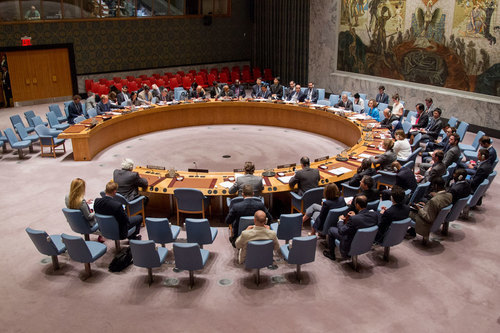
The outrageous anti-Israel resolution adopted by the United Nations Security Council on Friday was a deafening cry of antipathy by the world’s greatest powers, and a cynical declaration that bias and political agendas trump fairness and due process in the world’s preeminent international organization.

Less than two weeks ago, outgoing Secretary General Ban Ki-Moon admitted, for the first time in his near 10-year term, that a clear bias against Israel reigns at the United Nations. And yet, he welcomed the Security Council’s glaringly biased and counterproductive resolution demanding an end to Israeli settlements as “an opportunity to encourage Israeli and Palestinian leaders to work with the international community.”

Ban was referring to the same international community which, by his own admission, time and again abandons its own resolutions mandating direct negotiations, rather than external impositions, for ending the Middle East conflict. This is the same international community which repeatedly singles out Israel for condemnation with placating mention of Palestinian terror, while ignoring suffering and human rights abuses across the world; the same international community which has, through UNESCO resolutions, denied the Jewish people’s historical connection with Jerusalem, which has maintained Permanent Item 7 on its UNHRC agenda devoted to Israel’s “human rights abuses” against Palestinians, and which has equated Zionism – the defense of the Jewish people’s right to a homeland in Israel – with racism.

The message relayed by Israel’s greatest ally, the United States, in its choice to abstain was explicit. The four countries that pushed to table the vote, just a day after Egypt pulled back, called the resolution “urgent.” As US Ambassador Samantha Power herself said, none of these Security Council members could “muster the will” for immediate action to stop the Aleppo bombardment, or the flow of arms to murderers in South Sudan. The only urgency here was to ensure adoption of a biased and imposing resolution against Israel before the end of the current US administration’s term in office. It is shameful that the US would buy into the tactics of states such as Venezuela and Malaysia – notorious violators of human rights – to expedite such a narrow and limiting text, an attack on both Israel and the vital negotiations process so essential to ending the Palestinian-Israeli conflict.

It has long been US policy that a peace agreement cannot be imposed from the outside, but rather reached only through bilateral talks between Israelis and Palestinians, and US practice has always been to veto any resolutions that preclude such a process. Ambassador Power said that it was “because this forum too often continues to be biased against Israel, because there are important issues that are not sufficiently addressed in this resolution” that the US chose to abstain. And yet, it is precisely this ingrained bias that should have compelled the US not to deviate from its own long-standing policy by allowing this tendentious forum to pass such a one-sided resolution.

The issue at stake here is not the settlements, but rather the United Nations’ decision to impose external restrictions and intervene in Israeli law and efforts to resume peace negotiations, and the fact that by not vetoing or even rejecting this resolution, the US allowed it to pass, a resounding stab in the back of its great ally.

Israel has shown time and again that it is willing to enter talks to end this conflict, but the Palestinians, instead of coming to the negotiating table, have imposed numerous preconditions, including the settlement question. The most viable end to this conflict — as is the official position of the World Jewish Congress representing more than 100 Jewish communities across the globe — is a two-state solution, one reached through direct negotiations by the two parties who have lived together and suffered in this region for decades. Resolutions such as these only hinder the likelihood of a real settlement directly negotiated between Israelis and Palestinians.

The United Nations consistently takes sides against Israel and seeks to foist its will rather than playing honest broker so as to enable Israelis and Palestinians to negotiate. In deferring to the Security Council on this critical core issue, the US has allowed the counterproductive bias of the United Nations to gain the upper hand, at least in the short term, posing yet another obstacle to a lasting Israeli-Palestinian peace.


Ronald S. Lauder

Ronald S. Lauder
Ronald S. Lauder has served as president of the World Jewish Congress since 2007. He previously served as chairman of the Jewish National Fund and of the Conference of Presidents of Major American Jewish Organizations.


twoje uwagi, linki, wlasne artykuly, lub wiadomosci przeslij do: webmaster@reunion68.com