
Archive | 2017/01/03

Jak pomóc tym, którzy chcą studiować, a nie zostali do tego przygotowani

Jak pomóc tym, którzy chcą studiować, a nie zostali do tego przygotowani

Andrzej Koraszewski


M<br />Mais Ali Saleh – najlepsza studentka Technionu na wydziale medycyny w 2013 roku. ais Ali Saleh – najlepsza studentka Technionu na wydziale medycyny w 2013 roku.
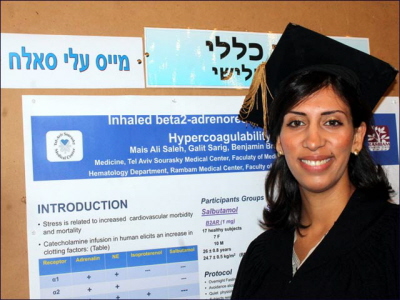
Najmocniej przepraszam, że ja znowu o Żydach, ale to może być interesujące również dla tych, którzy chcieliby o Arabach, a nawet dla tych, którzy patrzą z rozpaczą na „dobrą zmianę” i jej wyczyny na polu oświaty, które w przekonaniu zarówno nauczycieli akademickich, jak i przedszkolnych radykalnie pogorszą to, co nie było dobre już wcześniej.

Izrael, kraj wielkości jednego średniego polskiego województwa, ma problemów więcej niż kudłacz włosów na głowie, a jednym z nich jest kwestia integracji arabskiej mniejszości. Nie jest to jakaś drobna sprawa, bo populacja arabska to ponad 20 procent izraelskiego społeczeństwa, częściowo niezbyt przyjazna, spotykająca się w rodzinie, w szkole, w meczecie i w mediach arabskich z nieustaną antyżydowską indoktrynacją.

Izraelscy Arabowie mają te same prawa co Żydzi, co nie zmienia faktu, że są to żyjące obok siebie dwie zupełnie różne kultury, których integracja natrafia na tysięczne przeszkody.

Przez dziesięciolecia Izraelczycy z lewa i z prawa wyrażali nadzieję na to, że poprawę przyniesie wyrównanie poziomu edukacji, ale zawsze łatwiej takie hasła głosić niż wprowadzać w życie. Populacja arabska pozostawała nadal gorzej wykształcona i gorzej zarabiająca, co oczywiście wzmacniało poczucie dyskryminacji. Arabskie szkoły pozostawały(i pozostają) na niższym poziomie niż szkoły żydowskie, a i poziom motywacji uczniów do nauki jest wyraźnie odmienny.

Od pewnego czasu docierają informacje, że sytuacja się zmienia i gwałtownie wzrasta liczba arabskich studentów na uczelniach wyższych. Izraelski Technion to uniwersytecka śmietanka i 20 procent jego studentów stanowią Arabowie. Nie ma tu żadnej taryfy ulgowej, żadnej akcji afirmatywnej, a przerywanie studiów po pierwszym roku spadło w tej grupie z 75 procent do 15, czyli do analogicznego poziomu jaki jest wśród studentów żydowskich.

O tym fenomenie pisał kilka dni temu izraelski dziennikarz Dov Lieber i warto opowiedzieć jak się ta sztuka udała. Na przestrzeni ostatnich lat wysiłki rządu przyniosły efekty i liczba arabskich studentów wzrosła z nieco ponad 9 do nieco ponad 13 procent studiujących. Na tym tle wyniki Technionu są zdumiewające. Co się stało?

Jak wyjaśnia rektor Technionu, profesor Peretz Lavie, jest to głównie efekt działania programu przygotowywania studentów do osiągnięcia poziomu wymaganego do przyjęcia na studia. Odrzucono całkowicie możliwość wprowadzenia jakiejkolwiek akcji afirmatywnej. Jeśli jakaś grupa kandydatów na studia ma braki na starcie, jedyną szansą jest wyrównanie tych braków przed podjęciem studiów, a nie obniżanie wymagań.

Dwanaście lat temu zaledwie 7 procent studentów Technionu pochodziło z rodzin arabskich, wówczas, z pomocą żydowskich filantropów, rozpoczęto program dziesięciomiesięcznych kursów przygotowywania arabskich kandydatów na studia. Koncentrowano się na wyrównywaniu braków z matematyki, fizyki, angielskiego i hebrajskiego. Uczestnicy mają pokryte czesne, dostają ponadto miesięczne stypendium na utrzymanie w wysokości 800 szekli (210 dolarów) oraz własny laptop.

Po ukończeniu kursu konkurują o miejsce na uczelni na tych samych warunkach co inni.
Arabscy studenci są zazwyczaj młodsi od swoich żydowskich kolegów, ponieważ nie obowiązuje ich służba wojskowa, ale często znajdują się pod większą presją, by jak najszybciej zakończyć naukę i rozpocząć pracę zarobkową. Co jest naprawdę zdumiewające, i co może być sygnałem poważniejszych zmian w postawach społecznych, to fakt, iż wśród arabskich studentów Technionu 61 procent stanowią kobiety. (Wśród żydowskich studentów Technionu kobiety stanowią zaledwie 37 procent.)

Zdaniem profesora Lavie’go ta przewaga arabskich dziewcząt na jego uczelni, to efekt dążenia młodych kobiet arabskich do zdobycia wyższej pozycji społecznej, i świadomości, że droga do tego prowadzi przez edukację.

Autor artykułu przypomina, że Arabowie w Izraelu zarabiają średnio połowę tego co Żydzi, a co więcej bezrobocie wśród izraelskiej ludności arabskiej w wieku produkcyjnym sięga 50 procent. Równocześnie jest ogromne zapotrzebowanie na wysoko wykwalifikowaną siłę roboczą.

Badanie przeprowadzone na próbie 1500 arabskich absolwentów Technionu pokazały, że praktycznie wszyscy w ciągu roku po ukończeniu studiów znaleźli pracę w swoim zawodzie, a ponad 20 procent podjęło pracę w firmach międzynarodowych.

Rektor Technionu narzeka, że ciągle za mało jest arabskich doktorantów i zdecydowanie za mało Arabów wśród personelu nauczającego. Dla mnie jednak intrygujący jest fakt, że przyjęta technika wyrównywania poziomu kandydatów na studia działa i że podnoszenie wymogów jest lepsze niż ich obniżanie. (To ostatnie spotkało się z falą krytyki, ponieważ Technion podniósł niedawno swoim arabskim kandydatom na studia wymagania w zakresie znajomości hebrajskiego. Argument wydawać by się mogło prosty: student, który nie wszystko z wykładu rozumie, ma większe prawdopodobieństwo przerwania studiów. Dla lewicy to nie jest logiczny argument. Wrażliwi ludzie tak nie rozumują.)

Wydaje się, że droga wybrana przez Technion daje nadzieję na szybkie wzmocnienie arabskiej klasy średniej, dobrze wykształconej, nowoczesnej i dającej znaczący wkład do gospodarki. Z optymizmem w kraju takim jak Izrael należy być ostrożnym. Jednak czytając doniesienia prasowe łatwo dojść do wniosku, że arabska mniejszość w Izraelu w całości czuje się dyskryminowana (niektórzy nawet uwierzyli w izraelski apartheid), że jakakolwiek integracja tej mniejszości jest marzeniem ściętej głowy. Izraelski polityk, Dov Lipman opisał w „Jerusalem Post” swoje spotkanie z Mohammadem Darawshe, który jest dyrektorem Center for a Shared Society i poświęcił swoją karierę zawodową budowaniu lepszych stosunków arabsko-żydowskich w Izraelu. Ten arabski badacz i działacz przedstawił autorowi artykułu garść statystyk:

  • 23% izraelskich lekarzy jest Arabami,
  • 46% izraelskich farmaceutów to Arabowie
  • 20% studentów Technionu to Arabowie
  • 13% studiujących na wyższych uczelniach w Izraelu to Arabowie

Jak wyglądają postawy izraelskich Arabów w stosunku do Izraela? No cóż, to trochę zależy na jakie badania będziemy patrzeć. Mohammad Darawshe twierdzi, że ponad 70 procent izraelskich Arabów uważa się zarówno za Arabów, jak i Izraelczyków, że prawie 80 procent chce, aby ich społeczności były w pełni zintegrowane ze społeczeństwem izraelskim, a 60 procent nie ma nic przeciwko temu, że Izrael ma żydowską większość, a ponad 50 procent gotowa jest w referendum głosować za uznaniem Izraela za państwo żydowskie, z równymi prawami dla mniejszości.

Moje socjologiczne wykształcenie skłania mnie do odmiennego traktowania statystyk prezentujących twarde fakty i badań na temat postaw. Co widać z całą pewnością, to wzrost liczby arabskich ochotników w izraelskiej armii, ale również wzrost radykalizacji części arabskiej młodzieży.

(Nieco inne są dane opublikował 19 grudnia Israel Democracy Institute, który w swoim dorocznym raporcie podaje, że 51 procent izraelskich Arabów wyraża optymizm w sprawie przyszłości Izraela, 55% jest dumnych z tego, że są Izraelczykami, 54 izraelskich Arabów uważa, że Izrael musi zwalczać terror wszelkimi możliwymi sposobami, ale 76 procent arabskiej populacji odrzuca możliwość definiowania Izraela jako państwa żydowskiego.)

Okrągłe zdania Dova Lipmana w stylu „obie społeczności muszą współpracować, a wszystko będzie dobrze” to nie jest retoryka, która w czymkolwiek może pomóc. Autor artykułu w „Jerusalem Post” kończy radosnym wezwaniem, że „My, naród, musimy budować pozytywne trendy.” Ponieważ tego rodzaju języka polityki mamy w Polsce w nadmiarze, powracam do ciekawej i optymistycznej działalności Technionu. Żadnej akcji afirmatywnej, żadnego obniżania oczekiwań, maksymalny wysiłek, żeby wyrównać braki, a tym samym szanse na sukces. Kolejny minister Nauki i Szkolnictwa Wyższego powinien się nad tym zastanowić. (Obecny nie wydaje się być zainteresowany problemami poprawy jakości nauczania na wyższych uczelniach.)

Poniżej film opowiadający o arabskich studentach Technionu (niestety bez polskich napisów, ale są angielskie napisy)


twoje uwagi, linki, wlasne artykuly, lub wiadomosci przeslij do: webmaster@reunion68.com


Britain and Australia more supportive of Israel than Obama and Kerry

Gatestone InstituteBritain and Australia more supportive of Israel than Obama and Kerry

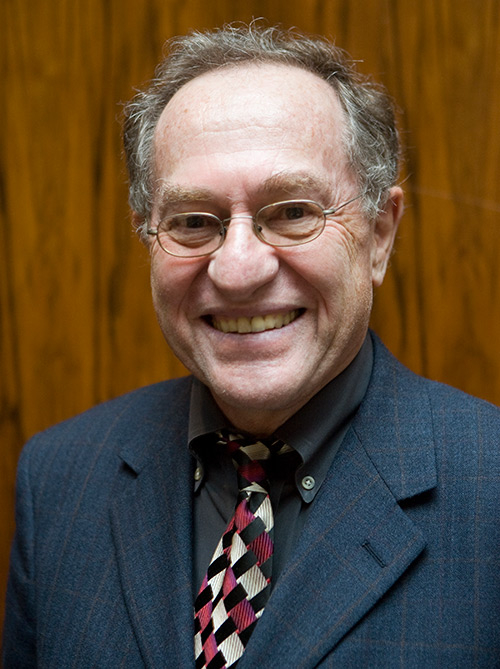
Alan M. Dershowitz


BildresultatAlan M. Dershowitz

When the British Prime minster and the Australians foreign minister both criticize the Obama administration for being unfair to Israel, you can be sure that something is very wrong with what President Obama and Secretary Kerry have been doing. This is what Theresa May said:

“We do not believe that it is appropriate to attack the composition of the democratically elected government of an ally. [W]e are also clear that the settlements are far from the only problem in this conflict. In particular, the people of Israel deserve to live free from the threat of terrorism, with which they have had to cope for too long.”2

This is what Julie Bishop, the foreign minister of Australia, said in explaining why Australia would not have voted for the U.N. Security Council resolution:

“In voting at the UN, the [Australian] Coalition government has consistently not supported one-­‐sided resolutions targeting Israel.”

And these are only the public criticisms. In private several other countries have expressed dismay at the problems caused by the last minute moves of the lame duck Obama administration.

Initially, the New York Times failed to report these important international developments,

presumably because they disagree with them. Only after other media featured the British and Australian criticism did they decide to cover it. They did immediately report that the Jewish community – both in the United States and Israel – is divided between right-­‐wing Jews who oppose the Obama administration’s moves and liberal Jews who support them.3 This is simply fake news: Israel is not divided over the Security Council’s resolution and the Kerry speech. All Israeli leaders and the vast majority of its citizens opposed these developments. This is true even of the Israeli leftists and centrists who are critical of Israel’s settlement policies. The same is true with regard to American Jews, despite the New York Times reporting to the contrary. Many liberal Jews and non-­‐

Jews, including Senators Schumer, Blumenthal, Gillibrand, and Wyden have been vocally critical. So have numerous liberal congressmen and pundits.4 I certainly count myself as a liberal Democrat, who opposes Israel’s settlement policies, but who is strongly critical of the Obama/Kerry moves.

Only J Street -­‐-­‐ which carries Obama’s water -­‐-­‐ has expressed support, along with a few handfuls of hard-­‐left reform rabbis and professional Israel bashers, who the Times reporter quoted as if they were representative of the larger Jewish community.

In contrast to the relative uniformity of the Israel’s leaders and citizens in opposition to the Obama/Kerry initiatives, the Obama administration itself and the Democratic Party are divided.

Most who have expressed views have been critical, but we have not yet heard from several leading Democrats, especially Keith Ellison who is seeking the chairmanship of the DNC. This is an issue on which silence is not a virtue. It is important for all Democrats to stand up and be counted.

There is actually some good news growing out of the Kerry speech. Arab leaders have expressed support for his proposal, which would require the Palestinian Authority to recognize Israel as a Jewish state (or as I prefer to put it “the nation state of the Jewish people.”) Despite this implicit support for such recognition from Arab leaders, the Palestinian Authority adamantly persists in refusing to recognize Israel’s Jewish character.

This is the phony excuse Hanan Ashwari, the official spokesperson for the Palestinian Authority, gave for why it would be “against our principles” to recognize Israel as the nation state of the Jewish people:

If you want to give religion to states, then this is against our principles. I don’t recognize Islamic states. I don’t recognize Christian states. I don’t recognize Jewish states. A state is a state for all its citizens. It has to be Democratic, inclusive, tolerant, and has to be genuinely representative of all its people. You cannot give added value to any people because of their religion or ethnicity.”5

This statement may win the award for Ashwari as hypocrite of the year. The Palestinian Authority, which she officially represents, has the following in its Constitution:

“Islam is the official religion in Palestine…. The principles of Islamic Shari’a shall be the main source of legislation.”6

Moreover, the Palestinian Authority recognizes Iran, Saudi Arabia, Egypt, and Jordan, which are all countries that define Islam as their state religion and discriminate against non-­‐believers in their particular brand of Islam.

Is Ashwari really saying that the principles of the Palestinian Authority require it to renounce their own Constitution and to withdraw recognition from all their Muslim allies? What about from Great Britain, which has an official state religion? If so, I challenge her to say that explicitly!

Israel is the only state in the Middle East that grants religious equality to all its citizens as a matter of law.7 Israeli Arabs enjoy more rights than do Arabs (let alone Jews) of any Arab state. They serve in all branches of government, including the Knesset and the Supreme Court. They have their own religious authorities recognized by the state.

Contrast this to the Palestinian leadership that has vowed that “not a single” Israeli Jew will be able to reside in the future Palestinian state.8 Furthermore Israeli Jews are banned from Palestinian universities and other institutions.9

So let’s have three cheers for Great Britain and Australia, a cheer and a half for Arab leaders, and a big raspberry for the hypocrisy of Hanan Ashwari and her Palestinian Authority.


1 Alan M. Dershowitz, Felix Frankfurter Professor of Law, Emeritus and author of Taking the Stand: My Life in the
2 Michael Birnbaum, British Leader Theresa May Breaks with John Kerry’s Condemnation of Israel, Washington
3 Adam Nagourney& Sharon Otterman, American Jews Divided Over Strain in U.S.-­‐Israel Relations, New York Times, Dec. 29, 2016. See also Peter Baker, In ‘Red’ and ‘Blue’ Israel, Separate Lives and Divergent Narratives, New York Times, Dec. 29, 2016
4 Rebecca Kheel, Obama Faces Widespread Backlash After Abstaining from UN Israel Vote, The Hill, Dec. 23, 2016.
See e.g. Eli Lake, Obama Fulfills His Prophecy on Israeli Settlements, Bloomberg View, Dec. 27, 2016.
5 CNN New Day with Don Lemon, Dec. 27, 2016.
6 2002 Basic Laws, Art. 4, available at http://www.palestinianbasiclaw.org/basic-­‐law/2002-­‐basic-­‐law
7 Declaration of the Establishment of the State of Israel, May 14, 1948
8 Abbas: ‘Not a single Israeli’ in future Palestinian state,’ Jerusalem Post, July 30, 2013, available at http://www.jpost.com/Middle-­‐East/Abbas-­‐wants-­‐not-­‐a-­‐single-­‐Israeli-­‐in-­‐future-­‐Palestinian-­‐state-­‐321470 9Amira Hass, When A Haaretz Journalist Was Asked To Leave A Palestinian University, Sept. 28, 2014


twoje uwagi, linki, wlasne artykuly, lub wiadomosci przeslij do: webmaster@reunion68.com


Israeli victim of Turkey terror attack to be buried in hometown

Israeli victim of Turkey terror attack to be buried in hometown

Staff


Large crowd expected in Tira for funeral of 19-year-old Lian Zaher Nasser, killed in Istanbul nightclub shooting

Lian Zaher Nasser of Tira, killed in a shooting attack at an Istanbul nightclub on January 1, 2017. (Courtesy)Lian Zaher Nasser of Tira, killed in a shooting attack at an Istanbul nightclub on January 1, 2017. (Courtesy)

An Israeli teenager killed in the shooting attack at an Istanbul club during New Year festivities will be laid to rest at 11 a.m. Tuesday in her home town of Tira.

The cortege of 19-year-old Lian Zaher Nasser will depart from her home in the Arab city and proceed to the local cemetery.

A spokesperson for the Joint (Arab) List confirmed that faction leader MK Ayman Odeh will attend the funeral, and possibly other parliamentarians. The party called for as many people as possible to attend the funeral.

The town has also declared a day of mourning in solidarity with all the victims of terror.

Nasser was one of 39 people killed Sunday when a gunman went on a rampage at the exclusive Reina nightclub in Istanbul where she was celebrating the New Year along with three friends from Tira.

First aid officers carry an injured woman at the site of an armed attack on January 1, 2017 in Istanbul. (AFP/ IHLAS NEWS AGENCY)First aid officers carry an injured woman at the site of an armed attack on January 1, 2017 in Istanbul. (AFP/ IHLAS NEWS AGENCY)

Her body arrived back in Israel on Monday. Interior Minister Aryeh Deri said Sunday that his ministry arranged Nasser’s return to Israel.

“Lian was killed in a serious terror attack and as a state we are obligated to help return her body to Israel,” Deri said.

Search-and-rescue organization ZAKA coordinated the repatriation at various levels, including finances, logistics, transportation and communication with the relevant authorities in Israel and in Turkey.

“ZAKA is an international humanitarian organization that honors the dead, regardless of religion, race or gender,” said ZAKA head Yehuda Meshi-Zahav.

The Islamic State (IS) terror group took responsibility for the attack, claiming that Christian revelers were targeted in response to Turkish military operations against IS in northern Syria. However the most of the dead were foreign tourists from Muslim countries.

Palestinian social media was filled with discussion about the terror attack, and while many comments were sympathetic, a large number were critical of Nasser and her friends for going against Muslim tradition by being in a nightclub and celebrating the secular New Year.

Tira resident Dr. Ala’a Abdulahi, who was also in the nightclub at the time of the shooting, hit back at the criticism on social media. She told Channel 10 television that “it is better to ignore such people. They are sick.”

Nur Samara, another resident of Tira, lodged a complaint with police over the social media attacks, calling them more painful than the nightclub shooting itself. “These were girls who just wanted to travel, to enjoy themselves, to eat and drink. That’s all,” he said.

The Joint (Arab) List also condemned the social media attacks, referring to them as “creeping IS-ism.” The party called on the public to dismiss such comments “which endanger the entire Arab community, its identity, its existence and its fundamental struggles.”

This hand out picture released by the Turkish police and taken from Dogan News Agency on January 2, 2017 shows the main suspect in the Reina nightclub rampage one day after a gunman killed 39 people, including many foreigners, in an attack at an upmarket nightclub in Istanbul where revellers were celebrating the New Year. AFP/Dogan News Agency / Handout)This hand out picture released by the Turkish police and taken from Dogan News Agency on January 2, 2017 shows the main suspect in the Reina nightclub rampage one day after a gunman killed 39 people, including many foreigners, in an attack at an upmarket nightclub in Istanbul where revellers were celebrating the New Year. AFP/Dogan News Agency / Handout)

The claim came after a recent IS propaganda video urged attacks on Turkey, which is home to an air base used in the US-led effort against the group in Syria and Iraq.

The nightclub assailant, armed with a long-barreled weapon, killed a policeman and a civilian early Sunday outside the club before entering and firing at some of the estimated 600 people inside. The establishment is frequented by famous locals, including singers, actors and athletes.

Authorities obtained the fingerprints and a basic description of the gunman and are close to identifying him, Deputy Prime Minister Numan Kurtulmus said Monday after a weekly cabinet meeting. He confirmed that eight people have been detained in connection with the attack.

Associated Press contributed to this report.


twoje uwagi, linki, wlasne artykuly, lub wiadomosci przeslij do: webmaster@reunion68.com
