
Archive | 2017/01/11

Małe kłamstewka Wielkiej Brytanii

Małe kłamstewka Wielkiej Brytanii

Douglas Murray
Tłumaczenie: Małgorzata Koraszewska
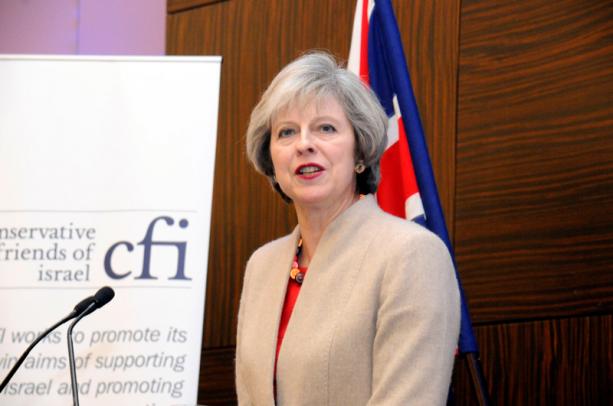

Premier Wielkiej Brytanii, Theresa May, przemawia na dorocznym lunchu Konserwatywnych Przyjaciół Izraela, 12 grudnia 2016 r. (Zdjęcie: Conservative Friends of Israel)Premier Wielkiej Brytanii, Theresa May, przemawia na dorocznym lunchu Konserwatywnych Przyjaciół Izraela, 12 grudnia 2016 r. (Zdjęcie: Conservative Friends of Israel)

12 grudnia premier rządu Zjednoczonego Królestwa z ramienia partii Konserwatywnej, Theresa May, wygłosiła aż nazbyt wylewne przemówienie podczas dorocznego lunchu stowarzyszenia Konserwatywnych Przyjaciół Izraela. W zatłoczonej sali z 800 proizraelskimi parlamentarzystami konserwatywnymi i zwolennikami tej partii, nie szczędziła pochwał dla państwa żydowskiego. Chwaliła osiągnięcia Izraela i surowo ganiła jego wrogów. Powiedziała, że Wielka Brytania będzie „z dumą” obchodzić stulecie deklaracji Balfoura. Podkreśliła także, że współpraca i przyjaźń między Wielką Brytanią a Izraelem działają nie tylko dla dobra dla tych dwóch krajów, ale „dla dobra świata”.

Wielu ludzi słuchających jej w tej sali, usłyszało jednak w tym wystąpieniu dwie zakłócające harmonię nuty. Pierwsza dotyczyła kwestii antysemityzmu poruszonej w przemówieniu May. Kiedy słusznie skorzystała z okazji, by ostro skrytykować Partię Pracy za jej problem z antysemityzmem, powiedziała również coś o sobie. Chwaląc się swoim sukcesem jako minister spraw wewnętrznych za nie wpuszczenia znanego francuskiego antysemity, Dieudonné oraz deportowania duchownego salafickiego, Abu Qatada al-Filistini, z powrotem do jego rodzinnej Jordanii, użyła także okazji, by pogratulować sobie zakazu wstępu do Wielkiej Brytanii dla Pameli Geller, Roberta Spencera i pastora Terry’ego Jonesa. „Islamofobia pochodzi z tego samego źródła nienawiści”, co antysemityzm, wyjaśniła.

To jest poważny błąd logiczny popełniony przez panią Premier. Ustawia krytyków religii, takich jak Geller i Spencer, na tej samej płaszczyźnie, co ludzi wspierających terroryzm (Qatada). Zamazuje granicę między słowem a czynem i myli ludzi, którzy wzywają do przemocy, z tymi, którzy przed nią ostrzegają. Pani premier nie przyznaje, że każdy, kto sprzeciwia się islamskiemu antysemityzmowi, natychmiast otrzymuje przydomek „islamofoba”, ani że ktoś, kto ma nadzieję na wjazd do Wielkiej Brytanii, będzie musiał zaakceptować, że będzie atakowany przez muzułmańskich ekstremistów, bo inaczej może dostać zakaz wstępu. To są zbyt poważne i podstawowe błędy, by je propagowała pani premier.

Był jednak w tych słowach wyraźny sens polityczny. Premier kraju takiego, jak Wielka Brytania XXI wieku może uważać, że musi być wyjątkowo ostrożna, by nie wyglądało, że krytykuje jedną grupę ludzi lub zanadto chwali inną. Na razie więc w Wielkiej Brytanii nadal panuje relatywizm moralny. Jeśli społeczność żydowska skarży się na antysemityzm, to trzeba krytykować antysemityzm. Jeśli społeczność muzułmańska skarży się na „islamofobię”, to trzeba krytykować „islamofobię”. Ocena wartościująca może być aktem politycznego szaleństwa. Mądrzy przywódcy w coraz bardziej „zróżnicowanych” społeczeństwach muszą więc ustawić się w połowie drogi między wszystkimi społecznościami, ani nie krytykując zbyt ostro, ani nie chwaląc nadmiernie, żeby mieć poparcie tak wielu ludzi, jak to możliwe.

Ta sama taktyka przyniosła kolejny, zakłócający harmonię moment podczas lunchu pani Premier, kiedy mówiła o sporze izraelsko-palestyńskim. Pojawił się po ustępie, w którym May gratulowała swojej minister z Department for International Development (DfID), Priti Patel. W dniach przed tym lunchem Patel ogłosiła, że DfID przeprowadzi dochodzenie, by ustalić, czy pieniądze podatnika brytyjskiego wysyłane do, jak to nazwała May, „okupowanych terytoriów palestyńskich”, są używane do wypłacania pensji dla Palestyńczyków skazanych za terroryzm przeciwko Izraelczykom. Następnie May powiedziała:

“Kiedy mówimy o globalnych zobowiązaniach, musimy być szczerzy z naszymi przyjaciółmi, takimi jak Izrael, bo na tym polega przyjaźń. Dlatego musimy mówić wyraźnie o budowaniu nowych, nielegalnych osiedli: to jest złe; to nie sprzyja pokojowi; i to musi się zakończyć”.
Te słowa zostały przyjęte w milczeniu i May przeszła do dalszych części przemówienia.

Te słowa jednak ściśle pasowały do strategii jej wystąpienia. Po obrzuceniu Izraela pochwałami, najwyraźniej krytyka wydawała się konieczna. Jest to niesłuszne, ale obecnie trudno jest brytyjskiemu premierowi zachować się inaczej. Jeśli istnieją terroryści, którzy otrzymują fundusze dzięki szczodrości rządu brytyjskiego, to może będzie to wreszcie „zbadane” – po wielu latach prowadzenia kampanii przez organizacje antyterrorystyczne. Jednak podczas takiego dochodzenia rząd brytyjski, powtarzając, że jest zwolennikiem umowy pokojowej, która powstanie w wyniku bezpośrednich negocjacji między stronami, przez lata oznajmia o własnym warunku wstępnym dla pokoju: zamrożenie budowania tego, co nazywa „osiedlami”. Podtrzymuje to żądanie mimo faktu, że osiedla nie mają nic wspólnego z problemem izraelsko-palestyńskim. Przed Wojną Sześciodniową w czerwcu 1967 r. nie było niczego takiego jak „osiedla”. Palestyńczycy jednak i tak próbowali zniszczyć Izrael – w 1948, 1956 i 1967 roku. Podstawowym problemem nie są i nigdy nie były „osiedla”, ale prawo Izraela (lub jakiegokolwiek narodu nie-muzułmańskiego) do istnienia w jakichkolwiek granicach w tej części świata.

W momencie przemówienia May te dwie kwestie wydawały się drobnymi zastrzeżeniami i nie zwrócono na nie większej uwagi. Dopiero teraz, dwa tygodnie później, ujawniła się prawdziwa obłuda tego przemówienia. Teraz bowiem świat dowiedział się, czym zajmowała się dyplomacja brytyjska, kiedy pani May wygłaszała swoje przemówienie.

W tym samym czasie, kiedy pani Premier mówiła o “prawdziwej przyjaźni” do przyjaciół Izraela, jej rząd spiskował z ustępującą administracją Obamy, by kopnąć tego przyjaciela w tyłek. Po załamaniu się sponsorowanej przez Egipt inicjatywy w ONZ ujawniono, że rząd brytyjski był jednym z kluczowych graczy nastawionych na przepchnięcie antyizraelskiej Rezolucji 2334 w Radzie Bezpieczeństwa ONZ. Ujawniono, że dyplomaci brytyjscy stali za sformułowaniami i zdobywaniem sojuszników dla tej rezolucji.

Najbardziej oczywistą interpretacją tego faktu jest po prostu refleksja, że przyjaciele nie wymierzają przyjaciołom kopniaka w tyłek. Szczególnie na czołowym forum międzynarodowym nastawionym głównie na kopanie tego konkretnego przyjaciela. Niektórzy jednak mają łagodniejszą interpretację faktów. Najłagodniejszą do dnia dzisiejszego jest to, że rząd May wierzy, iż ostrzejsze postępowanie w kwestii osiedli izraelskich da rządowi brytyjskiemu możliwość wywierania większego nacisku na Palestyńczyków.

Jeśli tak, to wydaje się, że rząd May będzie musiał nauczyć się za granicą tej samej lekcji, jakiej musi nauczyć się w kraju. Jedna i druga związana jest z błędem strategicznym: polegania na krótkoterminowej dogodności tego, co musiało początkowo wydawać się wygodnymi, małymi kłamstewkami. Problem polega na tym, że takie małe kłamstewka, testowane na wielkich oceanach spraw krajowych i zagranicznych, mają tendencję błyskawicznego i łatwego wpychania kłamcy w tarapaty.

Politycy chętnie zajmują stanowisko. Jeśli jednak zajmujesz stanowisko oparte na kłamstwie, to nie może ono odnieść sukcesu. Jeśli próbujesz przeciwstawiać się antysemityzmowi, ale udajesz, że jest on tym samym, co „islamofobia”, to struktura, na której oparłeś swoje stanowisko, zachwieje się i nic ci się nie uda. Jeśli próbujesz zająć stanowisko popierające Izrael, ale równocześnie zmawiasz się w ONZ, by podważyć istnienie Izraela, to twoja dwulicowość i obłuda wyjdą na jaw i zniknie podziw za twoje stanowisko. Jeśli próbujesz zbudować swój pogląd na koncepcji, że to osiedla izraelskie – nie zaś nieprzejednany opór palestyński wobec istnienia państwa żydowskiego – jest przeszkodą dla pokoju, to fakty nieustannie temu przeczą. Robiły to wcześniej – w kraju i za granicą – i zrobią znowu.

Douglas Kear Murray

Brytyjski autor, dziennikarz i komentator telewizyjny. Występuje często w brytyjskich i amerykańskich mediach, jest autorem książek: Neoconservatism: Why We Need It (2005) and Bloody Sunday: Truths, Lies and the Saville Inquiry (2011).


twoje uwagi, linki, wlasne artykuly, lub wiadomosci przeslij do: webmaster@reunion68.com



Why Did Japan Treat Jews Differently During World War II?

Why Did Japan Treat Jews Differently During World War II?

Benjamin Ivry


During World War II, why did the Japanese refuse orders from Nazi Germany, its wartime ally, to kill all the Jews within its borders? A new book from Academic Studies Press, “Under the Shadow of the Rising Sun: Japan and the Jews during the Holocaust Era” addresses this question. Its author, Dr. Meron Medzini, former director of Israel’s Government Press Office (GPO) and also the author of “Golda Meir: A Political Biography,” was born in 1932.

After working as spokesman at the GPO for the prime ministers Levi Eshkol, Golda Meir, and Yitzhak Rabin, Dr. Medzini taught modern Japanese history in the Department of Asian Studies of the Hebrew University of Jerusalem and Israeli foreign policy at the Rothberg International School of the Hebrew University. Recently, “The Forward’s” Benjamin Ivry discussed with Dr. Medzini the subtleties and complexities of Japanese policies towards Jews before and during the Second World War.

Benjamin Ivry: You write that although Jews in areas occupied by Japan during World War II were brutalized, they did not suffer because they were Jewish — does it matter to people being abused by an occupying power why they are being abused?

Meron Medzini: No, but the basic idea was to show the difference between the Japanese and the Nazis, and the second thing was that any dealing with Jews was essentially left to the local commander, be it the camp leader or division head. There was no clear-cut guidance from Tokyo, to do this or that to the Jews. The Jews were considered part of the gaijin, the foreigners.

Was the Japanese-Jewish common ancestry theory, which appeared in the 1600s as a hypothesis claiming that Japanese people belonged to the ten lost tribes of Israel, widely known enough to have influenced people’s beliefs in Japan?

Not at all. The people who spread this essentially were Christians. The average Japanese scholar was not interested in it, did not know about it, did not read or write about it.

The Japanese were skeptical of Nazi racial theories, insofar as Asians were described as inferior to Aryans in Hitler’s “Mein Kampf,” even if its Japanese translation deleted such references, right?

The few Japanese who read “Mein Kampf” in the original were aware of it. Some Japanese journalists knew of it in the 1930s. I am not aware that Japanese intellectuals ever brought up this idea. The Germans, in all their contacts with the Japanese, tried to downplay the [Nazi] idea that [Asian] races were inferior and destroyers of civilization.

 In Japan, a ministerial resolution of 1938 ordered officials to not alienate America and follow the so-called Japanese “policy of racial tolerance” rather than German and Italian anti-Semitic measures. Since Japan was capable of racism against its own minority populations as well as Chinese, Koreans, and Southeast Asians, was their self-image as tolerant justified or realistic?

I don’t know, it was probably realistic. Justified, I am not sure. Especially if we remember what they did to the Chinese not just in Nanjing but in other places. What they felt about the Jews was, “Let’s treat them like other foreigners.” On the one hand they feared the Jews because they saw how many Jews were involved in the Russian Revolution and the early days of the Soviet government. Also, they did not want to alienate the Americans. They had a good relationship with [the banker] Jacob Schiff, who bailed them out [by helping finance Japanese military efforts against Tsarist Russia in the Russo-Japanese War]. There was admiration of the Jews, but also fear.

The Japanese cult for classical music made Nippon Columbia Records ignore Nazi requests to destroy recordings by Jewish musicians, and in Japan, European Jewish musicians were generally undisturbed during the war. Yet the touring violinist Szymon Goldberg and pianist Lili Kraus, suffered internment in Java. How to explain respecting Jewish musicians in wartime Japan, while imprisoning those in Japanese colonies?

The colonies were a different story. The home country is one thing. Jews who lived in Japan, mainly in Tokyo, were not interned. Only in the last few months of the war were foreigners interned near Tokyo, although this was not in an internment camp and the foreigners preferred to leave Tokyo, which was destroyed by big bombing raids.

It is suggested that the Nazis did not share the details of the Final Solution with Japan, their ally. Weren’t they proud of the Holocaust?

They were not proud of the Holocaust and B) the alliance was basically on paper. There was basically no military cooperation; there was an advanced cultural gap. The Germans did not even tell the Japanese they were going to attack the Russians, so it was a very strange alliance.

In Japanese-occupied Penang, Malaysia and elsewhere in Asia, Jews had to wear armbands with the word “Jew” written in Japanese. Even if this did not lead to immediate execution, it seems to contradict the notion that the Japanese bore no grudge against the Jews.

Probably it was at the instigation of local elements, either Chinese or Muslims. They were dealing with a tiny number of Jews, because the majority of the Jews of Penang had been evacuated by the British and taken to Singapore, so this was a rare case, absolutely rare.

If the desire to profit from the presence of wealthy Jewish businesspeople and nervousness about post-war retribution played a role in the Japanese decision not to exterminate Jews, were Japan’s relatively humane policies motivated by greed and fear?

More by fear than by greed.

Was anti-Semitic propaganda that Jews control the world a blessing in disguise, intimidating the Japanese military into thinking that killing Jewish civilians would have post-war repercussions? How did the Japanese reconcile views published by Russian anti-Semites that Jews were Marxist, Bolshevik agitators responsible for political unrest with the fact that most Jews living in Asia were merchants, doctors, or lawyers, not full-time political agitators?

They did not write about this or discuss this in any official manner. They made a number of key decisions about what to do with the Jews, that they would not be singled out for any special treatment, but they should be watched, to keep an eye on them. Totally unlike the Final Solution of Nazi Germany.

You suggest that Chiune Sugihara, a Japanese diplomat who served as Japanese Vice-Consul in Lithuania, does not qualify as a Righteous Gentile, an honor he received from Israel in 1985, as he did not risk his life or suffer professionally for issuing transit visas in 1940. Should the title of Righteous Gentile be rescinded?

No, it should not be taken away, because Sugihara did go out of his way to help. He was very convenient for the government of Israel [around 1985]. The title should be viewed in the background of strained Israel-Japanese relations for the first forty years of our ties. Japan had pursued a clear policy of adhering to the Arab economic boycott of Israel, mainly because of their dependence on Arab oil. For Israel, it was important to demonstrate to the Japanese that at least one of them did something decent and humane. Israel wanted to show that we appreciate what a single Japanese did, even though he granted these visas before the decisions of the Holocaust were made. I personally met Sugihara when he came to Israel in 1968 or 1969; he was a very quiet, thoughtful, reflective man who was quite pleased that someone finally recognized him.

Your colleague the historian Ben-Ami Shillony has explored how the Jews and Japanese were seen by the world in the early 1900s as “flourishing infidels,” rejecting Christianity and asserting themselves in scientific and other pursuits. Did wartime Japanese observers see a somewhat distorted mirror image of themselves when looking at Jews, or was this viewpoint limited to those who hated them both?

Basically I would go along with Shillony, if only for the reason that he was my student. He is a top-notch Japanologist, highly respected world-wide. You have to bear in mind that most Japanese had never seen a Jew in their lives. There were maybe a thousand Jews in Japan in the 1930s, so most could not tell them from other foreigners. My motive in writing this book was to tell [readers] that the Holocaust was not only in Europe, but in North Africa to a limited extent, and also in Asia.


twoje uwagi, linki, wlasne artykuly, lub wiadomosci przeslij do: webmaster@reunion68.com


In farewell speech, Obama hails Iran deal, leaves out Israeli-Palestinian peace effort

In farewell speech, Obama hails Iran deal, leaves out Israeli-Palestinian peace effort

ERIC CORTELLESSA


Just days before start of Trump term, Obama looks to inspire, reassure fearful supporters

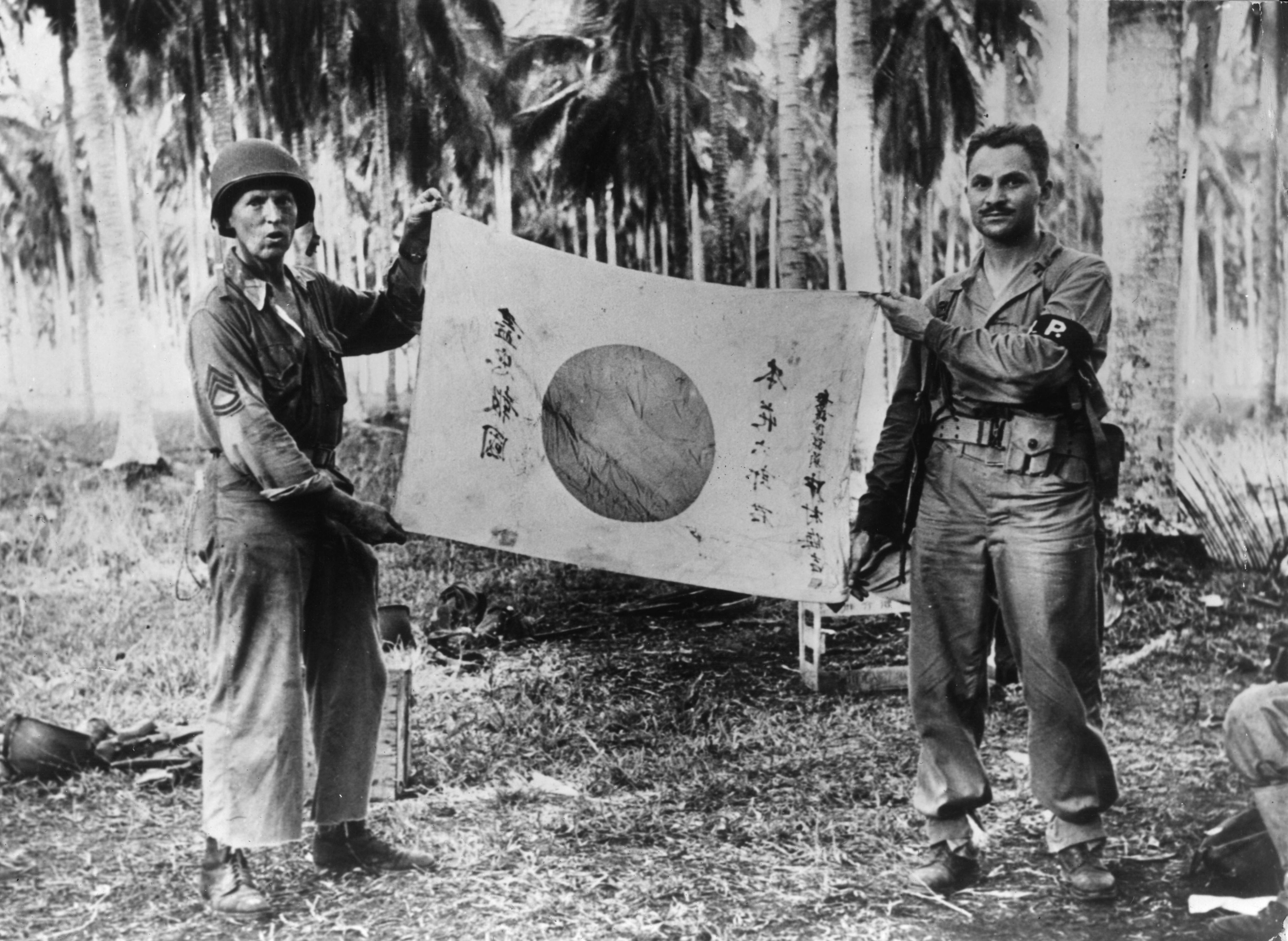
President Barack Obama speaks during his farewell address at McCormick Place in Chicago, Tuesday, Jan. 10, 2017. (AP Photo/Pablo Martinez Monsivais)President Barack Obama speaks during his farewell address at McCormick Place in Chicago, Tuesday, Jan. 10, 2017. (AP Photo/Pablo Martinez Monsivais)

WaSHINGTON — President Barack Obama used his farewell address Tuesday night to defend his legacy and try to unite a divided country. In recounting his eight years in Washington, he cited the Iran nuclear deal as a central achievement of his administration, but omitted any mention of his efforts to reach Israeli-Palestinian peace.

Forgoing the tradition of delivering his final presidential address to the nation from the Oval Office, Obama spoke in Chicago, his adopted hometown where he met his wife and launched his political career.

With only ten days left till he leaves office and passes the baton of power to President-elect Donald Trump, Obama sought to corral his supporters and fellow Americans to remain optimistic about their ability to protect America’s democratic underpinnings.

The president repeatedly referred to what he considered his signature accomplishments of the previous eight years to press a message that the American people was capable of creating a better future for itself, even in challenging circumstances.

The way his administration conducted diplomacy — evidenced by the nuclear deal with Tehran — was one of the examples he used to relay that message.

“If I had told you that we would open up a new chapter with the Cuban people, shut down Iran’s nuclear weapons program without firing a shot, and take out the mastermind of 9/11 … if I had told you that we would win marriage equality, and secure the right to health insurance for another 20 million of our fellow citizens – you might have said our sights were set a little too high,” he said.

“But that’s what we did,” he added. “That’s what you did. You were the change.”

The speech made no reference to the president’s extensive efforts to achieve a comprehensive two-state peace deal between Israelis and Palestinians, a major priority of his foreign policy since he took office.

In his first term, Obama appointed former New York Sen. George Mitchell as a special envoy for Middle East peace to jumpstart negotiations, and in his second term allowed Secretary of State John Kerry to embark on a nine-month round of intensive negotiations intended to reach a final-status agreement. Both efforts failed.

The president’s farewell speech comes two weeks after the US allowed to pass a United Nations Security Council resolution that condemned Israeli settlements as illegal. The decision was met with fury by Israel’s Prime Minister Benjamin Netanyahu, with whom Obama has had a turbulent relationship.


Eric CortellessaEric Cortellessa covers American politics for The Times of Israel.


twoje uwagi, linki, wlasne artykuly, lub wiadomosci przeslij do: webmaster@reunion68.com
