Archive | 2025/09/09

Antysemicki incydent na “Ginczance”. Gdy trwał spektakl, ktoś krzyknął: “J…ć Żydów”

Ginczanka. Przepis na prostotę życia. Na zdjęciu Agnieszka Przepiórska (Fot. Jakub Porzycki / Agencja Wyborcza.pl)


Antysemicki incydent na “Ginczance”. Gdy trwał spektakl, ktoś krzyknął: “J…ć Żydów”

Grzegorz Walczak


“Dostrzegałam tylko cienie, ale chciałam dać wyraz temu, że nie dam się zastraszyć. Że teatr nie ucieka. Że strach nie może być zgodą na zawłaszczanie przestrzeni” – napisała aktorka Agnieszka Przepiórska. Gdy w centrum Kielc odgrywała rolę Ginczanki, usłyszała: “J…ć Żydów!”.

– Jest mi wstyd za to, do czego doszło. Choć nie mam przecież wpływu na to, co ktoś wykrzyczy, to jednak uczucie wstydu jakoś mi towarzyszy – przyznaje Anna Żmudzińska, dyrektorka Miejskiej Biblioteki Publicznej im. Jerzego Pilcha w Kielcach, które było współorganizatorem V Festiwalu Herlinga Grudzińskiego. – Podczas święta literatury, w mieście pogromu żydowskiego, wydarzyło się coś absolutnie nieakceptowalnego. Coś, co wybrzmiało strasznie. Coś, na co absolutnie nie ma zgody organizatorów.

Agnieszka Przepiórska: Sparaliżowało mnie poczucie bezbronności

„Ginczanka. Przepis na prostotę życia” to monodram, który opowiada o niełatwym życiu i twórczości Zuzanny Gincburg znanej jako Zuzanna Ginczanka. To historia młodej, utalentowanej poetki żydowskiego pochodzenia, którą dotyka antysemityzm i wojna. W jej postać w sobotę wieczorem, na głównej festiwalowej scenie na Placu Artystów w centrum Kielc, wcieliła się aktorka Agnieszka Przepiórska, która nazywana jest mistrzynią monodramu – potrafi sama wypełnić scenę, nie oszczędza się w emocjach. 

To, z jaką reakcję spotkał się wystawiony w Kielcach spektakl, Agnieszka Przepiórska zrelacjonowała w mediach społecznościowych. Napisała, że między drugą a trzecią częścią zauważyła grupkę młodych chłopaków stojących za widownią. I że nagle rozległ się krzyk: “J…ć Żydów”. 

“W tamtym miejscu, w tamtym momencie, zabrzmiało to, jak pęknięcie czasoprzestrzeni. Jakby echo przeszłości przebiło się do teraźniejszości i zmroziło wszystkich słuchających” – opisywała Przepiórska.

Mnie – jako aktorkę, kobietę, człowieka – sparaliżowało poczucie bezbronności.

– opowiadała o tamtych emocjach.

Zwracała uwagę na symboliczne zderzenie: na scenie wcielała się w Zuzannę, która “całe dorosłe życie doświadczała wykluczenia”, a teraz wykluczenie “stało się realnym doświadczeniem tu i teraz”.

“Pamiętamy!”. Głos zemsty, pełen mrocznej energii. 

Przyznała, że czuła strach, ale i odwagę. Zgodnie z planem zdecydowała się zejść w stronę publiczności. 

“Bałam się. W głowie przeleciało mi kilka scenariuszy: co jeśli pójdą krok dalej? Mam w pamięci tragedię Pawła Adamowicza w Gdańsku. A jednak, gdy przyszła scena zejścia do widowni, zdecydowałam, że podejdę właśnie w stronę tej grupki. Chciałam im spojrzeć prosto w oczy. W ciemności jeszcze oślepiona reflektorami ze sceny. Dostrzegałam tylko cienie, ale chciałam dać wyraz temu, że nie dam się zastraszyć. Że teatr nie ucieka. Że strach nie może być zgodą na zawłaszczanie przestrzeni” – napisała Przepiórska.

I relacjonowała dalej:

Na koniec spektaklu, gdy proszę widzów, by zapamiętali numer buta Ginczanki – 38 – z tyłu rozległ się kolejny krzyk: »Pamiętamy!«. Ale to nie był głos pamięci – to był głos zemsty, pełen mrocznej energii. Trudno było go inaczej odebrać

Aktorka przyznała, że długo zastanawiała się nad tym, czy w ogóle opisać to, co się stało. Czy nie przemilczeć. “Ale skoro nie mogę przestać o tym myśleć i wciąż czuję poruszenie, uznałam, że powinnam to napisać – bo wydarzyło się coś ważnego, coś, co odbieram jako ostrzeżenie” – zwróciła uwagę. Podkreśliła, że nie chodzi jej o wzbudzanie sensacji. “Piszę, bo wiem, że takie momenty trzeba nazywać. Bo nie możemy mieć zgody na mowę nienawiści, na rozlewanie się faszyzmu w przestrzeni publicznej. Historia nie znika – żyje w nas, i od tego, jak na nią odpowiemy, zależy przyszłość” – zaznaczyła.

Sam festiwal chwaliła, pisząc, że organizacja “była wspaniała, pełna troski i czułości”. Oceniła, że gdy “teatr wychodzi z murów, wplata się w tkankę architektury i codzienności, spotyka przypadkowych przechodniów, prowokuje rozmowy”. I że wtedy “możemy naprawdę przyglądać się sobie nawzajem”. 

Dlatego post napisała z mieszanymi uczuciami: “z wdzięcznością za piękny festiwal i czułe przyjęcie, i z niezgodą na nienawiść, która – jeśli nie będziemy jej nazywać – znajdzie dla siebie miejsce i głos”.

Dyrektorka biblioteki: Moja wyobraźnia nie sięga tak daleko, jak sięga nienawiść człowieka

Anna Żmudzińska przyznaje, że rozmawiała z Agnieszką Przepiórską o tym, co się stało. 

– Przeprosiłam ją za ten incydent – mówi. – Nie ma co milczeć. Taką słowną agresję trzeba piętnować. To dobrze, że Agnieszka opowiedziała tę historię. Nawet jeśli to incydent, który bezpośrednio nas dotyka.

Opowiada, że obraźliwy okrzyk padł dość daleko od sceny, spoza widowni, ale był słyszalny. – To było na początku Placu Artystów. Sobota wieczór, grupa młodych ludzi, pełnych agresji i nienawiści, wykrzyczała, co wykrzyczała. Służby porządkowe festiwalu od razu zareagowały, stanowczo zwróciły im uwagę. Ci młodzi ludzie oddalili się. Nie wzywaliśmy w związku z tym policji – relacjonuje Anna Żmudzińska.

– Agnieszka wyszła między publiczność, przeszyła wzrokiem tych młodych chłopaków, nie przerywała swojego monodramu. Zachowała się wspaniale. To wielka artystka, wielka gwiazda – zachwala dyrektorka.

– Czy historia żydowskiej poetki jest dziś niebezpieczna do publicznego przedstawienia? – pytam.

– Czytam książki. Mam wyobraźnię. I moja wyobraźnia nie sięga tak daleko, jak sięga nienawiść człowieka do drugiego człowieka – opowiada Anna Żmudzińska. – Może to infantylne, co powiem, ale jeśli ludzie czytają książki, to mają własne zdanie. Trudniej jest nimi sterować. Warto uczestniczyć w wydarzeniach kulturalnych, przebywać wśród ludzi, ale też pokazywać, że na nienawiść i agresję nie ma naszej zgody.

Mówi, że chciałaby, aby historia z festiwalu “czegoś nas nauczyła”. – Ale czy tak będzie? Nie jestem przekonana. Pełno jest hejtu, nienawiści, agresji. Z drugiej strony: nie możemy być obojętni – zauważa.

Dziękuje Agnieszka Holland, wspiera Sylwia Chutnik

Wpis Agnieszki Przepiórskiej spotkał się z wieloma komentarzami. 

Jeden z nich: “Byłam, wstydziłam się, wsparłam. Wróciłam do domu i porozmawiałam o tej sytuacji z synem. On siadł do pianina i zaśpiewaliśmy razem »Imagine«. Bardzo chętnie spojrzałabym w oczy matkom tych chłopców i spytała, czemu wychowują ludzi, którzy nienawidzą…”.

Kolejny: “Tak, ja też słyszałam pierwszy okrzyk, podskórnie czekałam czy nie nastąpi atak niewerbalny. Przez kolejne 15 minut obmyślałam plan obywatelskiego zatrzymania. Myślałam sobie: nas jest więcej, ale czy zdążymy obronić tę dziewczynę, na której się skupi ta twardogłowa, bezmyślna złość? Potem miałam wrażenie, że chuligani poszli za scenę i próbowali zagłuszać spektakl muzyką disco (sprawdziłam, za sceną nikogo nie było, nie znalazłam źródła muzyki, ale zdaje się, że to po prostu miasto i sobotni wieczór przebijało?). Nie sądzę, żeby to była zorganizowana akcja, raczej myślę, że może Ginczanka »zawłaszczyła« przestrzeń chuliganów?”.

Za wpis Agnieszki Przepiórskiej podziękowała Agnieszka Holland.

Tak samo pisarka Sylwia Chutnik, która była gościnią kieleckiego festiwalu: “Jesteś bardzo dzielna: w tym, jakie tematy podejmujesz, gdzie i w jaki sposób. To, że zeszłaś ze sceny do tej grupy osób, uważam za gest odwagi nie tylko jako aktorki, ale i człowieka. Dziękuję Ci za wszystko. I przykro mi, że musiałaś się z tym zmierzyć. A Festiwal Herlinga-Grudzińskiego świetny i ludzie organizujący go również”. 

Dziennikarka i filozofka Katarzyna Kasia: “Dziękuję, że to opisałaś, ale jeszcze bardziej dziękuję Ci za »Ginczankę» i za wszystko, co robisz, za Twój teatr, odwagę i opiekę nad pamięcią”.


Redagował Bartłomiej Derdzikowski


Zawartość publikowanych artykułów i materiałów nie reprezentuje poglądów ani opinii Reunion’68,
ani też webmastera Blogu Reunion’68, chyba ze jest to wyraźnie zaznaczone.
Twoje uwagi, linki, własne artykuły lub wiadomości prześlij na adres:
webmaster@reunion68.com

From Sydney to Buenos Aires: Iran’s Global Terror


From Sydney to Buenos Aires: Iran’s Global Terror

Majid Rafizadeh


  • Investigations revealed that the IRGC had employed intermediaries in Australia, including organized crime networks, to carry out these attacks, demonstrating the regime’s continuing reliance on proxies to pursue its hostile objectives abroad.
  • From the 1980s onward. Iran has been implicated in multiple deadly attacks against American troops in Lebanon, killing hundreds of U.S. diplomats and military personnel, all carried out by Hezbollah under Tehran’s guidance.
  • The Iranian regime also had a role in the September 11, 2001 attacks on the US. In 2018, a U.S. federal court ruling determined that Iran provided material support to Al-Qaeda in the period leading up to and following the 9/11 attacks, resulting in a multibillion-dollar judgment for the families of the victims.
  • [I]t is difficult to understand why some international actors have advocated for engagement, negotiation or sanctions relief with Iran. Diplomatic overtures and economic incentives have not only failed to curb the regime’s aggressive behavior; they have emboldened it.
  • Closing Iranian embassies and consulates, expelling diplomats, and halting trade with Iran — and especially secondary sanctions: banning trade with countries that trade with Iran — would disrupt its operations, curb its influence, and send a message that the regime’s pattern of aggression and antisemitism will not be tolerated.

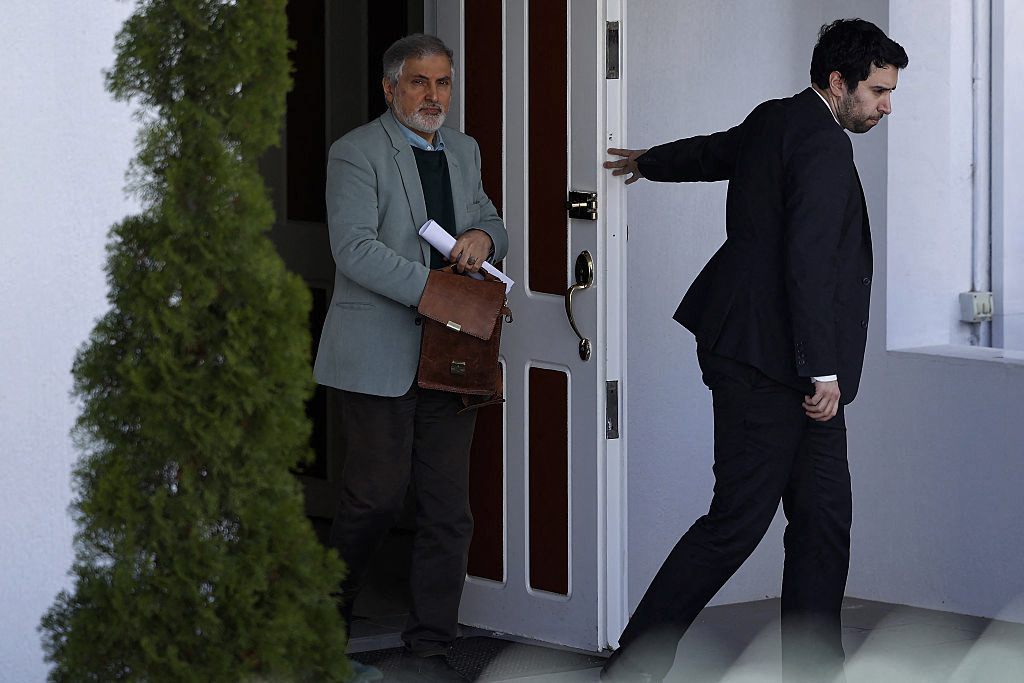
Closing Iranian embassies and consulates, expelling diplomats, and halting trade with Iran — and especially secondary sanctions: banning trade with countries that trade with Iran — would disrupt its operations, curb its influence, and send a message that the regime’s pattern of aggression and antisemitism will not be tolerated. Pictured: Iran’s Ambassador to Australia Ahmad Sadeghi (L) walks toward his car at the Islamic Republic of Iran’s Embassy in Canberra on August 27, 2025, a day after Australia ordered him expelled from the country. (Photo by Hilary Wardhaugh/AFP via Getty Images)

Iran’s deep involvement in antisemitic attacks in Australia should serve as a kick-in-the-head wake-up call to the European Union and the wider international community. Australia made the unprecedented decision to expel the Iranian ambassador, Ahmad Sadeghi, the first such diplomatic action in the country since World War II.

This unexpectedly welcome action came after the Australian Security Intelligence Organisation uncovered that Iran’s Islamic Revolutionary Guard Corps (IRGC) had orchestrated a series of antisemitic attacks on Australian soil. The attacks targeted a kosher restaurant in Sydney and a synagogue in Melbourne, causing significant property damage and sowing fear within the Jewish community, although fortunately nobody was killed in the attacks. Investigations revealed that the IRGC had employed intermediaries in Australia, including organized crime networks, to carry out these attacks, demonstrating the regime’s continuing reliance on proxies to pursue its hostile objectives abroad.

Despite Iran’s official denial of these allegations — calling them as baseless and a conspiracy to undermine Iran-Australia relations — the Australian government stood firm, emphasizing that such acts of terrorism and antisemitism could not be tolerated. Prime Minister Anthony Albanese, further solidifying Australia’s stance, signaled plans to designate the IRGC as a terrorist organization. This move underscores the necessity of a proactive and uncompromising approach to dealing with a regime that consistently operates through violence and intimidation, setting a clear contrast to the more cautious diplomatic engagements often observed from the European Union and the West.

The attacks in Australia are just part of a broader pattern of antisemitism and bellicosity from the Iranian regime against Jewish communities across the world. Iran’s belligerency toward Jewish communities extended far beyond its borders. For decades, Iran, using terror and intimidation to advance its ideological agenda. Iran has systematically targeted Jewish institutions and individuals in multiple countries. The 1994 bombing of the AMIA Jewish community center in Buenos Aires, killed 85 people. Investigations revealed that Iran directed this attack in coordination with Hezbollah operatives, who carried out the bombing under Tehran’s supervision. In 2024, Argentine courts, labeling Iran a terrorist state, reaffirmed its culpability for the 1994 terror attack.

Iran’s predations not limited just to antisemitism; they extend broadly to global terrorism They have targeted Americans and other Westerners in foreign countries, from the 1980s onward. Iran has been implicated in multiple deadly attacks against American troops in Lebanon, killing hundreds of U.S. diplomats and military personnel, all carried out by Hezbollah under Tehran’s guidance.

The Iranian regime also had a role in the September 11, 2001 attacks on the US. In 2018, a U.S. federal court ruling determined that Iran provided material support to Al-Qaeda in the period leading up to and following the 9/11 attacks, resulting in a multibillion-dollar judgment for the families of the victims.

Iran regularly uses violent tactics abroad to advance its strategic goals, leveraging proxy organizations, so that Iran can maintain plausible deniability.

The regime has also targeted exiled Iranian dissidents in countries such as Iraq and Turkey, and has abducted and assassinated individuals who oppose it.

The regime actively plots terrorist attacks abroad, often leveraging its diplomatic missions as hubs for coordination with proxy groups and intelligence gathering.

Domestically, Iran’s record is equally troubling. The regime routinely suppresses its own citizens through brutal measures, which include arbitrary detention, torture and executions, and demonstrates a savage disregard for civil liberties and human life. Human rights organizations have documented instances where even minors have been subjected to violent repression, including hanging children as young as nine (more atrocities herehere and here).

This dual approach — external aggression coupled with domestic repression — demonstrates a regime that thrives on intimidation, using both overt and covert operations to project power and maintain its authoritarian grip, leaving the international community exposed to its persistent threat.

Given Iran’s long, documented history of antisemitism, terrorism and domestic repression, it is difficult to understand why some international actors have advocated for engagement, negotiation or sanctions relief with Iran. Diplomatic overtures and economic incentives have not only failed to curb the regime’s aggressive behavior; they have emboldened it.

Australia’s unequivocal response to Iranian terrorism is instructive. By expelling Iran’s ambassador, severing diplomatic ties, and moving toward formally designating the IRGC as a terrorist organization, Australia has set a precedent that European nations and other members of the international community would do well to follow.

Closing Iranian embassies and consulates, expelling diplomats, and halting trade with Iran — and especially secondary sanctions: banning trade with countries that trade with Iran — would disrupt its operations, curb its influence, and send a message that the regime’s pattern of aggression and antisemitism will not be tolerated.

The Israeli and American airstrikes on Iran’s nuclear weapons sites, and now Australia’s decisive new stance, demonstrate the path forward: a refusal to tolerate terror by a regime that has brought nothing but suffering and instability, both inside Iran and across the globe.


Dr. Majid Rafizadeh, is a political scientist, Harvard-educated analyst, and board member of Harvard International Review. He has authored several books on the US foreign policy. He can be reached at dr.rafizadeh@post.harvard.edu

Follow Majid Rafizadeh on X (formerly Twitter)


Zawartość publikowanych artykułów i materiałów nie reprezentuje poglądów ani opinii Reunion’68,
ani też webmastera Blogu Reunion’68, chyba ze jest to wyraźnie zaznaczone.
Twoje uwagi, linki, własne artykuły lub wiadomości prześlij na adres:
webmaster@reunion68.com


Spain Recalls Ambassador From Israel After Jerusalem Accuses Sánchez Government of Antisemitism


Spain Recalls Ambassador From Israel After Jerusalem Accuses Sánchez Government of Antisemitism

Ailin Vilches Arguello


Spanish Prime Minister Pedro Sanchez speaks at a press conference in Kunshan, Jiangsu province, China, Sept. 11, 2024. Photo: REUTERS/Xihao Jiang

Spain has recalled its ambassador from Israel after Israeli Foreign Minister Gideon Saar accused Spanish Prime Minister Pedro Sánchez of antisemitism, following Madrid’s latest measures against the Jewish state.

On Monday, Sánchez unveiled new policies targeting Israel over the war in Gaza, including an arms embargo and a ban on certain Israeli goods.

The Spanish government announced it would bar entry to individuals involved in what it called a “genocide against Palestinians,” block Israel-bound ships and aircraft carrying weapons from Spanish ports and airspace, and enforce an embargo on products from Israeli communities in the West Bank.

“Protecting your country and your society is one thing, but bombing hospitals and killing innocent boys and girls with hunger is another thing entirely,” Sánchez said during a televised speech.

“What [Israeli] Prime Minister [Benjamin] Netanyahu presented in October 2023 as a military operation in response to the horrific terrorist attacks has ended up becoming a new wave of illegal occupations and an unjustifiable attack against the Palestinian civilian population – an attack that the UN special rapporteur and the majority of experts already describe as a genocide,” the Spanish leader continued.

“That isn’t defending yourself; that’s not even attacking. It’s exterminating defenseless people. It’s breaking all the rules of humanitarian law,” he said.

Palestinian terrorists led by Hamas started the war on Oct. 7, 2023, when they invaded southern Israel from neighboring Gaza, murdered, 1,200 people, and kidnapped 251 hostgaes while perpetrating widespread sexual violence against the Israeli people.

Israel responded with an ongoing military campaign aimed at freeing the hostages and dismantling Hamas’s military capabilities and political rule in Gaza.

Meanwhile, Saar announced sanctions against two Spanish ministers, accusing the government in Madrid of antisemitism and of pursuing an escalating anti-Israel campaign aimed at undermining the Jewish state on the international stage.

“The government of Spain is leading a hostile, anti-Israel line, marked by wild, hate-filled rhetoric,” Saar wrote in a post on X, accusing Sánchez’s “corrupt” administration of trying to “divert attention from grave corruption scandals.”

“The obsessive activism of the current Spanish government against Israel stands out in light of its ties with dark, tyrannical regimes — from Iran’s ayatollahs to [Nicolás] Maduro’s government in Venezuela,” the top Israeli diplomat continued.

In his post, Saar announced an entry and contact ban on Spanish Deputy Prime Minister and Minister of Labor Yolanda Díaz and Minister of Children and Youth Sira Rego.

He accused both ministers of promoting antisemitic rhetoric, citing multiple examples of statements calling for Israel’s destruction and endorsing violence against Israeli citizens in the aftermath of the Hamas-led invasion of and massacre across southern Israel on Oct. 7, 2023.

“It is no longer possible to avoid imposing personal sanctions on members of the Spanish government who have crossed every red line,” Saar wrote.

“Not every criticism of Israeli policy constitutes antisemitism. However, when such criticism is characterized by demonization, delegitimization, and double standards — it is antisemitism, according to the IHRA definition,” he added, referring to the International Holocaust Remembrance Alliance’s (IHRA) widely adopted definition of antisemitism. “Statements by members of the Spanish government, and its policy as a whole, fall squarely into this category. This is antisemitism.”

Earlier this year, Spain urged the European Union to suspend its association agreement with Israel — a pact governing the EU’s political and economic ties with Jerusalem — to protest what it calls human rights violations in Gaza.

The Spanish government has also pressured the EU to approve an arms embargo on Israel and to impose sanctions on individuals accused of undermining the two-state solution to the Israeli-Palestinian conflict.

One of Spain’s most recent anti-Israel initiatives came after an EU-commissioned report accusing Israel of committing “indiscriminate attacks … starvation … torture … [and] apartheid” against Palestinians in Gaza during its military campaign against Hamas, an internationally designated terrorist group.

According to the report, “there are indications that Israel would be in breach of its human rights obligations” under the 25-year-old EU-Israel Association Agreement.

While the document acknowledges the existence of violence by Hamas, it states that this issue lies outside its scope — failing to address the Palestinian terrorist group’s role in sparking the current war.

Israeli officials have slammed the report as factually incorrect and morally flawed, noting Hamas embeds its military infrastructure within civilian targets and Israel’s army takes extensive precautions to try and avoid civilian casualties.

Since the start of the war in Gaza, Spain has become one of Jerusalem’s fiercest critics, a stance that has only intensified in recent months.

Spanish Foreign Minister José Manuel Albares has actively pushed for anti-Israel measures on the international stage, while portraying himself as a dedicated supporter of a two-state solution to the Israeli-Palestinian conflict.

In the aftermath of the Oct. 7 atrocities, Spain halted arms shipments from its own defense companies to Israel and launched a diplomatic campaign to curb the country’s military response.

At the same time, several Spanish ministers in the country’s left-wing coalition government issued pro-Hamas statements and called for an immediate ceasefire in Gaza, with some falsely accusing Israel of “genocide.”

Last year, Spain officially recognized a Palestinian state, claiming the move was accelerated by the Israel-Hamas war and would help foster peace in the region. However, Israeli officials described the decision as a “reward for terrorism.”


Zawartość publikowanych artykułów i materiałów nie reprezentuje poglądów ani opinii Reunion’68,
ani też webmastera Blogu Reunion’68, chyba ze jest to wyraźnie zaznaczone.
Twoje uwagi, linki, własne artykuły lub wiadomości prześlij na adres:
webmaster@reunion68.com