
Archive | 2025/09/10

Gaza i Zachodni Brzeg – jeden naród? Naprawdę?


Gaza i Zachodni Brzeg – jeden naród? Naprawdę?

Sheri Oz


„Palestyńczycy” w retoryce dyplomacji, w relacjach medialnych i w międzynarodowych rezolucjach  są często przedstawiani jako jednolita wspólnota narodowa: jeden naród z jedną sprawą. Ale rzeczywistość codziennego życia opowiada znacznie bardziej podzieloną historię. Podział między Gazą a Zachodnim Brzegiem nie jest jedynie polityczny. Ma on charakter geograficzny, historyczny, demograficzny, kulturowy i ideologiczny.

W 1948 roku Gaza znalazła się pod egipską kontrolą wojskową, a Zachodni Brzeg został anektowany przez Jordanię. Pierwszy stał się enklawą uchodźców, drugi pozostał zakorzeniony w starożytnych miastach. Gaza to głównie społeczność beduińska i islamistyczna, Zachodni Brzeg – lewantyńska i biurokratyczna.

A jednak mit jedności trwa. Bo świat tego wymaga. A przywódcy odgrywają przypisane im role. Jednak pod flagą, która rzekomo ich łączy, obie populacje nigdy nie szły tą samą drogą.


Gaza i Zachodni Brzeg nigdy nie były jednością

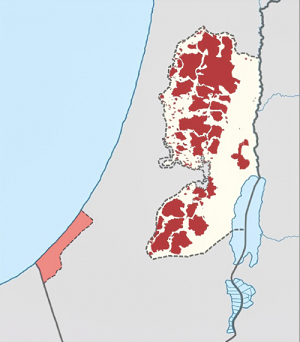
Przed 1948 rokiem – jak powszechnie wiadomo – nie istniało państwo o nazwie Palestyna. Pod brytyjskim mandatem Gaza oraz Judea i Samaria były administrowane osobno jako oddzielne dystrykty. Wcześniej stanowiły część systemu prowincji Imperium Osmańskiego. W 1948 roku podział stał się jeszcze bardziej wyraźny: Egipt przejął Gazę, podczas gdy Jordania anektowała Judeę i Samarię, nazywając ten obszar Zachodnim Brzegiem i przyznając jego mieszkańcom obywatelstwo jordańskie. Mieszkańcom Gazy nigdy nie przyznano egipskiego obywatelstwa.

To oznaczało różne rządy, systemy prawne, waluty, systemy edukacyjne, dokumenty podróży i statusy dyplomatyczne. Gaza i Zachodni Brzeg były oddzielone izraelskim terytorium i nie miały fizycznego połączenia. Funkcjonowały raczej jak sąsiadujące protektoraty niż prowincje wspólnego projektu narodowego i rozwijały się jako dwa odrębne społeczeństwa.


Uchodźcy w Gazie kontra mieszkańcy Zachodniego Brzegu

W 1947 roku Gaza liczyła około 80 000 mieszkańców. Do 1950 roku liczba ta potroiła się – ponad 240 000. Dwie trzecie populacji stanowili uchodźcy z południowej Palestyny Mandatowej, z takich miast jak Aszkelon (nazywany po arabsku Madżdal), Aszdod (Isdud) czy Beer Szewa.

Uchodźcy ci mieszkali w przeludnionych obozach UNRWA i nie otrzymali egipskiego obywatelstwa. Ich tożsamość ukształtowało wygnanie i pozbawienie ojczyzny.

Dla porównania – populacja Zachodniego Brzegu również wzrosła po 1948 roku, ale mniej dramatycznie. Miasta takie jak Hebron, Nablus i Ramallah wciąż były zamieszkane przez rodziny osiadłe tam od pokoleń, a około jednej trzeciej ludności stanowili uchodźcy, głównie z miast takich jak Jafa, Ramla czy Hajfa. Uchodźcy ci częściej byli wchłaniani w miejskie życie i otrzymywali obywatelstwo jordańskie.

W ten sposób powstały dwie palestyńskie populacje: jedna zdefiniowana przez trwałe przesiedlenie i poczucie krzywdy, druga zakorzeniona w polityce i integracji społecznej.

Chociaż oba terytoria były gospodarczo powiązane z Izraelem, to demograficzne różnice wpłynęły na odmienny rozwój ekonomiczny. Po 7 października gospodarka Gazy się załamała, a gospodarka Zachodniego Brzegu uległa pogorszeniu, choć brak dokładnych danych. Dla celów porównawczych znaczenie mają dane sprzed tego okresu.

PKB per capita w Gazie oscylował wokół 800–1000 dolarów rocznie, podczas gdy na Zachodnim Brzegu osiągał poziom 3500–4000 dolarów. Bezrobocie w Gazie wynosiło 46% ogółem i ponad 65% wśród młodzieży, w porównaniu do 13–17% na Zachodnim Brzegu. Ta dysproporcja wynika jednak głównie z polityki bezpieczeństwa, a nie z wewnętrznych różnic. Przed 2007 rokiem ponad 100 000 mieszkańców Gazy codziennie pracowało w Izraelu – podobnie jak mieszkańcy Zachodniego Brzegu przed 7 października. Tuż przed tym dniem w Izraelu pracowało 17 000 Gazańczyków.

Obostrzenia wprowadzone po przejęciu Gazy przez Hamas w 2007 roku przekształciły ją z gospodarki zintegrowanej w całkowicie zależną od pomocy międzynarodowej enklawę, podczas gdy Zachodni Brzeg utrzymał bardziej stabilne relacje handlowe i mobilność siły roboczej. Oba terytoria pozostają gospodarczo zależne od Izraela, ale dostęp Gazy jest znacznie bardziej ograniczony ze względu na obawy dotyczące przemytu broni i działalności bojowników.


Zakorzenienie różnic kulturowych i politycznych

Populacja Gazy, w dużej mierze beduińska i pod silnymi wpływami kultury egipskiej, tak bardzo nasiąkła desperacją, że jej kultura polityczna wyrosła na gruncie oporu i religijności. Dialekt, kuchnia, a nawet praktyki religijne w Gazie różnią się subtelnie od lewantyńskiej, górskiej kultury Zachodniego Brzegu.

Powstanie Hamasu nie było przypadkiem. Islamizm dostarczył języka zarówno krzywdy, jak i porządku społecznego.

Zachodni Brzeg, będący pod administracją jordańską, rozwinął bardziej biurokratyczną i świecką klasę polityczną o orientacji nacjonalistycznej. Fatah, OWP i w końcu Autonomia Palestyńska wyrosły z tego ekosystemu. Choć PA jest autorytarna, jej geneza tkwiła w budowie państwowości, a nie w islamistycznym oporze.


Porozumienia z Oslo i iluzja jedności

Porozumienia z Oslo z 1993 roku zakładały utworzenie jednej Autonomii Palestyńskiej zarządzającej zarówno Gazą, jak i Zachodnim Brzegiem. Przez chwilę wydawało się, że mit jedności może się urzeczywistnić.

Ale to była fasada. Polityczna infrastruktura pozostała podzielona. Rywalizacje trwały. Kiedy Hamas wygrał wybory parlamentarne w 2006 roku, PA odmówiła uznania jego władzy. W 2007 Hamas przejął Gazę siłą, a podział między dwoma regionami geograficznymi został utrwalony instytucjonalnie.

Hamas rządzi Gazą żelazną ręką. PA kontroluje części Zachodniego Brzegu, utrzymywana jest przy życiu przez zagraniczną pomoc i izraelską koordynację bezpieczeństwa. Obie strony aresztują członków przeciwnych frakcji. Wybory są wielokrotnie odkładane. Rozmowy o jedności kończą się fiaskiem. Oba terytoria funkcjonują bardziej jak rywalizujące państwa niż prowincje jednego przyszłego kraju.

Podział nie jest wyłącznie polityczny. Dzieci w Gazie i na Zachodnim Brzegu uczą się według różnych programów, podlegają różnym prawom i wychowywane są w różnych kulturach politycznych.

Oficjalnie oba terytoria stosują ten sam program nauczania PA, ale od 2007 roku różnice w edukacji się pogłębiły. W szkołach prowadzonych przez Hamas w Gazie uzupełnia się materiały podstawowe o dodatkowe ćwiczenia i arkusze podkreślające zbrojny opór i motywy islamskie – odzwierciedlając ideologiczną linię Hamasu. Nawet po ponownym otwarciu szkół w tym roku te tendencje zostały pogłębione. Choć używa się tych samych podręczników, dzieci w Gazie i na Zachodnim Brzegu otrzymują subtelnie odmienne przekazy o tożsamości i przyszłości.


Plan stabilizacji Naftalego Bennetta i koncepcja „trzech państw”

Były premier Naftali Bennett w 2012 roku w swoim „Planie Stabilizacji” otwarcie postulował zapobieżenie jakimkolwiek powiązaniom między Gazą a Zachodnim Brzegiem. Opisywał to jako sposób na powstrzymanie przemocy Hamasu i zapewnienie bezpieczeństwa Izraelowi.

Zgodnie z tym planem izraelskie prawo miało zostać rozszerzone na obszar C Zachodniego Brzegu (Judei i Samarii), obszary A i B pozostałyby pod autonomią PA, a Gaza traktowana byłaby jako odrębny, izolowany podmiot – de facto kierowany w stronę Egiptu.

Plan ten nigdy nie został formalnie rozpatrzony, ale odzwierciedla rzeczywistość, którą niektórzy mogą zacząć akceptować.

W 2015 roku Bassem Eid, sam będący palestyńskim uchodźcą z Jerozolimy, odpowiedział na pytanie w imieniu swoich rodaków:

„Nie sądzę, aby Palestyńczycy wierzyli w rozwiązanie dwupaństwowe. Większość Palestyńczyków w Gazie i na Zachodnim Brzegu wierzy w rozwiązanie trzypaństwowe: jedno państwo w Gazie, jedno państwo na Zachodnim Brzegu i państwo Izrael.”


Dlaczego więc mit jedności?

Jeśli Gaza i Zachodni Brzeg są tak różne, dlaczego świat wciąż mówi o „Palestyńczykach” jako o jednym narodzie?

Częściowo to strategia polityczna oparta na przedstawianiu jedności. Dyplomaci, NGO, agencje ONZ i media potrzebują jednego partnera do rozmów, jednej populacji do wsparcia, jednej sprawy do poparcia. OWP w latach 60. spopularyzowała tożsamość pan-palestyńską, zacierając różnice w celu zbudowania legitymacji międzynarodowej, a kwestia uchodźcza stworzyła wspólne poczucie krzywdy.

Ale krzywda to nie rządzenie. A ideologia to nie tożsamość. Dziś te dwa terytoria palestyńskie funkcjonują jak odrębne państwa z przeciwstawnym przywództwem, niekompatybilnymi systemami i być może coraz bardziej rozbieżnymi światopoglądami.

Są sygnały, że dawniej świecki Zachodni Brzeg staje się coraz bardziej konserwatywny, a sondaże pokazują wzrost poparcia dla Hamasu – nawet jeśli w Gazie zmęczenie wojną to poparcie osłabia. Może to sugerować zacieranie się granic ideologicznych, ale nie zaciera to różnic kulturowych i społecznych, które wciąż tkwią głęboko – w strukturach klanowych i odmienności między beduińską Gazą a lewantyńskim Zachodnim Brzegiem.


Zakończenie: Dwie flagi ukryte pod jedną

Mówić o mieszkańcach Gazy i Zachodniego Brzegu jako o jednym narodzie – to mylić wspólne poczucie krzywdy z narodową jednością. Ich historie od 1948 roku są skrajnie odmienne. Ich polityczna przyszłość może być niemożliwa do pogodzenia.

To nie tylko rozbita wspólnota narodowa. To naród podzielony jeszcze zanim się narodził.


Sheri Oz prowadzi blog Israel Diaries.


Zawartość publikowanych artykułów i materiałów nie reprezentuje poglądów ani opinii Reunion’68,
ani też webmastera Blogu Reunion’68, chyba ze jest to wyraźnie zaznaczone.
Twoje uwagi, linki, własne artykuły lub wiadomości prześlij na adres:
webmaster@reunion68.com



The destructive impulse to moralize about a zero-sum conflict

The destructive impulse to moralize about a zero-sum conflict

Jonathan S. Tobin


The claim that Israel will “lose” if it is falsely perceived as too brutal to its genocidal enemies is an exercise in navel-gazing, not a serious accounting of the Jewish soul.

Israeli author Yossi Klein Halevi speaks at the AJC Global Forum in Tel Aviv on June 14, 2023. Photo by Miriam Alster/Flash90.

One of the essential elements of Judaism is the annual cheshbon hanefesh or “accounting of the soul.” This takes place during the Hebrew month of Elul, which leads up to Rosh Hashanah and the Yamim Noraim (the Ten Days of Repentance) and Yom Kippur (the Day of Atonement). It involves a necessary period of introspection during which every Jew reflects on his or her behavior and deeds during the past year. Without it, forgiveness—whether coming from those we have offended or the Almighty—is impossible. It is supposed to result in a pledge to do better in the coming year.

If that’s required of individual Jews, then why not go through the same exercise for evaluating the actions of the one Jewish state on the planet? That’s the justification for pundits who use this time of year to write pieces beating their breasts about the sins of Israel, its government and its people. It is, by the lights of most people, a very Jewish thing to do.

High Holidays virtue-signaling

But while Israelis and those who care about the nation are right to think carefully and seriously about the actions of the government and army, inevitably, many of the resulting reflections often have more to do with political opinions than dispassionate moral judgements. And that can be particularly egregious when applied to the efforts of those who serve its cause in the middle of an armed conflict with the genocidal Islamist forces that head the Palestinian national movement.

Those who engage in this process also need to be aware that while Jews are taking part in acts of harsh self-evaluation in the midst of a war in which Israel’s survival is at stake, the other side, along with their numerous enablers and cheerleaders, are doing no such thing. The musing of Israelis and Jews about their alleged shortcomings is likely to be exploited by their enemies to fuel the ongoing surge of antisemitism that seeks Israel’s isolation and destruction, as well as the intimidation and silencing of Jews elsewhere.

Yet that doesn’t stop those who believe that this sort of commentary is not only appropriate but even required for Israelis to save their souls.

Doubtless, this will be the subject of innumerable High Holiday sermons that those gathered in synagogues in the coming weeks will be subjected to by their rabbis. This is a given, especially among those liberal denominations of Judaism where Zionism—the modern expression of one of the basic elements of Jewish faith and identity—has come into question among a noisy yet influential minority. In certain sectors of Jewish life, the act of distancing oneself from the actions of an Israel forced to defend itself against not just critics but terrorists, like those of Hamas, which led the Palestinian Arab attacks on southern Israel on Oct. 7, 2023, has become an all-too-common expression of virtue-signaling for many on the Jewish left.

These “as a Jew” detractors are legion in the current environment in which some in the Jewish world seek to remain in sync with their erstwhile allies, who have abandoned any vestige of support for Jewish rights or empathy for Israel’s dilemmas since Oct. 7. While they are easy to dismiss, those who approach this idea of a cheshbon hanefesh for Israel from a position of Israeli patriotism and belief in Zionism should not be dismissed out of hand.

Has something gone very wrong?

One such person is Yossi Klein Halevi, the author of some interesting books about Israel, and looked to by many as a voice of Jewish conscience. Halevi has earned the right to be taken seriously even by those who disagree with him. But his latest column in The Times of Israel nevertheless deserves a response, precisely because he is seeking to engage in a discussion about the current situation without necessarily accepting the premise of Israel’s unfair detractors.

Indeed, Halevi goes a long way toward debunking the entire premise of High Holiday critiques of Israel by knocking down as patently false many of the assumptions that its foes have accepted about its behavior:

“We know any nation in our place would have reacted to Hamas’s mass atrocities as we did. We know we face an enemy willing to commit any crime and that the IDF is fighting under conditions that would test the moral limits of any army. We know the young Israelis who have fought for months, many for nearly two years, are among the most heroic and self-sacrificing this country has produced. We know Israel is subject to a relentless campaign of lies, half-truths, distortions and convenient omissions. We know the outrageous accusation of genocide against Israel only diverts the world’s focus from radical Islamism, the truly genocidal side in this conflict.”

All true. But he then goes on to argue that the war being fought against Hamas is a failure—“something has gone very wrong in Gaza”—and to decry plans for eliminating the last Hamas strongholds in Gaza City. He backs this up with a partisan polemic about the government of Israeli Prime Minister Benjamin Netanyahu being “a coalition of the fanatical and the corrupt, [that] is disgracing the Jewish state.”

That resembles his musings from the months before Oct. 7, when he was among those disingenuously arguing that Netanyahu’s government was a threat to democracy because it attempted to reform and rein in an out-of-control, all-powerful judiciary. It was Halevi’s side in that dispute that was seeking to enshrine an undemocratic rule of elites as part of a culture war of liberal secularists against Mizrahi, religious and nationalist Israeli voters, in which Halevi was an unlikely recruit for the former.

An advocate for ambivalence

The wrongheaded nature of this jeremiad is not so much a matter of the awfulness of the current coalition or worries about the conduct of the war, important though those topics may be. It is Halevi’s advocacy for what he calls “ambivalence” about the conflict, as he decries those who either think Israel can do no wrong or no right, that needs to be addressed.

Both extremes are foolish, though the latter is not so much mistaken as it is culpable for the way it is consciously aiding Hamas’s goal of destroying the Jewish state and achieving the genocide of its population.

Moderation in all things is a good general principle to adopt in most circumstances. But not always.

Moderation was key to one of the genuine insights Halevi has offered his readers in the past, when he pointed out more than a decade ago that the old left-right divide in Israel was outdated. He was right to say that in the aftermath of the collapse of the Oslo peace process in 2000 and the evacuation of Gaza in 2005, which resulted in a Hamas terrorist state, the old arguments no longer made sense. The Israeli left had been wrong to believe that the Palestinians desired peace, and the Israeli right was wrong to think that it could ignore the reality of a hostile population that neither wanted a two-state solution nor could be absorbed into the Jewish one.

Unfortunately, he or anyone else has yet to come up with a way to solve that problem without endangering Israel. Still, he put aside that moderation when the Israeli right won a clear majority in the Knesset elections of November 2022.

Yossi Klein Halevi in 2013. Credit: Rachelgr713 via Wikimedia Commons.

Oct. 7 brought a reminder that the hopes of peaceful coexistence with a people whose national identity is inextricably linked to a permanent war against the Jews must be indefinitely postponed until sometime in a theoretical and far-off future when they are ready to change. Moreover, the willingness of so much of the international community and political left to join forces with Islamists meant that the sort of principled and righteous moderation that Halevi advocates for is simply an insufficient response to the current crisis.

Even worse, he argues that the “imminent invasion of Gaza City, many of us fear, will be a strategic and moral disaster” because it will not achieve any military goal and will further tarnish Israel’s good name by an immoral amount of Palestinian suffering. He thinks that requires Jews to join in a moral outcry to stop the government.

Yet that assertion falls flat. That’s not because the war has been conducted without mistakes, or that it is a certainty that Netanyahu’s plans are foolproof, or even because bad things will happen to those Palestinians who have been put in harm’s way by Hamas’s decision to launch a war and then hide behind civilians.

It’s because if we should have learned anything about the conflict from Oct. 7—and the way it mobilized antisemites around the world—it is that compromise with Hamas and a Palestinian people that supports its war simply isn’t possible.

No compromise with evil

Our Western sensibilities and desire to settle all conflicts on a reasonable basis cry out in favor of some sort of compromise with the Palestinians. But there is no compromise with those who are committed to the deaths of Israelis and Jews—not to achieve a limited political goal, but as a religious and national obligation.

Holding back from doing the necessary and awful job of eliminating the last Hamas strongholds won’t improve Israel’s image abroad or save its collective soul. It will only ensure that the conflict will continue on an even more horrible basis sometime in the near future, guaranteeing more death and destruction for Jews and Arabs alike.

Of course, as is the case with every nation in history that ever fought a war, it’s correct to say that this government is flawed and that the army has made mistakes. But Halevi argues that because Netanyahu has not stated in advance what Israel will do once the war is over, that essentially means the remnants of Hamas still holding out in the tunnels underneath Gaza City should be left in place. That is neither a reasonable nor a moral argument.

His claim that under the current circumstances, “even if we win against Hamas, we lose,” may sound wise, but it is sophistry masquerading as morality.

No one should blindly trust Netanyahu—or the generals or politicians who disagree with him. But in a war in which the other side is prepared to sacrifice all of their own people in an effort to further Israel’s destruction, there is no substitute for complete victory over such amoral monsters.

It was, after all, sensible moderation that led Netanyahu and virtually all of his political opponents to support leaving Hamas in place, bribing them with payments and Palestinian work permits to maintain a ceasefire. And it might have worked if the Palestinians were equally interested in sensible moderation or coexistence. But they weren’t, and they aren’t. And that leaves Netanyahu—or anyone else who would be placed in his position—with the obligation to safeguard Israel’s future by eliminating Hamas and its rule.

To use the High Holidays and the annual ritual of self-evaluation to second-guess his determination to pursue victory in this war is worse than mere Jewish navel-gazing. It is, in its own way, just as much a form of immoral chest-pounding as those who seek to demonize Israel and the just war of self-defense it never sought, but has been forced to fight.

To put Israel on trial now, with much of the world wrongly embracing blood libels against Israel and normalizing antisemitism, and with the war’s outcome still hanging in the balance, isn’t the laudable process Halevi thinks it is. You don’t have to sympathize with the prime minister or to support some of his coalition partners to believe that Halevi is mistaken. Rather, his call for an outcry against Israel’s democratically elected government at this time is a weaponization of Jewish tradition to create a political cudgel against Netanyahu to force him to end the conflict on terms that will ensure its repetition.

That will satisfy those who are so embittered by the prime minister that they view certain failure in Gaza as preferable to his continued stay in office. But the calculus by which they have arrived at that preferred outcome should not be mistaken for the sort of accounting of our souls demanded by Judaism.

The true Jewish moral imperative 

It’s all well and good for Halevi to claim that the high point of the Jewish state’s history is its willingness to admit fault in 1982 for “a massacre Israel didn’t commit.” But in a war that he admits that the Israel Defense Forces is striving to fight morally, to declare it guilty of wrongdoing when that gives aid and comfort to antisemitic mobs and Hamas, is not wisdom. And it’s not ethical.

The moral imperative facing Jews this year should require them to join in solidarity with Israel’s efforts to extinguish Hamas, rather than virtue-signal their ambivalence about a war against a truly evil opponent. And not because they think Israel can do no wrong, but because they have come to the correct conclusion about a zero-sum conflict in which any outcome other than Hamas’s destruction is an unparalleled moral disaster.

They should put aside partisan differences—both in Israel and in the United States—to support efforts to achieve a result to end this war on terms that will make it impossible for the Palestinians to continue it, regardless of their sense of grievance about Israel’s continued existence. Anything else is a betrayal of our obligation to support those fighting for the life of the Jewish state, rather than to gratuitously appoint ourselves as their judges.


Jonathan S. Tobin is editor-in-chief of the Jewish News Syndicate, a senior contributor for The Federalist, a columnist for Newsweek and a contributor to many other publications. He covers the American political scene, foreign policy, the U.S.-Israel relationship, Middle East diplomacy, the Jewish world and the arts. He hosts the JNS “Think Twice” podcast, both the weekly video program and the “Jonathan Tobin Daily” program, which are available on all major audio platforms and YouTube. Previously, he was executive editor, then senior online editor and chief political blogger, for Commentary magazine. Before that, he was editor-in-chief of The Jewish Exponent in Philadelphia and editor of the Connecticut Jewish Ledger. He has won more than 60 awards for commentary, art criticism and other writing. He appears regularly on television, commenting on politics and foreign policy. Born in New York City, he studied history at Columbia University.


Zawartość publikowanych artykułów i materiałów nie reprezentuje poglądów ani opinii Reunion’68,
ani też webmastera Blogu Reunion’68, chyba ze jest to wyraźnie zaznaczone.
Twoje uwagi, linki, własne artykuły lub wiadomości prześlij na adres:
webmaster@reunion68.com


We Can Fight Evil in Our Time


We Can Fight Evil in Our Time

Pini Dunner


An aerial view shows vehicles on fire as rockets are launched from the Gaza Strip, in Ashkelon, southern Israel October 7, 2023. REUTERS/Ilan Rosenberg

I’ve always believed that truth has the power to change hearts and reshape worldviews. This week, I came across the story of Dr. Nikos Sotirakopoulos. It is a perfect illustration of this belief.

Nikos grew up in Greece, a country where antisemitism has always bubbled just below the surface — and often, it’s right there, out in the open. On the political right, Jews are vilified as “Christ-killers.” On the left, Israel is caricatured as a colonial oppressor, and obviously (for them), all Jews are to blame for Israel. 

Even ordinary Greeks – non-political, regular people – casually repeat anti-Jewish tropes around the dinner table. This was the air Nikos breathed as a child, and he absorbed these childhood influences uncritically.

By his twenties, Nikos wasn’t just vaguely prejudiced — he was actively consumed by antisemitism. He eagerly read The Protocols of the Elders of Zion and drank in its vile prejudices against Jews as if it was gospel truth. 

His Facebook profile featured grotesque cartoons of Israel strangling its neighbors. He turned up at anti-Israel protests without knowing any real facts about the conflict between Israel and its enemies. But that didn’t matter. In his worldview, Israel was always the villain, and Jews were always to blame.

Now, 15 years later, Nikos is one of Israel’s most unlikely defenders. What happened to him during that time is what makes his story so compelling, and so important. After moving to the UK for graduate studies in his late twenties, Nikos decided to do a deep dive into Israel and its hostile neighbors. He began reading seriously — deliberately choosing books from both sides of the conflict. 

In the end, it was Benjamin Netanyahu’s A Durable Peace that forced the first real break in his thinking. On the very first page, a map of Israel leapt out at him: a sliver of land, just a few miles wide, “roughly 500 times smaller” than the surrounding Arab states. For the first time in his life, he understood how precarious Israel’s existence really was. One successful invasion, and the country would be gone.

From that moment on, Nikos was on a voyage of discovery. He discovered that in 1948, five Arab armies had invaded Israel on the very day it declared independence. He read about 1967 and 1973, when Israel was attacked by Arab armies determined to wipe it off the map. 

He realized that the land referred to by the world as the West Bank, which Israel is accused of “stealing,” had actually been under Arab control between 1948 and 1967 — but no Palestinian state was created, or demanded, by its inhabitants. He learnt that both peace and land had been offered time and again, but rejected by those who want to see Israel destroyed at any cost.

As the endless lies and warped narratives unraveled, Nikos saw something more profound. Israel isn’t merely fighting to survive — it is building a society devoted to life. Israel is an amazing country – a place where people raise families, innovate, debate politics with passion, write poetry, make music, and dream about a better future for all. 

By contrast, Israel’s enemies seem consumed by the cult of death — glorifying martyrdom over living, silencing dissent, and crushing anyone who dares to imagine a different path.

For Nikos, this realization was the actual turning point. Israel stopped being the faceless villain of his youth and became, in his words, “a land of modern heroes.” He was stirred by stories like the Entebbe rescue, when Israeli commandos risked everything to save hostages thousands of miles from home. 

The penny dropped: Israel is not some kind of imperial aberration, but a nation determined to safeguard life, and to offer hope and optimism even in the face of relentless hostility.

His journey reached its most emotional moment after October 7th, when Israeli families who lost loved ones in the massacre presented him with a medallion in gratitude for his transformation from hater to ally. For someone who once trafficked in the ugliest antisemitic conspiracy theories, it was nothing less than a moment of profound redemption.

Nikos’ story teaches us something profound: no one is doomed to remain on a bad path forever. And it is this very idea that explains why the Talmud dismisses one of the laws in Parshat Ki Teitzei as rhetorical fantasy. 

The Torah describes a phenomenon known as ‘ben sorer umoreh’ — a rebellious son who is gluttonous, drunk, disobedient, and seemingly on an inevitable path to a life of crime. His parents are told to bring him before the authorities, and the punishment — if the boy is found guilty — is death.

Shockingly, the rabbis of the Talmud reject this entire scenario out of hand. They insist that no case of ‘ben sorer umoreh’ ever happened in Jewish history, and none ever will. The law exists only as a theoretical construct, a cautionary tale. 

But how could they be so sure? Simple. Because Judaism refuses to accept permanent moral determinism. However dark the path you’re on, however entrenched the negativity, change is always possible. And Nikos Sotirakopoulos’s story is living proof. He was barreling down a road of hatred with no exit ramp in sight — and then he turned himself around.

Parshat Ki Teitzei ends with a very different lesson: the mitzvah to remember Amalek. This was the vicious warrior tribe that attacked Israel in the wilderness, hoping to wipe out the Jewish people before they had even found their footing. The Torah commands us to erase Amalek from the world and to show them no mercy. 

But the rabbis ask the obvious question: why does this mitzvah remain if the nation of Amalek has long since vanished from history? Their answer is that Amalek is not only an external enemy — it is also the Amalek within us: the baseless hatred, the corrosive cynicism, the prejudice we harbor in our hearts. Think of those Jews who can only ever see Israel in a negative light. That hatred for Israel is their Amalek — and it must be mercilessly rooted out and destroyed.

Seen together, these two passages form a profound existential truth: evil exists, but it does not have to stay that way. People like Nikos prove that even the ugliest bigotry can be unlearned. Nikos is not the only example — history offers other remarkable stories of transformation. 

Governor George Wallace, once the most notorious face of segregationist racism in America, spent years spewing venom and using every tool of power to hold back the Black community. But in later life, Wallace publicly repented, sought forgiveness from those he had wronged, and was even embraced by many of the very people he had once tried to exclude.

More recently, there is the story of Mosab Hassan Yousef, better known as the “Green Prince.” The son of a founder of Hamas, he was raised to hate Jews and groomed to inherit his father’s jihadist mantle. But he broke with Hamas, rejected its cult of death, and devoted himself to exposing its lies. 

Together, Wallace and Yousef demonstrate that even the deepest hatred can be unlearned — and that even those most consumed by poisonous ideas can still find their way to truth.

All these stories remind us that hatred and evil are not an inevitable destiny. Jewish tradition insists that no one is beyond redemption — and it also warns us never to tolerate the Amalek within. If even the most entrenched haters can change course, then there is hope for a world drowning in extremism and lies. 

But hope alone is not enough. Change requires truth, courage, and the willingness to confront falsehood head-on. Evil exists — but here’s the key: it doesn’t have to stay that way.


The author is a rabbi in Beverly Hills, California. 


Zawartość publikowanych artykułów i materiałów nie reprezentuje poglądów ani opinii Reunion’68,
ani też webmastera Blogu Reunion’68, chyba ze jest to wyraźnie zaznaczone.
Twoje uwagi, linki, własne artykuły lub wiadomości prześlij na adres:
webmaster@reunion68.com
