Archive | 2025/09/28

Warszawa skapitulowała 86 lat temu, rozpoczęły się lata niemieckiej okupacji

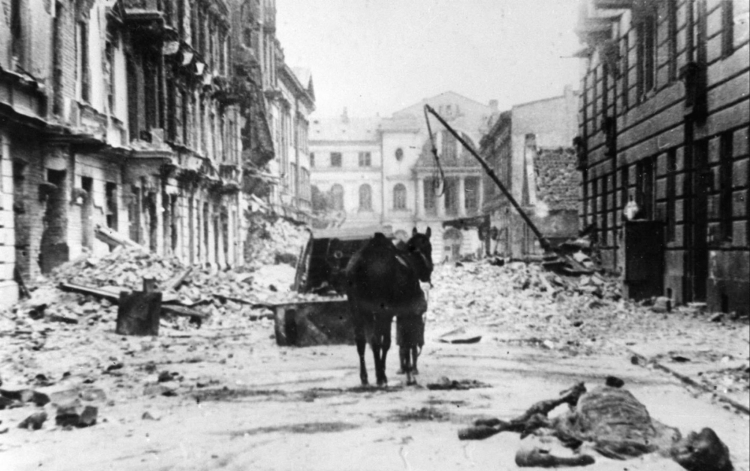
Warszawa, wrzesień 1939 roku. Fot. PAP/zdjęcie archiwalne


Warszawa skapitulowała 86 lat temu, rozpoczęły się lata niemieckiej okupacji

Marta Stańczyk (PAP)


28 września 1939 roku o godzinie 13.15 podpisano kapitulację stolicy. Umilkła artyleria, Warszawa wkroczyła w czas okupacji – powiedział w rozmowie z PAP kustosz Muzeum Warszawy Julian Borkowski.

Warszawa pod koniec września 1939 roku była oblegana ze wszystkich stron przez oddziały niemieckie. 22 września kończyła się kilkunastodniowa bitwa nad Bzurą połączonych oddziałów Armii „Pomorze” gen. dywizji Władysława Bortnowskiego i Armii „Poznań” pod dowództwem gen. dywizji Tadeusza Kutrzeby z 8 Armią gen. Johannesa Blaskowitza i 10 Armią gen. Waltera von Reichenau.

– Jednostki polskie w krwawych bojach torowały sobie drogę od zachodu, przez Puszczę Kampinoską do Warszawy. W tym czasie w mieście funkcjonowały służby cywilne, które działały bardzo sprawnie i m.in. opiekowały się mieszkańcami, ale także uchodźcami – opowiada Borkowski.

W następnych dniach Niemcy przygotowali się do szturmu na Warszawę. Atakowali z powietrza budynki użyteczności publicznej, kamienice mieszkalne, kościoły, muzea.

– 23 września została zniszczona elektrownia i filtry warszawskie, co spowodowało, że miasto pozbawione zostało prądu i wody. Przestało działać Polskie Radio, w którym przemawiał Stefan Starzyński, prezydent stolicy, komisarz cywilny przy Dowództwie Obrony Warszawy. Przestała się ukazywać codzienna prasa. Również 24 września zostały przerwane linie telefoniczne – przekazał kustosz.

Zaznaczył, że kluczowym dniem bombardowań był 25 września, który warszawiacy określili jako „lany poniedziałek” – najbardziej „czarny” dzień w bombardowaniu lewobrzeżnej części miasta. – Przez ponad 10 godzin spadło na miasto 560 ton bomb burzących i 72 tony bomb zapalających, zrzuconych przez ponad 400 niemieckich samolotów. Z czego polska obrona zestrzeliła 10 niemieckich maszyn – dodał.

Miasto ostrzeliwała także niemieckie artyleria – około 900 dział. – W tym czasie ginie duża liczba ludności cywilnej – około 10 tys. mieszkańców. W bombardowanym ratuszu umiera wiceprezydent miasta Jan Około-Kułak – zaznaczył kustosz.

W tym czasie ataki piechoty niemieckiej są odpierane w Babicach, Wawrzyszewie i Bielanach. Utrzymany jest Fort Mokotowski. – Mimo wszystko Niemcy, mając dużą przewagę w postaci czterech korpusów armijnych i oczywiście techniczną – czołgi, artyleria, zdobywają Królikarnię i Fort Dąbrowskiego, posuwają się też na Grochowie – powiedział Borkowski.

– Tragiczna sytuacja miasta wpływa na działania wewnętrzne, by doprowadzić do zakończenia działań na terenie Warszawy. Szczególnie optowali za tym gen. Walerian Czuma i płk. Tadeusz Tomaszewski z Dowództwa Obrony Warszawy, którzy wezwali dowódcę Armii Warszawa gen. Juliusza Rómmla do rozpoczęcia rokowań z Niemcami. Takie same działania podejmuje Komitet Obywatelski z gen. Michałem Tokarzewskim-Karaszewiczem. Podczas wspólnych rozmów uznano, że dalsza obrona jest niemożliwa – podkreślił historyk.

26 września polskie wojsko próbuje jeszcze odbić Fort Szczęśliwice, a piechota niemiecka atakuje Fort Czerniakowski i zdobywa go. Wkrótce Niemcy zajmują cały Czerniaków i przygotowują szturm generalny.

– W gmachu Pocztowej Kasy Oszczędności przy ulicy Świętokrzyskiej na Radzie Wojennej zdecydowano o wszczęciu rozmów o zawieszeniu broni. Po południu do pozycji niemieckich udał się parlamentariusz kpt. Tadeusz Wojciechowski. Do rozmów z Niemcami wyznaczeni zostali gen. Tadeusz Kutrzeba i płk. Aleksander Pragłowski – przekazał historyk.

Strona polska proponowała, żeby wszyscy zawodowi żołnierze poszli do niewoli na warunkach honorowych, zgodnie z konwencją genewską – mieli zatrzymać przy sobie broń białą. Żołnierze z poboru mieli być puszczeni wolno. Niemieckie dowództwo miało dostarczyć ludności około miliona porcji jedzenia, a także pomoc i środki dla 60 tys. rannych i chorych.

– W tym czasie Tokarzewski zamierza wdrożyć działania konspiracyjne, które zwieńczone zostały powstaniem Służby Zwycięstwu Polski 27 września 1939 roku. Staje na jej czele, uzyskuje akceptację Rómmla i Starzyńskiego. Dowódca Armii „Warszawa” przekazał pomoc finansową (750 tys. zł), a prezydent Warszawy – dokumenty legalizacje dla działaczy konspiracyjnych wspomnianej organizacji w postaci blankietów dowodów osobistych – opowiedział Borkowski.

Tego samego dnia Związek Harcerstwa Polskiego podejmuje decyzję o przejściu do konspiracji. Tworzą się konspiracyjne: Organizacja Harcerzy i Organizacja Harcerek, dla których w lutym 1940 roku zostanie ustanowiony kryptonim „Szare Szeregi”.

27 września 1939 roku, po raz pierwszy od czterech dni, ukazuje się „Gazeta Wspólna” składana ręcznie. Prezydent Warszawy odmawia opuszczenia miasta, choć był dla niego przygotowany samolot.

– W końcu 28 września polska delegacja spotkała się z dowództwem 8 Armii Niemieckiej gen. Blaskowitza w poszerzonym o przedstawicieli miasta – ze Stefanem Starzyńskim na czele – składzie. Wśród delegacji znalazł się m.in. Stanisław Lorentz – dyrektor Muzeum Narodowego, Felicjan Jabłoński – szef służby aprowizacyjnej, czy Konrad Orzechowski – szef wydziału szpitalnictwa – przekazał kustosz.

O godzinie 13.15 na terenie fabryki Skody na Rakowcu podpisano warunki kapitulacji. W imieniu dowódcy Armii „Warszawa” podpis złożył gen. Tadeusz Kutrzeba, ze strony niemieckiej był to gen. Blaskowitz. Zgodnie z postanowieniami obydwu stron – oficerowie WP mieli pójść do niewoli na warunkach honorowych, szeregowcy mieli zostać zwolnieni.

Polacy do 30 września do godz. 12 mieli złożyć broń. Między 1 a 3 października oficerowie mieli opuścić miasto. Na żądanie Niemców porządkiem w mieście miały się zająć Policja i Straż Obywatelska. – Gdyby strona polska nie zrealizowała postanowień, to Niemcy wzięliby 12 zakładników, którzy zostaliby wypuszczeni w październiku – powiedział kustosz.

Czasowo funkcje nadzorcze nad miastem miał sprawować Stefan Starzyński. W obwieszczeniu, które skierował do mieszkańców na żądanie Niemców, prezydent wprowadził godzinę policyjną między 19 a 5 rano.

– Jednocześnie z Rómmlem zaapelowali w odezwach do mieszkańców o zachowanie spokoju. Polskie wojsko wymaszerowało z miasta. Zaczęto porządkować miasto pod kierunkiem kierownika Pogotowia Technicznego Zarządu Miejskiego inż. Antoniego Olszewskiego. Likwidowano przekopy i barykady między innymi w Śródmieściu, dotyczyło to ulic: Marszałkowskiej, Żelaznej, Nowego Światu czy Nowogrodzkiej, aby umożliwić Niemcom poruszanie się po mieście – zaznaczył Borkowski.

Na początku października 1939 roku Niemcy wystawili wartę przed komendą miasta, została stworzona nowa organizacja niemiecka z komendantem miasta, którym został gen. Friedrich von Cochenhausen. Ustanowiono też komisarza rządu niemieckiego na Warszawę – dr. Helmuta Otto – a stroną cywilną administracji zarządzał Harry von Craushaar.

W wyniku działań obrony Warszawy śmierć poniosło ponad 6 tys. żołnierzy Wojska Polskiego, około 16 tys. zostało rannych. Do niewoli dostało się 5 tys. oficerów i około 97 tys. podoficerów i szeregowych. – Jeśli chodzi o bilans strat wśród ludności cywilnej, to łącznie ocenia się, że zginęło około 25 tys. ludzi – mieszkańców i uchodźców, w tym 10 tys. zginęło 25 września 1939 roku. Rannych zostało kilkadziesiąt tysięcy osób – zaznaczył Borkowski.

Warszawa utraciła 12 proc. substancji miejskiej, zniszczono elektrownię, filtry, kościoły, budynki użyteczności publicznej, Zamek Królewski, a od 2 października rozpoczął się proces prac porządkowych w mieście.

– 5 października Adolf Hitler przyjął w Alejach Ujazdowskich paradę zwycięstwa i od tej pory Warszawa wkroczyła w epokę okupacji, terroru, głodu, a z drugiej strony zaczęły się tworzyć pierwsze organizacje konspiracyjne – przekazał kustosz.

Opowiedział, że w trakcie walk o miasto mieszkańcy przebywali w ciężkich warunkach, mieszkali w piwnicach, mieli problemy, by dostać się do żywności. – Nieraz płacili cenę życia, bo np. ogródki działkowe były ostrzeliwane przez Niemców, czy też stojąc w kolejkach, stawali się celem dla lotników niemieckich – dodał.

Podkreślił, że 28 września zamilkła artyleria, ale pojawiła się niepewność o przyszłość. – Warszawiacy wkraczali w okres trudny, w czas okupacji – dodał.

Prezydent Warszawy, komisarz cywilny przy dowództwie obrony Warszawy mjr rezerwy Stefan Starzyński został aresztowany i był przesłuchiwany przez władze niemieckie.

– Ostatecznie między 21 a 23 grudnia 1939 roku został zastrzelony przez funkcjonariuszy gestapo. Różne są też miejsca, w których mógł zostać pochowany. Jednym z takich miejsc są warszawskie Palmiry – przekazał Borkowski.

– W uznaniu wybitnych czynów wojennych generał Władysław Sikorski, Naczelny Wódz, nadał Warszawie 9 listopada 1939 roku w Paryżu najwyższe wojskowe odznaczenie – Krzyż Virtuti Militari – powiedział kustosz Muzeum Warszawy.


Zawartość publikowanych artykułów i materiałów nie reprezentuje poglądów ani opinii Reunion’68,
ani też webmastera Blogu Reunion’68, chyba ze jest to wyraźnie zaznaczone.
Twoje uwagi, linki, własne artykuły lub wiadomości prześlij na adres:
webmaster@reunion68.com

Israeli attack on Iran nuke program ‘will go down in annals of military history,’ Netanyahu tells UN


Israeli attack on Iran nuke program ‘will go down in annals of military history,’ Netanyahu tells UN

Andrew Bernard, JNS Staff


“I want to thank President Trump for his bold and decisive action,” the Israeli prime minister said.

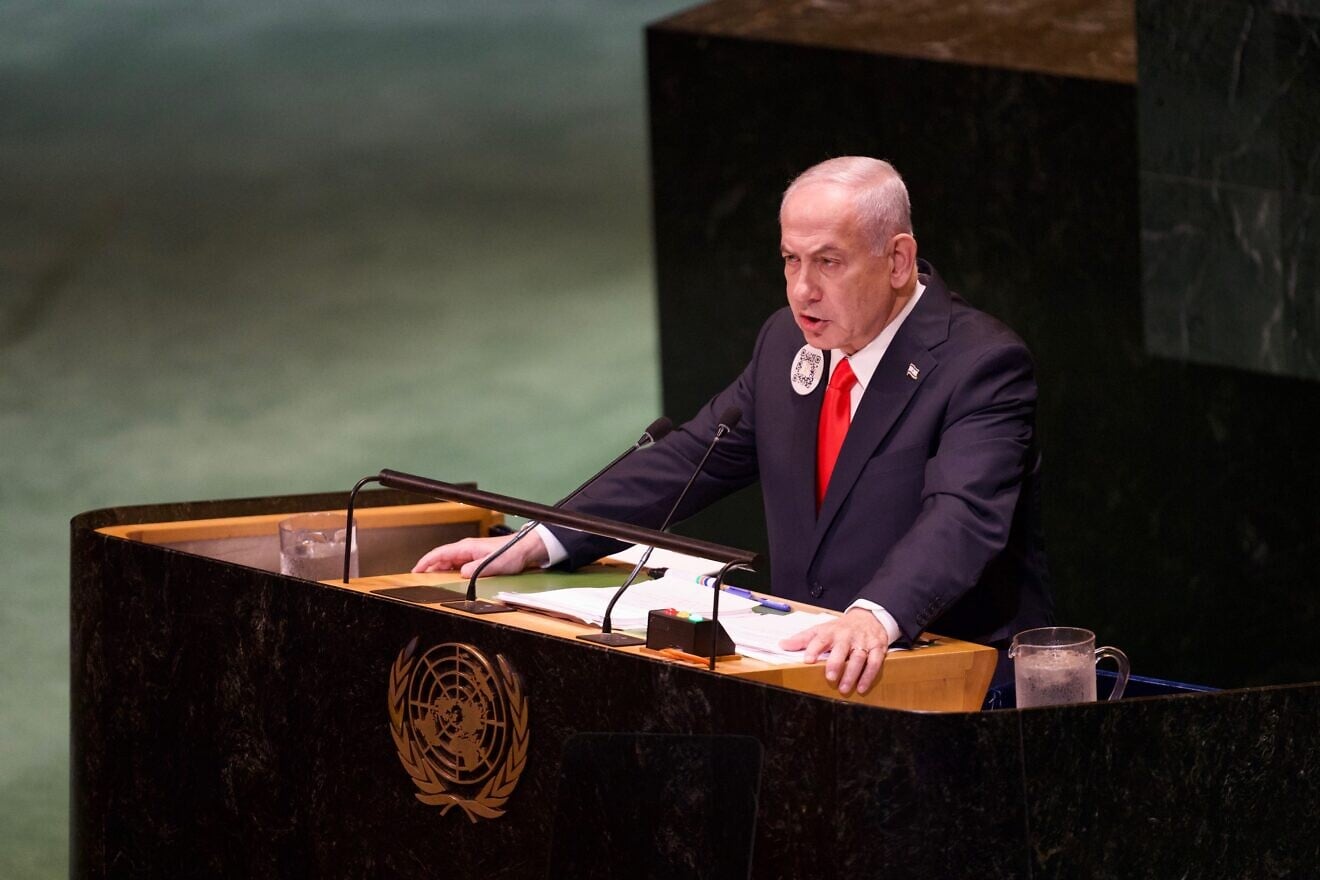
Israeli Prime Minister Benjamin Netanyahu addresses the U.N. General Assembly, Sept. 26, 2025. Photo by Perry Bindelglass/JNS

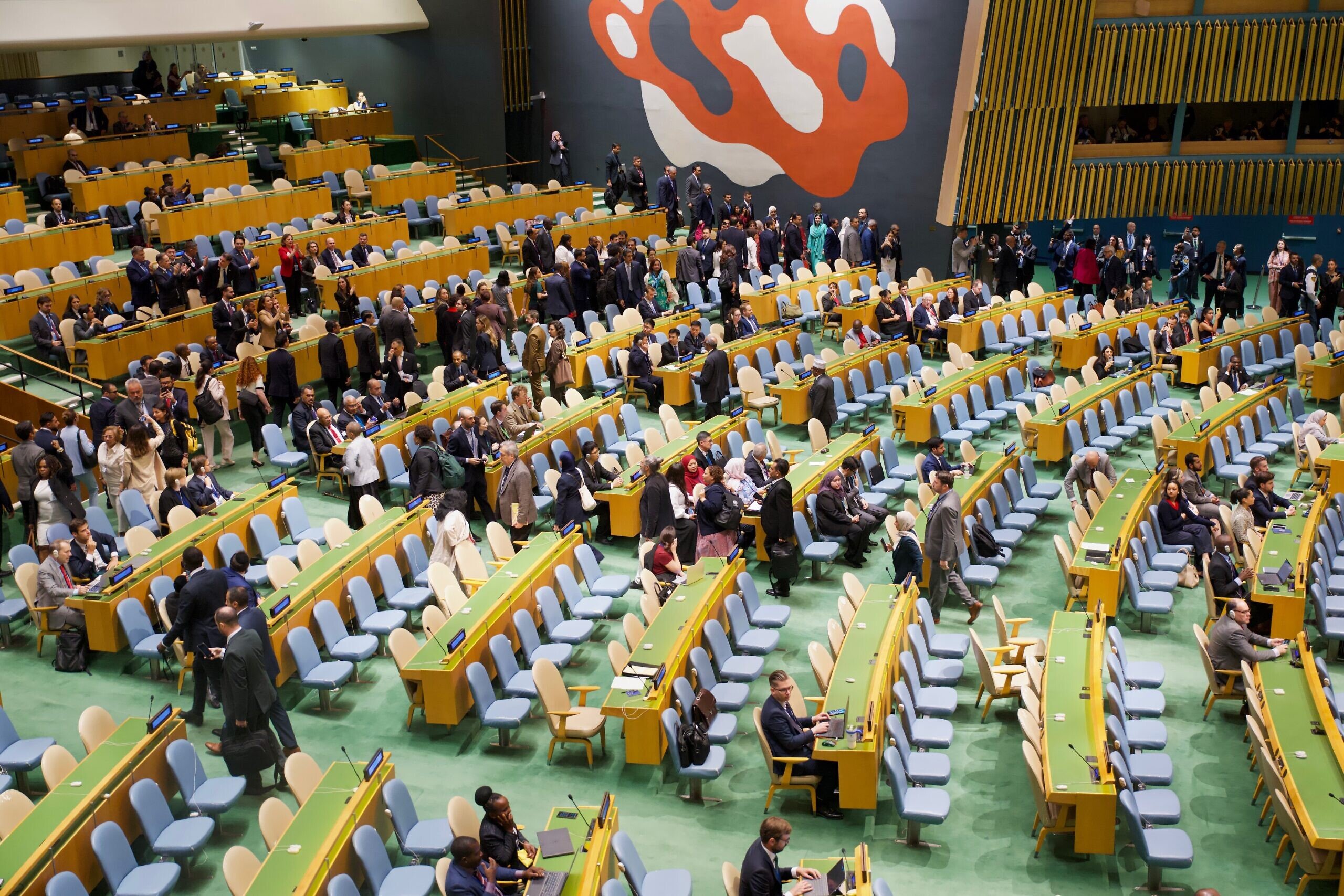
As dozens of people—part of a Palestinian mission to the United Nations-led walkout—exited the main hall of the world body after Israeli Prime Minister Benjamin Netanyahu was announced as the next speaker to address the U.N. General Assembly, the convener called repeatedly for “order in the hall” and for people to be seated.

Netanyahu looked out on those disrupting the proceedings and called everyone’s attention to the hostages, who continue “languishing in the dungeons of Gaza.” The Israeli premier then held up the map—identifying the “curse” of Syria, Iraq and Iran—that he had shown at the assembly last year.

“This axis threatened the peace of the entire world,” he said. “It threatened the ability of our region and the very existence of my country, Israel.”

Over the past year, Israel has “hammered” the Houthis, “crushed” the bulk of Hamas, “crippled” Hezbollah, “destroyed” Assad’s government in Syria, deterred Iran’s militias in Iraq and most importantly in the last decade, Netanyahu said, it “devastated” Iran’s atomic weapons and ballistic missiles program.

“Remember those beepers, pagers? We paged Hezbollah,” he said. “Believe me, they got the message.”

After crossing the threats off the map that he held up, Netanyahu added that Israel’s attack on Iranian nuclear sites “will go down in the annals of military history.”

“I want to thank President Trump for his bold and decisive action,” the Israeli prime minister said. “President Trump and I promised to prevent Iran from developing nuclear weapons, and we delivered on that promise.”

Netanyahu called for sanctions on Iran to snap back and for Iran’s nuclear stockpile to be destroyed.

There is still work to be done closer to home, too. Israel rebounded from its darkest day and delivered “one of the most stunning military comebacks in history, but we are not done yet,” he said. “The final remnants of Hamas are holed up in Gaza City.”

Israel has to finish the job as soon as possible, because Hamas has vowed to repeat the Oct. 7 attacks as often as it can.

“Much of the world no longer remembers Oct. 7,” Netanyahu said. “But we remember. Israel remembers Oct. 7.” He encouraged attendees to zoom in using their phones on a QR code lapel pin that he wore that links to a website with graphic images and videos of the Oct. 7 attacks.

A Palestinian-organized mass walkout during Israeli Prime Minister Benjamin Netanyahu’s address to the U.N. General Assembly on Sept. 26, 2025. Photo by Perry Bindelglass/JNS.

Netanyahu then addressed the hostages directly in Hebrew and English in the hopes that they would hear his message via “massive” speakers he had set up around Gaza.

“Our brave heroes, this is Prime Minister Netanyahu speaking to you live from the United Nations. We have not forgotten you, not even for a second,” he said. “The people of Israel are with you. We will not falter and we will not rest until we bring all of you home.”

Netanyahu told the assembly that thanks to Israeli intelligence, his words were also being streamed live to Gazan cell phones. He addressed “the remaining Hamas leaders” and the “jailers of our hostages.”

“Lay down your arms,” he said, raising his voice. “Let my people go. Free the hostages. All of them. The whole 48. Free the hostages now.”

“If you do, you will live,” he said. “If you don’t, Israel will hunt you down.”

Netanyahu told the assembly that Israel’s fight against global terror is also the West’s fight and that those who recognized a Palestinian state give the “ultimate reward” to “intolerant fanatics,” noting that “nearly 90% of Palestinians supported the attack on Oct. 7.

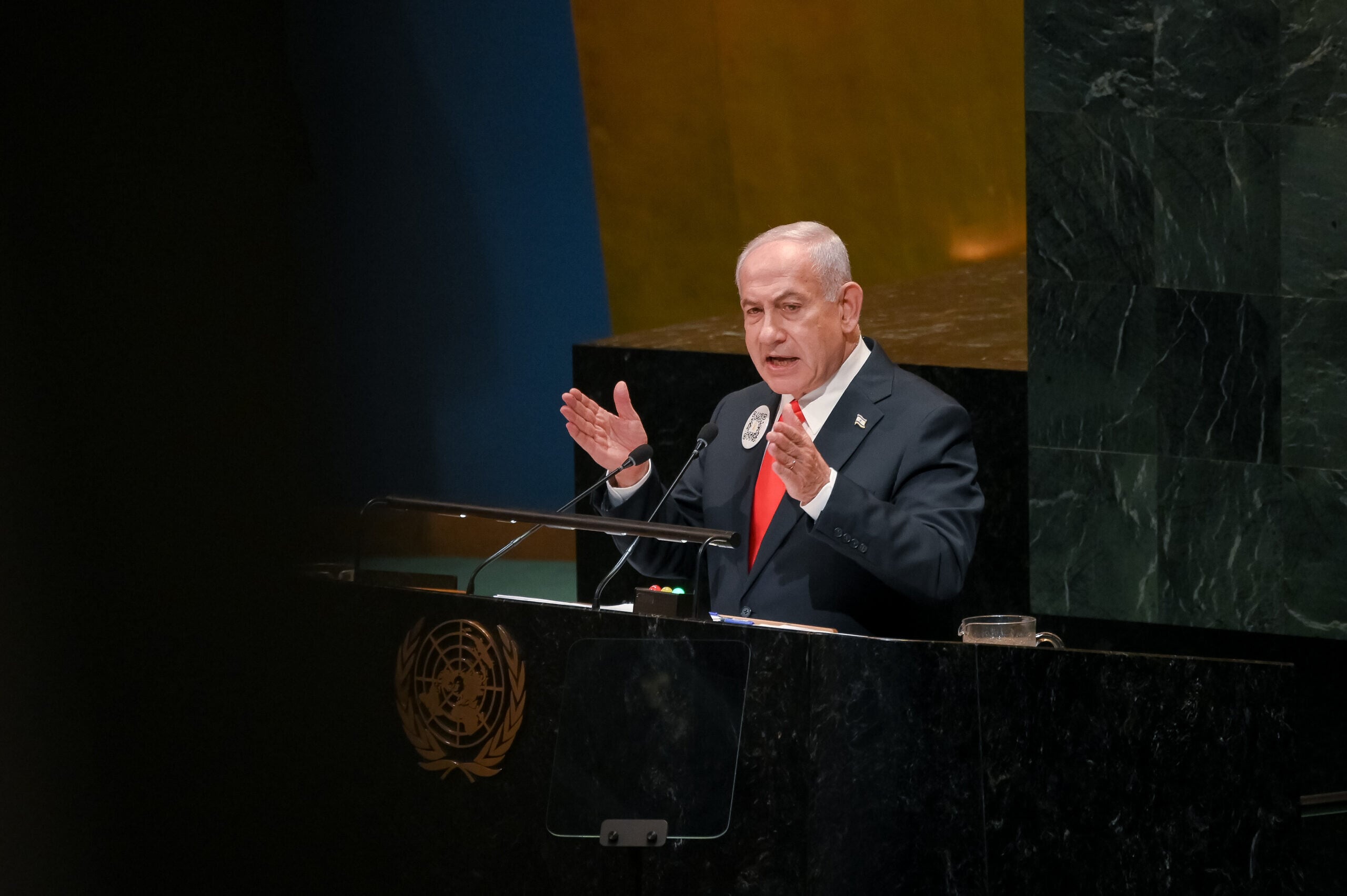
Israeli Prime Minister Benjamin Netanyahu addresses the United Nations General Assembly in New York City, Sept. 26, 2025. Credit: Liri Agami/Flash90.

“Giving the Palestinians a state one mile from Jerusalem after Oct. 7 is like giving Al-Qaeda a state one mile from New York City after Sept. 11,” he said. “This is sheer madness. It’s insane, and we won’t do it.”

Netanyahu told Western leaders that “Israel will not allow you to shove a terror state down our throats.”

“We will not commit national suicide, because you don’t have the guts to face down a hostile media and antisemitic mobs demanding Israel’s blood,” he said.

The Israeli premier was more optimistic about the potential for peace with Syria and Lebanon.

“We have begun serious negotiations with the new Syrian government,” Netanyahu said. “I believe an agreement can be reached that respects Syria’s sovereignty and protects both Israeli security and the security of the minorities in the region, including the Druze minority.”

“Peace between Israel and Lebanon is possible as well. I call on the Lebanese government to also begin direct negotiations with Israel,” he added.”

“I’m sure that if the Lebanese Government persists in its goal of disarming Hezbollah, peace will come very speedily and very readily,” Netanyahu said.


Zawartość publikowanych artykułów i materiałów nie reprezentuje poglądów ani opinii Reunion’68,
ani też webmastera Blogu Reunion’68, chyba ze jest to wyraźnie zaznaczone.
Twoje uwagi, linki, własne artykuły lub wiadomości prześlij na adres:
webmaster@reunion68.com

Trump’s ‘No West Bank Annexation’ Veto Isn’t What It Sounds Like, Expert Says


Trump’s ‘No West Bank Annexation’ Veto Isn’t What It Sounds Like, Expert Says

Debbie Weiss


US President Donald Trump speaks at the White House in Washington, DC, US, Sept. 25, 2025. Photo: REUTERS/Kevin Lamarque

Israelis were divided after US President Donald Trump declared on Thursday that he would not allow annexation of the West Bank, with some warning that blocking sovereignty could endanger national security and even risk another attack similar to the Hamas-led Oct. 7, 2023, invasion, while others argued the decision spared the country a costly international confrontation.

But legal scholar Eugene Kontorovich told The Algemeiner that Trump’s wording was being misunderstood, and that his remarks may still leave space for Israel to extend partial sovereignty in the West Bank, part of the ancestral Jewish homeland where the Palestinian Authority (PA) exercises limited self-governance.

Right-wing lawmakers, many of whom entered Israeli Prime Minister Benjamin Netanyahu’s coalition on promises of sovereignty, condemned Trump’s remarks as outside interference and urged Netanyahu to press ahead regardless.

“Israel is a sovereign state. No international actor, even a great beloved friend, can dictate to us how to treat our land,” Likud MK Dan Illouz said.

Zvi Sukkot of the Religious Zionism party argued that sovereignty “does not depend on any external factor, however friendly.” Another unnamed senior official went further, telling Hebrew media that Trump’s remarks amounted to “a real terror attack.”

Trump told reporters in the Oval Office on Thursday that he had also vetoed the idea of annexation in a closed-door conversation with Netanyahu. 

“I will not allow Israel to annex the West Bank. It’s not going to happen,” he said. “There’s been enough. It’s time to stop now.”

Kontorovich, who has long argued that the debate is being mischaracterized, noted that the term “annexation” itself is misleading. 

“Annexation implies taking territory that isn’t yours,” he told The Algemeiner. “What Israel has discussed is applying its civil law to parts of Area C in the West Bank that are already under Israeli jurisdiction. The Israeli government has made it clear it is not talking about diminishing the territory governed by the Palestinian Authority.”

Area C is the portion of the West Bank where Israel assumed full civilian and military control after the Oslo Accords, an agreement between Israeli and Palestinian authorities, three decades ago.

Trump’s comments on Thursday, Kontorovich argued, were not necessarily incompatible with Israeli mainstream positions. 

“The most literal understanding of Trump’s remarks is that he doesn’t want Israel to take over the entire West Bank. Since nobody is talking about that, it leaves room for other possibilities,” Kontorovich said.

Kontorovich suggested that applying Israeli law to major settlement blocs would be “a meaningful way to push back on the extremely harmful and dangerous British and French diplomatic efforts” to recognize a Palestinian state, while also improving Israel’s security “in a way that will redound to American benefit.”

Former Israeli Ambassador to Washington Michael Oren struck a more cautious note in comments to The Algemeiner, noting that Trump had “long opposed annexation of all or part” of the West Bank, but added that “annexation would be a justifiable response to the Palestinian Authority’s violation of its commitment under the Oslo Accords not to unilaterally change the status of the territories.” He echoed Kontorovich’s view that “annexation can certainly help meet Israel’s security needs.”

However, Oren warned that, “increasingly isolated internationally and facing serious threats of sanctions, Israel is extremely dependent on Trump’s support. We must be careful not to jeopardize it.”

Notably, both Finance Minister Bezalel Smotrich and National Security Minister Itamar Ben-Gvir, who have long promoted annexation and even branded 2025 as “the year of sovereignty,” did not respond publicly to Trump’s remarks. Days earlier, however, Smotrich echoed Illouz, saying, “The days when other nations decided our future are over.”

Yossi Dagan, head of the Samaria Regional Council, argued that only formal sovereignty could prevent the emergence of a “terrorist state” in the West Bank.

“[Netanyahu] must tell Trump: We will not allow another Oct. 7 — I am applying sovereignty,” he said prior to Trump’s comments.  

Kontorovich, who is a senior research fellow at the Washington DC-based Heritage Foundation, also emphasized deterrence. 

“Right now, Palestinian terrorists think that committing an Oct. 7 attack is a net winner. To discourage that, you need to create a disincentive, and an Israeli application of sovereignty to parts of the West Bank is a way of doing that,” he said. 

Some voices on the political right offered a different take. Israel Hayom columnist Ariel Kahana wrote that Trump “saved Israel from itself,” arguing that such a move at this point could trigger severe diplomatic and economic consequences. He added that Trump’s decision now gives Netanyahu a “crushing answer” to coalition partners who keep pressing for sovereignty. 

Kahana faulted the settlement movement for not offering a trade of shelving sovereignty in exchange for France – which led European nations in recognizing a Palestinian state at the UN — dropping its recognition of “Palestine,” saying Israel is now left with the worst of both outcomes: recognition of a Palestinian state abroad and no sovereignty at home.

Both Trump and Netanyahu lambasted the decision by a handful of Western countries — including France, the UK, Canada, and Australia — to officially recognize a Palestinian state, describing the move as a reward for Hamas’s terrorism and an invitation for Palestinians to continue waging war against Israel. Neither leader addressed the issue of potential West Bank annexation during their addresses to the United Nations General Assembly in New York this week.

After his meeting with Trump on the sidelines of the UN General Assembly, during which he declared recognition of a Palestinian state, French President Emmanuel Macron told France24 that when it came to the West Bank “the Europeans and the Americans are on the same page,” adding that “annexation was a red line for the US.”

Macron further warned that annexation would carry “grave consequences” for Israel and has made it clear that Paris sees a ban on sovereignty moves as essential to keeping the two-state option of resolving the Israeli-Palestinian conflict alive.

Ynet analysts reached a similar conclusion to Kahana, noting that Trump’s declaration “in some sense helps Netanyahu with his base and the extremists in his government,” since it relieves him of rejecting coalition demands directly.

Emirati officials told Washington earlier this month that annexation would inflict serious damage on the Abraham Accords and threaten the entire framework of Gulf-Israel ties. The UAE, which signed a normalization deal with Israel during Trump’s first term, has consistently viewed annexation as a major violation of the bargains that underpinned that agreement.

Israeli journalist and commentator Yair Sherki stressed that this is precisely why Trump cannot allow annexation to proceed. Even if Netanyahu were prepared to risk the Abraham Accords for sovereignty, Sherki noted, Trump will not — because the accords are his own signature achievement in the region.

Sherki added that postponement of a sovereignty declaration until after Netanyahu meets Trump on the sidelines of the UN “signals a fizzling out. If it doesn’t happen by the end of the [Sukkot] holidays, it won’t happen.”

Kontorovich concluded that applying Israeli civil law to the Jordan Valley — an area with virtually no Palestinian presence and long supported even by centrist and left-leaning lawmakers — could be one such option. “If Israel applies its civil law to the Jordan Valley, I don’t think anyone could say that it annexed the West Bank,” he said.


Zawartość publikowanych artykułów i materiałów nie reprezentuje poglądów ani opinii Reunion’68,
ani też webmastera Blogu Reunion’68, chyba ze jest to wyraźnie zaznaczone.
Twoje uwagi, linki, własne artykuły lub wiadomości prześlij na adres:
webmaster@reunion68.com
