Archive | 2025/09/18

Odpowiedź UN Watch: Analiza prawna wrześniowego raportu Komisji Pillay dla Rady Praw Człowieka ONZ


Odpowiedź UN Watch: Analiza prawna wrześniowego raportu Komisji Pillay dla Rady Praw Człowieka ONZ

UN Watch


Szesnastego września 2025 r. Komisja Pillay przekazała Radzie Praw Człowieka ONZ 72-stronicowy dokument zatytułowany Analiza prawna działań Izraela w Gazie na podstawie Konwencji w sprawie zapobiegania i karania zbrodni ludobójstwa. Dokument ten zawiera skrajne i bezpodstawne oskarżenia wobec Państwa Izrael, opierając się na jednostronnym materiale dowodowym, który pomija fakty przeczące z góry przyjętym wnioskom. Komisja Pillay, której mandat przewidywał niezależne ustalenia faktyczne, przygotowała raport, który jest niczym innym jak propagandą Hamasu ubraną w język prawniczy. Raport ten poważnie podważa wiarygodność międzynarodowego dochodzenia, prawo międzynarodowe oraz sam system ONZ.

Poniżej przedstawiamy streszczenie szczegółowej odpowiedzi prawnej UN Watch.

[ KLIKNIJ TUTAJ, ABY ZAPOZNAĆ SIĘ Z PEŁNĄ ODPOWIEDZIĄ PRAWNĄ ]

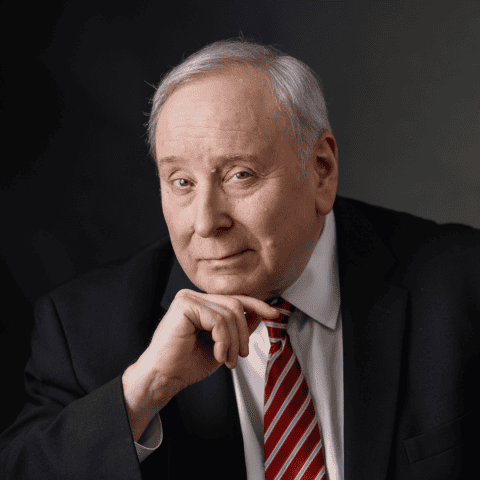
Autor: Salo Aizenberg

Oskarżenia o ludobójstwo należą do najpoważniejszych zarzutów, jakie można postawić państwu. Przywołują one najciemniejsze epizody współczesnej historii – takie jak Holokaust, Rwanda czy Srebrenica – i niosą za sobą poważne konsekwencje prawne oraz ogromny ciężar moralny. Z tego powodu Konwencja w sprawie zapobiegania i karania zbrodni ludobójstwa z 1948 roku ustanawia celowo bardzo wysoką poprzeczkę: ludobójstwo wymaga udowodnienia szczególnego zamiaru (dolus specialis) zniszczenia w całości lub w części chronionej grupy „jako takiej”.[1] Zamiar ludobójczy można uznać za udowodniony tylko wtedy, gdy nie istnieje żadna inna rozsądna interpretacja dowodów. Same ofiary cywilne, szeroko zakrojone zniszczenia czy podburzająca retoryka nie są wystarczające; konieczne jest wykazanie, że śmierć i cierpienie były rezultatem celowej polityki eksterminacji. Ustalenie takiego zamiaru należy do najtrudniejszych elementów prawa międzynarodowego – i właśnie na tym etapie zarzut ludobójstwa wobec Izraela upada, zanim jeszcze rozpatrzymy wypaczenia w przedstawieniu jego działań w Gazie zawarte w Raporcie.

Raport Komisji Śledczej Rady Praw Człowieka ONZ jest fundamentalnie wadliwy: jego argumentacja jest poważnie błędna, podstawa dowodowa niewiarygodna, a metodologia nieprofesjonalna. Raport wybiórczo interpretuje wypowiedzi izraelskich przywódców, przyjmuje niezweryfikowane dane o ofiarach od Hamasu, pomija systematyczne wykorzystywanie ludności cywilnej jako żywych tarcz przez Hamas, opiera się na niesprawdzonych doniesieniach medialnych (np. z Al-Dżaziry) i zakłada, że wszystkie cywilne ofiary w Gazie są wynikiem celowego ostrzału ze strony Izraela. Równie rażące są jego pominięcia. Raport całkowicie pomija fakt, że Hamas to aktywny uczestnik walk; na przestrzeni 72 stron nie znajdziemy ani jednej wzmianki, że Siły Obronne Izraela (IDF) walczą z liczącą 30 000 bojowników armią, która zbudowała pole walki ufortyfikowane 500 kilometrami tuneli. Te braki pozbawiają dokument wiarygodności prawnej i czynią go nieodróżnialnym od propagandy przebranej w język prawa.

Poniższe zestawienie wskazuje główne wady raportu („Raport”) sporządzonego przez Komisję Śledczą („Komisję”) oraz wyjaśnia, dlaczego przedstawione dowody nie pozwalają na postawienie zarzutu ludobójstwa zgodnie z prawem międzynarodowym:


Główne braki i błędy raportu:


1. Nieudowodnienie dolus specialis:

Kluczowym i niezwykle wysokim progiem w każdej sprawie o ludobójstwo jest udowodnienie szczególnego zamiaru zniszczenia chronionej grupy. Twierdzenie Komisji o istnieniu takiego zamiaru upada już na tym etapie – opiera się na karkołomnych interpretacjach wypowiedzi, wybiórczych cytatach i spekulacjach, zamiast na jednoznacznych dowodach.


2. Wymazanie Hamasu jako strony konfliktu:

Raport ani razu nie przyznaje, że IDF prowadzi działania wojenne przeciwko ok. 30-tysięcznej sile bojowej Hamasu oraz tysiącom bojowników innych ugrupowań zbrojnych. Czytelnik mógłby dojść do wniosku, że wojna polega na tym, iż IDF atakuje wyłącznie kobiety i dzieci – Hamas znika z narracji. Komisja nie podejmuje żadnej próby analizy konfliktu zbrojnego, bo w jej alternatywnej wersji rzeczywistości ten konflikt po prostu nie istnieje.


3. Milczenie na temat infrastruktury wojskowej Hamasu:


Brak jakiejkolwiek wzmianki o 17-letnim procesie militaryzacji Gazy przez Hamas – sieci tuneli, pułapkach w budynkach mieszkalnych, czy masowym gromadzeniu broni. Pomijając te fakty, raport pozbawia konflikt kontekstu militarnego i przedstawia legalne cele wojskowe jako dowody ludobójstwa.


4. Pominięcie wykorzystywania infrastruktury cywilnej przez Hamas:

Komisja ignoruje fakt, że Hamas otwarcie stosuje strategię żywych tarcz[2], wykorzystując meczety, szkoły, budynki mieszkalne i szpitale do ukrywania tuneli i broni. Zamiast tego, każde zniszczenie takich obiektów przedstawiane jest jako celowy atak Izraela na ludność cywilną.


5. Brak informacji o kryzysie zakładników:

Raport nie wspomina, że Hamas uprowadził izraelskich zakładników i wciąż ich przetrzymuje, głodzi[3] i gwałci[4]. To przemilczenie wpisuje się w szerszą strategię wymazania Hamasu jako aktywnego uczestnika konfliktu, co usuwa kluczowy kontekst z narracji Komisji.


6. Poleganie na danych o ofiarach dostarczonych przez Hamas:

Pomimo wieloletniej historii zawyżania liczby ofiar cywilnych przez Hamas oraz uznania go za organizację terrorystyczną przez USA i UE, jego dane są traktowane jako wiarygodne fakty, podczas gdy statystyki IDF dotyczące zabitych bojowników są ignorowane.


7. Ofiary cywilne jako „dowód” ludobójstwa:

Raport traktuje ofiary cywilne jako dowód zamiaru ludobójstwa, a nie jako tragiczne i nieuniknione skutki walk w terenie zurbanizowanym, pogłębione przez strategię żywych tarcz stosowaną przez Hamas. Liczne przypadki śmierci cywilów są przedstawiane jako zamierzone działania Izraela – bez dowodów.


8. Skutki wojny jako zbrodnia:

Typowe skutki wojny, takie jak problemy psychiczne, ograniczony dostęp do opieki medycznej czy przesiedlenia, są ukazywane jako elementy ludobójstwa, zamiast jako nieuniknione skutki konfliktu miejskiego.


9. Zniszczenia urbanistyczne jako rzekoma eksterminacja:

Zniszczenia na dużą skalę przedstawiane są jako dowód na eksterminację, pomimo że walki w zurbanizowanym środowisku z natury prowadzą do znacznych zniszczeń, szczególnie gdy siły militarne ukrywają się wśród ludności cywilnej.


Komisja ignoruje też rzecz oczywistą: cierpienia mieszkańców Gazy można by znacząco zmniejszyć, a nawet zakończyć, gdyby Hamas uwolnił zakładników i zrzekł się władzy nad Gazą. Twierdzenie, że ludność doświadczająca rzekomego ludobójstwa ma możliwość jego zakończenia, lecz z niej nie korzysta, jest bezprecedensowe w historii prawdziwych ludobójstw i odsłania świadomą ślepotę raportu. To przemilczenie współgra z szerszym wymazaniem Hamasu jako strony konfliktu – grupy posiadającej sprawczość i odpowiedzialność – pozostawiając czytelnika z fałszywym wrażeniem, że całe cierpienie w Gazie to wyłącznie wina Izraela.

Raport jest pełen błędów faktycznych i twierdzeń pozbawionych wiarygodnych dowodów. Pełne zestawienie tych błędów wraz z ich sprostowaniami byłoby dłuższe niż sam raport. Niniejsza odpowiedź podkreśla kluczowe przekłamania i istotne pominięcia, na których Komisja opiera swoją tezę o ludobójstwie.


Przypisy źródłowe:
[1] Konwencja w sprawie zapobiegania i karania zbrodni ludobójstwa, 78 U.N.T.S. 277 (przyjęta 9 grudnia 1948 r., weszła w życie 12 stycznia 1951 r.), link

[2] How Hamas is fighting in Gaza: tunnels, traps and ambushes, NYT (13 lipca 2024), link

[3] World leaders condemn videos of emaciated Israeli hostages in Gaza…, BBC (4 sierpnia 2025), link

[4] Hostages released from Gaza detail sexual violence…, CNN (8 lipca 2025), link; The Dinah Project, (czerwiec 2025), link; Raport ONZ z wizyty urzędników ds. przemocy seksualnej (marzec 2024), link


Link do oryginału: https://unwatch.org/un-watch-rebuttal-legal-analysis-of-pillay-commissions-september-2025-report-to-human-rights-council/

UN Watch, 16 września 2025


Zawartość publikowanych artykułów i materiałów nie reprezentuje poglądów ani opinii Reunion’68,
ani też webmastera Blogu Reunion’68, chyba ze jest to wyraźnie zaznaczone.
Twoje uwagi, linki, własne artykuły lub wiadomości prześlij na adres:
webmaster@reunion68.com



Spain’s PM Sánchez Faces Backlash for Fueling Anti-Israel Hostility Amid Surge in Antisemitic Incidents


Spain’s PM Sánchez Faces Backlash for Fueling Anti-Israel Hostility Amid Surge in Antisemitic Incidents

Ailin Vilches Arguello


Cycling – Vuelta a Espana – Stage 21 – Alalpardo to Madrid – Madrid, Spain – Sept. 14, 2025: Barriers are smashed by anti-Israel protesters during Stage 21. Photo: REUTERS/Ana Beltran

Spanish Prime Minister Pedro Sánchez is facing backlash from his country’s political leaders and Jewish community, who accuse him of fueling antisemitic hostility after incidents at the Vuelta a España disrupted the prestigious cycling race.

Amid a sharp rise in anti-Jewish hate crimes and anti-Israel sentiment, Lorenzo Rodríguez, mayor of Castrillo Mota de Judíos in northern Spain, accused the country’s leader of “fueling a discourse of hatred” against Israel and the Jewish people.

“The government is fostering antisemitism that will prove deeply damaging for Spain,” Rodríguez said in an interview with the local outlet El Español.

“Sánchez’s moves are less about serious foreign policy and more about deflecting attention from his trials and failures in governance,” he continued. “Spain isn’t leading anything — it’s merely whitewashing Hamas and other terrorist groups.”

On Sunday, anti-Israel protests forced the finale of the Vuelta a España cycle race to be abandoned as police tried to quell demonstrations against the participation of an Israeli team.

In his interview, Rodríguez blamed Sánchez for fostering a hostile climate in Spain, saying the country is witnessing “hatred toward an entire people.”

He also criticized the Spanish leader for failing to take a strong stand on other international crises, including those in Russia and Venezuela.

“We all recognize that the Palestinian people are suffering, but the solution cannot be to blame the Jewish people,” Rodríguez said.

“People are afraid. There’s growing concern because our town was recently targeted,” he continued. “We are being singled out and threatened even though we have nothing to do with this war.”

Before the incidents on Sunday that led to the race’s cancellation, Sánchez expressed “admiration for the Spanish people mobilizing for just causes like Palestine” through their protests.

Madrid’s Mayor José Luis Martínez-Almeida strongly condemned Sánchez’s statement, accusing him of encouraging hostility and fueling tensions.

“The prime minister is directly responsible for this violence, as his statements this morning helped instigate the protests,” Martinez-Almeida said after the race was canceled.

“Today is the saddest day since I took office as mayor of this great city,” he continued.

Santiago Abascal, leader of the far-right Vox party, also criticized Sánchez’s remarks, accusing him of stoking division to maintain his hold on power.

“The psychopath has taken his militias to the streets,” Abascal wrote in a post on X. “He doesn’t care about Gaza. He doesn’t care about Spain. He doesn’t care about anything. But he wants violence in the streets to maintain power.”

Shortly after the incidents, the Federation of Jewish Communities of Spain (FCJE) publicly denounced the violence, urging authorities to respond quickly and decisively.

“Violence and intimidation have no place in a democratic society and cannot be excused under the guise of freedom of expression,” FCJE said in a statement.

“These violent demonstrations fuel hatred and contribute to a concerning rise in antisemitism in Spain, which we have been warning about over the past two years,” the statement read. “It is unacceptable that violence is justified on ideological grounds and hostility is directed toward the Jewish community”

Since the start of the war in Gaza, Spain has become one of Israel’s fiercest critics, a stance that has only intensified in recent months, coinciding with a shocking rise in antisemitic incidents targeting the local Jewish community — from violent assaults and vandalism to protests and legal actions.

On Monday, Sánchez called for Israel to be barred from international sports events after pro-Palestinian activists disrupted the finale of the Vuelta cycling race in chaotic scenes in Madrid.

“The sports organizations should ask whether it’s ethical for Israel to continue participating in international competitions. Why was Russia expelled after invading Ukraine, yet Israel is not expelled after the invasion of Gaza?” Sánchez said while speaking to members of his Socialist Party.

“Until the barbarity ends, neither Russia nor Israel should be allowed to participate in any international competition,” the Spanish leader continued.

Israeli Foreign Minister Gideon Saar condemned Sánchez’s remarks, labeling him “an antisemite and a liar.”

“Did Israel invade Gaza on Oct. 7th or did the Hamas terror state invade Israel and commit the worst massacre against the Jews since the Holocaust?” the top Israeli diplomat wrote in a post on X.

The Palestinian terrorist group Hamas started the war in Gaza on Oct. 7, 2023, when it led an invasion of southern Israel, murdered 1,200 people, and kidnapped 251 hostages while perpetrating widespread sexual violence against the Israeli people.

Israel responded with an ongoing military campaign aimed at freeing the hostages and dismantling Hamas’s military capabilities and political rule in Gaza.

As part of its anti-Israel campaign, Spain announced on Tuesday that it will boycott next year’s Eurovision Song Contest if Israel participates, citing the country’s military offensive against Hamas in the war-torn enclave.

Last week, Sánchez also unveiled new policies targeting Israel over the war in Gaza, including an arms embargo and a ban on certain Israeli goods.

The Spanish government announced it would bar entry to individuals involved in what it called a “genocide against Palestinians,” block Israel-bound ships and aircraft carrying weapons from Spanish ports and airspace, and enforce an embargo on products from Israeli communities in the West Bank.

In one of its latest attempts to curb Israel’s defensive campaign in Gaza, Spain has canceled a €700 million ($825 million) deal for Israeli-designed rocket launchers, as the government conducts a broader review to systematically phase out Israeli weapons and technology from its armed forces.

Saar has denounced Sánchez’s latest actions, accusing the government in Madrid of antisemitism and of pursuing an escalating anti-Israel campaign aimed at undermining the Jewish state on the international stage.

“The government of Spain is leading a hostile, anti-Israel line, marked by wild, hate-filled rhetoric,” Saar wrote in a post on X, accusing Sánchez’s “corrupt” administration of trying to “divert attention from grave corruption scandals.”

“The obsessive activism of the current Spanish government against Israel stands out in light of its ties with dark, tyrannical regimes — from Iran’s ayatollahs to [Nicolás] Maduro’s government in Venezuela,” the Israeli diplomat continued.


Zawartość publikowanych artykułów i materiałów nie reprezentuje poglądów ani opinii Reunion’68,
ani też webmastera Blogu Reunion’68, chyba ze jest to wyraźnie zaznaczone.
Twoje uwagi, linki, własne artykuły lub wiadomości prześlij na adres:
webmaster@reunion68.com

The problem is the normalization of hate, not cancel culture


The problem is the normalization of hate, not cancel culture

Jonathan S. Tobin


Firing those who dissent is troubling. But progressive hate cheering for Hamas and the murder of Charlie Kirk, along with right-wing conspiracy theories, shouldn’t be platformed.

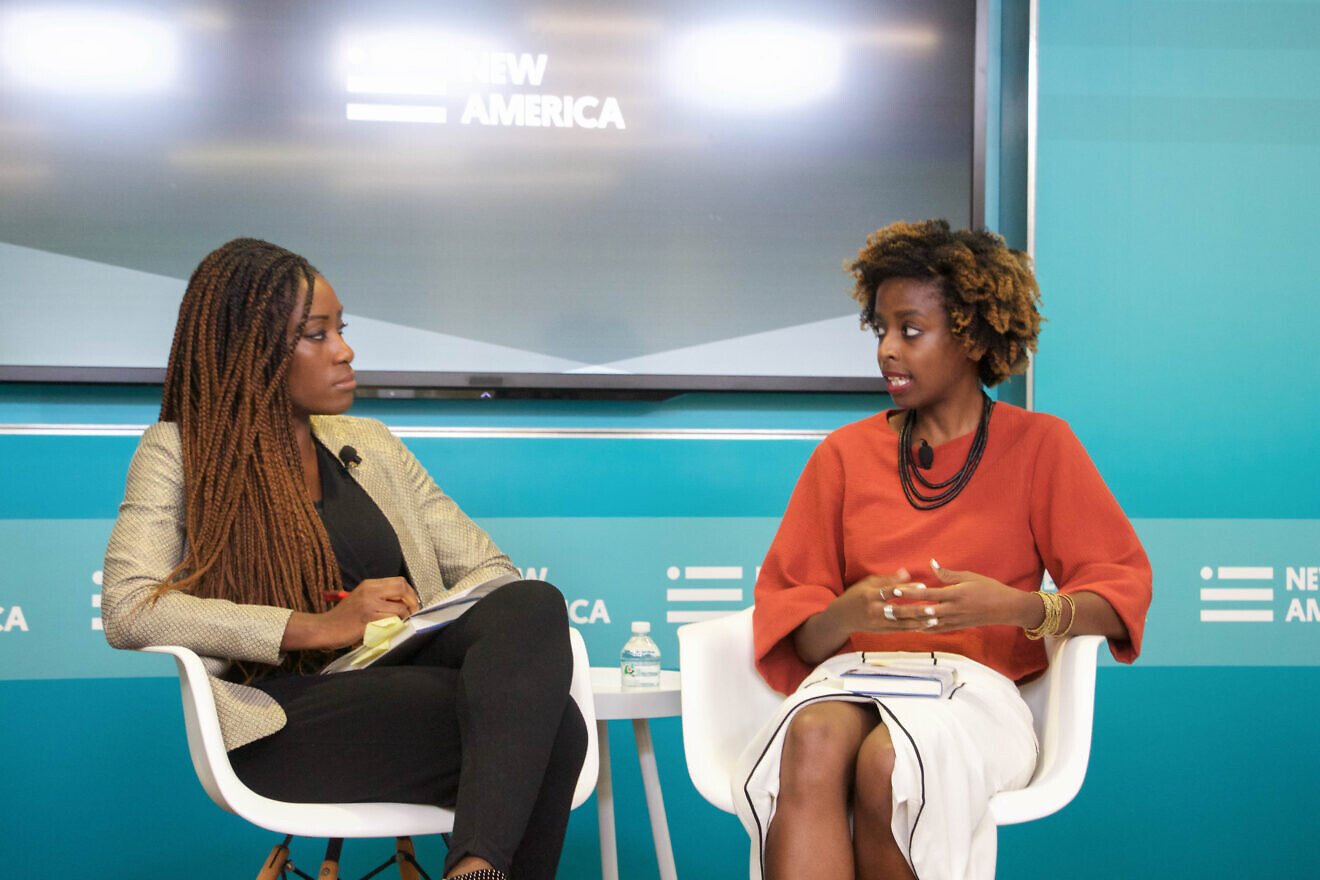
Karen Attiah, global opinions editor for “The Washington Post” (left) with Alexis Okeowo, staff writer for “The New Yorker,” a New America fellow and author of “A Moonless, Starless Sky: Ordinary Women and Men Fighting Extremism in Africa,” Oct. 11, 2017. Credit: New America via Wikimedia Commons.

For many readers of The Washington Post who care about the normalization of antisemitism, it was a case of good riddance. Karen Attiah was named the newspaper’s first Global Opinions editor in 2016 and has been a columnist since 2021. This week, she claimed that she was fired over what the newspaper said was a series of posts about the assassination of conservative activist Charlie Kirk, which the paper said were “unacceptable,” and constituted “gross misconduct” and “endangering the physical safety of colleagues.”

Are her posts about Kirk’s murder reason enough to lose her job?

Corrupted institutions

Her publishers’ excuses and disingenuous “safety” language notwithstanding, the real issue with Attiah or any other similar situation isn’t really about cancel culture.

It’s what it says about the PostThe New York Times and other corporate media institutions that employ many people like her. That they thought placing radical hate-mongers like Attiah in charge of influential platforms was a good idea in the first place is the problem.

We should be extremely wary of engaging in a culture war in which the goal is to silence, shame and even hound out of the public square people with whom we disagree. The question we should be asking in the wake of this latest example of political violence is not about how best to punish those who use their social-media accounts to say terrible things. It’s why we have allowed institutions that should be the bulwark of democracy, like journalism, to be so corrupted as to normalize the sort of public discourse from people like Attiah, whose goal is to tear down the foundations of the American republic and Western civilization.

Attiah has every right to say what she likes. And the same goes for anyone else who unfairly and insensitively defamed Kirk after his death. The same applies to those extremists on the far right who sought to exploit the assassination to promote their own brand of conspiracy theories, whether it was the libelous claim that Israel was responsible or other antisemitic insinuations about the crime.

No one should interfere with the ability of those who behave in this fashion to post on social media (so long as they are not directly advocating violence), stand on street corners or march in the streets while spouting their lies, whether about Kirk, other conservatives, or Israel and the Jews. Still, that doesn’t entitle them to a job at the top newspapers in the country, a tenured professorship at an Ivy League university or a position at a private company whose owners want no part of such madness. And it ought not to grant immunity from criticism or legal action when they violate the law or help fund radical groups like Antifa or Students for Justice in Palestine, both of which promote violence and hate.

What we want is not a nation that chills speech. We crave a culture of political discourse that doesn’t normalize hate and toxic extremist ideas—that doesn’t exacerbate racial divisions and promote antisemitism. Just as important, we should be actively discouraging a belief that political violence—whether against conservative activists, insurance company executives or politicians disliked by fashionable opinion on the left—is acceptable discourse.

Marginalizing hate-mongers

Our challenge isn’t how best to silence or punish ideologues who ran to TikTok to cheer for Kirk’s murderer or to mock those who mourned him. It’s recreating a political culture where such people are relegated to the fever swamps of the far left and right, where they belong, rather than featuring them in the mainstream media or allowing them to dominate our educational system.

Attiah was one among many being held up for opprobrium, even sometimes losing their jobs for their insensitive reactions to an act of political violence. But for those who have followed her career, her broadsides aimed at Kirk following his death were typical of her brand of journalism. She claimed that she was fired for “speaking out against political violence, racial double standards and America’s apathy toward guns.” The truth is that she is a typical of those self-styled progressives who have no problem with political violence so long as it is directed against people and groups that she thinks have no rights worthy of respect—for example, Israelis and Jews.

The columnist has written explicitly of her belief that the State of Israel had no right to exist. She falsely labels it a European-style colonial project, rather than an expression of Jewish self-determination in their ancient homeland. Even before the Oct. 7 Hamas-led Palestinian attacks on Israeli communities, she was cheerleading for the effort to defend the genocidal terrorists in Gaza from the consequences of their crimes, and delegitimizing Israel and its right of self-defense.

Her work illustrated how toxic left-wing myths like critical race theory, intersectionality and settler-colonialism are a method to normalize antisemitism. Indeed, as an alumnus of one of those institutions that have been a bastion of such terrible ideas—Attiah graduated from Columbia University’s School of International Affairs—there is no better example of the way the academy manufactures and then spreads Jew-hatred.

Many on the political left, like Attiah, thought the aftermath of Kirk’s murder was a license to not only vent their anger at his views, but to post misleading, if not downright false, information about the late activist. They now say that retribution for this is no different from something that the right has long decried: cancel culture.

That’s not a charge that can be dismissed out of hand. And it’s one that is also related to the assertions that President Donald Trump’s efforts to roll back the tide of woke antisemitism at colleges and universities are an infringement on free speech, academic freedom and a form of cancel culture.

Is the backlash against those who mocked Kirk’s death different from the moral panic about race that swept across the United States during the Black Lives Matter summer of 2020? That moment of peak progressive conquest of America’s media and culture led to cancellations of those who were deemed insufficiently sympathetic to BLM or otherwise denounced as “racists.” Most educational institutions, arts organizations, celebrities and even many corporations quavered in the face of this Jacobin-like attempt to purge conservatives or even moderates who wouldn’t bend their knees to BLM lies about race from the public square.

A failure to engage

Left-wingers who were happy to join the cancel culture mobs in 2020 or to cheer on the efforts of pro-Hamas activists to target Jews since Oct. 7 have suddenly discovered that being ostracized in this way isn’t a good thing. They assert that those who disagreed with Kirk—like Attiah and the countless others who have been attacking the victim of an assassination as someone who got what he deserved—are being unfairly punished.

As we saw in 2020, the impulse to persecute those who contradict the conventional wisdom of the moment and to seek to deprive them of their livelihoods is antithetical to how a free republic operates.

The real sickness afflicting American democracy is not primarily the fault of extreme speech that breeds angry arguments, but the unwillingness of so many people to engage with views differing from their own. The bifurcated political culture, in which much of the country reads, listens and watches two entirely different sets of media outlets, has created an almost unbridgeable gap between left and right. That has made many people uncomfortable with opinions or even facts that contradict their assumptions and prejudices. It also encourages them to engage in radical speech that demonizes their political foes.

Thus, it wasn’t enough for many people to state their disagreements with Kirk’s views about Trump, abortion, immigration, gun rights, gender ideology and even Israel (he was a strong and vocal supporter of the Jewish state). They also felt compelled to damn him as a racist, hate-monger, fascist or Nazi, and to double down on the same smears of Trump and his supporters.

That’s bad enough under normal circumstances. But those who did so after the object of their intemperate invective was murdered for exercising his right to free speech are understandably being criticized for what is, at best, insensitive behavior and, at worst, exactly the sort of hate speech that encourages more political violence.

Moving the Overton Window

So, what should our response be to this sort of speech? Should those who do so be held up to public outrage by being “ratioed” with a flood of critical comments on their social-media feeds—the 21st-century-version of the Medieval punishment of being put in the stocks in the public square for passersby to jeer at? Should they lose their livelihoods and be run out of town?

The answer to that question most often depends on whether the offending poster is situated on your side of the political aisle. We tend to be more forgiving of allies who misbehave online and demand the scalps of those whose opinions contradict our own.

Regardless of where you stand on the political spectrum, some basic truths need to be acknowledged. If you’re going to express opinions that are nasty, insensitive or extreme, then you don’t have standing to play the victim if other people who are offended respond in the same way. That doesn’t excuse foul language or threats, which platform providers have every right to moderate.

Yet we need to draw some distinctions here. Espousing opinions on a wide range of political issues, about which those who believe in democracy are compelled to agree to disagree, is not something that should be treated as a reason for shunning.

Supporting political violence, however, is not the same as backing a particular political candidate on the right or the left. Nor should we treat open racism—whether in the form of white nationalism or fashionable left-wing “anti-racism,” or antisemitism in all of its forms—as the same thing as just having a position on the best way to achieve racial harmony or how to bring about peace in the Middle East. What we’ve seen on the left is the growth of what can only be termed “assassination culture,” as some people laud those who murder their political foes or the terrorists of Hamas. Those who are part of this trend shouldn’t complain if their fellow citizens or their employers want nothing to do with them.

The problem is that the Overton window of acceptable discourse was deliberately shifted by progressives so as to treat their own extremist views about race, gender, American history, the Jews and Israel as normal, and to brand those who defended traditional values on religion, liberty and Jewish rights as hateful. Attiah is someone who despises the America to which her African parents immigrated, and who backs genocidal positions that deny Jewish history and rights. A political culture in which someone like her is treated as a respected voice rather than a marginal extremist is sick and in need of reform.

The same applies to someone like Tucker Carlson, who may have been a much-needed tribune of conservative resistance to BLM and the far left in 2020, but has since descended into an antisemitic extremist rabbit hole since being fired from his prominent position at Fox News. Those on the right who may disagree with him but are still treating his views as worthy of platforming—unfortunately, that included Charlie Kirk—are wrong.

What happened at The Washington Post and Fox News was not the cancellation of independent voices. They were necessary corrections by companies that don’t wish to be identified with extremism, and to that end, they cleaned house.

The Post’s billionaire owner, Amazon founder Jeff Bezos, may be a hypocrite who shows no sign of having much in the way of principles. And he has belatedly concluded that his money-losing sinkhole of a publication is better off with its editorials and columnists defending free markets and personal liberty, as opposed to partisan progressive extremism. He is trying to align himself with most Americans and actually doing something to defend the democracy that its banner warns will “die in darkness.”

Fox News owner Rupert Murdoch likely also feels himself well rid of Carlson’s particular brand of isolationism and hate for Israel, mixed in with kowtowing to tyrants in Russia and Qatar.

Attiah and Carlson may well prosper on Substack or podcasts on X, though they shouldn’t be silenced or interfered with by the government. Still, they have no place in mainstream media or discourse. Marginalizing them and other radicals aren’t examples of cancel culture to be decried. It’s just common sense. It’s also a sign: We need not despair that we are doomed to helplessly watch the polarization they represent send the American republic tumbling into a civil war between the left and the right.


Jonathan S. Tobin is editor-in-chief of the Jewish News Syndicate, a senior contributor for The Federalist, a columnist for Newsweek and a contributor to many other publications. He covers the American political scene, foreign policy, the U.S.-Israel relationship, Middle East diplomacy, the Jewish world and the arts. He hosts the JNS “Think Twice” podcast, both the weekly video program and the “Jonathan Tobin Daily” program, which are available on all major audio platforms and YouTube. Previously, he was executive editor, then senior online editor and chief political blogger, for Commentary magazine. Before that, he was editor-in-chief of The Jewish Exponent in Philadelphia and editor of the Connecticut Jewish Ledger. He has won more than 60 awards for commentary, art criticism and other writing. He appears regularly on television, commenting on politics and foreign policy. Born in New York City, he studied history at Columbia University.


Zawartość publikowanych artykułów i materiałów nie reprezentuje poglądów ani opinii Reunion’68,
ani też webmastera Blogu Reunion’68, chyba ze jest to wyraźnie zaznaczone.
Twoje uwagi, linki, własne artykuły lub wiadomości prześlij na adres:
webmaster@reunion68.com