Archive | March 2026

The Sad Clowns of Hollywood


The Sad Clowns of Hollywood

Liel Leibovitz


‘Clown Boss’ Chad Damiani is leading a movement of experimental comedy. Could it be the future of the funny business?

Chad Damiani at the Elysian Nights ATX / Travis P. Ball/SXSW Conference & Festivals via Getty Images

The Angelenos, about 30 or 40 of them, crammed into a dark rehearsal room behind a thick red curtain in a strip mall in East L.A. They were standing around in a circle and sharing their pronouns, which was the first activity of the evening that seemed to bring them some measure of comfort. Beforehand, while waiting for the workshop to begin, they were bumping into each other awkwardly, attempting conversation.

“Oh my God! You were at my improv class last week, right? Courtney?”

“No. Sam. Sorry. Must’ve been a different white girl.”

But the circle ended all that nervous chatter. The circle was a sign, heralding the coming of the Clown Boss.

Bald, bearded, all dressed in black, with a little belly and big biceps, he took his place in the circle and proceeded to share a string of perfectly anodyne observations—we’re here to have fun, don’t touch strangers in ways that may make them feel uncomfortable, that sort of thing—before pausing and looking around the room, meeting each and every gaze.

“Above all,” he said, his voice growing slower and more steely, “I ask you this: Remember me as I am now.”

And with that, the jacket came off, and the Clown Boss was left in a tight-fitting black tank top and elbow braces, looking as if he were about to climb the ropes of a wrestling arena and deliver a perfect diving elbow drop. The four-hour clowning workshop, one of L.A.’s hottest events, has begun.

The first exercise, he announced as the kids scattered to find a plastic chair and sit down, is called The Borg. “It’s about being the same but different.” Volunteers were called for. Two brave souls raised their hands.

The Clown Boss beckoned them to the makeshift stage in the front of the room, instructed an associate to play some raucous music, and asked each of the contestants onstage to improvise a dance move. The man—whose name was lost in the din but who looked like a Chad or a Brad, complete with a hoodie, shorts, and a ratty baseball cap worn backwards—pretended to hit a baseball. The woman, willowy and framed by pants that rode well into her midriff, pretended to be one of those colorful nylon figures outside used car lots, swaying wildly in the air.

As the two were doing their thing, the Clown Boss gave the rest of us our marching orders. One by one, we, too, were to take the stage, spend a few moments observing each dancer, and then choose a team. The first two or three dancers followed his instructions mechanically and with few signs of life, but the Clown Boss was having none of that.

“You all look like you’re about to join an incel group!” he bellowed. “Come on!”

Slowly, we young clowns-in-training opened up. Slowly, we were not just mechanically copying movements but also really watching each other, making eye contact, improvising, having fun. One young man, aware that most of the guys before him had chosen Team Baseball while the girls had gravitated to Team Flailing, walked right up to the sluggers, pretended to examine an invisible baseball bat, and then tossed that bat over his shoulder and moonwalked over to the women on the other side. People were cheering and laughing—not the nervous laughter you hear, say, at some cerebral stand-up show, but laughter that was guttural and freeing and real. Off to the side, the Clown Boss, Chad Damiani, stood, his massive arms crossed across his chest, and smiled.

Why were so many adults eager to quite literally clown around on a rainy weeknight? And why did they let Damiani playfully and publicly push them around? If you hear “clown” and think red nose, oversized shoes, and silly wigs, think again. Modern clowning is more avant-garde theater than yukfest, a performance art that thrives on audience engagement and flirts with fiercely absurd premises—like a man strapped in a suicide vest awkwardly getting up to leave in the middle of a play, apologizing and saying he has to be at work early in the morning, or a near-naked clown shouting that he’s been locked up in a warehouse for a week and refusing to believe that he’s a performer in a sketch. Contemporary clowning doesn’t go for easy chuckles; it goes for emotionally fraught situations designed to evoke emotional responses. And that, maybe, is why the art form is now fast-growing in popularity, hailed as the cure for comedy’s ongoing slump.

‘Improv Is Over’


It doesn’t take a Roger Ebert to know that Hollywood is in a terrible, horrible, no good, very bad place. Blame it on woke politics, shifting business models, new distribution platforms, or shrinking attention spans, but no matter your favorite culprit, the entertainment industry clearly is struggling to produce the kind of fun, profitable movies and shows that, not too long ago, it could turn out in abundance. And nowhere is this truth clearer than in the comedy space.

Once upon a time, in a mythical golden age known as the late 1990s, behemoths like the comedy institution and training center Upright Citizens Brigade preached the gospel of improv, delivering unscripted comedy that unfurled onstage as performers discovered new ways of being in the moment and playing with each other. From UCB alone came such luminaries as Amy Poehler, Aubrey Plaza, Adam McKay, Kate McKinnon, and Donald Glover, and soon even normies could talk confidently about improv staples like “yes and,” which meant accepting every premise thrown your way and expanding on it.

Improv delivered great comedy and a steady pipeline of talent, until it didn’t. “UCB is not dead … [but] it’s a shell of itself,” said one Hollywood comedy writer who, the town being small and its memories and knives being long, asked to remain nameless. “And that’s because people don’t have the same expectation that UCB is some pipeline to start them the way they used to. The system itself broke under its own weight of getting way too big.” There was a glut of people competing for so few slots, and over time, institutions resorted to tactics resembling pyramid schemes.

Improv was getting too cerebral, with younger generations of aspiring talent coming to the art form not as blank slates, but as eager and knowledgeable fans who, too often, were performing mainly for other comedy nerds rather than trying to connect with bigger themes and larger audiences. It also got too popular; it’s now offered on corporate retreats, cruise ships, and college campuses.

“Improv is over,” one comedian who switched from improv to clowning told Tablet. Whatever the reason for improv’s slow descent from the zenith of the funny heavens, a replacement soon arose: clowning. And with that, smaller, more experimental theaters that helped clowns like Damiani rise to prominence. And he’s not the only one: Clowns like Natalie Palamides have Netflix specials, while Estonian clown Julia Masli’s award-winning show became the talk of the 2023 Edinburgh Festival Fringe. In L.A. and beyond, people now talk about clowning as a movement, a movement here to secure the future of the funny business.

“It’s like the best part about theater,” said the comedy writer. “You’re in this space, and you’re having a singular experience with the performer and the audience.”

That unique spontaneity became apparent as Damiani introduced the next exercise to his fawning students.

He invited four volunteers to come onstage, played ridiculous music, and once again asked each volunteer to create a dance move. The audience then voted for their favorite, and the winner got to lead the little troupe onstage. But lead how? And in what? The volunteers themselves had no clue. They eyed each other’s movements, trying to figure out just what on earth they were supposed to do next. Ape the leader? Offer variations on the theme? Do something else altogether and try to steal the spotlight?

And, quip by quip, something happened: The strangers on the stage started working together. One dancer, with a dramatic head of curls, pretended to gasp and swoon and faint; the other three pranced about, pretending to catch her. All four were laying the melodrama on thick, as if they were all Lillian Gish, doing her best to emote for the camera in some silent-film tearjerker, before collapsing into a joint embrace as all of us watching applauded, hysterically laughing.

It wasn’t, I noticed after two or three rounds of this exercise, the sort of laughter you hear at a comedy show—a nasal chortle when a joke catches you by surprise or a guffaw when a premise keeps delivering on its promise. This was something else, a bodily sort of laughter, a laughter that was brewed somewhere in the abdomen and soon spread up and down, making your arms and your legs tremble slightly, like a depth charge.

Because the body was exactly the target of the Clown Boss’s ministrations. His mostly Gen Z students, particular about their pronouns as they might have been, were members of the first truly disembodied generation of Americans, young men and women who had grown up primarily on screens and who had their last years of high school clipped by COVID. Cut off from each other, they grew up unsure of how to approach simple tasks like looking a peer in the eye or even occupying space by carrying themselves upright. If a parent told them to make eye contact, shake hands firmly, or stand straight, they’d likely cringe. But coming from the Clown Boss, it was a revelation, a glimpse at a promised land of possibilities American adults of previous generations had no problem accessing.

Which, in turn, made the workshop’s participants feel something all too rare in the usually detached humor offered by improv: vulnerability. When you speak to Angelenos today, depressed and anxious and angry about the demise of Tinseltown—which is to say, feeling very, very vulnerable—they will tell you straight up: Clowning is meeting the moment.

The Sad Clown Rises


It makes sense that Damiani would be their guide to parts previously unknown. He began his career a quarter of a century ago by observing another kind of physical storytelling: professional wrestling. He rose through that industry’s ranks as a writer and an announcer. But wrestling, you may be shocked to learn, is fake, and Damiani is anything but. He politely declined an interview, but it’s not too hard to see why he’d gravitate first toward improv and then, pretty quickly, to clowning. 

Even if you knew absolutely nothing about clowning, or about Damiani, you could tell, just by watching him, that he’s a man marked by grief. Those who have never experienced loss may see only a middle-aged man prancing about, telling jokes and doing weird little dances; but those who have will spot the scar tissue that turns sorrow first into rage, then into despair, and finally into the deepest empathy.

Damiani captured all of these emotions well in a 2024 blog post titled “A Clown Writes About Grief.” He wrote candidly about how confused he’d felt when his life partner, Kiera Goodman, was diagnosed with cancer. How mad he was—first at her for upending their lives and then at himself for being so selfish. How helpless he felt, not being sure which treatment to pursue. And how shattered when Kiera passed away in 2012, at 35.

It took six months after her death for Damiani to even consider retaking the stage, he explained. But when he did, he was not the same clown. He observed that he was no longer obsessed with certainty, liberated from his pursuit of success:

Play is a simulation. It allows us to give meaning to imaginary things. That’s what makes it fun. But we can trick ourselves into believing it matters. We construct stakes, based on our fears and insecurities. The audience will reject us. People we admire will think less of us. We’ll be embarrassed and exposed as frauds.

I used to be debilitated by these kinds of doubts.

But after Kiera’s death, I knew better. I’d experienced actual devastation. Shows were exercises in make-believe. An opportunity to construct a better reality. I could experience joy without guilt. I was fearless and free and the audience noticed.

What the clown needed, in other words, is what we all need and all too rarely truly get: permission to feel helpless.

A trace of that helplessness remains even as he dons the black macho outfit of the Clown Boss. He can saunter over to a performer onstage, look him in the eye, and say something like This feels empty and soulless, like listening to an episode of Joe Rogan, and people will laugh, but the quip wasn’t delivered at the expense of the poor trainee doing his best to shimmy to the beat. It was there to rip up the veil that separates us—teacher from student, performer from spectator, human from human—and give the timid apprentice and everyone else watching permission to feel something real for a moment, something not governed by the strictures of carefully constructed, zealously guarded, and breathlessly ideological social norms. Permission to take risks, permission to fail.

It was getting late, and it was time for the workshop to end and the performance to begin. Damiani and another clown named Artun took the stage. They were pretending to fix a broken washing machine as a drummer in the corner was giving their high-octane nonsense a syncopated heartbeat.

It was fun to watch for a few moments—exaggerated expressions and arms flailing about and comical frustration with the imaginary machine breaking down—but then it morphed into something else. Something surreal. A scene that soon developed its own logic and dared you, like Twin Peaks, to try and make sense of its inner workings. Audience members were soon engaged. Damiani was trying to find someone who wore a watch, and when he couldn’t—who under 40 wears a watch anymore?—he grabbed a young woman’s iPhone from her hand, placed it horizontally across her wrist, and leaned in close as if he were trying to tell time.

It was a hilarious moment—the sleek, large device on the slender wrist, the clown pretending to be comically shortsighted—but it went deeper. It urged you, without words, to think: about time, about technology, about life in a digital world. But before you could think too much or too deeply, the Clown Boss was already on to the next zany gag, pulling out an unending stream of make-believe socks from his make-believe machine. And for a few minutes there in East L.A., the world felt chaotic in a wonderful way.


Liel Leibovitz is editor-at-large for Tablet Magazine and the host of its weekly podcast Rootless and its daily Talmud podcast Take One.


Zawartość publikowanych artykułów i materiałów nie reprezentuje poglądów ani opinii Reunion’68,
ani też webmastera Blogu Reunion’68, chyba ze jest to wyraźnie zaznaczone.
Twoje uwagi, linki, własne artykuły lub wiadomości prześlij na adres:
webmaster@reunion68.com


War with Iran halts haredi draft exemption law, but inequality remains – editorial


War with Iran halts haredi draft exemption law, but inequality remains – editorial

JPOST EDITORIAL 


Amid escalating tensions with Iran, Netanyahu shelves the contentious haredi draft law, prioritizing the war effort and national unity over domestic divisions.

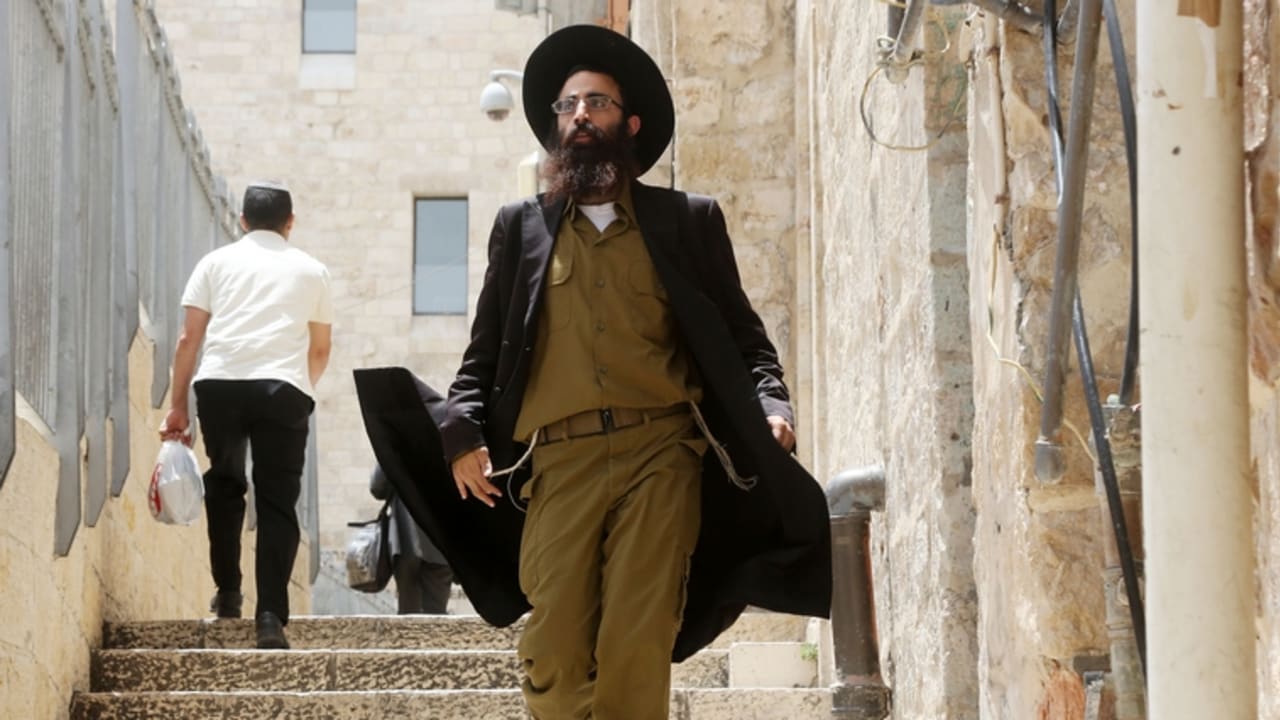
A haredi man and an IDF soldier pray at the Western Wall in Jerusalem, November 14, 2024
(photo credit: MARC ISRAEL SELLEM)

Just like that, an issue that generated a trillion words on television panels, billions more in print, and countless headaches has disappeared.

No, not the Iranian nuclear threat or its ballistic-missile program. Those still remain, although very much degraded.

What has suddenly – and happily – disappeared is the highly contentious haredi (ultra-Orthodox) draft exemption bill. And the reason it has disappeared is the Iran War. On Tuesday, Prime Minister Benjamin Netanyahu, who had been pushing the bill to keep the haredi parties in his coalition despite the anger it stirred across much of the country, unceremoniously said it would be shelved.
For months, the legislation hung heavy over Israeli politics. The haredi parties threatened that if the bill – which would legalize a situation in which the vast majority of haredim would not need to serve in the military – did not pass before the state budget, they would vote the budget down. That would effectively bring down the government.

Under Israeli law, if a budget is not passed by March 31, the government falls, triggering elections.

.

Therefore, the political stakes were enormous. But the regional stakes suddenly became even larger.

Netanyahu and Finance Minister Bezalel Smotrich this week said because of the enormous cost of Operation Roaring Lion – Israel’s campaign against Iran – an updated state budget must be passed, including billions of shekels in additional funding for the Defense Ministry.

Passing the budget would enable Israel to “win the war, provide better service to Israeli citizens in many areas, and establish a new regional order in the Middle East,” Smotrich said.

Sidelining the draft exemption law

To do that, however, something had to give, and that something was the draft exemption law.

The government is “setting aside the draft law, which will not be advanced at this time, along with several reforms for which we have not yet reached broad agreement,” Smotrich said.

Among them is Smotrich’s controversial milk reform, which also had been tied to the budget.

Both the draft law and the milk reform had become flash points of domestic friction. War is a time for unity and national responsibility, Smotrich said.

In other words, the political luxury of pushing through divisive legislation has evaporated.

Critics argue that even as the draft law is shelved, the government continues to fund coalition interests – including the haredi sector – to the tune of roughly NIS 5 billion, much of it earmarked for yeshivot.

But that figure exists largely on paper. The courts have already frozen much of the funding for haredi schools from last year’s budget, pending a new draft law.

As things stand now, the legal framework remains unchanged: With no new legislation in place, all 18-year-old Jewish males, including haredim, are subject to conscription under the Security Service Law, with criminal penalties theoretically applicable to non-compliers and funding cuts enforceable against yeshivot, even if enforcement has been uneven.

Political limbo

That legal and political limbo cannot continue indefinitely. But shelving the legislation now was clearly the correct decision.

At a time when tens of thousands of reservists are once again being called up  –  or as they and their families live on edge, wondering when their next call-up notice will arrive – advancing legislation now that would grant sweeping exemptions to haredim would have been unconscionable.

After 78 years, the issue of haredi military service unquestionably needs to be addressed and regulated. But pushing through a law that entrenches inequality in the middle of a war would have been the worst possible way to do it.

By postponing the legislation, the government has effectively kicked the issue down the road into the next government’s court. And that may ultimately prove beneficial.

Had the war with Iran not broken out, the legislation might very well have passed – or at least come very close. Its shelving had less to do with opposition pressure – although opposition leaders were quick to take credit – and far more to do with the wartime reality the country now faces.

Operation Roaring Lion may not yet have brought about regime change in Iran, but it already has swept aside one piece of legislation that would have enshrined into law a profound inequality within Israeli society. That already is one positive ripple effect being felt far beyond the battlefield.


Zawartość publikowanych artykułów i materiałów nie reprezentuje poglądów ani opinii Reunion’68,
ani też webmastera Blogu Reunion’68, chyba ze jest to wyraźnie zaznaczone.
Twoje uwagi, linki, własne artykuły lub wiadomości prześlij na adres:
webmaster@reunion68.com

Prawo międzynarodowe i inne sposoby na kaca


Prawo międzynarodowe i inne sposoby na kaca

Paul Finlayson


Gdyby ktoś chciał wymyślić najbardziej efektywną grę alkoholową w historii, mógłby zebrać kilku znajomych, postawić na stole porządną butelkę i włączyć dowolny współczesny panel dyskusyjny o polityce zagranicznej.

Zasady byłyby proste: za każdym razem, gdy polityk taki jak Mark Carney, Keir Starmer albo któryś z ich starannie odpicowanych kolegów z progresywnego establishmentu wypowie frazę prawo międzynarodowe, uczestnicy muszą się napić.

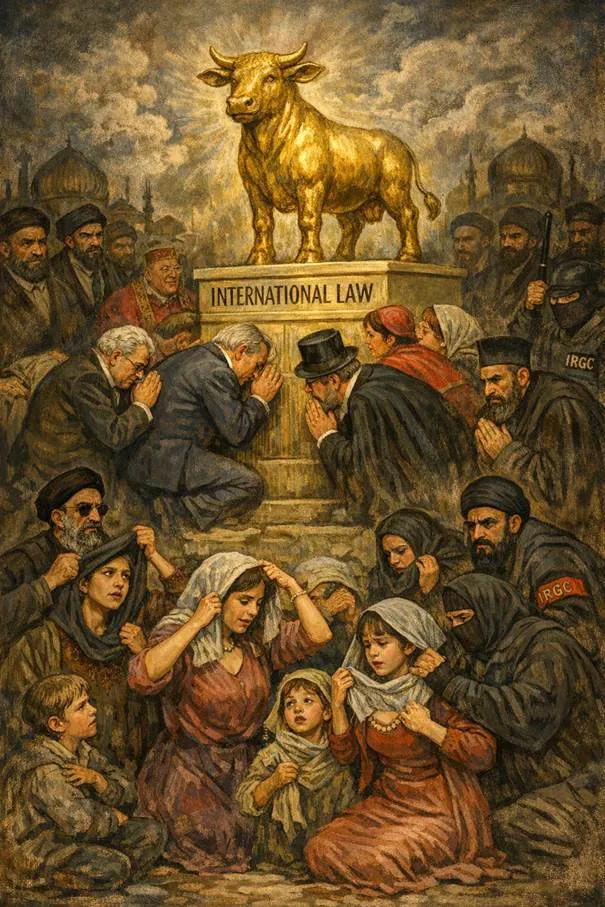
W ciągu godziny wszyscy straciliby przytomność. W ciągu dwóch wątroba składałaby pozew rozwodowy. Bo to wyrażenie stało się wszechobecne. Powtarza się je z rytmiczną natarczywością liturgicznego śpiewu: prawo międzynarodowe, prawo międzynarodowe, prawo międzynarodowe. Przywołuje się je nie jako argument, lecz jako sakrament — jakby samo jego wypowiedzenie rozstrzygało sprawę. Łatwo sobie wyobrazić, że fraza ta zstępuje z góry Synaj wyryta na kamiennych tablicach niesionych nie przez Mojżesza, lecz przez dyplomatów.

Problem polega na tym, że to wyrażenie skrywa dość niezręczną prawdę. Prawo, w jakimkolwiek sensownym znaczeniu, wymaga egzekwowania. Prawo krajowe działa, ponieważ istnieją sądy, policja i więzienia. Istnieje suwerenna władza zdolna wymusić posłuszeństwo, gdy to posłuszeństwo zawodzi.

Jeśli włamywacz wejdzie do twojego domu, państwo dysponuje siłą potrzebną, by go powstrzymać. Prawo międzynarodowe nie ma niczego takiego. Nie ma globalnego suwerena, nie ma międzynarodowej policji zdolnej egzekwować podporządkowanie, nie ma rządu światowego uprawnionego do wymuszania posłuszeństwa. W rzeczywistości mamy zbiór traktatów, konwencji i porozumień zawieranych między suwerennymi państwami, które przestrzegają ich głównie wtedy, gdy im to odpowiada.

I tu właśnie tkwi paradoks, który grzeczna formuła prawo międzynarodowe ukrywa: kraje najbardziej ograniczane przez prawo międzynarodowe to dokładnie te kraje, które i tak są najbardziej skłonne przestrzegać zasad — zachodnie liberalne demokracje. Reżimy najmniej skłonne do przestrzegania zasad — autokracje, teokracje, dyktatury wojskowe — nie napotykają żadnego realnego mechanizmu egzekwowania, gdy postanawiają je zignorować.

Tak więc to rzekomo uniwersalne prawo działa nie tyle jako uniwersalny system, ile raczej jako moralny kaganiec nakładany przede wszystkim na te narody, które i tak są najmniej skłonne do barbarzyństwa.

Można bezpiecznie założyć, że w pokojach planowania strategicznego talibów, w paranoicznych podziemnych kompleksach Korei Północnej, w gabinetach Władimira Putina w Moskwie czy w klerykalnej biurokracji Teheranu zwrot prawo międzynarodowe nie ma tej samej niemal nabożnej wagi, jaką ma podczas paneli dyskusyjnych w Ottawie.

Ajatollahowie nie powstrzymują się przed wysłaniem policji obyczajowej na ulice, by zapytać, czy konwencje genewskie pochwalałyby ich zachowanie.

Boko Haram nie konsultuje się z Międzynarodowym Trybunałem Sprawiedliwości pomiędzy kolejnymi porwaniami. Milicje mordujące cywilów w Sudanie nie robią przerwy, by sprawdzić przypisy do Karty Narodów Zjednoczonych.

A jednak ta fraza pojawia się z zadziwiającą regularnością wtedy, gdy zachodnie demokracje rozważają działania przeciwko takim reżimom. Oto osobliwa asymetria współczesnego dyskursu moralnego. W Syrii setki tysięcy ludzi zginęły pod rządami Asada, a przeciw cywilom używano broni chemicznej. W Jemenie wojna i głód pochłonęły setki tysięcy istnień. W Sudanie przemoc milicji zamieniła całe regiony w rzeźnie. W Nigerii dżihadystyczne masakry trwają od lat. A jednak wyrażenie to pojawia się z największą pilnością właśnie wtedy, gdy demokratyczne państwa rozważają interwencję przeciw sprawcom takich okrucieństw.

Człowiek zaczyna podejrzewać, że odwołanie do prawa międzynarodowego działa mniej jako zasada uniwersalna, a bardziej jako mechanizm selektywnego powściągania Zachodu.

Ta selektywna powściągliwość staje się szczególnie dziwna, gdy weźmie się pod uwagę współczesną niechęć do idei działań wyprzedzających. Dominująca interpretacja prawa międzynarodowego upiera się, że demokracje muszą czekać, aż agresja w pełni się zmaterializuje, zanim zareagują.

To trochę tak, jakby nakazać właścicielowi domu, by poczekał, aż włamywacz wejdzie do sypialni, zanim zacznie się bronić.

Historia dostarcza niewygodnych przykładów absurdalności takiej logiki. Kanada przystąpiła do II wojny światowej w 1939 roku nie dlatego, że została najechana, lecz dlatego, że nazistowskie Niemcy stanowiły zagrożenie dla samej cywilizacji. Gdyby obowiązywała dzisiejsza legalistyczna interpretacja, Kanadzie można by było zalecić neutralność, podczas gdy Europa waliłaby się pod naporem totalitaryzmu. Tego rodzaju historyczne refleksje rzadko jednak wdzierają się na scenę moralnego teatru współczesnej dyplomacji.

Zamiast tego oglądamy spektakl polityków przywołujących „międzynarodowy porządek oparty na zasadach” — frazę, która brzmi imponująco, dopóki nie przyjrzymy się jej z bliska. Porządek oparty na zasadach zakłada uniwersalność. Ale jeśli tylko garstka państw przestrzega zasad, podczas gdy reszta łamie je bezkarnie, to nie mamy do czynienia z porządkiem międzynarodowym, lecz zachodnim. Ta fraza przetrwała, bo jest użyteczna. Pozwala politykom ubrać swoje stanowiska w język moralnej powagi bez konieczności zmierzenia się z praktycznym faktem, że prawo międzynarodowe nie ma mechanizmu egzekwowania potrzebnego, by działać jak prawdziwe prawo.

Co nieuchronnie prowadzi nas do osobliwego przypadku obecnego premiera Kanady. Mark Carney ostrzegł niedawno, że reakcje na kryzysy geopolityczne muszą respektować międzynarodowy porządek oparty na zasadach. Był to występ wygłoszony z wyważoną powagą kogoś, kto przemawia na lekcji dobrego wychowania w szkole średniej.

Ton był szczery. Sformułowania — obowiązkowe. Można było niemal oczekiwać, że przemowa zakończy się oklaskami delegacji uczniowskiej z Luksemburga.

Tym, co czyniło ten występ szczególnie uderzającym, był jednak kontekst, który go otaczał. Szacunki nadal pozostają niejasne, ale doniesienia sugerują, że w ostatnich tygodniach w Teheranie mogło zostać zabitych od trzydziestu do czterdziestu tysięcy protestujących.

Młode kobiety wychodzą z domów, by dołączyć do demonstracji, i nie wracają. Rodzice stoją nad świeżo wykopanymi grobami. Protestujący, którzy odnoszą obrażenia i szukają pomocy medycznej, odkrywają, że same szpitale stały się narzędziami zastraszania: lekarzom Korpus Strażników Rewolucji Islamskiej grozi, że leczenie rannych demonstrantów skończy się więzieniem albo śmiercią.

Oto reżim, o którym mowa. Reżim, który od 1979 roku odpowiada za śmierć znacznie ponad miliona ludzi — zarówno wskutek własnych represji, jak i działań milicji oraz organizacji najemnych finansowanych przezeń na całym Bliskim Wschodzie. Reżim, który uczynił terroryzm trwałym elementem swojej polityki zagranicznej. Reżim, który nadal zagraża stabilności szerszego świata.

To państwo, które z bezczelną otwartością mówi inspektorom, że będzie posiadać broń jądrową i że zetrze Izrael z mapy.

A kiedy Izrael i Stany Zjednoczone reagują na tę rzeczywistość — na dekady terroru, na trwające represje, na zbiorowe mogiły zapełniające się w Teheranie — odpowiedzią kanadyjskiego przywództwa jest poinformowanie pogrążonych w żałobie rodziców stojących przy tych grobach, że Kanada woli powściągliwość.

Nie odsunięcie mułłów od władzy. Nie zdecydowane działanie. Zamiast tego kolejny panel dyskusyjny — kolejne uroczyste spotkanie prowadzone przez Marka Carneya, podczas którego błędnie cytuje Tukidydesa.

Tukidydes, pierwotny anatom realpolitik, zauważył, że w brutalnej arytmetyce stosunków międzynarodowych silni czynią to, co mogą, a słabi cierpią to, co muszą — nie jako moralną aprobatę, lecz jako trzeźwy opis rzeczywistości.

Można podejrzewać, że doradziłby Kanadzie trzymać się swoich demokratycznych sojuszników, zamiast dryfować ku strategicznej orbicie potęg autorytarnych. Ten niuans najwyraźniej umknął jednak gorliwemu stażyście, który poprzedniego popołudnia w pośpiechu przeczytał streszczenie Tukidydesa w ChatGPT, zanim Carney zachwycił Davos.

Rezultat jest jak zwykle ten sam: Carney błędnie przywołuje Tukidydesa, fałszywie przedstawia Václava Havla i wywołuje jeszcze jeden autorytet literacki, którego dzieła najwyraźniej jedynie przekartkowano gdzieś pomiędzy komunikatem prasowym a wejściem na mównicę.

Trudno byłoby zaprojektować bardziej groteskowy kontrast między retoryką a rzeczywistością.

Ironia pogłębia się jeszcze bardziej, gdy uwzględnimy geopolityczne realia, które uprzejmy język dyplomacji zwykle zaciera.

Iran nie istnieje w izolacji. Jego reżim działa w ramach sieci sojuszy, obejmującej jednego szczególnie potężnego partnera: Chiny. Chiny kupują ogromne ilości irańskiej ropy — według doniesień 90 proc. — zapewniając reżimowi gospodarczy tlen. Inwestują w infrastrukturę wzmacniającą aparat bezpieczeństwa Iranu.

Teheran pod wieloma względami służy jako regionalne narzędzie w szerszej strategii Pekinu mającej osłabić wpływy Zachodu. A jednak, podczas gdy ta oś współpracy trwa, kanadyjskie przywództwo wydaje się coraz bardziej skore do dystansowania się od Stanów Zjednoczonych — najpotężniejszej liberalnej demokracji w historii i najbliższego sojusznika Kanady — jednocześnie flirtując ze strategicznym zwrotem ku Pekinowi. Można by sądzić, że takie geopolitycznej zmiany należałoby starannie wyjaśnić. Zamiast tego słyszymy wykłady o prawie międzynarodowym.

Całe to przedstawienie ma znajomy rytm polityczny. Najpierw pojawia się uroczysta deklaracja zasad. Potem następuje nagły zwrot, gdy dane sondażowe sugerują, że inny ton mógłby przynieść wyborcze korzyści. Bo właśnie tu ta historia przestaje dotyczyć prawa międzynarodowego i zaczyna dotyczyć polityki krajowej.

Istnieje dobry powód, by podejrzewać, że Kanada może wkrótce zmierzać ku wiosennym wyborom. Choreografia byłaby prosta. Rozdrażnić Waszyngton. Sprowokować przewidywalną reakcję Donalda Trumpa. A potem owinąć się kanadyjską flagą i przedstawić całą sytuację jako patriotyczną konfrontację z południowym sąsiadem.

Człowiek, który spędził lata za granicą, nagle wystąpi w hokejowej koszulce Team Canada, wzywając do jedności narodowej w obliczu zagranicznej presji. A kanadyjscy wyborcy — których polityczne instynkty przypominają czasem podekscytowanych kibiców hokeja — z entuzjazmem staną za nim.

To sprytny manewr. Ma też bardzo niewiele wspólnego z zasadami. Bo pod retoryką prawa międzynarodowego, pod przemowami o porządku opartym na zasadach, pod nagłymi moralnymi pouczeniami kierowanymi do sojuszników, podczas gdy autorytarne reżimy działają bezkarnie, kryje się znacznie prostsza prawda polityczna.

Kanadyjczycy są oszukiwani.

To przedstawienie nie dotyczy sprawiedliwości. Nie dotyczy prawa międzynarodowego. Nie dotyczy cierpienia protestujących w Teheranie ani ofiar irańskich najemników na całym Bliskim Wschodzie. Chodzi o władzę. A władza, w przeciwieństwie do prawa międzynarodowego, jest czymś, co politycy rozumieją doskonale.

Czas bronić niewinnych ludzi wielkiego perskiego narodu Iranu. Niech tyrani mułłokracji zostaną odsunięci od władzy. Niech sprawiedliwość, uczciwość, wolność i przedstawicielska demokracja zostaną przywrócone narodowi irańskiemu. I niech jego długie cierpienie — znoszone od 1979 roku pod tyranią klerykalnego reżimu — wreszcie dobiegnie końca.

Chwała Stanom Zjednoczonym, Izraelowi i ich sojusznikom, gdy mierzą się z tyranami Iranu, rzucają im wyzwanie i ich niszczą.

I niech obywatele Kanady, Stanów Zjednoczonych, Zachodu i Iranu pamiętają o czymś, o czym nasza epoka zdaje się usilnie chcieć zapomnieć: wolności nie zachowują ci, którzy recytują formułki o „prawie międzynarodowym”, podczas gdy tyrania trwa bez przeszkód. W pewnym momencie świat musi zdecydować, czy woli sprawiedliwość — czy jedynie dźwięk własnego moralnego bełkotu.

Niech pamiętają, że prawo do życia w wolności — do chodzenia ulicą bez strachu, do mówienia bez cenzury, do odkrywania głowy bez prześladowań i do istnienia bez buta Korpusu Strażników Rewolucji Islamskiej na karku czy dekretów klerykalnych kleptokratów — nie jest nadawane przez konferencje dyplomatów.

I niech ludzie nigdy nie pozwolą, by sprawiedliwość, uczciwość, prawda i prawo do życia bez ucisku uklękły przed arbitralnymi orzeczeniami tych, którzy stylizują się na strażników prawa międzynarodowego — a najmniej ze wszystkich przed własnym Markiem Carneyem Kanady.


Link do oryginału:

 Freedom to Offend
International Law and Other Hangover Remedies
Read more

Freedom to Offend, 8 marca 2026


Zawartość publikowanych artykułów i materiałów nie reprezentuje poglądów ani opinii Reunion’68,
ani też webmastera Blogu Reunion’68, chyba ze jest to wyraźnie zaznaczone.
Twoje uwagi, linki, własne artykuły lub wiadomości prześlij na adres:
webmaster@reunion68.com

The issue for war opponents is Trump, not Israel or Iran’s regime of terror


The issue for war opponents is Trump, not Israel or Iran’s regime of terror

Jonathan S. Tobin


The effort to delegitimize the decision to strike Tehran is primarily about partisan politics. The president’s critics are focusing more on him than on America’s Islamist foes.

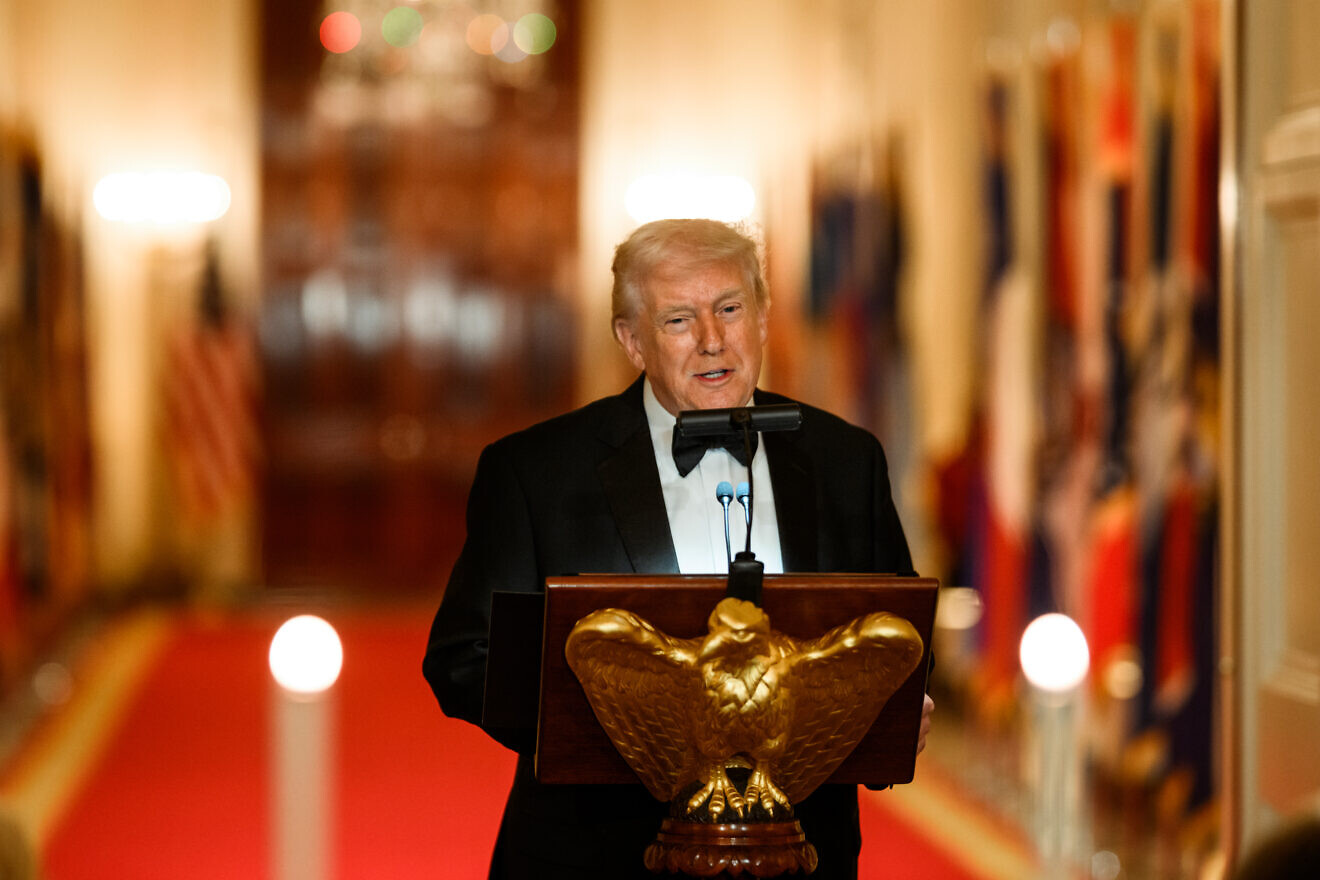
U.S. President Donald Trump at a dinner for the nation’s governors in the East Room of the White House, Feb. 21, 2026. Credit: Daniel Torok/White House.

Ten days after the beginning of the U.S.-Israeli air offensive against Iran’s terrorist regime, the ultimate outcome of the joint campaign remains uncertain. Iran’s government and military have largely been decapitated, with the country’s ability to inflict terror on the region drastically reduced. Further damage has been done to its ballistic-missile and nuclear programs. Yet it’s still unclear if the theocratic tyranny in Tehran will fall, as both America and Israel want and expect. 

What is clear is the focus of the opposition. Its campaign primarily revolves around one issue—and it isn’t the Jewish state. 

That comes despite attempts by right-wing and left-wing antisemites to advance the big lie that the United States was forced or led into the conflict by Jerusalem. Many of the war’s critics from both ends of the political spectrum are united by their antipathy for Israel, plain and simple. Common threads also tie the opposition when it comes to their disinclination to holding the Islamic Republic accountable for its behavior to arguments attempting to delegitimize Israel’s war on Hamas after the Palestinian Arab terror attacks in southern Israel on Oct. 7, 2023.

But as critiques of the Iran war start to harden, it’s obvious that Israel’s role as America’s partner in the conflict is not the main factor driving the opposition.

A partisan divide

Opinion polls taken during the war’s first week made one thing obvious. The decision to strike Iran appears to be opposed by a majority of Americans.

A deep dive into the numbers finds that the main driver of opinion on the conflict is partisanship. An overwhelming majority of Republicans, as high as 84% in an NPR/Marist poll, are in favor of military action against Tehran, while 86% of Democrats and 61% of independents are against it. That led to an overall result of 56% against the war and 44% in favor of it. When asked what they think about Iran, 70% of Republicans perceive Iran to be a major threat to the United States; however, only 27% of Democrats see it that way. 

The roots of that disagreement can be traced back to the debate over former President Barack Obama’s appeasement of Iran that culminated in the 2015 nuclear deal. As late as 2013, most congressional Democrats were quite hawkish when it came to efforts to stop Iran from acquiring nuclear weapons and punishing it for being the world’s leading state sponsor of terror. But once Obama made support for the nuclear accord a litmus test of personal loyalty to him, his party dutifully fell in line. That also materially contributed to the decline in Democratic support for Israel. The people and government of the Jewish state were, for good reasons, appalled by a document that would have guaranteed that a country committed to their destruction would have eventually acquired a nuclear weapon. 

As much as that decade-old argument about a failed diplomatic attempt, as Obama put it, to allow Iran “to get right with the world,” set up the current divide about how to deal with Iran, that isn’t what is determining opinion about the conflict. And while the post-Oct. 7 surge in antisemitism and hostility to Israel is connected to the debate about Trump’s decision, it doesn’t entirely explain it. 

It’s really all about Trump. 

Disapproval of the war is different from the debate about Israel that has been simmering for the last 30 months. 

The willful refusal to acknowledge reality with respect to the genocidal Palestinian war to wipe out the Jewish state isn’t the same thing as the critique about battling Iran. Many around the world bought into the gaslighting in which Hamas and its allies were depicted as the victims, rather than the Israelis who were attacked. The fact that they had started a war with unspeakable atrocities and the largest mass slaughter of Jews since the Holocaust wasn’t so much rationalized as simply disbelieved. It was soon followed by a willingness to buy into Hamas propaganda that claimed Israel’s war of self-defense was a “genocide.” A lot of that had to do with the influence of toxic ideologies that falsely claimed that Israelis and Jews were “white” oppressors who were always in the wrong, and that Palestinians were “people of color” who were always their victims. 

While there is some superficial comparison of attitudes about the war against Iran to the one against Hamas, outside of the extreme left, the anti-war argument isn’t centered on a disingenuous attempt to transform the ayatollahs and their minions into Third World victims of racism, as is the case with the “pro-Palestine” crowd. 

What it all boils down to is a belief that anything done by this president has got to be misguided and manipulative. 

The Putin comparison

A classic example of how this works was a so-called “news analysis” published by The New York Times on March 8, which tried to make the argument that the U.S.-Israel strikes on Iran were analogous to Russian President Vladimir Putin’s 2022 invasion of Ukraine. Even if the article by former Times Moscow bureau chief Anton Troianovski had been framed as an opinion piece (which it is, despite the “analysis” label and its layout in the newspaper’s news section), it was absurdly argued and devoid of context or sense. Its only point was to paint Trump as no different from Putin. 

Whatever one thinks about the Russia-Ukraine battle or the U.S.-Israel operation against Tehran, simply put, there is no comparison between these two events. A longstanding dispute between Ukrainian nationalism and Russian imperial ambitions dates back to the tsarist era. Ukraine was not a nuclear or terror threat to Russia—or any other country. Its government was not driven by a messianic belief in its right to impose a particular religion on the world. It was also not building missiles and seeking to acquire nuclear weapons to destroy another nation, as was the case with Iran’s attempts to eliminate Israel. 

Having relentlessly promoted the Russian collusion hoax for years, only to see it eventually exposed as a partisan conspiracy theory, the Times is still seeking to revive belief in the notion that Trump is a fascist thug, not unlike Putin. 

This article is a particularly egregious example of journalists having no shame about letting their Trump Derangement Syndrome affect their work. But even a dispassionate look at most of the liberal mainstream media’s war coverage shows that it has more in common with how they treated the Russia collusion hoax than their coverage of Oct. 7, and the multipronged war that followed. 

The consistent theme that colors arguments about Trump’s right to authorize U.S. airstrikes, America’s relations with allies, his statements about the war and uncertainty about its outcome is the belief that the specifics about the threat from Iran are not as important as the liberal detestation for the president. The point being: If you’ve spent the last decade believing that he is a fascist, neo-Nazi authoritarian, then it doesn’t really matter if the position he’s taken is one that all of his 21st-century predecessors have essentially endorsed, though he is the first to act on it. 

Interestingly, even many of Trump’s most vociferous critics at outlets like the Times and elsewhere aren’t trying to whitewash the Iranian regime, even though many of them were cheerleading for appeasement of them during the Obama and Biden presidencies. Most agree that the government that slaughtered tens of thousands of its own people in January and that engages in international terrorism is awful and at least a potential threat to the United States. 

And so, even if the war is being waged in defense of American interests and global peace—and Iran’s leaders are murderers who have been waging an Islamist terrorist war on the West for the past 47 years—they simply cannot get behind any initiative undertaken by the Trump administration. 

Let’s concede that reasonable arguments can be made about the limits of presidential power and the fact that wars are no longer preceded by declarations passed by Congress. There are also reasons to doubt whether an American push for regime change will work in even the worst of countries. Nor can anyone be sure that a change would lead to an improvement over the current situation, though it’s hard to imagine anything worse than the Islamic tyranny that has existed in Iran since 1979. 

The ‘fascist’ argument

The debate about the war isn’t so much about those concerns as it is one rooted in the belief that Trump is simply beyond the pale and must be opposed at all times and at all costs.

His opponents relentlessly doubled down on the “fascist” argument throughout his first term and during his time out of office—and continue to do so, despite his triumphant return to the White House after winning the popular vote and the Electoral College in 2024. While the anti-Trump “resistance” narrative was quiet for a while after the resounding defeat of former Vice President Kamala Harris, it has returned with a vengeance. Discussion of the war on Iran is only the latest manifestation of it.

Some of it can be understood as an automatic backlash to a president who is unlike any of the men who preceded him. As one Washington Post article conceded, Trump’s conduct as a war leader isn’t very different from the way he operates at other times, so it’s hardly surprising that reactions to his Iran policy would change.

Like the situation in Israel and many other democracies, 21st-century democracy in America is the function of a bifurcated society in which left and right no longer read, listen or watch the same media. They essentially avoid each other on social media or in any other places where public discourse takes place. And with politics now playing the role that religion used to have in most people’s lives, it’s no wonder that partisan divisions have hardened into inflexible beliefs on which no compromise is possible.

Trump’s unorthodox style still grates on his opponents and delights his supporters. The former still seems unable to grasp that his political rise was powered by the failures of both Republican and Democratic Party leaders to cope with new challenges, and by the arrogance and contempt of Obama and the credentialed elites he led toward much of the American electorate.

On Iran, as on other issues, such as illegal immigration and the deindustrialization of America, Trump is merely confronting a longstanding problem that his predecessors helped create and then ignored. The same was true of his approach to Israel, where he swept aside establishment thinking with respect to decisions like moving the U.S. embassy from Tel Aviv to Jerusalem, and declining to let Palestinian intransigence get in the way of his 2020 Abraham Accords.

No credit given

The refusal to give him credit for that diplomatic achievement was proof of the belief among his supporters that even if he cured cancer, his opponents wouldn’t applaud. Ending the appeasement of Iran and taking decisive action to ensure that it can no longer threaten America and the West is not quite the same thing as curing cancer. Still, the tone of critiques of his decision is not dissimilar to the way his peacemaking efforts have been dismissed by those who now oppose the war.

They blame him for not making the case for war while simultaneously refusing to acknowledge the arguments he has made justifying military action. They accuse him of acting on an authoritarian whim. However, the long buildup to the offensive, along with the last attempts the administration made to get Iran to come to a diplomatic agreement, makes it obvious that the decision was the result of a long, deeply considered process. Faulting him for failing to build bipartisan support for his policy ignores the fact that his opponents have no interest in playing the role of loyal opposition; instead, they forge ahead as a “resistance” to a presidency they believe is inherently illegitimate.

They’re also ignoring the clear evidence, as retired U.S. Army officer and military expert John Spencer points out, that the doom-and-gloom predictions of Trump opponents about the war are misguided. While nothing is certain, to date, the strategy employed by both the United States and its Israeli ally seems to be working, and those of the Iranian government are failing. Success isn’t guaranteed, but there is no reason to think it is another Iraq or anything like the disaster Trump-haters are sure is in the works.

Both left-wing hysteria about alleged Trumpian authoritarianism and the antisemitic conspiracy mongering of right-wing opponents of the war, such as far-right podcaster Tucker Carlson, should be seen for what they are. Most of what passes for anti-Iran war arguments aren’t about the actual situation on the ground and are fundamentally unserious.

That arguments about Iran, Islamist terror and the war to destroy Israel have been largely overridden by those about Trump is frustrating to those who see these issues as transcending politics. The struggle to resist Iran’s Islamist terror shouldn’t be bound up with the derangement that Trump inspires in his opponents.

Israelis are dodging missiles shot by the Islamist regime and its terrorist auxiliaries, while Iranian civilians weigh whether a renewed struggle to overthrow their tyrants is worth the risk. While that is happening, we in the United States ought to be able to have an open conversation about these subjects. That dialogue should not be determined by feelings toward the president; rather, it should focus on the clear threat the Islamist regime poses to the West and the United States.

At the moment, that doesn’t seem possible. Yet Iran-war critics need to take a breath. They need to stop thinking about whether U.S. failure in the war will help the Democrats in the midterms and start focusing on a subject that ought to unite Americans, rather than divide them.


Jonathan S. Tobin is editor-in-chief of the Jewish News Syndicate, a senior contributor for The Federalist, a columnist for Newsweek and a contributor to many other publications. He covers the American political scene, foreign policy, the U.S.-Israel relationship, Middle East diplomacy, the Jewish world and the arts. He hosts the JNS “Think Twice” podcast, both the weekly video program and the “Jonathan Tobin Daily” program, which are available on all major audio platforms and YouTube. Previously, he was executive editor, then senior online editor and chief political blogger, for Commentary magazine. Before that, he was editor-in-chief of The Jewish Exponent in Philadelphia and editor of the Connecticut Jewish Ledger. He has won more than 60 awards for commentary, art criticism and other writing. He appears regularly on television, commenting on politics and foreign policy. Born in New York City, he studied history at Columbia University.


Zawartość publikowanych artykułów i materiałów nie reprezentuje poglądów ani opinii Reunion’68,
ani też webmastera Blogu Reunion’68, chyba ze jest to wyraźnie zaznaczone.
Twoje uwagi, linki, własne artykuły lub wiadomości prześlij na adres:
webmaster@reunion68.com


New Reports Expose Iran’s Shocking Use of Rape, Torture to Crush Protests


New Reports Expose Iran’s Shocking Use of Rape, Torture to Crush Protests

Ailin Vilches Arguello


People attend the funeral of the security forces who were killed in the protests that erupted over the collapse of the currency’s value in Tehran, Iran, Jan. 14, 2026. Photo: Majid Asgaripour/WANA (West Asia News Agency) via REUTERS

Iranian security forces raped and tortured medical staff who treated wounded anti-regime protesters during the country’s nationwide uprising in January, targeting them in a campaign of intimidation against those aiding demonstrators, new reports reveal.

According to the London-based outlet Iran International, medical staff and other hospital personnel who treated people injured during the massive protests that erupted in late December and continued into early January before being crushed were detained by security agents and subjected to torture, repeated gang rape, and other forms of abuse while in custody.

In one of several shocking testimonies, two medical workers at Tehran’s Rajaei Cardiovascular Medical and Research Center recounted the horrors they suffered after being detained while treating injured protesters.

The two nurses were reportedly subjected to repeated sexual abuse and torture during detention, with one sustaining injuries so severe that part of her intestine had to be removed, leaving her to live with a colostomy bag.

After already undergoing two surgeries for severe uterine tearing, she may ultimately face complete removal of her uterus.

Detained and kept in isolation for several weeks, the other nurse — who also defied orders not to treat wounded protesters — suffered injuries so severe that she ultimately had her uterus completely removed.

Iran International also reported that the family of one of the nurses was forced to pay a substantial sum to an intelligence officer to secure her release after several weeks in detention

She was even coerced into signing a statement falsely claiming she had been abused and raped by “rioters.”

According to the report, security forces and local police involved in the crackdown explicitly warned hospital staff against treating wounded protesters, with witnesses reporting that agents would arrest or physically assault medical workers who refused to comply.

Echoing other international reports, Iran International detailed that security forces allegedly stormed hospitals, opened fire on wounded patients, and even shot nurses trying to provide treatment.

As Iranian authorities sought to crush dissent and reassert control, human rights groups and international organizations repeatedly warned that protesters detained during the unrest faced a high risk of torture and sexual violence, with some estimates suggesting that as many as 30,000 people may have been killed on the streets of Iran on Jan. 8 and 9 alone.

In a separate new report released Monday, the Special Rapporteur on the human rights situation in Iran, Mai Sato, exposed the regime’s widespread use of physical and sexual violence to crush dissent during the nationwide protests that began on Dec. 28 last year, warning that such brutal tactics remain a longstanding tool of control.

The UN official called on Iranian authorities to immediately stop their brutal crackdown on civilians, release everyone detained for exercising fundamental rights, restore full internet access, and allow human rights organizations to carry out their work without interference.

According to the new report, the brutal crackdown saw protesters — including children — shot at close range or severely beaten by security forces.

Tens of thousands of demonstrators, including medical professionals and lawyers, were also arbitrarily detained. Many were held incommunicado, denied legal representation, forced to deliver televised confessions, and some — even minors — now face the death penalty.

“In practice, lethal force has been a consistent feature of the state’s response to protests over decades,” the report said, referring to past demonstrations in which security forces deployed assault rifles or shotguns firing metal pellets at crowds

Sato also presented evidence showing that security forces raided hospitals, arrested wounded protesters, assaulted medical staff, and subjected families of the killed or detained to intimidation and interference with their memorials.

“Their grief is compounded by state intimidation and the denial of truth,” she said.

According to the report’s latest findings, the regime’s human rights violations reflect systemic patterns rather than isolated incidents, highlighting both the failure to investigate excessive force and the growing securitization of responses to civilian protests.

“I am deeply concerned about the welfare of those in custody and the heightened risk of violations in the absence of independent scrutiny,” Sato said.


Zawartość publikowanych artykułów i materiałów nie reprezentuje poglądów ani opinii Reunion’68,
ani też webmastera Blogu Reunion’68, chyba ze jest to wyraźnie zaznaczone.
Twoje uwagi, linki, własne artykuły lub wiadomości prześlij na adres:
webmaster@reunion68.com