Archives

I urge you to vote for Yamina – here’s why

I urge you to vote for Yamina – here’s why

AYELET SHAKED


Only a strong Yamina will ensure that the next government acts with determination to assert Israel’s rights, ensure its security, accelerate its economy, and improve quality of life for all.
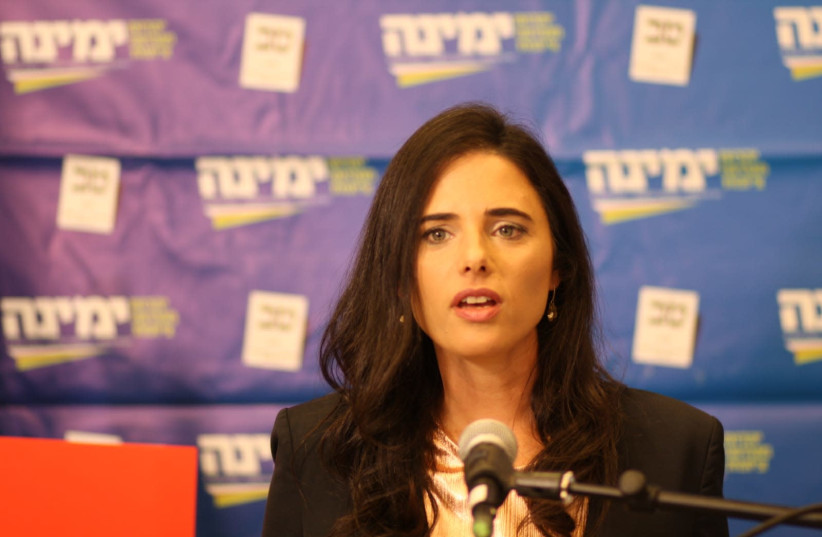
Yamina leader Ayelet Shaked speaks at a press conference. / (photo credit: EHUD AMITON/TPS)

As we approach next week’s elections, the stakes have never been higher. Israel stands at a strategic crossroads, and the future of our homeland will be determined by the policies of the next government.

There are three important factors that make the Yamina Party unique in the political landscape:

1. We are clear and consistent about what we stand for: a strong and secure Israel, a thriving liberal economy, a public sphere that values both Jewish tradition and individual freedom, an education system that encourages excellence, true democracy, and the promotion of successful aliyah.

2. We are driven not by animosity toward any politician, party or sector, but by an unwavering commitment to the future of the State of Israel.
3. We don’t just talk; we do.

YAMINA HAS always been consistent in its principles regarding Israel’s security and sovereignty. We oppose the establishment of a Palestinian state, which would quickly turn into a launching pad for terrorist rockets aimed at every city in Israel. While we support limited Palestinian civil autonomy, any potential solution must be based on ensuring Israel’s security, zero tolerance for all forms of terrorism, and the Jewish people’s legal and historical rights throughout the Land of Israel.

Unfortunately, despite aggressive rhetoric, past defense ministers failed to restore deterrence vis-à-vis these terrorist groups. In only a few short months, Defense Minister Naftali Bennett has begun to restore Israel’s deterrence, by changing the IDF’s response to attacks from Gaza, asserting the rights of Israeli citizens in Judea and Samaria, freezing Palestinian Authority funds being used to pay terrorists, and countering attempts by the United Nations, European Union and radical NGOs to undermine Israel’s national security. A strong Yamina will ensure that the next government continues this new approach.

Immediately after these elections, Israel will face a strategic dilemma. US President Donald Trump’s “Deal of the Century” presents both great opportunities and great dangers. On the one hand, his plan creates a window of opportunity to apply Israeli sovereignty to the Jordan Valley and to Jewish communities in Judea and Samaria. On the other, the plan, which Prime Minister Benjamin Netanyahu has endorsed, envisages the creation of a Palestinian state on the hilltops overlooking Israel’s population centers. Yamina will continue to promote Israeli sovereignty, while opposing all attempts to establish a Palestinian terrorist state.

Just as we are consistent regarding security, we are consistent regarding the need for a liberal and thriving economy. Unfortunately, the economy today still suffers from overregulation, onerous taxation, and monopolies which stifle competition. These factors have increased the cost of living, and created an unreasonable burden on the private sector, entrepreneurs and the self-employed.

Yamina is the only party that proudly represents the private sector, small businesses, and entrepreneurs. We come from the private sector and know that initiative and hard work should be rewarded, not penalized. We will continue to work to reduce regulation and red tape, expand benefits for the self-employed, create a new “regulation-lite” framework for young businesses, streamline the process of obtaining licenses, and decrease both direct and indirect taxation.

While protecting the rights of all workers, we will end the ability of privileged and coercive unions to hold the country hostage. We are the only party willing to take on the entrenched interests of all-powerful unions that regularly disrupt the economy to promote narrow interests.

A successful society begins with education. We will continue the revolution in the education system, which Bennett began as education minister. This revolution included an unprecedented rise in the number of students studying math and science at the highest levels, a decrease in the number of students per class, an increase in the number of teaching assistants, and expanding educational frameworks during school vacations, in order to make life easier for working parents.

This revolution must continue, by rewarding excellence, giving all students, including those with special needs, the tools they need to succeed, and granting parents and school administrators greater autonomy.
Yamina is the one party that truly promotes national unity by bringing together religious, traditional and secular populations. We cherish Jewish tradition and heritage, while supporting individual liberty. We oppose religious coercion, and we oppose secular coercion.

My experience has shown that mutually acceptable solutions to issues of religion and state can be found when good faith and respectful dialogue replace political posturing.

Since the reign of Aharon Barak as chief justice of the Supreme Court, the judicial system had regularly adopted ultra-left-wing positions, and asserted for itself far-ranging powers unheard of in Western legal systems. As justice minister, I took firm action to restore the balance of power between unelected judges and legal advisers, and the democratically elected representatives of Israel’s citizens. By passing the Nation-State Basic Law, we enshrined Israel’s status as the national homeland of the Jewish people. Only Yamina will ensure that these critical judicial reforms continue.

Israel was built on aliyah, and increasing aliyah, particularly from Western countries, is key to our continued growth. We are committed to facilitating successful aliyah by easing the process of recognizing licenses and degrees, creating economic opportunities, reducing tax burdens, and supporting educational frameworks for the children of olim. Israel must be the land of opportunity for all members of the Jewish people who wish to make it their home.

We will also continue strengthening the bonds between Israel and Jewish communities around the world, including in our shared fight against antisemitism.

WE ARE all frustrated by the current atmosphere of empty slogans and societal divisions. In Yamina, we believe that political leaders must have the integrity to say what they mean, and do what they say.

Only a strong Yamina will ensure that the next government acts with determination to assert Israel’s rights, ensure its security, accelerate its economy, and improve quality of life for all.

I urge you to vote for Yamina, so that we can continue to build a strong, proud and thriving future for the homeland we all love.


The writer, an MK, is a former justice minister and a leader of the Yamina Party.


Zawartość publikowanych artykułów i materiałów nie reprezentuje poglądów ani opinii Reunion’68,
ani też webmastera Blogu Reunion’68, chyba ze jest to wyraźnie zaznaczone.
Twoje uwagi, linki, własne artykuły lub wiadomości prześlij na adres:
webmaster@reunion68.com



Tel Aviv’s Mayor Vs. the Middle East Forum

Tel Aviv’s Mayor Vs. the Middle East Forum

Daniel Pipes / JNS.org


A view of the Yehudit Bridge and the Ayalon highway in Tel Aviv, Feb. 17, 2019. Photo: Adam Shuldman / Flash90.

For three years, the Middle East Forum has been engaged in a campaign to wean Americans and Israelis off the deceptive charms of the “peace process” which has, in fact, produced overwhelmingly malign results. Instead, we argue for an Israeli victory and a commensurate Palestinian defeat.

We constantly seek out new ways to bring this argument to the public’s notice, especially in Israel. Although the topic is deadly serious, we’ve had some fun in the process. Israel Victory Project attention-getting tactics have included posters of Hamas leader Ismail Haniyeh in a swimsuit thanking Israel for all the money it sends his organization; a 10-meter tall rubber chicken posed in front of the Israeli parliament and the Defense Ministry; and switching street signs in Tel Aviv (e.g., from Ben-Gurion Street to Yasser Arafat Boulevard).

In this spirit, as the election season heats up ahead of the national vote on March 2, we again sought a creative way to stimulate interest in Israel Victory. We came up with a provocative graphic showing blindfolded Palestinian Authority and Hamas leaders Mahmoud Abbas and Haniyeh photo-shopped against a battlefield scene. Abbas’s hands are raised high while Haniyeh’s hold a white flag. The graphic carries a pungent slogan in Hebrew: “Peace can ONLY be made with defeated enemies.”

To stimulate curiosity, we did not put our name on the posters. The goal, as explained by Nave Dromi, head of the Middle East Forum-Israel office, was to “to spark public discussion about the crying need to change the thinking that characterizes the ‘peace camp.’”

This graphic went up on billboards at five prominent spots in Tel Aviv on Feb. 13.

On Feb. 14, the mayor of Tel Aviv, Ron Huldai, responded by denouncing the signs as Nazi-like incitements to murder. A municipality flack, Eytan Schwartz, actually compared the two depicted monsters to Jewish children in the Holocaust. Well no, the billboards were incitements to victory, not to murder; surrendering prisoners being blindfolded is common the world around. Both Israelis (in Syria) and Americans (in Iran) have experienced this sort of treatment.

The good mayor, who proclaims Tel Aviv to be a city that “celebrates pluralism and tolerance,” is also known for his increasingly autocratic tendencies since coming to office in 1998. In this instance, he peremptorily ordered municipal employees to take down the ads, which they promptly did — freedom of speech and the sanctity of private property be damned.

In other words, without the nicety of first obtaining a court order, Huldai blithely took an illegal step. MEF responded in two ways: we went to court to assert our rights and we released a new version of the poster; this one covers the faces of Abbas and Haniyeh with a “Censored” (in Hebrew) stamp and a list of some of the 30 violent Palestinian attacks in Tel Aviv on Huldai’s watch that left 93 dead.

I draw two conclusions from this incident. First, the concept of Israel Victory, a simple idea with immense implications, gets hugely under some people’s skins. The positive response to it — among Israelis, some Palestinians, and caucuses in the US House of Representatives and the Knesset — enrages those who remain wedded to their “peace process” delusions.

Israel Victory dispenses with the nutty idea of giving an enemy hope, replacing it with the sensible goal of forcing him to give up his war goal. Out goes the saccharine path of appeasement in favor of the bitter doctrine of deterrence. Out goes the illusion of luring Palestinians to give up their foul goal through promises of benefits. When they finally do give up on eliminating the Jewish state, Palestinians can begin to build their polity, economy, society, and culture. It’s admittedly a long and tough path, but it will ultimately bring real rewards.

Second, as Israel’s die-hard left continues to decline, it increasingly relies on police methods to discredit its opponents. Prime Minister Benjamin Netanyahu has experienced a barrage of legal cases which (per Alan Dershowitz) in the aggregate “endangers democracy.” Recently, Israel’s police arrested Akiva Smotrich for unauthorized travel to the West Bank and Yehudah Glick — rabbi, former Likud member of parliament, and victim of a jihadi assassination attempt — for “walking too slowly” on the Temple Mount, then ransacked his house. And Huldai destroyed our billboards.

Where will it end?


Daniel Pipes (DanielPipes.org, @DanielPipes) is president of the Middle East Forum.‎This article first appeared in Israel Hayom.


Zawartość publikowanych artykułów i materiałów nie reprezentuje poglądów ani opinii Reunion’68,
ani też webmastera Blogu Reunion’68, chyba ze jest to wyraźnie zaznaczone.
Twoje uwagi, linki, własne artykuły lub wiadomości prześlij na adres:
webmaster@reunion68.com


Your News From Israel- Feb. 26, 2020

Your News From Israel- Feb. 26, 2020

  ILTV Israel News


Ousted former President of Egypt, Hosni Mubarak passes away. Israel and other world nations do their part to save humanity from the apocalypse. And finally, stay tuned to find out who will be hosting this year at the annual genesis prize.


Zawartość publikowanych artykułów i materiałów nie reprezentuje poglądów ani opinii Reunion’68,
ani też webmastera Blogu Reunion’68, chyba ze jest to wyraźnie zaznaczone.
Twoje uwagi, linki, własne artykuły lub wiadomości prześlij na adres:
webmaster@reunion68.com


Bible Lands Museum – Yemenite Culture, Heritage.

Bible Lands Museum Exhibits Yemenite Culture, Heritage, and Contemporary Connections to Israel

Eliana Rudee / JNS.org


A Yemenite family walks through the desert to a reception camp set up by the American Jewish Joint Distribution Committee near Aden. Nov. 1, 1949. Photo: Zoltan Kluger/Wikimedia Commons.

An exhibition at the Bible Lands Museum in Jerusalem shows that the ancient people living in the southern Arabia region (present-day Yemen) were largely connected to the land of Israel, despite being isolated from the rest of the Eastern world by seas and deserts.

On display for the first time, the new exhibition “Yemen: From Sheba to Jerusalem” explores the history of the ancient kingdoms of southern Arabia — Sheba, Qataban, Ḥadhramaut, and Maʿin — their commercial links with the land of Judah during the First and Second Temple periods, and the origins of the Yemenite Jewish community.

Through the trade in incense and aromatic plants like myrrh and frankincense — used in Temple worship, and worth the value of gold and silver at the time — modern-day Yemen became a key hub in ancient Near Eastern trade.

Biblical references such as Isaiah 60:6 also comment on trade from Sheba to Jerusalem: “Dust clouds of camels shall cover you, dromedaries of Midian and Ephah. They all shall come from Sheba; they shall bear gold and frankincense, and shall herald the glories of the Lord.”

This trade route also made it possible for Yemenite Jews to make the journey to the land of Israel. Though the trek was 2,400 kilometers (1,500 miles), which often took two whole months to complete, there was extensive commercial trade between the two lands, and the bones of Yemenite Jews were often taken to Israel to be buried.

“Yemen is probably one of the most remote lands of the Bible that we have, but the ancient Yemenite Jewish culture had a dream to be in the land of Israel,” said museum director Amanda Weiss. “That longing to have that connection to Israel and to the Bible, the Tanach, was something that never waned or got lost along the way, no matter how long and hard that journey was.”

The artifacts on exhibit, said Weiss, are evidence of the longing of those people, tracing their journey and the intermediaries in the spice trade — the peoples of North Arabia, especially the Nabateans, who left a wealth of artifacts at numerous sites in the Negev and Arava deserts.

By the end of the fourth century CE, the kings of Himyar (south Arabia’s last major kingdom before the advent of Islam) adopted a monotheistic religion inspired by Judaism, and it became known as the “Jewish Kingdom of Himyar.”

According to the exhibition, the Himyarite kingdom was destroyed in 525 CE by armies from the Christian Ethiopian kingdom of Axum. However, a vibrant Jewish community endured and developed its own unique culture, while also establishing ties with Jewish communities around the world, until most of Yemen’s Jews immigrated to the newly formed State of Israel.

Though Yemenite Jewish tradition says that the Jews arrived there following the warning of the Prophet Jeremiah of the destruction of the First Temple, exhibition curator Oree Meiri said that the first evidence of Jews in Yemen dates back to 25 BCE, with the Roman attempt to conquer Saudi Arabia.

The exhibition tells the story of the roots of the Yemenite Jewish community from the time of the kingdom of Himyar (110 BCE) onwards. It features images by photographer Naftali Hilger, who visited Yemen several times until the outbreak of civil war in 2015, documenting everyday life of the small Jewish community that stayed after most of its members had left for Israel.

The display shows the continuum of Jewish faith from ancient history in southern Arabia to the present, illustrating a powerful message that the community remained a unit and faithful to Judaism, carrying on their culture from generation to generation, Weiss said.

“This is the story of one resilient community that has survived with its traditions for thousands of years,” she affirmed.

The exhibition was inspired by Weiss’ late grandfather (the father of Batya Borowski, Weiss’ mother and the co-founder of the Bible Lands Museum), who emigrated from Yemen to British Mandatory Palestine in 1907.

The 89-year-old Borowski has said that creating an exhibition “about the history of the Yemenite people in Yemen and connections they had to the State of Israel” was one of her biggest dreams, and has now finally come to fruition.


Zawartość publikowanych artykułów i materiałów nie reprezentuje poglądów ani opinii Reunion’68,
ani też webmastera Blogu Reunion’68, chyba ze jest to wyraźnie zaznaczone.
Twoje uwagi, linki, własne artykuły lub wiadomości prześlij na adres:
webmaster@reunion68.com


Reuven Rivlin speaks out against bullying

Reuven Rivlin speaks out against bullying

JPOST EDITORIAL


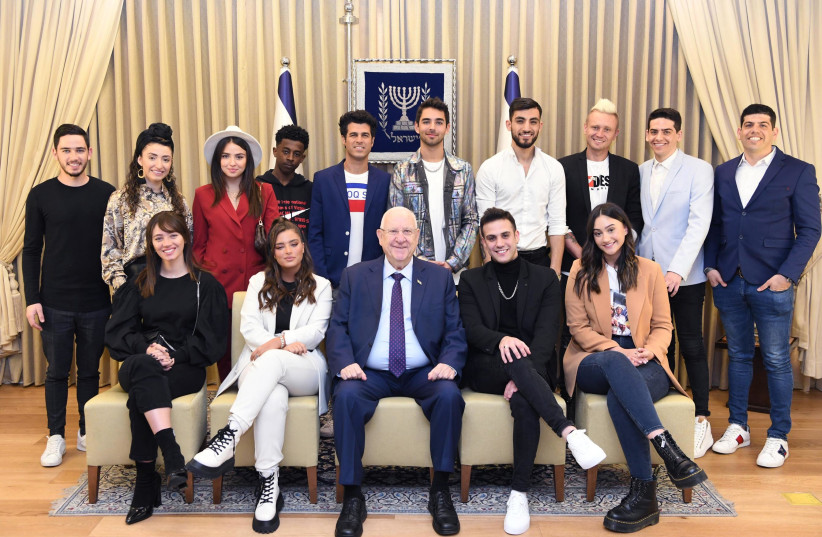
President Reuven Rivlln at the center of this photograph with Pop star Noa Kirel on his right side. Other teen-celebs include singer Agam Buhbut, second to his left, and actor Tal Mousseri known for his productions for children on the second row with the blue jacket /  (photo credit: AMOS BEN-GERSHOM/GPO)

President Reuven Rivlin made an important statement this week. Aimed at schoolchildren, it is a message that is nonetheless relevant to us all, particularly during these divisive times as the country heads back to the polls for the third election in a year.

Under the slogan #DontStandBy, the president on Sunday launched a campaign against cyberbullying. The initiative, in partnership with the Education Ministry’s psychological counseling service, includes a range of activities on social media using the hashtag (in Hebrew, “lo omdim mehatzad”) to raise awareness and combat the phenomenon.

“Social exclusion and bullying are nothing new, but in the digital age there are new ways to harm and abuse people – and verbal violence kills. It kills children’s dreams and hopes every day and has already claimed the lives of children who did not find a way out of the suffering and ended their own lives,” said Rivlin at the event at the President’s Residence in Jerusalem.

“I am so proud to see who is with us here today – educators, influencers and opinion-formers, young people who have decided to pick up the gauntlet and say enough is enough. We will not stand by. We will not stand by because even if it is not the easy thing to do, it is the right thing to do.”

As The Jerusalem Post’s Greer Fay Cashman reported, Rivlin told them a story about a boy who didn’t want to go to school because he knew he would either be shunned, ridiculed or cursed. He had been excluded from his peers’ WhatsApp group, and even his best friend had told him that he no longer wanted anything to do with him.

Rivlin urged all children not to stand on the sidelines but to intervene and help victims before the situation gets out of control.
As part of the campaign, influencers popular with youth, including singers Noa Kirel and Netta Barzilai, recorded tips on combating bullying and exclusion in the virtual and real worlds.

The tips include looking out for negative comments in groups and rejecting them; making sure a kid isn’t sitting alone on the bus on a school trip and sharing snacks with them and including them; being aware that verbal abuse can be no less harmful than physical violence; if you see an insulting clip on Tik Tok, send a private message asking the poster to delete it; if you see the type of child who keeps everything in, even when they’re suffering, ask an adult you trust, like a teacher, to help; make sure that kids are not alone during school vacations; and ask a kid who doesn’t seem to have friends to help with homework or studying for exams.

Education Ministry director-general Shmuel Abuav, like Rivlin, spoke of the Internet as “one of the great challenges of our times,” and Public Security Ministry director-general Maj.-Gen. (ret.) Moshe (Chico) Edri discussed an interministerial civil-law enforcement body for social media: “In a world first, police and civilians are working together in a single national bureau.”

Rivlin recorded a special clip, as if he was talking directly to a classroom from a framed photograph of the president on the wall. He is also featured in an Instagram filter that children can use to photograph themselves with him in the frame and post a story as part of the campaign against bullying. A special Instagram page – @lo_omdim – will include all the tips, clips and pictures.

The president made it clear that nobody – not even himself – is immune to cyberbullying and that everyone can take a stand against it.

“We have all come across cases of verbal aggression and violence, and when I say all of us, I mean myself as well. I also get violent responses on social media, and even though I am a grown-up, it is still hard. We must not allow this to become routine. We must not stand by when we come across behavior like this, even if it is not aimed directly at us. Let us promise today, together, all of us, to save lives and not to stand by!”

We’re grateful to President Rivlin for reminding us that even during election times there are broader social issues that the country needs to address. We must never forget that providing a safe environment for our children means not only being concerned with their physical safety but also their social and emotional well-being, which includes stopping cyberbullying and promoting inclusion.


Zawartość publikowanych artykułów i materiałów nie reprezentuje poglądów ani opinii Reunion’68,
ani też webmastera Blogu Reunion’68, chyba ze jest to wyraźnie zaznaczone.
Twoje uwagi, linki, własne artykuły lub wiadomości prześlij na adres:
webmaster@reunion68.com