Archives

Comedic Drama ‘My Neighbor Adolf’ Set to Start Production

New Israeli-Directed Comedic Drama ‘My Neighbor Adolf’ Set to Start Production

Shiryn Ghermezian


Actor Udo Kier. Photo: Wikimedia Commons.

A new film, titled “My Neighbor Adolf” is set to begin filming in Medellin, Colombia, later in this month, Variety reported last week.

The comedic drama is about a “lonely and grumpy” Holocaust survivor, living in Colombia’s countryside, who suspects that his new neighbor is the leader of the Nazi party, according to the publication. He goes on a mission to find out the truth and discovers that the only way to prove his theory is by befriending his neighbor.

David Hayman, known for his role in the Holocaust movie “The Boy in the Striped Pajamas,” will star as the Holocaust survivor, and Udo Kier of “Armageddon” and “Blade” fame will take on the role of his neighbor. Israel’s 2-Team Productions, Poland’s Film Produkcja and Vandalo Colombia are partnering on the film, with Israeli director Leon Prudovsky directing from a screenplay he wrote with Dmitry Malinsky.

Prudovsky told Variety: “‘My Neighbor, Adolf’ is a comedy, because a Holocaust survivor, who believes his new neighbor is Hitler, is comic. Because an old man obsessively conducting an absurd investigation is comic. But then again, the story is more of a tragedy. Because loneliness is tragic. Because demonizing your neighbor is tragic. Because not being able to put the traumatic past behind you is tragic.”

He added, “And this is almost a thriller, though the real dramatic question of the film is not about the new neighbor’s true identity, but whether the two lonely old men can overcome their prejudices and suspicions and build a friendship based on their common humanity.”

“My Neighbor Adolf” follows the success of “Jojo Rabbit,” a movie about a German boy in Hitler’s army whose imaginary friend is the Nazi leader himself. The movie received six Oscar nominations, including the coveted Best Picture, as well as Best Screenplay for Taika Waititi, the film’s director who also plays Hitler in it.


Zawartość publikowanych artykułów i materiałów nie reprezentuje poglądów ani opinii Reunion’68,
ani też webmastera Blogu Reunion’68, chyba ze jest to wyraźnie zaznaczone.
Twoje uwagi, linki, własne artykuły lub wiadomości prześlij na adres:
webmaster@reunion68.com


Walking with survivors on 75th anniversary of the liberation of Auschwitz

Walking with survivors on 75th anniversary of the liberation of Auschwitz

ANAT BARBER


We entered the gas chambers in silence… there was no talking allowed.
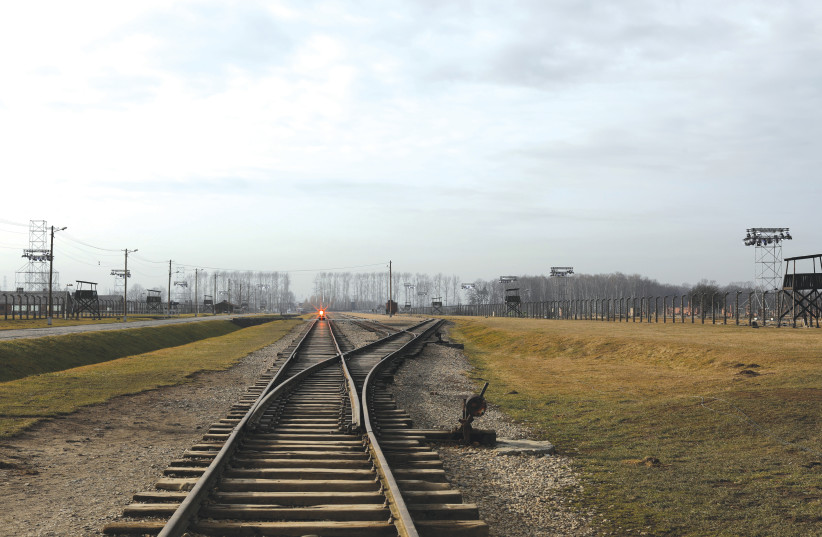
TRAIN TRACKS at Auschwitz. / (photo credit: REUTERS)

This morning as I put on my boots a few crumbly pieces of mud sprinkled onto the floor. The mud had traveled home with me from Birkenau. Stuck between the ridges of my physical sole, it was only a small vestige of the powerful experiences forever imprinted on the deepest places of my spiritual soul.

On that rainy morning, our group of 100+ survivors of the Auschwitz-Birkenau extermination camps, and their families, departed the hotel in a caravan of minibuses. As our hour-long ride drew to a close, the tension mounted. Many of us turned to look at the faces of the survivors to read their cues. We understood they had to set the tone for this experience. While this is considered a state museum, for our survivors, it was the place that irrevocably changed the course of their lives and their families forever.

And we began…

One family – survivor grandmother, two daughters, and eight grandchildren – linked arms and walked in stride together under the sign that falsely claimed “Arbeit Macht Frei.” In freedom they walked through the gates, each representing a family of their own and great-grandchildren of this survivor, too numerous to make the trip.

Our Polish guide began recounting the historical facts of the camp. We walked through the buildings, former barracks, now museums, which explain the mass killing of the Jewish people. We wove our way through the buildings listening to the guide who hesitantly explained the innumerable piles of glasses, braids of hair, cups, plates, shoes and religious articles.

We came upon the room with pictures of Hungarian women arriving at Birkenau. One survivor searched for faces she might recognize and shared, “We were told, your parents will be back on Sunday on their day off from work.” She began to cry as she said through tears, “We were children, we had no idea of the lies. We didn’t even say goodbye.”

We continued… out the door to the sight of executions and roll calls, where gallows stand.

One of the survivors spoke of the terror these public hangings instilled and the hours standing in the brutal cold. She said, “I never understood why it took so long. We were rows of five. All you had to do was multiply, but they tortured us.” Another added, “We had to carry the corpses of our friends back from the daily slave labor so that our morning and evening numbers matched.”

Finally, we arrive at the pinnacle of the genocide, the gas chambers. The guide explained the brutal and methodical way in which the Jews were led to their death. One survivor, clasping his well-worn siddur, grew antsy. He was waiting for a break in the guide’s remarks. Finally, not being able to hold back anymore he cried out in Yiddish for the grandmothers and mothers, the children, and the holy Jews, “Oy di babas and di mamas, the kinder, the heiloghe Yiddin.” He cried for his own mother, “Oy mamale, how you suffered.”

At that moment standing outside the door to the gas chamber, he began to recite kaddish. It started with a bellowing cry of “Yisgadal v’yiskadash shmei raba” (“May His great name be exalted and sanctified”). As tears flooded his eyes and his emotions poured out, the crowd around us grew. It ended with a tear-filled, barely audible “v’al kol Yisrael, v’imru amen” (“and upon all of Israel, and say amen”), and the resounding responses of “amen” echoed throughout the camp.

We entered the gas chambers in silence… there was no talking allowed.

We were meant to hear the voices of those who were eternally silenced. And as I touched the damp cement walls I thought of the women who nursed their children to bring them comfort, of the young children who clung to their parents’ legs and of the pain in the hearts of the elders who despaired at not being able to shield their families from these horrors.

As we exited, a reporter asked a survivor, “How did you keep your faith?” She responded, “Those of us with faith were the lucky ones, we had something to give us hope and hope helped keep us alive.”

WE CONTINUED to Birkenau where most Jewish victims were killed. Upon arrival the survivors asked questions. “Where did Mengele sit?” “Which directions did the trains arrive from?” as if trying to orient themselves and understand their experiences. “It feels so different because there is no mayhem. When we arrived, there was the loud screaming of the guards, the sky was ashen, the stench unbelievable and no one knew what was happening.”

They searched to find the barracks where they spent those wretched days or months during the war. One survivor asked “How could this be it? How could we have fit six people in this space? It seems so small.” She continued, “You can’t imagine what this was like, because I lived through it and even I can’t believe it.”

We walked toward the bombed-out remains of one of the gas chambers. It is preserved in its state of rubble. In the waning minutes of daylight we lit candles to commemorate. One of the survivors gently lowered the metal chain meant to keep the visitors back from the rubble and stepped forward so she could place her candle directly on the steps where her family was led to their death. She is not a visitor.

Here, perhaps symbolically, as the group organized for kaddish, one of the survivors passed the siddur to a member of the second generation. “This time you say it,” the survivor urged.

It was dark by the time we left and we traveled back in near silence. I turned to a survivor, sitting next to me and asked how she was feeling. She responded with a slight smile, “I fulfilled my purpose, I finally got to say goodbye to my family… they were all lost,” she cried. “I said goodbye, I lit a candle and I said kaddish. Now I never need to go back again.”

This journey left an indelible imprint on the crevices of my soul. Alongside the deep suffering is bravery and courage, memory and eternality, hope and continuity. Over and over the survivors made their message clear, “Tell our story,” “Don’t let people forget what happened,” and just as important, “Don’t forget to go on living” and “Keep the Jewish people’s story and traditions alive.”

The writer is the assistant-director of Capital Gifts and Special Initiatives at UJA-Federation of New York. In that capacity she coleads the Community Initiative for Holocaust Survivors through which UJA helps meet the needs of vulnerable Holocaust survivors in New York, Israel and around the world.


Zawartość publikowanych artykułów i materiałów nie reprezentuje poglądów ani opinii Reunion’68,
ani też webmastera Blogu Reunion’68, chyba ze jest to wyraźnie zaznaczone.
Twoje uwagi, linki, własne artykuły lub wiadomości prześlij na adres:
webmaster@reunion68.com


Israelis gather in Jerusalem to pray against coronavirus – 17.2.20 TV7 Israel News

Israelis gather in Jerusalem to pray against coronavirus – 17.2.20 TV7 Israel News

  TV7 Israel News


1) Sporadic rocket-fire and clusters of balloons rigged with explosives continue to plague Israel’s southern communities – prompting Israeli retaliatory strikes against Hamas installations in the Central Gaza Strip.

2) Prime Minister Benjamin Netanyahu highlights advancing efforts by both Israeli and American teams on the work of mapping West Bank territories that are set to become part of sovereign Israel, in accordance U.S. President Donald Trump’s so-called “deal of the century.

3) Hundreds of Israelis and Visitors gather at Jerusalem’s Western Wall for a mass prayer to keep the deadly coronavirus at bay.


Zawartość publikowanych artykułów i materiałów nie reprezentuje poglądów ani opinii Reunion’68,
ani też webmastera Blogu Reunion’68, chyba ze jest to wyraźnie zaznaczone.
Twoje uwagi, linki, własne artykuły lub wiadomości prześlij na adres:
webmaster@reunion68.com


NGOs call for public support in ending use of Palestinian child soldiers

NGOs call for public support in ending use of Palestinian child soldiers

DONNA RACHEL EDMUNDS


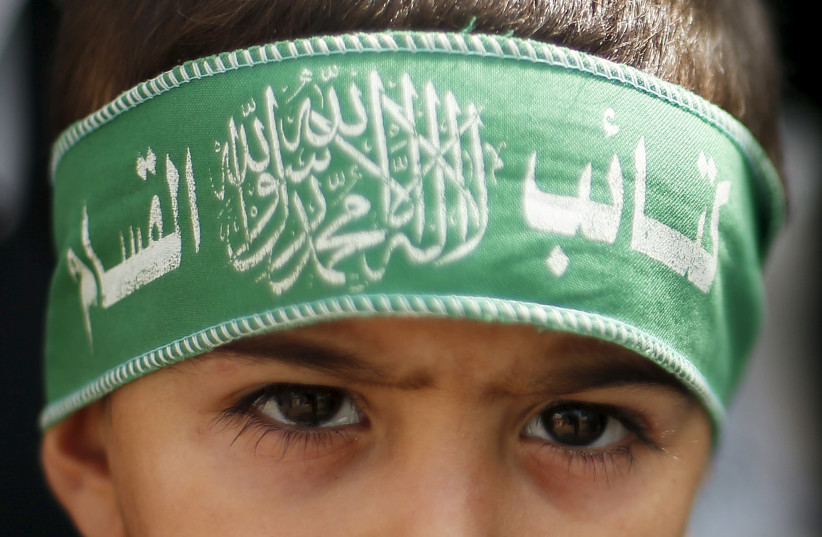
A Palestinian boy wears the headband of Hamas’ armed wing as he takes part in a rally to protest against an Israeli police raid on Jerusalem’s al-Aqsa mosque, in Gaza City September 15, 2015 /  (photo credit: REUTERS/SUHAIB SALEM)

A coalition of non-governmental organizations is urging the public to help stop the use of Palestinian children as soldiers and war resources by their leaders and terror groups in the region.

There are an estimated 300,000 child soldiers across 20 countries world-wide, including any person under 18 who is either recruited or used by an armed force or armed group in any capacity, according to the Convention on the Rights of the Child.

While the plight of child soldiers in Africa in particular has received global attention, their Arab counterparts in the Palestinian territories have often been ignored by the international community, as the human cost of using children to carry out terror attacks or as human shields has become overlooked in the political battles raging over the Arab-Israeli conflict.

Yet the children who survive their ordeal often carry the scars of trauma with them into their adult years, preventing them not only from having a normal childhood, but from being able to live fulfilling lives as adults.
Now a group of NGOs has banded together in a bid to raise the issue of Palestinian child soldiers on the world stage.

From February 18 -21, the Coalition to Save Palestinian Child Soldiers is holding a Solidarity Week, and is urging members of the public to sign an open letter to MEPs and US child welfare advocates to condemn the use of Palestinian children as soldiers.

For decades, the letter states, Palestinian children “have fulfilled the role of combatants, human shields, rioters, laborers, support staff, and even as suicide bombers, and as a result, their childhoods have been short by death, severe injury, or imprisonment.”

The global community’s unwillingness to address the issue “has emboldened organizations such as Hamas, Fatah, Palestinian Islamic Jihad and PFLP in their exploitation of children as war resources,” the letter continues.

A 2016 report found 240 US-government approved textbooks, used in hundreds of UNRWA-sponsored schools were teaching Arab children between the first and ninth grades to kill Israelis and martyr themselves. Other reports have reached similar findings. Yet despite this, it was not until August 2019 that the UN finally called on Palestinian leaders to act against “racist speech and hate crimes,” including incitement to violence against Israelis and Jews.

“These organizations expose them to inciteful and violent children’s shows, and flood social media with calls for jihad and terrorism,” the letter reads. “When the children are older they’re sent out to partake in violent riots and to act as human shields as thousands of others have before them.”
The letter notes that an estimated 10,000 children are trained in Gazan terrorist camps each year, while at least 160 have died digging terror tunnels into Israel.

The NGOs hope that public pressure put on the terrorist organizations will eventually force them to abandon their use of children to fight their wars. As part of that effort, they are also encouraging people to hold rallies and share materials online to raise awareness to the fact that the children are being used in this way.

One video, entitled ‘Palestinian Child Soldiers in Numbers’ notes that 17,000 children were enrolled in Hamas’ child militia programs in 2019, and that 29 children have already lost their lives as suicide bombers. “Dozens more” were prevented from carrying out their attacks.

“In combat, children from 17 to as young as 9 have been pushed into the battle fray, to fight and die alongside adult militants and terrorists. While in some cases the youngest of these casualties has been covered up with older, fake ages on casualty lists, Hamas and PIJ have been proud of the teenagers that have been “martyred” in battle,” the organizers noted in a statement on their website.

“These practices have lead to a strategic culture that views children as resources, and denies them their childhoods.

“For the future of the Palestinian people as a whole, and for these children as individuals with rights according to international law and decent moral doctrine, the above practices must be stopped.”


Zawartość publikowanych artykułów i materiałów nie reprezentuje poglądów ani opinii Reunion’68,
ani też webmastera Blogu Reunion’68, chyba ze jest to wyraźnie zaznaczone.
Twoje uwagi, linki, własne artykuły lub wiadomości prześlij na adres:
webmaster@reunion68.com


U.N. promotes Islamic-commissioned report against Israel in the West Bank


U.N. promotes Islamic-commissioned report against Israel in the West Bank

  TV7 Israel News


1) The United Nations Human Rights Council issued a report in which it listed 112 business entities that operate on lands, which the council defines as “occupied Palestinian territories.”

2) At least 10 clusters of balloons, presumably rigged with explosives, were reportedly seen crossing the coastal Palestinian enclave toward Israeli territories.

3) An exchange of fire ensued between Syrian militants and U.S. forces in Syria’s northeastern al-Hasakah province, when an American convoy was abruptly stopped at a pro-regime checkpoint, in the village of Kherbat Amo – east of Qamishli city.


Zawartość publikowanych artykułów i materiałów nie reprezentuje poglądów ani opinii Reunion’68,
ani też webmastera Blogu Reunion’68, chyba ze jest to wyraźnie zaznaczone.
Twoje uwagi, linki, własne artykuły lub wiadomości prześlij na adres:
webmaster@reunion68.com