Archives

The Aleph-bet song (Hosha’ana) Official video

Victoria Hanna – The Aleph-bet song (Hosha’ana) Official video

Victoria Hanna


Lyrics From the Hoshana Prayer
Concept, music, vocals: Victoria Hanna
Produced and arranged: Tamir Muskat
Drum, Keyboards and sampling: Tamir Muskat
Oud: Yarden Erez
Children Vocal: Zohar Moshe Chai Biran
Recorded and edited at Vibromonk East TLV
Technical Assistant: Omri Amado
Mastering: Shmulik Daniel at Hook & High

Video Clip:
Production company: ZOA Productions
Directed by: Asaf Korman
Script and concept: Victoria Hanna and Asaf Korman
Producers: Roei Zioni and Aviv Ben shlush


Zawartość publikowanych artykułów i materiałów nie reprezentuje poglądów ani opinii Reunion’68,
ani też webmastera Blogu Reunion’68, chyba ze jest to wyraźnie zaznaczone.
Twoje uwagi, linki, własne artykuły lub wiadomości prześlij na adres:
webmaster@reunion68.com


Defense Minister Naftali Bennett warns Hamas that ‘no one is immune’

Defense Minister Naftali Bennett warns Hamas that ‘no one is immune’

ANNA AHRONHEIM


Israel will not tolerate aggression from Gaza, Prime Minister Benjamin Netanyahu warned on Sunday, as terrorists continued to launch projectiles into Israel.

Defense Minister Naftali Bennett holds a situation assessment with IDF and security officials on February 9, 2020 / (photo credit: ARIEL HERMONI / DEFENSE MINISTRY)

Defense Minister Naftali Bennett warned Hamas on Sunday that “no one will be immune” from Israeli military action following the continued launching of explosive balloons and rockets from the Gaza Strip.

“The lawless conduct of Hamas leadership is bringing us closer to fatal action against them. We will not announce when or where,but no one will be immune,” Bennett said following a situational assessment in the Gaza Division.

Bennett held the situation assessment along with the Head of the Southern Command Maj.-Gen. Hertzi Halevi, Deputy Chief of Staff Maj.-Gen. Eyal Zamir, Gaza Division Commander, Brig.-Gen. Eliezer Toledano and representatives from Israel’s Coordinator of Government Activities in the Territories (COGAT), the Shin Bet and the National Security Council.

“The State of Israel does not want a war with Hamas in Gaza, but we have a commitment to the security of southern residents,” he said. “Hamas faces the choice: to choose life and economic prosperity or to choose terror and pay an unbearable price.”

Over a dozen rockets and mortars as well as countless explosive balloons and condoms have been fired towards southern Israel as tension spiked following the release of US President Donald Trump’s Middle East peace plan.

IDF tanks struck two Hamas positions in the Gaza Strip on Saturday night after a mortar was fired from the coastal enclave to southern Israel.
“We have no intention of allowing terrorism to succeed,” IDF Chief of Staff Lt.-Gen. Aviv Kochavi said on Thursday following a violent day in which three Palestinians were killed and dozens of IDF troops were injured.

“Our directive is very clear to all troops on the ground- to thwart and prevent all terror activity. When I say terror, I also mean the throwing of rocks, Molotov cocktails, explosive balloons… All of these are terror. The message is clear, not this attack, not the bombings, not the firing of the rockets, all these acts- will not succeed.”

Israel will not tolerate aggression from Gaza, Prime Minister Benjamin Netanyahu warned on Sunday, as terrorists continued to launch projectiles into Israel.

”Just a few weeks ago, we assassinated the senior commander of Palestinian Islamic Jihad in Gaza,” Netanyahu stated, “and I suggest that Islamic Jihad and Hamas refresh their memories.”

Netanyahu said Israel is “ready for decisive action against terrorist organizations in Gaza.

“Our actions are very strong and they are not over, to say the least,” he added.


Zawartość publikowanych artykułów i materiałów nie reprezentuje poglądów ani opinii Reunion’68,
ani też webmastera Blogu Reunion’68, chyba ze jest to wyraźnie zaznaczone.
Twoje uwagi, linki, własne artykuły lub wiadomości prześlij na adres:
webmaster@reunion68.com


First Ethiopian-Israeli Chosen to Represent Jewish State at Eurovision Song Contest

First Ethiopian-Israeli Chosen to Represent Jewish State at Eurovision Song Contest

JNS.org


Eden Alene, winner of the reality show ‘The Next Star to Eurovision,’ during the finals in the Neve Ilan studio near Jerusalem, Feb. 4, 2020. Photo: Shlomi Cohen / Flash90.

Eden Alene will be the first Ethiopian-Israeli to compete on behalf of the Jewish state at the Eurovision international song contest, set for May 16 in the Dutch city of Rotterdam.

On Tuesday night, the 19-year-old won Israel’s reality show “The Next Star to Eurovision,” whose winner then goes on to represent Israel in the Eurovision competition. Her final performance was of Beyoncé’s “Halo,” and she was crowned the winner after a tally of votes by the public and several panels of judges.

Alene, currently a soldier in the Israel Defense Forces, was the oldest of the four finalists on the show.

“It is an insane honor to represent my country,” she said of her win. “It is amazing that an Ethiopian is doing it for the first time.”

She also said, “I want to thank everyone who voted for me, and I promise to do my best to represent Israel with honor at the Eurovision.”

Israeli Prime Minister Benjamin Netanyahu congratulated Alene on Twitter, saying, “Eden, you are a champion! We trust you to bring Eurovision back home. Good luck!”

Alene, who moved this year with her single mother to Kiryat Gat from Jerusalem, studied ballet and theater and has taken voice lessons. She sang for two years with the YMCA Jerusalem Youth Choir, a mixed choir of Jewish and Arab teens, and was the winner of Israel’s “X-Factor” in 2018, in which she received a recording contract.

Viewers and professionals will vote on the song Alene will sing in the Eurovision competition, and the track will be revealed during on March 3 special broadcast on Kan.

Israel’s last winner in the Eurovision came was Netta Barzilai in 2018, who won with the song “Toy.”


Zawartość publikowanych artykułów i materiałów nie reprezentuje poglądów ani opinii Reunion’68,
ani też webmastera Blogu Reunion’68, chyba ze jest to wyraźnie zaznaczone.
Twoje uwagi, linki, własne artykuły lub wiadomości prześlij na adres:
webmaster@reunion68.com


Trump’s vision for Israel and how far the Jewish people have come

Trump’s vision for Israel and how far the Jewish people have come

GABRIEL GROISMAN


PA President Mahmoud Abbas rejected the plan before it was even announced. The “vision,” however, gives the PA a four-year window to change their mind.
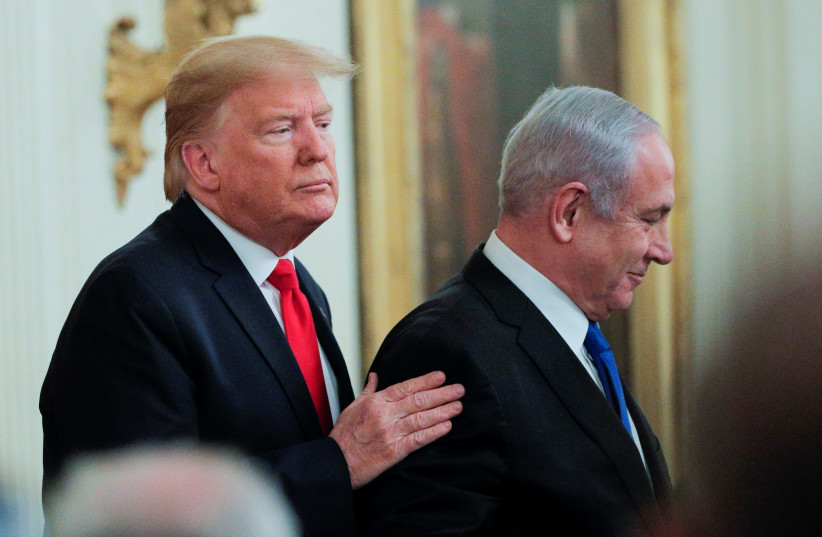
U.S. President Donald Trump and Israel’s Prime Minister Benjamin Netanyahu appear together at a joint news conference to discuss a new Middle East peace plan proposal in the East Room of the White House in Washington, U.S./ (photo credit: REUTERS/BRENDAN MCDERMID)

I sat in awe in the august East Room of the White House as President Donald Trump stood alongside Prime Minister Benjamim Netanyahu and unveiled a “Peace to Prosperity” vision for Israel and its Palestinian neighbors. The plan was not a dictate, but rather a framework by which the US hopes it can entice Israel and the Palestinian Authority to come together and negotiate a final status agreement between them.

Israel immediately stated, “If [the Palestinians] agree to abide by all the conditions… in [the] plan, Israel will be there. Israel would be prepared to negotiate peace right away.”

PA President Mahmoud Abbas rejected the plan before it was even announced. The “vision,” however, gives the PA a four-year window to change their mind.

The plan, in my opinion, has some good: applying Israeli law over the Jewish communities in Judea and Samaria (West Bank) and the Jordan Valley. The plan, in my opinion, also has some not so good: giving the Palestinians the outlines, including a map, of a contiguous potential state with a capital in a part of eastern Jerusalem without even requiring them to take a seat at the negotiating table.

But before we all dive into the details of the plan and debate whether we think it is a good step forward or not, it is absolutely imperative that we take a moment to recognize and absorb the enormity of the moment. What happened inside the East Room was a recognition of how far we have come as Jews in America, and how the US-Israel relationship has flourished during this president’s administration.

As I walked into the East Room, I was excited to see that the room was filled with leaders from the Jewish community across the nation, political leaders, including my governor Ron Desantis, US senators, congressional representatives, state legislators, and even leaders from the Christian community, including Pastor John Hagee. Also among those who attended were ambassadors from Bahrain, Oman and the UAE.

We welcomed Trump and Netanyahu, who stood side-by-side forcefully and confidently at the podium, as Trump made several statements of note.

“ON MY first trip overseas as president, I visited the Holy Land of Israel,” he said. “I was deeply moved and amazed by what this small country had achieved in the face of overwhelming odds and never-ending threats. The State of Israel comprises only a miniscule amount of land in the Middle East, and yet it has become a thriving center of democracy and of ancient culture and commerce. Israel is a light unto the world. The hearts and history of our people are woven together.”

In this room, at this moment in time, the American Jewish community was welcomed into the White House with open arms and with an unprecedented warmth – not just in word, but also in deed. Even if the unveiling of the plan left some difficult questions unanswered, the plan undoubtedly attempts to tackle, rather than ignore, the most significant issues of the region.

It recognizes the reality that the Jewish people are not leaving the Land of Israel, and that the State of Israel cannot be asked to make any concessions that would compromise its ability to defend itself. Importantly, this proposal seeks to break the parties away from the conscripts of the failed Oslo Accords, and the limbo in which Israel and the Palestinians have been living ever since.

This is a new day and a new path forward. Although the path is long, and there is no real hope that the Palestinians will negotiate on the basis of this (or any) deal, Israel and the Palestinian people now have a new road to walk down if they so choose – a realistic and safe road that gives both peoples a new vision and a new direction.

Just this week we commemorated International Holocaust Remembrance Day. The difference between the status of the American Jewish community today and 75 years ago cannot be overstated. Then, while Jews were being slaughtered in Europe, the American Jewish community made many well-documented attempts to seek the assistance of and intervention from the United States.

In 1944, the United States rejected several appeals to bomb the railroads leading to Auschwitz. The State Department sat on its hands as Jewish refugees sought to come to the land of the free. President Roosevelt was even made aware of the systematic, mass murder of Jews taking place, and took no action for over one year.

Of course, and thankfully, the US later played a vital role in liberating concentration camps, including Buchenwald in Germany in April 1945.
THE SPECIAL relationship between the United States and the State of Israel began immediately after David Ben-Gurion declared a new State of Israel, when president Truman recognized the Jewish state on that same date. The relationship has expanded over the years but it hasn’t been without its challenges.

In 1982, for instance, the Reagan administration asked Congress to increase its already significant military aid to Israel and Egypt. Later that year, prime minister Menachem Begin visited Capitol Hill for hearings related to the proposed aid package and Israel’s policies.

The hearing was described by a US senator in a New York Times article this way: “I’ve never seen such an angry session with a foreign head of state.”
When then-senator Joe Biden threatened Begin with cutting off US aid to Israel, Begin responded forcefully, “Don’t threaten us with cutting off your aid. It will not work. I am not a Jew with trembling knees!”

While Begin’s strong and poignant words remain a source of pride for Jews around the world, the exchange reflected the great tension between the nations at that time.

Today is different. Whether you believe the Trump vision is positive or not, we must recognize and celebrate how far we have come as a people, both in America and around the world. This, of course, is something we cannot take for granted.

It is beyond dispute that there are certain members of the American political establishment who have taken an aggressive and hostile position vis-à-vis Israel, but it is also beyond dispute that today the relationship between the US government and Israel is as strong as it has ever been.
In a time where we American Jews appropriately expend much of our energy in combating the meteoric rise of antisemitism and antisemitic attacks on our streets and in our synagogues, we take a moment to recognize that we have taken great strides in the United States: that we are welcomed with open arms in the halls of Congress and the White House alike; and that our eternal Jewish homeland, Israel, is respected by the leaders of the world’s most powerful nation.

The feeling in the White House was one of joy and pride about where we are as the Jewish people, and the status which Israel has earned in the corridors of power in Washington, DC.

While Trump’s plan has just been unveiled, there is no question that the work has just begun. The Jewish people and Israel must continue to walk with pride and strength, because it is only with these characteristics that we can continue to flourish as a people.


The writer is mayor of Bal Harbour, Florida. Follow him on Twitter @gabegroisman or Facebook at facebook.com/groismangabriel/.


Zawartość publikowanych artykułów i materiałów nie reprezentuje poglądów ani opinii Reunion’68,
ani też webmastera Blogu Reunion’68, chyba ze jest to wyraźnie zaznaczone.
Twoje uwagi, linki, własne artykuły lub wiadomości prześlij na adres:
webmaster@reunion68.com


Syrian air defense nearly hit passenger plane after Israeli attack

Russia: Syrian air defense nearly hit passenger plane after Israeli attack

ANNA AHRONHEIM, TAMAR BEERI, REUTERS


A passenger plane carrying 172 passengers from Tehran to Damascus made an emergency landing at the Russian-controlled Khmeimim air base on Thursday after coming under fire from Syrian air defenses.

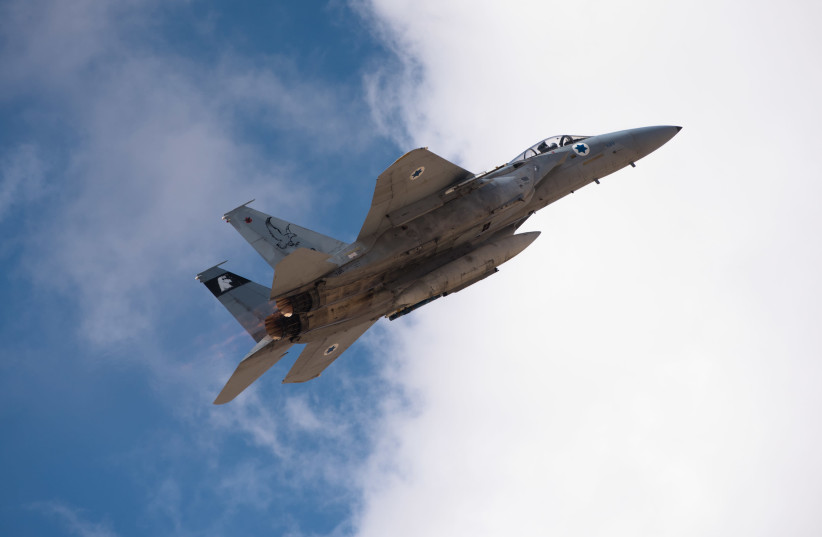
An IAF plane takes part in the IDF’s ‘Blue Flag’ exercise. November 5th, 2017
(photo credit: IDF SPOKESPERSON’S UNIT)

The Russian Defense Ministry in Moscow claimed that the Israeli attack on Syria, which killed at least 23 pro-Iranian gunmen in the middle of Wednesday night, put a civilian flight at risk, according to Yediot Aharonot.

A passenger plane carrying 172 passengers from Tehran to Damascus made an emergency landing at the Russian-controlled Khmeimim air base on Thursday after coming under fire from Syrian air defenses, Russia’s defense ministry said on Friday.

Defence Ministry spokesman Igor Konashenkov did not name the airline but data from Flight Radar indicated it was a Syrian Cham Wings plane. The airline could not immediately be reached for comment.

The Syrian air defense was trying to repulse an Israeli attack near Damascus, Russian state news agency RIA added.

According to the London-based Syrian Observatory for Human Rights, at least three government Iranian positions near Damascus and west of the capital were targeted. Syria’s official SANA news agency said the Israeli strikes came in two waves and hit the al-Kiswah area as well as Marj al-Sultan and Jisr Baghdad.

The first wave at 1:12 a.m. “targeted some of our military positions in the suburbs of Damascus,” SANA quoted a military source as saying. The second wave at 1:41 a.m. “targeted military positions in the surroundings of Dara’a, Quneitra and Damascus countryside with a number of missiles fired by Israeli warplanes from the airspace in southern Lebanon and the occupied Golan.”

According to the Russian statement, F-16 jets belonging to the Israeli Air Force (IAF) shot eight air-to-ground missiles without entering Syrian airspace. Moscow blamed Israel for using the civilian aircraft “as a shield against Syrian anti-aircraft systems.”

The Syrian defense ministry, however, claimed that Syrian air defenses intercepted the Israeli missiles over Damascus that were fired at military targets.

Israel has been unofficially carrying out a war-between-wars campaign in Syria since 2013 so as to prevent the entrenchment of Iranian forces, as well as the transfer of advanced weaponry from Iran to Hezbollah.

The IDF has previously admitted to carrying out hundreds of airstrikes in Syria since the country’s civil war broke out in 2011.

Israel has repeatedly bombed Iranian-backed militia targets in Syria, saying its goal was to end Tehran’s military presence there, which Western intelligence sources say has expanded in recent years.

Last month, the Syrian Armed Forces said IAF jets attacked the T-4 airbase in Homs province. In December, it said the air-defense system intercepted missiles fired from the direction of Israel aimed at targets on the outskirts of Damascus.


Zawartość publikowanych artykułów i materiałów nie reprezentuje poglądów ani opinii Reunion’68,
ani też webmastera Blogu Reunion’68, chyba ze jest to wyraźnie zaznaczone.
Twoje uwagi, linki, własne artykuły lub wiadomości prześlij na adres:
webmaster@reunion68.com