Archives

ICC to launch investigation into alleged Israeli war crimes

ICC to launch investigation into alleged Israeli war crimes

   TV7 Israel News


Zawartość publikowanych artykułów i materiałów nie reprezentuje poglądów ani opinii Reunion’68,
ani też webmastera Blogu Reunion’68, chyba ze jest to wyraźnie zaznaczone.
Twoje uwagi, linki, własne artykuły lub wiadomości prześlij na adres:
webmaster@reunion68.com


France, Britain, Germany trigger Iran nuclear deal dispute mechanism

France, Britain, Germany trigger Iran nuclear deal dispute mechanism

By REUTERS


The EU must now inform the other parties to the deal – Russia, China and Iran. If no resolution is found after 15 days, UN sanctions could be snapped back.

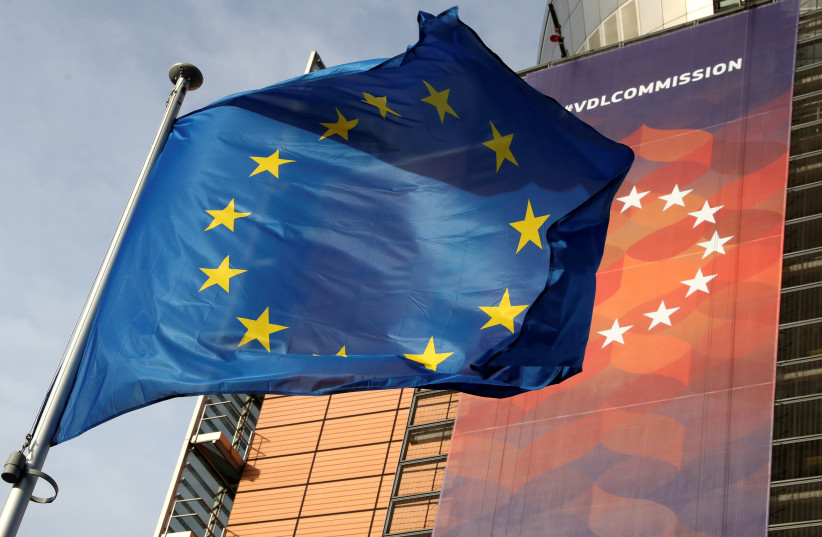
A European Union flag flies outside the European Commission headquarters in Brussels, Belgium, December 19, 2019.
(photo credit: REUTERS/YVES HERMAN)

France, Britain and Germany confirmed on Tuesday that they had triggered the dispute mechanism in the Iran nuclear deal given Tehran’s ongoing violations of the 2015 agreement, but said they were not joining the United States campaign to exert maximum pressure on Tehran.

“We have therefore been left with no choice, given Iran’s actions, but to register today our concerns that Iran is not meeting its commitments under the JCPoA [Joint Comprehensive Plan of Action]] and to refer this matter to the Joint Commission under the Dispute Resolution Mechanism, as set out in paragraph 36 of the JCPoA [Iran deal],” the three European states said in a joint statement.

In one of the strongest calls yet from Europe for a new agreement to replace the 2015 deal that Washington abandoned two years ago, British Prime Minister Boris Johnson said earlier in the day that the way forward was to agree a new “Trump deal.”

A decision by Britain, France and Germany to trigger a dispute mechanism in the 2015 arms control agreement with Iran is not designed to re-impose U.N. sanctions but to bring Tehran back into compliance, the EU’s top diplomat said.

EU foreign policy chief Josep Borrell, who is also the chairman of the Iran nuclear deal that the EU helped to broker, told reporters he had received notification from London, Paris and Berlin of their decision to trigger the dispute resolution mechanism. He explained that the goal was to preserve the deal and not create a situation by which United Nations sanctions were reimposed on Iran.

The aim “is to resolve issues relating to the implementation of the Iran nuclear agreement (and not)… to re-impose sanctions,” Borrell said at the European Parliament in Strasbourg.

Washington’s European allies have tried to keep the nuclear agreement from collapsing since President Donald Trump pulled the United States out of it in 2018. Under the agreement, international sanctions against Iran were lifted in return for Tehran agreeing to curbs on its nuclear program.

But Washington has reimposed sanctions, denying Iran most of the economic benefits. Iran has responded by gradually exceeding many of the limitations it had signed up to in the deal. This month it said it would abandon limits on its production of enriched uranium, a step the Europeans said was likely to force them to respond.

On Tuesday the three European signatories to the deal Britain, France and Germany said they had triggered the mechanism to resolve disputes that had been written into the 2015 agreement.

Under the terms of the mechanism the EU must inform the other parties – Russia and China as well as Iran itself. There would then be 15 days to resolve the differences, a deadline which can be extended by consensus.
The process can ultimately lead to a “snapback” – the reimposition of sanctions in place under previous U.N. resolutions.

“At one point we have to show our credibility,” said one of the European diplomats. The second diplomat said: “Our intention is not to restore sanctions, but to resolve our differences through the very mechanism that was created in the deal.”

Washington’s exit from the nuclear pact, and the severe economic distress caused by the U.S. sanctions that followed, have fed one of the biggest escalations in hostility between the United States and Iran since Iran’s 1979 Islamic Revolution.

That has accelerated sharply since Jan. 3, when the United States killed the most powerful Iranian military commander, Qassem Soleimani, in a drone strike in Baghdad.

On Jan. 8, Iran accidentally shot down a Ukrainian airliner while its forces were on high alert following strikes on U.S. targets. After days of denials, the Iranian authorities acknowledged responsibility for the crash, and have since faced days of anti-government demonstrations at home.

Trump says his aim in quitting the nuclear deal was to force Iran to sign up to a more stringent pact. Tehran says it will not renegotiate as long as U.S. sanctions are in place.

Britain’s Johnson, a conservative who has pitched himself as an ally of Trump who can help bridge the diplomatic gap between the United States and Europe, said he wanted to avoid a military conflict with Iran.

“Let’s dial this thing down,” he said in an interview with the BBC.
On the deal, he said: “If we’re going to get rid of it, let’s replace it and let’s replace it with the Trump deal… President Trump is a great dealmaker, by his own account. Let’s work together to replace the JCPOA and get the Trump deal instead.”e. The aim was not to reimpose UN sanctions, the diplomats said.


Jerusalem Post Staff contributed to this report.


Zawartość publikowanych artykułów i materiałów nie reprezentuje poglądów ani opinii Reunion’68,
ani też webmastera Blogu Reunion’68, chyba ze jest to wyraźnie zaznaczone.
Twoje uwagi, linki, własne artykuły lub wiadomości prześlij na adres:
webmaster@reunion68.com


Fatah officials jockeying for power as Abbas’s tenure enters 15th year

Fatah officials jockeying for power as Abbas’s tenure enters 15th year

KHALED ABU TOAMEH


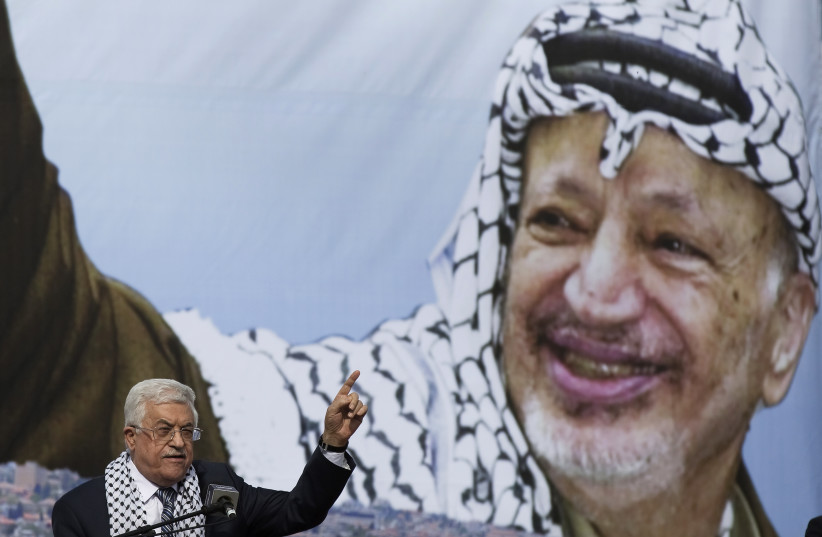
Palestinian President Mahmoud Abbas gestures beneath a poster of the late Palestinian leader Yasser Arafat / (photo credit: FINBARR O’REILLY / REUTERS)

On January 15, Palestinian Authority President Mahmoud Abbas will enter his 15th year of his four-year term of office amid reports of a behind-the-scenes war of succession in Ramallah.

According to the reports, Hussein Al-Sheikh, head of the PA’s General Authority for Civil Affairs and member of the Fatah Central Committee, and Majed Faraj, head of the PA General Intelligence Service, have been working to prepare for the post-Abbas era.

The reports said that Al-Sheikh and Faraj have been trying to convince PLO and Fatah officials to support PA Prime Minister Mohammed Shtayyeh as Abbas’s successor.

Mahmoud Aloul, deputy Fatah chairman, is also seen by several Fatah members as a “leading and natural candidate” to succeed Abbas.

The efforts of Al-Sheikh and Faraj seem to have enraged some Palestinian officials, including Jibril Rajoub, Chairman of the Palestinian Football Association and veteran member of the Fatah Central Committee.

Palestinian sources in Ramallah said on Saturday that Rajoub supports the candidacy of jailed Fatah leader Marwan Barghouti, who is serving a five life sentence in prison for his role in terrorist attacks against Israelis during the Second Intifada.

“Rajoub has been complaining about the alliance between Al-Sheikh, Faraj and Shtayyeh,” Fatah officials told the Lebanese newspaper Al-Akhbar. “That’s why Rajoub has recently been in contact with Barghouti, and has even visited him in prison a number of times.”

The sources said that Rajoub and his supporters have accused Al-Sheikh and Faraj of working to stop Barghouti from running in the next PA presidential election, if and when it takes place. The two Palestinian officials are also opposed to the release of Barghouti from Israeli prison, the sources claimed.
Other sources revealed that Rajoub has been waging a smear campaign against Al-Sheikh and Faraj, accusing them of filing “false reports” to Abbas about various issues related to the conduct of senior Palestinian officials in Ramallah.

Rajoub is also reported to have denounced – in private conversations – both Al-Sheikh and Faraj, dubbing them “collaborators” with Israel.

Al-Sheikh responded by posting on Facebook a photo of himself and Faraj with a comment reading: “To those who agree or disagree, this is my brother, my companion and my loyal friend [Faraj]. Those who are unhappy are welcome to drink from the water of the Dead Sea.”

A Facebook page supporting the head of the General Intelligence Service shared the photo, reminding Palestinians that Faraj and Al-Sheikh had previously served time in Israeli prison: “The honorable people will continue to pay the price of loyalty to their homeland. The Palestinians know the truth about the history of all the honorable people.”

The message behind these posts: Al-Sheikh and Faraj are not “traitors” or “collaborators.”

Al-Sheikh and Faraj also arranged a meeting with Abbas together with Fadwa Barghouti, the wife of the jailed Fatah leader, and posted a photo of the encounter on several Palestinian media outlets.

The purpose of the meeting was to refute claims that Al-Sheikh and Faraj are involved in a “conspiracy” against Marwan Barghouti. The meeting with Abbas was aimed at taunting Rajoub and his followers.

Hatem Abdel Qader, member of the Fatah Central Committee, was recently quoted as saying that Barghouti was planning to run in the election.
Abbas, Al-Sheikh and Faraj are said to be opposed to Barghouti’s purported bid to run in the election.

Rajoub, for his part, said in an interview with the PA’s Palestine TV that Abbas, who celebrated his 84th birthday in November 2019, will not seek re-election.

Rajoub’s statement came shortly after Al-Sheikh announced that Abbas would be Fatah’s sole candidate in the upcoming election. Rajoub has also denied slandering Al-Sheikh and Faraj. “I’m proud of all the brothers and sisters in Fatah,” he remarked.

It’s unclear at this stage whether Abbas intends to seek re-election.
In September 2019, Abbas announced his intention to hold long overdue presidential and parliamentary elections. However, he has still not issued an official announcement setting a date for the vote.

Abbas and senior PA officials have emphasized in recent weeks that the elections would not take place unless Israel allows east Jerusalem residents to cast their ballots. They have also insisted that Israel permit east Jerusalem residents to vote inside the Jerusalem Municipality city boundaries, and not in the West Bank.

Moreover, it remains unclear whether Barghouti would indeed run in the election.

A PA official in Ramallah said that Abbas and some Fatah leaders have asked Barghouti not to run in the presidential election in return for being placed at the head of the Fatah list that would contest the parliamentary vote.

According to the report in Al-Akhbar, Fatah officials have asked Egypt to pressure Israel to include Barghouti in a future prisoner exchange agreement. The Egyptians have endorsed the request, the report added.

The official told The Jerusalem Post that deposed Fatah leader Mohammed Dahlan, who is based in the United Arab Emirates and maintains close ties with Egyptian President Abdel Fattah Sisi, has also been wooing Barghouti. “President Abbas and many Fatah leaders are strongly opposed to Dahlan,” he said. “It would be very bad for Barghouti if he chooses to align himself with Dahlan.”


Zawartość publikowanych artykułów i materiałów nie reprezentuje poglądów ani opinii Reunion’68,
ani też webmastera Blogu Reunion’68, chyba ze jest to wyraźnie zaznaczone.
Twoje uwagi, linki, własne artykuły lub wiadomości prześlij na adres:
webmaster@reunion68.com


Photo Exhibit at Ben-Gurion

Photo Exhibit at Ben-Gurion Airport Brings Jewish State’s (and Agency’s) Story to Life

by JNS.org


Jewish Agency for Israel chairman Isaac Herzog and CEO Amira Ahronoviz (at center) with some of the subjects of the exhibit. Photo: Dror Sithakol.

A photo exhibit titled “One to Ninety” opened at Ben-Gurion International Airport on Monday, depicting the story of the Jewish Agency for Israel as it celebrates its 90th anniversary. It will be up until March 30, welcoming residents and visitors as they fly to and from the Jewish state.

Since its establishment nine decades ago, the organization has stood at critical junctures in the history of the Jewish people and the State of Israel. The exhibition presents a series of photographs and personal stories that represent those activities, connecting the personal to the collective and linking the Jewish past to its common future.

Among the subjects of the exhibition are a young woman who immigrated to Israel on her own and served as a lone soldier in the Israel Defense Forces; a child in a covert Aliyah of Rescue operation; a Hebrew teacher at the oldest ulpan (center for intensive Hebrew instruction) in Jerusalem; pioneers who built the country; shlichim (Israeli emissaries) who promote Israel overseas; and others.

The exhibition was curated by the Jewish Agency’s global brand director, Elad Sonn.

“Presenting the exhibition at Ben-Gurion airport—through which millions of immigrants have entered Israel and millions of visitors from around the world pass through each year—is exciting and highly symbolic,” said Jewish Agency Chairman Isaac Herzog.

“In its 10th decade,” he continued, ”the Jewish Agency is addressing major contemporary challenges facing our people in Israel and worldwide, including strengthening the ties between world Jewry and the State of Israel; acting as the voice of overseas Jewry in Israeli society; promoting shalom bayit (‘cooperative relationships’) among the various streams of Judaism; ensuring the security and well-being of Jews around the world as they face rising antisemitism; and, of course, continuing to bring tens of thousands of immigrants to Israel each year.”

The agency, which was founded in 1929, brought Jews to Israel even before the establishment of modern-day Israel. Fulfilling the vision of creating a national home for the Jewish people in its historic homeland, the organization today has brought more than 3.5 million immigrants from all over the world, established hundreds of small towns across the country, and for decades played a crucial role in populating, building and developing the country for all its citizens.

It has led cross-sectoral and diversity programs within Israeli society on behalf of world Jewry, together with its partners at the World Zionist Organization, the Jewish Federations of North America (JFNA), Keren Hayesod, the government of Israel, and foundations and donors from Israel and around the world.

Over the course of 90 years, the Jewish Agency has worked to build a bilateral connection between Jews and Israel, and to strengthen the relationship between Jews with Israel at its center. For these achievements, it was awarded the Israel Prize in 2008.


Zawartość publikowanych artykułów i materiałów nie reprezentuje poglądów ani opinii Reunion’68,
ani też webmastera Blogu Reunion’68, chyba ze jest to wyraźnie zaznaczone.
Twoje uwagi, linki, własne artykuły lub wiadomości prześlij na adres:
webmaster@reunion68.com


Strikes target Iranian militias on Iraq-Syria border, media blame Israel

Strikes target Iranian militias on Iraq-Syria border, media blame Israel

ROSSELLA TERCATIN


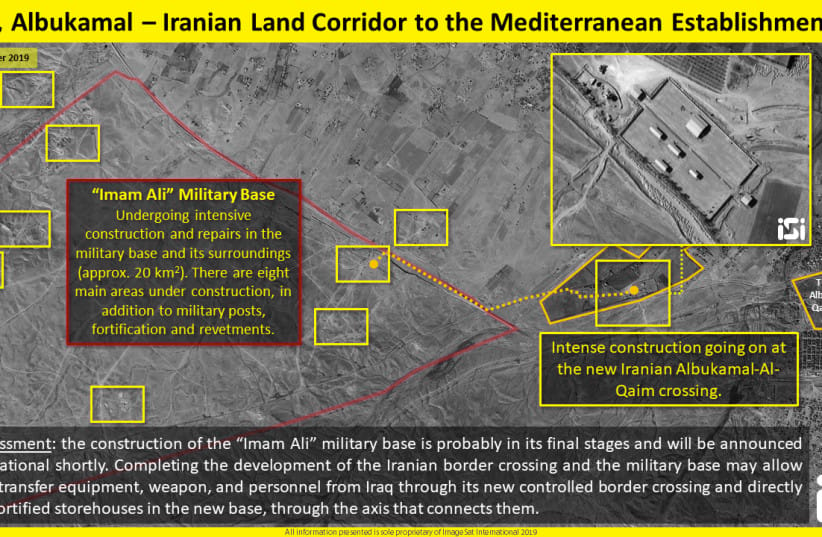
Aerial view of intense construction at Iran’s Albukamal-Al-Qaim crossing
(photo credit: IMAGESAT INTERNATIONAL (ISI))

Trucks and militants were targeted in airstrikes along the border between Iraq and Syria on Thursday night, according to the Beirut-based TV station Al Mayadeen. Violent explosions were heard in the area and “enemy planes” were seen above the city Al-Bukamal shortly before, according to the report.

Local news source DeirEzzor24 stated that target of the bombing is believed to have been a weapons shipment to Hezbollah in the border area.

Several Arab media outlets, including Al Mayadeen, blamed Israel for the airstrikes.

According to Ynet, the Syrian Observatory for Human Rights, an organization which opposes the regime of Bashar Al-Assad and his allies in Iran and the pro-Iranian militia Hezbollah, reported that non-identified fighter jets struck warehouses and equipment belonging to pro-Iranian militias.

Its report added that according to sources, Russian President Vladimir Putin informed Assad that the United States intended to close the land-route between Tehran and Beirut, which goes through Al Bukamal.

In November, the Al-Bukamal border crossing between Iraq and Syria reopened five years after being seized by the Islamic State, raising concerns that it could be a hub for Iran to expedite the transfer of weapons to groups like Hezbollah.

Two months earlier, Fox News stated that Iran was constructing a new military compound and weapon storehouses, in a report based on analysis from ImageSat International.

Explosions were also heard in “areas controlled by Iranian militias” near Al-ukamal in eastern Syria near the Iraq-Syria border earlier this week, according to local news source Deir Ezzor 24. The explosions were believed to have been caused by rockets, although some reports indicated that an airstrike had targeted the area.

Militias along the Iraq-Syria border have been on high alert since the US operation that killed IRGC’s Quds Force commander Qasem Soleimani last week.

Several strikes have been reported in the area in the past few days.


Tzvi Joffree contriuted to this report.


Zawartość publikowanych artykułów i materiałów nie reprezentuje poglądów ani opinii Reunion’68,
ani też webmastera Blogu Reunion’68, chyba ze jest to wyraźnie zaznaczone.
Twoje uwagi, linki, własne artykuły lub wiadomości prześlij na adres:
webmaster@reunion68.com