
Archive | 2015/08/08

Former Argentine president on trial for bombing cover-up

Former Argentine president on trial for bombing cover-up

Associated Press
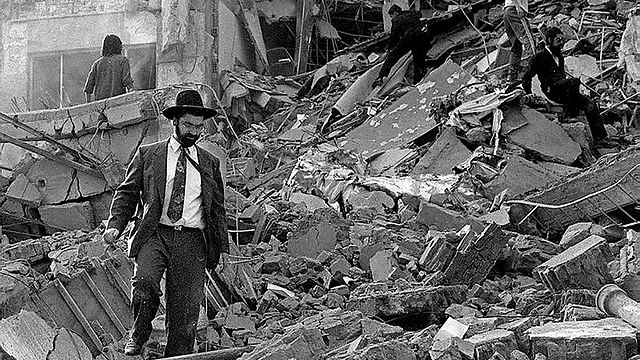

Aftermath of  Argentine Israelite Mutual Association bombing (Photo: AFP)

Aftermath of Argentine Israelite Mutual Association bombing (Photo: AFP)

Months after the mysterious death of prosecutor Alberto Nisman, who accused the government of a cover-up, the trial that could finally deliver justice for 85 victims of 1994 terror attack on Buenos Aires Jewish community center begins; former president Carlos Menem among defendants.

More than 21 years after a bomb ripped through a Jewish community center in Buenos Aires, ex-President Carlos Menem, a former top judge and several other officials went on trial Thursday for allegedly derailing the investigation into the South American nation’s worst terrorist attack.

On a day of heavy rain, several of the 13 men charged in the cover up were ushered into the court. Menem, president between 1989 and 1999, was absent. It wasn’t immediately clear where the now 85-year-old was or if lawyers would represent him at this point in the trial, which is expected to last several months.

Prosecutors have accused Iranian officials of being behind the 1994 bombing of the Argentine Israelite Mutual Association, which caused the organization’s main building to collapse, killing 85 and leaving hundreds more injured amid the rubble. But no one has been convicted in the attack, which many Argentines believe has come to symbolize an inept and corrupt justice system that operates at the whims of politicians and can be bought off.

“After 21 years of no justice, deception and defrauding the families (of victims), we hope that the truth will emerge about everyone who plotted to cover up and derail the investigation,” said Olga Degtiar, whose son was killed in the blast.

The men on trial include two former prosecutors, a former top intelligence official, former police officers, a Jewish community leader and a mechanic who owned the truck carrying the explosives. The charges carry between three and 15 years.

The trial is expected to focus on how and why Menem and the others might have wanted to bury the initial investigation. Testimony will likely delve into geopolitics of the 1990s, and even into Menem’s Syrian ancestry and how that might have influenced him.

Menem, whose parents immigrated to Argentina from Syria, is currently a senator representing La Rioja province where he was born.

Argentine authorities have long accused Iran and the militant group Hezbollah of being behind the attack. To this day, several Iranian officials are on Interpol’s red alert list, though the Middle Eastern country has always denied involvement.

Prosecutor Sabrina Namer is expected to argue that former Judge Juan Jose Galeano, on orders from Menem, stopped investigating a “Syrian trail” that involved Syrian-born Alberto Kanoore Edul. Edul was detained when authorities discovered he had telephoned Carlos Telleldin, a mechanic who owned the truck that carried the explosives, days before the attack.

Edul, whose parents had a personal relationship with the Menem family, was also suspected because he had a planner that included the phone number of Moshen Rabbani, at the time the cultural attache at the Iranian Embassy in Buenos Aires.

Prosecutors have accused Rabbani of masterminding the attack and continue to seek his extradition. Edul, who died in 2010, denied involvement.

In an interview with The Associated Press, Galeano denied that he received any orders from Menem. He said Edul wasn’t investigated further because there was no hard evidence against him.

Calls to Menem’s lawyers seeking comment were not returned.

Another central part of the cover-up charges involve the 1996 payment of $400,000 to Telleldin, at the time the only person detained in connection with the bombing. Galeano negotiated the payment, which came from funds from the now defunct Secretary of State Intelligence spy agency.

The stated reason behind the money was to persuade Telleldin to tell authorities to whom he had given the truck. Telleldin implicated several police officers of the Buenos Aires province, a force that at the time was largely discredited in the midst of several corruption scandals.

A dozen officers were detained and went on trial in 2001. The case dragged on, then after three years a mistrial was declared on the grounds that the payment to Telleldin had influenced his testimony. The 19 people on trial, including Telleldin and the officers, were absolved. Telleldin and some of the officers have been charged in the cover-up trial.

Galeano told the AP the payment was a bad decision, but said that at the time authorities were desperate to solve the case.

The trial comes at a time when the bombing is very much in the public eye after the mysteriousdeath in January of prosecutor Alberto Nisman.

In 2004, Nisman was appointed lead prosecutor in the case by then President Nestor Kirchner, who called the investigation up to that point a “national disgrace.”

In January, Nisman made a stunning accusation: that President Cristina Fernandez, the wife and successor of the late Kirchner, had reached a secret deal with the Iranian government to cover up the alleged role of several Iranian officials.


twoje uwagi, linki, wlasne artykuly, lub wiadomosci przeslij do: webmaster@reunion68.com



Czy Izrael uratuje świat po raz trzeci?

Czy Izrael uratuje świat po raz trzeci?

Mudar Zahran
Tłumaczenie: Małgorzata Koraszewska


Jako polityk jordańsko-izraelski ja i wielu innych polityków i decydentów arabskich przyswoiliśmy sobie naukę, że Izrael jest żywotnie ważny dla naszego istnienia. W rzeczywistości Izrael uratował nas – i świat – przed dwiema globalnymi katastrofami.

Pierwszy raz Izrael uratował nas wszystkich na początku lat 1980., kiedy prezydent iracki, Saddam Husajn, był jednym z najsilniejszych arabskich sojuszników Zachodu. Był przeciwnikiem Republiki Islamskiej Iranu i uważano go za ważnego partnera rządów zachodnich i regionalną przeciwwagę dla potęgi Iranu. Zachód był zakochany w Saddamie do tego stopnia, że pozwolił mu na program nuklearny, który budował z pomocą francuską.

Tak samo jak Iran robi to dzisiaj, Saddam mówił, że jego program nuklearny był tylko do “użytku pokojowego i cywilnego”. Reaktor nuklearny Saddam zbudował za aprobatą Stanów Zjednoczonych. Izrael jednak nie uwierzył w twierdzenia Saddama i w 1981 r. wysłał pilotów na misję (z której było wysoce prawdopodobne, że nie wrócą), zniszczenia reaktora nuklearnego Saddama. Według doniesień, ówczesny wiceprezydent George H. W. Bush był wściekły na akcję izraelską, podczas gdy pierwszą reakcją prezydenta Reagana na tę wiadomość było stwierdzenie: „Mężczyźni są jak dzieci”. Rządy arabskie i zachodnie potępiły atak izraelski, a niektórzy mówili także o tym w ONZ. Zgodnie z oczekiwaniami, media zachodnie piętnowały Izrael.

W dziewięć lat później Saddam okupował Kuwejt, groził całemu regionowi Zatoki i otwarcie mówił o kontrolowaniu “arabskiego bogactwa naftowego”, co mogłoby rzucić Zachód na kolana. USA i wiele państw zachodnich ryzykowali krew i pieniądze, by wyprzeć Saddama z Kuwejtu, ale nie obawiali się ataku nuklearnego z jego strony lub tego, że mógłby użyć brudnych bomb. Dlatego operacja Pustynna Burza przebiegła gładko. Gdyby Saddam nadal miał program nuklearny, cała sytuacja i jej wynik mogłyby być inne. W rzeczywistości Saddam mógłby pozostać przy władzy do dnia dzisiejszego, gdyby nie Izrael, który podjął ryzyko zniszczenia jego programu nuklearnego.

Krótko mówiąc, Izrael uratował świat przed maniakiem władzy, który był bardzo blisko zdobycia broni nuklearnej.

Nie był to jedyny raz, kiedy Izrael uratował świat. Inny dyktator arabski, Baszar Assad, miał tajny program nuklearny i budował reaktor z pomocą Korei Północnej. Choć wiele rządów nadal nie miało pewności, czy ten program w ogóle istnieje, Izrael nie marnował czasu. Według doniesień, odrzutowce izraelskie zbombardowały reaktor Assada w 2007 r., zamieniając go w stertę gruzu. Były także doniesienia, że kilku irańskich i południowokoreańskich naukowców jądrowych zginęło podczas tego ataku.

Choć świat niecałkiem potępił to posunięcie, wielu uważało to za nieuzasadnione, ponieważ Assad ściśle współpracował z USA w walce z Al-Kaidą w Iraku i schwytał kilku terrorystów, których przekazał siłom USA. Wiele rządów zachodnich uważało Assada za sojusznika, tak samo jak za sojusznika uważali Saddama.

Zaledwie cztery lata później w Syrii wybuchła wojna domowa i kraj szybko zamienił się w bastion islamistów z terytorium podzielonym między islamistami – głównie oddziałami Państwa Islamskiego i Frontu Al-Nusra – i Assadem. Zarówno Assad, jak islamiści dokonują rzezi cywilów. Assad użył broni chemicznej, by zabić cywilów syryjskich w 2013 r.

Pomyślmy: Assad masakruje własną ludność włącznie z kobietami i dziećmi. Czy miałby opory przed grożeniem światu bronią nuklearną, gdyby jego program nuklearny nie został zniszczony? Także, biorąc pod uwagę duży obszar Syrii, czy Assad wahałby się przed użyciem broni nuklearnej na jedno lub dwa miasta syryjskie, by uciszyć rebelię? Zasadniczo, Izrael uratował świat i ludność Syrii przed krwiożerczym dyktatorem.

Najbardziej interesujący jest fakt, że reaktor nuklearny Assada znajdował się w Deir el-Zour, w północnowschodniej Syrii, która szybko wpadła w ręce islamistów po rozpoczęciu wojny domowej. Możecie sobie wyobrazić, co ci islamiści zrobiliby z reaktorem nuklearnym? Zagroziliby reszcie Syrii, sąsiednim krajom (włącznie z Turcją) i Zachodowi przynajmniej brudnymi bombami, jeśli nie czymś bardziej zaawansowanym.

Dzisiaj USA zawarły układ z Iranem o jego programie nuklearnym. Na papierze i w teorii wielu obserwatorów może uznać ten układ za akceptowalny, a nawet uczciwy dla wszystkich stron. Tacy obserwatorzy nie rozumieją tego, co Izrael rozumie bardzo dobrze: Iran nie tylko jest rządzony przez szyickich radykalnych islamistów, którzy nie dotrzymają słowa, ale jeśli Iran zdobędzie bombę, będzie jedynym mocarstwem nuklearnym, które nie obawia się konsekwencji przeprowadzenia ataku nuklearnego na każde państwo, także na USA. Jeśli Iran zaatakuje jakiś kraj z bronią nuklearną i ten kraj odpowie tym samym, Iran nie mógłby mniej o to dbać; jego przywódcy umrą jako męczennicy, pójdą do nieba i spotkają dziewice.

Choć dyktator Korei Północnej jest bezlitosny, nieludzki, a nawet szalony, prawdopodobnie nie rozpocznie on ataku nuklearnego z powodu kaprysu, ponieważ wie, że będzie kontratak. Nie chce zginąć ani stracić kraju, którym rządzi. Z drugiej strony, kolektywne męczeństwo całego narodu irańskiego może być tym właśnie, do czego dążą mułłowie rządzący Iranem. Dlatego nacisną guzik, kiedy nadejdzie na to właściwy czas.

Przywódcy Iranu mogą nawet dążyć do zakończenia życia na całej planecie przez użycie broni nuklearnej, aby zrealizować swoją wizję “powrotu szyickiego Mesjasza, al-Mahdiego, który powróci dopiero po globalnej katastrofie”. Izrael rozumie ideologię irańską, a większość innych nie rozumie.

Czy Izrael podejmie inicjatywę, by po raz trzeci uratować świat, może przez zniszczenie programu nuklearnego Iranu? Nie wiemy, ani nawet nie możemy sugerować, że to powinno się zdarzyć. Niemniej, jeśli Izrael niczego nie zrobi i któregoś dnia Iran zacznie grozić światu bronią nuklearną, ci ludzie, którzy dzisiaj demonizują Izrael, bojkotują go i określają jako państwo zła, będą żałować, że go w przeszłości nie popierali.

Czekają nas trudne czasy a Izrael ucieleśnia przysłowie palestyńskie: “Jaki pożytek z dobrego umysłu skoro wszyscy wokół oszaleli?”


Mudar Zahran

Jordański Palestyńczyk, pisarz i dziennikarz, nauczyciel akademicki, mieszka w Wielkiej Brytanii. Jego artykuły pojawiają się często w prasie amerykańskiej. Islamiści wielokrotnie grozili mu śmiercią.

W grudniu 2013 roku sąd w Jordanii skazał zaocznie Mudara Zahrana na ciężkie roboty za „podżegnie do nienawiści i szkalowanie własnego narodu”. Zahran jest Sekretarzem Generalnym koalicji jordańskiej opozycji.


twoje uwagi, linki, wlasne artykuly, lub wiadomosci przeslij do: webmaster@reunion68.com


Will Jewish Democrats Sink the Iran Deal?

Will Jewish Democrats Sink the Iran Deal?

by Mona Charen


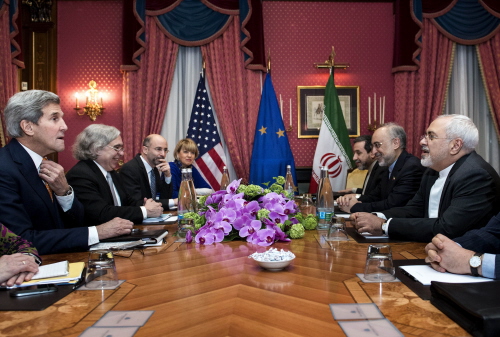
(Drew Angerer/Getty)

Seven Jewish Lawmakers Could Tilt the Scales on Iran Deal,” headlines the Times of Israel.

The members — Senator Charles Schumer, Representative Steve Israel, Representative Eliot Engel, Representative Adam Schiff, Representative Nita Lowey, Senator Ben Cardin, and Representative Ted Deutch — are all Democrats.

They must choose between loyalty to their party’s president, and concern about what the deal portends for Israeli and American security. There are long and short answers to the question: “Why are Jews liberal?” The long answer traces back to the Enlightenment in Europe when parties of the right were monarchist and anti-Semitic, while parties of the left favored pluralism and religious freedom. I don’t buy the long argument. Tsar Alexander III, who instigated pogroms against the Jews, is long dead. So is Napoleon, who liberated them.

In the meantime, Jews have suffered under Communists, who proved just as cruel as the monarchists. Jewish liberals often explain that their views spring from Jewish tradition, which admonishes the Jewish people to engage in “tikkun olam” or “healing the world.” I’m skeptical. Tikkun olam is traditionally understood as adhering faithfully to the commandments (keeping kosher, visiting the sick, and observing the Sabbath, for example), the better to prepare the world for the messianic age. Many of those who brandish the Hebrew phrase today have commandeered it to bolster support for same-sex marriage, government-run health care, and the rest of the progressive agenda — an interpretation that would, to quote the immortal words of Tevye in Fiddler on the Roof, “cross a rabbi’s eyes.” No, the short explanation of Jewish liberalism is straightforward. Jewish Americans tend to be disproportionately urban, secular, and educated.

Each of those categories is highly correlated with liberalism and membership in the Democratic party — God (you should forgive the expression) help us. Speaking of Him, Jewish Americans are less likely than any other religious group in America to say they believe in God. A 2013 Pew poll found that 62 percent of Jews reported that their identity was rooted mainly in culture and ancestry rather that religion. Only 34 percent of Jews said they were certain that God exists, compared with 69 percent of the general public (though an additional 38 percent say they believe, but without certainty, placing believers in the majority).

While 62 percent of American Christians and 81 percent of Muslims report attending services at least monthly, only 23 percent of Jews do. Fifty-eight percent of Jewish adults are college graduates, compared with 29 percent of the general population. About 20 percent of Americans live in rural areas. This is true of only 4 percent of American Jews. Even without knowing anything else about Jews, the above statistics would predict what we see: That about 70 percent of American Jews lean Democrat, while 22 percent are Republicans. Still, for those Democrats pondering what the Iran vote will mean for their own political futures, other statistics should pull them up short. Though comparatively irreligious, 70 percent of American Jews remain strongly or somewhat strongly attached to the State of Israel.

Though some liberal Jews may have, at times, been persuaded by Obama-administration claims that troubles in relations with Israel are traceable to Bibi Netanyahu’s prickly personality, that line is less likely to be effective now that all major parties in Israel have united in opposition to the Iran deal/capitulation. But here’s the kicker that Senators Schumer, Cardin, and others will want to bear in mind: The American Jewish world is changing very fast. The older, more secular, doggedly liberal Jews are dying off, falling away from organized Jewish life, and intermarrying (which means their children are no longer Jewish in most cases).

Orthodox Jews, by contrast, are thriving, and they have large families — ten or more children are not uncommon. In New York City, the Orthodox accounted for 33 percent of Jews in 2002, but 40 percent only ten years later. In 2012, 74 percent of Jewish children in New York were growing up in Orthodox homes. The religious/cultural conservatism of these observant Jews affects their political affiliation. Fifty-seven percent of Orthodox Jews are Republicans, and huge majorities are very concerned about Israel. They might forgive a vote for Obamacare, but a vote to provide billions of dollars to the paymasters of Hezbollah and Hamas; a vote to permit the Iranian regime to acquire missiles, stealth aircraft, and more with which to kill Americans and Israelis; a vote that, in essence, accepts the eventual nuclearization of Iran without any corresponding concessions from the mullahs — do Democrats want to chance it?


Mona Charen is a senior fellow at the Ethics and Public Policy Center. © 2015 Creators.com


twoje uwagi, linki, wlasne artykuly, lub wiadomosci przeslij do: webmaster@reunion68.com