
Archive | August 2024

Nieświęty sojusz lewicy z faszyzmem

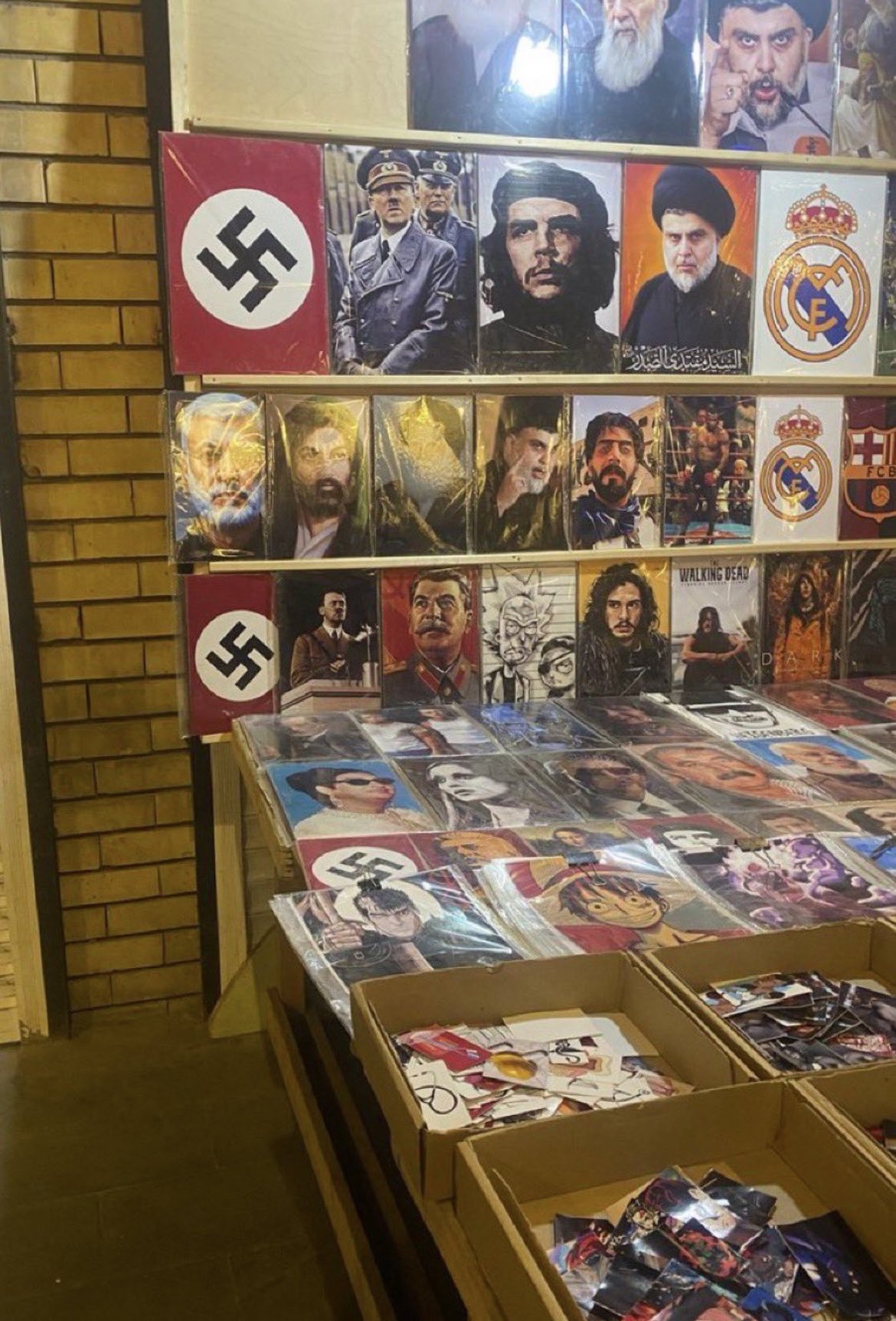
Sklep w Iraku. Źródło: Nioh Berg


Nieświęty sojusz lewicy z faszyzmem


Andrzej Koraszewski


Ilekroć używam określenia islamofaszyzm, ranię kilku osobom serca i wywołuję oburzenie. Nie powinienem się dziwić. Ludzie mają zaufanie do mediów i trudno im sobie wyobrazić to, co jest starannie przed nimi ukrywane. Kurdyjski socjaldemokrata wylądował kilka lat temu w Niemczech w głębokim przekonaniu, że tu znajdzie lewicowe środowisko walczące o lewicowe wartości. Zderzenie z dzisiejszą zachodnią lewicową mentalnością było bolesnym doświadczeniem. Peshraw Mohammed opisuje swój szok, wskazując na zupełnie niepojęty dla niego sojusz zachodniej lewicy z muzułmańską skrajną, faszystowską prawicą.
.

Kiedy próbowałem otwarcie przedstawić swoje poglądy na temat elementów faszystowskich w islamie i obecnego w nim antysemityzmu, nie tylko wielu nie chciało tego słuchać, ale byłem uważany za kogoś, kto albo nie należy do lewicy (często uważano mnie za prawicowego ekstremistę), albo kogoś, kto nie rozumie islamu. Oczywiste było, że nie na miejscu jest mówienie o islamofaszyzmie. Ale nadszedł najwyższy czas, aby mówić o tej sprawie otwarcie i jednoznacznie.

Kurdyjski badacz przypomina, że radykalni intelektualiści muzułmańscy byli zafascynowani faszyzmem co najmniej od 1935 roku, kiedy Hasan Al Bana, założyciel Bractwa Muzułmańskiego, zapoznał się z pismami Benito Mussoliniego. Co ciekawe, ta fascynacja była wzajemna.  

Julius Evola, włoski filozof, poeta i malarz, teoretyk faszyzmu, fetowany przez Himmlera, który do śmierci w 1974 roku nie zmienił swoich poglądów, po wojnie sześciodniowej w 1967 roku pisał: 

„Arabowie są niewątpliwie ważnym narodem. Obecnie znajdują się w opłakanym stanie. Arabski socjalizm im nie odpowiada. Globalny postęp islamu nie został jeszcze zatrzymany. Kiedy nadejdzie czas — a jestem pewien, że wkrótce — będą mogli przywrócić kalifat”

Nawiasem mówiąc (o czym Peshraw Mohammed nie wspomina), ponad dziesięć lat wcześniej, w 1956 roku Adolf Eichmann na emigracji w Argentynie, kierował swoje nadzieje raczej do muzułmanów niż do mieszkańców Zachodu. Uważał, że to muzułmanie ocenią go sprawiedliwie i uznają szlachetność jego planów ostatecznego rozwiązania kwestii żydowskiej. Jak pisał:

„Wy, 360 milionów mahometan, z którymi mam silny związek wewnętrzny od dni mojej więzi z waszym Wielkim Muftim Jerozolimy. Wy, którzy macie większą prawdę w surach waszego Koranu, wzywam was, byście mnie osądzili.”

W Islamskiej Republice Iranu intelektualiści również dziś uważają Evolę za ważnego filozofa. Skazany we Francji terrorysta Hezbollahu, Fouad Ali Saleh, który w połowie lat 80., był odpowiedzialny za serię ataków na terenie Francji, podczas swojego procesu również cytował fragmenty dzieła Evoli  Revolt Against the Modern World.

Na Zachodzie jest kilku badaczy, którzy zajmują się elementami faszystowskimi przeniesionymi do ideologii islamistycznej analizując polityczny islam jako nowoczesną formę faszyzmu. Amerykański politolog Manfred Halpern był jednym z pierwszych, który opisał upolityczniony islam jako ruch faszystowski; w swoich przełomowych badaniach z 1963 r. The Politics of Social Change in the Middle East and North Africa pisał o „neo-islamskim totalitaryzmie”. Peshraw Mohammed wylicza tu również francuskiego marksistę Maxime Rodinsona, który opisał ruchy islamskie, takie jak Bractwo Muzułmańskie, jako „pewien rodzaj archaicznego faszyzmu”, którego celem jest ustanowienie „państwa totalitarnego”, w którym „policja polityczna” brutalnie egzekwuje porządek moralny i społeczny.

Biorąc pod uwagę to tło, obecne zjawiska, takie jak ISIS, zdecydowanie zasługują na miano faszystowskich. Flagi talibów i terrorystów ISIS można było również zobaczyć pod koniec 2023 r. na rzekomo propalestyńskich demonstracjach w Essen i Hamburgu. Świeccy, liberalni i lewicowi emigranci z muzułmańskiego świata od dawna ostrzegają niemieckie społeczeństwo przed niebezpieczeństwami wzrostu islamizmu, ale są ignorowani. Kiedy zwróciłem uwagę na ten problem moim niemieckim lewicowym przyjaciołom, szybko zostałem nazwany „islamofobem”, a w niektórych przypadkach rasistą, występującym przeciwko muzułmanom.

Kurdyjski socjaldemokrata zastanawia się nad paradoksem zaprzeczania przez znaczną część zachodniej lewicy istnienia islamskiego faszyzmu i wszechobecnego w islamie antyjudaizmu.  

„Doniesienia o antysemickich hasłach na ‘pro-palestyńskich’ demonstracjach w Europie nie są zaskakujące z dwóch powodów: po pierwsze, ze względu na stygmatyzację Żydów w Koranie, przekazywaną od 1400 lat, a po drugie, ze względu na wpływ współczesnych ideologii na myślicieli islamskich i świat islamski.”

Peshraw Mohammed  pisze, że za najważniejszego nowożytnego antyżydowskiego islamistę uważa się powszechnie Egipcjanina Sajjida Kutba (1906–1966), autora wpływowego eseju z lat 50. zatytułowanego „Nasza walka z Żydami”. 

Qutb jest uważany za swego rodzaju głównego ideologa Bractwa Muzułmańskiego. Wydestylował specyficznie islamski antysemityzm z tradycji religijnej i zachodnich teorii spiskowych.

Żydzi, jak pisał Kutb, rekrutują „sługusów”, czyli wykształconych na Zachodzie i zwesternizowanych muzułmanów lub „muzułmanów pod wpływem Żydów”, aby podkopać islam i ducha walki muzułmanów.

Dlatego też nalegał, aby muzułmanie zawsze pamiętali o nauce Koranu, że „najgorszymi wrogami muzułmanów są Żydzi” i że „Bóg ich przeklął”. Przez stulecia Bóg wysyłał „swoje sługi”, aby ukarać Żydów, więc „sprawił, że Hitler będzie nad nimi rządził”. Kutb wierzył, że ich plan rozpoczęcia „wojny krzyżowców-syjonistów” doprowadzi do tego, że Allah ponownie ich ukarze, niszcząc Izrael.

Kurdyjski autor nie porusza wpływów nazizmu na islam szyicki. Wszystkie milicje tworzone przez Islamską Republikę Iranu systematycznie posługują się nazistowskim salutem, odwołania do Adolfa Hitlera spotykamy na każdym kroku, Korpus Strażników Rewolucji Islamskiej utworzony został na wzór SS. O jego początkach opowiadał niedawno w wywiadzie dla „Jerusalem Post” jego założyciel Mohsen Sazegara, który popadł w niełaskę i od 20 lat przebywa na emigracji w USA.        

Sazegara mówi: „Chociaż wszystkie rewolucje są złożone, tę w Iranie z 1979 r. często przedstawia się jako pewnego rodzaju rewolucję klasy robotniczej – powstanie biednych przeciwko szachowi lub powstanie religijnych islamistów przeciwko modernizacji i westernizacji.”

Chomeiniego popierała skrajna lewica (po zwycięstwie wymordowana) i skrajna prawica, pobożna wieś i miejski proletariat. Przeciwna była klasa średnia. Korpus Strażników Rewolucji Islamskiej powstał jako przeciwwaga regularnej armii, bo nie ufano kadrze oficerskiej. Pierwszym zadaniem był rozbrojenie ludu. Wszyscy musieli zdać broń. Jak mówi Sazegara – IRGC było „armią ludu”.

W rzeczywistością było potężnie uzbrojoną żandarmerią złożoną z fanatycznie oddanych rewolucji młodych ludzi indoktrynowanych do bezlitosnej walki z „wrogami ludu i Allaha”.

Sazegara daje do zrozumienia, że nadal jest wierny pierwotnym hasłom islamskiej rewolucji. Podkreśla, że „Nasza idea Gwardii Rewolucyjnej nie była ideą obecną”. Kandydował na stanowisko prezydenta, a potem został aresztowany. Trudno mieć do niego cień zaufania, ale nadal to, co mówi, jest interesujące:

„To jest teraz potwór. IRGC nie jest zjednoczoną organizacją. Jest jak smok z siedmioma różnymi głowami, które są niezależne od siebie. To jest armia, grupa terrorystyczna, machina tłumienia [wszelkiego oporu], z wywiadem takim jak KGB, a jednocześnie jest jak zachodni kartel obejmujący setki firm i jak mafia, jest zamieszany w przemyt narkotyków, prowadzenie burdeli i domów hazardu. To zasadniczo różni się od pierwotnego pomysłu”.

Zdaniem Sazegary  obecne przywództwo Iranu „jest teokracją, reżimem totalitarnym,  dyktaturą, ale główną naturą tego reżimu jest dziś kleptokracja”. Szacuje, że nawet połowa irańskiej gospodarki może być w jakiś sposób powiązana z osobistym majątkiem obecnego Najwyższego Przywódcy Alego Chameneiego, czy to poprzez defraudację, czy przywłaszczenie.

Sazegara nie mówi o obecności nazistowskiej ideologii w Iranie, ta jest jednak widoczna na każdym kroku. Mein Kampf Hitlera widzimy w witrynach księgarń, nazistowskie saluty są obecne na defiladach, pochwały nazizmu znajdujemy w tysiącach wpisów w mediach społecznościowych, stylistyka karykatur w oczywisty sposób nawiązuje do nazistowskiej tradycji, a eksterminacja Żydów w Izraelu i wszędzie indziej jest otwarcie prezentowanym, centralnym filarem irańskiej propagandy.      

Wróćmy jednak do kurdyjskiego badacza, dla którego szokiem był nie tylko fakt sojuszu  zachodniej lewicy z islamofaszyzmem, ale również stanowcza odmowa zauważenia islamskiego imperializmu.

„Bardziej niż kiedykolwiek lewicowcy, islam polityczny i intelektualiści postkolonialni połączyli siły w nieświętym sojuszu. Nie rozumiejąc historii ekspansjonizmu islamskiego, kolonializmu arabskiego i islamskiego antysemityzmu, części zachodniej lewicy zaczęły postrzegać każdy ruch kontrujący Zachód jako walkę z amerykańskim imperializmem” – pisze Peshraw Mohammed.

Postrzeganie Islamskiej Republiki Iranu, Hezbollahu, Huti, Hamasu jako części lewicy może szokować, ale jeśli wrogiem jest zachodnia demokracja, a przede wszystkim Ameryka, to wszystko staje się zrozumiałe. Nawet kiedy Islamskie Państwo Iraku i Syrii atakowało kurdyjskie miasto Kobane, znaleźli się zachodni lewicowcy żądający, aby amerykańskie i brytyjskie lotnictwo przestało bombardować pozycje ISIS. Zachodnia lewica jest bardzo niechętna dążeniu Kurdów do niepodległości.

Pochodzący z Iranu historyk kultury (profesor zwyczajny na Columbia University), Hamid Dabashi porównuje Kurdów do Żydów i widzi perspektywę ustanowienia niepodległego Kurdystanu jako „drugiego osadniczo-kolonialnego Izraela”.

„Koncentracja dużej części lewicy na Stanach Zjednoczonych przy jednoczesnej obojętności na imperializm rosyjski, chiński, irański lub turecki doprowadziła do poważnych błędnych osądów politycznych. Obejmuje to ideę, że każda forma zachodniej myśli, sztuki lub literatury jest częścią projektu kolonialnego – komentuje Peshraw Mohammed. […]

Dlaczego europejska lewica bezwarunkowo popiera palestyński ruch islamistyczny, ale znacznie mniej Kurdów, mimo że ruch kurdyjski jest świecki, lewicowy, liberalny, feministyczny i socjaldemokratyczny, a także wykazuje najmniejszy wpływ islamizmu? Trochę czasu zajęło mi zrozumienie odpowiedzi: selektywność lewicy i antysemityzm są nierozerwalnie ze sobą powiązane.”

Dabashi postrzega ustanowienie niepodległego Kurdystanu jako katastrofę dla Bliskiego Wschodu, równocześnie widzi ustanowienie państwa palestyńskiego i rozpad Izraela jako drogę do pokoju. Takie stanowisko podziela dziś również bardzo wielu lewicowców, którzy nie pochodzą z muzułmańskiego świata. Ci ludzie niesłychanie wzmocnili polityczny islam i wsparli imperialne ambicje islamistów.   

Kończąc swój artykuł Peshraw Mohammed stwierdza, że stanowisko w „kwestii żydowskiej”, choć samo w sobie nie ma pierwszorzędnego znaczenia, stało się wskaźnikiem przynależności do większego ruchu politycznego, przekonań politycznych i ogólnych wyborów kulturowych.

Kurdyjski autor chciałby, żeby zachodnia lewica wreszcie się otrząsnęła. Chwilowo nic takiego przebudzenia nie zapowiada. Wręcz przeciwnie.


Zawartość publikowanych artykułów i materiałów nie reprezentuje poglądów ani opinii Reunion’68,
ani też webmastera Blogu Reunion’68, chyba ze jest to wyraźnie zaznaczone.
Twoje uwagi, linki, własne artykuły lub wiadomości prześlij na adres:
webmaster@reunion68.com


Israel to hold annual commemoration of October 7 events amid deep divisions – opinion

Israel to hold annual commemoration of October 7 events amid deep divisions – opinion

SUSAN HATTIS ROLEF


Israel’s new annual commemoration of October 7 has sparked controversy, highlighting deep national divisions as differing views on the events persis

.
TRANSPORTATION MINISTER Miri Regev holds a news conference to address the issue of the planned state ceremony commemorating the October 7 massacre, and the controversy surrounding it, in Jerusalem last week. / (photo credit: CHAIM GOLDBEG/FLASH90)

Transcending the many issues of bitter contention in Israel these days is the government’s March 17 decision to hold an annual national commemoration of the events of October 7 and the Swords of Iron Operation. This year, the commemoration will be held on October 7; thereafter, it will take place on 24 Tishrei (or the following day, if the 24th is on a Shabbat) – two days after Simchat Torah.

The government decision mentions that those responsible for organizing the event are Prime Minister Benjamin Netanyahu; Transportation Minister Miri Regev, who is responsible for organizing national events; the Defense Ministry; and those in charge of national ceremonies and events in the Prime Minister’s Office.

It was decided that the ceremony to commemorate the fallen soldiers in the war would take place at 11 a.m., while the ceremony to commemorate civilians slain on October 7, at 1 p.m. No other details were provided regarding the ceremonies and accompanying events.

Clearly, it is very difficult, if not impossible, to separate politics from the need or desire to commemorate the events since Hamas’s mega-atrocity.

We all agree that the events since October 7 began with a cruel, unprovoked, murderous attack by Hamas on Israeli areas adjacent to the Gaza Strip, which resulted in 1,200 people of all ages being mercilessly butchered; some 250 abducted as hostages and 80,000 removed from their homes around the Gaza Strip and along the border with Lebanon, for safety reasons.

Miri Regev arrives to a special government conference on Jerusalem Day, on June 5, 2024 (credit: YONATAN SINDEL/FLASH90)

There is also a consensus that Israel had no alternative but to retaliate, not out of feelings of revenge, but because of our right to defend ourselves and prevent a future repetition of the events of October 7. But apart from the technical aspects of the commemoration ceremonies – the sirens, standing at attention, not holding festivities, possibly closing eateries – that consensus ends.

Some believe that the heads of the security forces and political leaders hold equal responsibility for the catastrophic events of October 7 and that they should resign or be removed as soon as practicable. Others believe that the sole culprits are the security forces and that those on the political level are free of blame. These include Netanyahu and Regev.

There are those who believe that the situation requires new elections immediately, which would likely result in a change of government. Others believe that as long as the war continues, in one form or another, new elections should not take place. Many of these (including, some say, the prime minister, though he has denied it) are also willing to prolong the war precisely to avoid elections for as long as possible.

While most Israelis desire a decisive victory over Hamas, many also believe that it is vital to bring back the remaining 109 hostages – 36 of whom are determined to be dead, at almost any price, before all of them die or are killed – and temporarily ending the war and enabling Hamas to survive a little longer.

IN FACT, IT is impossible to form a single narrative about the events of October 7, and the ensuing war, that will satisfy everyone. I doubt if we will ever agree on a single narrative, but certainly not before the current situation is resolved or at least assuaged, enabling us to at least return to a semblance of normalcy.

The effects of October 7.

However, the depression and post-trauma – both among the civilian population directly affected by the events of October 7 and what followed, and among those who engaged in battle – are going to linger for many years. For them, normalcy is an almost unachievable goal. Furthermore, in the absence of a solution to the Palestinian problem, normalcy will never be achieved.

Another obvious difficulty is that many of the October 7 victims are unwilling to have anything to do with any official events organized by the government. Though the southern cities of Sderot and Ofakim, in which massacres took place on October 7, and from which hostages were abducted, are willing to collaborate with the government over the commemoration ceremonies, all the kibbutzim from the Gaza border communities that experienced the same fate (only in larger proportions) are not; nor is the Hostages and Missing Families Forum.

The contempt, disregard, and even neglect that the kibbutzim have experienced from the government in general, and the prime minister and transportation minister in particular, have also created an attitude of “we want neither your honey nor your sting.” The families of those killed in the Supernova music festival, and the survivors, are also feeling despondent for the same reasons.

Regev, in a voice full of contempt, compared the initiatives for alternative October 7 commemoration ceremonies to those organized by Israeli and Palestinian families every Remembrance Day. She apparently views alternative ceremonies as a form of treason.

The protests of the hostages’ families against Netanyahu’s failure to do everything to bring their loved ones back as soon as possible, before they all perish, and the objection of many groups and individuals to the ceremonies being planned by the government for October 7, have been referred to by Regev as “background noises.” She added that this “noise” will not deter her from organizing a filmed national ceremony, without a live audience, and with a prerecorded address by the prime minister.

President Isaac Herzog has offered to help unravel the mess and hold a live commemoration ceremony at his residence, though the chances of this happening are low. Even if Netanyahu and Regev accept this offer, they are unlikely to keep their hands off the narrative that would accompany the ceremony.

Trying to bring about at least a modicum of unity and consensus within the Israeli population does not seem to be on either Netanyahu’s or Regev’s agendas.


The writer worked in the Knesset for many years as a researcher, and has published extensively both journalistic and academic articles on current affairs and Israeli politics. Her most recent book, Israel’s Knesset Members: A Comparative Study of an Undefined Job, was published by Routledge. 


Zawartość publikowanych artykułów i materiałów nie reprezentuje poglądów ani opinii Reunion’68,
ani też webmastera Blogu Reunion’68, chyba ze jest to wyraźnie zaznaczone.
Twoje uwagi, linki, własne artykuły lub wiadomości prześlij na adres:
webmaster@reunion68.com


Melbourne Symphony Orchestra Announces Policy Review After Criticized for Canceling Concert of Anti-Israel Pianist

Melbourne Symphony Orchestra Announces Policy Review After Criticized for Canceling Concert of Anti-Israel Pianist

Shiryn Ghermezian


The skyline of Melbourne, Australia, the capital of Victoria. Photo: Alex Proimos/Wikimedia Commons.

The Melbourne Symphony Orchestra (MSO) said on Friday that its board will conduct an “independent external review into our policies, procedures, and processes” in light of its decision this week to cancel a performance by Australian-British pianist Jayson Gillham after he made ardently anti-Israel comments about the ongoing war in Gaza.

MSO said the review will also “canvass the events” leading up to its decision to call off Gillham’s concert that was scheduled for this Thursday. More information about the review will be revealed when details are finalized.

“The board determined a formal review would provide transparency and certainty for our people — including our musicians, management, and employees — and our broader community of audience members, supporters, and other stakeholders,” the MSO said. “The review will help ensure our policies and processes reflect best practice in the contemporary environment.”

The MSO added that it is “determined to ensure we have the protocols in place that are fit for purpose for our organization and the role we play within the community.”

The formal review was announced after musicians of the MSO passed on Thursday night a vote of no confidence in Managing Director Sophie Galaise and Chief Operating Officer Guy Ross because of how they handled the situation with Gillham.

“We no longer have faith in the abilities of our senior management to make decisions that are in the best interests of the company at large,” the orchestra’s musicians said in a letter to the board. “We believe it is the duty of senior management to lead and manage in accordance with the MSO’s values and behaviors; however, it has become apparent that these values no longer appear to be aligned with those of the orchestra and staff.”

The musicians called for Ross and Galaise’s resignations. They also asked for an “impartial investigation into both the events of the cancellation of Jayson Gillham this week, and further into the general standards of leadership that have led to the ongoing issues with communication, morale, and psychosocial hazards affecting our workforce.”

Gillham, who is described on the MSO website as “one of the finest pianists of his generation,” performed the world premiere of a five-minute piece called “Witness” at his recital on Sunday at Iwaki Auditorium in Southbank, where he also performed a number of other works by composers such as Beethoven and Chopin. The piece was written by Australian composer Connor D’Netto and dedicated to Palestinian journalists. The MSO said it was a last-minute addition to the show.

When introducing the piece to the audience, Gillham claimed, “Israel had killed more than 100 Palestinian journalists” in the Gaza Strip during the ongoing Israel-Hamas war. “The killing of journalists is a war crime in international law, and it is done in an effort to prevent the documentation and broadcasting of war crimes to the world,” Gillham also claimed before playing “Witness.” He additionally accused Israel of “targeted assassinations of prominent journalists” who were traveling in marked press vehicles or wearing press jackets.

On social media, the pianist has accused Israel of occupation, genocide, ethnic cleansing, colonialism, and apartheid. He has promoted the slogan “Free Palestine” and wrote in an Instagram post uploaded on April 2: “Every day is a day closer to the end of the Z!%nist regime in Pa/est|ne and the Z!%nist stranglehold on Western nations.” He criticized Western countries for supporting Israel and compared the “genocide” of Palestinians in Gaza to the Holocaust. On Instagram, he has a “highlight” dedicated to the anti-Israel boycott, divestment, and sanctions (BDS) movement, which he encourages others to follow.

On X/Twitter, Gillham reposted a message in which Zionists are compared to Nazis and a separate post that said Israel’s goals in Gaza are “civilian deaths and destruction.” Gillham said the latter claim “seems obvious but worth repeating.” He also reposted a message about US President Joe Biden and his vice president, 2024 Democratic presidential candidate Kamala Harris, that called them “Genocide Joe and Kamala Harris” for “using the ‘we need a ceasefire now to release the hostages!’ line for 6 months to launder the ongoing Gaza genocide and rape of Palestinians by the Israelis they vow to forever arm and fund.” Gillham has also made accusations about Australia’s “complicity in genocide” for supporting Israel.

Photo: Screenshot

Photo: Screenshot

Photo: Screenshot

Photo: Screenshot

The pianist was set to perform again at the Melbourne Town Hall on Thursday with the MSO, but the latter canceled his appearance in the recital because of his comments about Israel. The entire concert has since been cancelled due to safety concerns, according to the MSO. The orchestra said it is trying to reschedule the performance.

On Wednesday, MSO admitted it made an “error” in canceling the performance.

“While the Melbourne Symphony Orchestra maintains that a concert platform is not an appropriate stage for political comment, we acknowledge Jayson’s concerns for those in the Middle East and elsewhere,” a MSO spokesperson told the Australian Broadcasting Corporation (ABC). “We recognize the strength of feelings of all parties on this matter and particularly acknowledge the dedication and commitment demonstrated by all our musicians and staff this week.”

Gillham accepted the MSO’s apology. He said in a statement to the ABC, “I hold my relationship with the MSO, its players, and audience with the highest regard and look forward to our continued working relationship in years to come.”

When MSO canceled Gillham’s appearance in Thursday’s recital, it sent an email to ticketholders explaining their position on the matter and apologizing for Gillham’s remarks. The MSO said his comments were “made completely without authority.”

“‘Witness’ was accepted for performance at the request of Mr Gillham on the basis that it was a short meditative piece,” the MSO explained. “Mr Gillham made his personal remarks without seeking the MSO’s approval or sanction. They were an intrusion of personal political views on what should have been a morning focused on a program of works for solo piano.”

“The MSO does not condone the use of our stage as a platform for expressing personal views,” it added. “The MSO understands that his remarks have caused offense and distress and offers a sincere apology … In standing for humanity and peace we seek for every one of our performances to be a welcome and safe place for all.”

A quick glance at the donors listed on the MSO website shows that the orchestra has a large number of Jewish patrons and supporters.


Zawartość publikowanych artykułów i materiałów nie reprezentuje poglądów ani opinii Reunion’68,
ani też webmastera Blogu Reunion’68, chyba ze jest to wyraźnie zaznaczone.
Twoje uwagi, linki, własne artykuły lub wiadomości prześlij na adres:
webmaster@reunion68.com


Eskalacja na Bliskim Wschodzie: Izraelczycy bombardują w Libanie, Hezbollah odpowiada ostrzałem

Skutki izraelskiego nalotu na miasto Sidon w południowym Libanie,


Eskalacja na Bliskim Wschodzie: Izraelczycy bombardują w Libanie, Hezbollah odpowiada ostrzałem

Marta Urzędowska


Izraelska armia zaatakowała tereny w południowym Libanie, Hezbollah posłał na Izrael potężną serię rakiet – trwa groźna eskalacja na izraelsko-libańskiej granicy, która grozi regionalną wojną. Izraelski resort obrony: Wydarzenia w Libanie ważniejsze niż w Gazie

Informację o ostrzelaniu Doliny Bekaa na południu Libanu potwierdza izraelska armia. Jak informuje jej rzecznik, Daniel Hagari, izraelskie bombowce uderzyły w środę w składy broni Hezbollahu, budynki wojskowe i wyrzutnię rakiet. Według libańskiego ministerstwa zdrowia w nalotach zginęła jedna osoba, a 30 zostało rannych, wśród nich – dziewięcioro dzieci.

W odpowiedzi Hezbollah przypuścił potężny atak na Izrael. Ponad 50 rakiet i dronów poleciało w kierunku okupowanych przez Izrael Wzgórz Golan, uderzyło w miejscowe budynki, w tym domy mieszkalne. Jedna osoba została ranna.

Wojna w Gazie od początku nie była wyłącznie lokalna. Hamas ma wsparcie Hezbollahu, który od października regularnie prowadzi ostrzał terenów północnego Izraela. W efekcie od października w Libanie zginęło już ponad 530 osób, wśród nich co najmniej 130 cywilów. W Izraelu liczba ofiar wyniosła 49 osób, spośród których 26 to cywile. Blisko 200 tys. osób mieszkających o obu stronach granicy musiało opuścić swoje domy.

Choć konflikt Izraela z Hamasem od początku groził rozlaniem się na inne kraje regionu, eskalacja nigdy nie była tak groźna, jak dziś. Napięcia rosną od końca lipca, kiedy Izraelczycy zabili w Iranie szefa politbiura Hamasu Ismaila Haniję i wysokiej rangi dowódcę Hezbollahu Fuada Szukra. Od tego czasu Iran i Hezbollah grożą Izraelczykom odwetem, przy czym podkreślają, że mogą go dokonać nawet z dużym opóźnieniem.

We wtorek izraelski minister obrony Joaw Gallant, przemawiając do żołnierzy, przyznał, że „środek ciężkości” działań izraelskiej armii stopniowo przesuwa się z Gazy na libańską granicę.

– Atakowanie magazynów amunicji w Libanie to przygotowanie na wszystko, co może się wydarzyć – stwierdził.

Izrael zrealizuje w całości swój plan

Ostatnia wymiana ciosów na granicy Izraela z Libanem przypada w czasie, kiedy trwają gorączkowe próby doprowadzenia do rozejmu w Gazie. Zaledwie kilka godzin przed izraelskim ostrzałem celów Hezbollahu, prezydent USA, Joe Biden, rozmawiał przez telefon z premierem Izraela Beniaminem Netanjahu. W rozmowie brała też udział Kamala Harris, zastępczyni Bidena i kandydatka Demokratów na prezydentkę w nadchodzących wyborach.

Biden przekonywał Netanjahu, jak ważne jest dogadanie się z Hamasem w sprawie zawieszenia broni i zwolnienia pozostających w Gazie izraelskich zakładników. Jednak ostatnia runda negocjacji w ostatnich dniach zakończyła się impasem, nie pomogła nawet kolejna wizyta Antony’ego Blinkena w regionie.

Obu stronom najtrudniej dogadać się w sprawie obecności izraelskich żołnierzy w Gazie po wojnie. Hamas chce, żeby wszyscy wrócili do domu, Izraelczycy powtarzają, że zostawią swoje siły na południu enklawy, przy granicy z Egiptem. „Izrael będzie nalegał na osiągnięcie wszystkich swoich celów w tej wojnie, w tym upewnienia się, że Gaza już nigdy nie będzie stanowiła zagrożenia dla bezpieczeństwa Izraela” – brzmi najnowsze oświadczenie kancelarii premiera.

W Gazie nie ustają walki. Izraelscy ortodoksi nie chcą do armii

W czasie gdy świat próbuje namówić walczące strony do pokoju, sytuacja w Strefie Gazy pozostaje dramatyczna. Jak podaje miejscowe ministerstwo zdrowia, tylko w ciągu ostatniej doby w izraelskich nalotach zginęło ponad 50 osób.

Izraelska armia potwierdza, że bombowce uderzyły w ok. 30 celów w różnych miejscach enklawy, w tym w tunele, miejsca odpalania rakiet i punkty obserwacyjne. Udało się zabić kilkudziesięciu uzbrojonych terrorystów, przejąć broń i materiały wybuchowe.

W środę w Izraelu setki skrajnie ortodoksyjnych Żydów protestowało w Jerozolimie przeciwko obowiązkowej służbie wojskowej. Starli się z policją, która musiała użyć armatek wodnych, by rozpędzić tłum. Pięć osób aresztowano. Izraelska armia prowadzi pobór ortodoksów od zeszłego miesiąca, po tym, jak Sąd Najwyższy w czerwcu zdecydował się skończyć z wyłączaniem ich ze służby.

Ortodoksi argumentują, że nie mogą walczyć, bo muszą zajmować się studiowaniem Tory, co jest równie ważne, jak dbanie o bezpieczeństwo Izraela.

Zawartość publikowanych artykułów i materiałów nie reprezentuje poglądów ani opinii Reunion’68,
ani też webmastera Blogu Reunion’68, chyba ze jest to wyraźnie zaznaczone.
Twoje uwagi, linki, własne artykuły lub wiadomości prześlij na adres:
webmaster@reunion68.com


Israel attacks Hezbollah in Lebanon, preempting ‘extensive attack’

Israel attacks Hezbollah in Lebanon, preempting ‘extensive attack’

update desk | Israel at War


The terror organization launched more than 150 projectiles at Israel from Lebanon, the Israeli military said. The Israeli defense minister and U.S. defense secretary spoke.

.
An Israeli Air Force F-15 fighter jet takes off from the Ovda Airbase in southern Israel, Nov. 25, 2013. Photo by Ofer Zidon/Flash90.

The Israeli military attacked sites preemptively in Lebanon, from which Hezbollah planned to launch rockets and missiles at Israel in an “extensive attack,” early in the morning on Sunday, the Israel Defense Forces said.

Hezbollah subsequently launched more than 150 projectiles at the Jewish state from Lebanon, the Israel Defense Forces stated. “We target terrorist infrastructure, they target civilians,” it said.

“Israel’s preemptive attack was aimed at missile launchers in Lebanon that had been programmed to be fired at 5 a.m. in the direction of Tel Aviv,” the New York Times reported, citing a western intelligence official, who “said that all the launchers that were targeted were destroyed and that Israel was anticipating a harsh response from Hezbollah.”

Israel’s strike followed “more than 6,700 rockets, missiles and explosive (drones) fired by Hezbollah at Israeli families, homes and communities since Oct. 8,” IDF spokesman Rear Adm. Daniel Hagari stated.

Israel could see that Hezbollah was about to launch an “extensive attack” on the Jewish state, endangering the Lebanese civilians among whom the terror group embeds its weapons, Hagari added.

He told Lebanese civilians to vacate the areas in which Hezbollah is operating, as the terror group risks escalating conflict in the region.

Israeli Prime Minister Benjamin Netanyahu and Defense Minister Yoav Gallant meet at the Kirya in Tel Aviv on Aug. 25, 2024. Credit: Ma’ayan Toaf (GPO).

“Israel will not tolerate Hezbollah’s attacks on our civilians,” he said. “We are operating in self-defense from Hezbollah. … We are ready to do everything—everything—we need to defend the people of Israel.”

Hezbollah reportedly stated that its attack was in response to Israel killing its top commander Fuad Shukr last month.

Video circulating online purporting to depict Israel’s strike showed massive explosions lighting up the night sky in Lebanon, and Iron Dome interceptions over Israel.

Israeli Prime Minister Benjamin Netanyahu and Defense Minister Yoav Gallant had met, and Netanyahu plans to convene the security cabinet at 7 a.m. local time, per his office.

Gallant called a “special situation on the home front,” a “declaration on the state of emergency (that) enables the IDF to issue instructions to the citizens of Israel, including limiting gatherings and closing sites where it may be relevant,” per the Israeli Prime Minister’s Office.

Israeli Prime Minister Benjamin Netanyahu and Defense Minister Yoav Gallant meet at the Kirya in Tel Aviv on Aug. 25, 2024. Credit: Ariel Hermoni/Israeli Ministry of Defense.

Gallant and U.S. Secretary of State Lloyd Austin had also spoken on Sunday Israel time, shortly before midnight in Washington, according to the Israeli Defense Ministry.

“We have conducted precise strikes in Lebanon in order to thwart an imminent threat against the citizens of Israel,” Gallant said, per an Israeli readout of the call. “We are closely following developments in Beirut, and we are determined to use all the means at our disposal in order to defend our citizens.”

Gallant and Austin “discussed the importance of avoiding regional escalation,” and Gallant “emphasized that Israel’s defense establishment is determined to defend the citizens of Israel and will use all the means at its disposal to remove imminent threats,” per the Israeli readout. “The defense establishment is following developments in Beirut and is prepared to deploy defensive and offensive means.”

U.S. President Joe Biden “is closely monitoring events in Israel and Lebanon,” stated Sean Savett, a spokesman for the National Security Council. “He has been engaged with his national security team throughout the evening.”

“At his direction, senior U.S. officials have been communicating continuously with their Israeli counterparts,” Savett added. “We will keep supporting Israel’s right to defend itself, and we will keep working for regional stability.”

Ben Gurion International Airport was reportedly closed amid the attacks.

“Since Oct. 7, Hezbollah has been firing rockets against Israel, displacing up to 100,000 Israelis from their homes and communities—an unacceptable loss of sovereignty that no other country, including our own, would ever accept,” stated Rep. Ritchie Torres (D-N.Y.).

“Israel is no exception to the rule of self-defense,” Torres said. “The Jewish state has a right to respond to the relentless rocket-fire from Hezbollah, which stands as the most heavily armed terrorist organization in the world and the most powerful proxy for the Islamic Republic of Iran.”

“In addition to responding to 10 months of relentless rocket fire, Israel is acting on the basis of U.S.-Israeli intelligence revealing an imminent major attack from Hezbollah,” he added. “Hence the need for an Israeli strike that is both preemptive and defensive all at once.”

Ted Deutch, CEO of the American Jewish Committee, stated that “Iran-backed terror group Hezbollah has launched thousands of rockets at Israel since Oct. 7.”

“Israel could not sit back and wait for thousands more to be fired into Israel, so tonight it struck preemptively to protect innocent civilians,” he added. “Israel has the right to defend itself and the obligation to protect its citizens in the face of ongoing Hezbollah attacks.”


This is a developing story.


הרמטכ״ל, רב-אלוף הרצי הלוי, מפקד על פעולות ההתקפה וההגנה מהבור בקריה, ומקיים הערכת מצב מתמשכת עם חברי פורום המטכ״ל, חיל האוויר, פיקוד הצפון ואגף המודיעין pic.twitter.com/c7lAGtoct2

— דובר צה״ל דניאל הגרי – Daniel Hagari (@IDFSpokesperson) August 25, 2024


Zawartość publikowanych artykułów i materiałów nie reprezentuje poglądów ani opinii Reunion’68,
ani też webmastera Blogu Reunion’68, chyba ze jest to wyraźnie zaznaczone.
Twoje uwagi, linki, własne artykuły lub wiadomości prześlij na adres:
webmaster@reunion68.com