Archive | 2026/02/19

Ustawa o usługach cyfrowych: mechanizm masowej cenzury

(Źródło zdjęcia: iStock)


Ustawa o usługach cyfrowych: mechanizm masowej cenzury

Drieu Godefridi
Tłumaczenie: Andrzej Koraszewski


Według krytyków unijna Ustawa o usługach cyfrowych (DSA) w praktyce zmusza amerykańskie platformy do pełnienia roli “policji słowa” na rzecz UE, pod nieustanną groźbą dotkliwych sankcji. W ten sposób DSA wywołuje eksterytorialne skutki, wykraczające daleko poza Europę. To kluczowa kwestia: każdy amerykański użytkownik platformy X może zostać przez nią ukarany za wyrażenie opinii. W praktyce DSA stosowany jest więc wobec wszystkich Amerykanów. Ten wymóg stanowi ewidentny przykład imperializmu normatywnego, który charakteryzuje Unię Europejską od ponad dwóch dekad.

Jedyną możliwą techniczną alternatywą byłoby stworzenie oddzielnych platform – X-USA i X-EU – co byłoby zaprzeczeniem samej idei globalnej sieci i internetu jako takiego.

Komisja Sprawiedliwości Izby Reprezentantów USA potępiła ten system jako formę “zorganizowanej cenzury”, w ramach której UE “uzbraja” organizacje pozarządowe, by zmuszały amerykańskie firmy technologiczne do usuwania treści, które są zgodne z prawem USA, ale uznane za “problematyczne” w Europie.

Kary mogą sięgać 6% globalnych obrotów firmy, co w przypadku podmiotów takich jak Meta czy Google oznacza potencjalne miliardy euro. W razie braku współpracy platformy mogą nawet zostać czasowo zablokowane na rynku unijnym.

W środowisku ścisłego egzekwowania przepisów platformy są silnie motywowane do nadmiernej moderacji, by ograniczyć ryzyko regulacyjne, co prowadzi do usuwania treści, które są całkowicie legalne. Mówimy tu o ok. ośmiu milionach postów miesięcznie usuwanych w UE – nie licząc całkowitych banów, np. dla rosyjskich mediów.

Priorytetem jest walka z treściami nielegalnymi. Zgodnie z przepisami UE i prawem krajowym należą do nich mowa nienawiści (np. nawoływanie do przemocy na tle rasowym czy religijnym), treści terrorystyczne, materiały z wykorzystywaniem seksualnym dzieci, towary podrabiane i produkty niebezpieczne… A jednak centralny problem pozostaje: “nienawiść” nie została nigdzie zdefiniowana w przepisach.

Warto podkreślić, że dezinformacja sama w sobie nie jest nielegalna. DSA wymusza więc aktywną cenzurę treści, które są zgodne z prawem – ale nie podobają się europejskim książętom i ich legionom cenzorów.

Amerykańska wolność słowa nie przetrwa w cieniu “Wielkiego Brata” zwanego DSA.

Czym jest DSA?

DSA, przyjęty przez Unię Europejską w 2022 r., a w pełni obowiązujący od lutego 2024 r. w stosunku do tzw. bardzo dużych platform internetowych (VLOP) – takich jak X, Facebook, TikTok czy Google – nie jest oficjalnie przedstawiany jako instrument “zorganizowanej cenzury”. W założeniu ma być ramami regulacyjnymi dla usług cyfrowych, chroniącymi użytkowników przed nielegalnymi treściami, ryzykiem systemowym oraz nieprzejrzystymi praktykami platform.

Jednak coraz więcej krytyków – zwłaszcza w USA, m.in. Elon Musk oraz republikańscy kongresmeni – postrzega DSA jako mechanizm masowej cenzury. Ich zdaniem ustawa narzuca biurokratyczny nadzór nad wolnością wypowiedzi i umożliwia selektywne tłumienie poglądów opozycyjnych.

Na wstępie trzeba zaznaczyć, że DSA dotyczy wszystkich pośredników cyfrowych (platform, dostawców hostingu i powiązanych usług), choć obowiązki są znacznie bardziej rygorystyczne wobec VLOP-ów, czyli platform mających ponad 45 milionów użytkowników miesięcznie w UE.

Kto cenzuruje? (Zaangażowane podmioty)

Cenzura – przemianowana na “moderację” – nie jest bezpośrednio sprawowana przez UE ani przez rządy krajowe. Została delegowana na same platformy, które działają pod ścisłym nadzorem administracji krajowych. Efektem jest zdecentralizowany, lecz silnie kontrolowany system, który krytycy określają jako biurokratyczną “industrializację moderacji”.

Platformy cyfrowe są głównymi wykonawcami tej polityki. Mają one obowiązek aktywnie moderować treści, a w przypadku VLOP-ów wymagania są szczególnie surowe. Muszą one przeprowadzać analizy “ryzyk systemowych”, takich jak rozpowszechnianie dezinformacji, oraz wdrażać proaktywne działania, w tym algorytmy wykrywające i zespoły moderatorów. Platformy poniżej progu 45 milionów użytkowników mają mniej obowiązków, ale i tak muszą reagować na zgłoszenia.

Komisja Europejska pełni rolę głównego nadzorcy VLOP-ów. Może wszczynać postępowania, żądać dostępu do danych i nakładać grzywny. Przykładowo, w grudniu 2025 r. nałożono na X karę 120 mln euro za rzekomy brak przejrzystości w praktykach moderacyjnych – zwłaszcza dotyczących tzw. “niebieskich znaczników”, które miały ostrzegać przed treściami rzekomo promującymi dezinformację.

UE wyznacza też tzw. “zaufanych sygnalistów” – zazwyczaj są to organizacje pozarządowe, których zgłoszenia muszą być traktowane priorytetowo. W oficjalnym wykazie figurują organizacje uznawane za lewicowe lub skrajnie lewicowe, jak HateAid (Niemcy) czy UNIA (Belgia).

Każde państwo członkowskie UE wyznacza krajowego koordynatora ds. usług cyfrowych (DSC) – np. ARCOM we Francji czy BNetzA w Niemczech – który nadzoruje platformy niebędące VLOP-ami i współpracuje z UE. To oni zajmują się skargami lokalnymi i nakładają sankcje. Najbardziej restrykcyjne kraje, jak Niemcy i Francja, mają nieproporcjonalny wpływ na cały system, co prowadzi do obniżania standardów wolności słowa w całej UE – treść zgłoszona w jednym kraju jest w praktyce zgłaszana w całej Unii.

Dodatkowo, każda osoba może zgłosić treść przez mechanizm “zgłoś i działaj” (notice-and-action). Zaufani sygnaliści, akredytowani przez DSC, mają uprzywilejowaną pozycję: ich zgłoszenia są traktowane priorytetowo i często skutkują szybkimi usunięciami.

W grudniu 2025 r. Stany Zjednoczone zakazały wjazdu pięciu Europejczykom, w tym byłemu komisarzowi Thierry’emu Bretonowi, za wywieranie presji na amerykańskie platformy internetowe.

Jak to działa? (Mechanizmy)

DSA tworzy szczegółowy, zorganizowany proces, który krytycy porównują do taśmy produkcyjnej cenzury.

  1. Zgłoś i działaj: Każdy może zgłosić treść jako nielegalną. Platformy muszą ją szybko przeanalizować – często w ciągu 24–48 godzin. W przypadku VLOP-ów wykorzystywane są również algorytmy AI do skanowania treści.
  2. Analiza ryzyka systemowego: VLOP-y muszą przeprowadzać coroczne audyty ryzyka, w dziedzinach takich jak dezinformacja, zagrożenia dla zdrowia psychicznego czy procesów demokratycznych, oraz wdrażać środki zaradcze, np. depriorytetyzację postów.
  3. Obowiązki w zakresie przejrzystości: Platformy muszą uzasadniać każdą decyzję o usunięciu treści (art. 17 DSA), publikować półroczne raporty (np. 41,4 mln usuniętych treści w UE w I połowie 2025) i oferować mechanizmy odwoławcze. W praktyce są one nieprzejrzyste i powolne, co zachęca do prewencyjnej cenzury.

Organy UE i DSC prowadzą też kontrole, np. poprzez “tajemnicze zakupy”, by sprawdzić przestrzeganie przepisów, jak w przypadku handlu nielegalnymi produktami na Temu.

Wysokość grzywien może sięgnąć 6% globalnego obrotu firmy. W razie braku współpracy możliwa jest tymczasowa blokada platformy na terenie UE.

Na jakiej podstawie? (Kryteria “moderacji”)

Kryteria moderacji nie są jednolite ani jasno określone. Opierają się na prawie unijnym i krajowym, co sprawia, że system jest nieprzejrzysty i podatny na nadużycia. Termin “nienawiść” nie ma spójnej definicji, co pozwala na jego dowolną interpretację.

Nielegalne treści to priorytet. Należą do nich: mowa nienawiści, treści terrorystyczne, wykorzystywanie dzieci, podróbki, niebezpieczne produkty (np. “lalki pedofilskie” na Temu).

Ale to, co uznaje się za “nienawiść”, zależy od ideologicznej interpretacji. Nazwanie polityka “skrajną prawicą” nie jest ścigane, natomiast wskazywanie na związki między islamską imigracją a antysemityzmem – już tak.

W rzeczywistości pojęcie “nienawiści” jest używane jako pretekst do cenzurowania opinii niezgodnych z lewicową ortodoksją.

W USA obowiązuje zasada: państwo nie może zakazywać wypowiedzi wzywających do użycia siły lub łamania prawa, chyba że mają one na celu i są zdolne do wywołania bezpośrednich działań bezprawnych. Jest to ochrona wynikająca z Pierwszej Poprawki.

Druga kategoria dotyczy “ryzyka systemowego”, tylko dla VLOP-ów. Obejmuje szkody dla nieletnich, przemoc, uzależniające treści czy dezinformację – np. dotyczącą zdrowia publicznego, wyborów czy szczepionek. Te treści nie są nielegalne, ale uznawane za szkodliwe, co prowadzi do ich degradowania lub cenzury.

W 2025 roku stu ekspertów ds. wolności słowa ostrzegło, że DSA doprowadzi do “rozbicia globalnej wolności słowa”.

Amerykańska wolność słowa nie przetrwa w cieniu “Wielkiego Brata” zwanego DSA.


Drieu Godefridi – prawnik (Université Saint-Louis, Uniwersytet w Louvain), filozof, doktor teorii prawa (Sorbonne – Paris IV). Przedsiębiorca, dyrektor europejskiej grupy edukacyjnej oraz PAN Medias Group. Autor książki The Green Reich (2020).

Oryginał angielski: The Digital Services Act: A Mechanism of Mass Censorship


Zawartość publikowanych artykułów i materiałów nie reprezentuje poglądów ani opinii Reunion’68,
ani też webmastera Blogu Reunion’68, chyba ze jest to wyraźnie zaznaczone.
Twoje uwagi, linki, własne artykuły lub wiadomości prześlij na adres:
webmaster@reunion68.com


Netanyahu expresses ‘skepticism’ on any deal with Iran


Netanyahu expresses ‘skepticism’ on any deal with Iran

Alex Traiman, JNS Staff


The Israeli prime minister said U.S. President Donald Trump believes that the Iranians “already understand who they are dealing with.”

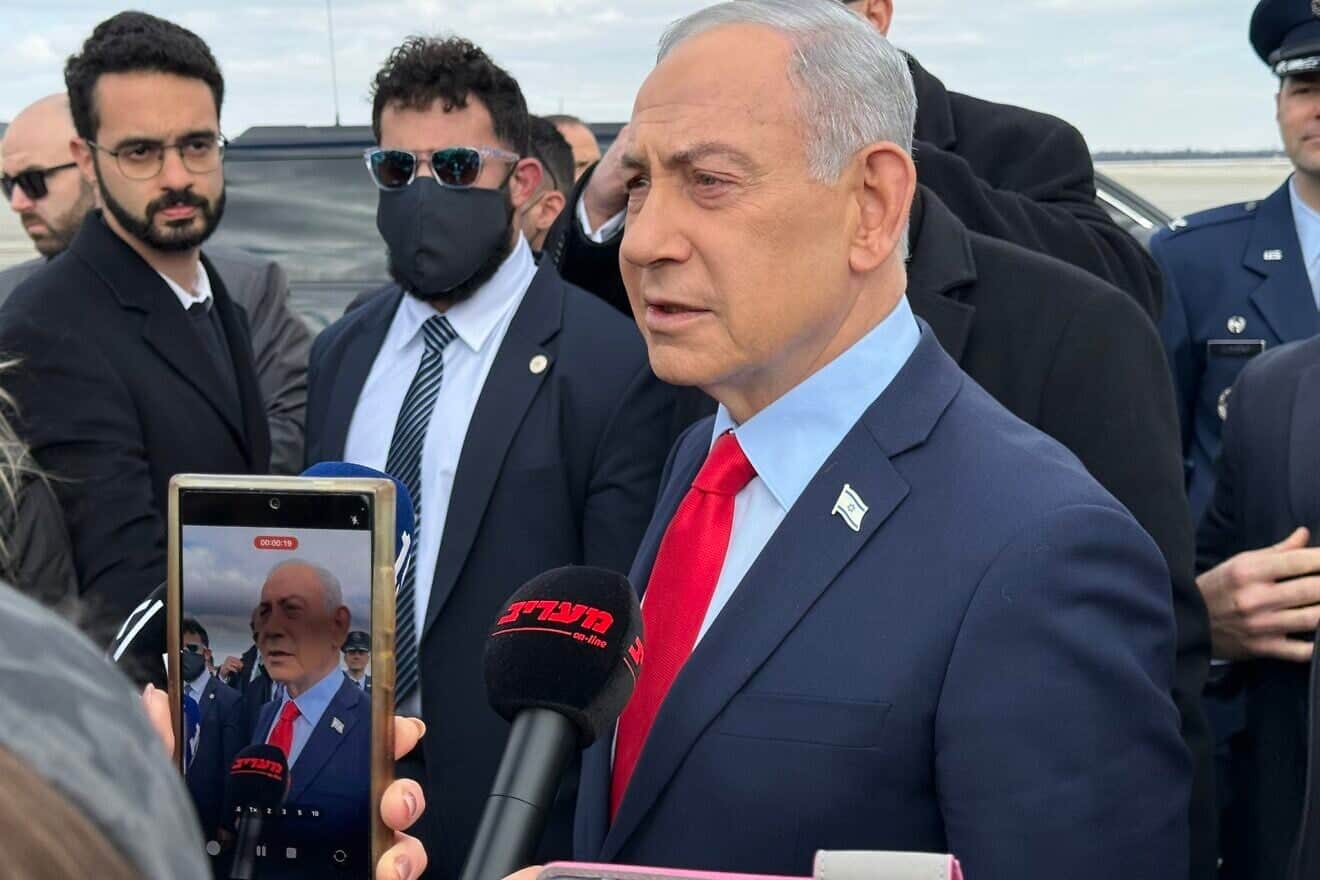
Israeli Prime Minister Benjamin Netanyahu speaks with reporters on the tarmac of Andrews Air Force Base in Prince George’s County, Md., Feb. 12, 2026. Photo by Alex Traiman/JNS.

Israeli Prime Minister Benjamin Netanyahu told reporters on Thursday that he remained skeptical about the prospects of reaching a new Iran deal, as he departed Washington after meeting U.S. President Donald Trump.

Speaking on the tarmac at Andrews Air Force Base near the U.S. Capitol, Netanyahu described his seventh visit during Trump’s second presidential term as “short but important.”

The prime minister said he held an “excellent conversation” with Trump, emphasizing the “close, genuine and open relationship” between the two leaders.

.

According to Netanyahu, his discussions at the White House focused primarily on the current nuclear negotiations with the Islamic regime.

He said that Trump believes the Iranians “already understand who they are dealing with,” and that the president thinks his preconditions—combined with Iran’s “understanding that they made a mistake the last time” by not reaching an agreement—could lead to a “good” deal.

On June 9, 2025, Tehran rejected a U.S. proposal for a renewed nuclear deal. Four days later, Israel launched a major aerial campaign against Iranian nuclear facilities and military infrastructure. The U.S. military also conducted strikes on Iran’s nuclear sites during the 12-Day War.

Netanyahu told reporters on Thursday that he did “not hide my general skepticism regarding the possibility of reaching any agreement with Iran” during his meetings with senior U.S. officials this week.

The Israeli leader stressed that any potential accord must address not only the regime’s nuclear program but also the acceleration of its ballistic missile development and support for regional terrorism.

“If an agreement is reached, it must include the elements that are important to us, to the State of Israel, and in my view to the entire international community as well. Not only the nuclear issue, but also the ballistic missiles and Iran’s regional proxies,” Netanyahu stated.

‘We will just have to see’

The two leaders also discussed Gaza and broader regional issues, the prime minister added. He concluded by describing Trump as “a great friend of the State of Israel—a president like no other.”

Trump and Netanyahu met at the White House for about two-and-a-half hours on Wednesday.

Trump said the meeting was inconclusive and that his administration would continue the indirect talks with the Islamic Republic in Oman.

“There was nothing definitive reached other than I insisted that negotiations with Iran continue to see whether or not a deal can be consummated,” the president wrote in a post on his Truth Social.

“If it can, I’ll let the prime minister know that will be a preference,” Trump stated. “If it cannot, we will just have to see what the outcome will be.”

The remarks came as Trump confirmed that he was considering sending a second aircraft carrier strike group to the Middle East to prepare for possible military action if the negotiations with Tehran break down.

Trump on Tuesday expressed optimism about the diplomacy, telling Axios that the regime wants to make a deal with the United States “very badly” after he struck their nuclear facilities during the 12-day war.

Trump said it was a “no-brainer” for any deal to cover Tehran’s nuclear program but that he thought it would also be possible to address its ballistic missiles. “We can make a great deal with Iran,” he stated.


Zawartość publikowanych artykułów i materiałów nie reprezentuje poglądów ani opinii Reunion’68,
ani też webmastera Blogu Reunion’68, chyba ze jest to wyraźnie zaznaczone.
Twoje uwagi, linki, własne artykuły lub wiadomości prześlij na adres:
webmaster@reunion68.com


Iran Races to Rebuild Missile Arsenal, Israel Tests Upgraded Defenses Amid Fragile US Nuclear Talks


Iran Races to Rebuild Missile Arsenal, Israel Tests Upgraded Defenses Amid Fragile US Nuclear Talks

Ailin Vilches Arguello


Iranian missiles are displayed in a park in Tehran, Iran, Jan. 31, 2026. Photo: Majid Asgaripour/WANA (West Asia News Agency) via REUTERS

As the prospect of renewed conflict looms, Iran is scrambling to restore its battered missile capabilities while Israel tests upgraded air defenses and accelerates military preparations for a potential confrontation.

Iran had 25 key sites housing long-range ballistic missile capabilities, 19 of which were struck during last June’s 12-day war, when the US and Israel bombed the regime’s nuclear facilities, according to Israel’s Channel 14.

The outlet’s latest report, drawing on satellite imagery, research by the Alma Institute for Middle Eastern Studies, and confirmations from security officials, reveals that all sites were equipped with underground infrastructure and suffered extensive surface and subterranean damage.

Yet, with the shadow of a new conflict looming, Iran has rushed to restore its shattered defense capabilities, reportedly completing some partial repairs already.

As of last month, the country’s main launch bases — whose surfaces suffered moderate to severe damage — appear to show clear signs of recovery and resumed operational activity.

Israeli officials estimate that the Islamist regime now possesses at least twice the missile arsenal it deployed in past attacks.

However, Iran’s missile launch capacity remains limited by shortages of launchers and rocket fuel, even as it reportedly works to restore these critical components as well.

As Tehran works to rebuild its strategic threat against the Jewish state amid rising regional tensions, Israel has successfully upgraded its missile defense systems and expanded its arsenal of anti-missile batteries, effectively reinforcing its deterrence capabilities.

On Wednesday, the Israeli Ministry of Defense announced a successful test of the “David’s Sling” air-defense system, designed to intercept Iranian ballistic missiles with advanced evasive capabilities.

Built on operational lessons from last year’s war, Israeli officials said the upgraded system can intercept cruise missiles, ballistic missiles, aircraft, and drones at medium and long ranges, reaching altitudes of 50 to 70 kilometers (31 to 43 miles).

From the Arrow system to the Iron Dome, Israel is bolstering its defense capabilities with extensive logistical preparations to maintain operational readiness during prolonged and intense missile attacks, the Ministry of Defense said in a statement.

At the top of the country’s operational defense pyramid is the Arrow system, a strategic, exo-atmospheric shield designed to intercept long-range ballistic missiles while they are still outside the atmosphere, neutralizing threats at a distance and preventing environmental damage or the impact of unconventional warheads

Serving as the middle layer of Israel’s missile defense, the newly upgraded David’s Sling system works alongside the Iron Dome, which protects the home front and civilian settlements.

The country is also introducing the laser system Iron Beam, or “Magen Or,” capable of intercepting missiles quickly, accurately, and more efficiently than conventional systems

These latest developments come as regional tensions escalate over Iran’s nuclear program and fragile negotiations with the United States, raising concerns about a renewed conflict in the region. 

Washington and Tehran resumed negotiations last Friday in Oman, marking the first direct engagement between US and Iranian officials since nuclear talks collapsed after the 12-day war in June.

With the chances of a deal still uncertain, US President Donald Trump has simultaneously launched a massive military buildup in the Gulf, pressuring the Iranian regime to return to the negotiating table if it wants to prevent a potential conflict.

On Wednesday, Israeli Prime Minister Benjamin Netanyahu met with Trump to discuss the prospects of a potential nuclear agreement with Tehran and the next steps in the talks. Israeli officials have said they want any agreement with Iran to include zero enrichment of uranium, limits on ballistic missiles, and a pullback of the regime’s support for terrorist groups across the Middle East.

“There was nothing definitive reached other than I insisted that negotiations with Iran continue to see whether or not a Deal can be consummated. If it cannot, we will just have to see what the outcome will be,” Trump wrote in a post on Truth Social after their meeting. 

“Last time Iran decided that they were better off not making a deal, they were hit with Midnight Hammer — that did not work well for them,” he continued, referring to the US operation to bomb Iranian nuclear sites in June. “Hopefully this time they will be more reasonable and responsible.”

Trump also told Axios in a Tuesday interview that he is considering deploying a second aircraft carrier strike group to the Middle East to prepare for military action if negotiations with Iran fail.

“Either we will make a deal or we will have to do something very tough like last time,” Trump said. 

According to multiple media reports, Washington has set three conditions for a nuclear agreement with Iran: halting uranium enrichment, restricting the country’s ballistic missile program, and ending the regime’s support for terrorist groups and other proxies throughout the Middle East.

However, Iran has long said all three demands are unacceptable, but two Iranian officials told Reuters its Islamist, authoritarian rulers view the ballistic missile program, not uranium enrichment, as the bigger issue.

In recent days, the US has indicated it is primarily concerned with the nuclear program, leaving some observers concerned that the Trump administration will strike a deal that’s too narrow in scope.

The Iranian government has already publicly rejected any transfer of uranium out of the country and ruled out negotiations over its ballistic missile program or support for proxy forces.

Cautious optimism about diplomacy has also been shaken by reported clashes between US and Iranian forces at sea as tensions rise.

Last week, the US military said it shot down an Iranian drone that had “aggressively” approached the aircraft carrier Abraham Lincoln in the Arabian Sea. Hours later, forces from Iran’s Islamic Revolutionary Guard Corps (IRGC) harassed a US-flagged, US-crewed merchant vessel in the Strait of Hormuz.

Trump initially threatened to intervene in Iran if the regime killed anti-government protesters who took to the streets across the country in late December and early January. However, the Iranian government proceeded to crush the protests with a brutal crackdown, reportedly killing tens of thousands of people.

The US subsequently began its military buildup in the region, and Trump called on the regime to begin negotiations.


Zawartość publikowanych artykułów i materiałów nie reprezentuje poglądów ani opinii Reunion’68,
ani też webmastera Blogu Reunion’68, chyba ze jest to wyraźnie zaznaczone.
Twoje uwagi, linki, własne artykuły lub wiadomości prześlij na adres:
webmaster@reunion68.com