Archive | 2026/02/05

Początek końca dla ajatollahów

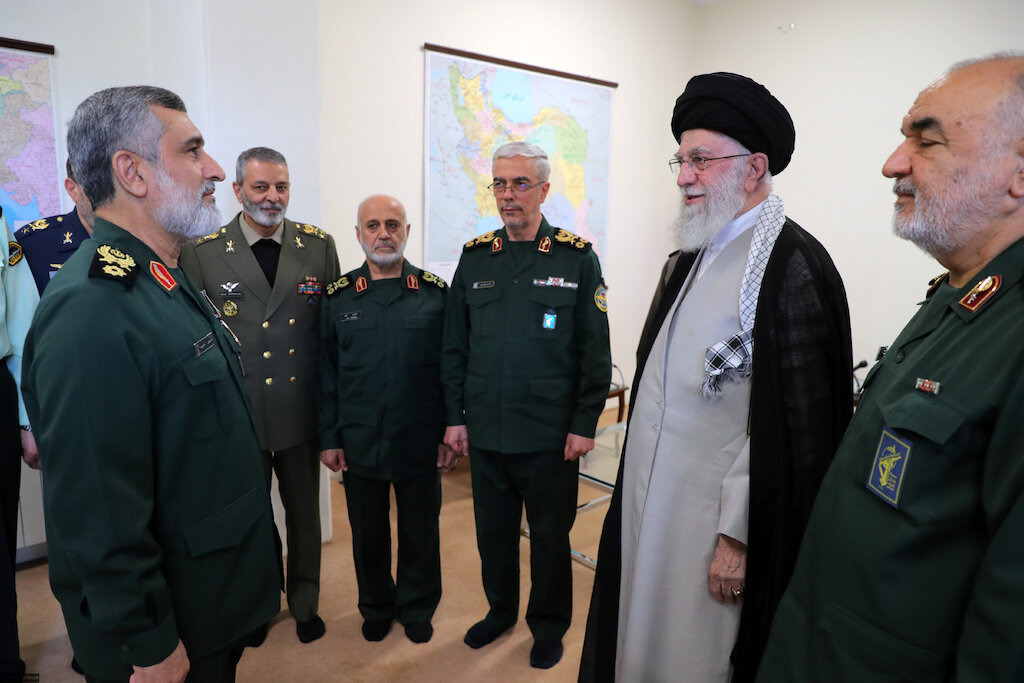
Prezydent Donald Trump zmienił psychologiczną równowagę sił między Waszyngtonem a Teheranem w sposób, na jaki nie odważył się dotąd żaden amerykański przywódca. Po raz pierwszy od ustanowienia Islamskiej Republiki irańscy przywódcy mierzą się z prezydentem USA, który – jak wierzą – jest gotów zrealizować swoje groźby. Reżim w Teheranie po raz pierwszy rozumie, że masowe egzekucje, eskalacja regionalna czy przyspieszony rozwój broni nuklearnej nie spotkają się już z “wyrazami zaniepokojenia”, lecz z odpowiedzią siłową. Na zdjęciu: Najwyższy Przywódca Iranu, ajatollah Ali Chamenei, podczas spotkania z najwyższymi dowódcami Korpusu Strażników Rewolucji Islamskiej w Teheranie, 6 października 2024 roku. (Źródło zdjęcia: Biuro Najwyższego Przywódcy Iranu)

Początek końca dla ajatollahów

Majid Rafizadeh
Tłumaczenie: Andrzej Koraszewski


Dzięki administracji Trumpa i Izraelowi nigdy w swej czterdziestosześcioletniej historii reżim irański nie był słabszy. Nigdy, od rewolucji islamskiej ajatollaha Ruhollaha Chomeiniego w 1979 roku, duchowny system władzy nie stanął w obliczu takiej konwergencji wewnętrznego buntu, gospodarczego załamania, militarnej podatności i psychologicznej porażki. Nigdy ajatollahowie nie byli tak obnażeni i tak przerażeni własnym społeczeństwem. To historyczne osłabienie jest efektem długotrwałej presji i — przede wszystkim — odwagi narodu irańskiego, który powstał przeciw systemowi rządzącemu ich życiem od pokoleń poprzez więzienia i egzekucje.

Fundamenty Islamskiej Republiki — jej roszczenie do boskiej legitymacji, przemoc, mit nietykalności i kontrola nad gospodarką — wszystkie jednocześnie się kruszą. Reżimy rzadko upadają tylko dlatego, że są nielubiane. Upadają, gdy strach zmienia stronę. Dziś strach nie jest już wyłącznie udziałem społeczeństwa — sięgnął sięgnął najwyższych szczebli władzy.

Z tego powodu ten moment nie jest czasem na wahanie czy kompromisy, lecz na intensyfikację presji. Historia pokazuje, że systemy autorytarne często trwają nie dlatego, że są silne, ale dlatego, że ich przeciwnicy zbyt szybko tracą cierpliwość, jedność lub nadzieję. Iran stoi dziś na rozdrożu. Jedna ścieżka prowadzi do transformacji demokratycznej. Druga – do przetrwania jednego z najbardziej brutalnych ideologicznych reżimów współczesności.

Jeśli spojrzeć uczciwie, tylko trzy siły naprawdę planują koniec tego radykalnego systemu i pracują na rzecz wolności w Iranie. Reszta społeczności międzynarodowej, w najlepszym wypadku, obserwuje z dystansu; w najgorszym — umożliwia trwanie reżimu poprzez handel, normalizację dyplomatyczną lub milczącą współwinę. Trzy decydujące siły to: prezydent Donald Trump i jego administracja, rząd Izraela pod przewodnictwem Benjamina Netanjahu oraz sam naród irański.

Trump przełamał wzorzec, który utrwalał się przez dekady. Po raz pierwszy od utworzenia Islamskiej Republiki irańscy przywódcy stanęli wobec amerykańskiego prezydenta, którego obawiają się w sposób realny. To zmiana strategiczna. Trump łączy dwa narzędzia, których dyktatury boją się najbardziej: moralną jasność i gotowość do użycia siły.

W sferze słów Trump złamał obowiązujące tabu. Zwrócił się do Irańczyków jako do politycznych podmiotów, pochwalił ich odwagę, uznał ich walkę za uprawnione dążenie do wolności. Reżimy potrzebują psychicznej izolacji obywateli, by utrzymać władzę. Uznanie z zewnątrz ją podważa.

W sferze działań Trump wzmocnił słowa konkretną presją: sankcje traktowano jak broń ekonomiczną, uderzającą w finansowe arterie reżimu. Urzędnicy odpowiedzialni za represje zostali objęci sankcjami. Co najważniejsze, groźby militarne zostały spełnione.

Rezultat? Realny strach u szczytów władzy. Pojawiły się doniesienia o transferach ogromnych sum pieniędzy za granicę przez elitę władzy — w próbie zabezpieczenia majątku na wypadek upadku reżimu.

Izrael stanowi drugi filar tej bezprecedensowej presji.
Przez lata Teheran kreował się na nietykalne centrum regionalnej osi, osłonięte przez zachodni strach przed eskalacją. Ten mit został obalony. Izraelskie uderzenia w infrastrukturę reżimu – szczególnie związaną z programem nuklearnym – pokazały, że niebo Iranu nie jest nietykalne, jego sekrety są znane, a obrona – bez znaczenia.

Znaczenie tych działań uderza w sam rdzeń mitu Islamskiej Republiki. Reżim przez dekady budował obraz boskiej nietykalności. Gdy izraelskie operacje dotarły w głąb Iranu, ta narracja runęła. Społeczeństwo zobaczyło, że władza nie potrafi ochronić nawet najwrażliwszych instalacji. Elity dostrzegły, że propaganda może zostać obalona w trzy godziny.

To militarne upokorzenie miało efekt psychologiczny, jakiego same sankcje nie mogłyby osiągnąć. Przekazało Irańczykom: Islamska Republika, która rości sobie prawo do pełnej kontroli nad waszym życiem, nie potrafi nawet zadbać o własne bezpieczeństwo.

Najważniejszą siłą w tym historycznym momencie nie była jednak ani Ameryka, ani Izrael. Był nią naród irański.

Przez lata amerykańscy prezydenci woleli postrzegać protesty w Iranie jako niezadowolenie ekonomiczne. Tymczasem najnowsze fale demonstracji ujawniają społeczeństwo, które nie chce już reform. Chce końca reżimu.

Te protesty — wywołane przez utratę siły nabywczej i niemożność dalszego życia w milczeniu, podczas gdy skorumpowana elita się bogaci — szybko przybrały charakter polityczny. Hasła przeszły od cen do odrzucenia całego systemu.

Reżim odpowiedział masakrami i aresztowaniami. Całe dzielnice zostały sterroryzowane. Wyłączano internet, by stłumić koordynację.

Mimo to wiele krajów europejskich i szerzej — Zachód — milczy. To forma współudziału. Europejscy politycy dużo mówią o prawach człowieka, a jednocześnie utrzymują relacje z najbrutalniejszymi reżimami świata. Potępiają represje, ale językiem wyważonym i niekonfrontacyjnym. Martwią się o “stabilność”, ignorując fakt, że to irański reżim destabilizuje region, wspiera wojny, dostarcza broń Rosji do użycia przeciw Ukrainie i organizuje zamachy na europejskiej ziemi.

Ironią losu jest to, że Europa sama cierpi z powodu polityki Iranu – poprzez terroryzm, uchodźców i zagrożenia bezpieczeństwa – a mimo to nie wspiera jedynej siły, która może rozwiązać problem u źródła: irańskiego społeczeństwa. W zamian oferuje deklaracje, konferencje i moralną paplaninę.

Dlatego ekonomiczna presja na Teheran musi być nieustanna. Sankcje nie mogą służyć medialnym nagłówkom, lecz muszą rzeczywiście ograniczać możliwości finansowe służb bezpieczeństwa Iranu, Korpusu Strażników Rewolucji i aparatu represji.

Presja militarna musi pozostać realna: odstraszanie ratuje życie. Gdy reżim wierzy, że może zabić bez konsekwencji – robi to. Gdy boi się odpowiedzi — powstrzymuje się. Groźby Trumpa zmieniły kalkulacje w Teheranie. Gdy Trump się waha, Iran zabija (tak było m.in. tutajtutajtutaj i tutaj). Usunięcie tego strachu byłoby prezentem dla reżimu.

Presja moralna również musi trwać. Irańczycy muszą wiedzieć, że ich walka jest widziana i szanowana. Milczenie zabija nadzieję. Uznanie ją wzmacnia.

Tylko trzy siły naprawdę pchają historię w kierunku wolności: Stany Zjednoczone, Izrael i sam naród irański. Razem stworzyły największe zagrożenie dla Islamskiej Republiki od jej powstania.

Nie wolno zmarnować tej szansy. Reżim irański znalazł się w potrzasku. Odpuścić teraz — to dać mu czas na odbudowę machiny represji. Zachód musi zdecydować: albo stanie po stronie społeczeństwa walczącego z brutalnym, fundamentalistycznym systemem, albo będzie się przyglądał, jak ten system odzyskuje władzę przelewając krew.


Zawartość publikowanych artykułów i materiałów nie reprezentuje poglądów ani opinii Reunion’68,
ani też webmastera Blogu Reunion’68, chyba ze jest to wyraźnie zaznaczone.
Twoje uwagi, linki, własne artykuły lub wiadomości prześlij na adres:
webmaster@reunion68.com


This entry was posted on 2026/02/05, in Ze Swiata.

No Imminent Attack on Iran as Washington Reportedly Deploys Additional Air Defenses


No Imminent Attack on Iran as Washington Reportedly Deploys Additional Air Defenses

i24 News and Algemeiner Staff


A Lockheed Martin Terminal High Altitude Area Defense (THAAD) missile interceptor is seen during the third annual “Made in America Product Showcase” on the South Lawn of the White House in Washington, U.S., July 15, 2019. Photo: REUTERS/Kevin Lamarque – RC1C57519ED0/File Photo

A US military strike on Iran is not expected in the immediate future, Pentagon officials said Sunday to The Wall Street Journal, as Washington focuses on strengthening air defenses across the Middle East to prepare for potential Iranian retaliation and a wider regional conflict.

While the US military is capable of carrying out limited strikes if ordered by President Donald Trump, officials say a broader, decisive attack would likely trigger a substantial response from Tehran.

Such a scenario would require far more extensive defensive coverage to protect American forces, Israel, and key regional allies.

The United States already maintains air defense systems in the region, including naval destroyers equipped to intercept aerial threats.

However, the Pentagon is now reinforcing those defenses by deploying additional Patriot and THAAD missile systems to U.S. Central Command areas.

These systems are expected to be stationed at American bases in Qatar, Saudi Arabia, and Jordan, according to officials familiar with the plans.

Regional partners are also accelerating their own defensive preparations. Gulf states have begun strengthening missile defense capabilities, anticipating that any large-scale US action against Iran could prompt missile launches targeting US installations and Israel.

A senior Gulf official told The Wall Street Journal that Saudi Arabia has already received several THAAD batteries it recently purchased.

The military buildup comes as tensions between Washington and Tehran continue to escalate rhetorically, even as diplomatic channels remain open. Earlier Sunday, Iran’s Supreme Leader Ayatollah Ali Khamenei warned that any American strike would spark a regional war, dismissing threats against Iran as nothing new.

At the same time, President Trump has publicly emphasized diplomacy. Speaking to reporters aboard Air Force One late Saturday, he said Iran is “seriously talking” with the United States and expressed hope that negotiations could lead to a deal that would prevent Tehran from acquiring nuclear weapons.

U.S. officials say this dual-track approach, maintaining military pressure while reinforcing defenses, reflects an effort to deter Iran without rushing into a conflict that could rapidly spiral beyond control.


Zawartość publikowanych artykułów i materiałów nie reprezentuje poglądów ani opinii Reunion’68,
ani też webmastera Blogu Reunion’68, chyba ze jest to wyraźnie zaznaczone.
Twoje uwagi, linki, własne artykuły lub wiadomości prześlij na adres:
webmaster@reunion68.com


Anti-Hamas Militias Step Up Attacks Across Gaza, Targeting Terror Leaders and Expanding Operations


Anti-Hamas Militias Step Up Attacks Across Gaza, Targeting Terror Leaders and Expanding Operations

Ailin Vilches Arguello


The head of an anti-Hamas faction, Hussam Alastal, fires a weapon in the air as he is surrounded by masked gunmen, in an Israeli-held area in Khan Younis, in the southern Gaza Strip, in this screenshot taken from a video released Nov. 21, 2025. Photo: Hussam Alastal/via REUTERS

Anti-Hamas militias across Gaza appear to be taking concrete, coordinated steps to disrupt the ruling terrorist group, carrying out targeted attacks and expanding their operations in a bid to weaken Hamas’s hold on the territory.

This past weekend, the Popular Forces armed group captured Hamas commander Adham al-Akar in Israeli-held Rafah, in southern Gaza, as militia forces ramp up efforts to curb the Islamist group’s influence and prevent it from regaining control in the war-torn enclave.

In a social media video released after the operation, militia leader Ghassan al-Duhaini is seen with Akar, sending a warning to the Palestinian terrorist group that its fighters will be “punished like the victims of the Spanish Inquisition.”

Following a successful operation in southern Gaza, the Popular Forces handed Akar over to Israeli authorities, the Israeli broadcaster Kan News reported.

According to Joe Truzman, senior research analyst at the Foundation for Defense of Democracies (FDD), a Washington, DC-based think tank, this latest development adds to growing evidence that militia forces are carrying out offensive operations against Hamas while seeking to expand their influence in the territory.

“It’s only in the past few months that we’ve started to observe these militias actively carrying out attacks against Hamas,” Truzman told The Algemeiner. “We’re seeing increasing evidence that they are actively going after Hamas, targeting both members and senior leadership with some success.”

Last month, Hussam al-Astal, leader of the Counterterrorism Strike Force – another prominent anti-Hamas militia based in Khan Younis, a city in southern Gaza – claimed responsibility for killing Mahmoud al-Astal, head of the city’s criminal police unit and a senior Hamas member.

The group also took responsibility for an offensive operation in the Abu al-Saber area of Shaboura Camp in Rafah, which left two Hamas members dead and a third in custody.

Even with notable successes against the Palestinian terrorist group, Truzman warned that these militia forces could face significant strategic challenges in the near future.

“My concern is how they will do beyond their current areas of operation. So far, I haven’t seen any indication that these militias are entering Hamas-controlled territory,” Truzman told The Algemeiner.

“At the end of the day, they are making progress, but will it be enough to bring down Hamas? Not in this way,” he continued. “They need much more support — money, weapons, and fighters — to make a real impact against Hamas. I’m skeptical, but I do see that they are making progress.”

With the region preparing to implement the second phase of US President Donald Trump’s Gaza peace plan, the Israel Defense Forces (IDF) will be expected to withdraw slowly from its current positions if Hamas fulfills its obligations to disarm — a step the terrorist group has repeatedly refused to take.

Truzman argued that such Israeli pullbacks would leave anti-Hamas militias — currently operating in Israeli-controlled areas — at a strategic disadvantage.

“In my opinion, these militias are able to survive because they operate under the IDF’s protection, either directly or indirectly,” Truzman told The Algemeiner.

Under Trump’s 20-point Gaza peace plan, a multinational peacekeeping force — the International Stabilization Force (ISF) — is supposed to oversee security in Gaza and replace the IDF’s current role once it forms. However, Truzman warned that this force will not be focused on supporting the anti-Hamas militias, ultimately undermining their position and leaving them more vulnerable to the terrorist group’s violence.

“The situation will allow Hamas and its allies the freedom to operate in territory where they were previously restricted by the ceasefire agreement and the presence of the IDF,” Truzman said.

“This gives Hamas and other terror groups the advantage they need to go after these militias,” he continued.

However, the analyst also expressed skepticism about how the Israel-Hamas ceasefire will play out, noting that much depends on Hamas’s disarmament, which is crucial for the militias and their protection against attacks.

“I don’t think Hamas will give up its arms in any meaningful way,” Truzman told The Algemeiner.

“And if they don’t, the IDF could end up staying in their current positions, which would actually benefit these militias by giving them the cover they need to continue fighting Hamas,” he added.

Some experts have even suggested the possibility of these groups joining the ISF in a post-war Gaza scenario, integrating them into the force and potentially giving them the protection they need against Hamas and its brutal crackdown on dissent.

Even with an uncertain future, anti-Hamas militias across the enclave have recently intensified their offensive operations, shifting their approach with new tactics to fight the Islamist group, including targeting officers in Hamas’s security services and members of its armed wing, the al-Qassam Brigades, near their homes, according to a report by Saudi outlet Asharq Al-Awsat.

In response, Hamas has reportedly increased alert levels and tightened personal security, warning members to remain vigilant, vary their routes, minimize phone use to avoid tracking, and be on the lookout for potential surveillance.

Shortly after the US-backed ceasefire to halt fighting in Gaza took effect last year, Hamas moved to reassert control over the war-torn enclave and consolidate its weakened position by targeting Palestinians who it labeled as “lawbreakers and collaborators with Israel.”

Since then, Hamas’s bloody crackdown has escalated dramatically, sparking widespread clashes and violence as the group moves to seize weapons and eliminate any opposition.

Social media videos widely circulated online have shown Hamas members brutally beating Palestinians and carrying out public executions of alleged collaborators and rival militia members.

As they continue to come under attack, both the Popular Forces and the Counterterrorism Strike Force vowed to unite against the Islamist group, emphasizing that both had “agreed the war on terror will continue.”


Zawartość publikowanych artykułów i materiałów nie reprezentuje poglądów ani opinii Reunion’68,
ani też webmastera Blogu Reunion’68, chyba ze jest to wyraźnie zaznaczone.
Twoje uwagi, linki, własne artykuły lub wiadomości prześlij na adres:
webmaster@reunion68.com