
Archive | 2026/02/18

Legenda o bezpiecznych Żydach


Legenda o bezpiecznych Żydach

Anna Grabowska (Anne Goldschmid)


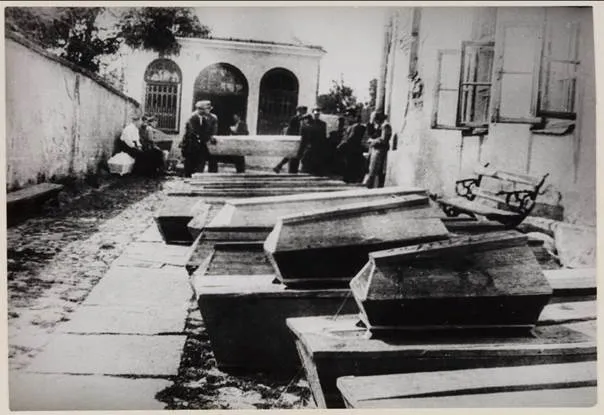
Pogrom Żydów w Kielcach, 4 lipca 1946 r.

Przeczytałam właśnie tekst Konstantego Geberta w “Kulturze Liberalnej”, zatytułowany “Pamięć o Zagładzie nie chroni już Żydów”. I już w samym tym zdaniu, w tym “już”, kryje się założenie, które wydaje mi się historycznie wątpliwe, żeby nie powiedzieć po prostu błędne. Bo żeby móc napisać, że pamięć o Zagładzie przestała chronić Żydów, trzeba najpierw udowodnić, że kiedykolwiek ich chroniła. A z tym, kiedy tylko wyjdzie się poza publicystyczną metaforę i zajrzy do historii, zaczynają się poważne kłopoty.

Zagłada była momentem absolutnej bezbronności. Nie początkiem ochrony, lecz jej ostatecznym zaprzeczeniem. Była dowodem na to, że kiedy świat uzna, że Żydzi są problemem, nie chroni ich ani kultura, ani patriotyzm, ani asymilacja, ani wykształcenie, ani zasługi wojenne, ani pozycja społeczna, ani nawet to, że są sąsiadami od pokoleń. Nie chroni ich nic. To jest właśnie lekcja XX wieku. Mówienie więc o tym, że pamięć o Zagładzie przez dziesięciolecia pełniła funkcję tarczy, brzmi raczej jak prywatna opowieść autora niż jak opis realnej historii.

Owszem, po wojnie pojawił się w części Europy Zachodniej krótki okres, jak ja to nazywam – zakłopotania. Ludzie nie chcieli mówić rzeczy, które brzmiałyby jak echo niedawnych oprawców. W języku publicznym powstało pewne tabu. Ale tabu językowe nie jest żadną ochroną, tylko zmianą dekoracji. Antysemityzm nie zniknął. Zmienił kostium, ton i retorykę. Zamiast Żyda pojawił się syjonista. Miejsce biologii zajęła moralna wyższość. A teorie rasowe zastąpiono oskarżeniami o kolonializm, spiski, pieniądze i oczywiście wpływy. Mechanizm pozostał więc ten sam, tylko słowa stały się bardziej eleganckie, bardziej salonowe i bardziej nadające się do druku.

Wystarczy spojrzeć na mapę powojennego świata i zapytać zupełnie zwyczajnie autora: gdzie właściwie ta ochrona miała miejsce? W powojennej Polsce, gdzie dochodziło do pogromów? W Związku Radzieckim, gdzie masowo urządzano antyżydowskie kampanie i oskarżano lekarzy o spiski? A może w 1968 r., kiedy w państwie, które samo uważało się za ofiarę nazizmu, przeprowadzono czystkę antyżydowską pod hasłem walki z syjonizmem? Czy też w krajach arabskich, z których wypędzono setki tysięcy Żydów, odbierając im domy, majątki i obywatelstwo? Z tej perspektywy opowieść o wieloletniej “ochronie” ma retoryczny połysk w zachodnioeuropejskich salonach, ale bardzo źle znosi konfrontację z faktami. Jeśli patrzy się na to z doświadczenia francuskiego, obraz też nie jest szczególnie pocieszający. Owszem, wszystko było “okadrowane” prawnie. Istniały przepisy, instytucje, deklaracje, szkolne lekcje pamięci, oficjalne ceremonie. W języku publicznym antysemityzm był zakazany, kompromitujący i w złym tonie. Ale między tą oficjalną ramą a codziennym doświadczeniem niestety istniała przepaść.

Antysemityzm nie zniknął z życia społecznego tylko dlatego, że przestał być elegancki. Był i jest obecny w drobnych gestach, w żartach, w insynuacjach, w podejrzeniach, w tym nieustannym odruchu przypisywania Żydom zbiorowej winy albo ukrytych interesów. Nie zawsze spektakularnie, nie zawsze w nagłówkach gazet. Często półgębkiem, w komentarzach, w przezwiskach, w tej banalnej, codziennej wrogości, która nie potrzebuje ani ideologii, ani wielkich słów.

W krajach, w których Żydów jest bardzo niewielu, ta ignorancja bywa wręcz uderzająca. Ludzie nie znają żadnego Żyda, ale mają o “Żydach” bardzo wyraźne wyobrażenie. Widzą monolit; czarny kapelusz, pejsy, broda, modlitwa i pieniądze. Taki ludowy rysunek z zeszytu do historii, który nigdy przez nikogo nie został poprawiony. W internecie widać to jak na dłoni, wystarczy mieć żydowskie nazwisko, żeby ktoś nazwał człowieka “pejsatym”, choćby ten ktoś nie miał z chasydyzmem nic wspólnego i nigdy w życiu nie założył czarnego kapelusza. To nie jest zatem nienawiść ideologiczna, to jest po prostu ignorancja. Taka, przy której naprawdę trudno nie odnieść wrażenia, że myślenie utknęło na poziomie instrukcji obsługi czajnika.

Bo społeczność żydowska nie jest żadnym monolitem, jest jedną z najbardziej, powtarzam, najbardziej zróżnicowanych wspólnot na świecie. Żydzi przez stulecia żyli w dziesiątkach krajów i kultur, od Maroka po Litwę, od Jemenu po Francję, od Etiopii po Argentynę itd. Są religijni i zupełnie świeccy, lewicowi i prawicowi, tradycyjni i całkowicie niereligijni. W największych społecznościach żydowskich ogromna część ludzi uważa się za świeckich albo tylko kulturowo związanych z judaizmem. Sprowadzanie całego świata żydowskiego do obrazu chasydów jest więc nie tylko uproszczeniem. Jest zwykłą niewiedzą. Ta sama niewiedza dotyczy dzisiaj Izraela. Cały naród przedstawia się jak jednolity blok, jakby wszyscy myśleli tak samo i ponosili tę samą odpowiedzialność za każdą decyzję rządu. Jakby nie było sporów, protestów, opozycji, wyborów, partii, demonstracji, gazet i debat. Tymczasem Izrael jest demokracją, w której ludzie kłócą się o politykę równie zajadle jak w każdej innej demokracji. Jedni popierają wojnę, inni ją krytykują, jeszcze inni popierają ją niechętnie, z poczucia konieczności. To samo dotyczy diaspory. Wielu Żydów w Europie i Ameryce nie zgadza się z konkretnymi decyzjami rządu. I mają do tego pełne prawo, bo na tym właśnie polega demokracja: jedni się zgadzają, inni nie, a jeszcze inni zmieniają zdanie. Obciążanie całego narodu zbiorową winą i sprowadzanie milionów ludzi do jednego stereotypu jest więc nie tylko moralnie wątpliwe, ale też intelektualnie ubogie. To skrót myślowy, który zastępuje wiedzę emocją i upraszcza złożoną rzeczywistość do poziomu ludowej bajki.

Trudno mówić o jakiejkolwiek “ochronie Żydów” trudno mi w ogóle strawić to niefortunne wyrażenie, skoro dla ogromnej części żydowskiego świata powojenna historia była kolejnym pasmem emigracji, kampanii nienawiści i politycznych czystek. Ochrona istniała co najwyżej w języku zachodnich elit, które przez pewien czas nie chciały brzmieć jak ich niedawni poprzednicy. Ale to nie jest to samo, co realne bezpieczeństwo.

Mylenie tabu językowego z rzeczywistą ochroną jest jednym z największych błędów tej narracji. To, że w niektórych krajach nie wypadało mówić rzeczy jawnie antysemickich, nie oznaczało, że ludzie przestali tak myśleć. Oznaczało tylko, że trzeba było mówić inaczej, bardziej subtelnie, bardziej politycznie i bardziej moralnie.

Antysemityzm został zreformowany, a nie pokonany. Dlatego zdanie, że pamięć o Zagładzie “już” nie chroni Żydów, brzmi jak spóźnione odkrycie. Jakby ktoś dopiero teraz zauważył, że parasol, pod którym rzekomo staliśmy przez dekady, był w istocie tylko dekoracją. Chronił przede wszystkim sumienia tych, którzy chcieli wierzyć, że świat po 1945 roku stał się o wiele lepszy. Żydów chronił znacznie rzadziej. A może wcale.

Żeby w ogóle napisać taki tekst, trzeba najpierw stanąć przed bardzo prostym pytaniem. Zadać je samemu sobie, bez publiczności i bez czytelników. Czy jestem w tym uczciwy. Czy naprawdę wiem, o czym piszę. I czy mam wiedzę i historyczną świadomość, które pozwalają mi stawiać takie tezy, a nie inne.

Bo publicystyka to nie jest tylko kwestia stylu, efektownego tytułu czy trafnej metafory. To także odpowiedzialność za obrazy historii, które wprowadza się do obiegu. Jeżeli ktoś pisze o “ochronie”, która rzekomo istniała przez dekady, powinien najpierw sam przed sobą odpowiedzieć, gdzie dokładnie ją widzi. W jakich krajach. W jakich latach. W jakich biografiach.

Autor powinien zawsze wiedzieć więcej, niż pisze. Powinien mieć w głowie ciężar faktów, których nie zmieścił w tekście, i świadomość wszystkich tych historii, które komplikują jego tezę. Dopiero wtedy zdania nabierają powagi, a nie tylko retorycznego blasku. Bo inaczej bardzo łatwo stworzyć elegancką opowieść, która pięknie i gładko brzmi na papierze, ale rozpada się przy pierwszym kontakcie z rzeczywistością.


Link do tekstu Geberta: Gebert


Zawartość publikowanych artykułów i materiałów nie reprezentuje poglądów ani opinii Reunion’68,
ani też webmastera Blogu Reunion’68, chyba ze jest to wyraźnie zaznaczone.
Twoje uwagi, linki, własne artykuły lub wiadomości prześlij na adres:
webmaster@reunion68.com


A Look Inside Gaza: More Questions Than Answers as Israel Remains Vigilant, Hamas Refuses to Give Up Weapons


A Look Inside Gaza: More Questions Than Answers as Israel Remains Vigilant, Hamas Refuses to Give Up Weapons

Jonathan Sacerdoti


Israeli soldier on guard in Gaza, February 2026. Photo: Jonathan Sacerdoti / The Algemeiner

GAZA — Going into Gaza remains a rare opportunity for journalists. Access has been tightly controlled throughout the Israel-Hamas war, and even now, months into a ceasefire that has paused the fighting without resolving it, entry is neither routine nor casual. Last week I had the opportunity to interview Nadav Shoshani of the Israel Defense Forces (IDF) inside the Gaza Strip itself, as he walked me through the so-called “Yellow Line” roughly dividing the enclave between east and west, the strained reality on the ground, and the directions in which this conflict may now move.

Shoshani is the IDF’s international spokesperson, one of the most visible Israeli figures to emerge since Hamas’s Oct. 7, 2023, invasion of the Jewish state. For months he has been a fixture in global media, correcting casualty claims and explaining operations in real time. In modern conflict, the spokesman is not an afterthought to the battlefield but an extension of it. What is said publicly shapes diplomatic reaction, public opinion, and operational latitude. English-language briefings in particular are conducted with as much care as any military deployment.

Spokesmen can be dry to interview: They do not reveal classified plans or freelance personal views. Instead, they articulate the institutional position. They present what Israel wants seen, understood, and, ideally, repeated. But even this is useful data for us journalists, and for our readers, too. It is a form of evidence, explaining the narrative the army — and the state — wants to be repeated. From this embed, and from this conversation, the message was consistent: tense but disciplined control in a moment of relative calm (but not peace), determination without appetite for escalation, action in response to violations rather than initiative for renewed war. It was almost as if they wanted to portray a sense of disciplined, determined boredom.

IDF international spokesperson Nadav Shoshani in Gaza. Photo: Jonathan Sacerdoti / The Algemeiner

We met at an IDF post a few hundred meters from what is now called the Yellow Line, the boundary dividing Israeli-controlled territory from areas still under Hamas control. Just beyond it lay Deir al-Balah and the central camps, dense urban belts whose origins stretch back to the aftermath of 1948 and whose political culture has long been shaped by displacement, factional rivalry, and Islamist terrorist organizations.

Shoshani’s own trajectory mirrors the way this war has pulled figures back into public roles. During his initial decade-plus in the IDF he served in key communications positions, including spokesperson for Military Intelligence and head of the IDF’s social media desk. In 2022 he moved into politics, advising Gadi Eisenkot in Israel’s parliament, known as the Knesset. He briefly entered private consulting. After Oct. 7, he was called back into uniform at Eisenkot’s request. Since then, he has become one of the IDF’s most recognizable English-language voices.

As we moved between locations in a military jeep, he spoke about operating in a conflict that is scrutinized but rarely visited, as a result of Israel’s own decision to bar free movement of journalists in the area. The informational theater runs parallel to the physical one. Every strike, every claim, every casualty figure is contested. The spokesman stands at the junction between battlefield and broadcast.
From the vantage point near the Yellow Line, the broader strategic dilemma came into focus.

Israeli military jeep driving in Gaza. Photo: Jonathan Sacerdoti / The Algemeiner

Hamas continues to control significant internal areas of Gaza. Israeli assessments indicate that weapons accumulated earlier in the war remain dispersed across the enclave. Tunnels are still being uncovered even in the southern city of Rafah, where the IDF has operated for an extended period. “The IDF are world class experts in dealing with terror tunnels,” Shoshani said. “And still, after a year plus in Rafah, there are still tunnels.” He described the network as vast and deeply embedded.

In the sector we were visiting, Shoshani said, there are dozens of tunnel shafts. “Single digits” are dismantled each week. It is a steady, grinding process rather than a decisive sweep. As the Israelis are still discovering new shafts and tunnels, the assumption is that the network is even more vast than they know. And for Israel, destroying the tunnels is part of Hamas’s commitment to disarmament in accordance with the US-backed ceasefire.

“The first line of the agreement says Gaza will be a terror free zone,” Shoshani told me. “The agreement speaks about Hamas disarming.” Israel, he said, is committed to that outcome.

Yet Hamas leaders abroad have recently made clear that disarmament is not under consideration. Khaled Meshaal has described surrendering weapons as removing the “soul” of the resistance. Instead, he has floated the prospect of a long “hudna” — a five, seven, or ten-year truce in which weapons remain intact. A pause, not a conclusion. The way things are at the moment it seems like America remains undecided, torn between the momentum of building on the relative calm of the ceasefire and the inclination toward helping Israel defeat its jihadist enemies.

That divergence defines the uncertainty of this moment. A ceasefire predicated on demilitarization rests on a premise one side openly rejects.

Landscape in Gaza, February 2026. Photo: Jonathan Sacerdoti / The Algemeiner

Israel currently controls somewhere between 51-58 percent of the Gaza Strip. Within Israel’s political and security leadership, the argument is not over whether Hamas must be weakened, but over how far that effort must go. One school supports sustained operational control and calibrated pressure, judging that persistent attrition imposes manageable diplomatic costs while limiting Israeli exposure. Another warns that leaving Hamas organizationally intact, even in a diminished form, merely postpones the next confrontation and preserves its capacity to reconstitute. The dispute turns on a single question: Can Hamas be contained, or must it be eradicated to prevent recurrence?

“We are literally standing between Hamas and our civilians,” Shoshani said, pointing toward Israeli communities only a kilometer or two away. The distance is short enough to be visible. Oct. 7 lingers as the unspoken baseline of risk. I walked through the burnt-out homes of Be’eri shortly after the massacre. I cried quietly among the makeshift memorials at Re’im for the Nova party victims slain by the barbarous Palestinian terrorists full of bloodlust. I met survivors from Nahal Oz, evacuated for months from their beloved home and living as a family of four in a single kibbutz bedroom in the north. The scars will remain in the psyche of Israel and Jews for decades to come.

The atmosphere at the post was quiet but taut. Occasional distant fire cracked and faded. Wind carried sand across the position. A short drive away, at the Kissufim crossing, pallets of humanitarian aid sat stacked inside Gaza, inspected and approved. “Every week, 4,200 trucks are going into Gaza,” Shoshani said. He emphasized that the Israeli depot on the other side was empty because everything cleared had been transferred into the Strip, awaiting collection by international agencies.

Supplies stacked in Gaza. Photo: Jonathan Sacerdoti / The Algemeiner

Humanitarian logistics and sniper fire exist side by side. Reconstruction frameworks are discussed internationally while tunnel shafts are dismantled meter by meter.

US President Donald Trump is expected to announce billions in funding for Gaza and provide an update on an international stabilization force at the next meeting of his Board of Peace. Israeli Prime Minister Benjamin Netanyahu has now formally joined the initiative, signing a back-dated letter during his US trip last week. Public language emphasizes transformation and demilitarization.

Questions surrounding the proposed international stabilization force are also occupying serious attention among policymakers. Under the framework advanced during the Trump administration’s post-war planning, the concept envisages a multinational force deployed in Gaza after the cessation of major combat operations. Its stated purpose would be to oversee demilitarization, support reconstruction, assist in training local security forces, and provide a transitional security umbrella while Israeli forces reduce their footprint.

Within the proposed international architecture, Indonesia has emerged as a potential contributor. Jakarta signaled its readiness, in principle, to supply a substantial contingent to such a force, positioning itself as a Muslim-majority state willing to participate in post-conflict stabilization. The rationale is clear. Indonesian involvement would lend broader regional legitimacy to any arrangement and dilute the perception that Gaza’s future security is being shaped solely by Western actors or by Israel. But everyone knows that nobody can truly disarm Hamas other than the IDF.

Legitimacy is only one dimension of the problem. For Israeli decision-makers, the critical issues are structural and operational. Under what mandate would such an international force operate? Would it be authorized to conduct active counter-terror operations, or confined to monitoring and training? How would intelligence be shared? What happens if armed factions attempt to regroup or test the limits of the force’s authority? These are the foundations upon which success or failure rests.

Israeli soldier on guard in Gaza, February 2026. Photo: Jonathan Sacerdoti / The Algemeiner

The Indonesian proposal illustrates the wider tension embedded in the international force concept. A deployment designed primarily for peacekeeping and humanitarian support may stabilize the optics of the post-war environment, but stabilization in a territory where armed networks have deep roots requires more than presence. It requires enforceable authority, coherent command structures, and the political will to confront spoilers — all things I witnessed in the IDF outpost in Gaza but cannot imagine will be present among foreign forces.

I ask LTC Shoshani about the Indonesian rumors and statements. On the ground, foreign troops are absent. “I think that’s more in the in the level of declaration and statements made by politicians,” he said. “It’s not something on the ground happening right now. As you can see, there’s only IDF soldiers in Gaza, but we’re working within the [US-led Civil Military Coordination Center] CMCC for the different solutions that have been agreed upon.” For the IDF, political declarations have yet to alter operational reality.

The central questions remain stark. Can Hamas realistically be disarmed without permanent occupation? If not, can Israel accept a reduced but armed Hamas presence? And if neither path proves viable, how long before the present equilibrium fractures? My embed in the Gaza Strip seems designed not to answer these questions, but to prompt them to the rest of the world to ponder. Criticism is easy, but Israel has to deal in solutions.

Meanwhile, the yellow line is clearly marked, by fluorescent yellow blocks of concrete dotted along the length of the strip. “It is not the type of area where you cross by accident,” Shoshani said. The IDF post we were standing in was deliberately positioned 200 to 300 meters back, allowing time for warnings, leaflets, shots into the air if necessary. Escalation is designed to be gradual.

Israeli soldier on guard in Gaza, February 2026. Photo: Jonathan Sacerdoti / The Algemeiner

Yet he seems keen to point out that ceasefires erode incrementally. A sniper attack. A targeted strike in response. Another violation. The cumulative weight builds.

From inside Gaza, the picture is neither triumphant nor chaotic. It is controlled, watchful, provisional. Israel is holding territory, responding to attacks, dismantling infrastructure, insisting on disarmament as the stated end state. As Trump and his two key negotiators — Steve Witkoff and Jared Kushner — talk publicly about reconstruction and rebuilding, and as Britain, France, and Canada deal in fantasies of Palestinian statehood, the Israeli soldiers I meet are tasked with the boring, grinding, slow process of degrading Hamas, pushing back when it ventures forward, and keeping alert as it declares it will not disarm.

That thick mud wall Shoshani and I stand behind wasn’t here a few weeks ago. It has been built because the line did not hold well enough. Though the line itself remains in place, what lies beyond it, and what may yet cross it again, remains unresolved.


Jonathan Sacerdoti, a writer and broadcaster, is now a contributor to The Algemeiner.


Zawartość publikowanych artykułów i materiałów nie reprezentuje poglądów ani opinii Reunion’68,
ani też webmastera Blogu Reunion’68, chyba ze jest to wyraźnie zaznaczone.
Twoje uwagi, linki, własne artykuły lub wiadomości prześlij na adres:
webmaster@reunion68.com


US Military Preparing for Potentially Weeks-Long Iran Operations


US Military Preparing for Potentially Weeks-Long Iran Operations

Reuters and Algemeiner Staff


FILE PHOTO: An Iranian woman holding a poster depicting Iran’s Supreme Leader Ayatollah Ali Khamenei walks under a large flag during the 47th anniversary of the Islamic Revolution in Tehran, Iran February 11, 2026. Majid Asgaripour/WANA (West Asia News Agency) via REUTERS/File Photo

The US military is preparing for the possibility of sustained, weeks-long operations against Iran if President Donald Trump orders an attack, two US officials told Reuters, in what could become a far more serious conflict than previously seen between the countries.

The disclosure by the officials, who spoke on condition of anonymity due to the sensitive nature of the planning, raises the stakes for the diplomacy underway between the United States and Iran.

US envoys Steve Witkoff and Jared Kushner will hold negotiations with Iran on Tuesday in Geneva, with representatives from Oman acting as mediators. US Secretary of State Marco Rubio cautioned on Saturday that while Trump’s preference was to reach a deal with Tehran, “that’s very hard to do.”

Meanwhile, Trump has amassed military forces in the region, raising fears of new military action. US officials said on Friday the Pentagon was sending an additional aircraft carrier to the Middle East, adding thousands more troops along with fighter aircraft, guided-missile destroyers and other firepower capable of waging attacks and defending against them.

Trump, speaking to US troops on Friday at a base in North Carolina, openly floated the possibility of regime change in Iran, saying it “seems like that would be the best thing that could happen.” He declined to share who he wanted to take over Iran, but said “there are people.”

“For 47 years, they’ve been talking and talking and talking,” Trump said.

Trump has long voiced skepticism about sending ground troops into Iran, saying last year “the last thing you want to do is ground forces,” and the kinds of US firepower arrayed in the Middle East so far suggest options for strikes primarily by air and naval forces. In Venezuela, Trump demonstrated a willingness to rely also on special operations forces to seize that country’s president, Nicolas Maduro, in a raid last month.

Asked for comment on the preparations for a potentially sustained US military operation, White House spokesperson Anna Kelly said: “President Trump has all options on the table with regard to Iran.”

“He listens to a variety of perspectives on any given issue, but makes the final decision based on what is best for our country and national security,” Kelly said.

The Pentagon declined to comment.

The United States sent two aircraft carriers to the region last year, when it carried out strikes against Iranian nuclear sites.

However, June’s “Midnight Hammer” operation was essentially a one-off US attack, with stealth bombers flying from the United States to strike Iranian nuclear facilities. Iran staged a very limited retaliatory strike on a US base in Qatar.

RISKS INCREASING

The planning underway this time is more complex, the officials said.

In a sustained campaign, the US military could hit Iranian state and security facilities, not just nuclear infrastructure, one of the officials said. The official declined to provide specific detail.

Experts say the risks to US forces would be far greater in such an operation against Iran, which boasts a formidable arsenal of missiles. Retaliatory Iranian strikes also increase the risk of a regional conflict.

The same official said the United States fully expected Iran to retaliate, leading to back-and-forth strikes and reprisals over a period of time.

The White House and Pentagon did not respond to questions about the risks of retaliation or regional conflict.

Trump has repeatedly threatened to bomb Iran over its nuclear and ballistic missile programs and crushing of internal dissent. On Thursday, he warned the alternative to a diplomatic solution would “be very traumatic, very traumatic.”

Iran’s Revolutionary Guards have warned that in case of strikes on Iranian territory, they could retaliate against any US military base.

The US maintains bases throughout the Middle East, including in Jordan, Kuwait, Saudi Arabia, Qatar, Bahrain, the United Arab Emirates and Turkey.

Israeli Prime Minister Benjamin Netanyahu met Trump for talks in Washington on Wednesday, saying that if an agreement with Iran were reached, “it must include the elements that are vital to Israel.”

Iran has said it is prepared to discuss curbs on its nuclear program in exchange for lifting sanctions, but has ruled out linking the issue to missiles.


Zawartość publikowanych artykułów i materiałów nie reprezentuje poglądów ani opinii Reunion’68,
ani też webmastera Blogu Reunion’68, chyba ze jest to wyraźnie zaznaczone.
Twoje uwagi, linki, własne artykuły lub wiadomości prześlij na adres:
webmaster@reunion68.com