Archive | 2026/02/06

ZAGRAĆ MARCOWEGO ŻYDA

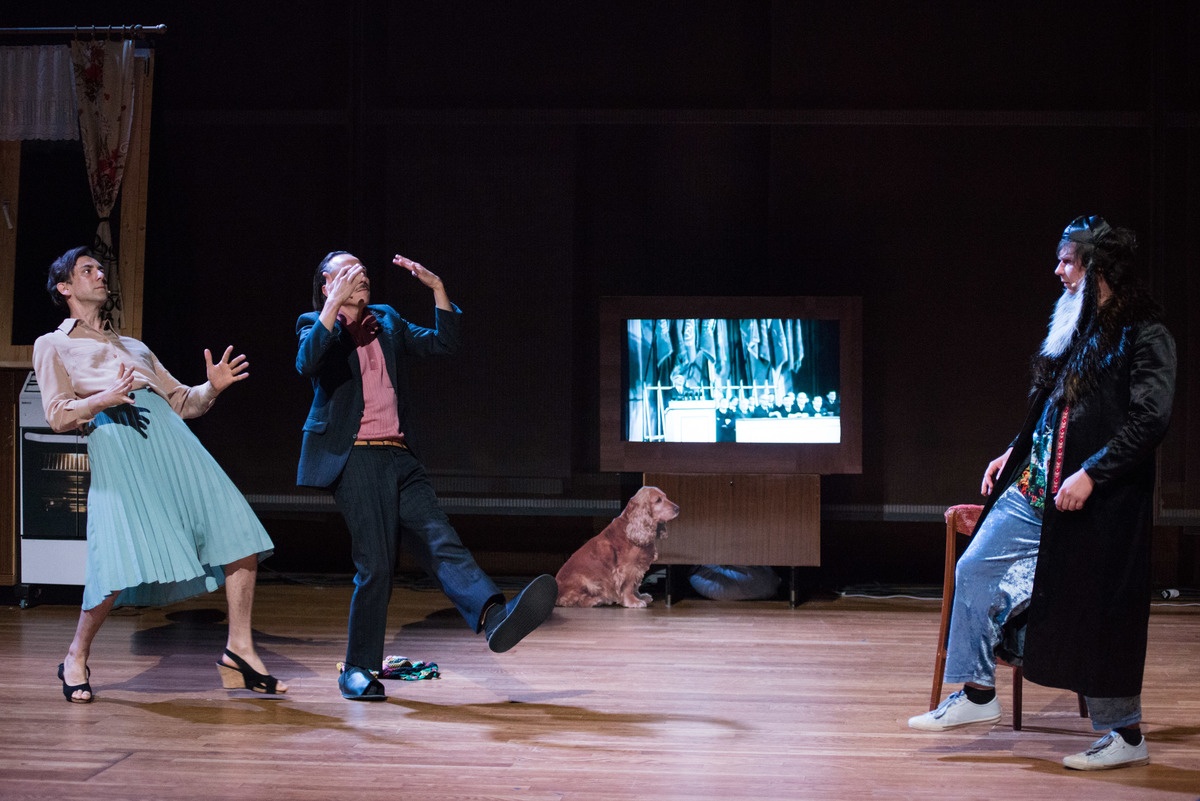
fot. Maciek Jaźwiecki


ZAGRAĆ MARCOWEGO ŻYDA

PIOTR MORAWSKI

[ październik 2018 ]


W spektaklu „Dawid jedzie do Izraela” Piaskowski z Sulimą nie robią niczego nowego, nawet ostentacja w ujawnianiu oczywistych klisz staje się już kliszą, a aktor pytający, jak zagrać Żyda, staje się coraz bardziej irytujący

Kiedy tak siedzą na wersalce i rozmawiają o wyjeździe, a babcia – jak się okazuje – wygrała właśnie dwa bilety na wycieczkę do Izraela, przypomniał mi się „Krum” Warlikowskiego. Podobny minorowy klimat rozmowy, nieco podobnie skomponowana scena. Tam jest życiowa klęska i powrót z zagranicy do Izraela, tu wyjazd z Polski; czas też być może podobny, zważywszy, że dramat Levina napisany został w 1975 roku… Scena z „Dawid jedzie do Izraela” Jędrzeja Piaskowskiego przywołała scenę z „Kruma”. Może bezzasadnie. „Krum” to jednak w jakimś sensie „Dawid…” à rebours. U Levina to Izrael jest krajem, z którego się wyjeżdża. W poszukiwaniu lepszego życia, co się akurat Krumowi nie udało – „W walizce mam tylko brudną bieliznę i kosmetyki”, mówi matce po powrocie. To wyjazdy zwyczajne, emigracja zarobkowa; nie towarzyszy im żadna trauma, zostają być może tylko życiowe rozczarowania. Dawid Piaskowskiego wyjeżdża do Izraela, bo akurat przyszedł Marzec 1968. Musi wyjechać do Izraela, ale nawet nie dlatego, że ktoś mu każe, czy że coś mu grozi. Raczej dlatego, że taki jest marcowy skrypt, scenariusz wdrukowany w obchody pięćdziesięciolecia Marca 1968. 

Spektakl Piaskowskiego jest bowiem koprodukcją TR Warszawa i POLIN Muzeum Historii Żydów Polskich; powstał w wyniku konkursu rozpisanego przez obie instytucje. Grany jest w audytorium muzeum, gdzie piętro niżej trwa wystawa „Obcy w domu. Wokół Marca ’68”. I to od wizyty aktorów TR Warszawa na tej wystawie zaczyna się spektakl: oto teatr spotyka muzeum. Jan Dravnel, Rafał Maćkowiak i Sebastian Pawlak jako delegacja aktorów przechadzają się po scenie – „Dziady” Dejmka, wojna sześciodniowa, w której nasi Żydzi pokonali ruskich Arabów, Gomułka przemawiający z telewizora. W składającej się z meblościanki i najprostszych mebli scenografii Kornelii Dzikowskiej odnajdują wątki z wystawy. W muzeum wszystko jest prawdziwe – to być może przy tym stole siedzieli tuż przed wyjazdem, pili ostatnią herbatę. Obecność rzeczy jest substancjalna, nie jak w teatrze, gdzie wszystko wykonane jest z butaforki. Być może dlatego właśnie wkładając prawdziwą spódnicę prawdziwej marcowej Żydówki, Pawlak staje się nagle Haliną Rosenberg; Maćkowiak – jej mężem, Ludwikiem, a Dravnel – najprawdopodobniej jako swój obcy z racji posiadanego litewskiego paszportu – najpierw Wojtkiem, a tak naprawdę Dawidem, którym musi wyjechać, bo jest 1968.

To, co następuje potem, jest realizacją scenariusza, nie tego napisanego przez Huberta Sulimę, autora tekstu, lecz tego wynikającego z odtwarzania klisz i marcowych performansów, nieraz doprowadzanych do absurdu. Okazuje się mianowicie, że Dawid – czy też Wojtek – został rodzinie dany na wychowanie w czasie wojny, a wraz z nim przekazany został tajemniczy tobołek zawierający brodę i chałat, w który natychmiast chłopak zostaje przyodziany. Ma dziwnie się poruszać i dziwnie mówić. W dodatku od tej chwili ma zespół Downa. Na dobranoc zaś ojciec mu śpiewa kołysankę, w której „idzie pogrom ciemną nocą…”. I oczywiście musi wyjechać.

Wtedy lądują na tej wersalce. Odwiedza ich matka Ludwika, to Matka Boska (Natalia Kalita) dotąd opowiadająca zza chmurki tę historię. Ma akurat dwa bilety, które wygrała w Orbisie, więc chętnie zabierze Dawida do kraju przodków; również swoich, bo oprócz tego, że jest Żydówką jako Matka Boska, to jeszcze ujawnia, że dziadek Ludwika również był Żydem. Jedyną nie-Żydówką pozostaje zatem Halina, która jednak i tak solidarnie dziedziczy wszystkie żydowskie traumy. „Jak zagrać marcowego Żyda?” – nieustannie zastanawia się Dravnel, podkreślając, że cały spektakl polega na wielopiętrowym performowaniu tożsamości, realizowaniu skryptów i powtarzaniu zachowań, których sensu nie da się zrozumieć.

„Jak zagrać marcowego Żyda?” – nieustannie zastanawia się Dravnel, podkreślając, że cały spektakl polega na realizowaniu skryptów i powtarzaniu zachowań, których sensu nie da się zrozumieć

Piaskowski z Sulimą dokonują przeglądu performansów tożsamościowych związanych nie tylko i nie przede wszystkim z Marcem, lecz z Żydami w kulturze polskiej w ogóle. Stąd też pewnie wątek Kazimierza Wielkiego. Przyjaciela Żydów, lecz także i przede wszystkim postaci z reżimowej produkcji „Korona królów”. Natalia Kalita tym razem nie w kostiumie Matki Boskiej, lecz w kołdrach i kocach, jakby z fejsbukowej akcji „Cała Polska zbiera firanki i koce na kostiumy dla Korony królów”. To Aldona Giedyminówna, późniejsza żona Kazimierza, Anna. Mówi o kiszonkach, w których rozkochany był jej mąż. Jeśli to performans, to raczej branżowy niż tożsamościowy i nie tyle dotyczący Żydów, ile serialu TVP, w którym Dravnel zagrał w kilku odcinkach epizod i był konsultantem językowym. Ciąg skojarzeń był taki, a Żydzi pojawili się tu nieco przypadkiem. Jak to w performansach, które wymykają się zasadzie logicznych konsekwencji.

Antysemityzm – bez niego też nie mogło się obejść. Halina ma już dość. Zresztą jako jedyna Polka w tym gronie, to ona musi być antysemitką. Sytuację ratuje Matka Boska z Żabki – ona dokonuje cudu, od tego czasu ma już nie być w Polsce antysemityzmu. Cud ten jednak – cud miłości (Kalita na swym błękitnym kostiumie wyhaftowane wielkie serce z napisem „Ich liebie dich”) nie jest jednak wyleczeniem z antysemityzmu; to cud zapomnienia, w wyniku którego wymazane zostają przeszłe wydarzenia i tożsamości – nikt nie odróżni już Polaka od Żyda, więc nie ma Polaków i Żydów. A marzec? Może się kojarzyć na przykład z biedronką. W głowie Haliny pozostaje niejasne wspomnienie, jakiś niepokój związany z marcem, jakby z czymś się kojarzył, lecz nie wiadomo z czym.  „Rumpie mnie ten marzec”, powtarza, starając się coś sobie przypomnieć. Lecz nie ma już nic. Wystąpienie Gomułki wciąż leci z nagrania, lecz nikt nie wie kto to – wygląda, jakby śpiewał. Nie ma więc marca, bo nie ma pamięci. Wszystko zostało zapomniane – taka fantazja.

Piaskowski ostentacyjnie odsłania klisze, konsekwentnie robi teatr oczywistych performansów, czasem doprowadzając je do absurdu. Lecz z tego przeglądu niewiele wynika

Na spektakl Piaskowskiego trzeba patrzeć z perspektywy innych marcowych spektakli – „Kilka obcych słów po polsku” Michała Buszewicza i Anny Smolar, gdzie dokonywany jest pewien re-enactment świata tych, którzy wyjechali; „Sprawiedliwość” Michała Zadary, który złożył (tak przynajmniej deklarował) doniesienie do prokuratury o możliwości popełnienia zbrodni przeciwko ludzkości; „Zapiski z wygnania”, w którym przejmująco gra Krystyna Janda. Żadnemu chyba nie udało się uniknąć pewnego rysu rocznicowej akademii. Twórcy – może poza Jandą – starali się wyjść z utartych narracji o Marcu, problematyzować własną pozycję i język, którym mówią.

Strategie były różne. Piaskowski ostentacyjnie odsłania klisze, konsekwentnie robi teatr oczywistych performansów, czasem doprowadzając je do absurdu. Lecz z tego przeglądu niewiele wynika. Cud, jakiego dokonuje Matka Boska jest kolejnym performansem, który uruchamia kolejną fantazję. W tym sensie Piaskowski z Sulimą nie robią niczego nowego; nawet ostentacja w ujawnianiu oczywistych klisz staje się już kliszą, a aktor pytający, jak zagrać Żyda, staje się coraz bardziej irytujący. Być może to, co w strategii Piaskowskiego najciekawsze, to próba squeerowania tej rzeczywistości.

Kuszące jest jednak wyjście z polskocentrycznego świata. Zobaczenie Marca w szerszej perspektywie. I może „Krum” nie byłby tu tak bardzo od rzeczy.


Zawartość publikowanych artykułów i materiałów nie reprezentuje poglądów ani opinii Reunion’68,
ani też webmastera Blogu Reunion’68, chyba ze jest to wyraźnie zaznaczone.
Twoje uwagi, linki, własne artykuły lub wiadomości prześlij na adres:
webmaster@reunion68.com


Hamas recruits the world to retain its power


Hamas recruits the world to retain its power

Natan Galula


“Any governing body established in Gaza without the destruction of Hamas will be a puppet government,” Israeli NGO Ad Kan tells JNS.

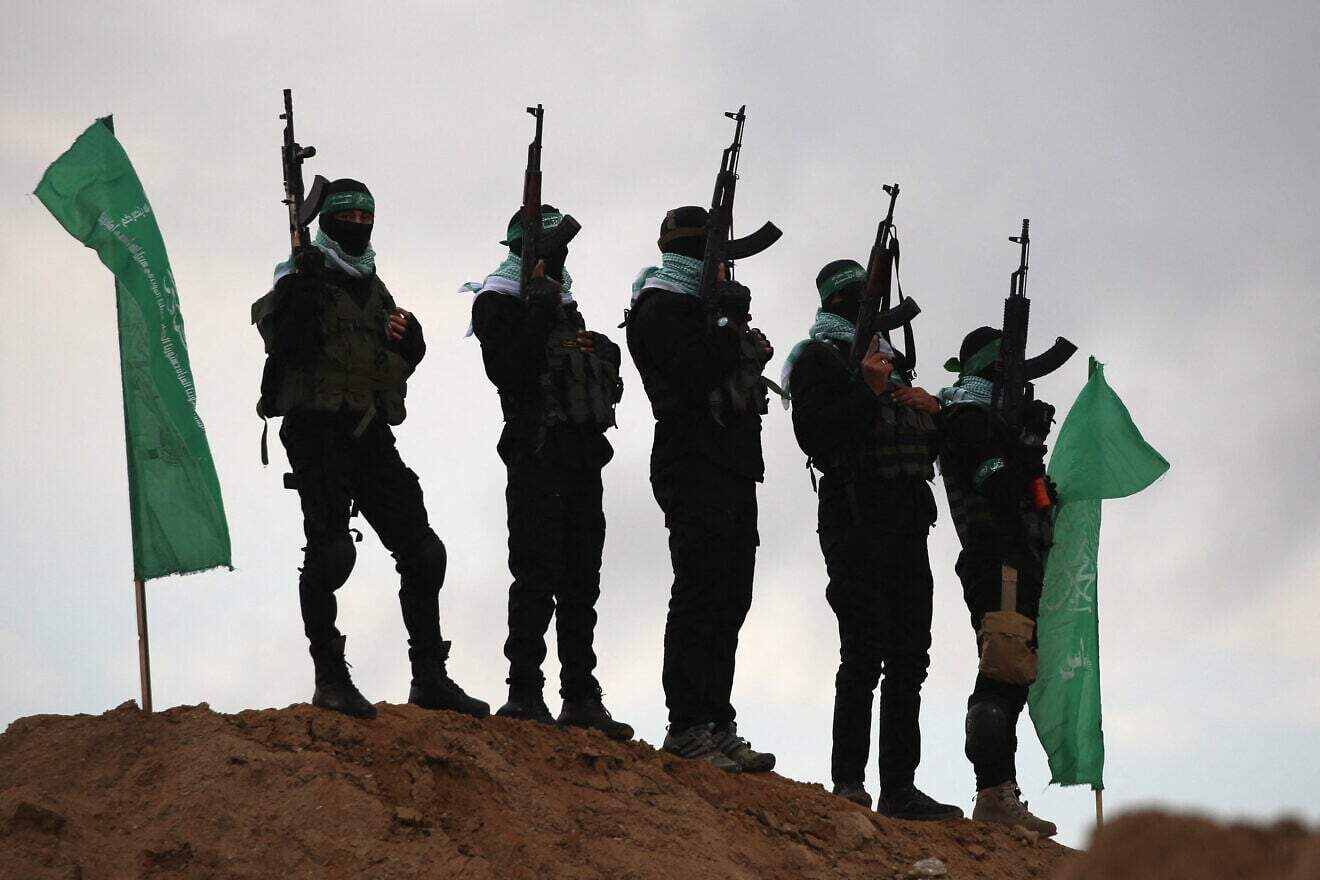
Hamas terrorists in Khan Yunis, the southern Gaza, before the Islamist group handed over of the bodies of four Israeli hostages on Feb. 20, 2025. Photo by Eyad Baba/AFP via Getty Images.

The invasion of thousands of Hamas and other Palestinian terrorists from Gaza into Israel on Oct. 7, 2023, “was for us, and for the vast masses across the world, not merely a military event but a moment of glorious birth and an emergence of a liberated consciousness free from deception or falsification,” Hamas wrote in English and Arabic in a formal document released on Dec. 24.

The dictatorship still ruling most Gazans after two years of war, sparked by its incursion into the northwestern Negev, butchering roughly 1,200 people and abducting 251 more, has signaled no willingness to disarm—a demand stipulated in Phase 2 of U.S. President Donald Trump’s 20-point peace plan.

The Israel Defense Forces hold about 54% of Gaza’s territory, east of the so-called Yellow Line that runs through the Strip. The start of the second phase of Trump’s plan was announced last week and is set to involve an interim “technocratic” Palestinian administration to govern the territory under Israeli control, along with the full demilitarization of Gaza.

In the paper published online by its media propaganda wing, the Hamas Media Office, the terror group frames the Oct. 7 massacre of 1,200 men, women and children in southern Israel—dubbed the Al-Aqsa Flood—as a calculated and “natural response” to Israel’s supposed oppression; hails Gaza’s “steadfastness” as a testament to its victory; boasts of the stalling of Israel’s normalization with Arab and Muslim states; calls for intensified legal pressure on Israel in the global arena; and presents its plans for the future, including expanding its rule to Judea and Samaria.

Gilad Ach, CEO of Israeli NGO Ad Kan, told JNS that the growing confidence expressed in the Hamas manifesto “reveals a troubling strategic reality that extends far beyond the Gaza Strip.

“It shows that while a sense of conclusion and victory has taken hold in Israel, from the perspective of Hamas and other Islamist organizations, [the two-year war] is merely another phase in an ongoing struggle against the State of Israel—a struggle being waged simultaneously from Gaza and from Judea and Samaria,” he said.

Meir Ben Shabbat, head of the Misgav Institute for National Security and Zionist Strategy, and a former Israeli national security adviser, told JNS on Tuesday that although Hamas suffered a significant setback during the war, “It is not a fatal blow.

“Hamas is no longer in a position where it feels its very existence is under threat; it remains the primary power in the Gaza Strip, deeply embedded in the population and in Gaza’s civilian systems. It skillfully exploits humanitarian aid and supplies entering the Strip for its own purposes,” Ben Shabbat said.

The Islamist group has rejected calls to lay down arms on a number of occasions. In December’s document, it defiantly dismisses the possibility.

“Attempts to isolate Hamas contradict the right of peoples to armed resistance and their right to freely choose their representatives,” Hamas writes in the paper titled “Our Narrative … Al-Aqsa Flood: Two Years of Steadfastness and the Will for Liberation.”

Two-faced Hamas

Ad Kan (“It Stops Now” in Hebrew), a group dedicated to exposing anti-Zionist organizations, released a document in Hebrew on Jan. 11 analyzing Hamas’s propaganda paper.

The paper is a calculated appeal to the international community, the Israeli NGO says. Its use of terms such as “justice,” “freedom” and “human rights,” while largely avoiding religious jargon, frames the Palestinian cause as a universal national struggle for liberty; Islam is sidelined as a secondary cultural ingredient.

The document’s main objective is to confer international legitimacy on Hamas as the unquestionable ruler of the Palestinians, while at the same time to justify its war against Israel by appealing to international law and United Nations resolutions, according to Ad Kan.

Hamas’s latest manifesto, the NGO continues, builds on a similar paper published in January 2024, yet is more ambitious in scope. If the 2024 paper conveyed an apologetic tone, just three months after the atrocities of Oct. 7, 2023, the new one aims to redefine the public discourse, portraying Hamas as an integral component of Palestinian society, rooted in its “national fabric.”

In contrast, another Hamas document, published internally in Arabic in July 2024, is steeped in religious language, replete with quotations from the Quran, and calls for a unified Islamic front against Israel, Ad Kan notes.

A poll carried out between Oct. 22 and 25, conducted by the Ramallah-based Palestinian Center for Policy and Survey Research, found that 78% of Arabs in Judea and Samaria object to Trump’s demand to disarm Hamas, even if it meant the renewal of active warfare, with 55% of respondents in Gaza saying the same.

Figures such as these, Ben Shabbat told JNS, “clearly demonstrate who we are dealing with. The Palestinian public in Gaza was not kidnapped by Hamas; a large portion of it supports it.

“These figures are a slap in the face to anyone talking about a Palestinian state. They require us in Israel to be sober-minded, not to be seduced by illusions, to act on our own to defend ourselves, and to watch morning and night the footage from Oct. 7 and the high levels of Palestinian public support for that horrific massacre,” Ben Shabbat said.

The Hezbollah model

“The deliberate evolution of Hamas’s rhetoric over the years, strategically adapted to the international arena and Western audiences, reflects a clear-eyed understanding that winning minds and legal battles may advance its strategic objectives as much as, or even more than, armed struggle,” Ad Kan states in its analysis of the “Our Narrative” paper.

A part of Hamas’s evolution is its agreement to a Palestinian technocratic government to run civilian matters in the Gaza Strip.

Ad Kan writes that this “is a tactical deception. The organization makes clear that it will not accept disarmament or any foreign foothold. The implication is that any governing body established in Gaza without the destruction of Hamas will be a puppet government, operating under the patronage of a terrorist organization that will continue to strengthen itself under the cover of international reconstruction.”

Ben Shabbat told JNS that Hamas’s stance is not new. Its willingness to relinquish civilian governance would “free [it] to rebuild its military capabilities” while benefiting “from resources raised by the new administration for Gaza.”

The former national security adviser compared this initiative to the Hezbollah terrorist organization’s modus operandi in Lebanon. “Hamas knows how to operate effectively even when formal power is in other hands. The Hezbollah-ization of Gaza under such circumstances is not a far-fetched scenario,” he said.

“Hamas will not truly disarm,” he continued. “It may stage some sort of show, reach understandings about integrating its armed operatives into enforcement mechanisms, or agree to other absurd arrangements—all of which share one common denominator: Hamas would retain military capabilities,” he said.

Past vows by Trump and Israeli Prime Minister Benjamin Netanyahu to disarm Hamas must be translated into a timetable and a clear, binding definition of what “disarmament” entails. “We must show determination and complete the mission in Gaza until all the [war] objectives we defined are fully achieved,” Ben Shabbat said.

Next, Judea and Samaria

Eyal Ofer, a former Israeli government adviser and an expert on “Hamas economics,” told JNS on Wednesday that the Hamas paper treats the Oct. 7 onslaught as a roaring success that changed the course of history.

From a situation where the world has largely lost interest in the Israeli-Palestinian conflict, Oct. 7 “has set history back on a path that, in [Hamas’s] view, leads to the destruction of the State of Israel,” said Ofer.

Materially, the terror group needs external funding to reconstruct Gaza, train a new generation of fighters and find new ways to smuggle arms into the Strip, “but Hamas views these as technical problems, which will be solved with time,” he added.

While Israelis focus on the military aspect of the war, preventing Hamas from ever again executing another Oct. 7-style invasion, “from Hamas’s perspective, it already carried out Oct. 7. Now they’re looking at the next stage,” Ofer said.

“What we see as the destruction of Gaza, the dismantling of tunnels and rockets, targeted assassinations of [senior] Hamas officials—they see as something different: a strategic shift.

“The [‘Our Narrative’] paper discusses how they created a situation in which the Abraham Accords and the normalization process, including global legitimacy for Israel, have been completely turned around. Today, the world views Israel as a pariah state; a state that, from their angle, commits genocide, starves a population, and stands on trial in The Hague. As far as they are concerned, they have isolated Israel and have united not just the Palestinians but the entire Arab and Muslim world to their side,” Ofer said.

In the paper’s “Current Stage Priorities” section, points Nos. 5 and 9 underline the importance Hamas places on strengthening ties with Qatar, Egypt and Turkey, the countries that brokered the Gaza truce. China, Russia and Algeria are also mentioned favorably for their role in curbing pro-Israel initiatives in the U.N. Security Council.

A complete Israeli withdrawal from the Gaza Strip and the establishment of a Palestinian administration to handle the reconstruction efforts are listed as Hamas’s two most urgent priorities.

Ofer says that Hamas welcomes an alternative authority in Gaza so it can work behind the scenes toward the next stage, which is to take over the Palestinian Authority, i.e., Judea and Samaria.

“Eventually, there will be elections,” Ofer said. “From the world’s perspective, if Gaza becomes a normal state that is being rehabilitated, then the next step will be to hold elections. … So [Hamas is] looking how in 15 years it will take over [all the Palestinian territories], while, globally speaking, viewing its situation today as much better than it was on Oct. 6, [2023].”

‘Complete the mission’

Brig. Gen. (res.) Erez Winner, a research fellow at the Israel Center for Grand Strategy and former head of the operational planning team in the IDF Southern Command, told JNS that “Hamas is trying to project a more favorable reality, much like the Iranians are now trying to project that they are threatening the United States and Israel.”

Since Oct. 7, “Hamas has been hit across every dimension. It has lost most of its capabilities, most of its senior commanders, and most of the territory of the Gaza Strip—yet it remains undefeated. Why has it not been defeated? Largely because of us,” Winner said.

“Ultimately, the IDF’s campaign was deficient for several reasons: the hostage issue, a reluctance to confront the question of civilian governance, and the unavoidable fact that terror and guerrilla forces embedded in civilian environments cannot be defeated without control over resources and administration,” he said.

And yet, despite Israel’s mistakes, “We have reached an agreement that is not bad at all for us and not good at all for them. … The [ceasefire] deal stipulates clearly that there won’t be an armed [Hamas], a [Hamas] government, a behind-the-scenes [Hamas] government modeled after Hezbollah—this won’t be,” he underscored.

Since the Islamist group will not voluntarily lay down its weapons, and since no external force other than Israel will forcefully disarm it, “within the next two months, which is the deadline that Trump gave them, we will have to act and complete the mission,” Winner said.

Ad Kan’s Gilad Ash sounded a cautious note, saying that “a comprehensive decisive strategy” is required to defeat Hamas and its ideology in all arenas.

“Without a deep shift in strategic conception and determined action in Judea and Samaria as well, Israel will continue moving from one round of conflict to another—until the next disaster,” he said.


Zawartość publikowanych artykułów i materiałów nie reprezentuje poglądów ani opinii Reunion’68,
ani też webmastera Blogu Reunion’68, chyba ze jest to wyraźnie zaznaczone.
Twoje uwagi, linki, własne artykuły lub wiadomości prześlij na adres:
webmaster@reunion68.com


Columbia University Leaves Door Open for Student Who Called for Death of Zionists to Return to Campus


Columbia University Leaves Door Open for Student Who Called for Death of Zionists to Return to Campus

Dion J. Pierre


Khymani James, ex-Columbia University student who filmed himself saying Zionists should be murdered. Photo: Screenshot

Columbia University has denied the reapplication of a student who said Zionists do not deserve to live and are lucky he has not resorted to killing them himself but left the door open to the anti-Israel protest leader returning to campus this fall, according to documents filed in a New York court.

Khymani James filmed himself making the comments during the 2023-2024 academic year, a period in which Columbia students amassed in the hundreds to set up a “Gaza Solidarity Encampment” on the New York City campus to show solidarity with Hamas in the aftermath of the Palestinian terrorist group’s Oct. 7, 2023, massacre across southern Israel.

“These are all the same people. The existence of them and the projects they have built, i.e. Israel, it’s all antithetical to peace. It’s all antithetical to peace. And so, yes, I feel very comfortable, very comfortable, calling for those people to die,” James said in 2024.

“Zionists don’t deserve to live,” he continued, proclaiming that people should “be grateful that I’m not just going out and murdering Zionists.”

James warned, “I don’t fight to injure or for there to be a winner or a loser. I fight to kill.”

Facing criticism from lawmakers and Jewish advocacy groups over its hesitance to discipline students who perpetrated antisemitism, Columbia suspended James in April 2024, saying he would be eligible to return in the fall of 2025. In response, he sued the university, alleging that the measure was racist and aimed at “privileging a subset of Jewish people.”

The suit charged twice that Columbia University favored Jews over “nonJews [sic].”

“James as a person of color is squarely within a protected class of black and brown-skinned students who have been the major targets of Columbia’s disciplinary actions arising from pro-Palestinian expression,” the suit stated. “James has been a victim of Columbia’s anti-Palestinian bias, severely punished, though not himself a Palestinian, as a supporter of the rights of Palestinian people. Third, James has been a victim of reverse discrimination, as Columbia privileges a class of self-described ‘Zionist Jewish’ people over everyone on campus who does not share their views.”

Since being suspended, James has continued to endorse political violence as a means of resolving ideological disputes. In September 2024, he expressed support for the assassination of conservative activist Charlie Kirk at Utah Valley University and called for additional killings, saying, “MORE. MORE!!! … Down with all fascists.”

In a newly revealed letter filed in December as an exhibit in the lawsuit, Columbia refused James’ request to return to campus in the fall of 2025.

One year later, in August 2025, Columbia again rejected his request to reenroll in a second letter filed in the lawsuit. Both letters were first reported by the Washington Free Beacon.

“Your written submissions do not demonstrate a clear understanding of the impact of your conduct,” the second letter to James stated.

Written by a college dean whose name is still redacted from the document, it explained that James’ online speech since being suspended prevented his re-enrollment, as it showed “insufficient ‘reflection on your activities’ that resulted in your suspension.” The letter cited that James had defended his wish to kill Zionists while being suspended and publicly said on social media that “anything I said, I meant it.”

“Your use of language tending to reaffirm those statements during your suspension raises serious concerns about your readiness to return to Columbia and engage with others appropriately,” the letter continued. “That only reinforces our concerns, rather than alleviates them.”

However, the university stressed that James was entitled to due process and would be “eligible to reapply to return” for the fall 2026 semester.

“You will be eligible to reapply to return for the fall 2026 semester under the conditions provided for in your Aug. 7, 2024, suspension letter,” it added. “It is our hope that you will use the months ahead to engage in more substantive and careful reflection on the behaviors that led to your suspension.”

The potential for James to return prompted concerns that Columbia may be reverting back to a cavalier attitude toward antisemitism, after pledging to never again allow brazen affronts to the civil rights of Jewish students who were assaulted, harassed, intimidated on campus.

“Universities should take responsibility for the students they admit to their campuses,” US Rep. Tim Wahlberg (R-MI), chairman of the US House Committee on Education and the Workforce, told The Algemeiner on Friday. “Under federal civil rights law, Columbia has the duty to prevent antisemitic harassment on its campus. I expect that Columbia’s incoming president will take this responsibility seriously.”

Columbia’s decision not to permanently expel James comes as the school continues to face scrutiny for its handling of antisemitism and pro-Hamas activism on campus.

This year, the university retained a professor who celebrated Hamas’s Oct. 7, 2023, massacre across southern Israel — in which the Palestinian terrorist group sexually assaulted women and men, kidnapped the elderly, and murdered children in their beds — allowing him to teach a course on the history of the Israeli-Palestinian conflict.

The professor, Joseph Massad, teaches modern Arab politics and intellectual history. On Oct. 8, 2023, he published an encomium to Hamas in The Electronic Intifada which lauded the Oct. 7 atrocities as “astounding,” “awesome,” “incredible,” and the basis of future assaults on the Jewish state. Additionally, Massad went as far as to exalt the Hamas paragliders who flew into a music festival to slaughter the young people attending it as the “air force of the Palestinian resistance.”

“Perhaps the major achievement of the resistance in the temporary takeover of these settler-colonies is the death blow to any confidence that Israeli colonists had in their military and its ability to protect them,” Massad wrote.

In July, former interim university president Claire Shipman said the institution will hire new coordinators to oversee complaints alleging civil rights violations; facilitate “deeper education on antisemitism” by creating new training programs for students, faculty, and staff; and adopt the International Holocaust Remembrance Alliance (IHRA) definition of antisemitism — a tool that advocates say is necessary for identifying what constitutes antisemitic conduct and speech.

Shipman also announced new partnerships with the Anti-Defamation League (ADL) and other Jewish groups while delivering a major blow to the anti-Zionist movement on campus by vowing never to “recognize or meet with” the infamous organization Columbia University Apartheid Divest (CUAD), a pro-Hamas campus group which had serially disrupted academic life with unauthorized, surprise demonstrations attended by non-students.

However, it’s unclear to what extent Columbia will follow through on these initiatives under new leadership.

Columbia recently hired a new university president, Jennifer Mnookin. As chancellor of University of Wisconsin-Madison, Mnookin struck a deal with pro-Hamas protesters that called for hiring Palestinian instructors and once issued a “land acknowledgement,” a hallmark of leftist ideology which fostered popular support against the higher education establishment. In 2020, she endorsed the Black Lives Matter (BLM) movement even as some of its supporters started riots, promoted antisemitism, and demoralized law enforcement.


Follow Dion J. Pierre @DionJPierre.


Zawartość publikowanych artykułów i materiałów nie reprezentuje poglądów ani opinii Reunion’68,
ani też webmastera Blogu Reunion’68, chyba ze jest to wyraźnie zaznaczone.
Twoje uwagi, linki, własne artykuły lub wiadomości prześlij na adres:
webmaster@reunion68.com