Archive | March 2026

Netanjahu jest Świętym Mikołajem Bliskiego Wschodu


Netanjahu jest Świętym Mikołajem Bliskiego Wschodu

Mohamed Saad Khiralla


Od ataku z 7 października Izrael i jego premier Benjamin Netanjahu dokonali niemożliwego. Odnieśli zwycięstwo – od Gazy przez Liban, Jemen aż po Iran. To początek nowej ery – pisze Egipcjanin Mohame

.

Lampa Aladyna w arabskiej mitologii jest symbolem nadludzkiej mocy i spełniania

niemożliwych życzeń; należy do świata „Tysiąca i jednej nocy”, gdzie wystarczy

potrzeć starą, brązową lampę, aby duch posłusznie się pojawił i spełnił każde

życzenie.

W mitologii zachodniej dominującym obrazem idei spełniania życzeń jest Święty

Mikołaj; pojawia się pod koniec roku, obładowany prezentami, w świątecznej

atmosferze, na którą dzieci czekają z entuzjazmem.

Dlatego nie jest niczym dziwnym, że w kulturze codziennej – zarówno w świecie

arabskim, jak i na Zachodzie – słyszy się zwroty takie jak: „Nie jestem duchem

Aladyna” albo „Nie jestem Świętym Mikołajem”, gdy ktoś oczekuje od nas czegoś

przekraczającego nasze możliwości.

Polityka jednak czasem tworzy postaci, które – w oczach zarówno swoich

zwolenników, jak i przeciwników – zdają się przekraczać wszystko, co wcześniej było

możliwe do wyobrażenia.

Kilka dni temu byłem gościem dziennikarki Marii Abd Rabbo w izraelskiej stacji

radiowej Radio Makan, aby rozmawiać o trwającej wojnie między USA i Izraelem z

jednej strony a Iranem z drugiej. W trakcie rozmowy powiedziałem coś, w co dziś

wierzę jeszcze bardziej: że Benjamin Netanjahu jest Świętym Mikołajem Bliskiego

Wschodu.

Może to brzmieć szokująco, ale dla mnie nie jest to reakcja emocjonalna, lecz

polityczny opis oparty na chłodnej analizie łącznych rezultatów ostatnich dwóch lat i

pięciu miesięcy. Od czasu ataków terrorystycznych z 7 października 2023 roku

„polityczne i militarne dary”, jakie Netanjahu przekazał regionowi, nie ustają –

niezależnie od tego, czy ktoś się z nim zgadza, czy nie.

Kto mógłby uwierzyć, że wielcy liderzy obozu wrogości i wyzerowanych świętych

narracji – tego, co przez lata nazywano „osią oporu” – upadną w taki sposób?

W Gazie obecność Jahji Sinwara i Mohammeda Deifa dobiegła końca, podobnie jak

wielu innych im podobnych, a sam ruch Hamas wyraźnie znajduje się dziś w fazie

schyłkowej.

W Libanie Hassan Nasrallah i wielu jemu podobnych zeszli ze sceny politycznej i

militarnej, a czas dojrzewa do rozmowy o tym, jak zostanie napisany finał

Hezbollahu.

W Syrii Baszar al-Asad odszedł bez powrotu do Rosji, a jego reżim Baas przestał

istnieć. Człowiek, który uderzał we własny naród beczkami z materiałami

wybuchowymi i bronią chemiczną, dziś dogorywa/przebywa na wygnaniu.

W samym Iranie najwyższe kierownictwo państwa weszło w bezprecedensową fazę

wyczerpania po likwidacji Alego Chameneiego w ataku, który stanowił wielki punkt

zwrotny w przebiegu wojny. Następnie kolejne ataki dopisały do listy zabitych

następne znane nazwiska z irańskiej struktury władzy.

Najnowszym z nich, zaledwie kilka godzin temu, był Ali Laridżani – nie zwykły polityk,

lecz mąż stanu z najściślejszego kręgu w pobliżu centrum decyzyjnego Iranu;

wcześniej przewodniczący parlamentu, przez lata odpowiedzialny za kwestie

nuklearne, a później sekretarz Najwyższej Rady Bezpieczeństwa Narodowego. Był

mózgiem koordynującym działania między instytucjami wojskowymi i politycznymi.

Uważano go za jednego z najbardziej zdolnych do prowadzenia kraju po erze

Chameneiego – zanim Izrael ogłosił, że był celem uderzenia w Teheranie.

Razem z nim znajdował się Gholamreza Soleimani, dowódca sił Basidż – nie zwykły

oficer polowy, lecz jeden z kluczowych elementów wewnętrznego aparatu kontroli

reżimu. Basidż, jako formacja bezpieczeństwa związana z Korpusem

Strażników Rewolucji, odegrała decydującą rolę w tłumieniu protestów społecznych,

szczególnie wśród irańskiej młodzieży i kobiet w ostatnich latach. Zwłaszcza podczas

fali poprzedzającej obecną wojnę – w której zginęły tysiące odważnych i niewinnych

młodych ludzi, marzących jedynie o wolności.

Pochodzę z tej części świata, którą nazywa się Bliskim Wschodem, i dobrze wiem, co

uczyniły islamistyczne grupy zbrojne oraz co spowodował irański reżim – ich

największy patron.

Wiem, jak miasta zamieniały się w ruiny, jak marnowano całe pokolenia i jak śmierć

była powielana jako codzienny przekaz polityczny.

Wiem też, jak skutki tego rozlały się na Europę: ostra polaryzacja, podziały

społeczne, napięcia kulturowe i powrót idei, które – jak sądziliśmy – kontynent

zostawił za sobą dekady temu.

Ogromne nagromadzenie nienawiści, budowane przez dziesięciolecia inwestowania

w wrogość, sprawia, że duża część Bliskiego Wschodu nie jest w stanie uznać tego,

co dzieje się na ich oczach.

W świadomości zbiorowej – kształtowanej przez trójcę: meczet, szkołę i państwowy

aparat propagandy – obraz Żyda i Izraelczyka zaszczepiany jest jako obraz

absolutnego wroga, a nie jako przeciwnika politycznego, którego działania można

oceniać według obiektywnych kryteriów.

Dlatego wielu nie potrafi przyznać, że to, co zostało osiągnięte w tej wojnie,

przekracza to, co wydawało się możliwe – nawet w politycznej wyobraźni.

Gdyby sam duch Aladyna się pojawił, albo gdyby Święty Mikołaj zstąpił z bieguna

północnego, nie byłoby im łatwo osiągnąć to, co faktycznie dokonano na ziemi w

tym okresie przez premiera Izraela.

Dlatego mówię: obiektywna i uczciwa analiza prowadzi tylko do jednego wniosku –

że Święty Mikołaj naprawdę pojawił się na Bliskim Wschodzie. Tym razem jednak nie

niósł zabawek dla dzieci; niósł radykalne przekształcenie równowagi sił w regionie,

które może otworzyć nowy horyzont – ograniczyć rozlew krwi, przerwać powtarzające

się cykle przemocy i skierować Bliski Wschód ku innemu początkowi, w którym

zwycięstwo ostatecznie należy do ludzkiej godności.

Dziękuję Ci, Benjaminie Netanjahu!


Mohamed Saad Khiralla

Pochodzący z Egiptu, mieszkający w Szwecji myśliciel polityczny i ekspert w sprawach Bliskiego Wschodu.

Link do szwedzkiego oryginału: https://bulletin.nu/saad-khiralla-netanyahu-ar-mellanosterns-jultomte

Bulletin.nu, 19 marca 2026


Zawartość publikowanych artykułów i materiałów nie reprezentuje poglądów ani opinii Reunion’68,
ani też webmastera Blogu Reunion’68, chyba ze jest to wyraźnie zaznaczone.
Twoje uwagi, linki, własne artykuły lub wiadomości prześlij na adres:
webmaster@reunion68.com


The ethnostate illusion


The ethnostate illusion

Melanie Phillips


Jews should be aware of the cry of pain behind a resurrected antisemitic libel.

Demographic diversity. Credit: geralt/Pixabay.

There’s been growing concern in America over the increasingly mainstream belief that Israel drags it into foreign wars, a belief given rocket fuel by the war against Iran. 

This belief not only ignores demonstrable reality—the thousands of Americans who have been killed by Iranian-backed terrorists or militias for almost half a century; the accelerated progress by Tehran towards nuclear weapons and ballistic missiles that could reach the United States; and the Iranian regime’s implacable goal of destroying America (the “Great Satan”) as well as Israel (the “Little Satan”). 

It also channels the odious image of war-mongering Jews straight out of the ancient antisemitism playbook. It’s an image reflecting the belief embedded in Western culture of the demonic, cunning Jews acting covertly in their own interests to put others in danger. 

This belief was formerly confined to cranks and nut jobs on the fringes of society. No longer. Mainstreamed by the Tucker Carlson faction, it’s cutting a swath across the ranks of conservatively minded, mainly young Americans. 

Last week, Brian McGinnis, a veteran U.S. Marine, burst into a hearing of the Senate Armed Services Committee in Washington, D.C., and yelled: “America does not want to send its sons and daughters to war for Israel!” 

In the United States, this belief has been fueling a widening division in Republican circles over the nature of conservatism, a fissure remarkably being framed around the issue of Israel. 

However, the claim that Iran is Israel’s war and that the Jews are risking World War III has erupted in Britain, too. As in the United States, it’s being expressed not just by dyed-in-the-wool antisemites and political activists on the far-right fringe, but also by apolitical, ordinary people. 

It’s based on a refusal to accept that Jewish and British or American interests actually coincide. Partly, that’s caused by an ignorance of world events so great that such people settle on Israel as the one country in the Middle East about which they ever hear—unfortunately, picking up mainly lies and distortions. 

But why has this trope of sinister Jewish power surfaced now in such volume and with such traction? 

Those listening carefully to such people discover they are telling us the reason. They believe that their culture is being taken away from them. They see the defamation of all white people as “colonialist” and privileged, and all men as violent, abusive and predatory.

In Britain, they have watched mass immigration transform their neighborhoods and their country out of all recognition on the basis that their own historic culture is racist and must be replaced by multiculturalism.

In both the United Kingdom and the United States, they have watched in horror the progressive destruction of social and moral norms, and the hijacking of language itself—producing the whole grisly gamut of intersectional bullying and Soviet-style denial of reason and reality.

And they view the Jews as being the cause of this because it’s the agenda of the left, and they see many prominent Jews on the left.

This is particularly so in America, where some 70% of Jews have embraced liberal ideologies. In Britain, too, Jews are disproportionately involved in public and political life.

Of course, that doesn’t mean that ideological leftism is a Jewish movement. It means that such people only see the Jews who are involved, ignoring the non-Jews who pump this stuff out in the universities and schools, the media, NGOs, the artistic world, the professions—in other words, the entire cultural elite.

There is, however, another element in this complaint that gives it an even more savage edge. The charge—and it’s toxic—is that the Jews who have destroyed the West are themselves immunized from the effects of this because they have the State of Israel to go to.

The Jews, say such people, maintain that it’s right and necessary for them to have a state for themselves, yet they are denying that privilege to the rest of us. They have a home of their own to go to; we don’t anymore.

This ignores the fact that most American or British Jews have no intention of living in Israel. It also fails to acknowledge those Jews who are not on the left, who are themselves American or British patriots and who support the idea that Americans and Brits are entitled to a national identity rooted in their history, culture and tradition.

But the complainants dismiss this because they say bitterly that the Jews have something they themselves aren’t allowed to have: an “ethnostate.” The left uses this to demonize Israel; the right wants one of its own.

This word is now as ubiquitous in these circles as it is absurd. An ethnostate restricts citizenship to members of a particular racial or ethnic group—in this case, defined as white people or born in the United Kingdom or the United States.

Britain was never an ethnostate. On the contrary, Britishness is an umbrella concept that allows immigrants to become equal citizens even if they don’t correspond to its white, Christian or dominant English culture.

America, the nation of immigrants with a large black African-heritage population, was never an ethnostate. And nor is Israel, where 20% of its citizens are Arabs, and a majority of Jews aren’t white-skinned Europeans but brown-skinned or black descendants of Jews from ancient Middle East communities.

Of course, it’s always the case that the deeper the trouble a society is in, the more it will turn on the Jews. And the charge of warmongering is inescapably and profoundly antisemitic.

Yet it’s impossible not to hear the genuine cry of pain—the justified sense of existential isolation, abandonment and betrayal shared by millions who haven’t gone down the antisemitism rabbit-hole, but simply want their nation and its historic culture back.

Jews of all people should be sympathetic to this. After all, the ancient Israelites were the earliest pioneers of the nation-state. More than any other people, Jews understand that in order to have a future, a people must connect to its past and maintain its historic culture.

Jews have benefited hugely from the civilized society that allowed them to prosper in America and Britain. So they have a duty to lend their voices to the defense of the West against Islamization and cultural takeover.

Unfortunately, virtually the only Jewish voices to be heard are those demonizing this as “white supremacy,” racism and “Islamophobia.” In Britain, Jewish leaders have supported government proposals to introduce protection for Muslims that will have a chilling effect on necessary debate about Islamic extremism.

This is very wrong in itself. But it’s also guaranteed to make resentment of the Jews even worse by appearing to prove the charge that the Jews “don’t care about the rest of us.” 

“So what?” many Jews would say in response; “antisemitism lies beyond reason and it’s eternal, so there’s no point even trying to fight it.” 

This is simply wrong. As I say in my new book, published this week, Fighting the Hate: A Handbook for Jews Under Siege, there’s plenty that can and should be done to combat it. 

True, antisemitism can never be defeated, but Jewish passivity makes it worse. Failing to produce arguments and evidence to show that claims of Jewish power over U.S. policy are groundless reinforces the belief that they are true.

Jews have to stand up for themselves in the right way. The Jewish world has consistently been doing so in the wrong way, and then wonders why it hasn’t gotten anywhere.

In my book, I set out a strategy for both individuals and community leaders that turns many of these flawed assumptions upside down. Community leaders should start speaking truths that Jews shy away from, such as the prevalence of Muslim antisemitism or Israel’s legally watertight claim to the land. Individuals should use difficult encounters about Israel as an opportunity to surprise their foes and so open their minds by at least a crack.

Even in today’s poisonous climate, this can have a remarkable effect. In any event, Jews—who have an obligation to stand up for truth against lies—should take on those foaming right now about “war-mongering for Israel” simply because it’s the right thing to do.


Melanie Phillips, a British journalist, broadcaster and author, writes a weekly column for JNS. Currently a columnist for The Times of London, her new book, Fighting the Hate: A Handbook for Jews Under Siege, has just been published by Wicked Son. Her previous book, The Builder’s Stone: How Jews and Christians Built the West and Why Only They Can Save It, was published in 2025. Access her work at: melaniephillips.substack.com.


Zawartość publikowanych artykułów i materiałów nie reprezentuje poglądów ani opinii Reunion’68,
ani też webmastera Blogu Reunion’68, chyba ze jest to wyraźnie zaznaczone.
Twoje uwagi, linki, własne artykuły lub wiadomości prześlij na adres:
webmaster@reunion68.com


´Iran’s Soccer Federation ‘Negotiating’ With FIFA to Relocate World Cup Matches From US to Mexico


Iran’s Soccer Federation ‘Negotiating’ With FIFA to Relocate World Cup Matches From US to Mexico

Shiryn Ghermezian


Soccer Football – FIFA World Cup 2026 – FIFA World Cup 2026 Draw – John F. Kennedy Center for the Performing Arts, Washington, DC, US – Dec. 5, 2025, General view as Draw Assistant Shaquille O’Neal draws Iran during the FIFA World Cup 2026 draw. Photo: REUTERS/Carlos Barria

Iran’s soccer federation said on Monday it is “negotiating” with FIFA to relocate the Islamic Republic’s first-round matches in the 2026 World Cup to Mexico from the United States to ensure the safety of its players.

“When Trump has explicitly stated that he cannot ensure the security of the Iranian national team, we will certainly not travel to America,” said Mehdi Taj, president of the Iranian Football Federation, in a statement shared on X by the Iranian Embassy in Mexico. “We are currently negotiating with FIFA to hold Iran’s matches in the World Cup in Mexico.”

The negotiations are taking place after the US and Israel launched joint airstrikes against Iran in late February, which led to the killing of Iranian Supreme Leader Ayatollah Ali Khamenei and several other high-ranking Iranian officials. Iran has since retaliated with attacks on Israel and US allies across the Middle East.

The 2026 FIFA World Cup will take place from June 11-July 19 in cities across the US, Canada and Mexico. Iran qualified for the 48-team tournament through its participation in the ‌Asian ⁠Football Conference and is set to compete in Group G at the World Cup. Iran’s national soccer team is scheduled to compete against New Zealand on June 15 and Belgium on June 21, both in Los Angeles, before going head-to-head against Egypt on June 26 in Seattle. Soccer fans from Iran are not allowed to enter the United States for the World Cup as part of a travel ban that the Trump administration imposed in June, but Iranian athletes and coaches are exempt from the ban.

Last week, US President Donald Trump wrote on the social media website Truth Social that Iran’s national soccer team is “welcome” to compete in World Cup, but he does not think “it is appropriate” for them to participate “for their own life and safety.”

The Iranian team responded to Trump’s post by saying in a statement on Telegram that a single person cannot exclude a country from the World Cup. They also suggested the US “lacks the ability” to provide security for World Cup-participating teams.

“The World Cup is a historic and international event and its governing body is FIFA — not any individual country. Iran’s national team, with strength and a series of decisive victories achieved by the brave sons of Iran, was among the first teams to qualify for this major tournament,” the statement said. “Certainly no one can exclude Iran’s national team from the World Cup. The only country that could be excluded is one that merely carries the title of ‘host’ yet lacks the ability to provide security for the teams participating in this global event.”

However, Iranian Sports and Youth Minister Ahmad Donyamali reportedly told state television it is “not possible” for the country to participate in the World Cup this year because of the US airstrikes on Iran. “Due to the wicked acts they have done against Iran — they have imposed two wars on us over just eight or nine months and have killed and martyred thousands of our people — definitely it’s not possible for us to take part in the World Cup,” he said, according to the Associated Press.

Trump later posted again on social media about the World Cup. “The United States of America looks very much forward to hosting the FIFA World Cup. Ticket sales are ‘through the roof!’” he added. “It will be the Greatest and Safest Sporting Event in American History. All Players, Officials, and Fans will be treated like the ‘STARS’ that they are!”

FIFA President Gianni Infantino said in an Instagram post last week that he met with President Trump and the latter “reiterated that the Iranian team is, of course, welcome to compete in the tournament in the United States.” FIFA Chief Operating Officer Heimo Schirgi recently said the World Cup is “too big” to postpone amid the ongoing conflict in the Middle East. He added that the organization hopes “everyone can participate that has qualified.”

Meanwhile, the UEFA, Europe’s governing body of soccer, has cancelled the “Finalissima” match in Doha, Qatar, between Argentina and Spain’s national soccer teams following security concerns related to the ongoing war between Iran, Israel, and the United States.


Zawartość publikowanych artykułów i materiałów nie reprezentuje poglądów ani opinii Reunion’68,
ani też webmastera Blogu Reunion’68, chyba ze jest to wyraźnie zaznaczone.
Twoje uwagi, linki, własne artykuły lub wiadomości prześlij na adres:
webmaster@reunion68.com


“Izrael działał sam”. Netanjahu został zapytany o atak na irańskie pola gazowe

Premier Izraela Beniamin Netanjahu przemawia na konferencji prasowej w Jerozolimie, 19 marca 2026 r. (Fot. REUTERS/Ronen Zvulun)


“Izrael działał sam”. Netanjahu został zapytany o atak na irańskie pola gazowe

Agnieszka Nowak


Netanjahu zdementował “fałszywą informację”, jakoby Izrael wciągnął USA w konflikt z Iranem. Przyznał przy tym, że w niedawnym ataku na irańskie pola gazowe kraj “działał sam”.

Netanjahu stwierdził, że po 20 dniach wojny Iran nie ma już możliwości ani wzbogacania uranu, ani produkcji rakiet balistycznych. – Całkowicie ich zniszczymy – powiedział. – Iran chciał zburzyć tysiące budynków w Izraelu, ale zamiast tego burzone są w Libanie i Iranie. Obiecuję, że zmienimy Bliski Wschód – dodał.

“Zmienimy Bliski Wschód”

W bezpośrednim przesłaniu do Izraelczyków, którzy pytają, jak długo potrwa jeszcze wojna na Bliskim Wschodzie, Netanjahu odparł: “Potrwa tyle, ile to będzie konieczne. Razem wygramy”. Podał trzy cele, jakie Izrael i Stany Zjednoczone, działające z “wielką determinacją”, chcą osiągnąć w wojnie z Iranem: usunięcie zagrożenia nuklearnego, usunięcie zagrożenia rakietami balistycznymi oraz stworzenie warunków, w których Irańczycy mogą “uchwycić swoją wolność”.

Izraelski premier wyjaśnił, że wojsko pracuje obecnie nad zniszczeniem w Iranie arsenału rakietowego i dronowego, wyrzutni rakietowych oraz infrastruktury nuklearnej. Stwierdził, że Izrael niszczy irański przemysł w sposób, “którego wcześniej nie robił”, ale “wciąż jest wiele pracy do wykonania”.

Izrael “nie wciągnął” USA w wojnę

Netanjahu zdementował “fałszywą informację”, jakoby Izrael wciągnął USA w konflikt z Iranem. – Czy ktoś naprawdę myśli, że może mówić prezydentowi Trumpowi, co ma robić? – pytał retorycznie. Jak stwierdził, Trump “zawsze podejmuje decyzje na podstawie tego, co uważa za dobre dla Ameryki” i “przyszłych pokoleń”.

Podczas konferencji premier Izraela został zapytany o to, co ma się stać, żeby wojna została zakończona. Przyznał, że USA i Izrael mają wytyczone “osiągalne cele”, ale nie będzie opowiadał o pełnych planach bitewnych. – Gdy te cele zostaną osiągnięte, muszą powstać alternatywne trasy ropy i gazu poza Cieśniną Ormuz – zaznaczył, opowiadając się za rurociągami naftowymi i gazowymi prowadzącymi na zachód przez Półwysep Arabski, aby “na zawsze zlikwidować wąskie gardła”.

Stwierdził, że USA przy wsparciu Izraela intensywnie pracują nad otwarciem Cieśniny Ormuz. – Jeśli im się uda, a myślę, że tak, ceny ropy spadną – powiedział, i dodał, że w przypadku uległości wobec irańskiego reżimu “będziesz szantażowany w sposób, którego nawet nie potrafisz sobie wyobrazić”.

“Nikogo nie wprowadziłem w błąd”

Zapytany, czy Izrael poinformował Trumpa o niedawnym ataku na irańskie pola gazowe, Netanjahu odpowiedział, że “Izrael działał sam”. – Prezydent Trump poprosił nas, byśmy wstrzymali się z kolejnymi atakami – i tak robimy – powiedział i stwierdził, że “nikogo nie wprowadził w błąd”, odpowiadając na pytanie o zaangażowanie USA na początku wojny.

Netanjahu stwierdził, że nie musiał przekonywać prezydenta USA do konieczności powstrzymania Iranu przed rozwojem programu nuklearnego, a jego partnerstwo z Trumpem to “jedyny sposób, by uniknąć tej katastrofalnej sytuacji”.

Zapytany o swoje plany wobec Hezbollahu w Libanie, Netanjahu odpowiedział, że Izrael stworzył “korytarz bezpieczeństwa”, który uniemożliwia ich siłom inwazję. – I mamy plany na przyszłość. Jeśli [irański] reżim odejdzie, odejdzie Hezbollah – dodał.

Netanjahu stwierdził, że na szczycie irańskiego przywództwa istnieją rozłamy i napięcia wewnętrzne. Dodał, że “autorytet i władza”, którą miał poprzedni najwyższy przywódca, “nie zostaną przekazane nikomu”. Mówił, że “dostrzega pęknięcia w irańskim reżimie” i uważa, że “reżim może się zmienić, ale nie jest to pewne”. – To od narodu irańskiego zależy to, czy wykorzysta warunki stworzone przez Izrael – skwitował.


Redagowała Kamila Cieślik


Zawartość publikowanych artykułów i materiałów nie reprezentuje poglądów ani opinii Reunion’68,
ani też webmastera Blogu Reunion’68, chyba ze jest to wyraźnie zaznaczone.
Twoje uwagi, linki, własne artykuły lub wiadomości prześlij na adres:
webmaster@reunion68.com


Stopping Tehran’s apocalyptic goals is more important than thwarting Trump


Stopping Tehran’s apocalyptic goals is more important than thwarting Trump

Jonathan S. Tobin


Critics assert that the price America is paying to force the Islamic Republic to give up its nuclear ambitions and zeal for terrorism is too high. But the alternatives are far worse.
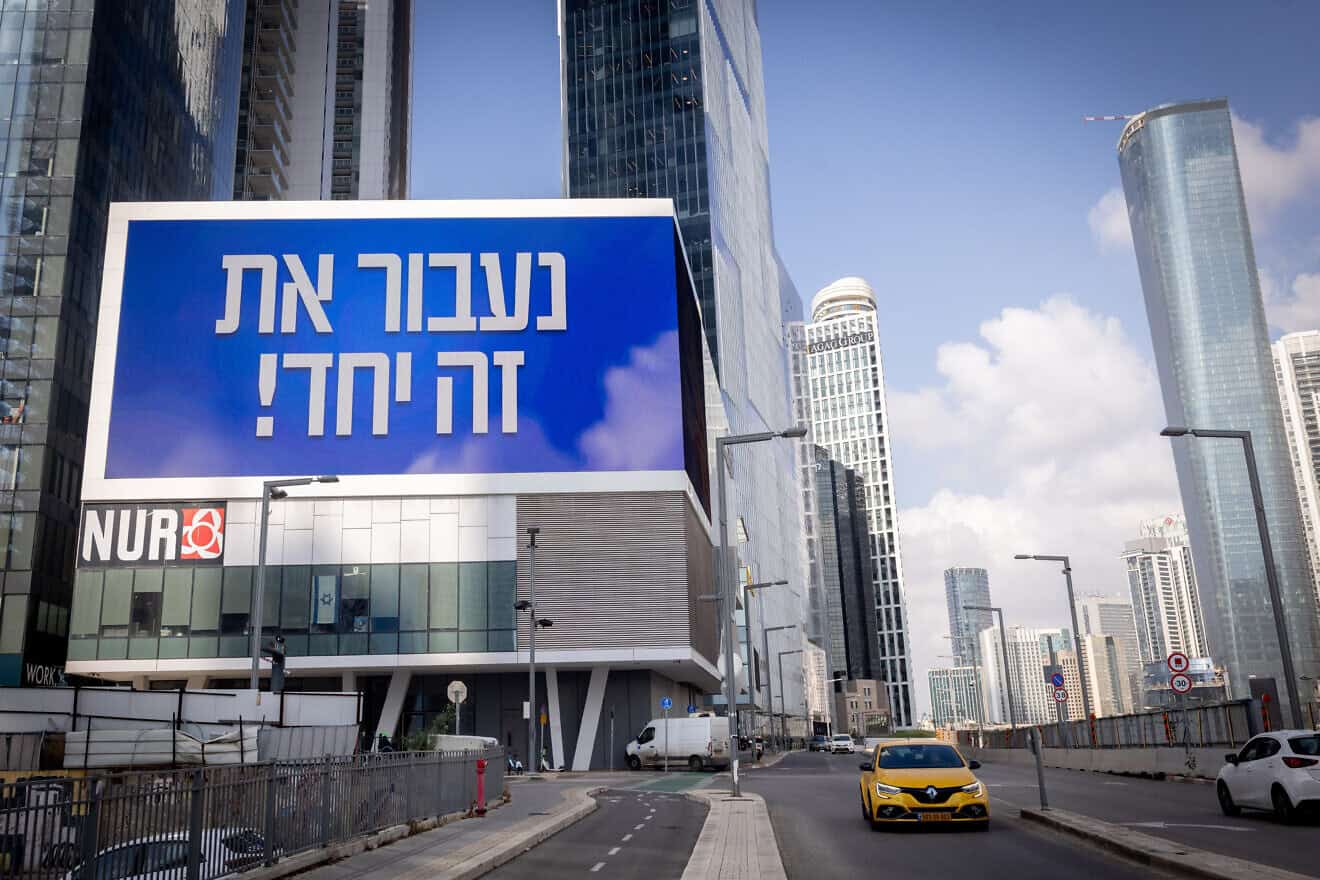
A large billboard on Ayalon Highway in Tel Aviv reading “We will get through it togethern” during the joint U.S.-Israel military operations against Iran, March 16, 2026. Photo by Miriam Alster/Flash90.

Two weeks after the start of the U.S.-Israeli offensive against Iran, naysayers about the wisdom of the operation remain pervasive and loud. The arguments against the war are based on a variety of concerns. The motivations of many of those denouncing the decisions of President Donald Trump are clearly partisan, ideological, and, in the case of a considerable percentage of those on the far right and left, connected to prejudice. 

Regardless of the validity of those complaints—and many, if not most, deserve to be dismissed—there is no avoiding the main question to be answered about such a conflict. Is it worth the cost in blood, money and political capital, both at home and abroad, that the administration is expending on a fight with no definite endpoint in sight?

And to that question, there are no easy answers. There is good reason to worry about whether the unintended negative consequences of the war will, in the long run, be viewed as more significant than the issues policymakers are currently obsessing about. 

Kicking the can down the road

Nevertheless, even the most reasonable skeptics of the effort, not to mention the deafening chorus of those partisans and ideologues predicting doom for Trump’s war plans, are largely failing to address another equally important question that must be answered. Is the cost of allowing the pre-war status quo to continue higher than those associated with the uncertainties of war? 

Iran was steadily rebuilding its nuclear program with an imminent option to race to a bomb, expanding missile production and continuing to orchestrate an “axis of resistance” dedicated to fomenting chaos and war. That’s more than enough to justify the risks of potential disaster that are an inevitable part of all wars. 

Like the question about the cost of war, the answer will only be clear after the fact. Yet even now, with the outcome of the campaign still somewhat in doubt, it’s obvious that continuing a policy of kicking the can down the road that Trump’s predecessors chose—either out of bad judgment, an unjustifiable sympathy for Tehran, cowardice or just plain apathy—would have been as colossal a mistake as even the costliest military blunder. 

The dangers that lie ahead are not limited to the short-term question of whether Washington and Jerusalem will achieve their objectives, which are aligned with each other but not identical. 

The first purpose of the campaign is the eradication of Iran’s nuclear and ballistic-missile programs, in addition to its support and active participation in international terrorism. Washington and Jerusalem are committed to those objectives, which they rightly see as not only crucial to their own countries but integral to the security of the West as a whole. Those are widely seen as achievable goals to one degree or another. 

Both governments have also stated that they favor regime change in Iran. That’s something Israel believes is absolutely necessary to achieve. The Trump administration would like it to happen, but could live without it, as long as the ayatollahs were stripped of their nukes and missiles, and had their terrorist option foreclosed. 

It’s far from clear whether the goal of toppling the Islamist government in Tehran can or will be accomplished. If a successful domestic uprising doesn’t happen, both countries are wisely reluctant to commit to a ground incursion on the scale required to install a new government. 

Economic and strategic problems

Still, the problems that are being generated by the war don’t only involve Iran retaining nuclear capability or whether the theocrats can cling to power. Just as important is whether the economic consequences of the war or its impact on equally important strategic problems faced elsewhere by the West will wind up overshadowing what happens in the Persian Gulf or the Middle East. 

With respect to economics, it’s obvious that Trump and his team—contrary to the false narratives about the war being impulsively decided on a presidential whim or as the result of sinister Israeli or Jewish pressure—were fully cognizant of the implications of combat in the region on the price of oil. That Iran might seek to stop its flow through the Strait of Hormuz was always a likely possibility. And it was a given that the price of oil, and consequently, the price of gas at the pump in the United States, would go up once the war started. 

A long-term jump in oil prices would harm the global economy, set back Trump’s objectives for American prosperity, and impact domestic politics and his party’s chances of retaining control of Congress in the midterm elections this fall. You don’t have to be an isolationist who opposes any foreign interventions to understand that any one of those things might be considered a good enough reason for an American president to hold off on efforts against Iran. 

The China factor

Added to that is the impact of the conflict on the international stage, where the United States is—whether many Americans fully understand it or not—locked in a geostrategic rivalry/conflict with Iran’s allies: Russia, and even more importantly, China. As historian Niall Ferguson, who supports action against Iran, has pointed out, this war must be seen in the context of a second Cold War in which the United States is facing off against what may prove to be a Chinese opponent that’s far more formidable than the Soviet Union was in the first such conflict in the 20th century. 

Removing the Iranian threat is a blow to China in terms of its strategic quest to dominate the globe and because it is an important source of oil to Beijing. But should the United States be embroiled in an unsuccessful war in the Middle East, this would help the Chinese elsewhere. And Russia is benefiting from the way the current war is increasing its oil and gas revenue, and serves as a distraction from its stalemated efforts to wear down Ukraine in that four-year-old war. 

As Ferguson writes this week in The Free Press, blocking the Strait of Hormuz for any appreciable period of time would be a disaster for Washington, as well as something that could set an unfortunate precedent for the ability of China and its allies to do the same thing in other important choke points, such as the Strait of Taiwan. It almost goes without saying that, as the analyst argues, “the longer the war lasts, the greater the domestic pressure on Trump; the heavier the costs for U.S. allies in Asia and Europe; the more money for Russia; and the greater the temptation for China.” 

Those risks are real. But to assume the sort of military failure or stalemate in Iran, as most of Trump’s critics do, that would generate that sort of scenario in which China profits from the war is not persuasive. 

While the success of the U.S.-Israeli offensive won’t be able to fully evaluated until after the conflict is over, it’s clear that both militaries have not been thwarted during the first two weeks of the joint campaign. To the contrary, they have systematically eliminated Iran’s military capabilities, hunted down its missile-launchers and done more damage to its nuclear program. 

The fact that a country as large as Iran is not completely defeated in two weeks is not a reason to believe the war has so far been a failure. If the armed forces of the two allies are allowed to continue their military efforts, the already devastating results for Iran will likely become even more impressive. It could possibly go a long way toward rendering the regime harmless to its neighbors and/or unable to resist the desire of its population for a new government. There is no reason to believe that the war is already a “quagmire,” other than the wish on the part of Trump’s opponents that this is what it will turn out to be. 

Even if the results are not everything the two governments would wish for, the arguments that say the United States would have been better off delaying action or even appeasing Iran, as the Obama and Biden administrations did, ring false. 

Partisan folly

The policy of enriching and empowering Tehran that was the consequence of former President Barack Obama’s signature foreign-policy achievement—the 2015 nuclear deal—was disastrous for the Middle East and for America. It led to a stronger and more aggressive Islamist regime. It encouraged its adventurism, hegemonic ambitions and willingness to start wars against Israel from Gaza and Lebanon via its terrorist proxies, Hamas and Hezbollah, as well as the way its Houthi allies in Yemen sought to interdict international shipping in the Horn of Africa. 

More than that, letting Iran get a nuclear weapon, as Obama’s pact guaranteed, or race to one, as became an increasingly likely scenario in the last year, would have done far more damage to U.S. interests than even a permanent hike in gas prices or an emboldened Beijing. Economic and strategic thinkers are right to ponder what may follow the current campaign, and whether some or all of the fallout from it will be problematic or wind up working out in ways that we cannot foresee. But letting a tyrannical regime ruled by religious fanatics bent on imposing their version of fanatical Islam on the Middle East and the rest of the world get a nuclear weapon to blackmail and intimidate opponents would be a nightmare. 

And that would have been the inevitable result if the United States hadn’t prepared to act at some point in the near future. While Washington could have waited until the threat was so imminent that averting it would have been as catastrophic as waiting for it to happen, Trump wisely decided that forestalling that scenario was worth the risk. 

While the calculus involved in determining that acting in 2026 was far less costly and dangerous than waiting until some point in the future, what cannot be debated is that stopping Iran was in almost everyone’s interests. To treat the need to stop the apocalyptic implications of an Iranian bomb as somehow less important than short-term increases in the price of fuel or theoretical advantages that might fall to Beijing is like comparing fatal cancer to a broken limb. The latter is painful and can impair one’s lifestyle. The former is to envision a chronic global catastrophe carried out by theocrats with no compunction about slaughtering innocents. 

The failure to acknowledge this basic premise is what makes so much of the criticism of the administration unpersuasive. 

And that brings us back to the motivations of the critics. As was apparent from the first days of the war, most of those opposing Trump on Iran are doing so for partisan reasons. 

While polls show that a majority of Americans oppose the war, those who drill down into public opinion on the issue also show that far larger majorities agree with Trump on the nature of the threat from Iran and the necessity to deal with it. However, when simply asked about whether they favor the president’s policies, their replies are in keeping with the hyper-partisan nature of contemporary American society. 

Democrats are united against the president’s decision to an extent unprecedented in the history of opposition parties at a time of war. Having committed themselves to a view of Trump as a complete villain (and a fascist authoritarian at that), few among his foes seem willing, as previous generations of Americans had done, to let politics stop at the water’s edge, even when vital American interests are at stake. 

As veteran Democratic lawyer David Boies wrote last week in The Wall Street Journal, every previous president of the last quarter-century agreed that Iran posed a threat that needed to be addressed. Yet virtually the entire Democratic Party has been opposed to acting on that imperative, and they’re not doing so because they are worried about oil prices or thinking China might find a way to gain from it. The only reason for their opposition is that Trump is doing it.  

The other reason for opposing action against Iran is, if possible, even more contemptible. 

An argument rooted in hate

For many on the left and on the noisy yet less numerous far right, the reason not to stop the mullahs is that doing so might help Israel in the process. 

As sober analysts, as well as Trump and his team, have pointed out, the Jewish state and its leaders didn’t strong-arm or even really persuade the United States to do something that was just as much an American imperative as an Israeli one. 

The fact that since the Iranian Revolution of 1970, the Islamic Republic has sought the elimination of the one Jewish state on the planet—the “Little Satan” and the “Great Satan” of the United States—was an argument against restraining them for those ideologues on the left and the right who sympathize with that goal. 

The antisemitic tropes and conspiracy theories that have been floated in recent months and weeks about Israeli and Jewish influence over American policy weren’t so much based on false conceptions about U.S. interests as it was in hostility to the safety or existence of Jews. That those, like podcaster Tucker Carlson, who traffic in Jew-hatred, didn’t want Washington to act with Jerusalem to prevent the genocide of its population, even if it also meant buttressing American security, isn’t surprising. But as Carlson’s confession about his communications with the Islamist regime in the run-up to the war makes clear, the loyalty of extremists who hate Israel and Jews is more with those who share their vile beliefs than it is to the United States, let alone Trump. 

Americans can and should be conducting a conversation about the cost/benefits of the war. Given the uncertainty involved in any military conflict, there is always the possibility that the fight will lead to results that will ultimately determine that the risk wasn’t worth it. 

Yet alongside that discussion must be one about the costs of letting Iran go on seeking, and ultimately acquiring, the nukes and missiles that would transform the world for the worse. Preventing a terrorist Islamist regime from gaining such power will always be a higher priority than even sensible efforts to keep oil prices down or conserve U.S. resources just to be able to deal with other threats posed by China and Russia. 

Instead, all we’re hearing from Trump’s opponents is partisan bile or antisemitic invective. That is not a debate that has anything to do with American interests or costs; it’s an irresponsible and hateful agenda that deserves no respect. 


Jonathan S. Tobin is editor-in-chief of the Jewish News Syndicate, a senior contributor for The Federalist, a columnist for Newsweek and a contributor to many other publications. He covers the American political scene, foreign policy, the U.S.-Israel relationship, Middle East diplomacy, the Jewish world and the arts. He hosts the JNS “Think Twice” podcast, both the weekly video program and the “Jonathan Tobin Daily” program, which are available on all major audio platforms and YouTube. Previously, he was executive editor, then senior online editor and chief political blogger, for Commentary magazine. Before that, he was editor-in-chief of The Jewish Exponent in Philadelphia and editor of the Connecticut Jewish Ledger. He has won more than 60 awards for commentary, art criticism and other writing. He appears regularly on television, commenting on politics and foreign policy. Born in New York City, he studied history at Columbia University.

Zawartość publikowanych artykułów i materiałów nie reprezentuje poglądów ani opinii Reunion’68,
ani też webmastera Blogu Reunion’68, chyba ze jest to wyraźnie zaznaczone.
Twoje uwagi, linki, własne artykuły lub wiadomości prześlij na adres:
webmaster@reunion68.com