
Archive | July 2025

Lebanese president nixes normalization with Israel

Lebanese president nixes normalization with Israel

Charles Bybelezer


“It is not currently part of Lebanese foreign policy,” Joseph Aoun said.

.
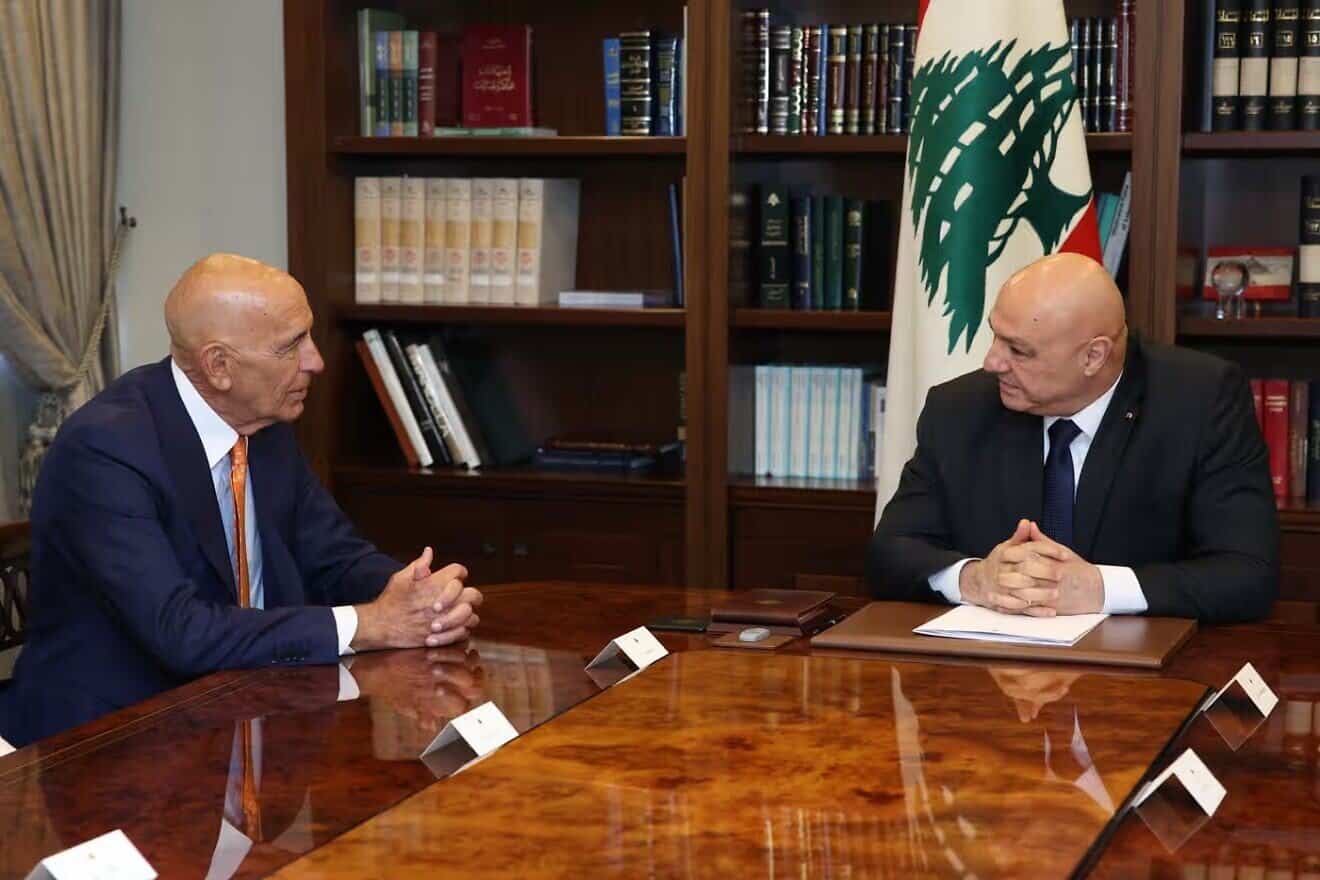
U.S. Special Envoy for Syria Thomas Barrack (left) and Lebanese President Joseph Aoun at the presidential palace in Baabda, east of Beirut, on July 7, 2025. Credit: Lebanese Presidency Press Office.

Lebanese President Joseph Aoun on Friday ruled out the prospect of normalizing relations with Israel, though he expressed a desire to end the longstanding conflict with the Jewish state.

“Peace is the lack of a state of war, and this is what matters to us in Lebanon at the moment. As for the issue of normalization, it is not currently part of Lebanese foreign policy,” Aoun said, according to Agence France-Presse.

The comments come after Israeli Foreign Minister Gideon Sa’ar said last week that Jerusalem is committed to expanding the Abraham Accords and is “interested in adding countries such as Syria and Lebanon, our neighbors, to the circle of peace and normalization.”

Syria’s new governing authority has claimed a willingness to work with the United States to reimplement the 1974 disengagement agreement with Israel, which created a U.N.-monitored buffer zone separating the two countries.

Thomas J. Barrack Jr., U.S. ambassador to Turkey and special envoy for Syria, told The New York Times last week that Jerusalem and Damascus were engaged in “meaningful” talks aimed at restoring calm to their shared border.
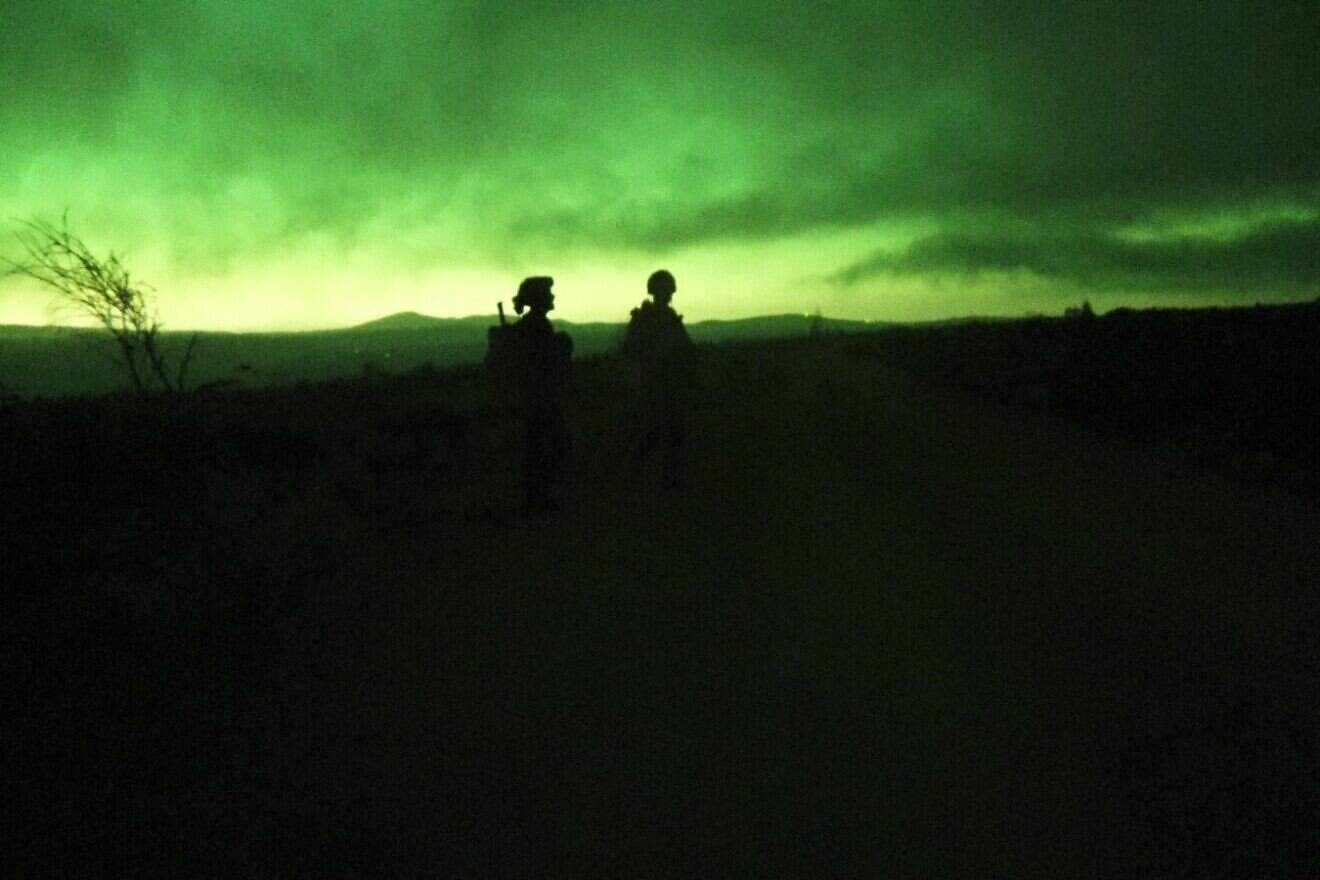
Israel Defense Forces operate against the Iranian-backed Hezbollah terrorist group in Southern Lebanon, July 2025. Credit: IDF.

On Friday, Aoun called on the Israeli military to withdraw from five positions along the Israel-Lebanon frontier. The outposts are located at strategic points, including a hill near Labbouneh, opposite the Israeli town of Shlomi; the Jabal Blat peak, across from Moshav Zar’it; a hill opposite Moshav Avivim and Kibbutz Malkia; another facing Moshav Margaliot; and one near the town of Metula.

Defense Minister Israel Katz said in March that IDF troops would remain at the sites in Southern Lebanon “indefinitely,” despite the launch of talks with Beirut over 13 disputed points along the border.

Aoun claimed on Friday that the Israel Defense Forces presence in Lebanon “obstruct[s] the complete deployment of the [Lebanese] army up to the internationally recognized borders.”

Ceasefire agreement and U.N. Resolution 1701

On Nov. 26, 2024, Jerusalem and Beirut signed a ceasefire deal aimed at ending more than a year of cross-border clashes between the IDF and Hezbollah. The Iranian-backed terrorist group began attacking the Jewish state in support of Hamas a day after the Oct. 7, 2023, massacre.

As part of the agreement, both sides acknowledged the significance of U.N. Security Council Resolution 1701, which ended the 2006 Second Lebanon War but has never been fully enforced. The resolution calls for the complete demilitarization of Hezbollah south of the Litani River and prohibits the presence of any armed groups in Lebanon other than the Lebanese Army and the United Nations Interim Force in Lebanon (UNIFIL).

Since the truce, Israel has conducted frequent operations to prevent Hezbollah from rebuilding its terrorist infrastructure and so violating the terms of the truce.
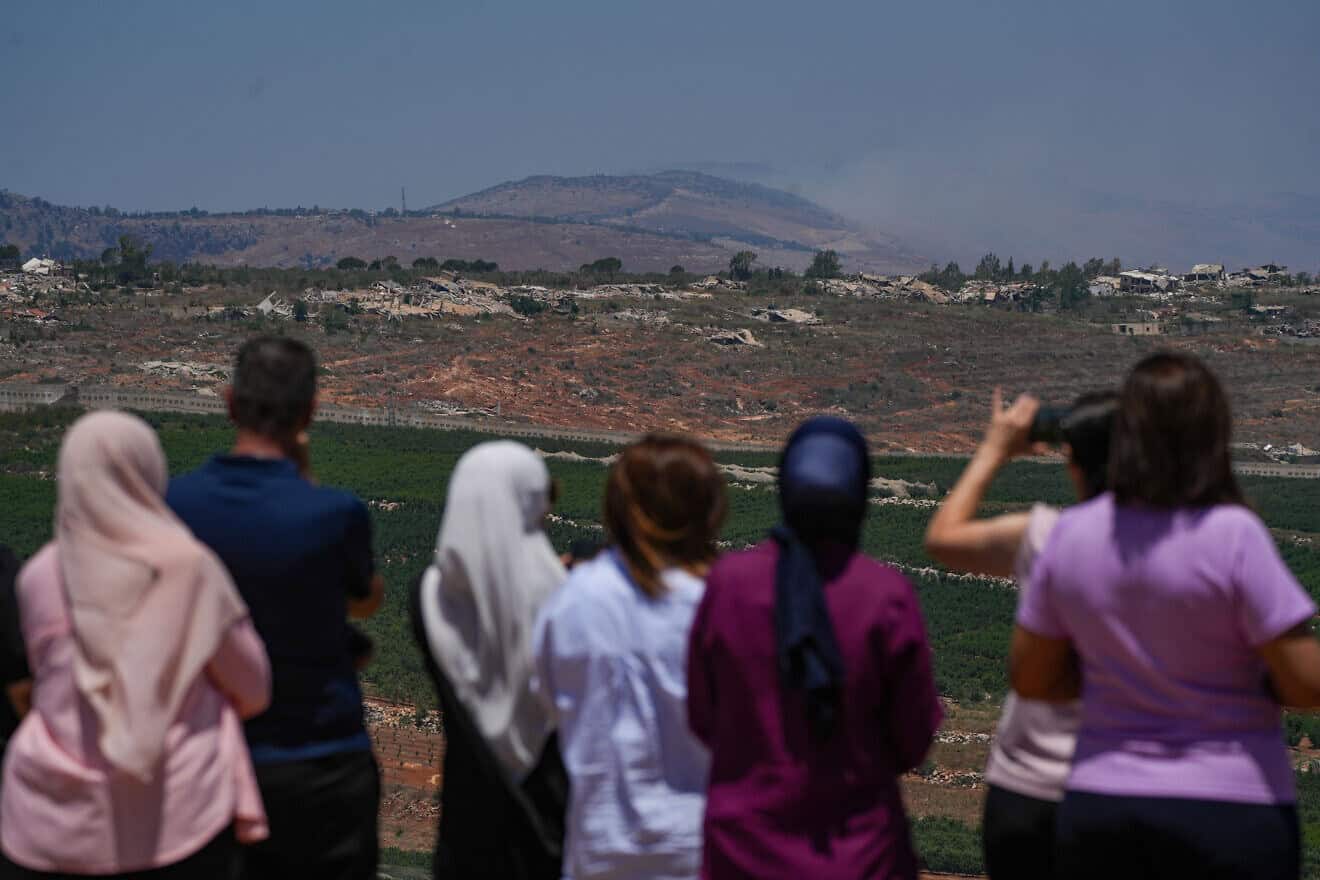
Smoke rises from Israeli airstrikes in Southern Lebanon, as it seen from the Israeli side of the border, June 27, 2025. Photo by Ayal Margolin/Flash90.

U.S. roadmap for disarmament

Barrack said on Monday that Hezbollah must see “a future for them” as part of a broader disarmament roadmap delivered to the Lebanese government on behalf of Secretary of State Marco Rubio.

“Hezbollah is a political party. It also has a militant aspect to it,” Barrack told reporters after meeting with Aoun in Beirut, according to AFP. “Hezbollah needs to see that there’s a future for them, that the road is not harnessed solely against them, and that there’s an intersection of peace and prosperity for them also.”

Hezbollah is designated as a Foreign Terrorist Organization by the U.S. State Department.

Barrack described the Lebanese government’s response to the plan as “thoughtful” and “spectacular,” adding, “We’re creating a go-forward plan. To create that, we need dialogue.”

While the official response was not made public, Aoun reiterated on Friday that his government is determined to “hold the monopoly over weapons in the country.” The move, he said, would be carried out in accordance with “the interest of the state and its security stability to preserve civil peace on one hand, and national unity on the other.”
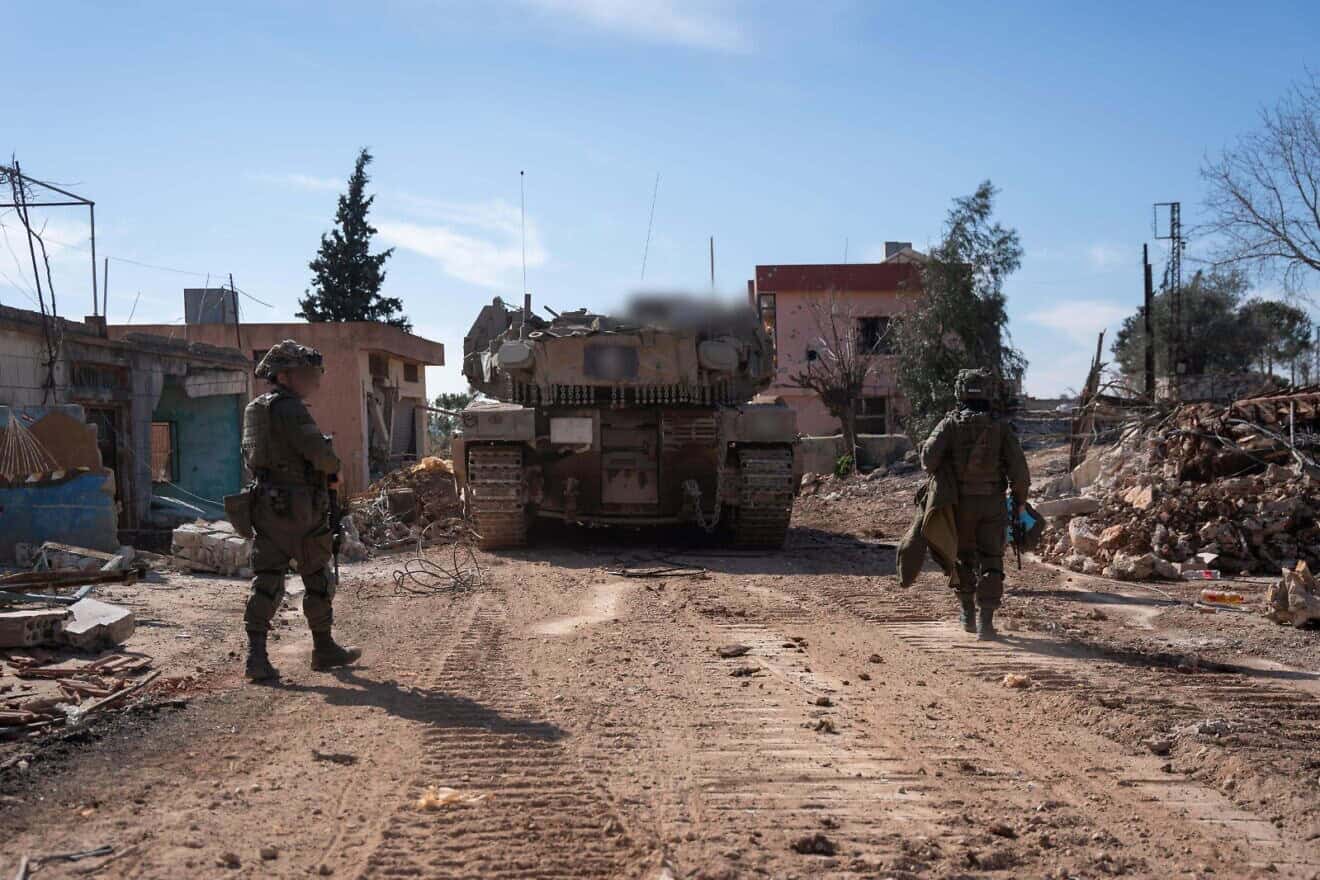
Israeli soldiers operating against Hezbollah in Southern Lebanon, February 2025. Credit: IDF.

Israeli Finance Minister Bezalel Smotrich told JNS on Monday that while he hadn’t heard Barrack’s specific comments, “Hezbollah has to disarm. That is the position of President Trump’s administration and, in my estimation, his people.

“If Hezbollah wants to be a civil body without arms or anything and to be a part of the State of Lebanon, I don’t interfere with Lebanon and how it wants to run itself. There’s a democracy there. [But] Hezbollah won’t have weapons. Period. No chance,” Smotrich said.

Hezbollah leader Naim Qassem on Sunday rejected the possibility of disarmament, citing “Israeli threats” and warning of a “confrontation” in response.


Zawartość publikowanych artykułów i materiałów nie reprezentuje poglądów ani opinii Reunion’68,
ani też webmastera Blogu Reunion’68, chyba ze jest to wyraźnie zaznaczone.
Twoje uwagi, linki, własne artykuły lub wiadomości prześlij na adres:
webmaster@reunion68.com


We Don’t Always Need to Be in the Room to Make a Difference

We Don’t Always Need to Be in the Room to Make a Difference

Pini Dunner


A Torah scroll. Photo: RabbiSacks.org.

This week, I listened to a riveting episode of The Rest is History, the ever-excellent podcast hosted by Dominic Sandbrook and Tom Holland. This one was about the infamous Munich Conference of September 1938, which allowed Nazi Germany to annex the Sudetenland so that they wouldn’t go to war with Czechoslovakia, which would inevitably have drawn in France, and then Great Britain.

If you’ve spent any time dabbling in 20th-century history, you’ll know that the Munich Conference has become the gold standard for the failure of the diplomatic policy known as “appeasement.” British Prime Minister Neville Chamberlain — umbrella in hand, and full of patrician optimism — famously emerged from negotiations with Adolf Hitler waving a piece of paper signed by the Nazi dictator and promising “peace for our time.” 

Less than a year later, Hitler invaded Poland, and the world was plunged into one of the most devastating wars in all of history. Chamberlain’s name has been synonymous with diplomatic naïveté ever since.

But here’s the kicker: what most people forget — or probably never knew to begin with — is that the country being discussed at Munich — Czechoslovakia — wasn’t even at the table. 

Britain, France, Germany, and Italy hashed out the fate of a sovereign nation without even bothering to invite any representatives from Czechoslovakia to participate. As Sandbrook and Holland dryly observed, it was a negotiation about Czechoslovakia, conducted without Czechoslovakia.

Czechoslovak President Edvard Beneš was famously informed of what had happened at Munich while he was taking a bath. According to multiple historical accounts, he received the news from his aides or possibly a British envoy. 

His initial response, as reported in various memoirs and diplomatic recollections, was short and bitter: “We have been betrayed.” He later added, “We have been deceived by our friends and left at the mercy of our enemies.”

And if you think that sort of thing doesn’t happen anymore, well, think again. Jump forward to 2015. The JCPOA, otherwise known as Obama’s Iran Nuclear Deal, was signed by Iran and the so-called P5+1 powers — China, France, Russia, the UK, the US, and Germany. 

Notably absent from the table was Israel. You know — the country Iran regularly threatens to wipe off the map. The country most likely to be targeted by an Iranian nuclear weapon if, heaven forbid, one were ever developed.

Michael Oren, Israel’s former ambassador to the United States, recounts in his book Ally that President Obama consistently gave the impression — through word and deed — that he believed he knew what was best for Israel better than its own democratically elected leaders did. As Oren writes, it was a startling form of paternalism. And it’s hard not to hear echoes of Munich.

Which is why recent developments in the Middle East feel nothing short of miraculous. Conversations about the future of the region are taking place — often behind closed doors, sometimes without direct Israeli input, but increasingly with it. 

Just this week, there was direct contact between Israel and Lebanon. Lebanon, Syria, and Saudi Arabia are reportedly engaged in serious discussions with the US — and with Israel — about expanding the Abraham Accords. 

On the surface, it might appear that Israel is still being sidelined. But in reality, the playing field has shifted dramatically. This time, instead of the United States arrogantly assuming it knows what’s best for Israel, something remarkable has happened: God intervened.

Somehow, against all odds, Israel’s enemies have been stymied. Iranian nuclear sites — long the subject of breathless speculation and veiled threats — were bombed into oblivion. Strategic alliances are forming that would have been unthinkable just a few years ago. And much of it has happened without direct Israeli involvement. Which brings us to Parshat Balak. 

If you blink, you might miss it — but Parshat Balak is one of the most astonishing episodes in the entire Torah. Not because of what the Jewish people do, but because of what they don’t do. In fact, they do nothing at all. They are completely marginal to the main narrative.

While the Israelites are camped peacefully in the wilderness, a drama of international intrigue is unfolding just beyond their line of sight. Balak, king of Moav, is in a panic. The Israelites have emerged from Egypt, miraculously survived forty years in the desert, and now threaten his kingdom by sheer proximity. 

But Balak knows he can’t beat them militarily. After all, they had already obliterated the warrior nation of Amalek on the battlefield. Balak didn’t want Moav to suffer the same fate. So instead, he turns to spiritual warfare. Balak engages the enigmatic prophet-for-hire, Bilaam, to curse the Jewish people. He wants them destroyed — not through force of arms, but through words.

Like so many Torah narratives, this isn’t merely the tale of some ancient tribal conflict. It’s a blueprint for what antisemitism has often looked like throughout history: plots hatched in smoke-filled rooms by people with power, aiming to sabotage the Jewish future from afar. 

And just like at Munich, or in the JCPOA negotiations, or at any number of international diplomatic settings — there isn’t a single Jew in the room. And yet, everything turns out okay. Scratch that. It turns out better than okay.

Bilaam opens his mouth to curse the Israelites — and instead, out come blessings. God turns his words inside out. Every attempt at sabotage is divinely inverted. Which is why the verse (Num. 24:5) — “How goodly are your tents, Jacob” — has become a permanent fixture in Jewish liturgy. Balak’s scheme collapses in divine irony. The entire threat — real, sophisticated, and well-financed — evaporates without the Israelites ever knowing what was happening as it unfolded.

And that’s the lesson. Sometimes the most incredible miracles are the ones we don’t even know have happened until after they’ve happened. Sometimes the most profound divine interventions take place in a room where no one representing the Jewish people has a seat — because God Himself takes the seat on our behalf.

When we look at recent events through that lens, we stop being passive observers of history and begin to sense the Divine choreography at work. 

Iran, once untouchable, suddenly suffers catastrophic setbacks. Arab leaders, who once wouldn’t even acknowledge Israel’s existence, are now quietly exploring peace and cooperation. And America is doing what’s in Israel’s best interests — despite the noise from woke troublemakers and social media agitators.

It’s not because Israel was in the room. It’s because God was, just like in Parshat Balak. 

So, the next time someone points out how Israel is being left out of this or that negotiation, or how Jewish interests are being ignored in high-level diplomatic conversations, take a breath. 

Remember Balak. Remember Bilaam. Remember the destruction of Iran’s nuclear facilities by the United States. And remember this: we don’t always have to be in the room — so long as God is.


The author is a rabbi in Beverly Hills, California. 


Zawartość publikowanych artykułów i materiałów nie reprezentuje poglądów ani opinii Reunion’68,
ani też webmastera Blogu Reunion’68, chyba ze jest to wyraźnie zaznaczone.
Twoje uwagi, linki, własne artykuły lub wiadomości prześlij na adres:
webmaster@reunion68.com


25 lat temu zmarł Jan Karski. Pierwszy przekazał na Zachód osobistą relację o zagładzie Żydów

Premiera filmu “Karski i władcy ludzkości” w reż. Sławomira Gruenberga w Muzeum Historii Żydów Polskich POLIN w Warszawie, 23 kwietnia 2015 r. Na zdjęciu kadr z filmu “Shoah” Claude’a Lanzmanna. Fot. PAP/Tomasz Gzell


25 lat temu zmarł Jan Karski. Pierwszy przekazał na Zachód osobistą relację o zagładzie Żydów

tst/ ls/ irk/


Jan Karski zmarł 13 lipca 2000 roku w Waszyngtonie. Był emisariuszem Polskiego Państwa Podziemnego. Za swoją działalność w czasie wojny został uhonorowany m.in. w Polsce, USA i Izraelu.

Jan Karski otrzymał wiele prestiżowych wyróżnień, m.in. był kawalerem orderów Virtuti Militari i Orderu Orła Białego, uhonorowano go tytułem „Sprawiedliwego wśród Narodów Świata” i Medalem Wolności, najwyższym cywilnym odznaczeniem amerykańskim, a Parlament Kanady nadał mu tytuł Bohatera Ludzkości. W 1998 r. izraelski Instytut Pamięci Yad Vashem zgłosił jego kandydaturę do Pokojowej Nagrody Nobla.

Urodził się w 1914 r. w Łodzi jako Jan Kozielewski. Uczył się w tamtejszym gimnazjum, był członkiem Sodalicji Mariańskiej. Po ukończeniu w 1935 r. studiów prawniczych i dyplomatycznych na Uniwersytecie Jana Kazimierza we Lwowie pracował jako urzędnik Ministerstwa Spraw Zagranicznych.

W 1936 r. ukończył kurs oficerski w Szkole Podchorążych Rezerwy Artylerii we Włodzimierzu Wołyńskim. We wrześniu 1939 r. służył w oddziale artylerii konnej. Dostał się najpierw do niewoli sowieckiej, a po wymianie jeńców do niewoli niemieckiej, z której zbiegł.

Wrócił do Warszawy, gdzie rozpoczął działalność konspiracyjną. Ze względu na doskonałą pamięć i znajomość języków obcych powierzono mu obowiązki politycznego kuriera władz Polskiego Państwa Podziemnego.

W styczniu 1940 r. udał się jako kurier i emisariusz do władz Rzeczypospolitej na uchodźstwie, we Francji.

Wielkoformatowy pokaz audiowizualny na fasadzie siedziby Polskiej Akademii Nauk - Pałacu Staszica w Warszawie. Tematem przewodnim spektaklu, przygotowanego przez Muzeum Historii Polski, była postać Jana Karskiego, w związku z 100. rocznicą urodzin legendarnego emisariusza Polskiego Państwa Podziemnego. Fot. PAP/Rafał GuzWielkoformatowy pokaz audiowizualny na fasadzie siedziby Polskiej Akademii Nauk – Pałacu Staszica w Warszawie. Tematem przewodnim spektaklu, przygotowanego przez Muzeum Historii Polski, była postać Jana Karskiego, w związku z 100. rocznicą urodzin legendarnego emisariusza Polskiego Państwa Podziemnego. Fot. PAP/Rafał Guz

W czasie kolejnej misji do Francji w czerwcu 1940 r. został aresztowany przez Gestapo na Słowacji. Po brutalnych przesłuchaniach został umieszczony w szpitalu w Nowym Sączu, po czym miał zostać przetransportowany do Warszawy. Został odbity dzięki akcji krakowskiego oddziału Związku Walki Zbrojnej, którym kierował Tadeusz Komorowski oraz pieniądzom socjalistów z krakowskiego PPS-WRN, na którego czele stał Józef Cyrankiewicz.

Jesienią 1942 r. pod pseudonimem Jan Karski, którego odtąd stale używał, wyruszył w kolejną misję, tym razem do Wielkiej Brytanii, gdzie spotyka się z gen. Władysławem Sikorskim. Jego zadaniem było przekazanie wiadomości od polityków różnych orientacji, dlatego spotkał się m.in. z syjonistą Menachemem Kirszenbaum i Leonem Feinerem z lewicowego Bundu. Zobowiązali go, by przekazał aliantom informację o trwającej zagładzie ludności żydowskiej. Aby mógł poświadczyć, że na własne oczy widział warunki, w jakich odbywa się eksterminacja, Karski został wprowadzony dwukrotnie do warszawskiego getta oraz do getta tranzytowego w Izbicy koło Krasnegostawu, z którego Żydów transportowano do obozu zagłady w Bełżcu. Między innymi na podstawie jego relacji i dokumentów minister spraw zagranicznych Edward Raczyński przedstawił w grudniu 1942 r. aliantom notę o objętości broszury „Masowa eksterminacja Żydów w Polsce okupowanej przez Niemców”.

Wstrząsającą relację naocznego świadka przekazał Karski wielu amerykańskim i brytyjskim politykom, dziennikarzom i artystom.

Spotkał się m.in. z ministrem spraw zagranicznych rządu brytyjskiego Anthonym Edenem oraz w lipcu 1943 r. z prezydentem USA Franklinem Delano Rooseveltem oraz przedstawicielami amerykańskich organizacji żydowskich. Jednak jego dramatyczne apele o ratunek dla narodu żydowskiego nie przyniosły rezultatów – większość rozmówców nie dowierzała jego doniesieniom lub je ignorowała.

Prezydent Warszawy Hanna Gronkiewicz-Waltz i historyk, dziennikarz, wiceprzewodniczący Stowarzyszenia Żydowski Instytut Historyczny w Polsce Marian Turski podczas odsłonięcia tablicy poświęconej Janowi Karskiemu na Bulwarze im. Jana Karskiego nad Wisłą w Warszawie. Fot. PAP/Jakub KamińskiPrezydent Warszawy Hanna Gronkiewicz-Waltz i historyk, dziennikarz, wiceprzewodniczący Stowarzyszenia Żydowski Instytut Historyczny w Polsce Marian Turski podczas odsłonięcia tablicy poświęconej Janowi Karskiemu na Bulwarze im. Jana Karskiego nad Wisłą w Warszawie. Fot. PAP/Jakub Kamiński

Zachodni przywódcy, a nawet niektórzy liderzy organizacji żydowskich w USA, nie dawali wiary jego wstrząsającym relacjom o Holokauście. Nie wpłynęły one na politykę państw sprzymierzonych w czasie wojny, opierającą się na założeniu, że jedynym sposobem uratowania Żydów jest pokonanie najpierw nazistowskich Niemiec.

“Począwszy od wiosny 1943 roku, w rezultacie raportu, który przywiozłem z kraju, w Stanach Zjednoczonych i w Anglii ukazywały się artykuły o tym, co się dzieje z Żydami. Były manifestacje żydowskie w Nowym Jorku, były apele. W Nowym Jorku organizował je rabin Wise, prezes Światowego Kongresu Żydów. Ukazały się dziesiątki artykułów o prześladowaniach Żydów, ale, jak wiemy, nie miało to żadnego znaczenia. Dlaczego?

Po prostu pomoc Żydom w czasie wojny – tak to widzę dziś i już wtedy tak to widziałem – nie mieściła się w ramach zasadniczej strategii alianckiej.

Trzeba byłoby zmienić strategię, pozyskać Rosję sowiecką, pozyskać Stalina. Zwoływać jakieś konferencje. Zasadniczym punktem tej strategii było zniszczenie potencjału wojennego Niemiec. Bezwarunkowe poddanie się, jak najszybszy koniec wojny. Jak najmniej strat. I za wszelką cenę utrzymanie sojuszu anglo-amerykańsko-sowieckiego. Żadne sprawy uboczne nie mogły tej strategii skomplikować. (…) Jak patrzę na to teraz, po pięćdziesięciu latach, to widzę, że Żydzi nie mieli szans na przeżycie drugiej wojny światowej” – podsumował swoją misję Karski.

Waldemar Piasecki, sekretarz i biograf Jana Karskiego, tak mówił o skutkach misji Karskiego: „Misją Karskiego było przekazanie konkretnej wiedzy konkretnym ludziom, by na jej podstawie podjęli decyzje. Co z nią zrobili Franklin Roosevelt czy Anthony Eden, brytyjski minister spraw zagranicznych, oraz jego szef Winston Churchill to już inna kwestia. Nie można obarczać Karskiego winą za ich decyzje czy ich brak. O misji Karskiego często rytualnie mówi się, że dotyczyła tragicznej sytuacji Żydów, pomijając dyskretnym milczeniem jej cel zasadniczy. Przede wszystkim chodziło o rzetelną prezentację projektu Państwa Podziemnego jako unikalnego, dobrze zorganizowanego i cieszącego się poparciem społeczeństwa okupowanej Polski. Moskwa robiła wszystko, aby Londyn i Waszyngton myślały inaczej, bo tak naprawdę przyszłością dla Polski są PPR i Gwardia Ludowa. Prezentacja Państwa Podziemnego była głównym celem misji Karskiego i w tym odniósł sukces”.

Uczniowie ze Szkoły Podstawowej nr 24 z Lublina czytają fragmenty II części biografii Jana Karskiego "Infernio" Waldemara Piaseckiego podczas inauguracji obchodów 75-lecia Misji Jana Karskiego w Muzeum Powstania Warszawskiego w Warszawie. Fot. PAP/Radek PietruszkaUczniowie ze Szkoły Podstawowej nr 24 z Lublina czytają fragmenty II części biografii Jana Karskiego “Infernio” Waldemara Piaseckiego podczas inauguracji obchodów 75-lecia Misji Jana Karskiego w Muzeum Powstania Warszawskiego w Warszawie. Fot. PAP/Radek Pietruszka

Jan Karski pracował nad scenariuszem filmu o Polskim Państwie Podziemnym, do jego planowanej realizacji w Hollywood nie doszło. Po wojnie zdecydował się pozostać na emigracji w Stanach Zjednoczonych. Podjął w 1948 r. studia z zakresu nauk politycznych i obronił doktorat na Uniwersytecie Georgetown w Waszyngtonie, gdzie od 1957 r. jako profesor wykładał stosunki międzynarodowe i teorię komunizmu. Wśród jego studentów znalazł się m.in. przyszły prezydent Bill Clinton.

Jan Karski był również autorem kilku książek. Najsłynniejsza z nich, „Tajne państwo” („Story of a Secret State”), została opublikowana w 1944 r. w USA i sprzedana w liczbie 400 tys. egzemplarzy stała się bestsellerem, przetłumaczonym na wiele języków.

Książka opowiada o wojennych losach Karskiego – jego misjach kurierskich, ujęciu przez Gestapo, torturach i uwolnieniu przez podziemie. Przedstawia też strukturę Polskiego Państwa Podziemnego i wojenną codzienność. Premier Stanisław Mikołajczyk chciał za pomocą książki zdobyć poparcie aliantów dla rządu londyńskiego i struktur podziemnego państwa oraz parasol ochronny przed brutalnym Stalinem. Jak zaznacza Piasecki, również tłumacz „Tajnego Państwa” na język polski, był to produkt propagandowy z wieloma fikcyjnymi wątkami o charakterze sensacyjnym.

Dlatego Karski odmawiał propozycjom wydania książki po polsku, m.in. przez paryską „Kulturę”, wiedząc, że polski czytelnik znający okupacyjne realia, będzie kwestionował prawdziwość niektórych wydarzeń.

Polskie wydanie ukazało się dopiero w 1999 r. z odpowiednią przedmową. 

Rektor Uniwersytetu Warszawskiego Andrzej Kajetan Wróblewski przypina uniwersytecką odznakę Janowi Karskiemu. Fot. PAP/Ireneusz RadkiewiczRektor Uniwersytetu Warszawskiego Andrzej Kajetan Wróblewski przypina uniwersytecką odznakę Janowi Karskiemu. Fot. PAP/Ireneusz Radkiewicz

Karski jest także autorem monografii „Wielkie mocarstwa wobec Polski 1919-1945. Od Wersalu do Jałty”.

Przed śmiercią Karski pracował nad wspomnieniami ze spotkań z najbardziej znanymi postaciami polskiego ruchu oporu, politykami USA i Wielkiej Brytanii oraz działaczami żydowskimi. 

Amerykański Medal Wolności, którym Jan Karski został odznaczony pośmiertnie przez prezydenta USA Baracka Obamę, prezentowany w Gabinecie prof. Jana Karskiego w Muzeum Miasta Łodzi. Fot. PAP/Grzegorz MichałowskiAmerykański Medal Wolności, którym Jan Karski został odznaczony pośmiertnie przez prezydenta USA Baracka Obamę, prezentowany w Gabinecie prof. Jana Karskiego w Muzeum Miasta Łodzi. Fot. PAP/Grzegorz Michałowski

Przez wiele lat po wojnie Jan Karski nie mówił o swoich wojennych przeżyciach. Przerwał milczenie dopiero na przełomie lat 70. i 80. gdy wystąpił w filmie Lanzmanna „Shoah” (nagranie 1978, premiera 1985) oraz wygłosił referat poświęconych swojej misji na Międzynarodowej Konferencji Wyzwolicieli Obozów Koncentracyjnych (1981).

Karski ufundował w 1992 roku nagrodę im. Jana Karskiego i Poli Nireńskiej (jego żony) przyznawaną co roku wspólnie przez Institute for Jewish Research (YIVO) w Nowym Jorku i Żydowski Instytut Historyczny w Warszawie autorom publikacji przedstawiających rolę i wkład Żydów polskich w polską kulturę.


Zawartość publikowanych artykułów i materiałów nie reprezentuje poglądów ani opinii Reunion’68,
ani też webmastera Blogu Reunion’68, chyba ze jest to wyraźnie zaznaczone.
Twoje uwagi, linki, własne artykuły lub wiadomości prześlij na adres:
webmaster@reunion68.com


Jewish Groups Organize ‘J Pride’ Celebrations After San Diego Pride Refuses to Drop Anti-Israel Singer Kehlani

Jewish Groups Organize ‘J Pride’ Celebrations After San Diego Pride Refuses to Drop Anti-Israel Singer Kehlani

Shiryn Ghermezian


Kehlani arrives at the BET Awards 2025 at Peacock Theater in Los Angeles, California, United States. Photo: Image Press Agency via Reuters Connect

Local Jewish organizations in San Diego, California, have together organized a weekend of LGBTQ+ celebrations the same weekend as the San Diego Pride Festival after festival organizers ignored their requests to drop R&B singer Kehlani as the headlining performer due to safety concerns surrounding her anti-Israel comments.

The J Pride weekend of events is being hosted by the Lawrence Family Jewish Community Center (LFJCC) Jacobs Family Campus and is open to everyone.

“At a time when hate and hostility feel louder than ever, we are choosing something different,” LFJCC said on its website. “We are choosing to lead with PRIDE, with compassion, and with unity. Rather than be defined by exclusion or division, our Jewish community across San Diego is coming together to create something new. A space that uplifts LGBTQ+ Jews and our allies. A space filled with joy, celebration, and connection. A space where everyone can feel seen, safe, and proud. This is not just a reaction — it’s a declaration.”

Kehlani has been a vocal supporter of a “free Palestine” and highly critical of Israel’s military actions in the Gaza Strip during the Israel-Hamas war. In May, the Grammy-nominated singer from Oakland, Calif., said, “F— Israel, f— Zionism.” Last year,  she released a music video that opens with the phrase “Long live the intifada,” referencing violent Palestinian uprisings against Israel and the Jewish community. She has accused Israel of genocide, and in one Instagram post, she wrote: “Dismantle Israel. Eradicate Zionism.” She also posted an image online that called for Israel to be removed from the map and replaced with “Palestine.”

The premier sponsor of J Pride is Jamul Casino and Resort, which donated $10,000 to support the event and withdraw participation in San Diego Pride due to the Kehlani controversy, according to East County Magazine. The casino and resort said in a statement that it will honor its financial commitments to the San Diego Pride Festival but will not have a physical presence at the annual event.

“Given the complexity and sensitivity of this situation involving free expression, political symbolism and community inclusion, Jamul Casino Resort’s position is one that prioritizes its firm commitment to core values such as artistic freedom, equality, diversity and genuine respect for community concerns,” resort spokesperson Kirvin Doak said in a statement cited by the magazine. “As an organization rooted in LGBTQ2S+ advocacy, we do not condone hate speech or violence of any kind. Further, we will not be participating in the Pride Parade and those funds will be distributed to the J Pride Festival.”

The San Diego Pride Festival is set to take place July 19-20 at Marston Point in Balboa Park. Eight San Diego-based Jewish groups and synagogues have already withdrawn participation from the festival because of Kehlani’s inclusion.

San Diego Mayor Todd Gloria will limit his participation in the festival in light of Kehlani’s involvement. He made the decision due to “regrettable and controversial rhetoric on social media about the Jewish community,” he explained in a letter to San Diego Pride leaders that was obtained by the San Diego Union-Tribune. Gloria will attend and walk in the parade on July 19 but not participate in the rest of the festival, according to his office.

The festival’s volunteer director of medical operations and assistant director of medical operations, both of whom are Jewish, said they were also stepping away from participating in the event. Others who have pulled their support for the festival include UC San Diego, UC San Diego Health, Meals on Wheels and Mamas Kitchen San Diego, among many others.

In May, nearly three dozen Jewish organizations released a statement urging festival organizers to reconsider having Kehlani perform at the event.

In late June, the Antisemitism Task Force of San Diego at StandWithUs launched a campaign called “Pride, not Prejudice” to pressure San Diego Pride organizers to remove Kehlani from the lineup of performers. Kehlani’s “hateful rhetoric” against Israel and Zionism “glorifies violence against Jews, and alienates Jewish LGBTQ+ participants, directly contradicting the values of inclusivity, respect, and safety that Pride events are meant to uphold,” the task force argued.

“When progressive spaces tolerate antisemitism or excuse it under the guise of anti-Zionism, they send a clear message that Jews are only welcome if they deny their identity,” Task Force Director Liat Cohen-Reeis said in a statement shared with The Algemeiner. “By booking Kehlani, Pride organizers are sending a clear message that Jews can join the festival if they leave their identity at home.”

San Diego Human Relations Commission Chair Nicole Murray Ramirez, who helped cofound San Diego Pride in 1974, told the Bay Area Reporter she will not attend the festival this year and is extremely upset with festival organizers for inviting Kehlani to perform.

“The Pride board is out of touch,” she told the local publication. “I am absolutely shocked, dismayed, and so disappointed. The Jewish community has always had our backs. I’m a Latino Catholic, but when this came out and [Kehlani] was booked, I wasn’t the only one shocked at the rhetoric she gave and her statements. This is about hate speech.”

“This is not about the Middle East,” she added. “This is about an entertainer who espouses hate, and calls for the end of a people.”

Kehlani insisted she is not antisemitic in an Instagram video uploaded in late April. “I am not antisemitic nor anti-Jew, I am anti-genocide,” she claimed. “I am anti the actions of the Israeli government, I am anti-an extermination of an entire people. I am anti the bombing of innocent children, men, women — that’s what I’m anti.”

Kehlani was scheduled to perform at a concert in New York City in June, but it was canceled after organizers faced pressure from Israel supporters, including New York City Mayor Eric Adams. Cornell University also canceled a performance by Kehlani, and the singer was set to headline San Francisco’s SoSF Pride festival in late June, but she pulled out of the lineup.

San Diego Pride organizers have rejected demands to have Kehlani removed from the event and released a statement in response.

“San Diego Pride identified headliners who are Grammy-level, queer artists to come into a space dedicated to centering and celebrating queer voices, queer identities, and queer joy,” said a spokesperson. “The organization has a zero-tolerance policy for hate speech. At the same time, San Diego Pride is committed to ensuring a space for dissenting voices — particularly queer voices of color — at a time when the federal government is actively silencing those same voices.”


Zawartość publikowanych artykułów i materiałów nie reprezentuje poglądów ani opinii Reunion’68,
ani też webmastera Blogu Reunion’68, chyba ze jest to wyraźnie zaznaczone.
Twoje uwagi, linki, własne artykuły lub wiadomości prześlij na adres:
webmaster@reunion68.com


IAF kills Lebanese terrorist linked to Iranian arms smuggling

IAF kills Lebanese terrorist linked to Iranian arms smuggling

JNS Staff


Muhammad Shoaib was a “significant figure” in a weapons smuggling route from Iran to northern Israel and Judea and Samaria.

Israeli Air Force fighter jets. Credit: Israeli Defense Ministry Spokesperson’s Office.

The Israeli Air Force on Friday killed senior terrorist operative Muhammad Shoaib in an airstrike near Nmairiyeh in Southern Lebanon, the Israel Defense Forces said.

According to the IDF, Shoaib was a “significant figure” in a weapons smuggling route from Iran to northern Israel and Judea and Samaria. He also maintained operational ties with arms dealers in Syria and Lebanon as part of that network.

The IDF linked Shoaib’s activities to Qasem Salah al-Husseini, a member of Unit 840—a branch of Iran’s Islamic Revolutionary Guard Corps’ Quds Force—who was killed in an Israeli strike on July 3 in Kafr Sil, south of Beirut. Al-Husseini was implicated in planning and executing attacks against Israeli civilians and military forces across multiple sectors.

On Wednesday, the IDF reported the elimination of Hussein Ali Muzhir, the head of firepower for the Zahrani Sector in Hezbollah’s Badr Unit, in a strike near Al-Babliyah in Southern Lebanon.

Two days earlier, the IDF killed Ali Abd al-Hassan Haidar, a senior commander in Hezbollah’s elite Radwan Force, in an airstrike in the Deir Kifa area of Southern Lebanon. According to the military, Haidar was involved in the Lebanese terror group’s “Conquer the Galilee” plan—an Iranian-backed plot to infiltrate northern Israel, seize territory, and take hostages.

The IDF announced on Tuesday that it had targeted Hamas operative Mehran Mustafa Ba’jur in a strike near Tripoli, Lebanon. Ba’jur was described as a key figure in orchestrating attacks against Israeli forces and civilians, including rocket barrages on Nahariya and Kiryat Shmona during the war.

On Nov. 26, 2024, Jerusalem and Beirut signed a ceasefire deal aimed at ending more than a year of cross-border clashes between the IDF and Hezbollah. The Iranian-backed terror group began attacking the Jewish state in support of Hamas in the aftermath of the Oct. 7, 2023, massacre.

Since the truce, Israel has conducted frequent operations to prevent Hezbollah from rebuilding its terror infrastructure and violating the terms of the truce in Southern Lebanon.


Zawartość publikowanych artykułów i materiałów nie reprezentuje poglądów ani opinii Reunion’68,
ani też webmastera Blogu Reunion’68, chyba ze jest to wyraźnie zaznaczone.
Twoje uwagi, linki, własne artykuły lub wiadomości prześlij na adres:
webmaster@reunion68.com