Archive | July 2025

Zbrodnia w Jedwabnem – od książki Grossa do umorzenia śledztwa IPN

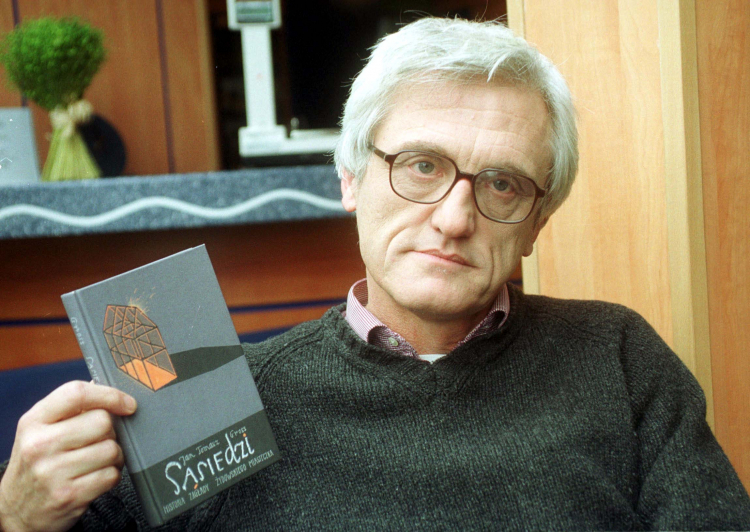
Prof. Jan Tomasz Gross z Uniwersytetu w Nowym Jorku. Autor książki pt.: „Sąsiedzi” , 16.02.2001 r. PAP Zdzisław Lenkiewicz


Zbrodnia w Jedwabnem – od książki Grossa do umorzenia śledztwa IPN

irk/ wus/ lm/


Zbrodnia w Jedwabnem była w latach 2000-2002 – po ukazaniu się głośnej książki Jan Tomasza Grossa – przedmiotem zaciętych sporów, debat naukowych i śledztwa. Przypominamy najważniejsze wydarzenia dotyczące tej sprawy.

W początkach 2000 r. profesor politologii z Nowego Jorku Jan Tomasz Gross w eseju w księdze „Europa nieprowincjonalna” ogłosił relację nieżyjącego już Szmula Wasersztajna z Jedwabnego złożoną w 1945 r. Żydowskiej Komisji Historycznej w Białymstoku. Mówił on wtedy, że 10 lipca 1941 r. na rozkaz Niemców grupa Polaków, mieszkańców miasteczka i okolic, zebrała na rynku 1600 miejscowych Żydów, przez wiele godzin znęcała się nad nimi, po czym zagnała do stodoły i spaliła.

W maju 2000 r. sprawę opisała „Rzeczpospolita”. Po zestawieniu relacji ze wspomnieniami świadków i z literaturą przedmiotu gazeta potwierdziła, że 10 lipca w Jedwabnem i 7 lipca w pobliskim Radziłowie część miejscowych Polaków uczestniczyła w mordzie.

Po swym eseju i obejrzeniu zdjęć do filmu dokumentalnego Agnieszki Arnold o zbrodni w Jedwabnem „Sąsiedzi”, Gross pod koniec maja 2000 r. w książce pt. „Sąsiedzi. Historia zagłady żydowskiego miasteczka” sformułował tezę, że bezpośrednią odpowiedzialność za mord w Jedwabnem ponoszą nie Niemcy, lecz polscy wykonawcy.

31 sierpnia 2000 r.

Prof. Witold Kulesza, nowo powołany szef Głównej Komisji Ścigania Zbrodni Przeciw Narodowi Polskiemu, części Instytutu Pamięci Narodowej, zapowiedział, że rozpocznie się śledztwo ws. mordu na Żydach w Jedwabnem.

14 lutego 2001 r.

Podczas spotkania z działaczami żydowskimi w waszyngtońskim Muzeum Holocaustu prezes IPN prof. Leon Kieres potępił pogrom w Jedwabnem i obiecał przeprowadzenie gruntownego śledztwa w tej sprawie. – Dziś nie znamy jeszcze dokładnego przebiegu wydarzeń, które tam zaszły. Nie znamy dokładnej liczby ofiar. Nie można jednak zaprzeczyć, że w Jedwabnem byli Żydzi, którzy zginęli z rąk Polaków. Nie ma nic w historycznych okolicznościach lub motywach sprawców, co mogłoby złagodzić moralną wymowę tego haniebnego czynu – mówił prof. Kieres.

2 marca 2001 r.

Prezydent Aleksander Kwaśniewski w wywiadzie dla izraelskiej gazety „Jedijot Achronot” zapowiedział, że ze strony polskiej padną przeprosiny związane z pogromem w Jedwabnem: „Za tę dramatyczną sprawę, niezależnie od inspiracji, powodów, tła historycznego, które doprowadziło do tego faktu, niewątpliwie należą się słowa najwyższego hołdu dla ludności żydowskiej tam mieszkającej. Sądzę, że obchody sześćdziesiątej rocznicy tego mordu będą okazją, żeby tego rodzaju akt przeprosin miał miejsce”. Prezydent zastrzegł, żeby nie zapominać, „kto zorganizował Holocaust, kto wywołał II wojnę światową”.

4 marca 2001 r.

W reakcji na pismo rabina gminy wyznaniowej żydowskiej w Warszawie prymas Polski Józef Glemp powiedział, że Kościół katolicki chętnie połączy się w żałobie z gminą żydowską w Polsce i odbędzie wspólną modlitwę za ofiary mordu w Jedwabnem z 1941 roku.

5 marca 2001 r.

Mieszkańcy Jedwabnego powołali społeczny komitet obrony dobrego imienia miasta. Uważali, że prezentowane opinie o okolicznościach mordu Żydów w Jedwabnem w 1941 roku są jednostronne i niezgodne z prawdą. Domagali się m.in. dokładnego ustalenia liczby ofiar mordu Żydów w tej miejscowości i rzeczywistego udziału w tym zdarzeniu Polaków.

6 marca 2001 r.

– Naszym obowiązkiem jest godne uczczenie pamięci ofiar mordu w Jedwabnem oraz rzetelne ustalenie prawdy – oświadczył premier Jerzy Buzek. Zapowiedział, że prowadzone przez IPN śledztwo „ustali szczegółowo okoliczności zbrodni i wskaże jej sprawców”. Dodał, że „udział Polaków w zbrodni w Jedwabnem jest bezsporny – nie zaprzecza temu żaden poważny historyk”.

8 marca 2001 r.

Wezwania do ogólnonarodowych przeprosin Żydów za mord w Jedwabnem w 1941 r. są „co najmniej przedwczesne” oraz „mocno przesadzone” – napisał w oświadczeniu ppłk. Stanisław Karolkiewicz, prezes Światowego Związku Żołnierzy Armii Krajowej. ŚZŻAK stwierdził też, że jeśli się okaże, iż istotnie miejscowi Polacy są winni zbrodni, to „wtedy przyjdzie czas na pokajanie i przeprosiny, ale ze strony faktycznych winowajców, a nie ze strony całego narodu”.

10 marca 2001 r.

Jan Nowak-Jeziorański, w czasie II wojny światowej kurier polskiego rządu i wieloletni szef sekcji polskiej Radia Wolna Europa, napisał w oświadczeniu, zachodzi „paląca potrzeba jakiegoś symbolicznego aktu, który stałby się wyrazem żalu i zadośćuczynienia za zbrodnię i okrucieństwo, którego dopuścili się nasi rodacy”. Zaznaczył, że „jej potępienie przez samą Polskę musi wyprzedzić reakcję opinii światowej”.

11 marca 2001 r.

Do rachunku sumienia i udziału w porządkowaniu miejsc związanych z pogromem Żydów 10 lipca 1941 r. w Jedwabnem wezwał mieszkańców miasteczka biskup łomżyński Stanisław Stefanek. Przyjechał tam na niedzielną sumę, by – jak powiedział – „modlić się wraz z mieszkańcami w obliczu niespotykanego ataku na Jedwabne, ataku na rozumienie II wojny światowej i historii najnowszej”.

13 marca 2001 r.

Rabin Warszawy i Łodzi Michael Schudrich odebrał dyplom „Człowieka Pojednania”, nagrody przyznanej przez Polską Radę Chrześcijan i Żydów. Podczas uroczystości powiedział, że jest dumny z tego, iż mieszka w Polsce, wśród ludzi, którzy są gotowi i otwarci – choć nie wszyscy – na poznanie prawdy, a także, że „prawda o Jedwabnem pozwoli nam wspólnie budować lepszą przyszłość”.

14 marca 2001 r.

Prezes IPN Leon Kieres uzgodnił z Kolegium IPN, w skład którego wchodzą historycy, prawnicy i publicyści, tekst oświadczenia w sprawie mordu w Jedwabnem. „Dramat wydarzeń w Jedwabnem nie może być podstawą do krzywdzących uogólnień w ocenie postaw Polaków w czasie tragicznych lat II wojny światowej” – zaznaczył w oświadczeniu. Dodał, że IPN „kieruje się przekonaniem, że wymordowanie żydowskich sąsiadów nie zostało dokonane w imieniu naszego Narodu” i że „przynależność do rodziny narodów cywilizowanych wyklucza jakiekolwiek usprawiedliwienia dla mordowania dzieci, kobiet i mężczyzn z powodów narodowych, politycznych, społecznych, rasowych lub religijnych, nakazując traktowanie takich czynów jako skierowanych przeciwko całej ludzkości”.

15 marca 2001 r.

Z pomnika ofiar mordu Żydów w Jedwabnem został usunięty napis, że dokonali go Niemcy. Napis ten brzmiał: „Miejsce kaźni ludności żydowskiej. Gestapo i żandarmeria hitlerowska spaliła żywcem 1600 osób 10 lipca 1941 roku”. Według komunikatu Rady Ochrony Pamięci Walk i Męczeństwa głaz upamiętniający zamordowanych Żydów został rozebrany: „Rozbiórka pomnika – uzgodniona z władzami Jedwabnego – wiąże się z planowanym nowym uporządkowaniem i upamiętnieniem miejsc związanych z wydarzeniami jakie rozegrały się w Jedwabnem w lipcu 1941 roku”.

28 marca 2001 r.

Andrzej Przewoźnik, sekretarz generalny Rady Ochrony Pamięci Walk i Męczeństwa poinformował, że Rada ustaliła dokładne miejsce w Jedwabnem, w którym stała stodoła, gdzie spalono żydowskich mieszkańców oraz miejsce pochówku tych osób. Ustalenie dokładnego miejsca zbrodni miało pomóc m.in. w wytyczeniu przyszłego cmentarza.

7 kwietnia 2001 r.

Abp Józef Życiński, metropolita lubelski, zareagował na apel honorowego prezesa Muzeum Holocaustu w Waszyngtonie Milesa Lermana, który podczas spotkania z ministrem spraw zagranicznych Władysławem Bartoszewskim wzywał polskie duchowieństwo do podjęcia się przywódczej roli w odsłonięciu pełnej prawdy o pogromie Żydów w Jedwabnem. Życiński powiedział, że polskie duchowieństwo może odegrać „ważną rolę w kształtowaniu nowej jakości w relacjach polsko-żydowskich, która jest inspirowana dobrem naszego kraju”.

3 kwietnia 2001 r.

W USA ukazała się książka Grossa „Sąsiedzi”. W jednym z pierwszych komentarzy, w „New York Timesie”, Tina Rosenberg, autorka książek o rozrachunkach z historią w krajach byłego bloku sowieckiego, odniosła się do działań polskiego rządu i reakcji społeczeństwa: „Jest to poważna reakcja, ilustrująca postępy Polski w jej stosunku do mniejszości narodowych, co świadczy, że staje się ona krajem normalnym”.

13 kwietnia 2001 r.

Prymas Glemp powiedział, że nie pojedzie do Jedwabnego w 60. rocznicę mordu Żydów, by nie robić demonstracji. Nie chciałbym robić z Jedwabnego widowiska. Jestem gotów do innych form modlitwy przebłagalnej za winy Polaków – zadeklarował.

23 kwietnia 2001 r.

Prokuratura Rejonowa w Sejnach, miejscowa dla wydawcy książki, Ośrodka „Pogranicze”, odmówiła wszczęcia dochodzenia przeciwko Janowi T. Grossowi, autorowi „Sąsiadów”. Zawiadomienia o popełnieniu przestępstwa złożyły: Stronnictwo Narodowe, Stowarzyszenie Przeciwko Antypolonizmowi Leszka Bubla i pismo „Polskie Sprawy” z Poznania. Domagały się ścigania naukowca za publiczne znieważanie narodu polskiego oraz nawoływanie w jego publikacji do nienawiści na tle różnic narodowościowych.

11 maja 2001 r.

Daria Nałęcz, szefowa Archiwów Państwowych, ujawniła rozkaz szefa RSHA Reinharda Heydricha z 1 lipca 1941 r. dotyczący wciągania „antykomunistycznie i antyżydowsko nastawionych Polaków” do pogromów w 1941 r. po agresji Niemiec na ZSRR. – To wskazuje na zamierzoną akcję niemiecką – powiedziała historyczka o rozkazie skierowanym do dowódców tzw. Einsatzgruppen, specjalnych jednostek likwidacyjnych SS przeznaczonych do mordowania Żydów i komisarzy Armii Czerwonej na tyłach frontu wschodniego.

18 maja 2001 r.

IPN wystąpił do Rady Ochrony Pamięci Walk i Męczeństwa o możliwość przeprowadzenia ekshumacji ofiar mordu w Jedwabnem.

22 maja 2001 r.

Podczas spotkania z ministrem sprawiedliwości Lechem Kaczyńskim i prezesem IPN Leonem Kieresem rabina Michaela Schudricha i przedstawicieli Związku Gmin Wyznaniowych Żydowskich w RP: Stanisława Krajewskiego i Piotra Kadlcika przedstawiciele strony żydowskiej przyjęli do wiadomości, że ekshumacja zostanie przeprowadzona „zgodnie z polską procedurą karną i z udziałem rabinów”. Wcześniej Schudrich przekonywał ministra, że ekshumacja w Jedwabnem jest niepotrzebna i sprzeczna z tradycją żydowską, która głosi, że szczątki ludzkie powinny spokojnie spoczywać w miejscu pochówku.

27 maja 2001 r.

Podczas specjalnego nabożeństwa w Warszawie Episkopat Polski pod przewodnictwem prymasa Polski kardynała Glempa prosił Boga o wybaczenie wszelkiego zła, jakie ze strony Polaków dotknęło Żydów w Jedwabnem i innych miejscach. Biskupi wyrazili żal i skruchę w specjalnej przygotowanej na tę okazję modlitwie przebłagalnej. Modlili się również za tych, którzy ginęli, ratując Żydów. Nabożeństwo zakończyła modlitwa napisana przez papieża Jana Pawła II w intencji narodu żydowskiego.

28 maja 2001 r.

Sekretarz generalny ROPWiM Andrzej Przewoźnik przedstawił tekst inskrypcji, który miał się znaleźć na upamiętnieniu ofiar mordu w Jedwabnem: „Pamięci Żydów z Jedwabnego i okolic, mężczyzn, kobiet, dzieci, współgospodarzy tej ziemi, zamordowanych oraz żywcem spalonych w tym miejscu 10 lipca 1941 roku. Ku przestrodze potomnym, by rozpalony przez niemiecki nazizm grzech nienawiści już nigdy nie obrócił przeciwko sobie mieszkańców tej ziemi. Jedwabne 10 lipca 2001”. Ambasador Izraela w Polsce Szewach Weiss skomentował: – W takich sprawach trzeba mieć i sprawiedliwość, i odwagę, i tu, i tam kompromisy, ale za daleko ten kompromis.

31 maja 2001 r.

Amerykański tygodnik “New Republic” opublikował polemikę redaktora naczelnego „Gazety Wyborczej” Adama Michnika z tekstem amerykańskiego specjalisty od Holokaustu Leona Wieseltiera, który napisał m.in., że „było znacznie więcej Polaków morderców” niż tych, którzy zdecydowali się ich ratować. Michnik podkreślił, że w debacie o Jedwabnem Polacy otwarcie stawili czoło bolesnym faktom ze swej historii, natomiast Wieseltier zdaje się tego nie dostrzegać i powiela „wygodne żydowskie stereotypy” na ich temat: „Tak, byli Polacy, którzy w czasie okupacji popełnili zbrodnie na Żydach. Ale zbrodnie te zostały potępione przez emigracyjny rząd londyński i były karane przez polskie podziemie. (…) Każdy Polak ma obowiązek spojrzeć żydowskimi oczami na cierpienie Żydów, aby je lepiej zrozumieć. I ty także powinieneś spróbować dojrzeć w swym polskim rozmówcy przyjaciela, który boryka się ze swoją trudną historią, a nie antysemitę i krętacza” – zwrócił się Michnik do Wieseltiera.

4 czerwca 2001 r.

Rozpoczęta 1 czerwca ekshumacja zakończyła się znalezieniem i przekazaniem do szczegółowych badań blisko 100 łusek, nabojów i tzw. łódek od karabinów. Przebadano m.in. pół tony mieszaniny popiołu, ziemi i szczątków ludzkich. Oszacowano, że są tam szczątki ok. 50 dorosłych osób, które po przebadaniu zostały na powrót umieszczone w wykopie i przysypane. Zgodnie z ustaleniami ze środowiskami żydowskimi, nie ruszano z miejsca zachowanych kości. Warstwę takich szczątków odkryto pod warstwą mieszaniny popiołu, ziemi i szczątków.

13 czerwca 2001 r.

Andrzej Przewoźnik poinformował, że tekst inskrypcji na nowym pomniku nagrobnym upamiętniającym ofiary mordu w Jedwabnem został skrócony o część kontrowersyjną dla środowisk żydowskich. Nowa wersja (w językach polskim, hebrajskim i jidisz) brzmiała: „Pamięci Żydów z Jedwabnego i okolic, mężczyzn, kobiet, dzieci, współgospodarzy tej ziemi, zamordowanych, żywcem spalonych w tym miejscu 10 lipca 1941 roku. Jedwabne 10 lipca 2001 roku”. Z pierwotnej treści usunięto zdanie: „Ku przestrodze potomnym, by rozpalony przez niemiecki nazizm grzech nienawiści już nigdy nie obrócił przeciwko sobie mieszkańców tej ziemi”. Na pomniku umieszczono także hebrajski tekst modlitwy za zmarłych.

14 czerwca 2001 r.

W liście do prezydenta Kwaśniewskiego dziekan i założyciel centrum Szymona Wiesenthala, rabin Marvin Hier, napisał, że pominięcie w inskrypcji na pomniku, iż sprawcami mordu w Jedwabnem byli Polacy, „nie tylko zniekształca prawdę i historię, lecz także bezcześci pamięć” zabitych.

10 lipca 2001 r.

– Jako człowiek, obywatel i jako prezydent Rzeczypospolitej Polskiej przepraszam. Przepraszam w imieniu swoim i tych Polaków, których sumienie jest poruszone tamtą zbrodnią. W imieniu tych, którzy uważają, że nie można być dumnym z wielkości polskiej historii, nie odczuwając jednocześnie bólu i wstydu z powodu zła, które Polacy wyrządzili innym – powiedział podczas uroczystości w Jedwabnem prezydent Kwaśniewski. Podkreślił, że za śmierć Żydów z Jedwabnego, Radziłowa i innych miejscowości „odpowiedzialność ponoszą ich sprawcy i inspiratorzy”.

– Każdy człowiek odpowiada tylko za własne czyny. Synowie nie dziedziczą win ojców. Ale czy wolno nam powiedzieć: to było dawno, to byli inni? Naród jest wspólnotą. Wspólnotą jednostek, wspólnotą pokoleń – dodał.

– Państwo polskie nie było w stanie obronić swych obywateli przed mordem dokonanym z hitlerowskim przyzwoleniem, z hitlerowskiej inspiracji – powiedział prezydent. Na uroczystościach rząd reprezentował szef MSZ Władysław Bartoszewski, który był także przewodniczącym Rady Ochrony Pamięci Walk i Męczeństwa.

16 lipca 2001 r.

W prasie w USA pojawiło się kilka głosów wyrażających uznanie dla Kwaśniewskiego za przeprosiny w Jedwabnem. „Polski prezydent uważa, że Polacy są teraz wystarczająco silni, aby móc powiedzieć, że to ich rodacy popełnili zbrodnię sprzed 60 lat. Jego darem dla swego kraju i dla świata było przesłanie, że jeśli nie przyznamy przed samymi sobą, że wini są winni, bratobójstwo będzie się powtarzać” – napisał A.M.Rosenthal, były redaktor odpowiedzialny „New York Timesa”, a wcześniej korespondent tej gazety w Polsce. „New York Times” zamieścił też list rabina Zeva Friedmana, który wyeksponował bojkot uroczystości w Jedwabnem przez niektóre środowiska i postawę negacji polskiej odpowiedzialności za masakrę: „Powinno się odmówić pełnego przyjęcia do zachodniej rodziny narodów każdemu bałtyckiemu czy wschodnioeuropejskiemu krajowi, który nie okazuje pełnego potępienia zbrodni przeciw ludzkości, popełnionych przez ich rodaków w czasie II wojny światowej”.

19 grudnia 2001 r.

Prokurator Radosław Ignatiew poinformował, że IPN uznał za wysoce mało prawdopodobną tezę, iż pod stodołą w Jedwabnem strzelano do Żydów, gdyż ekspertyza łusek znalezionych w czasie ekshumacji wykazała ich pochodzenie albo z broni, która weszła na wyposażenie Niemców dopiero w 1942 r., albo z I wojny światowej. – Nie uzyskaliśmy dotychczas dowodów, które by wskazywały, że oprócz ośmiu żandarmów, o czym wcześniej wiedziano, w Jedwabnem były inne umundurowane formacje niemieckie – powiedział Leon Kieres, prezes IPN.

18 kwietnia 2002 r.

91-letni były dowódca komando gestapo z Ciechanowa obersturmfuehrer Herman Schaper był ostatnim świadkiem przesłuchanym w śledztwie IPN ws. mordu na Żydach w Jedwabnem. Na pytanie o pogromy w pobliżu Łomży odpowiedział, że „dochodziło do dzikich akcji tubylczej ludności i jakichś oddziałów”. Zastrzegł, że nie wie, „jakie to były oddziały”.

9 lipca 2002 r. IPN ogłosił końcowe ustalenia śledztwa ws. zamordowania żydowskich mieszkańców Jedwabnego. Według IPN mordu Żydów 10 lipca 1941 r. dokonała ok. 40-osobowa grupa polskiej cywilnej ludności, która miała w nim „rolę decydującą”, ale inspiratorami byli Niemcy, choć ich roli do końca nie da się ustalić.

– Zasadne jest przypisanie Niemcom sprawstwa tej zbrodni. Obecność choćby biernie zachowujących się niemieckich żandarmów z posterunku w Jedwabnem, a także innych umundurowanych Niemców – jeśli założyć, że byli obecni na miejscu zdarzeń – była równoznaczna z przyzwoleniem i tolerowaniem dokonania zbrodni – powiedział prokurator Ignatiew.

Śledztwo IPN wykluczyło, by w Jedwabnem zostało zamordowanych 1600 Żydów. Przypuszczalnie było to około 300 osób, na co wskazały ekspertyzy po ekshumacji.


Zawartość publikowanych artykułów i materiałów nie reprezentuje poglądów ani opinii Reunion’68,
ani też webmastera Blogu Reunion’68, chyba ze jest to wyraźnie zaznaczone.
Twoje uwagi, linki, własne artykuły lub wiadomości prześlij na adres:
webmaster@reunion68.com


Strategy over spectacle: The message behind Netanyahu’s low-key, high-stakes US visit

Strategy over spectacle: The message behind Netanyahu’s low-key, high-stakes US visit

HERB KEINON


Netanyahu’s quiet trip to Washington proves that the two were meeting for impact, not optics.

Here, Prime Minister Benjamin Netanyahu, accompanied by Trump, speaks during a dinner in the Blue Room of the White House on Monday in Washington. / (photo credit: Andrew Harnik/Getty Images)

A great deal of buildup always precedes prime ministerial visits to the US, and this week’s visit by Prime Minister Benjamin Netanyahu to Washington was no exception. In fact, it was preceded by more than most.

There was an expectation that a Gaza ceasefire and hostage deal would be announced. That an expansion of the Abraham Accords would be broadly hinted at. That a coordinated US-Israel policy regarding upcoming talks with Iran would be thrashed out.

As of Thursday afternoon, neither of the first two expectations has been met. As for coordination toward Iran, if guidelines and an agreement have been worked out, that is all taking place very discreetly behind tightly closed doors.

As Netanyahu’s visit drew to a close – though on Thursday it was still unclear whether he would fly home that evening as planned or stay through the weekend for additional talks – what stood out was not what was said, but what wasn’t. The most notable feature of the visit so far was its silence – its lack of news.

There were no handshakes in the Oval Office with US President Donald Trump as dozens of cameras clicked, no dramatic announcements, only limited photo-ops. The two Trump-Netanyahu meetings – first a dinner in the Blue Room on Monday evening, then a follow-up meeting in the Oval Office the next night – took place long after Israelis had gone to bed. That’s a sharp departure from what has almost become protocol during these prime ministerial visits: scheduling the high-profile meetings in time to make the 8 p.m. Israeli television news.

Not this time.

Prime Minister Benjamin Netanyahu meets with US President Donald Trump at the White House, in Washington DC, US, July 8, 2025 (credit: Avi Ohayon/GPO)

The relative dearth of news-generating events and press opportunities was not accidental. It signaled that this was not a trip designed for headlines, performative diplomacy, or political theater. The structure of the visit sent a clear message: the stakes are high, and the risks of saying the wrong thing to the wrong audience at the wrong time are even higher.

It’s not every day that a media-savvy Israeli prime minister meets a voluble US president like Trump without turning the Oval Office moment into a headline event.

But this time, the choreography was intentional. The few symbolic moments that were revealed – the gifting of a mezuzah case in the shape of a B-2 bomber made out of Iranian missile shrapnel, a letter nominating Trump for the Nobel Peace Prize – were carefully selected and tightly controlled.

The message? This trip was about substance, not optics.

BACK IN March, the last time Netanyahu was in Washington, Iran dominated the agenda. It was at an Oval Office photo-op that Trump announced the US would begin nuclear talks with Tehran.

Ironically, while the current visit came just two weeks after Operation Rising Lion and a US-led strike on Iran’s nuclear facilities, it wasn’t Iran that took center stage. It was Gaza.

The shift of attention back to Gaza – from the bombed centrifuges of Fordow to the tunnels of Beit Hanun – was not a matter of ideology. It was a matter of immediacy. Operation Rising Lion had a definitive endpoint: the US attacks on Fordow, Natanz, and Isfahan. The war in Gaza, by contrast, continues to drag on.

Five IDF soldiers were killed in Gaza on Monday, another on Wednesday, bringing the total number of Israeli soldiers killed in Gaza since the Iran operation to 17. That grim tally underscored a hard truth: the war is far from over, and the Iranian operation did not end it. 

That reality, as well as the hostages still languishing in Hamas captivity, continues to anchor Israel’s emotional center of gravity. For the public, it weighs more heavily than even the glow of success from the Iran strike.

Trump sees return of Gaza hostages as priority

FOR TRUMP as well, ending the war and freeing the hostages are a priority. He has said so repeatedly.

“We’re very close to a deal,” Trump declared yet again on Wednesday, echoing what he has been saying for days. “We want to have a ceasefire, we want to have peace. We want to get the hostages back. And I think we’re close to doing it.”

And yet, unlike two weeks ago – when he reportedly ordered Netanyahu to call off airstrikes on Tehran after Iran broke the ceasefire – Trump has not, at least publicly, applied pressure on Netanyahu to make concessions that would hasten an agreement in Gaza.

This time, the diplomacy is being done quietly. A Qatari delegation arrived in Washington this week, and according to an Axios report, Strategic Affairs Minister Ron Dermer met with a senior Qatari official and Middle East envoy Steve Witkoff at the White House to discuss a potential deal and try to bridge the remaining gaps.

Israel has reportedly passed a new proposal to Hamas via Qatar. The plan centers on a gradual redeployment of the IDF from key areas in Gaza, with the Morag Corridor – believed to be the last major point of contention in the ceasefire negotiations – at the heart of the discussions.

One question hangs over all this, even if few are voicing it aloud: Did Israel trade Gaza for Fordow? In other words, did Netanyahu agree to soften his stance in Gaza in exchange for US participation in the strikes on Iran’s nuclear infrastructure?

If Trump helped Netanyahu tick his most crucial strategic box – inflicting a devastating blow to Iran’s nuclear timeline – might Netanyahu now be expected to help Trump tick his own: notching a major diplomatic win in Gaza?

And perhaps, with Iran no longer on the front burner, Netanyahu feels he can afford to be more flexible. After all, it will be hard for Hamas to claim any form of victory at a moment when the Iranian “axis of resistance” – of which it was a central pillar – has so dramatically unraveled since October 7.

“They took over Iraq, Syria, Lebanon with Hezbollah, Gaza with Hamas, and the mouth of the Red Sea with the Houthis in Yemen. They were invincible,” Netanyahu said of Iran during a Fox News interview on Wednesday. “But we broke them.

“We first peeled off Hezbollah, which led to the collapse of the Assad regime, which in turn led to the collapse of the Iranian axis,” he continued. “So I think it’s a different Middle East.”

That different Middle East may now be prompting Netanyahu to readjust his redlines in Gaza.

Still, he has his coalition to think about. Religious Zionist Party head Bezalel Smotrich and Otzma Yehudit chairman Itamar Ben-Gvir have made their redlines abundantly clear: no deal that leaves Hamas intact will be accepted. Which is why Netanyahu’s rhetoric in Washington, even while discussing a Gaza ceasefire, has been carefully measured.

“We are determined to complete our war objectives in Gaza,” he said. “To release all our hostages, to bring about the destruction of Hamas’s military and governmental capabilities, and of course to ensure that Gaza will no longer be a threat to Israel.”

But even with those words, the fact that the negotiations are continuing at the current level means there is room for maneuver – room that Trump has made clear he wants to see left open – even if Smotrich and Ben-Gvir do not.

What Trump hasn’t made clear, however, is any public pressure on Netanyahu. If it is happening, it is taking place in the back rooms, far away from the cameras. In front of the cameras, as far as the cameras are permitted, the closeness of the alliance was on full display during this visit.

For instance, the mezuzah case in the shape of a B-2 bomber was more than a novelty. It was a thank-you for Fordow – and a reminder of the depth of strategic cooperation that enabled that mission.

Likewise, Netanyahu’s presentation to Trump of a letter he had written to the Norwegian Nobel Committee nominating the president for the Nobel Peace Prize – a nomination that came months after the application process had ended – was carefully thought out. It positioned Trump as a peacemaker, reinforcing a narrative that serves him well: the man who brokered the Abraham Accords, helped end Iran’s grip on the region, and is thereby forging a new Middle East.

PM’s visit to Washington will not be remembered for fanfare in Israel

WHILE NETANYAHU spent the week in Washington, back in Israel the public mood was increasingly weary.

Support for the war’s overall goals remains strong, though there is continued skepticism whether defeating Hamas and freeing the hostages can be done simultaneously. Furthermore, the costs – the fallen soldiers, the hostages, the lingering trauma – are taking a toll.

Even the remarkable success of Operation Rising Lion has done little to lighten the emotional load. That’s because the October 7 trauma remains unresolved. And because the Israel-Hamas war, unlike the campaign against Iran, has no clear endgame.

The prime minister’s visit to Washington this week will not be remembered for fanfare. There was no joint announcement with the president of a new regional dawn. No memorable ceremonies. No dramatic sound bites.

But that does not mean the visit wasn’t significant.

The very absence of theatrics may say more than any press conference could. It hinted at hard choices ahead. It hinted at strategic bargains that may have already been made. And it hinted at the possibility – still out of reach – of a release of the hostages, a ceasefire, and a new diplomatic beginning.

Those outcomes didn’t materialize this week, but for the first time in a long time, they feel possible. And as the country waits, it’s worth returning to what Netanyahu told Fox News in his interview on Wednesday:

“President Wilson used to say, ‘I believe in open covenants of peace, openly arrived at.’ I have a slight change in that formula. I believe in open covenants, secretly arrived at. Whatever we can do in diplomacy, I think we should do discreetly, and then surprise people.”

The nation now waits to see what surprise – if any – might yet emerge from this low-key, high-stakes trip to Washington.


Zawartość publikowanych artykułów i materiałów nie reprezentuje poglądów ani opinii Reunion’68,
ani też webmastera Blogu Reunion’68, chyba ze jest to wyraźnie zaznaczone.
Twoje uwagi, linki, własne artykuły lub wiadomości prześlij na adres:
webmaster@reunion68.com


The Predictable Rise of Zohran Mamdani — and His Congressional Appeasers

The Predictable Rise of Zohran Mamdani — and His Congressional Appeasers

Irit Tratt


Zohran Mamdani. Photo: Ron Adar / SOPA Images via Reuters Connect

Zohran Mamdani, the State Assemblyman and Democratic nominee for New York City mayor, was dealt another reason to celebrate this week, when it was revealed that the young socialist had won the most votes ever in a New York City primary. 

While many of Mamdani’s progressive comrades are reveling in their candidate’s electoral success, his commanding victory on June 24 is leaving establishment Democrats concerned, confused, and in shock. 

Yet for those who have kept a discerning eye on the left-wing trajectory of the Democratic Party, the ascendance of a politician such as Mamdani came as no surprise, and was in fact entirely predictable. 

What first began in 2019 as an unwillingness to disassociate from an energized leftist cohort of lawmakers entering Congress, has now evolved into a troubling pattern of Democrats failing to reject candidates espousing dangerous anti-American and antisemitic positions. 

Mamdani, the presumptive next mayor of New York City, is transparent about his hatred for Israel, and his tolerance of violent threats against Jews. His election poses a direct threat to the safety and security of Jewish residents in America’s largest city. 

Thirty-six hours following the October 7 massacre, the lawmaker, in a statement on X, blamed the “ongoing violence” on Israeli Prime Minister Benjamin Netanyahu and Israel’s government. 

He has made no attempts to scrub his social media of his depraved posts, which include flipping the middle finger at a Christopher Columbus statue, and calling Jew-hating Democratic Congresswoman Rashida Tlaib (D-MI) his hero.

Despite being given repeated opportunities to condemn the phrase “Globalize the Intifada,” a term used as a rallying cry to murder Jews, Mamdani defends its use, and often reverts to speaking about his broader objective to root out “all bigotry.” 

For their part, New York’s Democratic Congressional delegation is buckling under the progressive weight of their party. 

With the exception of Long Island Congresswoman Laura Gillen (D-NY), who said that Socialist Mamdani is “too extreme” to lead New York City, the state’s liberal lawmakers are refusing to rule out endorsing the socialist in the general election, while delivering varying statements on Mamdani’s defense of the “Globalize the Intifada” phrase. 

When pressed to repudiate Mamdani’s defense of the violent expression, House Minority Leader Hakeem Jeffries (D-NY) stated in an interview on MSNBC that Mamdani should “clarify his position” on the use of the term, which he admits is “unacceptable.”

The State’s senior Senator, Chuck Schumer, who will likely face a primary challenge from the left when he is up for reelection in 2028, carefully curated his words and condemned the phrase without mentioning Mamdani directly.

Schumer’s Democratic colleague, Senator Kirsten Gillibrand’s, efforts to denounce Mamdani for failing to discredit “Globalize the Intifada” was soon eclipsed by the Junior Senator walking back her harsh words and apologizing to the mayoral nominee for saying in that same interview that Mamdani had made references to “global jihad.”

Even Bronx Congressman Ritchie Torres, who objects to the jihadi slogan, is tempering any distancing from Mamdani and saying that he is “committed to a working relationship with him.” 

Indeed, once radicals like Omar or Mamdani gain power, Democrats embark on a roadmap of expressing displeasure with some of their views, while simultaneously employing political jargon centering on “engagement,” “discussion,” and “conversation,” as if Mamdani’s fanatical positions emanate from a sincere misreading of the issues rather than being anchored to a deeply held anti-American worldview.

Americans were clued into this strategy years ago, when then-House Speaker Nancy Pelosi (D-CA) agreed to a 2019 Rolling Stone photo shoot alongside members of the new insurgent wing of the party, including Democratic Reps. Alexandria Ocasio-Cortez (NY) and Ilhan Omar (MN). 

Democrats weren’t about to reject this new faction of disruptors and leftist ideologues; they were going to lean in and learn from them. 

As such, in the coming weeks, New Yorkers can expect more Democratic officials to follow the lead of New York Reps. Alexandria Ocasio-Cortez and Jerry Nadler, both of whom have endorsed Mamdani.

It’s worth noting that Jeffries has officially supported anti-Israel figures in the past, with the Minority Leader formally backing disgraced former Congressman Jamaal Bowman during last year’s Democratic primary in New York’s 16th Congressional District. 

Combined with the actions of major unions, such as the United Federation of Teachers (UFT), announcing their endorsement of Mamdani earlier this week, it’s hard to envision a scenario under which Democrats launch a serious counterweight to Mamdani’s threatening candidacy.

And while those who live outside the city’s liberal ecosystem are quick to indicate that a nominee as radical as Mamdani could never rise to power in their region, most Democrats dominating the national political landscape harbor little will to wrest control away from radicals in their party. 

Senior Editor of Commentary Magazine, Seth Mandel, recently wrote about Senators Chris Murphy (D-CT) and Andy Kim’s (D-NJ) departure from the pro-Jewish sympathies of their predecessors.

As Mandel notes, over the last year, Sens. Murphy and Kim both voted to block arms sales to Israel, just as the Jewish State was battling Iran’s terrorist proxies. 

Murphy has also praised Mamdani, calling him a “dynamic” and “new voice.” 

Their hostility towards Israel may not present in the same dramatic fashion as Mamdani’s — but their objective conveys a similar desire to complete the progressive sea change in the Democratic Party, albeit through the more palatable and cultured Congressional process.  

After years of accommodating anti-Israel politicians, Mamdani’s candidacy is an unsettling testament to the consequences of indifference, and that hard-left antisemitic politicians may no longer be outliers, but reflect a frightening and new normal. 


Irit Tratt is a writer who resides in New York. Follow her on X @Irit_Tratt. 


Zawartość publikowanych artykułów i materiałów nie reprezentuje poglądów ani opinii Reunion’68,
ani też webmastera Blogu Reunion’68, chyba ze jest to wyraźnie zaznaczone.
Twoje uwagi, linki, własne artykuły lub wiadomości prześlij na adres:
webmaster@reunion68.com


Ustalenia IPN: zbrodni w Jedwabnem dokonali Polacy z niemieckiej inspiracji

Witold Kulesza /L/, szef pionu śledczego IPN podczas konferencji dotyczącej śledztwa w sprawie zbrodni w Jedwabnem, Warszawa, 5 czerwca 2001r. Fot. PAP/Piotr Rybarczyk


Ustalenia IPN: zbrodni w Jedwabnem dokonali Polacy z niemieckiej inspiracji

jkrz/ wj/ jw/


10 lipca 1941 r. w Jedwabnem zamordowanych zostało mniej więcej 340 miejscowych Żydów, większość z nich spalono żywcem w stodole. Według ustaleń IPN sprzed ponad 20 lat zbrodni dokonali Polacy, ale z niemieckiej inspiracji.

Jedwabne, miasteczko w okolicach Łomży, między wrześniem 1939 r. a czerwcem 1941 r. znajdowało się pod okupacją sowiecką. 23 czerwca 1941 r., nazajutrz po wybuchu wojny niemiecko-sowieckiej, do Jedwabnego wkroczył witany kwiatami przez mieszkańców oddział Wehrmachtu. Żołnierze natychmiast ruszyli dalej na wschód, a nadzór nad miejscowością od tego momentu sprawowała niemiecka żandarmeria (według różnych źródeł posterunek liczył od ośmiu do 11 osób). Zaczęły też funkcjonować władze cywilne – z polskim burmistrzem i jego zastępcami.

To oni mieli być organizatorami zbrodni, do której doszło 10 lipca 1941 r.

Pierwsze śledztwo w tej sprawie, tuż po wojnie, zakończyło się procesem przed Sądem Okręgowym w Łomży i skazaniem na śmierć jednego oskarżonego, a na kary więzienia (od ośmiu do 15 lat) dziewięciu kolejnych.

Ostatecznie jednak wyrok śmierci w drodze łaski został zamieniony na karę więzienia, a wszyscy skazani wyszli na wolność przed upływem terminu zasądzonej kary.

Nowe śledztwo w 2000 r. wszczął Instytut Pamięci Narodowej i wobec niewykrycia sprawców umorzył postępowanie.

W punkcie wyjścia pion śledczy IPN przyjął trzy hipotezy, które weryfikowano na podstawie wszystkich dowodów gromadzonych w toku śledztwa. Według pierwszej z tych hipotez zbrodni w Jedwabnem dokonali sami Niemcy bez udziału Polaków lub też zmuszając do udziału w jej dokonaniu pewną grupę polskich cywili. Druga hipoteza zakładała, że zbrodni w Jedwabnem dokonali sami Polacy z własnej inicjatywy, bez współdziałania z Niemcami, zaś trzecia, że zbrodni „dokonała grupa Polaków działających z niemieckiej inspiracji, w poczuciu dozwolonej ze strony Niemców i pełnej bezkarności”.

„Wykonawcami zbrodni, jako sprawcy sensu stricto, byli polscy mieszkańcy Jedwabnego i okolic – mężczyźni, w liczbie co najmniej około 40. (…) Należy przyjąć, iż aktywnie uczestniczyli oni w dokonaniu zbrodni, uzbrojeni w kije, orczyki i inne narzędzia.”

Rok przed wydaniem postanowienia o umorzeniu śledztwa, 9 lipca 2002 r. (zakończono wówczas wszystkie czynności zaplanowane w śledztwie), prokurator Radosław Ignatiew (ówczesny naczelnik Oddziałowej Komisji Ścigania Zbrodni przeciwko Narodowi Polskiemu w Białymstoku) przedstawił prawdopodobny przebieg zbrodni.

Napisał, że 10 lipca 1941 r. nad ranem do Jedwabnego zaczęli przybywać mieszkańcy okolicznych wsi z zamiarem brania udziału w zaplanowanej wcześniej zbrodni zabójstwa żydowskich mieszkańców tej miejscowości. W wieczór poprzedzający zdarzenia niektórzy żydowscy mieszkańcy uprzedzeni zostali przez znajomych Polaków, że przygotowywane jest zbiorowe działanie przeciwko Żydom.

Od godzin rannych rozpoczęło się wypędzanie z domów ludności żydowskiej i gromadzenie jej na rynku miasteczka. Zgromadzonym kazano wyrywać trawę spomiędzy kamieni brukowych, którymi wyłożony był rynek. Dopuszczano się przy tym aktów gwałtu i przemocy wobec zgromadzonych. Dokonywali tego mieszkańcy Jedwabnego i okolic, narodowości polskiej.

Prokurator Ignatiew zaznaczył, że liczni przesłuchani w toku śledztwa świadkowie wspominali o obecności w Jedwabnem umundurowanych Niemców. „Niemcy ci prawdopodobnie w małej grupie asystowali w akcji wyprowadzania pokrzywdzonych na rynek i do tego ograniczyła się ich czynna rola. Nie jest w świetle zgromadzonych dowodów jasne, czy uczestniczyli w konwojowaniu ofiar na miejsce kaźni i czy byli obecni przy stodole. Zeznania świadków w tym zakresie różnią się zasadniczo” – napisał prokurator IPN.

W kolejnym fragmencie opisał zdarzenia na rynku i w jego okolicach. Zgromadzonych tam żydowskich mężczyzn zmuszono do rozbicia stojącego na skwerku pomnika Lenina (ustawionego w trakcie okupacji sowieckiej – PAP), a potem do przyniesienia jego fragmentów na rynek, zaś stamtąd do stodoły.

„Grupa ta (żydowskich mężczyzn – PAP) mogła liczyć około 40-50 osób. Był w niej również miejscowy rabin. Ofiary z tej grupy zgładzono w nieustalony sposób, a ciała wrzucono do grobu wykopanego wewnątrz stodoły. Na zwłoki w grobie wrzucono części rozbitego popiersia Lenina” – napisał prokurator Ignatiew.

Druga, większa grupa ludności żydowskiej, została wyprowadzona z rynku po upływie pewnego czasu, być może 1-1,5 godziny, jak określił to jeden ze świadków. Inni świadkowie wskazywali, że było to późne południe. „W grupie tej było kilkaset osób, prawdopodobnie około 300, na co wskazuje liczba ofiar w obu grobach, według szacunkowej oceny ekipy archeologiczno-antropologicznej biorącej udział w czynnościach ekshumacyjnych” – zaznaczył prokurator.

W drugiej grupie znajdowały się ofiary obu płci w różnym wieku, wśród nich także dzieci i niemowlęta. Ludzie ci zostali wprowadzeni do drewnianej, krytej strzechą stodoły. Po zamknięciu budynek został oblany naftą i podpalony. Znajdujący się w środku Żydzi spłonęli żywcem.

Prokurator Ignatiew odniósł się również do podanej w publikacji Jana Tomasza Grossa „Sąsiedzi” informacji o liczbie ofiar zbrodni z 10 lipca 1941 r. – ok. 1600.

„Niepełny rozmiar prac ekshumacyjnych, a także niemożność zweryfikowania hipotezy o istnieniu grobu lub grobów zbiorowych na terenie żydowskiego cmentarza nie pozwala na określenie w sposób pewny liczby wszystkich ofiar zamordowanych w dniu zbrodni w Jedwabnem. Liczba 1600 ofiar bądź zbliżona, wydaje się wysoce nieprawdopodobna i nie znalazła potwierdzenia w toku prowadzonego śledztwa. W dniu zbrodni w Jedwabnem przebywały na pewno osoby narodowości żydowskiej, które schroniły się tam m.in. z Wizny i Kolna. Jednakże pewna grupa żydowskiej ludności ocalała. Przyjąć można, że było to co najmniej kilkadziesiąt osób, które mieszkały po dacie zbrodni w miasteczku i jego okolicach, do początków listopada 1942 r.” – napisał prokurator Ignatiew.

„Co do udziału polskich cywili w dokonanej zbrodni, należy przyjąć, iż była to rola decydująca w zrealizowaniu zbrodniczego planu. Przyjąć można, że zbrodnia w Jedwabnem została dokonana z niemieckiej inspiracji. Obecność choćby biernie zachowujących się niemieckich żandarmów z posterunku w Jedwabnem, a także innych umundurowanych Niemców (jeśli założyć, że byli oni obecni na miejscu zdarzeń) była równoznaczna z przyzwoleniem i tolerowaniem dokonania zbrodni na żydowskich mieszkańcach tej miejscowości. W tym stanie rzeczy stwierdzić należy, że zasadne jest przypisanie Niemcom, w ocenie prawnokarnej, sprawstwa sensu largo tej zbrodni. Wykonawcami zbrodni, jako sprawcy sensu stricto, byli polscy mieszkańcy Jedwabnego i okolic – mężczyźni, w liczbie co najmniej około 40. (…) Należy przyjąć, iż aktywnie uczestniczyli oni w dokonaniu zbrodni, uzbrojeni w kije, orczyki i inne narzędzia” – zaznaczył.

Z zeznań świadków wynikało, że po dokonaniu zbrodni doszło do rabowania mienia pozostałego po ofiarach.

W uzasadnieniu do umorzenia śledztwa zaznaczono, że nie jest możliwe określenie przyczyn biernego zachowania się większości ludności miasteczka w obliczu zbrodni. „W szczególności nie można przesądzić, czy bierność ta była wynikiem akceptacji zbrodni, czy też wynikała z zastraszenia brutalnością działania sprawców. Taka postawa mieszkańców Jedwabnego wobec zbrodni dokonanej w dniu 10 lipca 1941 r. nie poddaje się kwalifikacji prawnokarnej, nie może być zatem przedmiotem ocen w kategorii przypisania odpowiedzialności karnej” – napisał prokurator Ignatiew.

Na koniec dodał, że spośród osób, których nazwiska, jako sprawców wymienione zostały w aktach spraw, część została prawomocnie osądzona, a inne już w chwili prowadzonego przez niego śledztwa nie żyły.

„Spośród osób, których nazwiska, jako sprawców wymienione zostały w aktach spraw, część została prawomocnie osądzona. Inne już nie żyją. […] Nie zgromadzono wystarczających dowodów, które pozwoliłyby na zidentyfikowanie i postawienie zarzutów ewentualnym innym żyjącym sprawcom, którzy zaangażowani byli we wzięcie udziału w dokonaniu zabójstwa obywateli polskich narodowości żydowskiej w dniu 10 lipca 1941 r. w Jedwabnem” – napisał prokurator Ignatiew w konkluzji uzasadnienia o umorzeniu śledztwa. (PAP)


Zawartość publikowanych artykułów i materiałów nie reprezentuje poglądów ani opinii Reunion’68,
ani też webmastera Blogu Reunion’68, chyba ze jest to wyraźnie zaznaczone.
Twoje uwagi, linki, własne artykuły lub wiadomości prześlij na adres:
webmaster@reunion68.com

The Trump-Bibi Bond

The Trump-Bibi Bond

Lee Smith


Like Reagan and Thatcher, and Roosevelt and Churchill, an American president found a fighting partner—this time in the Middle East

.

President Donald Trump shakes hands with Israeli Prime Minister Benjamin Netanyahu at the White House in Washington, D.C., April 7, 2025
Brendan Smialowski/AFP via Getty Images

Israeli Prime Minister Benjamin Netanyahu will meet Donald Trump today at the White House for their fourth meeting in a year. Last July, Netanyahu traveled to Palm Beach, Florida, to meet with candidate Trump at his Mar-a-Lago mansion. During their last official meeting at the White House on April 7, the president seemed to throw a curveball at Bibi when he announced that the administration would engage in direct talks with Iran over its nuclear program. Both the left-wing media and the Tucker Carlson-led faction of the right erupted with glee at the thought of the Israeli prime minister getting publicly spanked. As it turned out, the meeting was camouflage for Trump and Netanyahu’s joint plans to eliminate Iran’s nuclear program through military action—part of the most successful high-level deception operation since the Allied landing at Normandy.

This time, there’s little doubt about the strength of the relationship between the two world leaders, who will discuss plans for a cease-fire in Gaza and no doubt celebrate the historic victory they won together by destroying the bulk of Iran’s nuclear weapons program. “Bibi and I just went through HELL together,” Trump posted on Truth Social on June 25. “Bibi could not have been better, sharper, or stronger in his LOVE for the incredible Holy Land.” The American president added, “Perhaps there is no one that I know who could have worked in better harmony with the President of the United States, ME, than Bibi Netanyahu.”

Certainly, the relationship between the two men, each of whom prides himself on being at war with his country’s elites, has gone through some rocky patches. Still, it is nonetheless the most consequential relationship between world leaders since Ronald Reagan and Margaret Thatcher teamed up to end the Cold War—and perhaps even since Winston Churchill enlisted Franklin Delano Roosevelt’s aid in defeating Nazi Germany. It’s easy to say that the Churchill-Roosevelt relationship was far more significant to the world at large than Trump’s partnership with Bibi to bomb Fordow. But we’ll never know the extent to which the Islamic Republic threatened to destabilize the world order, since the United States and Israel destroyed the terror regime’s nuclear weapons program before it tested our peace—a peace that has been kept by two resolute leaders.

Over the course of the war, Churchill and FDR exchanged more than 2,000 letters and telegrams. Five days after Churchill was named prime minister in May 1940, he wrote Roosevelt: “If necessary we shall continue the war alone and we are not afraid of that. But I trust you realize, Mr. President, that the voice and force of the United States may count for nothing if they are withheld too long. You may have a completely subjugated, Nazified Europe established with astonishing swiftness, and the weight may be more than we can bear. All I ask you now is that you should proclaim non-belligerency, which would mean that you would help us with everything short of actually engaging armed forces.”

The relationship between the two men is the most consequential relationship between world leaders since Ronald Reagan and Margaret Thatcher teamed up to end the Cold War—perhaps even since Churchill and FDR defeated Nazi Germany.

Polls showed that while Americans backed aiding Great Britain, most wanted to stay out of the war. FDR nonetheless prepared them for the role that he believed the United States was destined to play. “Never before has our American civilization been in such danger as now,” he said in a late December 1940 speech. “If Great Britain goes down, all of us in the Americas would be living at the point of a gun.”

Nearly 19 months after Churchill took charge, the Japanese bombed Pearl Harbor, Hitler declared war on the United States, and FDR brought his fellow Americans into a war to save civilization.

Netanyahu spent nearly three decades waiting for an American leader who understood the stakes of Iran’s nuclear weapons program the way he did. He began warning about the dangers of an Iranian bomb in his 1995 book, Fighting Terrorism. The Islamic Republic, he wrote, was between three to five years away “from possessing the prerequisites required for the independent production of nuclear weapons.” However, the Clinton administration wasn’t paying attention even after Iranian-backed group Hezbollah al-Hijaz killed 19 U.S. airmen and wounded nearly 500 more when it bombed the Khobar Towers in Saudi Arabia in 1996.

The murder of Americans on Saudi soil underscored a point that U.S. policymakers would continue to obscure, or miss entirely: Iran saw neither Israel nor Saudi Arabia as its chief foe; rather, that was America. The Iranians targeted Saudi interests and made war on Israel, primarily through its Lebanese proxy Hezbollah, because Saudi Arabia and Israel are U.S. allies, pillars of the Washington-led security alliance in the Middle East that Tehran intended to destroy and replace with its own regional order. Since the end of WWII, we have been the major power in the region. Thus, as the 1979 takeover of the U.S. embassy in Tehran and the kidnapping of 52 hostages for 444 days made clear, the Islamic Republic had America in its crosshairs from the start.

U.S. hegemony in the Persian Gulf was one of the prizes that FDR won by bringing America into the war. In a February 1945 meeting on Egypt’s Great Bitter Lake with the founder of modern Saudi Arabia, King Abdul Aziz Ibn Saud, the U.S. president agreed to protect the kingdom in exchange for cheap Saudi oil. This arrangement would keep global markets humming throughout the Cold War and ensure that, should Washington ever need to mobilize troops against the Red Army, they’d never be short of fuel. Yes, the Eastern Mediterranean was an important Cold War testing ground where Israel’s serial victories over Soviet proxies demonstrated American military and technological supremacy. But for the United States, the most crucial part of the Middle East was always the Gulf, the cornerstone of our postwar peace and prosperity.

For Netanyahu, managing relations with Israel’s superpower patron often involved reminding forgetful U.S. policymakers how our regional security architecture worked and why Iranian ambitions threatened America’s greatness. According to a 2009 diplomatic cable, Bibi told a U.S. congressional delegation that “a nuclear Iran [is] the greatest threat facing Israel, and urged strong economic sanctions backed by a viable military option to confront a problem that he said threatened the region and could prove a ‘tipping point’ in world history.”

In a 2012 speech before the U.N. General Assembly, Netanyahu warned, again in Churchillian tones, “At stake is not merely the future of my own country. At stake is the future of the world. Nothing could imperil our common future more than the arming of Iran with nuclear weapons.”

He told the U.N. audience that he’d been “speaking about the need to prevent Iran from developing nuclear weapons for over 15 years.” He said, “I speak about it now because the hour is getting late, very late.”

Paradoxically, it was Netanyahu’s long record of warning against the imminent threat of the Iranian nuclear program that began raising questions as early as 2012, and again in recent months, before he and Trump partnered to obliterate Fordow, Isfahan, and other nuclear sites. Namely, if the midnight hour is always so near, why don’t the Iranians have the bomb yet? Isn’t this a case of the Bibi who cried wolf?

That’s a good question. Why didn’t Iran already have the bomb? After all, nuclear technology dates back to the 1930s, so it’s not esoteric knowledge. Lots of other countries got the bomb, even countries as backwards and corrupt as Iran—such as Communist China, North Korea, and Pakistan. College students know how to build the bomb; truck drivers too. You can buy blueprints for a bomb online.

The Iranians spent billions building the infrastructure for a bomb and stole what they couldn’t buy, yet they still couldn’t get it done because the Israelis kept pushing them back. While Netanyahu and other Israeli officials kept warning of the Iranian bomb, Jerusalem also fought a decades-long shadow war against the terror regime—often with American help. For instance, the Israelis and the George W. Bush administration reportedly worked together on Stuxnet, a computer worm that destroyed Iranian centrifuges. The Israelis also interdicted equipment and killed nuclear scientists, which showed that even if you can’t destroy the knowledge it takes to build a bomb, you can certainly discourage scientists, whether homegrown or foreign mercenaries, from using their talents to further that mission.

Maybe the Israelis would have been able to keep delaying Iran’s program forever, if not for Barack Obama: He wanted Iran to have the bomb. Obama believed that Israel was the destabilizing force in the Middle East and thus the best way to stabilize it was by balancing Israel against Iran—that is, by withdrawing U.S. support from its ally and strengthening an anti-American regime responsible for the deaths of thousands of Americans in Lebanon, Iraq, Israel, and elsewhere. Obama’s rebalancing act, what he called a new geopolitical “equilibrium,” required getting Iran the bomb to keep the Israelis in check.

Obama’s problem, and Iran’s, was that Israel kept setting back the mullah’s nuclear program. Thus, the purpose of Obama’s Iran deal, formally known as the Joint Comprehensive Plan of Action (JCPOA), was to get the international community to help Iran build the bomb and commit America to protecting the Iranian bomb from Israel.

The idea was so dangerously crazy that in a hearing on Capitol Hill, then Sen. Marco Rubio asked Obama’s Secretary of State John Kerry to clarify Annex III of the JCPOA, which obligated the United States, world powers, and the European Union “to strengthen Iran’s ability to protect against, and respond to nuclear security threats, including sabotage.” Rubio wanted to know if the JCPOA required the United States to defend Iran from an Israeli cyberattack. Kerry replied, “I think we just have to wait until we get to that point.”

In March 2015, Netanyahu spoke out against Obama’s apocalyptic policy before a joint session of Congress; he’s made four such appearances before U.S. lawmakers, one more than Churchill, and more than any other world leader. “Iran’s regime is not merely a Jewish problem, any more than the Nazi regime was merely a Jewish problem,” said Netanyahu. “The 6 million Jews murdered by the Nazis were but a fraction of the 60 million people killed in World War II. So, too, Iran’s regime poses a grave threat, not only to Israel, but also the peace of the entire world.”

Of course, Obama wasn’t listening: His policy’s goal of hobbling an ally that projects power on behalf of America is evidence that it was really America he wanted to weaken, a goal he shared with the Iranians. Donald Trump saw the problem clearly. After declaring his candidacy in June 2015, Trump spoke about the Iran deal frequently on the campaign trail, calling it “the worst deal ever negotiated” and saying it could lead to a “nuclear holocaust.” It must have seemed a terrible irony to the Israeli prime minister that the American leader he had been waiting for was an underdog outsider seemingly destined to lose to Hillary Clinton, who made a point of declaring neither her full support nor her open opposition to the deal. But then fate intervened: Trump won.

At the end of April 2018, Netanyahu briefed Trump about the nuclear archives Israel had lifted from a Tehran warehouse, showing that the Iranians had lied for decades about their nuclear activities. In early May, the president withdrew from the JCPOA and embarked on a maximum pressure campaign, imposing further sanctions on the regime that emptied its war chests and checked significant advancements in the nuclear program. In January 2020, Trump liquidated the commander of Iran’s expeditionary terror unit, Qassem Soleimani. Killing the man responsible for the deaths of hundreds of U.S. servicemen in Iraq gave evidence that the American president was determined to end the Iranian threat.

Trump critics, especially isolationists in his own party, wondered why the Iranian nuclear issue had become so urgent again after Trump’s reelection. Why was Netanyahu, the first foreign leader to visit him in February, invited to visit the White House again in April? What was wrong with simply maintaining the status quo, instead of rushing to war?

The reason is simple: The Joe Biden administration had let Iran out of the box. During Biden’s four years, he’d given the regime access to billions of dollars while its proxies made war on Israel. In fact, the Biden team saw the aftermath of the Oct. 7 attack as an opportunity to topple Netanyahu from power and replace him with a more pliable leader. The Biden team wanted a PM who’d allow Israel to be balanced against Iranian proxies in Lebanon and Syria, agree to a Palestinian state, and accommodate a new regional order led by a nuclear-armed Iran backed by Washington—Obama’s order.

Trump saw that was madness. As Israel prepared to retaliate against an Iranian strike in October 2024, Biden warned Netanyahu not to hit Iran’s nuclear facilities. Trump thought that was nuts. “That’s the thing you want to hit, right?” said the then candidate. “It’s the biggest risk we have, nuclear weapons.”

Trump’s opinion about the prospect of a nuclear-armed Iran has been consistent throughout his political career, from his 2016 campaign through his third campaign in 2024. At virtually every campaign stop, Trump explained that Iran couldn’t be allowed to have the bomb. Once elected to a second term in the White House, he regularly warned of the dangers of a nuclear-armed Iran. He said he’d prefer to handle the threat diplomatically, but he’d do it the other way if given no choice. In either case, he’d never let Iran get the bomb.

From Trump’s perspective, the problem wasn’t just the prospect of a terror regime launching nuclear weapons at Israel, Saudi Arabia, and other U.S. allies—and in time at Europe and even the U.S. homeland. A nuclear-armed Iran threatened America’s historic position in the Gulf. After all, the chief purpose of the postwar U.S. Navy was to keep shipping lanes open and ensure the free flow of cheap Gulf oil that has given the U.S. ultimate control over global oil markets, including the energy supplies of its leading trade partners in Europe and Asia. No postwar arrangement has been more important in keeping the United States secure and prosperous than our role in the Gulf.

An Iranian bomb did not pose the same level of direct threat to the U.S. homeland as the Soviet Union’s enormous nuclear arsenal did. But it could hardly be wished away. A nuclear Iran could, among other things, close the Strait of Hormuz, send oil prices soaring, and destabilize global markets. In this framework, it would also thwart Trump’s most important foreign-policy initiative: rolling back China. What was the point of a trade war with Beijing to reshore manufacturing and fix the trade imbalance that had impoverished the American middle class if China’s main Middle East ally could close a major trade route through which one-fifth of the world’s energy passes? Iran could never have the bomb.

Then there was the not negligible fact that the Iranians kept sending hit squads to hunt Trump in retaliation for killing Soleimani. A nuclear Iran could deploy terror squads around the world with near impunity. Iran must never have the bomb.

In time, perhaps we’ll have the full story of how, when, and where Trump and Netanyahu plotted their strategy, and how they used misdirection and ambiguity to throw off Iran as well as their domestic adversaries. Like FDR, Trump also had to fight off an isolationist faction in his party, while Netanyahu has been under continuous siege by Israel’s version of the Deep State. In his June 25 post on Truth Social, Trump told his partner’s domestic opponents to lay off, because Bibi is a hero.

“Bibi Netanyahu was a WARRIOR,” Trump wrote, “like perhaps no other Warrior in the History of Israel, and the result was something that nobody thought was possible, a complete elimination of potentially one of the biggest and most powerful Nuclear Weapons anywhere in the World, and it was going to happen, SOON! We were fighting, literally, for the Survival of Israel, and there is nobody in Israel’s History that fought harder or more competently than Bibi Netanyahu.”

Soon after, Netanyahu thanked Trump on X. “I was deeply moved by your heartfelt support for me and your incredible support for Israel and the Jewish people. I look forward to continue working with you to defeat our common enemies.”

Churchill and Roosevelt’s voluminous correspondence gives us details of the relationship they forged to save the world, and the same is so with the record of Reagan and Thatcher’s secure phone calls. But these were all private exchanges made public only later. What we’re watching with Trump and Netanyahu on social media is unique: the public declaration of a friendship, its goals and commitments, between two world leaders—a bond that makes the world safer.


Zawartość publikowanych artykułów i materiałów nie reprezentuje poglądów ani opinii Reunion’68,
ani też webmastera Blogu Reunion’68, chyba ze jest to wyraźnie zaznaczone.
Twoje uwagi, linki, własne artykuły lub wiadomości prześlij na adres:
webmaster@reunion68.com