Archive | March 2026

US Direct Talks with Hamas: Legitimizing and Empowering Terrorists


US Direct Talks with Hamas: Legitimizing and Empowering Terrorists

Khaled Abu Toameh


  • Engagement clearly signals to terrorists that violence is an effective path to power, land, and international recognition. Hamas is a group that is explicitly and fundamentally committed, in both ideology and practice, to “armed resistance” (terrorism)
    .
  • Hamas is not some misunderstood political faction waiting to be coaxed into moderation. It advocates jihad (holy war) as an “individual duty [of all Muslims] for the liberation of Palestine.”
    .
  • Article 13 of the Hamas charter says: “There is no solution for the Palestinian question except through Jihad. Initiatives, proposals and international conferences are all a waste of time and vain endeavors.”
    .
  • [T]here is no evidence that the terror group intends to fundamentally alter its long-term goals
    .
  • Talking to Hamas now, without its first adhering to Trump’s preconditions, marks a sharp and potentially confusing policy reversal that weakens US credibility globally
    .
  • Across the region, the Iranian regime and its terror proxies are watching closely. The lesson for them will unmistakably be: hold out, escalate, and eventually the world’s most powerful democracy will come to deliver victory to you
    .
  • Engaging Hamas as if it were a normal governing authority will only demonstrate to other terrorist groups that terrorism works
    .
  • Launching direct talks with Hamas or other Islamist terror groups absent any fundamental change in their positions is not diplomacy. It is capitulation and surrender dressed up as “realism.”
    .
  • Above all, direct engagement of Hamas is a concession to the jihadis, who believe Muslims are in an eternal confrontation with the enemies of Islam and must overthrow secular regimes to restore a “pure” Islamic state.
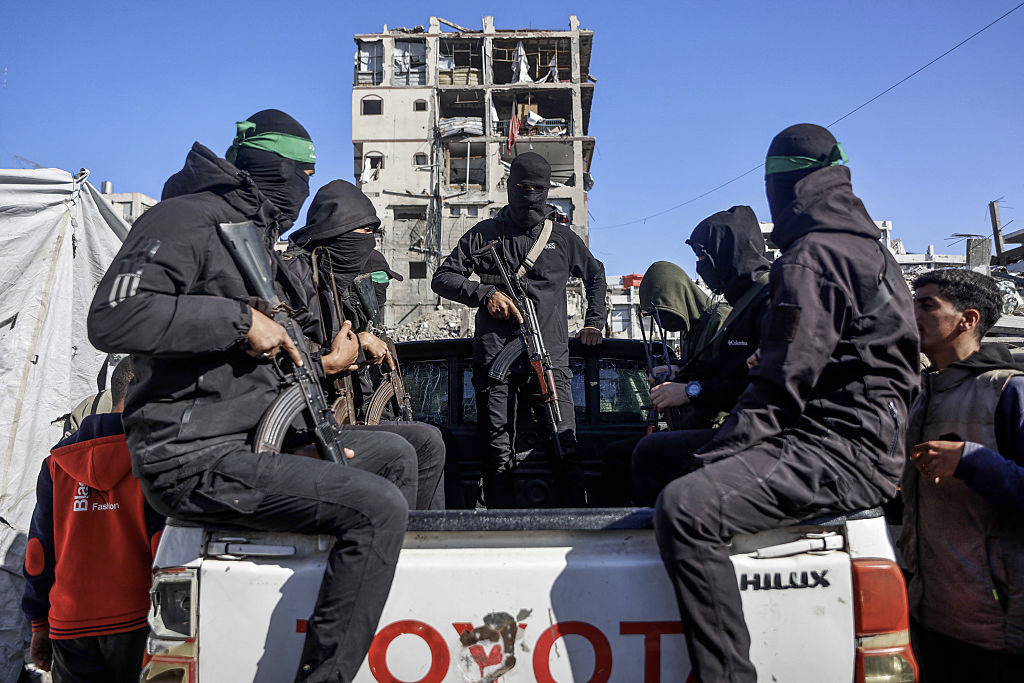
Hamas is not some misunderstood political faction waiting to be coaxed into moderation. It advocates jihad (holy war) as an “individual duty [of all Muslims] for the liberation of Palestine.” Pictured: Hamas terrorists in Jabalia refugee camp, in the Gaza Strip, on December 1, 2025. (Photo by Omar Al-Qataa/AFP via Getty Images)

Envoys from U.S. President Donald J. Trump’s “Board of Peace” recently met representatives of Hamas in the Egyptian capital of Cairo in an effort to safeguard the Gaza ceasefire, Reuters reported on March 16.

“The weekend meeting is the first publicly reported since ‌the start of the Iran war between the Palestinian militant group and the board, a new international body personally headed by Trump, which has been tasked with overseeing post-war Gaza….

“One of the sources says Trump’s board was represented at the talks with Hamas by Aryeh Lightstone, an American aide to Trump’s special envoy Steve Witkoff…. Further meetings were expected ‌this week. “

The Trump administration is making a huge mistake by engaging an Islamist terror group.

Direct talks with Hamas, officially designated by the US government as a Foreign Terrorist Organization, risk conferring legitimacy on a group that rejects Israel’s right to exist and for decades has carried out attacks against countless Israeli civilians.

Engagement clearly signals to terrorists that violence is an effective path to power, land, and international recognition. Hamas is a group that is explicitly and fundamentally committed, in both ideology and practice, to “armed resistance” (terrorism).

Hamas’s October 7, 2023 invasion of Israel was a large-scale terror operation that illustrated the group’s commitment to terrorism. Senior Hamas officials have repeatedly vowed that they fully intend to continue such attacks.

Hamas is hardly a controversial political actor. The group, an offshoot of the Muslim Brotherhood, aims to establish an Islamic state encompassing the entirety of present-day Israel and the West Bank and Gaza Strip, through armed conflict.

Hamas’s 1988 charter as well as repeated statements by its leaders, rejects the legitimacy of Israel. Its charter quotes Muslim Brotherhood founder Hassan al-Banna as saying: “Israel will exist and continue to exist until Islam will obliterate it, just as it obliterated others before it.”

Article 11 of the Hamas charter states:

“The Islamic Resistance Movement [Hamas] believes that the land of Palestine is an Islamic Waqf consecrated for future Moslem generations until Judgement Day. It, or any part of it, should not be squandered: it, or any part of it, should not be given up. Neither a single Arab country nor all Arab countries, neither any king or president, nor all the kings and presidents, neither any organization nor all of them, be they Palestinian or Arab, possess the right to do that.”

Hamas is not some misunderstood political faction waiting to be coaxed into moderation. It advocates jihad (holy war) as an “individual duty [of all Muslims] for the liberation of Palestine.”

Article 13 of the Hamas charter says:

“There is no solution for the Palestinian question except through Jihad. Initiatives, proposals and international conferences are all a waste of time and vain endeavors.”

Since its establishment in 1987, Hamas has remained fully committed to its “armed resistance” and the elimination of Israel. In Hamas’s lexicon, the terms “compromise” and “concessions” do not exist.

Hamas’s ideological framework — rooted in Islamist “resistance” — make compromise and concessions impossible. Needless to say, there is no evidence that the terror group intends to fundamentally alter its long-term goals.

For Hamas, direct talks with the US provide an opportunity to gain time, legitimacy, and concessions. As Trump’s envoys are talking to Hamas, the terror group has been continuing by force to reassert its rule in the Gaza Strip.

Unfortunately, negotiating with terrorist groups and the like, instead of defeating them, tends to end in disaster. The minute it becomes convenient, they go right back to terrorizing. The Taliban have been expanding their repression throughout Afghanistan. Russia disregarded the 1994 Budapest Memorandum, in which it guaranteed Ukraine’s sovereignty, borders and freedom from aggression if Ukraine gave up its nuclear weapons; and China appears to assume that agreements exist to be violated (such as herehere and here).

Hamas has consistently refused to disarmrecognize Israel, cease ruling Gazarenounce violence, and accept past agreements between Israel and the Palestinians. Talking to Hamas now, without its first adhering to Trump’s preconditions, marks a sharp and potentially confusing policy reversal that weakens US credibility globally.

If Hamas is allowed to gain diplomatic access without changing its core positions, other Islamist terror groups will draw an empowering lesson: violence pays.

Across the region, the Iranian regime and its terror proxies are watching closely. The lesson for them will unmistakably be: hold out, escalate, and eventually the world’s most powerful democracy will come to deliver victory to you.

For Palestinians, direct talks would mean that Hamas’s rule in the Gaza Strip — which began with a violent coup against the Palestinian Authority in 2007 — has been marked by nearly twenty years of repression at home. It has consisted of crackdowns on dissent, summary executions, torture, intimidation and murder of rivals, stealing humanitarian aid from civilians, shooting at their own people trying to flee, using their citizens as human shields to escalate the death count and blame it on Israel; and the imposition of heavy economic burdens.

Engaging Hamas as if it were a normal governing authority will only demonstrate to other terrorist groups that terrorism works. Negotiating will not moderate reality. The message it sends to the Palestinians and like-minded groups is: The international community is willing to overlook internal abuses and human rights violations so long as the rulers in question enforce obedience. That is the job for a prison warden, not for a government one hopes will stabilize the neighborhood.

Direct negotiations with Hamas also sideline other Palestinians who are not affiliated with the terror group or who are opposed to violence and terrorism. Direct negotiations just reinforce Hamas’s claim that “armed resistance,” not diplomacy, gets results.

The Trump administration, if it believes that talking to Hamas represents a pragmatic and necessary approach for achieving peace and stability, is dangerously mistaken. This belief collapses under scrutiny. Talking directly to Hamas will only reward extremism and terrorism, weaken anti-Hamas individuals and parties, and erode the very principles Washington claims to defend.

Launching direct talks with Hamas or other Islamist terror groups absent any fundamental change in their positions is not diplomacy. It is capitulation and surrender dressed up as “realism.”

The Trump administration would do well to see that talking to Hamas only normalizes it as a legitimate regional actor rather than ostracizing it as an Islamist terror group.

Above all, direct engagement of Hamas is a concession to the jihadis, who believe Muslims are in an eternal confrontation with the enemies of Islam and must overthrow secular regimes to restore a “pure” Islamic state.


Khaled Abu Toameh is an award-winning journalist based in Jerusalem.


Zawartość publikowanych artykułów i materiałów nie reprezentuje poglądów ani opinii Reunion’68,
ani też webmastera Blogu Reunion’68, chyba ze jest to wyraźnie zaznaczone.
Twoje uwagi, linki, własne artykuły lub wiadomości prześlij na adres:
webmaster@reunion68.com


Hundreds Wounded in Iran Missile Attacks Across Central, Southern Israel, Including Near Nuclear Site


Hundreds Wounded in Iran Missile Attacks Across Central, Southern Israel, Including Near Nuclear Site

Debbie Weiss


A drone view shows a damage in a residential neighborhood, following a night of Iranian missile strikes which injured dozens of Israelis, amid the US-Israel conflict with Iran, in Dimona, southern Israel, March 22, 2026. Photo: REUTERS/Roei Kastro

More than 200 people were wounded in several Iranian strikes on central and southern Israel over the weekend, including children who were seriously injured, after Israeli air defenses failed to intercept at least two ballistic missiles, prompting the defense minister to threaten to send Iran “back decades.”

Fifteen people were injured on Sunday following an Iranian cluster missile strike in the central Israeli cities of Tel Aviv, Petah Tikva, and Ramat Gan. By early evening, several homes and roads were damaged by the strikes.

A direct hit by a missile launched from Iran the prior evening on Arad and Dimona in southern Israel caused widespread damage to buildings and prompted the evacuation of nearly 300 people to hospital. As of Sunday afternoon, 18 children were still hospitalized.

A ballistic missile carrying a payload of several hundred kilograms of explosives landed next to residential buildings in Dimona, with the shockwave ripping through them and leaving about 30 people wounded, including a young boy.

Israel’s Shimon Peres Negev Nuclear Research Center, located roughly eight miles southeast of the city, was likely the target, analysts said. But according to the International Atomic Energy Agency (IAEA), the site was not harmed in the strikes.

“Information from regional states indicates that no abnormal radiation levels have been detected,” the UN nuclear watchdog tweeted.

Iranian state TV said on Saturday the salvos were in response to an attack on Iran’s Natanz nuclear facility earlier that day.
.

At Soroka Medical Center in Beersheba, more than 160 injured patients arrived overnight, including over 70 children, according to Prof. Shlomi Codish, the hospital’s director. He described the influx as a “highly complex mass casualty event” involving blast injuries, shrapnel wounds, and trauma, including critically and moderately injured patients who required urgent surgery.

Codish said authorities were working to provide “immediate support and shelter” for those impacted, adding that entire families were evacuated to the hospital.

“The challenge is not only medical but also human. The strike hit the heart of a civilian neighborhood, and entire families arrived together, injured and distressed. We worked to map family connections in order to provide coordinated care and preserve family unity as much as possible,” he told The Algemeiner.

The missiles in both Arad and Dimona were engaged by air defenses, but the interceptors failed to bring them down.

In both cases, most of those injured in the missile did not make it to bomb shelters in time.

Prime Minister Benjamin Netanyahu, visiting the scene of the strike in Arad, said it was a “miracle” that no one was killed but added “we don’t want to rely on miracles.”

“If you’re in a shelter, you’re protected,” he said.

Defense Minister Israel Katz, who was also in Arad, accused Iran of intentionally targeting civilians.

“If this continues, we’ll make sure to hit Iran so hard it will be sent back decades,” Katz said.

Tehran aimed to generate domestic pressure on Israel’s government to stop the war, he said, but added that “it won’t happen because our home front is strong.”

In a statement posted on X, IAEA Director-General Rafael Grossi stressed that “maximum military restraint should be observed, in particular in the vicinity of nuclear facilities.”

Since the Feb. 28 US-Israeli strikes on Iran, Tehran has launched more than 400 missiles toward Israel, with the Israeli Air Force saying roughly 92 percent were intercepted. More than 4,500 Israelis have been evacuated to hospitals from the strikes, the health ministry said.


Zawartość publikowanych artykułów i materiałów nie reprezentuje poglądów ani opinii Reunion’68,
ani też webmastera Blogu Reunion’68, chyba ze jest to wyraźnie zaznaczone.
Twoje uwagi, linki, własne artykuły lub wiadomości prześlij na adres:
webmaster@reunion68.com


„Trump Derangement Syndrome”: – niebezpieczeństwo, gdy nienawiść zaciemnia postrzeganie rzeczywistości„


„Trump Derangement Syndrome”: – niebezpieczeństwo, gdy nienawiść zaciemnia postrzeganie rzeczywistości„

Majid Rafizadeh


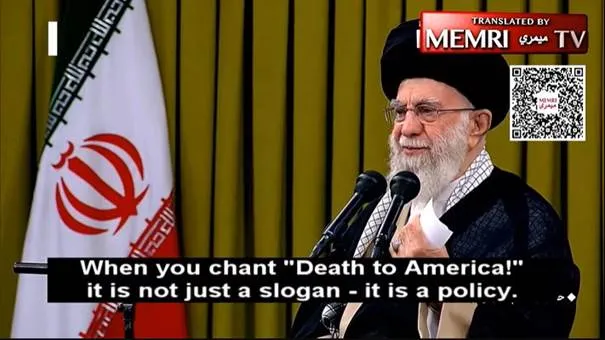
Przez dziesięciolecia przywódcy Iranu skandowali „Śmierć Ameryce” („Wielki Szatan”) oraz „Śmierć Izraelowi” („Mały Szatan”) — slogany, które nie są jedynie retorycznymi ozdobnikami, lecz rzeczywistymi centralnymi elementami ideologicznej tożsamości reżimu. A jednak, gdy Trump konfrontuje się właśnie z tym reżimem, uwaga przesuwa się z działań irańskich władz i skupia niemal wyłącznie na potępianiu samego Trumpa. Zbrodnie popełniane przez reżim schodzą na dalszy plan.
Na zdjęciu: ówczesny Najwyższy Przywódca Iranu Ali Chamenei wygłasza przemówienie 1 listopada 2023 r., transmitowane na irańskim kanale Channel 1. (Źródło obrazu: MEMRI)

Jeśli oderwać się na chwilę od codziennego szumu partyjnych sporów i spojrzeć na szerszy obraz sytuacji w Stanach Zjednoczonych, można odnieść wrażenie, że niektóre media i postacie polityczne są tak pochłonięte wrogością wobec obecnego prezydenta, iż nie są już w stanie racjonalnie oceniać wydarzeń.

Ich reakcja na niemal wszystko, co robi, wydaje się automatyczna i odruchowa. Sytuacja ta, często określana mianem „Trump Derangement Syndrome”, osiągnęła tak skrajny poziom, że momentami głosy te zdają się stawać — czy to świadomie, czy nie — po stronie wrogów Ameryki, takich jak Komunistyczna Partia Chin czy reżim irański, który od momentu powstania w 1979 roku otwarcie prowadzi wojnę ze Stanami Zjednoczonymi i przez 39 lat z rzędu był określany przez amerykańskich urzędników z obu partii jako największy na świecie państwowy sponsor terroryzmu.

Rezultatem jest dyskurs polityczny, który wydaje się oderwany od pytania o to, co jest słuszne lub niesłuszne — liczy się jedynie to, czy coś zostało zrobione przez prezydenta Donalda J. Trumpa.

Ten spór dawno wykroczył poza normalne polityczne różnice zdań. W każdej zdrowej demokracji przywódcy polityczni i ich polityka mogą — i powinni — być przedmiotem debaty i krytyki. Jednak to, co obserwujemy dziś w niektórych częściach krajobrazu politycznego i medialnego, zdaje się przekraczać granicę racjonalnej debaty i zbliżać się raczej do emocjonalnej obsesji. Jakby zasadą przewodnią stało się: jeśli Trump coś robi, musi to być automatycznie złe. Logika i kontekst działania przestają mieć znaczenie. Zamiast pytać, czy konfrontacja z wrogim reżimem może służyć interesom Ameryki lub bezpieczeństwu międzynarodowemu, reakcją staje się natychmiastowy sprzeciw — niezależnie od okoliczności i stawki.

Na przykład reżim irański od dziesięcioleci otwarcie definiuje się poprzez wrogość wobec Stanów Zjednoczonych i ich sojuszników. Jego przywódcy wielokrotnie skandowali „Śmierć Ameryce” („Wielki Szatan”) i „Śmierć Izraelowi” („Mały Szatan”). Nie są to jedynie retoryczne hasła, lecz centralne elementy ideologicznej tożsamości reżimu. Irańscy przywódcy, począwszy od założyciela Islamskiej Republiki, ajatollaha Ruhollaha Chomeiniego, otwarcie wzywali do zniszczenia Izraela i wspierali zbrojne organizacje na całym Bliskim Wschodzie, które atakują zarówno Izraelczyków, jak i Amerykanów.

Od 1984 roku rząd Stanów Zjednoczonych — zarówno za administracji republikańskich, jak i demokratycznych — oficjalnie uznaje Iran za państwowego sponsora terroryzmu ze względu na wspieranie organizacji terrorystycznych takich jak Hezbollah, Islamski Dżihad, Hamas i Huti; udział w atakach w regionie oraz próby przeprowadzenia zamachów za granicą, w tym udział w atakach z 11 września, a także co najmniej dwie próby zamachu na Trumpa oraz planowanie zabójstw wysokich rangą amerykańskich urzędników podczas jego pierwszej kadencji.

Reżim irański zabił niezliczoną liczbę Amerykanów i nadal prowadzi politykę mającą na celu osłabienie wpływów Stanów Zjednoczonych na Bliskim Wschodzie. Jest to reżim, który wielokrotnie demonstrował wrogość wobec USA i ich sojuszników.

Jednak gdy Trump przyjął twarde stanowisko wobec Teheranu, zamiast koncentrować się na naturze samego reżimu irańskiego, część krytyków zdawała się skupiać wyłącznie na osobie prezydenta, który podjął z nim walkę. Sprawa przestała dotyczyć Iranu, a zaczęła dotyczyć Trumpa. Jego działania, zamiast być oceniane według ich meritum, były filtrowane przez pryzmat politycznej wrogości. Cokolwiek zrobi — musi spotkać się z podejrzliwością lub potępieniem.

Hipokryzję trudno przeoczyć. Wiele z tych samych ruchów politycznych i organizacji aktywistycznych, które mocno akcentują prawa kobiet i prawa człowieka, przez lata ignorowało zbrodnie Iranu wobec kobiet i dysydentów. Irańskie władze przez dekady nakładały surowe ograniczenia na wolność kobiet, brutalnie tłumiły protesty oraz więziły dziennikarzy, aktywistów i przeciwników politycznych. Dziesiątki tysięcy Irańczyków zostało aresztowanych, torturowanych lub zamordowanych za kwestionowanie władzy reżimu albo domaganie się podstawowych wolności.

A jednak, gdy Trump konfrontuje właśnie ten reżim, uwaga odwraca się od działań władz Iranu i skupia się niemal wyłącznie na potępianiu Trumpa. Zbrodnie popełniane przez reżim schodzą na dalszy plan.

Wyobraźmy sobie, jak odmienna mogłaby być reakcja przy innej administracji. Relacje medialne mogłyby podkreślać naruszenia praw człowieka w Iranie, represje wobec kobiet oraz wspieranie organizacji terrorystycznych. Analitycy mówiliby o obronie praw człowieka, ochronie sojuszników i przeciwstawianiu się autorytarnym rządom. Politykę tę prawdopodobnie przedstawiano by jako konieczną odpowiedź na brutalny reżim rozwijający broń nuklearną i stanowiący groźne globalne zagrożenie.

Kiedy sprzeciw wobec postaci politycznej staje się absolutny, każdemu jej działaniu trzeba się sprzeciwiać. Debata przestaje dotyczyć faktów lub zasad moralnych, a zaczyna być rywalizacją tożsamości politycznych.

Krytycy, którzy niegdyś z pasją mówili o naruszeniach praw człowieka w Iranie, wydają się dziś niechętni do ich uznania, jeśli mogłoby to oznaczać poparcie dla polityki prowadzonej przez Trumpa. Obrona praw kobiet, demokracji i wolności zaczyna być stosowana selektywnie, filtrowana przez pryzmat krajowej rywalizacji politycznej.

Ostatecznie największym zagrożeniem takiego sposobu myślenia nie jest jedynie niesprawiedliwa krytyka prezydenta. Głębszy problem polega na tym, że osłabia on zdolność społeczeństwa do stawiania czoła poważnym zagrożeniom. Gdy nienawiść polityczna staje się tak silna, że przesłania podstawowy osąd, coraz trudniej odróżnić uzasadnioną krytykę od odruchowej opozycji. Sama percepcja rzeczywistości zostaje zaburzona.

W chwili, gdy świat mierzy się z ogromnymi wyzwaniami bezpieczeństwa — takimi jak Chiny rozwijające nowe śmiercionośne patogeny do wojny biologicznej i autonomiczne roboty przeznaczone do zabijania — oraz z reżimami autorytarnymi zagrażającymi zarówno własnym obywatelom, jak i swoim wrogom — zaprzeczanie rzeczywistości i ślepota niosą poważne ryzyko.

Demokracje funkcjonują najlepiej wtedy, gdy debaty opierają się na faktach i rozumie, a nie na emocjonalnych odruchach. Jeśli dyskurs polityczny stanie się tak spolaryzowany, że ludzie nie będą w stanie rozpoznać natury reżimów represjonujących własnych obywateli i otwarcie zagrażających Stanom Zjednoczonym oraz Wolnemu Światu, problem jest znacznie większy niż jakikolwiek pojedynczy prezydent. Staje się kryzysem, który można rozwiązać tylko wtedy, gdy ludzie wyjdą poza swoje partyjne bańki i skonfrontują się z rzeczywistością taką, jaka naprawdę jest.

Link do oryginału: https://www.gatestoneinstitute.org/22338/trump-derangement-syndrome-iran

Gatestone Institute, 14 marca 2026

Dr Majid Rafizadeh jest politologiem, analitykiem wykształconym na Uniwersytecie Harvarda oraz członkiem rady Harvard International Review. Jest autorem kilku książek na temat polityki zagranicznej Stanów Zjednoczonych.


Zawartość publikowanych artykułów i materiałów nie reprezentuje poglądów ani opinii Reunion’68,
ani też webmastera Blogu Reunion’68, chyba ze jest to wyraźnie zaznaczone.
Twoje uwagi, linki, własne artykuły lub wiadomości prześlij na adres:
webmaster@reunion68.com


Israel Continues to Kill Key Iranian Officials as Netanyahu Says Iran Can No Longer Build Missiles, Enrich Uranium


Israel Continues to Kill Key Iranian Officials as Netanyahu Says Iran Can No Longer Build Missiles, Enrich Uranium

Ailin Vilches Arguello


Israeli Prime Minister Benjamin Netanyahu speaks during a press conference, amid the US-Israel conflict with Iran, in Jerusalem, March 19, 2026. Photo: REUTERS/Ronen Zvulun/Pool

Israel continued its efforts to kill key Iranian officials and destabilize the regime on Friday, one day after Israeli Prime Minister Benjamin Netanyahu praised what he described as the military’s unprecedented achievements three weeks into the war.

The Israeli military said on Friday it killed Islamic Revolutionary Guard Corps (IRGC) spokesperson Ali Mohammad Naini in an overnight airstrike against regime targets across the Iranian capital of Tehran.

“Naini disseminated the regime’s terrorist propaganda to its proxies across the Middle East,” the military said, describing him as a central figure in messaging tied to attacks against Israel.

Kasra Aarabi, director of IRGC research at United Against Nuclear Iran, described Naini’s death as “a significant blow to the regime’s psychological warfare and propaganda operations — an increasingly central pillar of the IRGC’s current war strategy.”

Iranian state media had reported his death earlier in the day.

The Israeli military also announced on Friday that, two days ago, it killed a key, senior commander in Iran’s intelligence ministry, Mahdi Rostami Shamastan, in an airstrike in Tehran following a joint operation involving Israel’s Military Intelligence, Mossad, and Shin Bet.

The Israel Defense Forces (IDF) also said on Friday that it killed the Basij militia’s intelligence chief, Esmail Ahmadi, in a strike in central Tehran.
.

The Iranian regime uses the Basij paramilitary force, which is affiliated with the IRGC, to violently suppress protests and crush political opposition across the country.

“Ahmadi played a central role in advancing and executing terror attacks carried out by Basij Forces,” the IDF posted on social media. “He was also responsible for enforcing public order and the regime’s values on behalf of the IRGC and leading major suppression operations during the recent internal protests in Iran.”

Ahmadi was killed earlier this week in the strikes that targeted and successfully eliminated other senior Basij militia members, including top commander Gholam Reza Soleimani and his deputy, Seyyed Karishi.

The IDF’s announcements came after Netanyahu on Thursday vowed the campaign against Iran will continue “as long as necessary” until all objectives are met.

Speaking at a press conference, Netanyahu reiterated the war’s three main objectives, emphasizing the dismantling of Iran’s nuclear program, the destruction of its ballistic missile capabilities, and the creation of conditions for the Iranian people to determine their own future.

“Today, after 20 days [of conflict], I can tell you: Iran does not have the ability to enrich uranium … and it does not have the ability to produce ballistic missiles,” the Israeli leader said. “Not only did we destroy the existing missiles [and nuclear components], but we seriously damaged the industries that make it possible to produce them.”

He also stressed that Israel is operating on all fronts — by air, on land, underground, and across the Caspian Sea — where, this week, Israeli forces launched their first attack on Iranian Navy targets since the outbreak of the war.

“A revolution cannot be made from the air; there are also ground-based options,” Netanyahu said.

“We have eliminated the political and military top command, the [Islamic Revolutionary Guard Corps] and the Basij,” he continued.

On Tuesday night, the IDF killed Iranian Intelligence Minister Ismail Khatib in Tehran during a precision airstrike carried out with a narrow window of real-time intelligence.

Appointed in 2021, Khatib led Iran’s Ministry of Intelligence, a central pillar of the regime’s repression apparatus, overseeing espionage, covert operations, and intelligence activities targeting both domestic dissent and foreign adversaries, including Israeli and US targets.

He also played a central role during the regime’s brutal crackdown on internal opposition, including the latest nationwide anti-government protests, which security forces violently crushed, with thousands of demonstrators tortured and killed.

Khatib’s assassination was part of an ongoing wave of targeted killings of senior Iranian officials in recent days, further weakening the regime’s leadership and operational networks.

During Thursday’s press conference, Netanyahu praised Israel’s recent military and strategic successes, presenting them as a defining moment for the country’s strength and influence in the region.

“I promised that we would change the Middle East — and we have changed it beyond recognition. The State of Israel is stronger than ever and Iran is weaker than ever,” he said.

“We have turned Israel into a regional power, and some would say … into a global power,” he continued. “The relationship between me and my friend [US President Donald Trump] is unprecedented, and together we are leading the fight of the free world against the forces of evil.”

Earlier this week, the Israeli Air Force also killed Ali Larijani, secretary of Iran’s National Security Council, in what was the most significant assassination since the killing of former Supreme Leader Ayatollah Ali Khamenei at the start of the campaign on Feb. 28. Larijani was widely believed to be running the country following Khamenei’s death.

With the military campaign escalating, Israeli forces have now been authorized to carry out targeted assassinations of senior Iranian officials without requiring approval from higher command.

Netanyahu also said he had instructed intelligence officers to “act so that the Revolutionary Guards’ killers know we will hunt them down in the cities as well.”

“It’s too early to say whether the Iranian people will take advantage of the conditions we are creating to take to the streets,” the Israeli leader said. “I hope so — but it will depend only on them.”

“I see this war ending much faster than people think,” he continued. The Islamist regime’s collapse “will not happen in one day, but we can already see the cracks.”

According to a recent intelligence assessment, the Iranian regime shows no signs of surrender and remains far from collapse, and Israeli officials have been warned that the war could continue for weeks, the Israeli news outlet N12 reported.

Even though there have been demonstrations in Iran in recent days, this latest assessment shows that they have been limited to a few locations with relatively small numbers of participants, and that the regime’s brutal repression continues to instill fear.

However, a senior Israeli source also told the outlet that the regime is in a state of “complete chaos,” with Jerusalem seeing increasing signs of a breakdown in the regime’s systems in Tehran.

“There is no one there at the moment who is taking the orders, and the government vacuum is deepening,” the official said, adding that Israel is “working to create a breaking point” for the regime.

“The goal is for the Iranian public to understand for itself, through the reality on the ground, that this regime has reached a ‘game over.’ We want to create the conditions in which the Iranian people feel they have an opportunity to take their fate into their own hands and take to the streets,” the source reportedly said.

Israel’s campaign is increasingly focused on dismantling Iran’s internal repression systems, aiming to create a leadership vacuum and logistical breakdown that could hinder the regime’s ability to respond if mass protests erupt again.

Israeli forces have carried out targeted strikes on senior Basij and IRGC officers, destroyed infrastructure used to suppress protests, and launched cyber operations to disrupt internal security communications and coordination, crippling the regime’s ability to redeploy its forces effectively.

So far, Israel says it has dropped some 10,000 munitions on targets linked to the IRGC, Basij, and other internal security forces, delivering a devastating blow to the regime’s security apparatus.

Late Tuesday night into Wednesday morning alone, around 300 Basij commanders and field officials were killed in a wave of strikes on key command and operational centers, according to Iran International.

During Thursday’s press conference, Netanyahu expressed pride in the Israeli people for their steadfast stand, praising their resilience and unity in the face of ongoing conflict.

“I know how difficult it is to stay in the security rooms and showers, and I understand the challenges with studies, businesses, and reservist duties. Your patience gives us the strength to keep fighting until we achieve the campaign’s objectives,” he said.

“Continue to stand tall, continue to stand with us, and with God’s help, together, we will stand and together we will win.”


Zawartość publikowanych artykułów i materiałów nie reprezentuje poglądów ani opinii Reunion’68,
ani też webmastera Blogu Reunion’68, chyba ze jest to wyraźnie zaznaczone.
Twoje uwagi, linki, własne artykuły lub wiadomości prześlij na adres:
webmaster@reunion68.com


‘A very difficult evening,’ Netanyahu says after Iranian missiles wound 115


‘A very difficult evening,’ Netanyahu says after Iranian missiles wound 115

JNS Staff


“We are determined to continue striking our enemies on all fronts,” added the Israeli premier.

Prime Minister Benjamin Netanyahu receives an update on an Iranian missile attack on Arad, March 21, 2026. Photo by Avi Ohayon/GPO.

Israeli Prime Minister Benjamin Netanyahu on Saturday night wished a speedy recovery to those wounded in Iranian ballistic missile strikes on the southern cities of Dimona and Arad, calling it “a very difficult evening in the campaign for our future.”

After speaking with the mayors of Dimona, Arad and Rishon Letzion—where an Iranian cluster munition damaged eight sites, including a closed kindergarten, without causing injuries—the premier reiterated the importance of entering bomb shelters in accordance with instructions of the Israel Defense Forces’ Home Front Command.

“We are determined to continue striking our enemies on all fronts,” said Netanyahu.

The Magen David Adom medical emergency response group said it had evacuated a total of 31 people to Soroka Medical Center in Beersheva after a missile scored a direct hit in Dimona around 7 p.m. on Saturday. One person sustained serious wounds, one was moderately injured and 29 others were listed as being in mild condition.

Around three hours later, 84 people were wounded by a direct impact in Arad, some 15 miles west of Dimona, MDA said. Among those evacuated to Soroka Medical Center were 11 in serious condition, 20 in moderate condition and 84 in mild condition, according to the NGO.

Israel’s Health Ministry said on Sunday morning that 4,564 people had been evacuated to hospitals since the start of “Operation Roaring Lion” on Feb. 28.

As of 7 a.m., 124 remained hospitalized—one in critical condition, 13 in serious, 26 in moderate and 84 in light condition, according to the ministry.


Zawartość publikowanych artykułów i materiałów nie reprezentuje poglądów ani opinii Reunion’68,
ani też webmastera Blogu Reunion’68, chyba ze jest to wyraźnie zaznaczone.
Twoje uwagi, linki, własne artykuły lub wiadomości prześlij na adres:
webmaster@reunion68.com