Archive | 2026/05/25

Rok z Leonem XIV

Papież – Wikipedia, wolna encyklopedia


Rok z Leonem XIV

Stanisław Obirek


Dokładnie rok temu 8 maja kardynał Robert Prevost został papieżem i wybrał imię Leon. To była jasna deklaracja ideowa i odcięcie się od poprzedników w sposób symboliczny. Nie chciał być kojarzony z Franciszkiem, który zapisał się na kartach historii jako papież charyzmatyczny, ale też polaryzujący. Nie widział też powodu, by nawiązywać do długiego pontyfikatu Jana Pawła II, który był zbyt jednoznacznie kojarzony jako aktor kulturowych wojen. Podobnie nie nawiązał do Benedykta XVI, który nazbyt wyraziście podkreślał wyjątkowość katolicyzmu, najpierw jako prefekt Dykasterii Nauki Wiary stygmatyzujący nowatorskie rozwiązania w teologii, a potem jako papież zbyt lękliwie postrzegający współczesny świat jako zagrożenie. Nawiązał do śmiałych wizji Leona XIII, który encykliką Rerum Novarum z 1891 roku, podjął rękawicę rzuconą przez wyzwania rodzącego się kapitalizmu. Nie był więc kontynuatorem antymodernistycznej histerii rozpętanej przez Piusa IX, ale chciał dialogu, na miarę ówczesnego czasu i z duchem czasu.

Jako papież zakorzeniony w obu Amerykach (urodzony w USA, 20 lat spędził w Peru i jest obywatelem tego kraju) bez kompleksów krytykuje nieprzewidywalnego prezydenta swojej pierwszej ojczyzny, Donalda Trumpa i członków jego administracji, zwłaszcza katolików. Wyróżniającego się w osobliwym pojmowaniu swojej wiary neofitę katolickiego, wice prezydenta J.D. Vance’a, który próbował go uczyć właściwego rozumienia myśli św. Augustyna (Leon XIV jest członkiem zakonu augustianów) i sekretarza stanu Marco Rubio, który po spotkaniu 7 maja chyba zrozumiał, że jego szef, prezydent Trump, tylko traci atakując papieża.

Polski premier Donald Tusk, który spotkał się z papieżem również 7 maja, zapewnia, że wiele nauczyła go rozmowa z Leonem XIV. Zobaczymy, czy tak jest naprawdę i czy zmieni swój stosunek do uchodźców na granicy polsko-białoruskiej. Tusk jest też przekonany, że Leon XIV przyjedzie do Polski. Podobne zapewnienia słyszymy od szefa episkopatu abpa Tadeusza Wojdy. Leon nie jest skłonny do wpisywania się w oczekiwania innych, zwłaszcza te polityczne, o czym przekonali się Amerykanie zapraszając go do przyjazdu na 4 lipca tego roku na okrągłą 250 rocznicę powstania USA. Leon odmówił, tłumacząc, że już wcześniej zaplanował wizytę na Lampeduzie. Zapewnienia o przyjętym z radością zaproszeniu przyjazdu do Polski nie brzmią zbyt przekonująco. Podobnie jak Franciszek, Leon XIV wie, że przyszłość katolicyzmu rozgrywa się na Południu naszego globu, gdzie żyje trzy czwarte katolików. Jak dotąd był w Turcji i Libanie, gdzie katolicy stanowią mniejszość i w czterech krajach Afryki gdzie ich obecność jest znaczniejsza. Jak sądzę nadal będzie zwracał uwagę raczej na obrzeża starego kontynentu i USA.

Europa i USA nie stanowią priorytetów Watykanu i trudno się dziwić. Katolicyzm jest uwikłany w wojny kulturowe i nie ma jak na razie wiele do zaproponowania. Zobaczymy, co przyniosą najbliższe lata. Wszystko wskazuje na to, że Leon XIV spróbuje, podobnie jak jego poprzednik, na nowo ukształtować episkopaty, by pełniej odpowiadały na wezwania współczesności. Jeśli tak się stanie, to być może odwiedzi i swoją pierwsza ojczyznę i zajrzy do krajów starego kontynentu, w tym do Polski. Na razie jego wzrok jest skierowany na globalne Południe.


<strong>Stanisław Obirek</strong>Stanisław Obirek

 (ur. 21 sierpnia 1956 w Tomaszowie Lubelskim) – teolog,
historyk, antropolog kultury, profesor nauk humanistycznych, profesor zwyczajny Uniwersytetu Warszawskiego, były jezuita.


Zawartość publikowanych artykułów i materiałów nie reprezentuje poglądów ani opinii Reunion’68,
ani też webmastera Blogu Reunion’68, chyba ze jest to wyraźnie zaznaczone.
Twoje uwagi, linki, własne artykuły lub wiadomości prześlij na adres:
webmaster@reunion68.com


Facebook group becomes living archive for Cyprus camp survivors’ descendants


Facebook group becomes living archive for Cyprus camp survivors’ descendants

TPS-IL Staff


Digital platforms increasingly allow descendants to shape memory from below through personal testimony and collective participation.

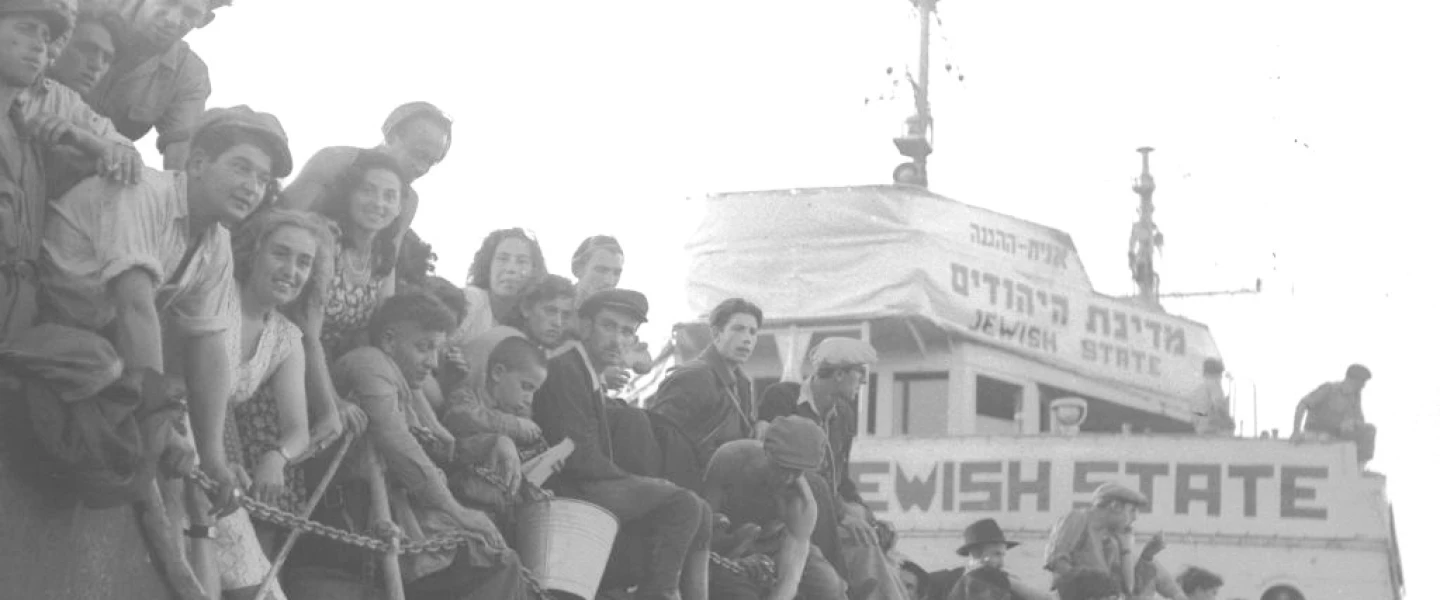
Illegal immigrants on the Haganah ship the “Jewish State” in Haifa Port before their deportation to a British displaced persons camp in Cyprus, Oct. 30, 1947. Photo by Hans Pinn/GPO/TPS-IL.

A Facebook group created by descendants of Holocaust survivors who were detained by British authorities in Cyprus after World War II has evolved into an unexpected archive of collective memory, helping reconstruct family histories that in many cases were nearly lost, according to a study at Ben-Gurion University of the Negev in Beersheva.

The research, conducted by Ayelet Klein-Cohen and published in the peer-reviewed journal Memory, Mind and Media, examines how descendants of survivors use social media to preserve family stories, documents and photographs connected to the Cyprus detention camps. These camps, operated by British authorities in the British Mandate of Palestine context, held tens of thousands of Jewish refugees between 1946 and 1949 as they attempted to reach the Land of Israel.

Klein-Cohen said the Facebook community demonstrates how digital platforms can help descendants recover fragmented family histories.

“If this causes a group of people anywhere in the world to feel that they too want to explore the history of the past for themselves, then the power of this study is that it may inspire someone to do the same thing in another context,” she said.

Participants in the group have gained a deeper understanding of their personal and family narratives, she explained.

“In essence, the study speaks about the way in which descendants of Holocaust survivors seek less familiar stories in order to develop a deeper understanding of themselves and of family stories connected to Cyprus,” she told TPS-IL. “At the same time, it points to the ability of social networks to allow less familiar narratives to surface and become part of public discourse, especially stories connected to traumatic events, the search for personal identity, and the process of dealing with intergenerational trauma.”

According to the research, the online group functions as a collaborative space where descendants share testimonies, search for relatives and piece together fragments of stories that often remained untold within families for decades.

Klein-Cohen analyzed 687 posts and comments published by group members during 2022. She emphasized that the study was qualitative and not intended to provide statistical representation of all descendants of Cyprus camp survivors.

“For me, what makes this community especially unique is the fact that there is no formal body behind it and no official institution,” she said. “There is no archive behind it. Yet people still gather around it and share stories and memories with one another.”

Asked about the relationship between historical fact and memory, Klein-Cohen said it is an inherent tension in historical research.

“The moment something happens, it is over, and memory takes over, for better and worse. That is the eternal tension between memory and history,” she said.

The Cyprus detention camps were established by the British in August 1946 in an effort to restrict Jewish immigration to Mandatory Palestine. More than 50,000 Jewish refugees, many of them Holocaust survivors, passed through the camps before the establishment of the State of Israel. An estimated 80% were between the ages of 13 and 35. Conditions included overcrowding, poor sanitation and a lack of privacy.

Despite their historical significance in the broader story of postwar Jewish migration and the founding of Israel, Klein-Cohen said the Cyprus camps have received relatively limited public attention compared to other Holocaust and post-Holocaust narratives.

A need to discover more about family’s past

Historian Nahum Bogner, who has extensively researched the Cyprus story, told the researchers that “the case of the Cyprus deportation was omitted as if it were by an invisible hand” and that “in what was published, a clear priority was given to the heroic episodes at sea,” referring to attempts at illegal immigration to Mandatory Palestine.

According to Klein-Cohen, descendants participating in the group are not simply sharing nostalgia but actively reconstructing fragmented family histories across generations.

One post cited in the study was written by a woman identified only as Maya, who said her grandparents were detained in Cyprus after being released from the Bergen-Belsen concentration camp.

“In my family, as in many others, they rarely spoke about the difficult and painful chapters of life that preceded their new beginning in Israel. Like many others of the second and third generations, I was left with very little information about my family’s past, with many questions, and with a desire, or even a need, to discover more,” the post stated.

Klein-Cohen said such testimonies illustrate how digital communities are filling gaps left by silence in many survivor families.

She described the online space as “a dynamic public sphere through a Facebook group,” where descendants collectively preserve and reinterpret memory.

The study also highlights a broader shift in how Holocaust memory is transmitted across generations.

While traditional commemoration has often centered on museums, ceremonies and formal archives, Klein-Cohen said digital platforms increasingly allow descendants to shape memory from below through personal testimony and collective participation.


Zawartość publikowanych artykułów i materiałów nie reprezentuje poglądów ani opinii Reunion’68,
ani też webmastera Blogu Reunion’68, chyba ze jest to wyraźnie zaznaczone.
Twoje uwagi, linki, własne artykuły lub wiadomości prześlij na adres:
webmaster@reunion68.com


Bahrain Court jails nine for life for collaborating with Iran’s Revolutionary Guards


Bahrain Court jails nine for life for collaborating with Iran’s Revolutionary Guards

Reuters and Algemeiner Staff


Smoke rises following a reported Iranian drone strike on the fuel storage facility of Bahrain International Airport, amid the US-Israeli conflict with Iran, in Muharraq, Manama, Bahrain, March 12, 2026. Photo: REUTERS/Stringer

A Bahraini court sentenced nine defendants to life in prison and two others to three years in jail for collaborating with Iran’s Revolutionary Guard Corps (IRGC) to carry out what it described as “hostile and terrorist acts” against Bahrain, the state news agency reported on Sunday.

The defendants were involved in gathering information on sensitive sites and facilitating related financial transfers, the statement said.

Bahrain’s interior ministry said on May 9 that it had arrested 41 people it said were linked to the IRGC. The ministry said security authorities had uncovered a group tied to the IRGC while public prosecutor investigations also involved cases related to sympathy with Iranian attacks.

Iran launched attacks on targets in Bahrain and other Gulf Arab states hosting US military bases after the United States and Israel launched a war against Iran on February 28.


Zawartość publikowanych artykułów i materiałów nie reprezentuje poglądów ani opinii Reunion’68,
ani też webmastera Blogu Reunion’68, chyba ze jest to wyraźnie zaznaczone.
Twoje uwagi, linki, własne artykuły lub wiadomości prześlij na adres:
webmaster@reunion68.com