
Archive | 2026/05/31

Zarzuty i hańba [polemika z listem otwartym ludzi kultury do minister kultury ws. Izraela]

Źródło: Facebook / Marta Cienkowska


Zarzuty i hańba [polemika z listem otwartym ludzi kultury do minister kultury ws. Izraela]

Konstanty Gebert


List jest reakcją na działania zbrojne Izraela, podjęte w odpowiedzi na atak na to państwo przez organizacje terrorystyczne, a następnie bezpośrednio przez wspierający te organizacje Iran. Być może część sygnatariuszy nie miała świadomości, na jak kruchych podstawach opierają się postulaty, pod którym się podpisali?

Trwa zbieranie podpisów pod „Listem otwartym ludzi kultury do Minister Kultury i Dziedzictwa Narodowego Marty Cienkowskiej”. Sygnatariusze proszą „o zawieszenie wszelkiej współpracy z izraelskimi instytucjami, organizacjami pozarządowymi i osobami fizycznymi, które nie sprzeciwiają się polityce Izraela, przez instytucje znajdujące się pod egidą Ministerstwa Kultury i Dziedzictwa Narodowego”. Uważam, że mimo iż pod listem podpisało się już niemal pięćset osób, ministra nie powinna przychylić się do ich prośby.

List jest reakcją na działania zbrojne Izraela, podjęte w odpowiedzi na atak na to państwo przez organizacje terrorystyczne: Hamas w strefie Gazy i Hezbollah w Libanie, a następnie bezpośrednio przez wspierający te organizacje Iran. Jest rzeczą charakterystyczną, że wezwanie sygnatariuszy do bojkotu wymierzone jest jedynie w państwo napadnięte, nie zaś w napastników. I choć oczywiście Hamas i Hezbollah nie są państwami, a tym samym Ministerstwo nie może ich bojkotować, to zdziwienie budzi to, że sygnatariusze nie wzywają na przykład do bojkotu kultury irańskiej. Najwyższy Przywódca tego państwa właśnie potwierdził obowiązywanie hasła „Śmierć Izraelowi” i oznajmił, że ta „rakowata narośl […] zbliża się do końcowych stadiów swego odrażającego istnienia”. Iran hasło to realizuje w praktyce, odpaliwszy na Izrael od kwietnia 2024 roku niemal 3 tysiące rakiet i dronów. Być może sygnatariusze tej agresji nie potępiają, czy wręcz ją popierają – do czego zresztą mają rzecz jasna prawo.

Konieczność szczególnego potraktowania Izraela uzasadniają oni tym, że – w słowach ich listu – działają „w obliczu ludobójstwa, którego dokonuje państwo Izrael w Strefie Gazy, polityki apartheidu stosowanej na okupowanych palestyńskich terytoriach i agresji na Liban”. Uzasadnienie to budzi jednak wątpliwości: Izrael walczy w Libanie z Hezbollahem, który zaatakował go pierwszy i odmawia zaprzestania ataków. Państwo libańskie, które te ataki skrytykowało, obiecało rozbroić Hezbollah, lecz nie było w stanie tego dokonać. Trudno w tej sytuacji mówić o „izraelskiej agresji”.

Palestyńczycy na okupowanym Zachodnim Brzegu są istotnie dyskryminowani, a w ostatnim czasie poddawani zmasowanemu terrorowi żydowskich osadników, któremu władze państwowe się nie przeciwstawiają. Bojkot osób za to odpowiedzialnych byłby z całą pewnością wskazany. Ale dyskryminacja Palestyńczyków nie ma charakteru rasowego czy etnicznego, lecz polityczny. Nie cieszą się pełnią praw obywatelskich przysługujących żydowskim i palestyńskim obywatelom Izraela. Inaczej zapewne byłoby, gdyby Izrael wszystkich Palestyńczyków z Zachodniego Brzegu wygnał, jak uczyniła to Turcja, usunąwszy cypryjskich Greków z podbitego Cypru Północnego, lub narzucił im obywatelstwo izraelskie, jak uczyniło Maroko na podbitej Saharze Zachodniej. Dyskryminacja, jakiej Palestyńczycy doświadczają, jest rzeczywista. Można jej zaradzić, jedynie umożliwiając powstanie państwa palestyńskiego, co obecny rząd izraelski wyklucza. Jest to godne napiętnowania, ale apartheidu nie stanowi.

Zarzutem najcięższym jest jednak oskarżenie Izraela o ludobójstwo w Gazie. „Nie ma wątpliwości, co do faktu ludobójstwa – piszą sygnatariusze – potwierdziły to liczne organizacje, w tym ONZ, Amnesty International, Human Rights Watch, B’Tselem, Lekarze bez Granic, Międzynarodowe Stowarzyszenie Badaczy Ludobójstwa (IAGS), a także ponad 800 specjalistów prawa międzynarodowego i studiów nad ludobójstwem”. Stwierdzenie to jest w najwyższym stopniu mylące. Istotnie – rozmaite agendy ONZ oskarżają Izrael o ludobójstwo. Trzeba jednak pamiętać, że organizacja ta około jednej czwartej wszystkich rezolucji potępiających jakieś państwo, jakie w swej historii uchwaliła, wymierzyła w Izrael właśnie. W przypadku Rady Praw Człowieka, która powołano w miejsce Komisji Praw Człowieka, rozwiązanej w 2006 roku z inicjatywy Sekretarza Generalnego ONZ Kofiego Annana, wskaźnik ten wynosi około 70 procent. Annan uznał, że „niektóre agendy ONZ zbyt często surowo oceniają Izrael […] według standardów, których nie stosują wobec jego wrogów”. W tej kwestii nic się nie zmieniło – i do ocen Izraela formułowanych przez ONZ należy podchodzić ostrożnie.

Przyznała to sama Organizacja, gdy w 1991 roku odwołała przyjętą w 1975 roku rezolucję 3379 Zgromadzenia Ogólnego, zrównującą syjonizm z rasizmem. Było to możliwe dzięki temu, że rozpadł się polityczny blok głosów państw islamskich oraz obozu sowieckiego, który przeforsował jej przyjęcie. Ale blok państw islamskich – ze znanych powodów antyizraelski – nadal jest najsilniejszym ugrupowaniem w Zgromadzeniu Ogólnym i to on napędza przyjmowanie kolejnych antyizraelskich rezolucji. PRL głosowała za rezolucją 3379, zaś III RP za jej odwołaniem. Sygnatariusze listu zapewne uważają, że to PRL miała rację, i mają do tego przekonania prawo. Ale skoro w kwestii tak fundamentalnej ONZ popełniła wobec Izraela błąd – przy pierwszym głosowaniu bądź drugim – to istotnie jej ocen nie należy traktować jako ostateczne.

Amnesty International istotnie oskarża Izrael o ludobójstwo w Gazie – ale przyznaje, że aby tego dowieść, trzeba by zmienić zasady orzecznictwa na „mniej restrykcyjne”; innymi słowy, na mocy obecnego orzecznictwa ludobójstwa udowodnić się nie da. Human Rights Watch jest ostrożniejsze i mówi jedynie o „aktach ludobójstwa”. W głosowaniu nad rezolucją IAGS uczestniczyło jedynie 28 procent członków organizacji, do której może zresztą wstąpić każdy, niezależnie od wykształcenia i dorobku, kto opłaci roczna składkę członkowską. Pod oświadczeniem „800 specjalistów prawa międzynarodowego i studiów nad ludobójstwem” podpisani są zarówno profesorowie jak i studenci oraz osoby, których status akademicki nie został określony. Nie oskarżają oni jednak Izraela o ludobójstwo, lecz „ostrzegają przed możliwością” jego popełnienia. Oświadczenie to uchwalili 15 października 2023 roku, więc zaledwie w 8 dni po morderczym ataku Hamasu na Izrael. W tekście jednak nie tylko nie ma potępienia tego ataku, ale nawet uznania, że miał on miejsce. Wiarygodność obu zbiorowych oświadczeń przywołanych przez sygnatariuszy wydaje się więc wątpliwa. Z przywołanych przez sygnatariuszy organizacji jedynie izraelskie B’tselem istotnie jednoznacznie oskarża swój kraj o ludobójstwo. Wymaga to odwagi cywilnej i zasługuje na szacunek – ale opinia jednej organizacji nie może być miarodajna dla rządu innego kraju.

Izrael – o czym zresztą sygnatariusze nie wspominają – został oskarżony przez RPA o ludobójstwo przed Międzynarodowym Trybunałem Sprawiedliwości. Sprawa jest w toku, ale Trybunał – jak przypomniała jego przewodnicząca, sędzia Joan Donoghue, prostując nieprawdziwe doniesienia medialne – nie orzekł, jakoby zarzuty były „prawdopodobne”, a jedynie stwierdziła, że Palestyńczycy, co skądinąd oczywiste, mają uprawnione podstawy, by być przed ewentualnym ludobójstwem chronieni – jak zresztą wszystkie inne narody. Warto zauważyć, że Międzynarodowy Trybunał Karny nie stawia izraelskim przywódcom – premierowi Benjaminowi Netanjahu i byłemu ministrowi obrony Yoavowi Galantowi – zarzutu ludobójstwa. Zarzuty zbrodni wojennych i zbrodni przeciw ludzkości, które MTK postawił, są już dostatecznie poważne.

I choć są uzasadnione wątpliwości proceduralne co do decyzji MTK (zgromadzonych przeciwko oskarżonym dowodów nie przedstawiono najpierw, wbrew zasadom Trybunału, izraelskiej prokuraturze, by mogła sama wszcząć w ich sprawie śledztwo), to wydaje się wysoce prawdopodobne, że Izrael istotnie zbrodnie takie podczas wojny w Gazie popełnił. To, że jest to wojna obronna nie może posłużyć za usprawiedliwienie, i dlatego respektowanie nakazów MTK, do czego Polska jest skądinąd traktatowo zobowiązana, nie powinno być podważane. Podobnie należy wyrazić uznanie dla decyzji ministra Radosława Sikorskiego, o objęciu izraelskiego ministra Itamara Ben-Gwira, sprawcy haniebnej demonstracji przemocy wobec zatrzymanych uczestników flotylli Sumud, zakazem wjazdu do Polski. I generalnie, kontaktując się z osobami fizycznymi i prawnymi z krajów zaangażowanych w konflikty, należy istotnie uważać, by nie nawiązać współpracy z ludźmi, których postępowanie budzić może sprzeciw.

Tyle że nie tego domagają się sygnatariusze, lecz tego, by Polska zawiesiła współpracę z izraelskimi instytucjami, organizacjami i osobami, które „nie sprzeciwiają się polityce Izraela”. Niedookreślenie w liście tego, o politykę w jakiej sprawie chodzi (Izrael uznaje na przykład prawa człowieka oraz obywatelskie mniejszości narodowych, etnicznych, religijnych czy seksualnych – czy „niesprzeciwienie się” temu też miałoby skutkować bojkotem?) można uznać za błąd redakcyjny autorów listu. Uznanie jednak wszystkich Izraelczyków, ich instytucji i organizacji za winnych zbrodni agresji, apartheidu bądź ludobójstwa, na które dowody są kruche, o ile „nie sprzeciwią się” im, wydaje się bezzasadne. Kto zresztą i w jaki sposób miałby weryfikować ów sprzeciw, i orzekać, że jest wystarczający?

Być może część sygnatariuszy nie miała świadomości, na jak kruchych podstawach opiera się postulat, pod którym się podpisali. Ale w konkluzji swego listu piszą oni: „Polityka Izraela budzi dziś zasadne skojarzenia z polityką najgorszych ludobójczych reżimów znanych z historii. Uważamy, że każda forma współpracy z instytucjami kulturalnymi tego państwa okrywa dziś polską kulturę hańbą”. Tymczasem to ich zarzuty budzą skojarzenia z oszczerczą polityką antysemickich reżimów z przeszłości, jak choćby wspomnianej PRL. A oszczerstwo zawsze okrywa hańbą jego sprawców.


Konstanty Gebert – Urodzony w 1953 roku, stały współpracownik „Kultury Liberalnej”, przez niemal 33 lata dziennikarz „Gazety Wyborczej”, współpracownik licznych innych mediów w kraju i za granicą. W stanie wojennym dziennikarz prasy podziemnej, pod pseudonimem Dawid Warszawski. Autor 12 książek, m.in. o obradach Okrągłego Stołu i o wojnie w Bośni, o europejskim XX wieku i o polskich Żydach. Jego najnowsza książka „Pokój z widokiem na wojnę. Historia Izraela” ukazała się w 2023 roku.


Zawartość publikowanych artykułów i materiałów nie reprezentuje poglądów ani opinii Reunion’68,
ani też webmastera Blogu Reunion’68, chyba ze jest to wyraźnie zaznaczone.
Twoje uwagi, linki, własne artykuły lub wiadomości prześlij na adres:
webmaster@reunion68.com



Republicans are fighting a battle for their souls Democrats already lost


Republicans are fighting a battle for their souls Democrats already lost

Jonathan S. Tobin


While the future of the GOP as a pro-Israel party may be in doubt, right now, the Democrats are mainstreaming anti-Zionism and Jew-hatred.

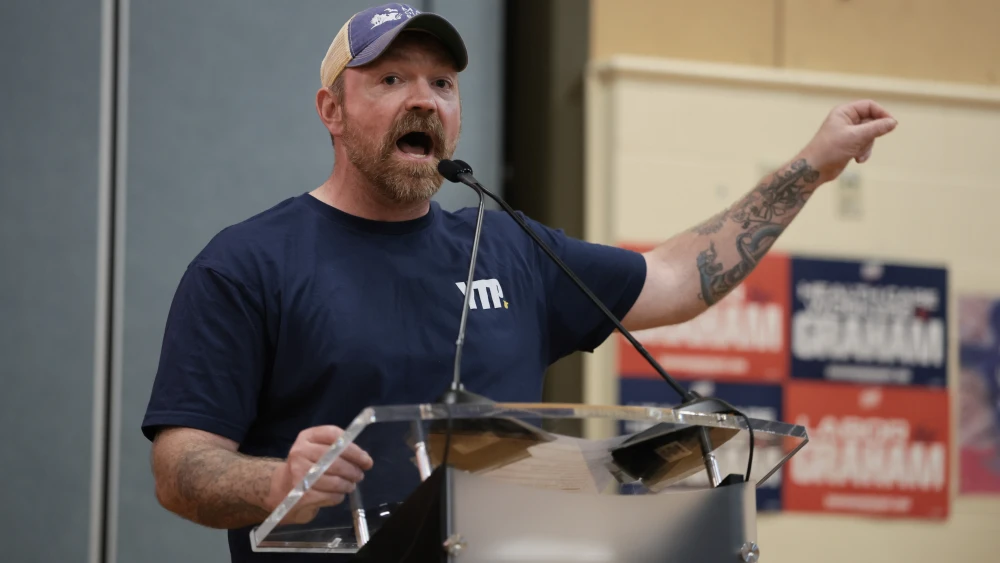
Democratic Senate candidate Graham Platner speaks during a town hall about a Vision for a Healthy Society in Portland, Maine, on May 20, 2026. Photo by Joe Raedle/Getty Images.

It turns out that there are some limits to the tolerance for antisemitism and hatred for Israel increasingly being demonstrated by the Democratic Party. When Maureen Galindo, a candidate in the race for the Democratic nomination for the 35th Congressional District in Texas, said that she planned on turning an ICE detention center into a prison for American Zionists, it was a bit too much for most Democrats. Galindo posted on Instagram that “if you are a Zionist,” then “you are a danger to humanity and belong in prison.”

Democratic House Minority Leader Rep. Hakeem Jeffries (D-N.Y.) said her comments “had no place in American politics, and certainly not in the Democratic Party.” Even left-wing congressional “Squad” ringleader Rep. Alexandria Ocasio-Cortez (D-N.Y.) denounced Galindo for spewing “bigoted garbage and antisemitism.”

Mainstreaming hate on the left

That was encouraging, as was the fact that Galindo ultimately lost her primary runoff to Deputy Sheriff Johnny Garcia, whom she accused of taking money from the pro-Israel AIPAC lobby. But it shouldn’t lead anyone to think that Jew-hatred is off-limits for mainstream Democrats. As the 2026 midterm elections come into focus, it’s clear that anti-Israel rhetoric is not merely commonplace among Democratic candidates. A willingness to demonize Israel and its supporters, discredit AIPAC as a malevolent influence on American politics and treat anti-Zionist smears that are indistinguishable from traditional antisemitism are no barrier to success or acceptance among Democrats. To the contrary, it is often a winning platform.

That’s not merely a function of the support garnered by extremists like Galindo, or first- and second-generation “Squad” members like Reps. Ilhan Omar (D-Minn.), Rashida Tlaib (D-Mich.) and Summer Lee (D-Pa.), all of whom are openly anti-Zionist. Nor is it limited to the popularity of someone like New York City Mayor Zohran Mamdani, whose entire career has centered on his hatred for the State of Israel and the embrace of anti-Jewish tropes. The willingness of national Democrats to tolerate the rise of antisemites who can help them win control of Congress, such as the Nazi-tattooed Maine Senate candidate Graham Platner or Michigan’s Abdul El-Sayed, speaks volumes about the party’s shifting center of gravity.

Reports about Jewish Democratic officeholders feeling themselves to be under constant attack from their own base are widespread. Rep. Josh Gottheimer (D-N.J.), whose pro-Israel views make him a throwback to a bygone era when such beliefs were normative among Democrats, complained in a New York Times op-ed: “My Party Has a Double Standard on Antisemitism.” But Sen. Chris Van Hollen (D-Md.), who has no shame in spreading libelous accusations about Israel committing “genocide” in Gaza, seemed to speak for most members of his party when he used the same forum to assert that they weren’t anti-Israel enough.

With Democrats seemingly poised to make significant gains in November, that’s a sobering thought for those who still hold onto memories of a bipartisan pro-Israel consensus that is clearly a vestige of the past.

But should we be equally worried about the future of the Republican Party with respect to Israel and the Jews?

Trouble on the right

That was the upshot of a New York Times/Sienna College poll published last week. Even if you discount the results because of the newspaper’s unabashed anti-Israel bias—highlighted by its recent publication of Nicholas Kristof’s bizarre and unsubstantiated blood libel about Israelis training dogs to rape Palestinian Arab prisoners—the results raise important questions about the prospects for continued Republican support for Israel and opposition to antisemitism.

Like every other poll about attitudes about President Donald Trump’s support for Israel, the war with Iran and the Jewish state’s conflict with Palestinian Arabs, the numbers show a stark partisan divide. Republicans back the president by huge margins, while Democrats are nearly unanimous in their contempt for Trump. The parties also differ on Israel, with the majority of Republicans backing the Jewish state, while even larger numbers of Democrats oppose it. But the main takeaway from the poll in the newspaper’s own coverage was the “generational divide” that it detected among Republicans with respect to Israel.

It wasn’t just that 60% of those identifying as Republicans wanted to see Trump’s successor seek a new approach to foreign policy. A majority of respondents aged 18 to 44 opposed the president’s decision to go to war against Iran. Of that age group, 54% also thought Trump was “too supportive” of Israel. And nearly two-thirds of them opposed providing additional “military and economic support for Israel,” though the slanted nature of the question (Israel only gets military aid, and almost all of that is spent in the United States) should be taken into consideration.

Among voters older than 45, the results are uniformly positive for Trump and for Israel. But just as ominous was the fact that 37% of Republicans of all ages said that they viewed antisemitic conspiracy theorist Tucker Carlson favorably, while only 29% viewed him unfavorably. That result may, at least in part, be a hangover from his time as a Fox News host, when he was a pro-Trump tribune of conservatism, and managed to keep his anti-Israel and anti-Jewish biases under wraps. Still, it demonstrates that while the antisemitic far-right may remain a minority among Republicans, it is not marginal.

In the post-Trump era—and January 2029 is only 32 months away—the situation may get a lot worse as those young voters play a larger role. Vice President JD Vance, whose public neutrality about Carlson’s antisemitism ought to be disqualifying, is still in the poll position to succeed Trump. If that is how things play out—and given U.S. Secretary of State Marco Rubio’s increasingly dominant role in the administration, assumptions about Vance’s 2028 prospects may be premature at best—the notion of the GOP being a lockstep pro-Israel party may become as much a vestige of the past as similar assertions about the Democrats.

Anti-Israel is political poison for GOP voters

The Times’ predictions about a future in which the mainstream of the Republican Party will, like Carlson, echo the anti-Israel and antisemitic rhetoric of the left are troubling. But for now, such a prospect is still more a matter of wishful thinking for its left-wing readers, who cheer the Democrats’ embrace of Platner and El-Sayed, and lap up the newspaper’s daily repetitions of the “genocide” smear, as well as its disingenuous and utterly unpersuasive justifications of its appalling canard about dogs being trained to rape people.

For the moment, the reality is that opposition to Trump’s pro-Israel stands is political poison for Republicans tempted to try to achieve the “strange new respect” that the left is willing to give to conservatives who embrace the new antisemitism.

The starkest illustration of this occurred last week in Kentucky’s 4th Congressional District when seven-term incumbent Rep. Thomas Massie was bested by a Trump-endorsed challenger by nearly 10 percentage points in the GOP primary. The extremist libertarian Massie spent the campaign claiming that he was being targeted by “Zionist billionaires.” While he was right that pro-Israel PACs poured record amounts into the campaign against him, he was able to counter those sums by raising massive sums of money from out-of-state sources who supported his willingness to engage in antisemitic slurs and Israel-bashing. He remained true to form even after losing, when he said that he had difficulty locating his opponent to concede “because it took a while to find Ed Gallrein in Tel Aviv.”

The results made clear that whatever may happen in the future, even in a district where a popular incumbent was the standard-bearer for the anti-Israel cause, it is a formula for defeat. It’s not only still Trump’s party. It’s also still a party where pro-Israel sentiments, along with support for efforts to oppose a genocidal Islamist regime like that of Iran, remain highly popular.

Indeed, as you look across the country at the results of Republican primaries, it’s obvious that whatever divisions exist within the GOP, the constituency for Israel-bashing is not the path to victory as it often is among Democrats. Antisemitism may be the coin of the realm when it comes to extremist podcasters like Carlson, far-right conspiracy theorist Candace Owens or the neo-Nazi “groyper” Nick Fuentes. But it has yet to make itself felt among Republican voters or officeholders. Indeed, once Massie is sent back to his off-the-grid cattle ranch to consume raw milk to his heart’s content, the GOP House caucus will be uniformly pro-Israel.

There simply is no current Republican equivalent of Platner or El-Sayed—or would-be members of the “Squad”—among those likely to be representing the GOP this fall. Candidates who might fit that description, such as Florida gubernatorial candidate James Fishback or Dan Bilzerian, who is mounting a primary challenge to Rep. Randy Fine (R-Fla.), are way behind in the polls. Their conspiracy-mongering about Jews and Israel seems to have put them in the wrong party.

Democrats embrace anti-Zionists

The situation is different among Democrats.

To take just one example of how Democratic primary voters are trending, the nominally pro-Israel Rep. Dan Goldman (D-N.Y.), whose anti-Trump credentials could not be better (he was one of the attorneys for the dubious effort to impeach the president in 2019), is seen as an almost-certain loser in his effort to hold his seat.

He is opposed by Brad Lander, the former Controller of New York City, whose tenure in that office was widely deemed a disaster. But Lander, who, like Goldman, is Jewish, is endorsed by Mamdani and is a rabid Israel-basher. He even recited a Quranic verse in an appearance at a mosque that attacked Christianity while also repeating the familiar blood libels about Israel committing “genocide” and “apartheid.”

Yet according to the latest polls, Landers leads the incumbent in the deep-blue district with a significant Jewish population by an astonishing 57% to 23% margin.

Across the nation, similar results can be seen. Indeed, the antisemitic Platner is coasting to his party’s Maine Senate nomination, because his lead in the polls scared Gov. Janet Mills (who had been recruited by the party establishment to oppose him) out of the race.

It’s possible to imagine a future in which younger GOP voters hold onto their antagonism for Israel and the Jews, as well as tolerance for antisemites, and wind up being the dominant force in a post-Trump party. Yet even Vance has to know that holding onto his friendship with Carlson will be a problem in the 2028 presidential primaries against an opponent who will be able to appeal to the GOP’s evangelical pro-Israel base.

On the other side of the aisle, pro-Israel candidates face a base that has been marinating in the intersectional ideology that falsely identifies Jews and the Jewish state as “white” oppressors. And they will be operating in an environment in which liberal media, like the Times, will not only be legitimizing Jew-hatred but openly celebrating it.

The persistent appeal of people like Carlson and other Jew-haters for many on the right means that a battle for the soul of the Republican Party will be waged in the coming years, and the outcome is far from certain. But the awful truth is that the same battle has already played out among Democrats in recent years. And condemnations of outliers like Galindo notwithstanding, it has already been lost.


Jonathan S. Tobin is editor-in-chief of the Jewish News Syndicate, a senior contributor for The Federalist, a columnist for Newsweek and a contributor to many other publications. He covers the American political scene, foreign policy, the U.S.-Israel relationship, Middle East diplomacy, the Jewish world and the arts. He hosts the JNS “Think Twice” podcast, both the weekly video program and the “Jonathan Tobin Daily” program, which are available on all major audio platforms and YouTube. Previously, he was executive editor, then senior online editor and chief political blogger, for Commentary magazine. Before that, he was editor-in-chief of The Jewish Exponent in Philadelphia and editor of the Connecticut Jewish Ledger. He has won more than 60 awards for commentary, art criticism and other writing. He appears regularly on television, commenting on politics and foreign policy. Born in New York City, he studied history at Columbia University.


Zawartość publikowanych artykułów i materiałów nie reprezentuje poglądów ani opinii Reunion’68,
ani też webmastera Blogu Reunion’68, chyba ze jest to wyraźnie zaznaczone.
Twoje uwagi, linki, własne artykuły lub wiadomości prześlij na adres:
webmaster@reunion68.com


Alo Yoga Urged to Investigate Customers Receiving Packages With Anti-Israel, Anti-Jewish Messages


Alo Yoga Urged to Investigate Customers Receiving Packages With Anti-Israel, Anti-Jewish Messages

Shiryn Ghermezian


An Alo Yoga store under renovation at K11 Musea in Hong Kong, China. Photo: SCMP via Reuters Connect

The Jewish advocacy group StandWithUs has called on the American athleisure brand Alo Yoga to publicly condemn antisemitism and investigate how some customers received packages containing anti-Israel and anti-Jewish messages.

“No customer should face discrimination or hate because of their identity or nationality. We are calling on Alo Yoga to investigate this incident, condemn antisemitism clearly and publicly, and ensure this never happens again,” StandWithUs said in a statement.

The Jewish group also asked supporters to send “a respectful direct message” to the privately-owned company on Instagram and demand the brand take “accountability,” address the reported incidents, and condemn antisemitism.
.

Earlier in May, the Israeli publication Ynet spoke with two Alo Yoga customers in Israel who ordered items from the brand’s official website. Instead of receiving a mailed package with their purchased products, the shipments included hateful messages. Both customers said their orders were placed through the brand’s US website but physically shipped from Alo Yoga Canada.

One customer said her package did not include the items she ordered and was instead full of torn cardboard and papers, and an empty plastic bag used to wrap clothing. She shared photos of her printed order summary that was inside the package, showing someone had handwritten “Free Palestine,” “Hamas will win,” and “Death, death to the IDF [Israel Defense Forces].” Someone had also drawn an inverted red triangle, which has been used to symbolize support for violent Palestinian “resistance” against Israel. The symbol first appeared in propaganda videos from the Al-Qassam Brigades, Hamas’ military wing.

“The bag was sealed — the shipment arrived intact, and I opened the folds myself, so it would appear that this had to have happened at the company itself,” the customer told Ynet. “All the junk inside — the cardboard, the bags — was also all from Alo Yoga.”

The shopper said after she contacted customer service through the Al Yoga chat and uploaded a photo of the package, the chat blocked her.

A second Israeli Alo Yoga customer told Ynet the package she received did not contain her purchased items but just a order slip with the handwritten messages “Free Palestine,” “Victory to Hamas,” “From the river to the sea,” and “Death, death to the IDF.”

“I contacted Alo Yoga, and the moment I sent a photo, the chat closed,” she told the publication. “But I am very persistent, so I opened another chat, and another chat, and another chat, until the bot transferred me to a representative. I started corresponding with her. I told her, ‘This is incitement, this person knows my address,’ and she said, ‘I’m very sorry, I’m transferring this to the department that handles this.’ I gave her my email. Now the ball is in Alo Yog’’s court. They need to get back to me and say what they are going to do.”

Alo Yoga did not respond to The Algemeiner‘s request for comment.

Alo — which stands for air, land, and ocean — was launched in Los Angeles in 2007 and founded by childhood best friends Danny Harris and Marco DeGeorge. Harris is the company’s CEO while DeGeorge serves as its president. The two friends also co-own Alo Yoga’s parent company, Color Image Apparel, Inc.

Zawartość publikowanych artykułów i materiałów nie reprezentuje poglądów ani opinii Reunion’68,
ani też webmastera Blogu Reunion’68, chyba ze jest to wyraźnie zaznaczone.
Twoje uwagi, linki, własne artykuły lub wiadomości prześlij na adres:
webmaster@reunion68.com