
Archive | 2026/06/13

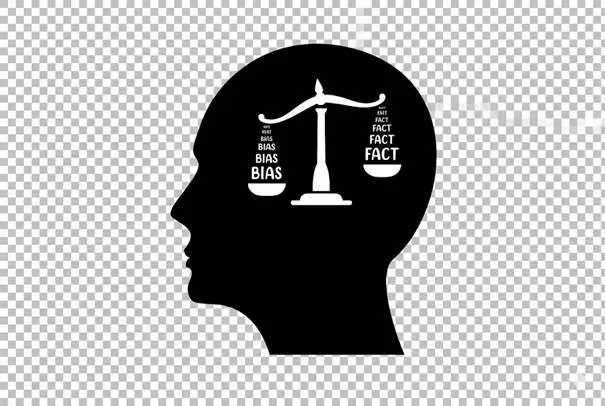
Jak rozpoznawać i zwalczać własne uprzedzenia poznawcze Rozdział 6 książki How to Think Elder of Ziyon


Jak rozpoznawać i zwalczać własne uprzedzenia poznawcze Rozdział 6 książki How to Think Elder of Ziyon

Elder of Ziyon


Do tej pory kierowaliśmy uwagę na zewnątrz – na źródła, które wprowadzają w błąd, twierdzenia odporne na falsyfikację, ramy interpretacyjne zniekształcające obraz rzeczywistości oraz techniki manipulacji. Założenie było takie, że czytelnik, wyposażony w odpowiednie narzędzia, jest w stanie uczciwie oceniać napływające do niego informacje. Ale czy rzeczywiście tak jest? Zanim zapytamy, dlaczego ludzie źle rozumują w konkretnych sytuacjach, warto zadać wcześniejsze pytanie: biorąc pod uwagę to, co wiemy o rzeczywistym funkcjonowaniu ludzkiego umysłu, dlaczego mielibyśmy oczekiwać, że ktokolwiek będzie rozumował dobrze?

Uczciwa odpowiedź brzmi: nie powinniśmy tego oczekiwać. Ludzki umysł nie został zaprojektowany do poszukiwania prawdy. Jesteśmy biologicznie przystosowani do przetrwania w małych grupach społecznych oraz do unikania wykluczenia z tych grup. Zrozumienie konkretnych sił, które zniekształcają myślenie – u każdego człowieka, w każdej kulturze, jeszcze zanim zostanie zastosowana jakakolwiek celowa manipulacja – sprawia, że narzędzia opisane w poprzednich rozdziałach stają się jednocześnie bardziej potrzebne i bardziej wyrozumiałe.

Wszyscy jesteśmy stronniczy, niezależnie od tego, jak bardzo chcielibyśmy udawać, że jest inaczej.

Woda, w której pływasz

Najgłębsza warstwa zniekształconego myślenia to ta, która zostaje zainstalowana jeszcze zanim pojawi się zdolność do jej oceny.

Każdy człowiek przyswaja w dzieciństwie i w okresie wczesnego kształtowania się osobowości zestaw założeń dotyczących tego, komu można ufać, co uznaje się za dowód, jakie obowiązki wobec grupy są wiążące i jakie są konsekwencje sprzeciwu. Nie są to wnioski wypracowane drogą rozumowania; są one środowiskiem, w której owo rozumowanie pływa. Nie postrzegasz swoich podstawowych założeń jako założeń. Doświadczasz ich jako oczywistej rzeczywistości.

Amerykanie negocjujący z japońskimi partnerami w dekadach po II wojnie światowej regularnie interpretowali milczenie jako zgodę, ponieważ w amerykańskiej kulturze biznesowej milczenie podczas negocjacji oznacza akceptację. W japońskiej kulturze biznesowej milczenie sygnalizuje coś przeciwnego – dyskomfort, brak zgody albo potrzebę większej ilości czasu. Żadna ze stron nie kłamała ani nie próbowała celowo utrudniać rozmów. Każda działała w obrębie założeń tak głęboko zakorzenionych, że nawet nie były postrzegane jako założenia. Amerykanie opuszczali spotkania przekonani, że osiągnięto porozumienie. Japończycy wychodzili z tych samych spotkań pewni, że jasno zakomunikowali swoje poważne zastrzeżenia. Nieporozumienie nie dotyczyło faktów. Dotyczyło niewidzialnej architektury komunikacji – architektury, którą każda ze stron przyswoiła, zanim była wystarczająco dorosła, by uświadomić sobie jej istnienie.

Kultury honoru – w których podstawowym obowiązkiem jest obrona reputacji grupy przed oceną zewnętrzną, a domniemane zniewagi wymagają odpowiedzi – kształtują systematycznie odmienny stosunek do świadectw i mówienia prawdy niż kultury winy, w których głównym ograniczeniem jest wewnętrzny koszt nieuczciwości. Żaden z tych systemów nie jest charakterystyczny wyłącznie dla jednego narodu czy regionu. Oba pojawiały się w historii w wielu formach, lecz prowadzą do odmiennych nawyków rozumowania w warunkach konfliktu lub zagrożenia. Członek kultury honoru, poproszony o złożenie zeznań przeciwko własnej społeczności, postrzega takie zeznanie jako formę zdrady, niezależnie od jego zgodności z faktami. Członek kultury winy odbiera jako zdradę właśnie niepowiedzenie prawdy. Ten sam czyn ma przeciwstawną wagę moralną w zależności od tego, w ramach której architektury funkcjonuje dana osoba – i żadna z nich prawdopodobnie nie będzie świadoma, że jej reakcja wynika z tej architektury, a nie po prostu z tego, co uważa za słuszne.

Praktyczna konsekwencja jest taka, że znaczna część tego, co wydaje się rozumowaniem, jest w rzeczywistości zastosowaniem wcześniej wgranych założeń, które nigdy nie zostały poddane analizie, ponieważ nigdy nie wypłynęły na powierzchnię świadomości. Pierwszym krokiem ku uczciwemu myśleniu jest uznanie, że to środowisko istnieje – że pływasz w pewnym środowisku, a ono zostało ci narzucone, zanim mogłeś wyrazić na nie zgodę.

Umysł plemienny

Na te kulturowe założenia nakłada się kolejna, bardziej bezpośrednia i równie potężna siła: tożsamość grupowa.

Ludzie zasadniczo nie dochodzą do wniosków drogą rozumowania, a następnie nie dołączają do grup podzielających te same wnioski. Najpierw dołączają do grup – albo się w nich rodzą – a następnie przyjmują poglądy podzielane przez grupę. Dopiero później konstruują uzasadnienia dla tych poglądów, które z ich własnej perspektywy wydają się niezależnym rozumowaniem. Sam proces rozumowania wydaje się autentyczny. Jednak wnioski, których broni, zostały przyjęte jeszcze zanim to rozumowanie się rozpoczęło.

Psycholog Jonathan Haidt przeprowadził eksperyment dotyczący tego zjawiska. Kiedy ludzi proszono o wyjaśnienie własnych ocen moralnych – dlaczego coś wydaje im się odrażające, niesprawiedliwe lub złe – bez trudu i z dużą pewnością siebie podawali uzasadnienia. Jednak gdy te uzasadnienia były podważane kolejnymi pytaniami, nie zmieniali swoich ocen. Zaczynali szukać nowych argumentów. Ocena była stała; rozumowanie służyło jej obronie. Haidt nazwał to zjawisko „moralnym osłupieniem” (moral dumbfounding) – doświadczeniem polegającym na całkowitej pewności, że coś jest złe, przy jednoczesnej niemożności wyjaśnienia dlaczego, nawet gdy wszystkie wcześniej podane wyjaśnienia zostały obalone. Pewność nie była produktem rozumowania. To rozumowanie zostało wytworzone w obronie tej pewności.

Psychologia polityczna udokumentowała konkretną formę, jaką zjawisko to przybiera we współczesnym życiu. Gdy badanym prezentowano identyczne propozycje polityczne, zmieniając jedynie informację o tym, która partia polityczna je popiera, oceniali je jako lepsze lub gorsze, bardziej lub mniej rozsądne, lepiej lub słabiej uzasadnione – w zależności od tego, której partii je przypisano. Ludzie nie oceniali samej propozycji. Oceniali własną plemienną relację z tymi, którzy ją przedstawiali. Rozumowanie dotyczące zalet danego rozwiązania było konstruowane później, aby uzasadnić osąd podjęty wcześniej na gruncie lojalności grupowej.

Wniosek jest taki, że większość przekonań politycznych nie ma u swoich podstaw charakteru politycznego. Ma charakter społeczny. Osoba wyznająca określony zestaw poglądów zwykle przyjęła je dlatego, że są to poglądy jej wspólnoty – rodziny, sąsiedztwa, środowiska edukacyjnego czy zawodowego – a koszt przyjęcia odmiennych stanowisk miałby charakter społeczny, a nie jedynie intelektualny. Rozumowanie towarzyszące tym poglądom jest szczere. Jest jednak wtórne wobec społecznej kalkulacji, która została dokonana, zanim proces rozumowania w ogóle się rozpoczął. 


Link do oryginału:

Elder’s Substack

Zawartość publikowanych artykułów i materiałów nie reprezentuje poglądów ani opinii Reunion’68,
ani też webmastera Blogu Reunion’68, chyba ze jest to wyraźnie zaznaczone.
Twoje uwagi, linki, własne artykuły lub wiadomości prześlij na adres:
webmaster@reunion68.com

There Is No ‘Good Deal’ to be Made with Iran’s Regime


There Is No ‘Good Deal’ to be Made with Iran’s Regime

Eric Levine


  • The Obama strategy was apparently to make any deal and call it a “good deal
    .”
  • In exchange for these concessions to the Ayatollah, the Obama Administration agreed to lift economic sanctions on Iran at a time when its frozen overseas assets totaled approximately $115 billion, and delivered $400 million of cash on a pallet as ransom for American hostages being illegally held by the Islamic Republic
    .
  • In short, Obama gave away everything and got nothing in return. Now that is a really bad deal
    .
  • Obama and his lead negotiator, Secretary of State John Kerry, must have understood that the money Iran received was to be used to fund its military, its international terror network, and to advance its hegemonic goals in the region
    .
  • Obama rammed the deal down the throats of a skeptical American public and implemented it in the face of overwhelming bipartisan congressional opposition. Moreover, Israel and the Gulf Arab states — the countries most directly impacted by the deal and that strenuously opposed it — were not consulted
    .
  • The Obama propaganda machine also understood that it could not tell the truth about the terms of the deal if they wanted any support from the American people. So they simply lied about them
    .
  • The current hostilities with Iran are a direct result of Obama’s failed policy. Obama did not just save the Iranian regime; he empowered it
    .
  • Iran’s regime will only make a deal with the US if Iran’s rulers believe the survival of the regime is guaranteed. No matter what is agreed to by Trump, Iran’s rulers are sure to violate the agreement. Maybe not today or tomorrow, but as soon as Trump leaves office
    .
  • If Trump makes a deal, even a great one, it will last no longer than his presidency. The Gulf states will hedge their bets. Trump will be gone but the Iranian regime, perhaps with the support of a new American administration, will still be in their midst.

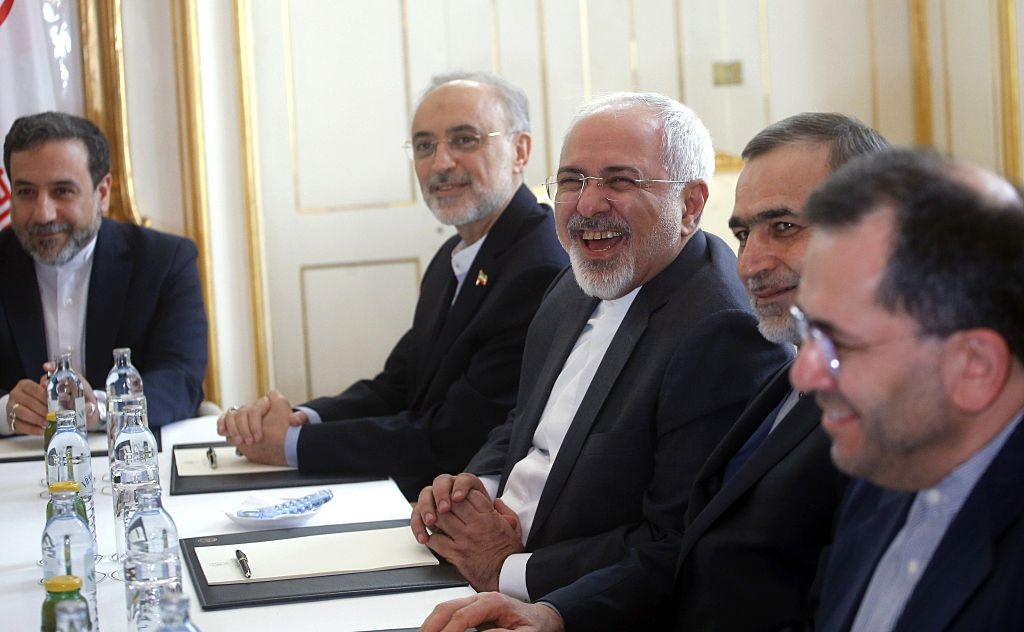
The current hostilities with Iran are a direct result of Obama’s failed policy. Obama did not just save the Iranian regime; he empowered it. The Obama strategy was apparently to make any deal with Iran and call it a “good deal.” Obama and his lead negotiator, Secretary of State John Kerry, must have understood that the money Iran received was to be used to fund its military, its international terror network, and to advance its hegemonic goals in the region. Pictured: Iran’s then Foreign Minister Mohammed Javad Zarif (center) shares some laughs with his delegation during nuclear deal negotiations with Kerry in Vienna, Austria, on June 30, 2015. (Photo credit should read Carlos Barria/AFP via Getty Images)

Before agreeing to the JCPOA (the Iran “nuclear deal”) in 2015, President Barack H. Obama assured the American people that he understood, in the words of his press secretary, Josh Earnest, that “no deal is better than a bad deal.”

Obama then proceeded to make a historically epic terrible deal.

Because Obama made it clear to friend and foe alike that he would never use military force to prevent Iran from obtaining nuclear weapons, the only possible outcome was a “bad deal.”

As Obama told a skeptical and worried Israeli public on June 1, 2015:

“I can, I think, demonstrate, not based on any hope but on facts and evidence and analysis, that the best way to prevent Iran from having a nuclear weapon is a verifiable, tough agreement…. A military solution will not fix it. Even if the United States participates, it would temporarily slow down an Iranian nuclear program but it will not eliminate it.”

The Obama strategy was apparently to make any deal and call it a “good deal.”

President Donald J. Trump is assuring the American people that he will only make a “good deal.” Trump, unlike Obama, has demonstrated his willingness to use military force. Because of the nature of the Iranian regime and the damage done to America’s national security interests in the region, not to mention the distrust Obama’s nuclear deal engendered among our Arab allies, it is not possible for Trump to make a “good deal” with Iran’s current regime.

Trump’s only alternative for a positive outcome is regime change, which can only be achieved by resuming kinetic military action. It appears that Trump has reached the same conclusion, and renewed military operations against the Iranian regime have commenced this week.

Obama, while purposely misleading the average American about the terms of his deal and the nature and goals of the Iranian regime, may well have believed that he made a “good deal.” It seems that for Obama, the goal of the deal (any deal) justified the lies.

The Obama deception was not the good deal/bad deal dichotomy. The lie was the motivation behind the deal and how it was sold to the American people.

For Obama, even a deal like the one he negotiated that empowered the Iranian regime and fundamentally changed the security architecture of American policy in the Middle East from an Israel-centric system to an Iranian-centric or bi-polar Israeli-Iranian geopolitical paradigm, was a “good deal.”

On March 24, 2007, the United Nations Security Council unanimously adopted Resolution 1747, imposing sanctions on Iran for violating its obligations under the Treaty on the Non-Proliferation of Nuclear Weapons.

On March 3, 2008, the UN Security Council adopted Resolution 1803, imposing additional sanctions on Iran for its refusal to suspend its uranium enrichment.

On June 9, 2010, the UN Security Council adopted Resolution 1929, noting that Iran had failed to abide by previous resolutions designed to stop its uranium enrichment program, and prohibiting it from outsourcing its nuclear program.

The UN Security Council also seems to have understood that a nuclear weapon without the means to deliver it was of limited use. Therefore, the international community sought to frustrate Iran’s ability to launch a nuclear warhead, and included the following provision in Resolution 1929:

“… Iran shall not undertake any activity related to ballistic missiles capable of delivering nuclear weapons, including launches using ballistic missile technology, and that States shall take all necessary measures to prevent the transfer of technology or technical assistance to Iran related to such activities.”

Obama allowed Iran to continue developing nuclear weapons. He refrained from enforcing the UN resolutions or supporting the popular uprisings of the Iranian people in 2009 and 2015 that sought to overthrow Ayatollah Ali Khamenei’s Islamic Republic. Instead, Obama agreed to a deal that allowed the mullahs to violently crush the popular protests, and required the repeal of each of the UN resolutions. Obama’s deal provided for all limitations on Iran’s uranium enrichment and development of its “civilian” nuclear program to expire in 2030, and permitted Iran, the world’s leading state sponsor of terrorism for 39 straight years, to enrich uranium and legitimately develop a ballistic missile system designed to deliver nuclear weapons at the expiration of the agreement in October 2025.

In exchange for these concessions to the Ayatollah, the Obama Administration agreed to lift economic sanctions on Iran at a time when its frozen overseas assets totaled approximately $115 billion, and delivered $400 million of cash on a pallet as ransom for American hostages being illegally held by the Islamic Republic.

In short, Obama gave away everything and got nothing in return. Now that is a really bad deal.

Obama and his lead negotiator, Secretary of State John Kerry, must have understood that the money Iran received was to be used to fund its military, its international terror network, and to advance its hegemonic goals in the region.

Obama rammed the deal down the throats of a skeptical American public and implemented it in the face of overwhelming bipartisan congressional opposition. Moreover, Israel and the Gulf Arab states — the countries most directly impacted by the deal and that strenuously opposed it — were not consulted.

The Obama propaganda machine also understood that it could not tell the truth about the terms of the deal if they wanted any support from the American people. So they simply lied about them.

We were famously told by Kerry that the Iran deal “closed off all paths to a bomb.” Obama told an identical fib when he announced to the world that America had reached a “[c]omprehensive long-term deal with Iran that will prevent it from obtaining a nuclear weapon… Every pathway to a nuclear weapon has been cut off.”

There was talk of “[c]onstant international supervision,” “24/7 access to key nuclear facilities,” and “access where necessary, when necessary.”

Obama and his lackeys left out the part of the deal that effectively prevented inspectors from searching Iranian military sites and the requirement of almost one month’s notice by international inspectors concerning locations they found suspicious. That allowed ample time for Iran to cover its tracks.

Obama could not but appreciate that the deal was problematic. It could never pass the Senate as a treaty. There was no possibility of getting 67 votes (two-thirds of the Senate) to approve it.

With the help of Kerry and the complicity of Senate Democrats, in particular Chuck Schumer, Obama turned the Constitution on its head and implemented a protocol requiring 67 votes to disapprove the nuclear deal. The fix was in.

The current hostilities with Iran are a direct result of Obama’s failed policy. Obama did not just save the Iranian regime; he empowered it. Every pathway to an Iranian nuclear weapon was not cut off. To the contrary, Obama guaranteed Iranian success. He helped Iran fund its military and its terror proxies — the same ones that have killed and maimed thousands of American service members. Obama’s nuclear deal helped fund the October 7 attack against Israel. The attack drones and ballistic missiles that Iran launched at American service members, at Israel, and at our Gulf Arab allies, were paid for in large part by Obama’s nuclear deal.

Yet, the nuclear deal did have one positive unforeseen consequence. It persuaded many of the Arab states looking for a reliable ally that an alliance with Israel was their best geopolitical hedge against an ascendant Iran and a schizophrenic America.

To his credit, Trump understood the dynamic and seized the opportunity. The Abraham Accords was born.

Iran’s regime will only make a deal with the US if Iran’s rulers believe the survival of the regime is guaranteed. No matter what is agreed to by Trump, Iran’s rulers are sure to violate the agreement. Maybe not today or tomorrow, but as soon as Trump leaves office.

The regime will test the next president.

If it is a Democrat, whatever Trump agrees to will be meaningless. Can anyone imagine a President Harris or Buttigieg using military force against Iran? These people are rooting for Iran to win the war just so they can say “Trump lost.”

Depending on who the next president is, it is more likely that American policy will be to move away from, weaken, and isolate Israel. Israel will be cut loose, and with it, the safety net the members of the Abraham Accords are looking to build.

The principal beneficiary of such an “agreement” will be Iran. The Gulf Arab states understand that all too well.

If Trump makes a deal, even a great one, it will last no longer than his presidency. The Gulf states will hedge their bets. Trump will be gone but the Iranian regime, perhaps with the support of a new American administration, will still be in their midst.

The Arabs no doubt are planning for that possibility now and will make accommodations with Iran at a time when we need them to stand with us against this predatory death cult. Rather than join the Abraham Accords, Saudi Arabia and other Gulf states will run from it. Joining the Abraham Accords under those circumstances would be tantamount to suicide.

Trump’s only long-term “good deal” is no deal. Regime change is his only option.

Our enemies are watching.


Eric Levine, a New York attorney, represents both plaintiffs and defendants. His clients range from individuals to Fortune 100 companies. He served formerly at the U.S. Department of Treasury, Office of Thrift Supervision, where he prosecuted Savings and Loan fraud. Mr. Levine then worked at the international law firm, Proskauer Rose, before starting his own firm in New York City, Eiseman Levine. He has appeared multiple times on FOX Business News, FOX News, and CNN. Mr. Levine is also a co-host of the Sunday morning WABC radio show, Let the Record Show, where he discusses local, state, federal, and national security issues. He has appeared on BBC radio and been quoted in the New York Times, the Washington Post, Le Monde and other international publications concerning his views on the American political landscape.


Zawartość publikowanych artykułów i materiałów nie reprezentuje poglądów ani opinii Reunion’68,
ani też webmastera Blogu Reunion’68, chyba ze jest to wyraźnie zaznaczone.
Twoje uwagi, linki, własne artykuły lub wiadomości prześlij na adres:
webmaster@reunion68.com


Helen Mirren Responds to Being Called ‘Evil Zionist B—h’ on the Street in London


Helen Mirren Responds to Being Called ‘Evil Zionist B—h’ on the Street in London

Shiryn Ghermezian


Actress Helen Mirren arrives for the Premiere of the film ‘Fast X’ on May 12, 2023, at the Colosseum monument in Rome. Photo: Luca Carlino via Reuters Connect

The man who called Dame Helen Mirren an “evil Zionist b—h” on the streets of London was perhaps “mentally not quite stable,” the Oscar-winning actress said while addressing the incident for the first time publicly.

Mirren, 80, made the comments while talking to reporters on the sidelines of the annual Taormina Film Festival, where she is the recipient of the Lifetime Achievement Award.

As seen in a video shared on social media in late May, Mirren was walking with her husband in East London at night when a man approached the couple and called Mirren an “evil Zionist b—h” and an “avowed Zionist” because of pro-Israel comments she made in 2023. It was later reported that the incident actually took place last year.

Mirren, who played former Israeli Prime Minister Golda Meir in the 2023 film “Golda,” had told the Israeli media outlet N12 in 2023: “I believe in the existence of Israel, and I believe Israel has to go forward into the future for the rest of eternity. And I believe in Israel because of the Holocaust.”

When asked about the incident in London, Mirren told reporters at the film festival in Sicily she was “attacked by mistake by a man who was maybe a little over passionate or maybe mentally not quite stable.”

“I don’t know whether he read things on the internet or thought he read something which he hadn’t read, I don’t know,” she added, according to The Times. She then clarified her stance on Israel while seemingly criticizing the country’s military campaign against the Hamas terrorist group in Gaza.

“Evil forces are rising everywhere, even in a country like Israel,” she said. “How could you possibly repeat the actions of what was done to you as people to other people? Crimes against humanity, it’s called.”

She added that she has “great friends from Israel” and praised the country’s artistic and “intellectual” communities as being “so remarkable.” The actress then explained that her support for Israel is in part due to the fact that she grew up in the years immediately following the Holocaust.

“I was born at the end of the Second World War. I grew up in Europe post-Second World War and the realization in my parents’ generation of what had happened in the Holocaust was so profound, so important,” she noted. “Therefore, the creation of Israel was a very important moment, although maybe it was done in completely the wrong way, in the wrong place, I don’t know. But something had to happen after the horror.”

Mirren said that she has “many Jewish friends” and her first two boyfriends were Jewish, including an Englishman with whom she traveled to Israel. Mirren first visited the country after World War II and worked as a volunteer at Kibbutz Ha’on in the Galilee region.

While talking to reporters at the Taormina Film Festival, she also compared Israel’ss recent military actions to the conquests of Catherine the Great and Alexander the Great.

“When you play Catherine the Great, why was Catherine called the Great? Because she took land. Why was Alexander the Great? Because he took land. He invaded, he killed people, he destroyed cities and he took land. Why is he remembered in history? Because with incredible brutality and unbelievable cruelty, he took land. So, it devastates me. That’s what I mean,” the actress said. “The evil is always lurking, waiting to take over, even in a place like Israel. I played Golda Meir and worked in a country that was the idealistic Israel, and I always thought it was a country that would never do wrong, but of course they were doing wrong, even then.”

Mirren condemned the Hamas-led terrorist attack in Israel on Oct. 7, 2023, shortly after the massacre took place and was among more than 1,000 members of the entertainment industry who supported Israel’s participation in the Eurovision Song Contest this year.


Zawartość publikowanych artykułów i materiałów nie reprezentuje poglądów ani opinii Reunion’68,
ani też webmastera Blogu Reunion’68, chyba ze jest to wyraźnie zaznaczone.
Twoje uwagi, linki, własne artykuły lub wiadomości prześlij na adres:
webmaster@reunion68.com