Archive | 2016/09/13

DOBRZE JEST POSIADAĆ DOM POD ZIEMIĄ …

DOBRZE JEST POSIADAĆ DOM POD ZIEMIĄ …
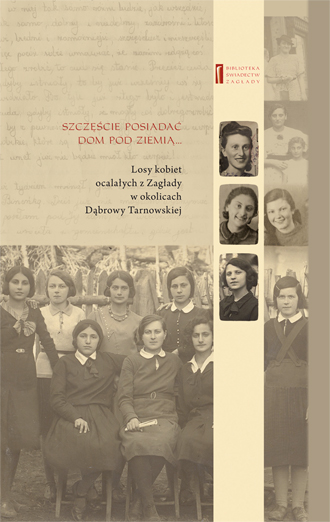

DOBRZE JEST POSIADAĆ DOM POD ZIEMIĄ …
Losy kobiet ocalałych z Zagłady w okolicach Dąbrowy Tarnowskiej
Chaja Rosenblatt , Rywka Schenker , Melania Weissenberg
oprac i wstępem opatrzył Jan Grabowski
Stowarzyszenie Centrum Badań nad Zagładą Żydów
Warszawa 2016
ISBN:978-83-63444-44-0

Na książkę składają się trzy teksty, napisane przez trzy niezwykłe kobiety, którym przyszło żyć w strasznych czasach. Chaja Rosenblatt i Rywka Schenker urodziły się na początku lat dwudziestych i w wojnę weszły jako młode, lecz już dorosłe kobiety, Melania Weissenberg natomiast była od nich znacznie młodsza – w 1939 r. miała zaledwie dziewięć lat. Chaja i Rywka spisały własne wspomnienia wkrótce po wojnie, a Melania prowadziła swój dzienniczek na bieżąco, od wiosny 1942 aż do wyzwolenia w styczniu 1945 r. Melania pochodziła z Krakowa, a Rywka i Chaja – z małego małopolskiego sztetla. Rodziny Rywki i Chai były głęboko religijne, Melania zaś dorastała w domu stosunkowo dobrze zasymilowanym. Mimo różnicy wieku i odmiennych typów narracji trzy prezentowane teksty łączą się i uzupełniają na wiele sposobów oraz na wielu płaszczyznach.

Przede wszystkim losy Chai, Rywki i Melanii spięli wspólną klamrą Niemcy, którzy skazali je – wraz z resztą polskich Żydów – na śmierć. Łączyła je też geografia – w momencie gdy rozpoczęto likwidację skupisk żydowskich na terenie Generalnej Guberni, wszystkie trzy znalazły się w getcie w Dąbrowie Tarnowskiej, małym miasteczku położonym kilkanaście kilometrów na północ od Tarnowa. W obliczu nadciągającej Zagłady każda z nich obrała inną strategię przetrwania…

25 I 1943. [Poniedziałek]
Wielka zmiana w moim życiu! Zmieniłyśmy dziś „mieszkanie”. Przeniosłyśmy się ze skrytki w stodole do skrzyni umieszczonej w ziemi. Jest wprawdzie otwór, by niby światło wchodziło i powietrze, ale siedzieć nie można. Straszne jest to bezczynne leżenie przez całe dnie, bo dopiero w nocy można wyjść, wyprostować się, na cuchnącą stajnię, zimną i ciemną, i drżeć na każde szczeknięcie psa, ale to już rozkosz, bo po przeleżanym dniu kości sobie nie czujemy. Ale jak długo można to tak stać w tej ciemności, zimnie i smrodzie? “
Melania Weissenberg

To ja usłyszałam straszne krzyki po niemiecku, natychmiast my weszli do kryjówki. Jak tylko zamaskowałam kryjówkę, to zaczyna się strzelanie. Bardzo mi serce biło jak kowadłem, jeden patrzył się na drugiego, każdy milczał. Słyszeliśmy okropne krzyki: Raus, o ile nie wyjdziecie z kryjówki, to wrzucamy granat. Każdy z nas był jak [s]paraliżowany, jeden się patrzył na drugiego. Tymczasem zaczęli strzelać do góry, żeby nas przestraszyć. Natychmiast otworzyłam drzwiczki, które były zamaskowane tak pięknie, że to nie było możliwe poznać. Niemcy krzyczeli: Ręce do góry i jak ktoś ma broń, to wszystko wyrzucić. Myśmy wyszli, każdy był blady jak trup”
Rywka Schenker

O godzinie 20 opuściliśmy ukradkiem miasto. Czekaliśmy w polu, zanim ciemna noc zapadnie, i wyruszyliśmy w drogę. Zostawiliśmy nasze ostatnie rzeczy, które mieliśmy ze sobą, ponieważ wiedzieliśmy z doświadczenia, że nawet bez paczek trudno nam będzie dotrzeć do Tarnowa. Trudno sobie wyobrazić i opisać nasze położenie. Rodzice nie byli w stanie kroku zrobić, ciągnęliśmy ich jak słupy drzewa. Byłam przekonana, że jeżeli nawet dobrniemy do Tarnowa – oni nie przybędą żywi (…) Było to około trzeciej godzinie nad ranem, niebo było usiane gwiazdami, na wschodzie horyzont zaledwie zaczął jaśnieć. Znaleźliśmy się na dróżce, niedaleko której ciągnęła się rzeka i wzdłuż której główna droga znajdowała się, prowadząca z Dąbrowy do Tarnowa. Nagle słychać było piekielne roztrzaskanie. Zwracamy nasz wzrok w kierunku głównej drogi, na której widzieliśmy długą kolumnę, toczącą się w kierunku Dąbrowy. Zawierała ona samochody, ciężarówki wojskowe oraz samochody pancerne. Szereg tych wozów ciągnął się wzdłuż przeszło kilometra. Łatwo zrozumieć: komisja deportacji jedzie prosto do Dąbrowy, aby wytępić Żydów.
Chaja Rosenblatt

SPIS TREŚCI

Wstęp

I.Melania Weissenberg
Wprowadzenie do dzienniczka Melanii
Dziennik Melanii Weissenberg, 1942–1945
Fotografie do dziennika Melanii Weissenberg

II. Chaja Rosenblatt
Wprowadzenie do wspomnień Chai
Wspomnienia Chai Rosenblatt
Fotografie do wspomnień Chai Rosenblatt

III. Rywka Schenker
Wprowadzenie do wspomnień Rywki
Wspomnienia Rywki Schenker
Fotografie do wspomnień Rywki Schenker


twoje uwagi, linki, wlasne artykuly, lub wiadomosci przeslij do: webmaster@reunion68.com



Archaeologists restore ancient tiles from Second Temple in Jerusalem

The Jerusalem Post - Israel NewsArchaeologists restore ancient tiles from Second Temple in Jerusalem

DANIEL K. EISENBUD


“This represents the first time that archaeologists have been able to successfully restore an element from the Herodian Second Temple complex,” says expert


A reconstructed tile from the Second Temple.. (photo credit:ZACHI DVIRA/TEMPLE MOUNT SIFTING PROJECT)

For the first time since its destruction at the hands of the Roman Empire 2,000 years ago, several floor tiles from Jerusalem’s Second Temple’s courtyard have been reconstructed, archeologists announced on Tuesday. According to Dr. Gabriel Barkay and Zachi Dvira, co-founders and co-directors of the Temple Mount Sifting Project, the reconstruction is unprecedented.

“This represents the first time that archeologists have been able to successfully restore an element from the Herodian Second Temple complex,” said Dvira at an unveiling of the tiles at the project’s headquarters in Emek Tzurim National Park, located on the western slopes of Mount Scopus.

The regally designed ancient tiles likely featured prominently in the courtyards of the holy Temple during King Herod’s reign between 37 to 4 BCE, added Barkay. “It enables us to get an idea of the Temple’s incredible splendor,” he said.

The Temple Mount Sifting Project, supported by the City of David Foundation and the Israel Archeology Foundation, was established in response to the illegal removal of tons of antiquities-rich earth from the Temple Mount by the Islamic Waqf in 1999.

It is run under the auspices of Bar-Ilan University and the Israel Nature and Parks Authority.

Frankie Snyder, a member of the Temple Mount Sifting Project’s team of researchers and an expert in the study of ancient Herodian-style flooring, said they succeeded in restoring the ornate tile patterns using geometric principles, and through similarities found in tile design used by Herod at other sites.

“This type of flooring, called opus sectile [Latin for “cut work”] is very expensive, and was considered to be far more prestigious than mosaic tiled floors,” said Snyder, who has an academic background in mathematics and Judaic Studies.

“So far, we have succeeded in restoring seven potential designs of the majestic flooring that decorated the buildings of the Temple Mount,” Snyder added, noting that there were no opus sectile floors in Israel prior to the time of King Herod.

“The tile segments were perfectly inlaid, such that one could not even insert a sharpblade between them,” she explained.

To date, approximately 600 colored stone floor tile segments have been uncovered, with more than 100 of them definitively dated to the Herodian Second Temple Period.

“This style of flooring is consistent with those found in Herod’s palaces at Masada, Herodian, and Jericho, among others, as well as in majestic palaces and villas in Italy, also attributed to the time of Herod,” said Snyder.

The tile segments – mostly imported from Rome, Asia Minor, Tunisia, and Egypt – were created from polished multicolored stones, cut in a variety of geometric shapes.

“A key characteristic of the Herodian tiles is their size, which corresponds to the Roman foot, approximately 29.6cm.,” said Snyder.

The possibility that large expanses of the Temple Mount during the Second Temple Period were covered with opus sectile flooring was first raised in 2007 by archeologist Assaf Avraham, director of the Jerusalem Walls National Park.

Avraham’s theory was based on a description given by the first-century Romano- Jewish historian Josephus, who wrote in The Jewish War, “…the uncovered [Temple Mount courtyard] was completely paved with stones of various types and colors…”

Moreover, Talmudic literature records the meticulously planned construction of the Temple Mount, describing rows of marble in different colors, including green, blue and white.

“Now, as a result of Frankie Snyder’s mathematical skills, we have succeeded in recreating the actual tile patterns,” said Barkay.

“Referring to the Temple that Herod built, the Talmud says that, ‘Whoever has not seen Herod’s building, has not seen a beautiful building in his life,’” he continued.

“Though we have not merited seeing the Temple in its glory, with the discovery and restoration of these unique floor tiles, we are now able to have a deeper understanding and appreciation for the Second Temple, even through this one distinctive characteristic.”

Since the Temple Mount Sifting Project’s inception in 2004, more than 200,000 volunteers from around the world have taken part in the sifting, representing an unprecedented phenomenon in the realm of archeological research.

The restored tiles will be presented to the general public on Thursday at the 17th Annual City of David Archaeological Conference.


twoje uwagi, linki, wlasne artykuly, lub wiadomosci przeslij do: webmaster@reunion68.com