Archive | 2016/09/24

Rabin w jarmułce dźgany przez nożownika…

Reporters.plRabin w jarmułce dźgany przez nożownika krzyczącego „Allahu Akbar!” To nie antysemityzm. To nie terroryzm

atak_francjaAtak-francja

W Strasburgu we Francji islamski fanatyk zaatakował nożem żydowskiego rabina w tradycyjnym stroju, krzycząc „Allahu Akbar”. Aż trudno uwierzyć jak na ten kolejny nożowniczy atak w Europie zareagowała francuska policja.

O ataku fanatyka poinformowały francuski „Journal de Dimanche” i „Le Figaro”. Według nich ranny 62-letni rabin, którego tożsamość podano jako Mr Levy, został zaatakowany w piątek rano na żydowskim osiedlu. Świadkowie zeznają, że napastnik krzyczał „Allahu Akbar!”. Rannego przewieziono do szpitala. Wszystko wskazuje, że przeżyje.

Sprawca został schwytany, jednak – jak zwykle w ostatnim czasie – policja skrzętnie ukrywa jakiej był narodowości, nie chce podać jego nazwiska, ani żadnych innych szczegółów. Przyznaje, że nożownik był już wcześniej notowany, ale nie chce ujawnić za co.

Co więcej, zdaniem francuskich służb, atak nożownika absolutnie nie miał motywu antysemickiego i nie był aktem terrorystycznym. Zamachowiec miał jakoby wcześniej leczyć się psychiatrycznie i to jest, zdaniem policji, jedyne wyjaśnienie. Co w takim razie jest, zdaniem francuskich władz, atakiem terrorystycznym? Trudno powiedzieć.

Przypomnijmy, że żydowska społeczność we Francji już od dłuższego czasu pada ofiarą ataków nożowników i uzbrojonych terrorystów muzułmańskich. M. in. w ataku na szkołę żydowską w Tuluzie w marcu 2012 r. islamista zabił 4 osoby, w tym 3 dzieci.

W ub. roku głośny był atak na centrum żydowskie w Nicei, a przede wszystkim na sklep koszerny w Paryżu, gdzie fanatyk Państwa Islamskiego zastrzelił 4 osoby i wziął zakładników, zanim nie został zabity przez policję.

Powoduje to, że coraz więcej Żydów zaczyna opuszczać Francję, wyjeżdżając m.in. do Izraela. Tylko w ubiegłym roku wyemigrowało tam 8 tys. Żydów. W br. prawdopodobnie już znacznie więcej. Żydzi uciekają także do innych regionów Francji ze swoich tradycyjnych skupisk na przedmieściach Paryża, m.in. z Bondy.

„Do niedawna było tu cicho i spokojnie. Mieszkało tu 250-300 żydowskich rodzin. Teraz zostało tylko 100” – mówi w rozmowie z „The Local” 71-letni Alain Benhamou, który sam postanowił uciec zawczasu po tym jak ktoś na ścianie jego mieszkania napisał „brudny Żyd”.

We Francji mieszka największa diaspora żydowska w Europie, która liczy – według różnych danych – od 500 tys. do 600 tys. osób. Jednocześnie we Francji jest największa w Europie społeczność muzułmańska – ponad 5 mln osób.

Dodajmy, że o ukrywaniu na masową skalę islamskiego podłoża ataków terrorystycznych przez władze Niemiec pisaliśmy już wcześniej w artykule W Niemczech mordują wariaci, zakochani i prawicowcy. Tylko nie islamscy imigranci. Teraz najwyraźniej niemiecką głupotą zaraziły się także służby francuskie.

Ciekawe jak to się ma do zachodniej „wolności słowa”? Logika stosowana przez władze i policję krajów UE poraża: według niej bowiem jeśli ktoś jest psychopatą to automatycznie nie jest terrorystą. Najwyraźniej terrorystami nie są więc także islamiści w Syrii masowo odcinający głowy swoim ofiarom. Po prostu mają zaburzenia psychiczne…


twoje uwagi, linki, wlasne artykuly, lub wiadomosci przeslij do: webmaster@reunion68.com


Coraz więcej Litwaków chce odzyskać obywatelstwo litewskie

Coraz więcej Litwaków chce odzyskać obywatelstwo litewskie

“Z tego co wiem, zainteresowanie jest naprawdę duże. Na przykład, dużo osób zwróciło się do Litewskiej Ambasady w Izraelu. Mam nadzieję, że każda prośba będzie rozważona ponownie, a w wypadkach, gdzie jest taka możliwość, będzie przyjęta decyzja pozytywna”- dla dziennika “Lietuvos žinios“ powiedział minister spraw wewnętrznych Tomas Žilinskas.

Fot. PAP
Fot. PAP

Po kolejnej poprawce Ustawy dot. obywatelstwa w lipcu br., Litwacy, zamieszkujący obecnie Izrael oraz Afrykę Południową, po raz kolejny zwracają się do państwa litewskiego z prośbą o odzyskanie obywatelstwa. Są to osoby, które opuściły Litwę w okresie międzywojennym.

Po wprowadzeniu poprawek do Ustawy w listopadzie ubiegłego roku, Żydom, którzy wyjechali z Litwy w okresie międzywojennym i obecnie zamieszkują Izrael oraz Afrykę Południową, zaczęto częściej odmawiać możliwości odzyskania obywatelstwa litewskiego. Odmowę uzasadniano faktem, że obywatelstwo może odzyskać osoba, która opuściła terytorium kraju przed 1990 rokiem z powodów politycznych. Stwierdzono, że w okresie międzywojennym Żydzi nie byli prześladowani przez ówczesny reżym polityczny na terytorium Litwy.

Takie zmiany wzbudziły niezadowolenie Żydów, co było powodem wprowadzenia kolejnych poprawek do Ustawy, która ostatecznie umożliwiła Litwakom oraz ich potomkom odzyskanie obywatelstwa litewskiego.

Departament Migracji przy Ministerstwie Spraw Wewnętrznych poinformował, że po ostatnich poprawkach Ustawy otrzymano 55 powtórnych zgłoszeń o odzyskanie obywatelstwa przez Litwaków.

Podczas Drugiej Wojny Światowej naziści zgładzili ok. 90 proc. z 208 tys. Żydów, zamieszkujących Litwę.

W tym momencie Litwę zamieszkuje około 3 tys. Żydów.


twoje uwagi, linki, wlasne artykuly, lub wiadomosci przeslij do: webmaster@reunion68.com


Remembering the 1929 Hebron massacre

The Jerusalem Post - Israel NewsRemembering the 1929 Hebron massacre

BEN BRESKY


Perhaps Schissel summed it up best: “I think it’s impossible to understand the reality we face today, without knowing the history of Hebron.”
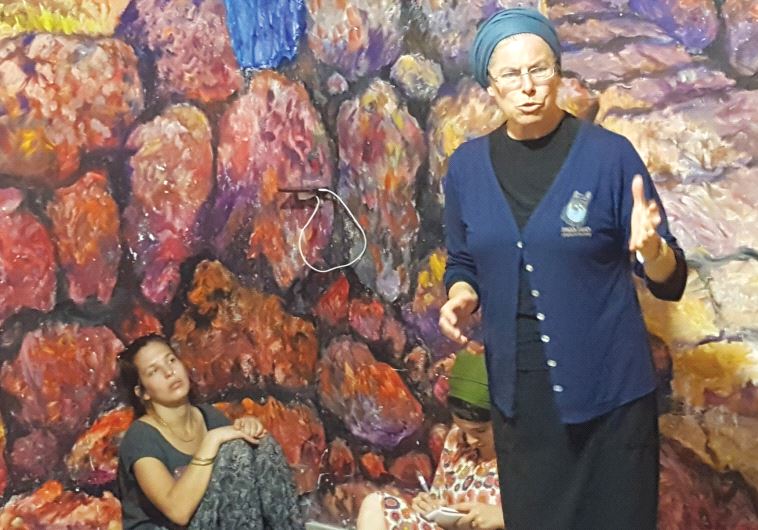
Hebron History museumTzipi Schissel, curator of the Hebron History museum, leads a tour of the site and discusses her personal connection to the massacre Photo By: BEN BRESKY

Before the mid-1980s, if a crowd gathered at the site of the Avraham Avinu synagogue in Hebron, they would have found crumbling walls and a sheep pen. The synagogue, build in 1540 by returning Sephardi Jewish exiles from the Spanish Inquisition, was abandoned after the infamous 1929 massacre.

But last week Hebron was filled with people snapping photos of the original Torah scrolls, which date back hundreds of years. Now reconstructed, the house of worship has daily services, using the same Torah scrolls used by the community that once lived there.

Dr. Yinon Elmakias, who lectured about the Torah scrolls, was one of the academics who led the seminar marking the 87th anniversary of the 1929 massacre that took 67 lives and resulted in the expulsion of the Jewish community. Young and old walked through the now inhabited Jewish quarter in the city that suffered from the worst of the disturbances that year.

The conference took place on August 10, and began at Midreshet Hevron, a college in Kiryat Arba. Prof. Gershon Bar Kochba, a Hebron resident, spoke about what was called the Jewish ghetto of Hebron, the only place in Israel referred to by that name. With copious notes and photos of the neighborhood – including maps and diagrams of what 1920s Hebron Jewish life was like – Bar Kochba described a traditional, tight-knit, humble community on a lower economic stratum.

The next speaker was Dr. Yuval Arnon-Ohana of Ariel University. In contrast to the previous speaker, he was clean-shaven, bare-headed and spoke almost without any notes. He fascinated the crowd by his lecture on Arab riots, which were instigated by Haj Amin Husseini, the mufti of Jerusalem.

Arnon-Ohana explained that Husseini’s excuse for the riots was the increase in Jewish immigration. He countered, however, that in the late 1920s, Jewish immigration was at one of its lowest points. He argued that the real reason was a bid for power by Husseini, who sought to consolidate Arab factions by whipping them into a frenzy over a common enemy.

Husseini later became a supporter of Hitler, as evidenced by the famous photo of the two sitting together in Germany.

The cause and details surrounding the riots have filled volumes. Why did neighbors slaughter neighbors? Although tensions existed in the city between Jews and Arabs over generations, daily interaction was a fact of life. For example, the chief rabbi of Hebron, Rabbi Eliyahu Mani (c.1818-1899), mentioned frequently in the lectures, was revered by Jews and Arabs alike as a spiritual leader. The Chabad matriarch Menucha Rochel Slonim (1798–1888) was also respected, and offered advice to both communities despite her seemingly outsider status as an immigrant from Russia.

Sarah Tzipporah Segal (left) (Ben Bresky) Sarah Tzipporah Segal (left) (Ben Bresky)

In the riots of 1921, also instigated by Haj Amin Husseini, Hebron was calm. This led to a lax attitude seven years later. But on that fateful Shabbat on August 24, 1929, mobs of Arabs broke into Jewish homes, torturing, raping and murdering 67 people. Their bodies were mutilated and their homes looted. Although many claimed they were only seeking revenge on “The Zionists” or “the strangers,” both Ashkenazi and Sephardi Jews were murdered. Young and old, long-time residents and new immigrants were targeted. The remaining community was rounded up by the British Mandate authorities and sent off to Jerusalem. The memorial to the victims was later vandalized, and the cemetery plowed over.

One of the most violent and dramatic episodes of the riots involved that of Eliezer Dan Slonim, from the famous Chabad family that helped revitalize the backwater community when they immigrated en-masse in the mid-1800s. Slonim spoke fluent Arabic, and was the only Jewish member of the Hebron city council.

He was manager of the Anglo-Palestine Bank, and well-known by both Jews and Arabs. It was for this reason that Jewish community members sought refuge in his home.

The Jewish Telegraphic Agency reported on October 9, 1929, in an article titled “Hebron, Five Weeks After the Massacre,” that “it could not help hearing reports of the mob’s demand that Slonim should surrender the ‘foreigners,’ meaning the yeshiva students sheltered in his house, if his and his family’s lives were to be spared, and the martyr’s historic answer, ‘We Jews are one.’” Slonim and his family, including his wife and young children, were killed. One child, one-year-old Shlomo Slonim, survived. He was found with a knife wound in his forehead in his dead mother’s arms.

Shlomo Slonim, who died in 2014, used to attend the memorial in Hebron every year. This year, the few remaining survivors are all in the 90s.

In April of this year, one of the more vocal survivors, Miriam Sasson, died at the age of 92. She was part of the Castel family, whose roots in Hebron go back to the time of the Spanish Inquisition. Her family was in the group that returned to the city from 1931 to 1935, before the British again deported the Jewish residents amid countrywide rioting in 1936.

It was an Arab neighbor who saved Miriam and her family from the massacre by hiding her in his butcher shop. However another member of the Castel family, 60-year-old Rabbi Shlomo Castel, was burned to death by the mob.

The irony of some Arabs risking their lives to save their neighbors while others brutalized the defenseless has been debated for decades.

One lecturer at the conference had a more personal connection to the story. Tzipi Schissel, curator of the Hebron History museum, led a tour of the site located in the historic Beit Hadassah. The building, originally built in 1893, served as one of the first Hadassah hospital branches and treated residents of all backgrounds.

In 1929 it was the site of violence, and was subsequently ransacked.

The participants of the conference viewed the new 4D movie titled Touching Eternity, about the history of Hebron. As dramatic as the film was Schissel’s description of what her grandmother went through in those dark days. Standing in a hall dedicated in memory of the victims, she told the group about Sarah Tzipporah Segal, whom her family affectionately called “Tzippora’le.”

“She was approximately 14 years old during the pogrom,” Schissel stated. She and her sisters survived with the help of an old man named Abu Shaker Amru, who refused to allow the rioters to enter his house. But the rioters were so cruel that they attacked him and chopped his leg off.” Abu Shaker is mentioned in detail for his heroism, in the book Year Zero of the Arab-Israeli Conflict 1929, by Hillel Cohen.

Dr. Yinon Elmakias lectures about the Torah scrolls in Hebron’s Avraham Avinu synagogue, some of them dating back almost 500 years (Ben Bresky)Dr. Yinon Elmakias lectures about the Torah scrolls in Hebron’s Avraham Avinu synagogue, some of them dating back almost 500 years (Ben Bresky)

read more: Remembering the 1929 Hebron massacre


twoje uwagi, linki, wlasne artykuly, lub wiadomosci przeslij do: webmaster@reunion68.com


Netanyahu Tells UN: You Began as a ‘Moral Force’ and Have Become a ‘Moral Farce’

Netanyahu Tells UN: You Began as a ‘Moral Force’ and Have Become a ‘Moral Farce’

Barney Breen-Portnoy


Prime Minister Benjamin Netanyahu addresses the UN General Assembly on Thursday. Photo: Screenshot. Prime Minister Benjamin Netanyahu addresses the UN General Assembly on Thursday. Photo: Screenshot.

The United Nations “began as a moral force and has become a moral farce,” Prime Minister Benjamin Netanyahu quipped on Thursday in his annual address to the UN General Assembly in New York City.

Nevertheless, Netanyahu predicted, “Israel has a bright future at the UN.”

“Back home, your governments are rapidly changing their attitudes toward Israel,” the prime minister said. “Everything will change, and a lot sooner than you think.”

More and more countries — including in Asia, Africa and Latin America — are seeing Israel as a potential partner in “fighting the terrorism of today and developing the technology of tomorrow.”

But the biggest shift, Netanyahu stated, was taking place in the Arab world, where many nations were coming to realize that Israel is an ally, not an enemy.

“Our common enemies are Iran and ISIS,” he said. “Our common goals are security, prosperity and peace.”

Looking to the future, Netanyahu said, “I believe the day is not far off that Israel will be able to count on many countries to stand with us at the UN. The days when UN ambassadors reflexively condemn Israel, those days are coming to an end.”

Referring to rumors of a potential UN Security Council resolution on peace with the Palestinians being advanced in the coming months, Netanyahu declared, “We will not accept any attempt by the UN to dictate terms to Israel. The road to peace runs through Jerusalem and Ramallah, not through New York.”

Netanyahu characterized Palestinian Authority President Mahmoud Abbas’ threat to sue the United Kingdom over the 1917 Balfour Declaration — issued during Abbas’s General Assembly speech earlier on Thursday — as “absurd” and called out the PA for its incitement of terrorism.

“How can we expect young Palestinians to support peace when their leaders poison their minds?,” Netanyahu asked. “President Abbas, you have two choices: you can continue to spread hate as you did today, or you can work with me.”

The prime minister went on to invite Abbas “to come and speak at the Knesset in Jerusalem and I will gladly come to speak at the parliament in Ramallah.”

Netanyahu also reiterated his vow that Israel would not let Iran develop nuclear weapons — “not now, not in a decade, not ever.”


twoje uwagi, linki, wlasne artykuly, lub wiadomosci przeslij do: webmaster@reunion68.com