Archive | March 2026

Who Will Become the Biggest Beneficiary of the Billions of Dollars About To Be Invested in the Gaza Strip? The Terrorist Group Hamas


Who Will Become the Biggest Beneficiary of the Billions of Dollars About To Be Invested in the Gaza Strip? The Terrorist Group Hamas

Khaled Abu Toameh


  • Although Hamas has expressed its willingness to hand over its government institutions to the NCAG [Palestinian National Committee for the Administration of Gaza], there are indications that the terror group seeks to control the new committee and turn it into a Hamas puppet.
    .
  • The NCAG is already under pressure from the terror group to incorporate thousands of Hamas terrorists into a newly established Palestinian police force in the Gaza Strip. Hamas, in addition, is seeking to ensure that its civil servants be placed on the payroll of the NCAG.
    .
  • “There is a prevailing sense within the committee and other parties that Hamas is determined, by all means, to keep its members within the new administrative framework overseeing the Gaza Strip.” — Asharq al-Awsat, quoting “sources close to” NCAG, February 14, 2026.
    .
  • What we are currently witnessing are direct and indirect efforts by Hamas to continue governing the Gaza Strip even after the establishment of Trump’s “Board of Peace” and the NCAG.
    .
  • Hamas… sees itself as an essential part of the post-war arrangements in the Gaza Strip. In the viewpoint of Hamas, the role of bodies such as the “Board of Peace” and NCAG should be limited only to paying salaries, funding reconstruction and ensuring the entry of aid supplies into the Gaza Strip. Meanwhile, the terror group will focus its efforts on rearming, regrouping, rebuilding its terror infrastructure, and planning more attacks on Israel.
    .
  • Anyone who believes that the NCAG will be able to operate as an independent governing body in the Gaza Strip is abysmally uninformed. Its members will undoubtedly be at the mercy of Hamas and its masked thugs.
    .
  • “The image promoted by some international parties that the committee is a means to remove Hamas from power seems far removed from reality. The facts on the ground indicate that Hamas still maintains military, organizational, and ideological control within Gaza, and that any new administrative body cannot operate independently of its will or outside its sphere of influence. Real power remains in the hands of those who possess weapons, organizational networks, and the capacity for sustained popular mobilization.” — Mahdi Mubarak, Arab political analyst, rumonline.net, February 16, 2026
    .
  • Hamas should have been asked to end its rule over the Gaza Strip and hand over all its weapons before, and not after, the formation of the NCAG. Since that has not happened, Hamas will become the largest beneficiary of the billions of dollars that are about to be invested in the Gaza Strip.
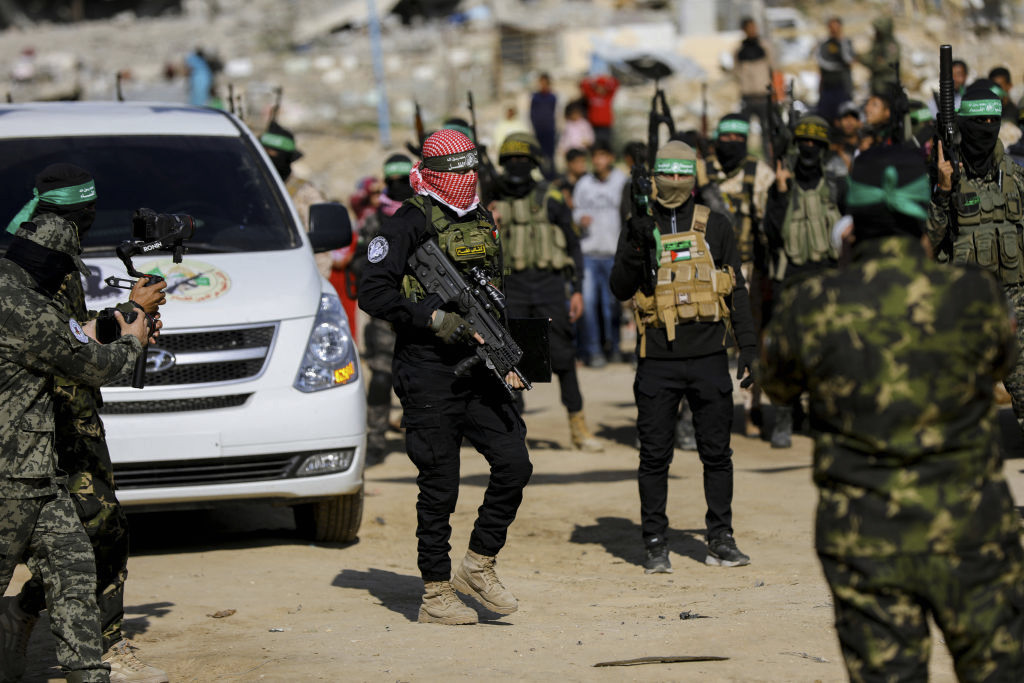
What we are currently witnessing are direct and indirect efforts by Hamas to continue governing the Gaza Strip even after the establishment of Trump’s “Board of Peace” and the Palestinian National Committee for the Administration of Gaza (NCAG). Pictured: Hamas terrorists in Gaza on February 15, 2025. (Photo by Moiz Salhi/Middle East Images/AFP via Getty Images)

The Palestinian National Committee for the Administration of Gaza (NCAG), established last month in accordance with US President Donald J. Trump’s plan to end the Israel-Hamas war, is about to assume its responsibilities in the Gaza Strip.

The NCAG’s main mission is to manage the day-to-day operations of the civil service and administration in the Gaza Strip in the aftermath of the war, which erupted after the October 7, 2023 Hamas-led invasion of Israel.

The committee, whose members are described as “independent technocrats,” is headed by Ali Shaath, a top official of the Fatah faction headed by Palestinian Authority (PA) President Mahmoud Abbas. Shaath previously held several positions in the PA, including Deputy Minister of Planning and International Cooperation, and Undersecretary at the Ministry of Transport.

The NCAG is expected to start operating in the Gaza Strip even though Hamas continues to control nearly half of it, with more than 90% of the population still under the terror group’s jurisdiction. The other half is controlled by the Israel Defense Forces (IDF).

Although Hamas has expressed its willingness to hand over its government institutions to the NCAG, there are indications that the terror group seeks to control the new committee and turn it into a Hamas puppet.

The NCAG is already under pressure from the terror group to incorporate thousands of Hamas terrorists into a newly established Palestinian police force in the Gaza Strip. Hamas, in addition, is seeking to ensure that its civil servants be placed on the payroll of the NCAG.

Sources close to the NCAG revealed that Hamas “continues to insist that its security personnel remain in service within the agencies that will operate under the committee’s [NCAG] leadership,” according to the London-based newspaper, Asharq Al-Awsat.

“The sources said this issue further complicates the committee’s ability to assume its duties in an orderly manner, explaining that Hamas, by insisting on certain demands related to its security employees and police forces, seeks to impose its presence in one way or another within the committee’s work. There is a prevailing sense within the committee and other parties that Hamas is determined, by all means, to keep its members within the new administrative framework overseeing the Gaza Strip.”

The news about the newly established Palestinian governance committee’s preparations to enter the Gaza Strip coincided with reports that Hamas is reasserting its power in areas under its control. According to a February 18 BBC report:

“Gazans say Hamas is again extending its control over security, tax revenue, and government services, raising questions about its long-term strategy, and whether it is prepared to give up its weapons and authority, as now required under the second stage of Donald Trump’s peace plan.”

Mohammed Diab, an activist in the Gaza Strip, noted that Hamas “regained control of more than 90% of the areas where it is present.”

“Its police and security agencies have returned, and are now present in the streets, controlling crime and pursuing those it labels as collaborators and people with opinions. Citizens must go to the Hamas authorities for identity cards or health procedures, and it is also reasserting control over the judiciary and courts.”

Such reports prove that Hamas is lying when it says that it is ready to hand over its governing power to NCAG. Hamas’s actions on the ground demonstrate that the terror group plans to maintain its control over the Gaza Strip in violation of Trump’s plan, which states: “Hamas and other factions agree to not have any role in the governance of Gaza, directly, indirectly, or in any form.” What we are currently witnessing are direct and indirect efforts by Hamas to continue governing the Gaza Strip even after the establishment of Trump’s “Board of Peace” and the NCAG.

Hamas, whose members murdered, tortured, mutilated, raped and kidnapped thousands of Israelis and foreign nationals on October 7, sees itself as an essential part of the post-war arrangements in the Gaza Strip. In the viewpoint of Hamas, the role of bodies such as the “Board of Peace” and NCAG should be limited only to paying salaries, funding reconstruction and ensuring the entry of aid supplies into the Gaza Strip. Meanwhile, the terror group will focus its efforts on rearming, regrouping, rebuilding its terror infrastructure, and planning more attacks on Israel.

According to the Meir Amit Intelligence and Terrorism Information Center:

“[D]espite Hamas’ alleged willingness to transfer governance to the committee, it will have to rely on tens of thousands of employees who remain loyal to Hamas after nearly two decades of absolute Hamas control in the Strip. In such a situation, the committee will at best be able to carry out limited assistance and reconstruction activities, but most likely not to resolve core issues of control, security and demilitarization.”

Needless to say, Hamas has repeatedly made it clear that it has no intention of laying down its weapons or abandoning its Jihad (holy war) to eliminate Israel.

Under current circumstances, where Hamas is quickly reasserting its control over the Gaza Strip, it is hard to see how the “Board of Peace” or the NCAG could succeed in ending the terror group’s rule and implement Trump’s vision, specifically that “Gaza will be a deradicalized terror-free zone that does not pose a threat to its neighbors.”

So long as Hamas and thousands of its terrorists are roaming the streets, collecting taxes, intimidating the residents, and recruiting new fighters, the security and economic situation in the Gaza Strip will never improve. Anyone who believes that the NCAG will be able to operate as an independent governing body in the Gaza Strip is abysmally uninformed. Its members will undoubtedly be at the mercy of Hamas and its masked thugs.

Arab political analyst Mahdi Mubarak wrote:

“The committee’s formation did not occur in a political vacuum, but rather in an environment dominated by Hamas, which ruled the Gaza Strip for many years and established a deep military, organizational, and social presence. Therefore, any realistic assessment of the committee’s future cannot ignore the existing balance of power on the ground. No matter how professional the civil administration may be, its influence remains limited if it lacks the tools of actual power or if it operates within a framework defined by a more powerful party.

“The image promoted by some international parties that the committee is a means to remove Hamas from power seems far removed from reality. The facts on the ground indicate that Hamas still maintains military, organizational, and ideological control within Gaza, and that any new administrative body cannot operate independently of its will or outside its sphere of influence. Real power remains in the hands of those who possess weapons, organizational networks, and the capacity for sustained popular mobilization.

“From this, it can be said that Hamas was the biggest beneficiary of the formation of the committee, not because it relinquished its influence, but because it cleverly repositioned itself. Instead of appearing at the forefront of the scene and bearing the cost of political, security, and economic confrontation before the international community, Hamas left space for a civilian body to manage day-to-day affairs, while it retained the keys to strategic influence. The military force is still in Hamas’s hands, its organizational structure has not been dismantled, and the social networks it built over the years are still active.

“If the new security apparatus relies on elements formed within an organizational environment close to Hamas, then the separation between civilian administration and Hamas’s influence becomes more theoretical than practical. And if the professional cadres—engineers, doctors, and employees—work within a social system that has been influenced by Hamas for years, its indirect influence will persist even in its formal absence from the forefront.”

Hamas appears to be on its way to attempting to impose the model of Lebanon, where Iran’s terror proxy, Hezbollah, has for the past few decades been able to operate as a “state within a state.”

Hamas should have been asked to end its rule over the Gaza Strip and hand over all its weapons before, and not after, the formation of the NCAG. Since that has not happened, Hamas will become the largest beneficiary of the billions of dollars that are about to be invested in the Gaza Strip.


Khaled Abu Toameh is an award-winning journalist based in Jerusalem.


Zawartość publikowanych artykułów i materiałów nie reprezentuje poglądów ani opinii Reunion’68,
ani też webmastera Blogu Reunion’68, chyba ze jest to wyraźnie zaznaczone.
Twoje uwagi, linki, własne artykuły lub wiadomości prześlij na adres:
webmaster@reunion68.com


Israeli Muay Thai Fighter Returns Home After Victory Over Anti-Israel Turkish Rival


Israeli Muay Thai Fighter Returns Home After Victory Over Anti-Israel Turkish Rival

Shiryn Ghermezian


Israeli Muay Thai fighter Ahavat Gordon. Photo: YouTube screenshot

Israeli Muay Thai fighter Ahavat Hashem Gordon returned home to Israel on Monday morning after winning a match in Lithuania on Saturday night against a Turkish rival who reportedly had posted on social media a series of threats against the Israeli athlete as well as anti-Israel messages before their fight.

The 19-year-old Israeli, who is nicknamed “Golden Boy,” defeated Turkish fighter Ali Koyuncu, 25, after just two rounds at the Lithuanian UTMA 17 held at the Zalgirio Arena in Kaunas. Gordon has no UTMA losses and put on an aggressive performance in the Muay Thai fight, where the fighters use MMA gloves. In the second round, Koyuncu injured his foot shortly before Gordon knocked him to the floor with a blow to the head. When the fighters were pulled apart, Koyuncu was seen heavily bleeding from the side of his head. The judges then made the call to end the fight and Gordon was named the winner.

At the pre-fight weigh-in on Friday, Gordon was draped in an Israeli flag and wore a kippah, tzitzit, and a Star of David necklace. Koyuncu tried to grab his Israeli opponent by the throat and as officials attempted to hold the two men back from each other, the Turkish fighter managed to kick Gordon in the stomach.

Koyuncu additionally raised his middle finger at Gordon and made antisemitic threats, which led to the Israeli Embassy in Lithuania requesting increased security around Gordon ahead of the fight, according to Israel Hayom. Before getting into the ring, Koyuncu also reportedly posted a video on social media that featured a message about the “bloodshed” he hoped Gordon would suffer.

At a special press conference after arriving back home to Israel, Gordon talked about his victory.
“Everything is from God,” he said, according to Ynet. “Especially since the fight was against a Turkish opponent who is antisemitic, this whole week was crazy. This is the moment I’ve been waiting for my entire life. If I had let everything that was happening get into my head, it would have thrown me off balance and I would have stopped this fight.”

“I always try to avoid bringing politics into sports. The moment he brought it in, there was no turning back,” Gordon added about his opponent. “I’m glad I showed the whole world that the people of Israel are strong. It’s incredible and it’s a privilege. I gave strength and showed that a Jewish Israeli can step into the ring wearing a kippah and tzitzit and not hide who he is … I asked him why he wrote what he wrote and told him not to do it again. I do respect him for stepping into the ring because that takes a lot, but beyond that I don’t respect him.”

Gordon thanked the public for their supportive messages, especially those he received from IDF troops. “Soldiers who watched the fight in Gaza, it moved me almost to tears,” he said. “Did I receive antisemitic responses about this fight? Yes, absolutely,” he admitted. “Not only me, but my family also did. I also heard about incidents in the crowd. We’re doing what we need to do, and we’re doing the right thing.”
.

.


Zawartość publikowanych artykułów i materiałów nie reprezentuje poglądów ani opinii Reunion’68,
ani też webmastera Blogu Reunion’68, chyba ze jest to wyraźnie zaznaczone.
Twoje uwagi, linki, własne artykuły lub wiadomości prześlij na adres:
webmaster@reunion68.com


Irański gambit w Zatoce


Irański gambit w Zatoce

Hussein Aboubakr Mansour


Być może to właściwy dzień, by przypomnieć, że mimo podobieństw w owłosieniu twarzy Iran nie jest Hamasem. Jego rakiety nie są domowej roboty pociskami wystrzeliwanymi bez systemów naprowadzania z gruzów zawalonego budynku UNRWA. Gdy irańskie rakiety uderzają w lotnisko lub hotel Fairmont w Dubaju, trafiają w Dubaj dlatego, że ktoś w Teheranie zdecydował, iż tak ma być — to świadomy wybór strategiczny, a nie przypadek wynikający z bezładnego ostrzału.

Istnieje tu wyraźna strategia. Pytanie brzmi, czy jest ona rozsądna.

Desperacki gambit Teheranu staje się coraz bardziej czytelny. Model gospodarczy państw Zatoki — przede wszystkim model Emiratów — opiera się na obietnicy oazy stabilności w sąsiedztwie chaosu: że kapitał przepływa swobodnie, że turyści, biznesmeni, rosyjscy oligarchowie i kobiety z Europy Wschodniej przybywają bezpiecznie, że linia horyzontu zawsze olśniewa. PKB państw Zatoki jest w istocie wskaźnikiem zaufania. Uderz w lotniska, hotele, dzielnice handlowe Dubaju, Dohy czy Manamy, a uderzysz w fundament całego projektu dywersyfikacji postnaftowej. Iran wyraźnie zakłada, że nadzwyczaj niska tolerancja państw Zatoki na zmienność gospodarczą przełoży się na polityczną presję na Waszyngton, by zakończył operację, zanim osiągnie ona swoje cele.

Istnieją powody, by sądzić, że ten zakład może się powieść, a Teheran nie działa tu irracjonalnie. Główna strategiczna korekta w polityce zagranicznej państw Zatoki w ciągu ostatnich pięciu lat — zwrot ku balansowaniu między Rosją i Chinami oraz to, co Rijad i Abu Zabi nazywały „dywersyfikacją portfela” — była napędzana właśnie tym doświadczeniem. Wspierane przez Iran ataki na Rijad (2019) i na instalacje naftowe Abu Zabi (2022), którym Stany Zjednoczone nie zdołały ani zapobiec, ani na nie znacząco odpowiedzieć, nauczyły przywódców Zatoki lekcji, której nie zapomnieli: amerykańskie gwarancje bezpieczeństwa są warunkowe, sporadyczne i zawodne. Teheran wyciągnął z tej sytuacji lekcję po drugiej stronie — że uderzanie w infrastrukturę gospodarczą Zatoki przynosi rezultaty polityczne nieproporcjonalne do poniesionych nakładów militarnych. Sam Trump jest tu wielkością znaną; preferuje krótkie zaangażowania, spektakularne deklaracje i szybkie wyjścia z jeszcze bardziej bombastycznymi oświadczeniami na Truth Social. (Nie mogę się doczekać, by opowiedzieć moim dorosłym dzieciom o dniu, w którym Trump pogratulował „obu stronom” zakończenia „udanej wojny”). Irańskie kalkulacje zakładają, że długotrwała kampania zakłóceń gospodarczych w całej Zatoce złamie amerykańską wolę polityczną, zanim złamie Islamską Republikę.

Tym razem jednak Teheran może się poważnie przeliczyć.

Różnica polega na skali. Poprzednie irańskie ataki były możliwe do wyparcia się, ograniczone i punktowe — tu atak dronem na instalację Aramco, tam atak pełnomocników na Abu Zabi — wystarczające, by wysłać sygnał bez wymuszania strategicznego zwrotu ku akceptacji kosztów. To, co wydarzyło się w ten weekend, jest jakościowo inne. Iran wystrzelił jednocześnie pociski balistyczne na terytorium Arabii Saudyjskiej, ZEA, Kataru, Kuwejtu, Bahrajnu i Jordanii, zabijając cywilów w Abu Zabi, uderzając w hotele w Dubaju, trafiając w lotniska i atakując infrastrukturę gospodarczą oraz cywilną wszystkich stolic GCC poza Maskatem. Rozróżnienie między wyważonym sygnałem a aktem wojny przeciwko całemu systemowi Zatoki naraz nie jest kwestią interpretacji.

To zaś najpewniej całkowicie zmienia logikę polityczną w porównaniu z poprzednimi epizodami. Gdy zagrożenie było sporadyczne i możliwe do wyparcia się, balansowanie miało sens — utrzymywać kanały z Teheranem, dywersyfikować partnerstwa, unikać wciągnięcia w amerykańską konfrontację, która mogłaby zakończyć się bez rozstrzygnięcia. Kiedy irańskie rakiety spadają na twoje hotele, lotniska i dzielnice mieszkaniowe w biały dzień, balansowanie przestaje być realną strategią, a staje się niebezpieczną kapitulacją, niosącą większe ryzyko dla przyszłości i stabilności.

Państwa Zatoki nie wybrały tej wojny, lecz decyzja Iranu o uderzeniu w ich terytorium nie była — jak twierdzi Teheran — jedynie odwetem za amerykańskie aktywa na ich ziemi. Była to świadoma strategia wykorzystania gospodarczej kruchości Zatoki przeciwko Waszyngtonowi — tak, by koszt operacji spadł na państwa najbardziej skłonne domagać się jej natychmiastowego zakończenia. Amerykańskie bazy stanowiły jedynie pretekst, lecz prawdziwymi celami są hotele, lotniska i dzielnice handlowe, ponieważ to właśnie takich obrazów przywódcy Zatoki nie mogą pozwolić, by pokazywały się w międzynarodowej telewizji. Teheran właśnie pokazał, w najbardziej dosadny sposób, że neutralność nie daje ochrony przed reżimem, który traktuje swoich sąsiadów jako cele niezależnie od ich stanowiska dyplomatycznego.

Moja ocena jest taka, że stolice Zatoki są teraz znacznie bardziej skłonne naciskać na Waszyngton, by „dokończył robotę” — mocniej, szybciej i bardziej zdecydowanie — niż by domagać się przedwczesnego zawieszenia broni. Wiele wczesnych sygnałów to potwierdza. ZEA i inne państwa Zatoki ogłosiły kary dla każdego, kto filmuje ataki i uszkodzone budynki — nie jest to postawa rządu szykującego się do proszenia o pokój, lecz takiego, który zarządza środowiskiem informacyjnym w perspektywie przedłużającej się walki. Oświadczenia Emiratów i Arabii Saudyjskiej zostały wyważone tak, by wysłać Teheranowi jasny sygnał: że ataki na terytorium Zatoki raczej legitymizują operację, niż ją podważają, co oznacza gotowość do ponoszenia kosztów. MbS nie zadzwonił do MbZ, by omawiać deeskalację, lecz dlatego, że zdesperowany Iran, który właśnie uderzył w arabskie stolice w zasięgu rakiet, stanowi większe zagrożenie niż Iran pokonany i wymaga koordynacji wykraczającej poza ich własne spory.

Logika stanowiska Zatoki została w praktyce odwrócona względem tego, czego oczekiwał Iran: ryzykiem nie jest już to, że operacja eskaluje zbyt daleko, lecz że zakończy się zbyt wcześnie, pozostawiając przy władzy reżim, który zademonstrował zarówno wolę, jak i zdolność do uderzania w gospodarcze serce Zatoki i który będzie szukał odwetu.

Jednak tolerancja państw Zatoki — jakkolwiek dziś stanowcza — nie jest nieskończona. Ich przywódcy sięgają do ograniczonego rezerwuaru kapitału politycznego i gospodarczego, by absorbować koszty irańskiego odwetu — a ten rezerwuar ma dno, które zbliża się szybciej, jeśli Iran eskaluje z hoteli i lotnisk na infrastrukturę krytyczną — zakłady odsalania, sieci energetyczne, systemy, od których fizycznie zależy życie w Zatoce. Każdy dzień, w którym irańskie rakiety nadal uderzają w terytorium Zatoki bez widocznego osłabienia zdolności Teheranu do ich wystrzeliwania, przybliża moment, w którym kalkulacja ponownie się odwróci.

Waszyngton i Jerozolima działają w istocie pod presją zegara wyznaczanego nie tylko przez ich własne harmonogramy wojskowe, lecz także przez malejącą tolerancję Zatoki na to przedłużające się uderzenie. Operacja musi zatem w sposób widoczny sparaliżować zdolność Iranu do projekcji siły w Zatoce, zanim wola polityczna, która obecnie ją podtrzymuje, wyczerpie się.

Zakład Teheranu polegał na tym, że nietolerancja Zatoki wobec zmienności przeważy nad postrzeganiem zagrożenia — był to rozsądny zakład w świetle precedensów wcześniejszych prowokacji, które przyniosły nieproporcjonalne ustępstwa polityczne. Lecz wcześniejsze precedensy dotyczyły ukłuć szpilką, nie salw. Iran pokazał właśnie przywódcom Zatoki, w ciągu jednego poranka, co Islamska Republika robi, gdy zostaje przyparta do muru — a odpowiedzią na tę demonstrację najpewniej nie będzie ugoda.


Link do oryginału

The Abrahamic Metacritique
Iran’s Gulf Gambit
It is perhaps a good day to remember that, despite the facial hair affinities, Iran is not Hamas. Its missiles are not home-made projectiles lobbed without guidance systems from the rubble of a collapsed UNRWA building. When an Iranian drone strikes the airport or the Fairmont in Dubai, it strikes them because someone in Tehran decided it should — a del…
Read more

Zawartość publikowanych artykułów i materiałów nie reprezentuje poglądów ani opinii Reunion’68,
ani też webmastera Blogu Reunion’68, chyba ze jest to wyraźnie zaznaczone.
Twoje uwagi, linki, własne artykuły lub wiadomości prześlij na adres:
webmaster@reunion68.com


Los Chameneiego pokazuje, że rosyjska polisa na życie jest bezwartościowa


Los Chameneiego pokazuje, że rosyjska polisa na życie jest bezwartościowa

Bartosz T. Wieliński


19.07.2022, Teheran, spotkanie Alego Chameneiego z Władimirem Putinem (SalamPix/ABACA / PAP)

Donald Trump, atakując Iran i zabijając ajatollaha Alego Chameneiego, kolejny raz obnażył globalną słabość Rosji.

Już zapomnieliśmy o wydarzeniach z 17 stycznia 2025 roku. Na Kreml przybył wówczas prezydent Iranu Masud Pezeszkian, by podpisać traktat o rosyjsko-irańskim partnerstwie strategicznym. Dokument cementował wieloletnią i szeroką – w tym wojskową i wywiadowczą – współpracę między krajami. I choć nie przewidywał wzajemnej pomocy na wypadek ataku, było jasne, że Iran jako kraj sojuszniczy znajduje się pod rosyjską ochroną. Tak Rosja rewanżowała się za technologiczną pomoc w wojnie z Ukrainą. Dzięki tanim i skutecznym irańskim dronom Szahed Rosjanie mogli rozpocząć zakrojoną na szeroką skalę terrorystyczną kampanię przeciwko ukraińskim miastom. A przecież Iran dostarczał Rosjanom także pociski balistyczne i amunicję dla artylerii.

Już pół roku później okazało się, że rosyjska ochrona jest niewiele warta. Izraelskie lotnictwo zniszczyło opartą na rosyjskim sprzęcie irańską obronę przeciwlotniczą i bezkarnie bombardowało obiekty wojskowe. A Amerykanie uderzyli w znajdujący się głęboko pod ziemią zakład wzbogacania uranu w Fordo. Rosja ograniczyła się do niemrawych protestów. Podobnie reaguje, gdy izraelskie i amerykańskie samoloty wróciły nad Iran, a bomby zabiły rządzącego krajem ajatollaha Alego Chameneiego.

Syria, Wenezuela, Iran. Rosja traci sojusznika za sojusznikiem

To analogiczna sytuacja do reakcji na rajd amerykańskich komandosów w Caracas, skąd 3 stycznia porwali prezydenta Nicolasa Maduro. On również słono płacił za rosyjską polisę na życie, ale i tak gwarancje Rosji okazały się bezwartościowe. Na kremlowskiej polisie przejechał się też syryjski despota Baszar al-Asad. I tak miał szczęście. Stracił kraj i władzę, ale nie życie. Wegetuje w daczy pod Moskwą.

Rosja przez lata tworzyła na świecie sieć zaprzyjaźnionych satrapii, za pomocą których mogła destabilizować otoczenie i zaznaczać swoje ambicje do współrządzenia światem na równi z USA i Chinami. W piątym roku wojny w Ukrainie ta sieć przestaje funkcjonować. Być może wkrótce przekona się o tym reżim na Kubie, hołubiony przez Moskwę od ponad 60 lat. Wyspiarski kraj jest państwem wielokrotnie upadłym, całkowicie pogrążonym w nędzy. Prezydent USA Donald Trump już zapowiada jego przyjazne przejęcie. Gdyby do niego doszło, Kreml – który jesienią 1962 r. broniąc kubańskiego komunizmu, był gotów rozpętać wojnę atomową – nie będzie w stanie nic zrobić.

Korci, by napisać, że to ostentacyjne demonstrowanie przez USA, że Rosja jako globalne mocarstwo jest naga, to mimo wszystko pozytywy uzysk z trwającej właśnie izraelsko-amerykańskiej operacji w Iranie. Sprawa niestety nie jest tak oczywista. Polityka nie znosi próżni, a miejsce Rosji w świecie przejmą Chiny.


Zawartość publikowanych artykułów i materiałów nie reprezentuje poglądów ani opinii Reunion’68,
ani też webmastera Blogu Reunion’68, chyba ze jest to wyraźnie zaznaczone.
Twoje uwagi, linki, własne artykuły lub wiadomości prześlij na adres:
webmaster@reunion68.com


Iranian Missile Strike on Beit Shemesh in Israel Kills 9


ranian Missile Strike on Beit Shemesh in Israel Kills 9

Debbie Weiss


Emergency personnel work at the site of an Iranian strike, after Iran launched missile barrages following attacks by the US and Israel on Saturday, in Beit Shemesh, Israel, March 1, 2026. Photo: REUTERS/Ammar Awad

An Iranian missile strike hit the Israeli city of Beit Shemesh on Sunday, killing nine people and wounding dozens, in what authorities described as a direct impact on a public bomb shelter.

A ballistic missile leveled the bomb shelter, leaving a large crater in its wake. Most, if not all, of those killed had been taking cover inside the shelter when it hit, Jerusalem Police Deputy Commissioner Avshalom Peled said at the impact scene.

Those in critical condition were airlifted to Shaare Zedek Medical Center, a spokesperson for the Israel Defense Forces (IDF) said.

At least 20 people were still missing late on Sunday afternoon local time.

.

Several buildings surrounding the shelter in Beit Shemesh, which is west of Jerusalem, were also damaged in the attack, with two collapsing entirely. A synagogue was also destroyed.

Emergency crews from Magen David Adom, ZAKA, and United Hatzalah joined fire and rescue units at the site, combing damaged buildings and debris for possible survivors. Many people were trapped under rubble or inside apartments, first responders said.
.

Chaim Wingarten, deputy director of operations at rescue organization ZAKA, described the scenes as “very difficult.”

“When I arrived, it was a huge chaos, with wounded people everywhere,” he said.

The strike was part of a larger volley that triggered air-raid sirens across the country. A man in his fifties was wounded by shrapnel elsewhere in central Israel.

IDF foreign media spokesman Lt. Col. Nadav Shoshani charged Iran with deliberately firing at civilians. “We know this is their strategy,” he said, adding that Israel would do “everything in our power to remove these capabilities from this bloodthirsty terrorist regime.”

The Beit Shemesh hit marked the highest single-incident death toll inside Israel since the confrontation with Iran began a day earlier. The previous peak came during the 12-day war in June 2025, when a missile slammed into an apartment block in Bat Yam and killed nine people.

The Beit Shemesh strike came a day after US and Israeli forces struck a compound in Tehran killing senior Iranian officials, including Supreme Leader Ayatollah Ali Khamenei, whose death was later announced on Iranian state television.

In an interview with Fox News on Sunday, Trump said 48 Iranian leaders were killed in the strikes. “Nobody can believe the success we’re having; 48 leaders are gone in one shot. And it’s moving along rapidly,” he said.

Separately, the American president told CNBC that the US operation was “ahead of schedule.”

Thousands of Iranians braved the strikes and took to the streets to celebrate Khamenei’s death on Saturday evening. Many people stood on balconies and at windows chanting “freedom, freedom,” The New York Times reported. People in the Iranian city of Shiraz were “abandoning their cars for an impromptu dance party, whistling, cheering, clapping, and screaming with joy. In many videos, celebrants joined together in a cheer that is typically reserved for weddings, symbolizing pure joy,” the report said.

.

.

.

Iran retaliated by firing repeated waves of missiles and drones, with launches aimed not only at Israel but also at US bases in the Middle East, including Qatar, Kuwait, the United Arab Emirates, and Bahrain. Iran on Sunday morning also launched two missiles at Cyprus, where thousands of British military personnel are stationed, which fell short.

Later in the afternoon, the US acknowledged its first losses with US Central Command, saying three American service members were killed and five were seriously wounded during the operations in Iran.


Zawartość publikowanych artykułów i materiałów nie reprezentuje poglądów ani opinii Reunion’68,
ani też webmastera Blogu Reunion’68, chyba ze jest to wyraźnie zaznaczone.
Twoje uwagi, linki, własne artykuły lub wiadomości prześlij na adres:
webmaster@reunion68.com