Archive | April 2026

W kamienicy w Krośnie znaleziono kolejne granaty; powiększa się historyczny arsenał

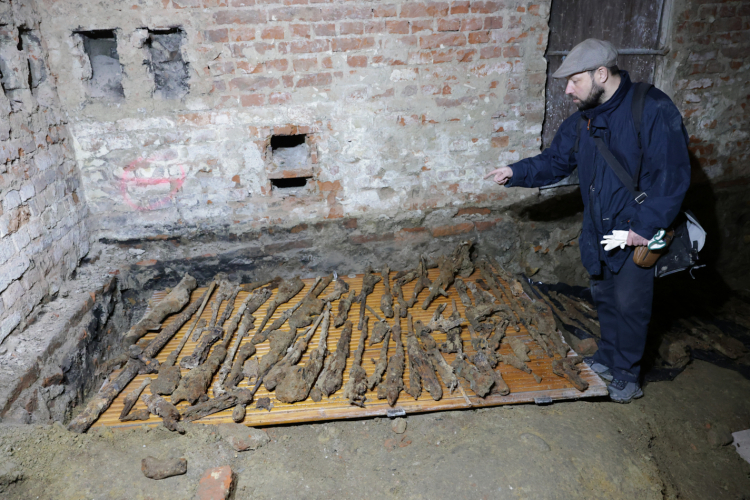
W kamienicy w Krośnie znaleziono kolejne granaty. Fot. Muzeum Rzemiosła w Krosnie


W kamienicy w Krośnie znaleziono kolejne granaty; powiększa się historyczny arsenał

al/ amac/


Po znalezieniu kolejnych granatów w kamienicy przy ul. Blich w Krośnie (Podkarpacie), zapadła decyzja o rozszerzeniu badań archeologicznych. Eksperci prześwietlą przewody kominowe oraz drewniane podłogi dawnych cel, gdzie spodziewają się odkryć przedmioty osobiste ukryte przez aresztantów.

Tym samym historia, która rozpoczęła się tydzień temu od odkrycia całego arsenału broni, nabiera jeszcze większego rozmachu. Kamienica przy ul. Blich 1, położona w samym sercu krośnieńskiej starówki tuż przy Rynku, przechodzi gruntowny remont, który ma przekształcić ją w nową siedzibę Muzeum Rzemiosła. Prace obejmują przebudowę wnętrz – od fundamentów po strych. Budynek jest zabytkowy, dlatego wszystkie roboty prowadzone są pod nadzorem archeologa.

Właśnie podczas pogłębiania piwnic pod przyszłą wystawę poświęconą Janowi Szczepanikowi, genialnemu krośnieńskiemu wynalazcy zwanemu „polskim Edisonem”, robotnicy natrafili na zamurowaną piwnicę – jedyną w całym budynku bez betonowej posadzki. Już pierwsze uderzenie łopatą na głębokości ledwie 30–40 centymetrów odsłoniło metalowe elementy. – Można powiedzieć: szczęście w nieszczęściu. Gdybyśmy nieumiejętnie podeszli do tematu, wszystko groziło wielkim wybuchem – przyznaje Marta Rymar, dyrektor Muzeum Rzemiosła w Krośnie.

W ten sposób odkryto potężny arsenał broni: 82 karabiny z okresu I i II wojny światowej, w tym prawdopodobnie polskie i austriackie modele z nakładanymi bagnetami, elementy masek gazowych oraz ponad 20 granatów przeciwpiechotnych wypełnionych trotylem. Wszystko to było wrzucone do płytkiego dołu i przysypane ziemią.

Broń, niekonserwowana i narażona na wilgoć, uległa znacznej korozji, a drewniane kolby w większości przegniły. Największe zagrożenie stanowiły jednak załadowane rakietnice i granaty, które saperzy wywieźli i zdetonowali na poligonie. Dwa dni temu musieli przyjechać jeszcze raz. W sąsiedniej przestrzeni piwnicznej zostały odnalezione kolejne granaty; identyczne jak poprzednie. – To pokazuje, że budynek wciąż skrywa tajemnice, które mogą nas zaskoczyć bardziej, niż przypuszczaliśmy – mówiła Marta Rymar.

Stąd decyzja o poszerzeniu badań. Archeolodzy mają przeskanować przewody kominowe i sprawdzić klepisko pod deskami w dawnych celach aresztu z lat 1944–1956. – Spodziewamy się tam znaleźć przedmioty osobiste: różańce, pierścienie, bo z reguły takie rzeczy zwykle były ukrywane przez aresztantów – wyjaśnia dyrektor muzeum.

Kamienica ma bogatą i mroczną historię. Dotychczasowe badania archeologiczne ujawniły tzw. fazę pożarową, co sugeruje, że dzieje tego miejsca mogą sięgać nawet XVII wieku. Obecna bryła powstała na początku XX wieku dla żydowskich kupców Jonasa i Izaaka Stiefeldów, współwłaścicieli kopalni ropy „Wietrzanka”. W latach 1944–1956 mieściła się tu siedziba Powiatowego Urzędu Bezpieczeństwa Publicznego, a później – do 1975 roku – Komendy Powiatowej Milicji Obywatelskiej. W piwnicach budynku funkcjonował areszt śledczy, w którym przetrzymywano m.in. członków podziemia antykomunistycznego.

Marta Rymar ma własną hipotezę o pochodzeniu arsenału. Jej zdaniem, w obliczu nadciągającego frontu sowieckiego, konspiratorzy – najprawdopodobniej AK-owcy – w pośpiechu zakopali sprzęt i zamurowali wejście do piwnicy, licząc, że wrócą po niego później. Okazało się, że nigdy takiej szansy nie mieli, a skrytka pozostała nienaruszona przez kolejne dekady.

Znalezioną broń bada teraz prokuratura. Egzemplarze uznane za bezpieczne po konserwacji wrócą do muzeum, by stać się częścią ekspozycji dokumentującej wojenne i powojenne losy Krosna. (PAP)


Zawartość publikowanych artykułów i materiałów nie reprezentuje poglądów ani opinii Reunion’68,
ani też webmastera Blogu Reunion’68, chyba ze jest to wyraźnie zaznaczone.
Twoje uwagi, linki, własne artykuły lub wiadomości prześlij na adres:
webmaster@reunion68.com


Unlike Israel, many of America’s NATO allies aren’t really allies


Unlike Israel, many of America’s NATO allies aren’t really allies

Jonathan S. Tobin


Europe’s moral abdication in the fight against the Islamist terror regime is proving a surprising truth. Right now, Washington and Jerusalem both have only one reliable ally: each other.
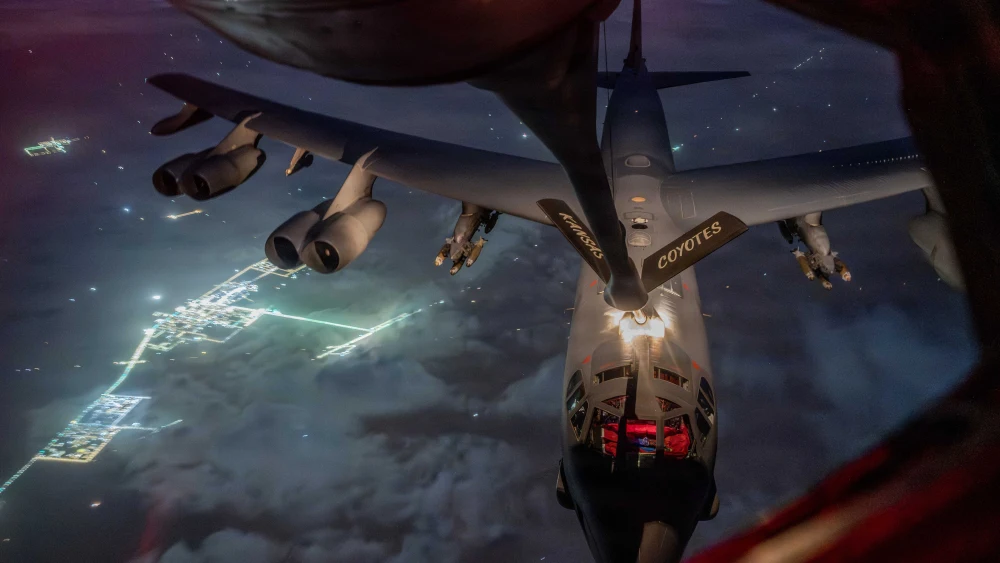
The transfer of remains of six U.S. soldiers killed in an Iranian drone strike in Kuwait to Dover Air Force Base, Del., March 7, 2026. Credit: Daniel Torok/White House.

It is axiomatic that Israel’s greatest diplomatic challenge rests on a single unavoidable truth. The Jewish state has only one real ally on which it can depend right now: the United States. Yet at the start of the sixth week of war against Iran, it’s becoming clear that the same may be true for Washington. It has formal alliances with many nations—notably, the 31 other members of NATO. But when push comes to shove, it turns out that the only truly reliable ally of the United States is the country with which it has no formal alliance: Israel.

Predictably, critics of President Donald Trump are blaming this state of affairs on him and his confrontational attitude toward NATO allies, particularly Western European nations like the United Kingdom, France and Spain.

They argue that he has launched an unnecessary and costly “war of choice” that the Europeans are wise to stay out of. Moreover, they also say that the diffidence, if not outright opposition, of NATO members to joining in the Iran war is due to Trump’s belligerent approach to them. He has badgered them to contribute more than token amounts to their own defense, which has been largely funded by the generosity of American taxpayers for the last 80 years, and threatened serious consequences if they refuse. Worse than that, his demands that Denmark, for instance, allow the United States to take over Greenland is considered nothing less than a threat that they say is analogous to Russia’s invasion of Ukraine.

NATO is the problem, not Trump

Still, the notion that it is Trump’s behavior or “America First” beliefs that are sinking NATO is to mistake a reaction to a dilemma for the problem itself.

NATO was vital to stopping a wave of postwar Soviet aggression from swallowing Western Europe into Moscow’s Communist empire in the years after the conclusion of the Second World War. It continued to deter the Russians for 40 years until their “evil empire” collapsed under the weight of its own failures and contradictions, as well as its inability to match former President Ronald Reagan’s strengthening of America’s strategic capabilities.

Since the end of the Cold War, it has struggled to find a way to remain relevant. Its major Western European elements aren’t just too militarily weak to help shoulder the burden of defending the West. The British, French, Italians and Spanish lack a credible defense deterrent, as is true of most of the other smaller countries. The only NATO allies who actually act like allies are in Eastern Europe, such as the Czechs and Hungarians, though they are too small to make a difference and have limited ability to help vis-à-vis Iran.

All of Trump’s predecessors in the last 30 years tried to get them to take defense seriously; however, due to their largely polite approach, which was all carrot and no stick, the Europeans ignored them. Their lack of defense spending helped them grow rich, though it also left them unable to do much other than to appeal to the United States when Russia invaded Ukraine in 2022.

But the rot goes deeper than merely the finances of the alliance.

Western Europeans are alarmed by Russian President Vladimir Putin’s authoritarianism and his quest to reassemble the old tsarist and Soviet empire. They are right to despise him, even though his failure to conquer Ukraine means the fears about him swallowing up Eastern, Central or Western European nations (something that was a real possibility when the Soviets had a vast army in the middle of Germany during the Cold War) are more hysteria than a real possibility.

Appeasers, not allies

That said, the Europeans have no interest in containing, let alone confronting, the threat from Iran’s terrorism, missiles and nuclear ambitions. The Islamists hanging on to power in Tehran consider themselves at war with the entire West—not just the “Great Satan” (the United States) and the “Little Satan” (Israel). Though they’ve already proved that their terrorists and missiles can reach Europe’s capital cities, London, Paris, Madrid and Rome act as if the battle to remove this deadly peril is someone else’s job.

These governments have been eager to appease Iran. Their policies on this question have been primarily driven by a desire to continue to do business with the ayatollahs over the years, rather than do something about the way the theocracy threatens Europe and the West. Cowed by antisemitic Muslim migrants-turned-voters they’ve imported from the Middle East and North Africa, their leaders behave as if they are innocent bystanders in a struggle that solely concerns Tehran’s quest to wipe out Israel or to make trouble for the United States.

Though their resentment against Washington can be at least partially explained by their antipathy to Trump, the foundation of their unwillingness to act on Iran predates even his first administration. And it has grown not so much because of their distaste for Trump. Rather, it is because support within these countries for the notion of them having a responsibility to defend the West against militant Islam has largely diminished to the point of irrelevance in the last two decades. Even worse, their hostility to Israel, which has become more overt due to the surge of Jew-hatred around the globe but particularly among their own populations, has fueled a reluctance to do anything about a country like Iran.

All of this adds up to a situation where—like many, if not most of Trump’s domestic critics—America’s European allies are rooting for defeat simply because it would harm the U.S. president and the Israeli prime minister. They equally view Benjamin Netanyahu as a thorn in their side because of their pro-Palestinian foreign-policy agendas.

That ought to lead serious American observers to stop reflexively speaking as if NATO is as important and functional as it was 40 years ago and to start questioning its future. Instead, the U.S. foreign-policy establishment and Democrats merely blame Trump for his justified suspicions about the continued utility of the alliance and hostility to the multilateral organizations like the anti-Israel United Nations.

Weakness and betrayal

More to the point, their attitude toward the Iran war calls into question why NATO is still needed.

After all, the Europeans haven’t been asked to do much to help the military campaign to stop Iran that the United States and Israel are conducting. Even if they were willing, they couldn’t do much. For example, the mighty British Royal Navy that once ruled the waves now has more admirals than ships, with fewer than two dozen warships afloat.

The British initially refused to allow American ships and aircraft to use their bases, but have since relented. And other nations—like France, Spain and Italy—have refused even to allow American resupply efforts for the war to use their airspace, let alone contribute to the war.

Allowing American planes to fly over their airspace is not a big ask, nor would it mean that these nations are participating in the war. Nevertheless, these governments think it is more important to signal their opposition to Trump and Israel to their domestic electorates than to contribute in some small way in a war that, whether they are willing to admit it or not, is being fought to make them all safer. What does a country need allies for if they are going to behave like this?

It’s true that the war on Iran doesn’t come without a cost. The Iranian threat to shipping in the Gulf of Hormuz has raised the price of oil worldwide. But as Trump has made abundantly clear, that is going to hurt the Europeans more than the United States because they are dependent on the oil that is transported through it.

It’s not clear whether the president’s threats to let the Europeans suffer, rather than to act to secure the right of free navigation in a key international waterway, are real or are just another case of Trump trolling his opponents. Nor do we know what the next steps in the war will entail.

But the assumption that Iran is somehow winning a war in which their military assets and leaders are being systematically knocked off—and that the powerful militaries of the United States and Israel are losing—simply isn’t credible. The notion that a campaign in which the two allies have flown more than 5,000 sorties into Iran with the loss of only a handful of manned planes and unmanned drones (and has the ability to rescue downed pilots deep in enemy territory, as they did this past week) is floundering against Tehran is ludicrous. The reason why so many supposed foreign-policy “experts” say so is because they are so invested in an American defeat and Iranian victory that sowing belief in this dubious position has become their skewed priority.

There is a risk that Trump will cut and run or conclude a deal that will strengthen Iran, rather than persevere until the regime gives in or falls. But so far, there is no real indication that he will do so. To the contrary, the idea that he would concede defeat at a time when the United States and Israel are in such a dominant military position seems rooted more in that same Trump derangement syndrome that motivates so much commentary about the conflict than in dispassionate analysis.

What we’re left with then is not so much another example of the complex relationship between America and Europe as it is compelling evidence that Western European nations stopped acting like U.S. allies long before the current war. It’s not just that these countries don’t believe in Trump. Their internal collapse in the face of a growing red-green alliance of Marxists and Islamists is a product of the fact that, unlike the founders of NATO in the 1940s, they no longer believe in themselves either. This moral failure on Iran should only accelerate the process by which the United States concludes that it should worry less about opinion in London, Paris, Madrid and Rome—and more about the countries helping to defend the West.

There all sorts of nations that claim to be U.S. allies—from the frenemies in Qatar to actual Gulf state allies like Saudi Arabia, to friendly but unhelpful countries like Canada, to supposed allies like France that consistently vote against Washington in the United Nations and to the many good friends of America around the globe that mean well but can do little to provide direct assistance in an armed conflict.

But there is only one nation that has stepped up and shown that it can fight side by side with the United States, even if that means its own population is directly and continuously subjected to missile attacks. And that nation is Israel.

Only Israel fights with America

Other countries will cheer or jeer from the sidelines, but Israel not only has a powerful military but is willing to use it, along with its unmatched intelligence capabilities and operations, to fight a war alongside America. And it is doing so with the knowledge that Trump could end the war before the Jewish state has achieved the objectives that Netanyahu has set.

Contrary to the largely antisemitic myth that the world’s most powerful man in charge of a superpower was dragged into a war by the prime minister of a country the size of New Jersey with a mere 10 million people, this war was America’s idea. And it is being fought to protect America’s interests as well as Israel’s. Stopping nuclear and missile threats—and the world’s largest state sponsor of terror—isn’t a favor to Israel. It’s vital for the security of the Middle East, which affects the economies of all, as has been shown in Iran’s stranglehold of the Strait of Hormuz and international shipping.

A clear look at the events of the last two months doesn’t just show Israel’s value as an ally, even though there is no pact of alliance between Washington and Jerusalem as there is with America’s 31 NATO allies, which the United States is obligated to defend under that treaty’s Article V provision. It has also done invaluable damage to what remains of American support for the belief that the alliance is vital to the country’s defense.

Israel has friendly relations with other countries, including some in Europe. And it has strong security ties with key regional nations like Saudi Arabia, even though they remain under the table rather than out in the open. But it has only one genuine ally. There are no plausible alternatives, even when Washington is run by those who are lukewarm or worse about the relationship, as under the administrations led by former Presidents Barack Obama and Joe Biden.

NATO may yet be revived at some point in the future. Even now, it still serves some use, if only to help ensure that Russia’s troublemaking can be contained. But the stark truth of 2026 is that it has largely become a vestige of the past that has outlived much of its usefulness.

At the same time, the idea that Washington’s affection for Israel is a hindrance to the pursuit of U.S. national interests or makes it difficult for it to make friends in the Middle East has been conclusively exploded by recent events.

It is the alliance with Israel that is the one irreplaceable asset for American foreign policy and security needs in the region. And one is hard-pressed to think of another such reliable ally elsewhere with both the military assets—and the willingness to use them in a difficult fight— and common values of democracy. It’s high time that American pundits and politicians, whether seduced by antisemitic tropes and arguments or wallowing in hatred for Trump, stop speaking of Israel as an American problem and start acknowledging this reality.


Jonathan S. Tobin is editor-in-chief of the Jewish News Syndicate, a senior contributor for The Federalist, a columnist for Newsweek and a contributor to many other publications. He covers the American political scene, foreign policy, the U.S.-Israel relationship, Middle East diplomacy, the Jewish world and the arts. He hosts the JNS “Think Twice” podcast, both the weekly video program and the “Jonathan Tobin Daily” program, which are available on all major audio platforms and YouTube. Previously, he was executive editor, then senior online editor and chief political blogger, for Commentary magazine. Before that, he was editor-in-chief of The Jewish Exponent in Philadelphia and editor of the Connecticut Jewish Ledger. He has won more than 60 awards for commentary, art criticism and other writing. He appears regularly on television, commenting on politics and foreign policy. Born in New York City, he studied history at Columbia University.

Zawartość publikowanych artykułów i materiałów nie reprezentuje poglądów ani opinii Reunion’68,
ani też webmastera Blogu Reunion’68, chyba ze jest to wyraźnie zaznaczone.
Twoje uwagi, linki, własne artykuły lub wiadomości prześlij na adres:
webmaster@reunion68.com


Iran’s Internet Blackout Hits Record Length as Regime Tries to Crush Dissent in Digital Darkness


Iran’s Internet Blackout Hits Record Length as Regime Tries to Crush Dissent in Digital Darkness

Ailin Vilches Arguello


People attend the funeral of the security forces who were killed in the protests that erupted over the collapse of the currency’s value in Tehran, Iran, Jan. 14, 2026. Photo: Majid Asgaripour/WANA (West Asia News Agency) via REUTERS

Iran’s internet blackout became the longest such nationwide shutdown ever recorded over the weekend, as the regime continued to face mounting military pressure, internal unrest, and growing isolation.

According to NetBlocks, an internet-monitoring watchdog that tracks global connectivity disruptions, Iran’s blackout entered its 37th consecutive day on Sunday, making it the longest nation-scale internet shutdown on record after authorities severed internet access as the war with the US and Israel broke out in late February.

The blackout continued on Monday, with the general public cut off from international networks for over 888 hours.

With the regime attempting to suppress internal opposition and silence domestic dissent, the blackout has effectively cut millions of Iranians off from independent reporting on the war and access to global news.

“We constantly find ourselves searching for ways to reconnect, just to be able to hear reliable news,” a 47-year-old woman in the central city of Isfahan told AFP on Saturday.

“Being without internet feels like being without oxygen to me. I feel trapped and suffocated,” a 53-year-old man in Tehran also said.

Iranian authorities have even warned that citizens suspected of accessing internet through virtual private networks (VPNs) — tools that bypass government censorship — could face arrest or imprisonment.

According to state media reports, Iranian security forces have arrested several citizens in recent weeks for using the Starlink satellite internet system, which allows users to bypass state-controlled terrestrial infrastructure.

Iran’s latest internet shutdown marks the second nationwide blackout in less than two months, after authorities previously imposed an 18-day outage in January during mass anti-government protests, which security forces violently crushed, leaving tens of thousands of demonstrators tortured or killed.

Human rights groups warn the regime has repeatedly used nationwide internet shutdowns as a tool to intensify its crackdown on opposition movements and conceal ongoing abuses from international scrutiny.

In recent years, Iranian authorities have accelerated efforts to sever the country’s reliance on the global web by advancing the regime-backed “National Internet” project aimed at consolidating state control over digital communications and information flows.

Meanwhile, the Islamist regime continues to face relentless pressure from US and Israeli strikes as the conflict escalates and prospects for negotiations become increasingly fragile.

In one of its latest attacks, Israel announced that Iran’s Islamic Revolutionary Guard Corps (IRGC) intelligence chief Brig. Gen. Majid Khademi and Quds Force special operations commander Asghar Bagheri were both killed over the weekend.

This latest strike on leadership represents a “significant blow to Iran’s intelligence leadership at a time when the regime is already under sustained pressure,” an Israeli security official told Fox News. 

According to the Israel Defense Forces (IDF), Khademi orchestrated overseas terrorist operations and oversaw surveillance targeting Iranian civilians during the regime’s brutal crackdown on protests.

Part of Iran’s elite military force, Bagheri coordinated the recruitment of terrorist operatives across the Middle East and directed deadly attacks against US and Israeli targets abroad.

On Monday, Israeli Defense Minister Israel Katz announced the IDF also struck Iran’s largest petrochemical facility in Asaluyeh, a blow that has effectively taken offline the two plants responsible for roughly 85 percent of the country’s petrochemical exports, crippling a key pillar of Iran’s economy and export capacity.

Katz described the strikes as “a severe economic blow to the Iranian regime, amounting to tens of billions of dollars.”

“Israeli Prime Minister Benjamin Netanyahu and I have instructed the IDF to continue to attack the national infrastructure of the Iranian terror regime with all its might,” the Israeli defense chief said. 

“The Iranian terror regime will discover that the continued aggression against Israel and the cowardly and criminal fire at Israeli citizens will lead to the deepening of the economic and strategic damage it is paying and the collapse of its capabilities,” he continued.


Zawartość publikowanych artykułów i materiałów nie reprezentuje poglądów ani opinii Reunion’68,
ani też webmastera Blogu Reunion’68, chyba ze jest to wyraźnie zaznaczone.
Twoje uwagi, linki, własne artykuły lub wiadomości prześlij na adres:
webmaster@reunion68.com


Wojna Żydowska | Tomasz Lis 1na1 Anne Goldschmid


Wojna Żydowska | Tomasz Lis 1na1 Anne Goldschmid

Tomasz Lis


Zawartość publikowanych artykułów i materiałów nie reprezentuje poglądów ani opinii Reunion’68,
ani też webmastera Blogu Reunion’68, chyba ze jest to wyraźnie zaznaczone.
Twoje uwagi, linki, własne artykuły lub wiadomości prześlij na adres:
webmaster@reunion68.com


Żonkil bez gwiazdy

Adam Lipszyc i Marysia Świetlik (Zdjęcia z X)


Żonkil bez gwiazdy

Anna Grabowska (Anne Goldschmid)


Mało co mnie oburza, jednak powstają takie teksty, które odsłaniają coś znacznie gorszego niż zwykła głupota czy ideologiczna jednostronność. Oto ich moralny mechanizm. Petycja złożona do prezydenta Warszawy o niewywieszanie flag Izraela podczas obchodów rocznicy powstania w getcie warszawskim nie jest tylko polityczny gestem, to kolejna manifestacja antypatii wobec Izraela. Próba symbolicznego rozdzielenia martwych Żydów od żywych, pamięci o Zagładzie od żydowskiej suwerenności i powstania w getcie od państwa żydowskiego. Czyli: wolno czcić Żydów zamordowanych, wzruszać się popiołem, chodzić z żonkilami i mówić o bohaterstwie getta – byle tylko nie pojawiła się flaga Izraela, byle tylko nie przypominać, że po tym wszystkim naród żydowski nie pozostał już tylko narodem trupów, cmentarzy i muzealnych gablot, lecz narodem żywym, mającym własne państwo, własną armię i własną historię dalszą niż rok 1945. I właśnie to wielu ludziom nie przechodzi przez gardło. Najchętniej zatrzymaliby Żydów w roli ofiary – milczącej, martwej i niezdolnej do sprzeciwu. Żyd żywy, polityczny, suwerenny i z własną flagą, to już dla nich problem.

Poniżej pełna treść wpisu i petycji, bo takie rzeczy warto czytać w całości. Nie w streszczeniu, ani w cudzysłowie wyrwanym z kontekstu, tylko w pełnym brzmieniu, żeby nikt później nie mógł udawać, że to tylko nieporozumienie, albo “apel o neutralność”.


“ Proszę bardzo! Złożyliśmy dziś z Adamem Lipszycem petycję do Prezydenta Warszawy o to, by nie wywieszał flag izraelskich z okazji rocznicy powstania w getcie warszawskim.

Poniżej zamieszczam treść, która tłumaczy, dlaczego takie działanie uważamy za konieczne. Jeśli otrzymamy odpowiedź, damy znać – a może uda się i wszyscy zobaczymy jej efekt już 19 kwietnia.

(Uprzedzając ewentualne pytania od razu zapowiadam, że postaramy się wyjaśnić nasze stanowisko szerzej, jeśli jakaś redakcja udostępni nam łamy, natomiast dyskusje na FB akurat w tym temacie wydają mi się bezproduktywne, nie będę się w nie wdawać, więc nie zachęcam do ich wszczynania )


Petycja

Działając w interesie publicznym, wnosimy o podjęcie decyzji o niewywieszaniu flagi państwa Izrael podczas obchodów rocznicy powstania w getcie warszawskim w 2026 roku przez władze m.st. Warszawy.

Uzasadnienie

Szanowny Panie Prezydencie,

zwracamy się do Pana z petycją o powstrzymanie się od wywieszania flagi państwa Izrael podczas obchodów rocznicy powstania w getcie warszawskim.

Powstanie w getcie warszawskim jest wydarzeniem o szczególnym znaczeniu. Pozostaje kluczowym punktem odniesienia dla polskiej diaspory żydowskiej, której częścią jesteśmy, dla społeczności żydowskiej na całym świecie, a także dla państwa Izrael. Jest ono jednak również integralną częścią dziedzictwa mieszkanek i mieszkańców Warszawy. Ta pamięć nie ma jednego dysponenta. Właśnie dlatego władze Warszawy powinny pełnić rolę jej neutralnego strażnika, tak aby nie uległa ona zawłaszczeniu czy instrumentalizacji.

Przywódcy i powstanki getta warszawskiego wywodzili się z różnych środowisk politycznych – przede wszystkim z ruchów komunistycznych i socjalistycznych, w tym Bundu, PPR, Poalej-Syjon Lewica, czy młodzieżowych organizacji Dror i Haszomer Hacair. Mimo że część tych organizacji i ludności cywilnej, w tym naszych rodzin, która w getcie żyła, walczyła, ginęła i była mordowana, podzielała marzenie o własnym państwie, motywacją dla walki podjętej w 1943 r. nie było dążenie do budowy państwa narodowego. Walka ta stanowiła akt oporu wobec faszyzmu, wobec nacjonalistycznej przemocy oraz wobec systemowej dehumanizacji. Była walką o godność ludzi, przeciw którym zwróciła się machina całego państwa. Była także sprzeciwem wobec osamotnienia i obojętności świata na Zagładę Żydów.

To właśnie ten uniwersalny wymiar powstania – sprzeciw wobec ludobójstwa, wobec przemocy państwowej, wobec obojętności wspólnoty międzynarodowej – stanowi jego najważniejsze przesłanie. „Nigdy więcej wojny, nigdy więcej obojętności” – to wezwanie pozostaje dziś równie aktualne jak wówczas.

Symbole państwowe niosą ze sobą zmienne i wieloznaczne znaczenia. Flaga Izraela, podobnie jak każdy symbol polityczny, jest nieuchronnie odczytywana w kontekście aktualnych działań rządu tego państwa. W obliczu trwającej przemocy i cierpienia ludności cywilnej w Strefie Gazy i na Zachodnim Brzegu dla wielu osób symbol ten nabrał niestety złowrogich znaczeń. Stał się symbolem nacjonalistycznej instrumentalizacji pamięci o Zagładzie i znakiem, pod którym dokonuje się ludobójstwo narodu palestyńskiego. Możemy nad tą zmianą znaczenia ubolewać, ale nie możemy jej zignorować.

Mając to na uwadze, apelujemy, aby władze Warszawy upamiętniały powstanie w getcie warszawskim w sposób, który podkreśla jego antyfaszystowski charakter oraz wielość tradycji, z których wyrastało – bez przypisywania tej pamięci jednemu państwu czy jednej współczesnej narracji politycznej. Nie ma naszej zgody na to, by nasze dziedzictwo oddane zostało w ręce ludobójców, którzy bezprawnie instrumentalizują pamięć o Zagładzie i bohaterstwie uczestniczek i uczestników powstania w getcie warszawskim.

Adam Lipszyc i Maria Świetlik

01/04/2026, Warszawa”

Koniec cytaty.


Teraz już nie ma żadnych złudzeń, to nie jest apel o powagę obchodów ani troska o “neutralność”, czy zwykły spór o symbole. To jest petycja, która bierze pamięć o powstaniu w getcie warszawskim i próbuje ją wyprać z żydowskiej ciągłości, a następnie oddać z powrotem opinii publicznej jako moralnie oczyszczony, uniwersalny produkt do użytku wspólnego. Najpierw autorzy ogłaszają, że pamięć “nie ma jednego dysponenta”, co ma brzmieć szlachetnie, lecz w praktyce służy tylko odebraniu szczególnej legitymacji właśnie państwu żydowskiemu. Później rozwadniają to wydarzenie w opowieści o antyfaszyzmie, przemocy państwowej, systemowej dehumanizacji i obojętności świata, jakby trzeba było koniecznie wyrwać powstanie w getcie z konkretu żydowskiej historii i przerobić je na abstrakcyjną lekcję etyczną dla wszystkich. A na końcu robią to, co od początku chcieli zrobić: mówią, że flaga Izraela jest dziś znakiem “ludobójstwa”, a więc należy ją symbolicznie wyrzucić z obchodów rocznicy żydowskiego powstania. Cała reszta jest tylko ozdobnikiem. Sedno jest jedno – Izrael ma zostać wyłączony z tej pamięci, odcięty od niej, moralnie wykreślony.

To jest właśnie współczesny antysemityzm w wersji eleganckiej. Nie krzyczy na ulicy, mówi miękkim głosem o pamięci i uniwersalnym przesłaniu, po czym kończy zdaniem o “ludobójcach”, którym nie wolno oddać “naszego dziedzictwa”. I tu właśnie wychodzi cała ohyda tej operacji, bo przecież nie chodzi o to, że ktoś proponuje, by na uroczystościach nie dominowały współczesne konflikty. Gdyby o to chodziło, język byłby inny. Nie byłoby oskarżenia o “ludobójstwo narodu palestyńskiego”, ani nazywania Izraela “ludobójcami”, nie byłoby całego tego moralnego rozpasania, które przerabia flagę państwa żydowskiego w znak absolutnego zła. Czy to jest język troski o pamięć? Nie, to język oskarżenia, delegitymizacji i symbolicznego wykluczenia.

Proszę zwrócić uwagę na to, że autorzy tej petycji sami przedstawiają się jako część polskiej diaspory żydowskiej. Nie przemawia tu więc ktoś stojący całkowicie z zewnątrz, kto po prostu nie rozumie, czym dla narodu żydowskiego jest ciągłość między Zagładą a późniejszą suwerennością. Nie, tu przemawiają osoby, które dobrze wiedzą, czym była żydowska bezpaństwowość, osamotnienie europejskich Żydów i jaką historyczną odpowiedzią na tę katastrofę stało się państwo Izrael. I właśnie z tej pozycji domagają się wyrzucenia izraelskiej flagi z rocznicy powstania w getcie. To już nie jest zwykła pomyłka, lecz świadomy wybór. Przecięcie nici, która łączy zamordowanych Żydów Europy z żywym narodem żydowskim. Świadome powiedzenie: waszą śmierć wolno wspominać, ale waszego państwa już nie wolno uznać za część tej historii.

Oburzający jest w tej sprawie podpis Adama Lipszyca, bo działa tu jak moralny glejt, o którym szeroko pisał Jan Hartman. Ma osłaniać tekst przed najbardziej oczywistym zarzutem, czyli sugerować, że skoro podpisał to Żyd, to przecież nie może chodzić o antysemityzm. Otóż właśnie może i często właśnie tak dziś wygląda. Żydowskie nazwisko bywa używane jako pieczęć, która ma zalegalizować gest symbolicznie wymierzony w żydowską suwerenność. Najłatwiej akceptowanym Żydem okazuje się dziś ten, który potępia Izrael, odcina się od syjonizmu, delegitymizuje własne państwo i najlepiej jeszcze sam tłumaczy większości, że ta niechęć wobec Izraela nie ma nic wspólnego z antysemityzmem. Taki Żyd jest natychmiast mile widziany, cytowany, oklaskiwany, używany jako alibi. Ale Żyd, który powie, że Izrael ma prawo istnieć, że syjonizm nie jest chorobą, tylko nazwą prawa narodu do samostanowienia, że flaga Izraela nie jest obelgą wobec powstania w getcie, lecz częścią długiej i logicznej historii żydowskiego losu – oj, nie, taki Żyd staje się niewygodny. Wtedy nagle kończy się tolerancja, zaczyna się chłód, podejrzliwość, moralny szantaż, czyli mówiąc po ludzku: ma się zamknąć albo ukorzyć.

Jest w tej petycji jeszcze jeden szczegół szczególnie niesmaczny. Autorzy wrzucają swój gest do obiegu publicznego, a zarazem z góry zapowiadają, że nie będą prowadzić “bezproduktywnych” dyskusji na Facebooku, natomiast chętnie wyjaśnią swoje stanowisko szerzej, jeśli jakaś redakcja udostępni im łamy. To zdanie mówi o całej sprawie więcej, niż być może chcieli, bo nagle okazuje się, że pamięć o powstaniu w getcie może zostać użyta nie tylko jako narzędzie nacisku politycznego, ale i jako trampolina do dalszej obecności medialnej. Najpierw rzuca się skandaliczny postulat, potem odmawia rozmowy (tam, gdzie został publicznie wrzucony), a później sygnalizuje gotowość do rozwijania go już na bardziej prestiżowej scenie. Nie trzeba do tego dorabiać teorii o pieniądzach, żeby zobaczyć coś bardzo ohydnego: próbę przekucia symbolicznej przemocy wobec pamięci w kapitał medialny. To jest zwyczajnie kompromitujące.

Petycja Marii Świetlik i Adama Lipszyca jest więc czymś znacznie gorszym niż politycznym błędem, jest dokumentem epoki, w której martwych Żydów czci się coraz chętniej, bo niczego już nie zażądają, nie przypomną i nie zaprotestują, a żywym Żydom stawia się warunek – możecie być akceptowani tylko wtedy, gdy odetniecie się od własnej suwerenności, państwa flagi i od prawa do obrony. To jest właśnie ten mechanizm. Martwy Żyd owszem, żywy Żyd tylko pod warunkiem, że będzie Żydem unieważnionym, bez Izraela i bez syjonizmu. Czyt. Żydem użytecznym dla cudzej opowieści. Reszta ma zostać zepchnięta poza nawias, napiętnowana albo symbolicznie usunięta z pola widzenia.

Tego nie wolno zostawić bez odpowiedzi. Bo jeśli dziś ktoś bez wstydu żąda, by z rocznicy powstania w getcie warszawskim usunąć flagę Izraela a robi to jeszcze w imię rzekomej ochrony pamięci, to znaczy, że społeczeństwo polskie zaszło bardzo daleko w procesie moralnego rozkładu. Za daleko. To jest walka o to, czy Żydzi mają pozostać w polskiej wyobraźni wyłącznie martwi.


Źródło: https://www.facebook.com/MarysiaSwietlik
Komentarze na FB:


Marysia Świetlik autorka

Zwrócono mi uwagę, że kolejność w jakiej podajemy nazwy organizacji może sugerować, że Bund był ważniejszy niż np. Dror – nie, nie było takiej intencji, kolejność jest przypadkowa i nie jest to również pełna lista organizacji zaangażowanych w organizację kwietniowego powstania. Bund, jak wiadomo, najpierw odmówił wstąpienia do Bloku Antyfaszystowskiego, kluczowej organizacji konspiracyjnej, która wspierała opór i powstania w wielu gettach. Blok powstał z inicjatywy członków PPR, wspólnie z działaczami lewicowo-syjonistycznych młodzieżówek, czyli m.in. Droru. ŻOB, który już oprócz Bloku obejmował właśnie m.in. Bund, powstał później, po wielkiej akcji deportacyjnej z lipca 42, a samo powstanie wybuchło już po zamordowaniu części przywódców Bloku, stąd ich nazwiska nie są tak dobrze znane, ale przypomnę choćby Józefa Lewartowskiego, którego ulicy miałam okazję bronić przez “zdekomunizowaniem” z częścią tu obecnych.

Ewa Dryjańska

To przerażająca petycja. Czyni z narodu zakładnika jego postrzegania przez innych. Tym samym aktywistom, którym flaga Izraela kojarzy się ze śmiercią palestyńskich cywilów z powodu działań Izraela, flaga Palestyny nie kojarzy się już z bestialski mordami I gwałtami 7.10 i nie mają problemu, żeby sami ją nosić na demonstracjach. Uczestnicy i ofiary powstania w Getcie przewracają się w grobie

Bozena Keff

Ewa Dryjańska Tak, flaga alestyńska kojarzy się z ofiarami wojny. Dziwne ale nie kojarzy się zofiarami wojny wywołanej przez własną reprezentację polityczną czyli Hamas. Nie kojarzy się z 1200 ofiarami z kibuców i z festiwalu muzyki. W zasadzie Izrael powienien się poddac i oddać w ręce Palestyńczyków, którzy wymordują większość mieszkańców, 2 miliony Arabów oszczędzą, ale ich potem naietnują. Izrael powienien prowadzić wojnę bez ofiar i bez zniszczeń. I wtedy też byłoby to niedobrze, bo jednak wojna to przymus. Kur… , nie wiem co powinien zrobić Izrael, żeby było dobrze. Przenieść się w chmurę. W niebo, tam się nie leży ciasno. Czy Hamas miał w czasie tej wojny jakiekolwiek pokojowe prozpozycje? Nie wydaje mi się. Nie znam się na prowadzeniu wojny, jak wszyscy dookoła, nie wiem czy zniszczenia mogą być mniejsze. Wiem,że za ofiary cywilne odpowiada Hamas, ale zanim jeszcze wbuchła wojna było wiadome, że można wszytskich cywili złozyć w ofierze Allahowi, tak ujął to jeden z naczelnych immamów Palestyny. Nie jestem za tym, żeby ludzie z Palestyny ginęli. Jestem za dwoma państwami. Ale jak można było zmusić Palestynę, żeby przyjęła np. propozycje Ehuda Baraka, bardzo hojną? Nie chcą ziemi, chcą żeby nie było Izraela, żeby było jak przed 1948. Izrael walczy w kontekście tej deklaracji, więc zawsze walczy o istnienie. Więc kiedy jesteście za pokrzywdzonymi Palestyńczykami, którzy ciagną swoje powstanie warszawie już 78 lat, mówcie że Izraela ma nie być. To będzie uczciwe.

Ewa Dryjańska

Bozena Keff Dokładnie. Dobrze Pani opisała tę hipokryzję.

Zawartość publikowanych artykułów i materiałów nie reprezentuje poglądów ani opinii Reunion’68,
ani też webmastera Blogu Reunion’68, chyba ze jest to wyraźnie zaznaczone.
Twoje uwagi, linki, własne artykuły lub wiadomości prześlij na adres:
webmaster@reunion68.com