Jonathan S. Tobin
The late congressman demonstrated how to be a passionate Zionist and an ardent liberal Democrat—something that is no longer possible.
 Rep. Eliot Engel (D-N.Y.) speaks about a trip taken to Israel and Auschwitz-Birkenau as part of a bipartisan delegation from the U.S. House of Representatives in Washington, D.C., Jan. 28, 2020. The liberation of the Nazi concentration and death camp at Auschwitz-Birkenau is remembered on Jan. 27, 1945, around the world on its 75th anniversary. Photo by Samuel Corum/Getty Images.
Former Rep. Eliot Engel outlived the paradigm he once exemplified, but not by much. The former member of Congress, who died on April 17 at the age of 79, was one of the last of his kind. He was a die-hard political liberal who was an ardent supporter of a raft of causes dear to the hearts of left-wing Democrats like single-payer health insurance for all, abortion rights and gun control. But he was just as passionate in his support for Israel and utterly opposed to efforts to pressure it to make concessions to its foes that seek its destruction.
That combination of positions is rarely found in the current political environment. In fact, it’s something that no one who hopes to have a future in the Democratic Party could possibly adopt in 2026. That is why it was almost fitting that in the week following Engel’s passing, the Democrat who runs New York City once again made clear that his support for the war on the Jewish state was his priority.
Mayor Zohran Mamdani’s decision to veto a bill that would have created buffer zones around houses of worship and educational institutions in the city for protection against efforts to harass congregations and students sent an unmistakable signal to New Yorkers. The impetus for the bill was the siege by a pro-Hamas mob last fall against people entering a synagogue on the Upper East Side. It was also motivated by the appalling targeting of Jews on college campuses since the Hamas-led Palestinian-Arab terror attacks on Israeli communities on Oct. 7, 2023.
A safe space for antisemites
The mayor chose not to veto a similar bill that only affected houses of worship because it was passed with a veto-proof majority. But the reasoning for his choice was not so much a defense of the right to conduct antisemitic protests on campuses, even those that are violent and illegal, as it was a desire to show the left-wing Democrats responsible for his election last year that he was not abandoning his lifelong opposition to the existence of Israel. As such, it made it obvious once again that he was on the side of those trying to intimidate Jews wherever they happened to gather.
In the same week, Phylisa Wisdom, the left-wing activist that Mamdani appointed to head an office to combat antisemitism, told a New York City Council hearing that she could not define the term. The point of that statement was not merely to demonstrate that Mamdani’s administration would not use the widely accepted International Holocaust Remembrance Alliance’s working definition of the term. By not adopting any definition, especially the IHRA document that rightly linked efforts to destroy the one Jewish state on the planet and call Jews Nazis to Jew-hatred, she was similarly signaling antisemites that the city government didn’t take the subject seriously.
Taken together with other developments like the recent Senate vote where 40 out of 47 Democrats voted to cut off arms sales to Israel, it’s no longer possible to deny the obvious. At a time when Jew-hatred has surged to unprecedented levels in New York and around the globe, the Democratic Party and the government of the city with the world’s largest Jewish population outside of Israel are both largely hostile to the cause that Engel held dear.
How has this happened?
The hijacking of liberal political institutions like the Democratic Party by so-called progressives is linked to the same trend that has occurred in academia, as well as in the arts and popular culture. Advocates of toxic ideologies like critical race theory, intersectionality and settler-colonialism that exacerbate racial divisions, as well as falsely labeling Israel and Jews as “white” oppressors, have assumed a dominant position throughout these sectors of American life. They’ve made it difficult for people who support Jewish rights and Zionism to stay within them while making them safe places for antisemites.
Changing political fashions and demographics
The situation in New York City, however, is also one that is a function of demography.
Engel, who was born, raised, educated and died in the Bronx, was a product of a now-bygone era of life in Gotham when Jews and white ethnic groups like Irish and Italian-Americans were important, if not dominant forces in local politics. It was once axiomatic that mayoral aspirants would precede their campaigns with visits to the “three I’s”—Ireland, Italy and Israel—to signal their identification with core constituencies. But in the current age of Mamdani, perhaps the moral equivalent would be the two “P’s”—Pakistan and “Palestine.”
That is partly a product of factors like the enormous increase in immigrants from South Asia and other Muslim-majority countries. It’s also a function of the way hostility to Israel—and backing for Palestinian Arabs, whose national identity is inextricably linked with their century-long war on Zionism and the Jews—has become not so much an intellectual fashion on the left as it is the new orthodoxy from which dissent is difficult if not impossible for Democrats.
It’s also the result of the flight from New York of those groups that made the outer boroughs—specifically Brooklyn, Queens and Engel’s native Bronx, along with little Staten Island, which remains a red outlier in a deep-blue city—a check on the power of the left-wing elites who run Manhattan. While the Jewish population of New York City has remained relatively stable in recent decades due to the high birth rates of Orthodox and Chassidic enclaves, the decline of the non-Jewish, white ethnic population has had an enormous impact on New York politics.
Approximately half of New Yorkers are Hispanic or African-American. But even their influence has been offset by others like Asians, South Asians and other diverse groups in a city where voter turnout is low in many areas where the population is economically disadvantaged.
That population shift explains why a New York that elected a Republican like Rudy Giuliani as mayor twice (1993 and 1997) and then an independent like Michael Bloomberg three times (2001, 2005 and 2009), despite the overwhelming registration advantage of the Democrats, simply doesn’t exist anymore. That’s something former Gov. Andrew Cuomo learned when he was easily defeated by Mamdani in a mayoral primary and then again last fall in the general election. That’s why the city is now governed by radicals like Mamdani. And where once it was represented in Congress by Democrats and Republicans who were uniformly pro-Israel, that is no longer the case.
The ranks of New York City’s congressional representatives are now increasingly filled with those like left-wing “Squad” ringleader Rep. Alexandria Ocasio-Cortez (D-N.Y.) and those aligned with her. There are still those who are supportive of the Jewish state—like Rep. Nicolle Malliotakis (R-N.Y.), the sole Republican from Staten Island; Rep. Ritchie Torres (D-N.Y.) from the Bronx; and Minority Leader Rep. Hakeem Jeffries (D-N.Y.), who is now more focused on the national party rather than local politics. But with each incoming class arriving in Washington, their ranks become thinner.
And in keeping with these demographic and ideological shifts, the number of Jews in Congress from New York City has also declined. In 1992, when Engel was serving the second of his 16 terms, he was one of eight Jews representing the city. Now, with Rep. Jerry Nadler (who began his career as a steadfast backer of Israel and is leaving it as just one more liberal who has abandoned it) retiring from Congress at the end of the year, there may be only one: Rep. Dan Goldman (D-N.Y.).
Goldman is a lukewarm supporter of Israel who represents a district in Manhattan and Brooklyn with a significant Jewish population. He is currently facing a stiff primary challenge from former New York City Controller Brad Lander, a Jewish opponent of Israel who’s running with the endorsement of Mamdani. The congressman is an anti-Trump stalwart who was the counsel for the Democrats in their first attempt to impeach the president in 2019. But he is under enormous pressure on the issue of Israel—to the point where he felt compelled to distance himself from his wife and campaign treasurer, Corrine Levy Goldman, because of her online outrage about the Palestinian Arab terrorist attacks on Oct. 7, 2023.
A throwback to a bygone era
No matter the outcome of the midterms in New York, in the foreseeable future, there will be no one representing the city in the same manner as Engel.
Engel was no great orator nor did he possess much charisma. During the course of his long career that stretched from 1989 to 2021, he was best known for his somewhat comical efforts to get seen on national television on the evenings of presidential State of the Union addresses. He always arrived in the House chamber for the joint session hours early so he could secure a seat on the aisle where the president walked in and out, and he could count on a chance to shake hands while the whole country was watching.
While it was a bit ridiculous, his defense of the practice also seemed to hark back to the days when politics was not a blood sport in a bifurcated nation. In 2015, at a point when he was a leading opponent of President Barack Obama’s Iran nuclear deal, he said that, “It’s an honor to shake the hand of the president of the United States, no matter who it is.” He only discontinued that practice in 2017, when the hand he would have shaken was that of President Donald Trump, a disturbing sign of changing times.
That was ironic because support for Israel was always a priority for Engel. While some, like Senate Minority Leader Charles Schumer (D-N.Y.), have posed as faithful defenders of the Jewish state, it was genuinely true of Engel. And when he ascended, by means of seniority, to the positions of ranking minority member (2013-2019) and then chairman (2019-2021) of the House Foreign Relations Committee, he didn’t hesitate to use that perch to pursue policies that would protect Israel’s security.
No one thought of him as a giant of Capitol Hill. In some ways, he was a typical liberal Democrat, and there was much to criticize about some of his positions. Still, he was hard-working, dutiful and respected. That sustained him for many years. Yet in an era in which politics is conducted on social media and with behavior that legislators of the past would have shunned, at a certain point, it was no longer enough.
Engel lost his seat in 2020, when he was easily defeated in a primary by Jamal Bowman, a radical foe of Israel. Part of the problem was Engel’s age and the impression that, as a veteran congressman, he had lost interest in his district. But it was equally true that Engel’s particular brand of ardent pro-Zionist politics was out of fashion in his party. Bowman was part of the second class of the hard-left congressional “Squad,” alongside its founding members: AOC and Reps. Ilhan Omar (D-Minn.), Rashida Tlaib (D-Mich.) and Ayanna Pressley (D-Mass.). His tenure only lasted two terms—not because of his extremism, but due to his incompetence and bad behavior (he was caught pulling a fire alarm in the Capitol to avoid having to attend a vote).
Suffice it to say that a Democratic Party, where it is now axiomatic that taking contributions from supporters of the AIPAC pro-Israel lobby is political poison, is not one in which someone like Eliot Engel could hope to win a Democratic primary in New York City, let alone aspire to serve in Congress for three decades.
Engel’s passing came the same week during which events in Washington and New York illustrated the new reality in which the Democrats have become the anti-Israel party. That provided a tragic counterpoint to the memory of his career. In the years to come, it’s highly unlikely that someone like Engel will again represent the city in Washington. And American Jews, New Yorkers and all Americans will be worse off because of it.
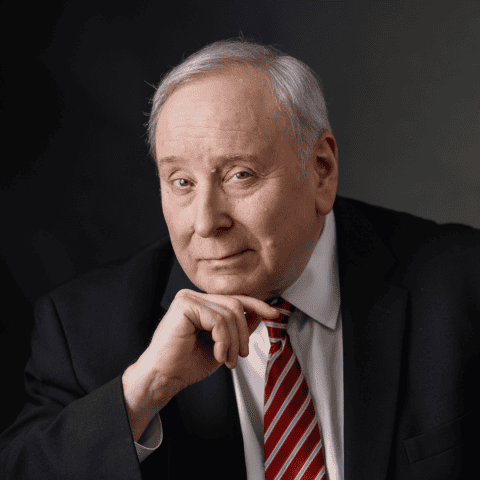 Jonathan S. Tobin is editor-in-chief of the Jewish News Syndicate, a senior contributor for The Federalist, a columnist for Newsweek and a contributor to many other publications. He covers the American political scene, foreign policy, the U.S.-Israel relationship, Middle East diplomacy, the Jewish world and the arts. He hosts the JNS “Think Twice” podcast, both the weekly video program and the “Jonathan Tobin Daily” program, which are available on all major audio platforms and YouTube. Previously, he was executive editor, then senior online editor and chief political blogger, for Commentary magazine. Before that, he was editor-in-chief of The Jewish Exponent in Philadelphia and editor of the Connecticut Jewish Ledger. He has won more than 60 awards for commentary, art criticism and other writing. He appears regularly on television, commenting on politics and foreign policy. Born in New York City, he studied history at Columbia University.
 Irańska delegacja w Islamabadzie (Fot. REUTERS/Akhtar Soomro)
 Donald Trump odwołuje rokowania w Pakistanie. “Za dużo latania”
 Statki w cieśninie Ormuz Fot. REUTERS/Stringer
 Jared Kushner i Steve Witkoff Fot. Jacquelyn Martin/Pool via REUTERS