Archive | May 2026

Ludzie kultury piszą do ministry Cienkowskiej. “Każda forma współpracy okrywa polską kulturę hańbą”

Minister kultury i dziedzictwa narodowego Marta Cienkowska (Fot. Dawid Żuchowicz / Agencja Wyborcza.pl)


Ludzie kultury piszą do ministry Cienkowskiej. “Każda forma współpracy okrywa polską kulturę hańbą”

Marta Górna


Polityka Izraela budzi skojarzenia z “polityką najgorszych ludobójczych reżimów znanych z historii” – piszą polscy ludzie kultury w liście otwartym do ministry Cienkowskiej.

Do wtorkowego poranka ponad 200 osób z polskiego środowiska kulturalnego podpisało

Żądają, by instytucja traktowała Izrael i jego obywateli tak samo, jak “traktuje się Federację Rosyjską i jej obywateli po agresji na Ukrainę”. W liście przekonują: “Skala zniszczeń w Gazie jest niewyobrażalna. Obejmuje nie tylko ogromną większość zabudowy miasta, ale też skażenie środowiska i całą infrastrukturę niezbędną do przeżycia dwumilionowej społeczności w tym wodociągi, kanalizację, oczyszczalnie ścieków, elektrownie. Odbudowa Strefy ma wedle raportów zająć kilkadziesiąt lat”.

Podkreślają, że Palestyńczycy – mimo tzw. zawieszenia broni – wciąż są zabijani, m.in. w obozach dla uchodźców, a także wypędzani z własnych domów na Zachodnim Brzegu i we wschodniej Jerozolimie.

Dodają też, że aktualna polityka Izraela budzi skojarzenia z “polityką najgorszych ludobójczych reżimów znanych z historii”. Uważają, że każda forma współpracy z instytucjami kulturalnymi tego państwa “okrywa dziś polską kulturę hańbą”.

Pod listem otwartym podpisali się m.in. Krzysztof Cieślik (wydawca, redaktor, tłumacz, współwłaściciel wydawnictwa ArtRage), Przemysław Wielgosz (eseista nominowany do Nagrody Literackiej “Nike” za “Grę w rasy”), pisarka Olga Gitkiewicz, tłumaczka i poetka Aga Zano, pisarz Wojciech Chmielarz, pisarz Jul Łyskawa, pisarka Sylwia Chutnik, zespół Teatru Ósmego Dnia z Ewą Wójciak na czele, pisarki Kinga Dunin i Małgorzata Rejmer, Kaja Puto z “Krytyki Politycznej”, krytyczka literacka Olga Wróbel, pisarz i wykładowca Jakub Nowak, reżyserka filmowa Jagoda Szelc, reżyser i dramaturg Paweł Demirski, aktorka Anita Sokołowska, krytyk Maciej Nowak i wielu innych.

Podpisów wciąż przybywa. Poniżej publikujemy pełną treść listu otwartego.

List otwarty ludzi kultury do Minister Kultury i Dziedzictwa Narodowego

Szanowna Pani Minister,

w obliczu ludobójstwa, którego dokonuje państwo Izrael w Strefie Gazy, polityki apartheidu stosowanej na okupowanych palestyńskich terytoriach i agresji na Liban, my, ludzie kultury zwracamy się z prośbą o zawieszenie wszelkiej współpracy z izraelskimi instytucjami, organizacjami pozarządowymi i osobami fizycznymi, które nie sprzeciwiają się polityce Izraela, przez instytucje znajdujące się pod egidą Ministerstwa Kultury i Dziedzictwa Narodowego.

Nie ma wątpliwości, co do faktu ludobójstwa – potwierdziły to liczne organizacje, w tym ONZ, Amnesty International, Human Rights Watch, B’Tselem, Lekarze bez Granic, Międzynarodowe Stowarzyszenie Badaczy Ludobójstwa (IAGS), a także ponad 800 specjalistów prawa międzynarodowego i studiów nad ludobójstwem. Nie ma także wątpliwości co do innych, niemożliwych do usprawiedliwienia, działań państwa izraelskiego, w tym torturowania palestyńskich więźniów, o czym niedawno szczegółowo donosił „The New York Times”, używania głodu jako broni, stosowania metody „double tap strike”, by nie wspomnieć o niszczeniu całych miast i wiosek w Palestynie i Libanie, mordowaniu dziennikarzy (od czasu prowadzenia statystyk żadne państwo nie zabiło tylu dziennikarzy, co Izrael), niszczeniu szpitali.

Jednym z głównych celów ludobójczej kampanii w Strefie Gazy stały się  szkoły, uniwersytety, biblioteki, instytuty badawcze i miejsca światowego dziedzictwa kulturalnego (o czym szeroko pisał Eyal Weizman na łamach “London Review of Books”). Tę listę można by ciągnąć właściwie bez końca, wszyscy obserwowaliśmy to na własne oczy, ponieważ było to pierwsze w historii świata ludobójstwo transmitowane na żywo i dokonywane z cichym przyzwoleniem ze strony tzw. Zachodu. Dziś jest za późno, by cofnąć jego skutki, można jednak skończyć z bezkarnością sprawców, która zachęca do kontynuowania zbrodni. Dlatego uważamy, że należy podjąć wszelkie kroki, by sprzeciwić się zbrodniczym działaniom Izraela choćby tak skromnym gestem, jak zerwanie instytucjonalnej współpracy.

Nie domagamy się niczego wyjątkowego. Żądamy jedynie, by Ministerstwo Kultury i Dziedzictwa Narodowego traktowało Izrael i jego obywateli tak samo, jak traktuje się Federację Rosyjską i jej obywateli po agresji na Ukrainę. Skala zniszczeń w Gazie jest niewyobrażalna. Obejmuje nie tylko ogromną większość zabudowy miasta, ale też skażenie środowiska i całą infrastrukturę niezbędną do przeżycia dwumilionowej społeczności w tym wodociągi, kanalizację, oczyszczalnie ścieków, elektrownie. Odbudowa Strefy ma wedle raportów zająć kilkadziesiąt lat. Palestyńczycy, mimo tzw. „zawieszenia broni”, wciąż są zabijani, m.in. w obozach dla uchodźców, a także wypędzani z własnych domów na Zachodnim Brzegu i we wschodniej Jerozolimie.

Polityka Izraela budzi dziś zasadne skojarzenia z polityką najgorszych ludobójczych reżimów znanych z historii. Uważamy, że każda forma współpracy z instytucjami kulturalnymi tego państwa okrywa dziś polską kulturę hańbą.


Redagowała Magdalena Birska


Zawartość publikowanych artykułów i materiałów nie reprezentuje poglądów ani opinii Reunion’68,
ani też webmastera Blogu Reunion’68, chyba ze jest to wyraźnie zaznaczone.
Twoje uwagi, linki, własne artykuły lub wiadomości prześlij na adres:
webmaster@reunion68.com


Giuliani Says Mamdani Has ‘Hatred’ for Jews for Declining to Attend Israel Day Parade in New York City


Giuliani Says Mamdani Has ‘Hatred’ for Jews for Declining to Attend Israel Day Parade in New York City

Shiryn Ghermezian


Former Donald Trump lawyer and former New York City Mayor Rudolph Giuliani arrives at US federal court in New York City, US, Nov. 26, 2024. Photo: REUTERS/Brendan McDermid

Former New York City Mayor Rudy Giuliani has lambasted the city’s current mayor, Zohran Mamdani, for the latter’s decision not to attend the annual Israel Day parade, which is set to take place later this month.

“Mamdani’s decision to snub the Israel Day Parade demonstrates his deep disdain and hatred of the Jewish community,” Giuliani, a Republican, told the New York Post on Wednesday. “When you combine this with his failure to attend the investiture of the new Catholic Archbishop [Ronald Hicks], a pattern emerges, revealing a man on a mission to tear down the foundations of Western civilization.”

Mamdani, a far-left democratic socialist, has made fierce anti-Israel activism a cornerstone of his political career, leading many Jewish leaders and other critics to accuse him of antisemitism.

“Have New Yorkers awakened to the fact that they made a disastrous decision in November 2025 by electing this man?” added Giuliani, who served as New York City’s mayor from 1994 through 2001.

Mamdani confirmed earlier this month that he will skip this year’s Israel Day Parade. However, the avowed anti-Zionist first indicated that he would not attend the event in October 2025, the month before his election. At the time, he told the Jewish Telegraphic Agency that he looked forward “to joining — and hosting — many community events celebrating Jewish life in New York and the rich Jewish history and culture of our city,” but not including the parade.

“While I will not be attending the Israel Day Parade, my lack of attendance should not be mistaken for a refusal to provide security or the necessary permits for its safety,” Mamdani said last year. “I’ve been very clear: I believe in equal rights for all people — everywhere. That principle guides me consistently.”

Mamdani is reportedly the first mayor of New York City to skip the Israel Day Parade, which has been held annually since 1964. The parade takes place along Manhattan’s Fifth Avenue and is set this year for May 31 under the theme, “Proud Americans, Proud Zionists.”

For what is believed to be the first time in history, a Muslim group will march in the parade. Supporters of the nonprofit American Muslim & Multifaith Women’s Empowerment Council will participate and be led by Anila Ali, the organization’s board chair and president.

As a supporter of the boycott, divestment, and sanctions (BDS) movement against Israel, Mamdani has been highly critical of the country and has refused to recognize it as a Jewish state. New York City is home to the world’s largest population of Jews outside of Israel.

“Since the very first Israel Parade in 1964, every single sitting mayor of New York City has joined in the festive celebrations. New York has historically been proud of its deep relationship with Israel. Not joining the parade is an affront to the history of New York City,” Moshe Davis – former executive director of the Mayor’s Office to Combat Antisemitism, a body formed by Mamdani’s predecessor, Mayor Eric Adams – told Fox News Digital.

Adams told the news outlet that the Israel Day Parade “is a testament to one of New York City’s most important relationships.”

“From health care to technology to innovation, Israel and New York City are partners in building a better future,” he explained. “I want every New Yorker to join the Parade on Fifth Avenue because celebrating this bond isn’t just for the Jewish community; it’s for our entire city.”

Last week, Mamdani posted a video on social media in honor of “Nakba Day.” The word “nakba” is Arabic for “catastrophe” and used by Palestinians to describe Israel’s founding and the displacement of hundreds of thousands of Arabs during Israel’s 1948 War of Independence.

Many Arabs left for varied reasons, including that they were encouraged by Arab leaders to flee their homes to make way for the invading armies to destroy the nascent Jewish state. At the same time, about 850,000 Jews were forced to flee or expelled from Middle Eastern and North African countries in the 20th century, primarily in the aftermath of Israel’s declaring independence.

Several pro-Israel Jewish groups found the video posted by Mamdani offensive, and as a result, some Jewish leaders decided not to attend a pre-Shavuot event Mamdani hosted at Gracie Mansion in honor of Jewish Heritage Month.

The UJA Federation of New York and the Jewish Community Relations Council of New York, both of which are organizing the Israel Day Parade, declined to attend the gathering. They told the New York Post they made the decision because the event’s host is a mayor who “denies the core pillar of our heritage, the State of Israel as the homeland of the Jewish people.” At the event, Mamdani announced that his administration will allocate $26 million annually to expand efforts made by the city’s Office for the Prevention of Hate Crimes.

Since Mamdani assumed office, Jews have been targeted in the majority of all hate crimes committed in New York City, continuing a troubling trend of rising antisemitism following Hamas’s Oct. 7, 2023, massacre across southern Israel.


Zawartość publikowanych artykułów i materiałów nie reprezentuje poglądów ani opinii Reunion’68,
ani też webmastera Blogu Reunion’68, chyba ze jest to wyraźnie zaznaczone.
Twoje uwagi, linki, własne artykuły lub wiadomości prześlij na adres:
webmaster@reunion68.com


Chinese Cameras in Israel Could Be Exploited by Iran, Expert Warns


Chinese Cameras in Israel Could Be Exploited by Iran, Expert Warns

Ailin Vilches Arguello


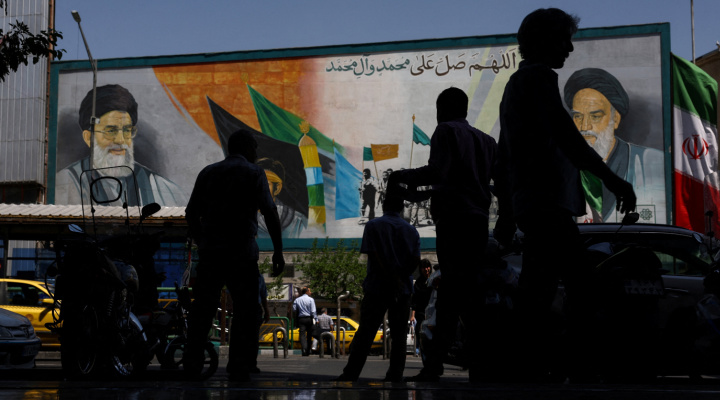
People walk past a mural depicting the late leader of the Islamic Revolution, Ayatollah Ruhollah Khomeini, and the late Iran’s Supreme Leader Ayatollah Ali Khamenei, in Tehran, Iran. Photo: Majid Asgaripour/WANA (West Asia News Agency) via REUTERS

Israel’s widespread use of internet-connected Chinese surveillance cameras could pose a major security risk, a new analysis warns, potentially enabling Iran and its terrorist proxies to infiltrate live feeds, gather intelligence, and assist in the targeting of sensitive infrastructure and civilian areas.

According to a report by the Institute for National Security Studies (INSS), Iran and Hezbollah have intensified coordinated efforts since the outbreak of this year’s war with the US and Israel to breach surveillance camera networks across the Jewish state, using the systems to collect intelligence, identify missile impact locations, and track potential targets.

The rapid spread of Chinese-made surveillance systems is creating a potentially dangerous intelligence vulnerability, with civilian camera networks increasingly seen as tools that hostile foreign actors could exploit for strategic monitoring and security operations.

In the past, Israel has also leveraged Iranian surveillance infrastructure for intelligence operations, specifically hacking Tehran’s traffic camera network to systematically track senior leadership and their security circles, providing the crucial data required to successfully execute the targeted killing of Iran’s Supreme Leader, Ayatollah Ali Khamenei, on Feb. 28.

Even though networked camera systems are intended to strengthen security and improve monitoring and control, the INSS report by research associate Yuval Less warns they can also become critical vulnerabilities if exploited by hostile actors for intelligence gathering and surveillance purposes.

The widespread use of surveillance cameras — including foreign-made systems — not only raises concerns over embedded security vulnerabilities but also heightens risks of espionage and broader national security threats, especially where sensitive visual data may be intercepted, exploited, or repurposed by hostile actors.

Based on artificial intelligence and IoT technologies, modern surveillance cameras can now analyze activity in real time and detect behavioral patterns, but these same capabilities also expose the systems to cyber intrusions, remote hijacking, data breaches, and privacy violations.

The report suggests that such systems could effectively function as “eyes and ears” for enemy actors, enabling intelligence collection, continuous surveillance, and support for operational planning.

Specifically, experts say the widespread use of Chinese surveillance technology in Israel presents a complex mix of geopolitical, technological, and security challenges that demand closer scrutiny from government and intelligence authorities.

These vulnerabilities come into sharper focus amid the deepening strategic alignment between China and Iran, fueling concerns that Iran-linked actors could increasingly exploit such systems for surveillance, intelligence collection, and other operational uses against Israel.

In recent years, the United States has repeatedly warned about the security risks associated with Chinese technology, with the US Department of Homeland Security cautioning that Chinese-made surveillance cameras could potentially be used for espionage targeting critical infrastructure.

The Iranian regime has previously relied on Chinese technology for strategic security purposes, with past instances pointing to a broader pattern of using such systems for intelligence gathering and surveillance operations.

According to a study by the international human rights organization Article 19, the Islamist regime used Chinese and Russian technology to silence dissent during nationwide anti-government protests earlier this year, imposing near-total internet shutdowns and disrupting satellite communications in an effort to suppress public scrutiny.

“In its pursuit of total control over the digital space, Iran borrows directly from the Chinese digital authoritarian playbook,” Michael Caster, head of Article 19’s Global China Program, said in a statement. 

“From Chinese companies embedded inside Iran’s infrastructure, to Iran’s support for China’s ‘cyber sovereignty’ principles based on censorship and surveillance, both countries align in their ambition to disconnect their populations from the open, global internet,” he continued.  

According to the report, China has provided material and technical support to Iran since at least 2010, bolstering its surveillance and censorship capabilities as Chinese firms including ZTE, Huawei, Tiandy, and Hikvision continue operating in the country despite international sanctions.


Zawartość publikowanych artykułów i materiałów nie reprezentuje poglądów ani opinii Reunion’68,
ani też webmastera Blogu Reunion’68, chyba ze jest to wyraźnie zaznaczone.
Twoje uwagi, linki, własne artykuły lub wiadomości prześlij na adres:
webmaster@reunion68.com


Rok z Leonem XIV

Papież – Wikipedia, wolna encyklopedia


Rok z Leonem XIV

Stanisław Obirek


Dokładnie rok temu 8 maja kardynał Robert Prevost został papieżem i wybrał imię Leon. To była jasna deklaracja ideowa i odcięcie się od poprzedników w sposób symboliczny. Nie chciał być kojarzony z Franciszkiem, który zapisał się na kartach historii jako papież charyzmatyczny, ale też polaryzujący. Nie widział też powodu, by nawiązywać do długiego pontyfikatu Jana Pawła II, który był zbyt jednoznacznie kojarzony jako aktor kulturowych wojen. Podobnie nie nawiązał do Benedykta XVI, który nazbyt wyraziście podkreślał wyjątkowość katolicyzmu, najpierw jako prefekt Dykasterii Nauki Wiary stygmatyzujący nowatorskie rozwiązania w teologii, a potem jako papież zbyt lękliwie postrzegający współczesny świat jako zagrożenie. Nawiązał do śmiałych wizji Leona XIII, który encykliką Rerum Novarum z 1891 roku, podjął rękawicę rzuconą przez wyzwania rodzącego się kapitalizmu. Nie był więc kontynuatorem antymodernistycznej histerii rozpętanej przez Piusa IX, ale chciał dialogu, na miarę ówczesnego czasu i z duchem czasu.

Jako papież zakorzeniony w obu Amerykach (urodzony w USA, 20 lat spędził w Peru i jest obywatelem tego kraju) bez kompleksów krytykuje nieprzewidywalnego prezydenta swojej pierwszej ojczyzny, Donalda Trumpa i członków jego administracji, zwłaszcza katolików. Wyróżniającego się w osobliwym pojmowaniu swojej wiary neofitę katolickiego, wice prezydenta J.D. Vance’a, który próbował go uczyć właściwego rozumienia myśli św. Augustyna (Leon XIV jest członkiem zakonu augustianów) i sekretarza stanu Marco Rubio, który po spotkaniu 7 maja chyba zrozumiał, że jego szef, prezydent Trump, tylko traci atakując papieża.

Polski premier Donald Tusk, który spotkał się z papieżem również 7 maja, zapewnia, że wiele nauczyła go rozmowa z Leonem XIV. Zobaczymy, czy tak jest naprawdę i czy zmieni swój stosunek do uchodźców na granicy polsko-białoruskiej. Tusk jest też przekonany, że Leon XIV przyjedzie do Polski. Podobne zapewnienia słyszymy od szefa episkopatu abpa Tadeusza Wojdy. Leon nie jest skłonny do wpisywania się w oczekiwania innych, zwłaszcza te polityczne, o czym przekonali się Amerykanie zapraszając go do przyjazdu na 4 lipca tego roku na okrągłą 250 rocznicę powstania USA. Leon odmówił, tłumacząc, że już wcześniej zaplanował wizytę na Lampeduzie. Zapewnienia o przyjętym z radością zaproszeniu przyjazdu do Polski nie brzmią zbyt przekonująco. Podobnie jak Franciszek, Leon XIV wie, że przyszłość katolicyzmu rozgrywa się na Południu naszego globu, gdzie żyje trzy czwarte katolików. Jak dotąd był w Turcji i Libanie, gdzie katolicy stanowią mniejszość i w czterech krajach Afryki gdzie ich obecność jest znaczniejsza. Jak sądzę nadal będzie zwracał uwagę raczej na obrzeża starego kontynentu i USA.

Europa i USA nie stanowią priorytetów Watykanu i trudno się dziwić. Katolicyzm jest uwikłany w wojny kulturowe i nie ma jak na razie wiele do zaproponowania. Zobaczymy, co przyniosą najbliższe lata. Wszystko wskazuje na to, że Leon XIV spróbuje, podobnie jak jego poprzednik, na nowo ukształtować episkopaty, by pełniej odpowiadały na wezwania współczesności. Jeśli tak się stanie, to być może odwiedzi i swoją pierwsza ojczyznę i zajrzy do krajów starego kontynentu, w tym do Polski. Na razie jego wzrok jest skierowany na globalne Południe.


<strong>Stanisław Obirek</strong>Stanisław Obirek

 (ur. 21 sierpnia 1956 w Tomaszowie Lubelskim) – teolog,
historyk, antropolog kultury, profesor nauk humanistycznych, profesor zwyczajny Uniwersytetu Warszawskiego, były jezuita.


Zawartość publikowanych artykułów i materiałów nie reprezentuje poglądów ani opinii Reunion’68,
ani też webmastera Blogu Reunion’68, chyba ze jest to wyraźnie zaznaczone.
Twoje uwagi, linki, własne artykuły lub wiadomości prześlij na adres:
webmaster@reunion68.com


Facebook group becomes living archive for Cyprus camp survivors’ descendants


Facebook group becomes living archive for Cyprus camp survivors’ descendants

TPS-IL Staff


Digital platforms increasingly allow descendants to shape memory from below through personal testimony and collective participation.

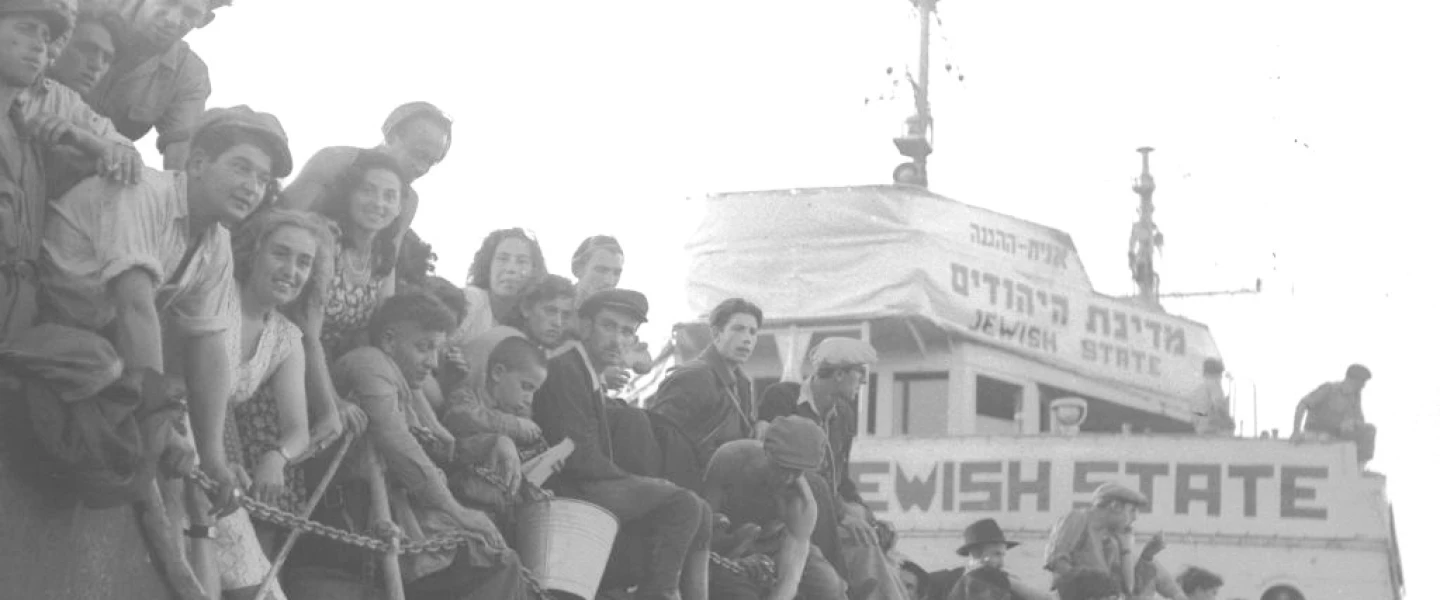
Illegal immigrants on the Haganah ship the “Jewish State” in Haifa Port before their deportation to a British displaced persons camp in Cyprus, Oct. 30, 1947. Photo by Hans Pinn/GPO/TPS-IL.

A Facebook group created by descendants of Holocaust survivors who were detained by British authorities in Cyprus after World War II has evolved into an unexpected archive of collective memory, helping reconstruct family histories that in many cases were nearly lost, according to a study at Ben-Gurion University of the Negev in Beersheva.

The research, conducted by Ayelet Klein-Cohen and published in the peer-reviewed journal Memory, Mind and Media, examines how descendants of survivors use social media to preserve family stories, documents and photographs connected to the Cyprus detention camps. These camps, operated by British authorities in the British Mandate of Palestine context, held tens of thousands of Jewish refugees between 1946 and 1949 as they attempted to reach the Land of Israel.

Klein-Cohen said the Facebook community demonstrates how digital platforms can help descendants recover fragmented family histories.

“If this causes a group of people anywhere in the world to feel that they too want to explore the history of the past for themselves, then the power of this study is that it may inspire someone to do the same thing in another context,” she said.

Participants in the group have gained a deeper understanding of their personal and family narratives, she explained.

“In essence, the study speaks about the way in which descendants of Holocaust survivors seek less familiar stories in order to develop a deeper understanding of themselves and of family stories connected to Cyprus,” she told TPS-IL. “At the same time, it points to the ability of social networks to allow less familiar narratives to surface and become part of public discourse, especially stories connected to traumatic events, the search for personal identity, and the process of dealing with intergenerational trauma.”

According to the research, the online group functions as a collaborative space where descendants share testimonies, search for relatives and piece together fragments of stories that often remained untold within families for decades.

Klein-Cohen analyzed 687 posts and comments published by group members during 2022. She emphasized that the study was qualitative and not intended to provide statistical representation of all descendants of Cyprus camp survivors.

“For me, what makes this community especially unique is the fact that there is no formal body behind it and no official institution,” she said. “There is no archive behind it. Yet people still gather around it and share stories and memories with one another.”

Asked about the relationship between historical fact and memory, Klein-Cohen said it is an inherent tension in historical research.

“The moment something happens, it is over, and memory takes over, for better and worse. That is the eternal tension between memory and history,” she said.

The Cyprus detention camps were established by the British in August 1946 in an effort to restrict Jewish immigration to Mandatory Palestine. More than 50,000 Jewish refugees, many of them Holocaust survivors, passed through the camps before the establishment of the State of Israel. An estimated 80% were between the ages of 13 and 35. Conditions included overcrowding, poor sanitation and a lack of privacy.

Despite their historical significance in the broader story of postwar Jewish migration and the founding of Israel, Klein-Cohen said the Cyprus camps have received relatively limited public attention compared to other Holocaust and post-Holocaust narratives.

A need to discover more about family’s past

Historian Nahum Bogner, who has extensively researched the Cyprus story, told the researchers that “the case of the Cyprus deportation was omitted as if it were by an invisible hand” and that “in what was published, a clear priority was given to the heroic episodes at sea,” referring to attempts at illegal immigration to Mandatory Palestine.

According to Klein-Cohen, descendants participating in the group are not simply sharing nostalgia but actively reconstructing fragmented family histories across generations.

One post cited in the study was written by a woman identified only as Maya, who said her grandparents were detained in Cyprus after being released from the Bergen-Belsen concentration camp.

“In my family, as in many others, they rarely spoke about the difficult and painful chapters of life that preceded their new beginning in Israel. Like many others of the second and third generations, I was left with very little information about my family’s past, with many questions, and with a desire, or even a need, to discover more,” the post stated.

Klein-Cohen said such testimonies illustrate how digital communities are filling gaps left by silence in many survivor families.

She described the online space as “a dynamic public sphere through a Facebook group,” where descendants collectively preserve and reinterpret memory.

The study also highlights a broader shift in how Holocaust memory is transmitted across generations.

While traditional commemoration has often centered on museums, ceremonies and formal archives, Klein-Cohen said digital platforms increasingly allow descendants to shape memory from below through personal testimony and collective participation.


Zawartość publikowanych artykułów i materiałów nie reprezentuje poglądów ani opinii Reunion’68,
ani też webmastera Blogu Reunion’68, chyba ze jest to wyraźnie zaznaczone.
Twoje uwagi, linki, własne artykuły lub wiadomości prześlij na adres:
webmaster@reunion68.com