Archive | September 2026

Why ‘Fauda’ has shocked the West


Why ‘Fauda’ has shocked the West

Melanie Phillips


A TV show delivers truths that people don’t know have been so lethally denied.
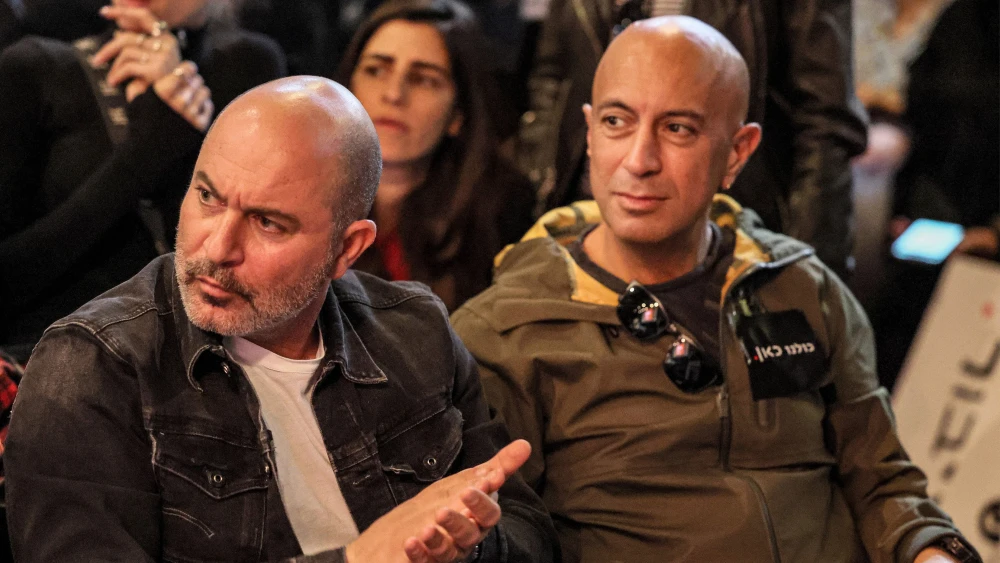
Actor Lior Raz (left) and Avi Issacharoff, co-creators of the hit Israeli TV show “Fauda,” attend a demonstration in Tel Aviv against the Israeli government’s plans to shut down public broadcaster KAN, Jan. 25, 2023. Photo by Jack Guez/AFP via Getty Images.

The Israeli drama series “Fauda” is making waves that no one expected.

The series has long been regarded as brilliant. A strong part of its compulsive appeal is that it’s closely modeled on a reality that’s scarcely less dramatic: the undercover Israeli counter-intelligence unit whose members pose convincingly as Palestinian Arabs to infiltrate the terrorist gangs that wage their war of annihilation against Israeli Jews.

Its fifth season, which aired two weeks ago on Netflix, plunges graphically into the Hamas-led atrocities in Israel on Oct. 7, 2023. No one foresaw that, at a time of unprecedented hatred of Israel, this show would have such a global impact.

In the Arab world, “Fauda” has always been popular, and this season has been an instant smash hit. In Lebanon, Jordan, Qatar and Saudi Arabia, Arabs who are programmed to hate and fear Israel are binge-watching a show about Israelis infiltrating Arab areas and fighting Arab terrorists, and about Jewish trauma suffered at their hands.

Maybe this is because “Fauda” presents Palestinian Arab culture with fairness, subtlety and a measure of empathy.

Even more striking has been the reception to this latest season in the Israel-hating West. People there are watching it with their hands to their mouths in shock, horror and tears.

For the first time, it seems, “Fauda” has made them understand the enormity of what happened on Oct. 7. For the first time, they have registered the depravity of the Gazan Arabs who invaded southern Israel, slaughtered, raped or burned alive 1200 men, women and children and took 251 into Gaza as hostages.

How can it be, others are asking, that people are only now realizing what happened on that terrible day? How come this TV drama is cutting through when everything that the Israeli government has said about Oct. 7 could not?

The main reason why people are reacting as if they didn’t know what actually happened that day is because those atrocities were all but eclipsed by the coverage of the war that followed.

That has given rise to the grotesque belief that Israel wasn’t defending itself against genocide but was committing it, along with war crimes, ethnic cleansing and the latest evidence of its apparent monstrousness, “settler violence.”

These claims are becoming ever more hysterical and deranged, not least at the shameful anti-Israel hate-fest this week at the United Nations. The U.N. secretary-general, António Guterres, declared: “The scale of killing in Gaza is unlike anything I’ve witnessed in my years as secretary-general.”

Thus, he claimed that a war in which Hamas itself says some 74,000 Gazans were killed, of whom more than half were fighting-age men, was worse than the 377,000 killed in the savage war in Yemen, or the more than 600,000 who were massacred or starved to death in Ethiopia, or the 150,000 who were killed in Sudan.

Australia’s foreign minister Penny Wong claimed: “In the first six months of this year alone, ‘settler violence’ [in the “West Bank”] has driven more than 15,000 children from their homes.” There is no basis whatsoever for this figure, which she seems to have plucked out of the air.

And French President Emmanuel Macron beclowned himself by announcing: “Hamas has never been active in Judea and Samaria.”

The reality is that Jewish “settlers” in Judea and Samaria are being subjected to virtually nonstop attacks, both carried out and plotted, by Hamas and other Islamic terrorist groups.

On the eve of Yom Kippur, a father of six, Netanel Shukrun, was murdered in a shooting attack at the natural spring in Samaria where he had gone for a ritual immersion.

Within the following three hours, elsewhere in these disputed territories, according to Israeli journalist Amit Segal, an Israeli was attacked and wounded after he took a wrong turn into an Arab village; an attempted car-ramming targeted Israeli troops; and a vehicle with no license plates tried to run down two more Israelis.

All this followed a weekend in which Jewish residents of these areas had reported at least seven other such attacks. On Wednesday, the soldier son of Yechiel Leiter, Israel’s ambassador to the United States, was left fighting for his life after another car-ramming in Samaria.

On the same day, Israeli forces arrested a Fatah-affiliated man, reported by Palestinian sources to be an officer in the Palestinian Authority security apparatus, on suspicion of advancing terrorist activity.

And then Israeli forces discovered two shafts 12 meters deep in Qalqilya, an Arab city in Samaria only a few kilometers away from several Jewish cities. The shafts contained weapons, magazines and ammunition. Israeli forces arrested four Arabs suspected of terrorist activity.

In other words, the Palestinian Arabs are constantly attempting serious terrorist violence against Israelis within the “West Bank”—from where the West has decided that Jewish “settlers” must be ethnically cleansed.

The reason people are reacting as if they didn’t know what happened on Oct. 7 is because the atrocities were eclipsed by the coverage of the war that followed.

Virtually none of this systemic onslaught on Israeli Jews in these territories is ever reported in the West. Instead, it defames them as monsters wantonly killing Palestinian innocents and driving the rest out.

Many things have contributed to the insanity of the West’s obsessional delegitimization of Israel that has turned it into a pariah in mainstream political and cultural circles. This can only be properly understood as part of a broader and deeper Western civilizational crisis.

However, one factor, in particular, has turned truth and lies inside out in the minds of many. For decades, there’s been a settled view among progressives that Israel is a rogue state that behaves illegally and cruelly.

That’s because the overwhelming majority of media coverage of the Jewish state has consisted of lies and distortions intended to delegitimize it as a prelude to its destruction.

In recent days, a curtain has been lifted on a corner of this madness. Motaz Azaiza is a Palestinian Arab photojournalist lionized by Western liberals for his production of images that have fueled hatred and incitement against Israel. Time magazine listed him among its top 100 most influential people of 2024.

But in a long interview in Arabic, whose translation is now all over social media, Azaiza revealed that every claim or image coming out of Gaza during the war had been crafted to fit the Hamas narrative. If Gazan journalists didn’t toe the line, they disappeared. Every journalist in Gaza belonged to a Hamas-run group.

Said Azaiza: “They take the details of a specific person, publish his phone number in the group and instruct online activists to attack him, curse him and make his life miserable.”

As a result, photographers like him lowered their cameras the moment anyone said something bad about Hamas.

Furthermore, Azaiza himself supported Hamas terrorism. He related how he’d filmed Gazans beating and abusing Israelis who were captured and dragged into the Strip on Oct. 7, but he didn’t publish those videos because he didn’t want Israel to identify the abusers and kill them.

Not a word of Azaiza’s revelations has appeared in Western media. Of course not. That would reveal that they’ve been doing Hamas’s dirty work for it. Every report from Gaza should have carried a health warning that it was produced under Hamas censorship. Instead, it was all presented as credible or true.

And this has been the case for decades. The Western public has no idea that what it takes to be the truth about Israeli behavior and Palestinian suffering—because it’s “seen it on TV”—is a giant and monstrous lie.

Shockingly, many Diaspora Jews are now claiming that Israel’s terrible image in the world is due to the toxic nature of its prime minister, Benjamin Netanyahu, and the extremists in his coalition government, Minister of National Security Itamar Ben-Gvir and Finance Minister Bezalel Smotrich.

Such a ludicrous misrepresentation of the civilizational emergency that has engulfed the West can only be explained by the desperate need for such Diaspora Jews to deny the danger to themselves from their own society that has simply lost its collective mind.

“Fauda” is delivering to the West a truth that it doesn’t even realize it has so devastatingly denied.


Melanie Phillips, a British journalist, broadcaster and author, writes a weekly column for JNS. Currently a columnist for The Times of London, her new book, Fighting the Hate: A Handbook for Jews Under Siege, has just been published by Wicked Son. Her previous book, The Builder’s Stone: How Jews and Christians Built the West and Why Only They Can Save It, was published in 2025. Access her work at: melaniephillips.substack.com.


Zawartość publikowanych artykułów i materiałów nie reprezentuje poglądów ani opinii Reunion’68,
ani też webmastera Blogu Reunion’68, chyba ze jest to wyraźnie zaznaczone.
Twoje uwagi, linki, własne artykuły lub wiadomości prześlij na adres:
webmaster@reunion68.com

The ‘Proud Jew’ Pushing Out British Jewry


The ‘Proud Jew’ Pushing Out British Jewry

Jonathan Sacerdoti


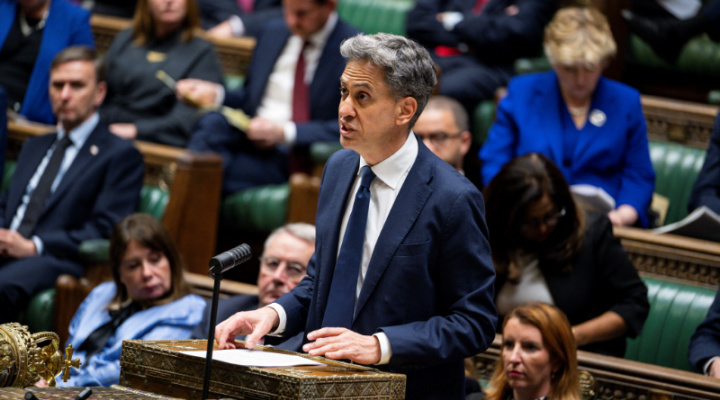
Britain’s Foreign Secretary Ed Miliband speaks at the House of Commons in London, Britain, Sept. 8, 2026. Photo: HOUSE OF COMMONS/Handout via REUTERS

Our British Foreign Secretary is certainly not camera shy. In fact, he has something of an obsession with posting toe-curling social media videos — so much so that one might mistake his taxpayer-funded trip to the UN General Assembly in New York for a wannabe influencer’s minibreak, booked on Avios saved up from years of shopping at Accessorize. His wooden personality, bodily awkwardness, and peculiar dental endowment combine to bring new levels of dweebishness to the poorly produced, formulaic Instagram reels he’s been pumping out since he took office. His poor man’s Robert Jenrick act is simply showing him up as the lightweight he is.

While other world leaders used the UN General Assembly this week to hold important meetings, deliver set-piece speeches, and put vital messages across to the world, Edward Miliband appears to have forced a spad [special adviser] to film him as he wanders around the UN building and through the streets of New York, awkwardly delivering lines fresh from ChatGPT. He’s giving more “Miss Alumunumu” vibes than Lord Palmerston – but she at least raised a few smiles flogging her Chinese-made aluminum capsule homes on TikTok. Not so Miliband.

In one carefully stage-managed collab with the internet video creator Feroz Khan, he declares himself “like the Marco Rubio of Great Britain.” Nothing could be further from the truth. Khan became internet-famous for a series of videos in which he spontaneously stops strangers in the street to chat. He faked this one with Miliband, presumably to help the guy build more international recognition. If the badly scripted conversation hadn’t given the game away, the very idea that anyone would stop a second-rate Mr. Bean tribute act on Fifth Avenue because he looked “well dressed” destroyed any scrap of believability. Asked what his job involves, he garbled, “I’m just trying to make the world a better place,” with all the flair of David Brent.

This Alan Partridge-meets-messiah-complex act might reveal why he’s doing such a bloody dreadful job only weeks into the new role. I always thought the UK Foreign Secretary’s job was to direct British foreign policy worldwide, negotiate treaties, and build alliances, all for the benefit of British interests. Miliband thinks he’s been appointed Mother Teresa.

Then there was his tone-deaf post of a photo of himself standing next to Zohran Mamdani. “Progressive parties are so much stronger when we learn from and stand with each other — from the cost of living to climate action to peace in Israel and Palestine,” he gushed in the caption. Zohran Mamdani is the New York mayor who used his first day in office to bin the city’s adoption of the IHRA definition of antisemitism, who wouldn’t condemn calls to “globalize the intifada,” who has called AIPAC “monsters,” and who took most of a day to condemn chants of “We support Hamas” outside a Queens synagogue. For nine months, New York’s rabbis, from Reform to Orthodox, have been telling him that his rhetoric is making Jews less safe. That is the man Britain’s Jewish Foreign Secretary chose to “learn from and stand with.”

In another video, he talks about how great it was that the Labour government “recognized” a Palestinian state. It’s not entirely clear what positive effect he thinks that had – but maybe it’s too early to tell. Surely his desperate Hail Mary, punishing Israel to keep alive the long-dead fantasy of a two-state solution, is proof enough that the so-called recognition did nothing to bring about Palestinian statehood. If it had really recognized a state, wouldn’t there already be two? The “solution” would be well and truly achieved, and peace would reign throughout the Middle East.

Then there’s the money. This week Miliband also unveiled more than £88 million of British taxpayers’ cash for Gaza and the “West Bank,” some of it for UNRWA – the agency whose staff the UN’s own investigators found may have taken part in the Oct. 7 massacre. He couldn’t resist using the announcement for another swipe at Israel, urging it to “listen to our Call to Action” and end its “unacceptable restrictions on Gaza.” One wonders whether Hamas, which has spent years diverting resources into tunnels and rockets, received a Call to Action too.

The point of all this cheap, transparent social media fodder is clear: Miliband is desperate for his potential voters to know that, while he is a “proud Jew,” he’s not afraid to upset, imperil, and abandon British Jews, and is positively excited by the prospect of destroying the safety and security of Israeli Jews. In fact, the sheer volume of these totally un-serious videos makes it clear that he really, really wants everyone to know this. None of this is accidental. Thankfully for both groups, he is also making sure Britain’s ability to do the latter shrinks by the day, as he makes our nation ever less relevant and influential in the messy business of containing the Palestinian and wider Iranian threat to Israel.

Miliband’s morality is also strikingly selective. Just over two weeks after solemnly invoking “death, destruction, and dehumanization on an appalling scale” in Gaza, he sat down in New York with Iran’s Abbas Araghchi, foreign minister of a regime whose forces massacred protesters in January — more than 36,500 in just two days, according to documents obtained by Iran International. To be fair, he reportedly used the meeting to warn Tehran against hostile activity on British soil. But don’t expect that one to get a slickly produced reel, or any talk of making the world a better place

With every video and photo condemning Israel for one thing or another, Miliban makes it clearer which voters Labour is most afraid of losing. And each one signals weakness, not the strength he thinks he’s projecting. Meanwhile, everyone who isn’t obsessed with Gaza and “recognizing Palestine” is left with an increasingly clear sense that he has little to add to our standing in the world. He would rather make online gestures and meaningless political moves over something he can’t control than roll up his sleeves and do the hard work of effective diplomacy, alliance-building, and forging strong trade partnerships.

Even on this issue of the Middle East, just think which side makes the more productive ally for Britain as it faces an increasingly uncertain and unsafe future: a democratic, confident, strong Israel, with its excellence in defense, technology, intelligence, and medicine — or the Palestinians, with their decades-long, stubborn commitment to violence, terrorism, and rejectionism. Britain’s interests are not served by alienating a strong and valuable ally for an imaginary, violent one with few shared values.

Since declaring himself a “proud Jew,” Miliband has wasted no time in proving how little that pride is worth to the community he claims. He is at least doing British Jews one service: More of us now understand that our legitimate, real concerns do not count when set against the objections of a small but angry and often violent mob of irrational actors. Their concerns — and votes — matter far more than ours to the government that determines our future.

British Jews are increasingly being convinced by our Foreign Secretary that this country is no longer a sensible place to bring up children, build businesses, or plan a safe and secure future. As a “proud Jew,” perhaps this is his contribution to helping Anglo-Jewry decide its path ahead.


Jonathan Sacerdoti, a writer and broadcaster, is now a contributor to The Algemeiner.


Zawartość publikowanych artykułów i materiałów nie reprezentuje poglądów ani opinii Reunion’68,
ani też webmastera Blogu Reunion’68, chyba ze jest to wyraźnie zaznaczone.
Twoje uwagi, linki, własne artykuły lub wiadomości prześlij na adres:
webmaster@reunion68.com


NAZA i dwadzieścia pięć minut nienawiści


NAZA i dwadzieścia pięć minut nienawiści

Anjuli Pandavar


Zmiana zachodziła wewnątrz umysłu, który dobrowolnie poddawał się tej masowej kontroli myśli.


Kłamstwa nie są sednem sprawy; sednem jest wypaczanie prawdy.


„Potworność Dwóch Minut Nienawiści nie polegała na tym, że człowiek musiał odgrywać swoją rolę, lecz przeciwnie — na tym, że nie sposób było powstrzymać się od udziału. Po trzydziestu sekundach wszelkie udawanie stawało się zawsze zbędne. Ohydna ekstaza strachu i mściwości, pragnienie zabijania, torturowania, roztrzaskiwania twarzy młotem kowalskim zdawały się przepływać przez całą grupę niczym prąd elektryczny, przemieniając człowieka, nawet wbrew jego woli, w wykrzywionego grymasem, wrzeszczącego szaleńca. A jednak odczuwana wściekłość była emocją abstrakcyjną, pozbawioną kierunku, którą można było przerzucić z jednego obiektu na drugi niczym płomień palnika. I tak w jednej chwili nienawiść Winstona nie była wcale skierowana przeciw Goldsteinowi, lecz przeciwnie – przeciw Wielkiemu Bratu, Partii i Policji Myśli; w takich chwilach jego serce zwracało się ku samotnemu, wyszydzanemu heretykowi na ekranie, jedynemu strażnikowi prawdy i zdrowego rozsądku w świecie kłamstw. A jednak już w następnej chwili był jednym z otaczającymi go ludźmi i wszystko, co mówiono o Goldsteinie, wydawało mu się prawdą.”
(George Orwell, Rok 1984)

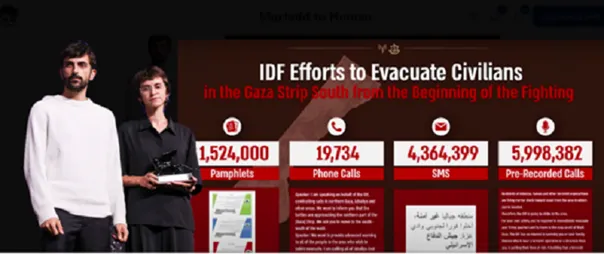
Nie mogli zabijać, torturować ani roztrzaskiwać twarzy młotem kowalskim. Byli na to zdecydowanie zbyt cywilizowani. W końcu był to Międzynarodowy Festiwal Filmowy w Wenecji. Mogli jedynie stać ramię w ramię – demonstrowało to stanowczość, jeden cel i jeden wspólny umysł – i klaskać, raz za razem uderzając w dłonie, by wywoływać gwałtowne wybuchy powietrza; było to nieświadome nawiązanie do zawartego w filmie NAZA twierdzenia o dokonywanym przez IDF „masowym zabijaniu na skalę przemysłową”, które samo w sobie stanowiło aluzję do Holokaustu. Tytuł filmu to hebrajskie określenie „strat ubocznych”, a zarazem podwójna aluzja do słów „Nazi” i „Gaza”. Film, wyreżyserowany przez dwoje izraelskich dziennikarzy, Yuvala Abrahama i Rachel Szor, miał na festiwalu swoją premierę.*

George Orwell zgłębiał psychologię Dwóch Minut Nienawiści. Warto zadać pytanie, co dzieje się w umyśle i emocjach wyrafinowanego nienawistnika Żydów, który musi przebrnąć przez dwadzieścia pięć minut nienawiści. Można sobie wyobrazić, że wygląda to tak:

Oklaski zaczęły się jako zapewnienie: nie martwcie się, mimo że jesteście Żydami, tutaj jesteście bezpieczni. Poza tym powiedzieliście nam to, co chcieliśmy usłyszeć.

Po trzydziestu sekundach tego festiwalu ostentacyjnego demonstrowania własnej cnoty wzrok przestaje wypatrywać, kto w tłumie mógłby mnie rozpoznać, i przenosi się na dwoje cherlawych, kruchych, bezbronnych, wręcz żałosnych Żydów na scenie, którzy nie skrzywdziliby nawet muchy – starannie wykreowany obraz, maksymalnie odległy od IDF, nic, co mogłoby kogokolwiek „uruchomić”.

Uruchomić co?

Pomieszany strach i odrazę zwykłego antysemityzmu czy przemoc pełnowymiarowej nienawiści do Żydów?

W drugiej minucie oklaski niczym nie różniły się od tych z pierwszej – przynajmniej dla zewnętrznego obserwatora. Zmiana zachodziła wewnątrz umysłu, który dobrowolnie poddawał się tej masowej kontroli myśli.

Było coś afirmującego, coś satysfakcjonującego, coś dającego poczucie siły w byciu anonimową kroplą w tym, co umysł wyobraża sobie jako dziki potok zalewający świat — zwykły odurzający materiał masowej psychozy.

To była ich przemoc na ich polu bitwy: każde klaśnięcie było zabójstwem, torturą albo roztrzaskaniem twarzy.

Poprzez dwoje wynędzniałych Żydów ściskających na scenie swoją nagrodę patrzyli na ekran za nimi, gdzie na własne oczy ponownie widzieli i na własne uszy ponownie słyszeli IDF wyliczające, ilu palestyńskich zabitych trzeba osiągnąć, aby dokonać ludobójstwa.

Rozmazani Żydzi na scenie byli teraz równie niewyraźni jak rozmazane, bezimienne i bezcielesne głosy ponownie odtwarzane na ekranie za twórcami filmu.

Kiedy minęły pierwsze dwie minuty, każdy bał się przestać klaskać, aby pozostali nie zaczęli podejrzewać, że nie jest dostatecznie zaangażowany, że ma wątpliwości albo – uchowaj Boże – potajemnie popiera syjonistów.

Każdy więc klaskał dalej, obserwując, jak klaszczą inni.

Mija pięć minut i bez obracania głowy – jedynie wodząc gałkami ocznymi – każdy wypatruje i nasłuchuje najmniejszego spadku tempa lub zachwiania rytmu, za którym mógłby podążyć, są bowiem z natury naśladowcami, łatwo dającymi sobą kierować.

Ramiona zaczynają boleć.

To nie jest głupie.

Mija dziesięć minut. Dłonie bolą, a oni klaszczą z takim samym zapałem jak przez pierwsze trzydzieści sekund.

Łopatki płoną żywym ogniem.

Poświęcenie.

Oczywiście nic na miarę palestyńskiego poświęcenia, które jest prawdziwym poświęceniem – poświęceniem dzieci.

Poświęcamy się w geście solidarności z zabijaniem palestyńskich dzieci, ponieważ życie Palestyńczyków ma znaczenie.

Ich urojenia napędzają samowystarczalną maszynę perpetuum mobile, maszynę, która nie mogła przestać klaskać.

Po kwadransie kark i barki są napięte, ramiona, początkowo uniesione wysoko i wyprostowane przed siebie, opadły już wzdłuż tułowia, więc klaszczą z łokciami przyciśniętymi do ciała, a w pośladkach pulsuje tępy ból.

To nie jest śmieszne.

Wciąż niczym nieróżniące się z zewnątrz oklaski ponownie przeobrażają się wewnętrznie – tym razem po to, by pokrzepić i zachęcić od dawna cierpiących Palestyńczyków, żeby nigdy się nie poddawali.

Jesteśmy z wami, klaszczemy dla was.

Mija dwadzieścia minut, a oni jadą już na wysokooktanowym paliwie moralnej wyższości – każde klaśnięcie jest strzałem wymierzonym w żołnierza IDF.

Żaden Zio nie potrafi tak klaskać.

TO pójdzie w świat.

Zwycięstwo jest pewne.

Drżące kolana zostają szybko przywołane do porządku, a ich właściciele modlą się, żeby nikt tego nie zauważył.

Zaciśnięte szczęki łapie skurcz.

To nie jest szaleństwo.

Osoba pilnująca czasu dała znak.

Ktoś gdzieś opuścił jedno klaśnięcie.

Nieliczni, którzy to usłyszeli, przestali klaskać.

W dwudziestej piątej minucie przestali już wszyscy, nieco oszołomieni tym, czego właśnie dokonali:

Izraelski film NAZA, dokumentujący trwające masowe zabijanie palestyńskich cywilów przez siły izraelskie, otrzymał dwudziestopięciominutową owację na stojąco podczas Międzynarodowego Festiwalu Filmowego w Wenecji.

Więź była osiągnięta…


Link do oryginału:

Murtadd to Human
NAZA and the Twenty-Five Minutes Hate
Read more

Murtadd to Human, 20 września 2026


Anjul Pandavar, urodzona w Południowej Afryce w muzułmańskiej rodzinie, zna czarne karty islamu tak, jak niektórzy z nas znają czarne karty Kościoła katolickiego. Islam broniący się przed współczesnością coraz głębszym fundamentalizmem, islam który sprzymierzył się z nazizmem, islam gloryfikujący nienawiść i barbarzyństwo, dotarł jej zdaniem do punktu zwrotnego. Wielu mieszkańców muzułmańskiego świata zaczyna dostrzegać, że ich religia nie tylko cofa ich do średniowiecza, uniemożliwia współżycie z innymi, ale również niszczy ich życie codzienne.

Autorka książki Islam, Wiara a człowieczeństwo wydanej w przekładzie na język polski nakładem wydawnictwa Stapis.


Zawartość publikowanych artykułów i materiałów nie reprezentuje poglądów ani opinii Reunion’68,
ani też webmastera Blogu Reunion’68, chyba ze jest to wyraźnie zaznaczone.
Twoje uwagi, linki, własne artykuły lub wiadomości prześlij na adres:
webmaster@reunion68.com


Lying for a standing ovation won’t protect the screenwriters of ‘NAZA’ from the Israel-haters


Lying for a standing ovation won’t protect the screenwriters of ‘NAZA’ from the Israel-haters

Ruthie Blum


Yuval Avraham and Rachel Szor are nothing more than useful idiots in the service of antisemites.

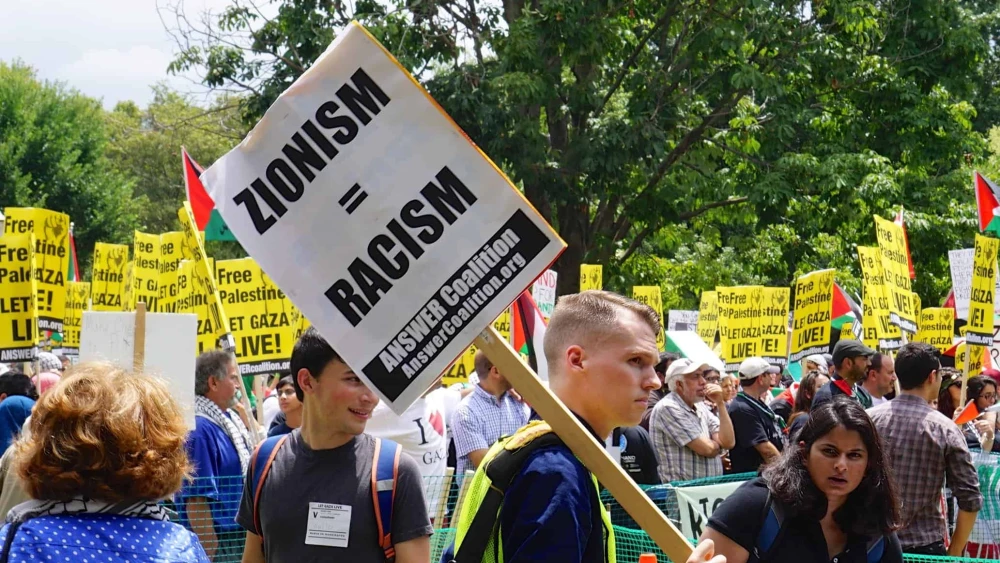
A anti-Israel demonstrator carries a poster declaring “Zionism is racism” at a protest in Washington, D.C., Aug. 2, 2014. Credit: Ted Eytan via Wikimedia Commons.

If Yuval Avraham and Rachel Szor imagine that a 25-minute standing ovation in Venice is a sign that the anti-Zionist cultural elites abroad have embraced them completely, they’re living in an alternate universe. Certainly after Oct. 7, 2023, when the murderers, rapists and kidnappers from Gaza didn’t bother to inquire about the political views of their victims before torturing and murdering them.

Like so many progressive Jews at home and in the Diaspora, the two Israeli screenwriters who won the Special Jury Prize at the 83rd Venice International Film Festival for “NAZA” fail to grasp a tragic irony: Those applauding them for their woke ideology and auto-antisemitism don’t consider them allies. Not deep down.

Yes, the audience applauding Avraham and Szor was mainly delighted that Israeli Jews were providing the most effective propaganda weapon against the Jewish state and its military.

The phenomenon isn’t new, not even where the deceitful duo is concerned. They are two of the four creators of “No Other Land,” the 2024 documentary about “settler violence” against Palestinians in Judea and Samaria that won the Oscar for Best Documentary Feature. Naturally. Demonizing Israeli settlers is almost a guaranteed ticket to success in the world of arts and entertainment.

But that’s nothing compared to the kind of accolades sure to be received when vilifying the Israel Defense Forces—particularly since the beginning of the current war, which has unleashed a wave of antisemitism not seen since the Holocaust. This includes blood libels about “genocide” and “starvation” supposedly perpetrated by Israeli soldiers against “innocent” Palestinians in Gaza.

Enter “NAZA.”

Though Avraham and Szor wrote the screenplay, the production is British. Therefore, the use of the Latin transliteration of a title derived from Hebrew initials that mean nothing in English was clearly intentional. After all, the concept has an exact translation: “collateral damage.” Yet that wasn’t what the movie was called.

The reason is that visually, “NAZA” looks like a mash-up of “NAZI” and “GAZA.”

Fair enough. Hamas terrorists aren’t merely sadists reminiscent of the Nazis; copies of Mein Kampf and photographs of Hitler were found by IDF soldiers in numerous homes throughout the Strip. Of course, facts of this sort don’t interest the producers and directors of “NAZA,” among them the British newspaper The Guardian.

The film draws on content published in that paper, as well as in outlets +972 Magazine and Local Call—all three firmly on the far left.

The plot of the drama-disguised-as-a-documentary is based on anonymous testimony from 24 soldiers in the elite Unit 8200, under the IDF Military Intelligence Directorate. These purported “insiders” were filmed on rooftops in Tel Aviv, with their faces and voices distorted to protect their identities.

How convenient for all the accusers involved: They can tell whatever stories they like without having to produce a shred of evidence for their false claims of the targeted mass killing of Palestinian civilians.

Government officials and the IDF responded with anger and outrage. Nearly the entire political spectrum condemned Avraham and Szor. The notable exceptions were the Arab parties and The Democrats, led by Yair Golan.

That’s hardly surprising. Golan, a retired major general who served as deputy IDF chief of staff, caused an uproar in May 2025 when he suggested that Israel was “killing babies in Gaza as a hobby.” He later claimed that he had meant to refer to the government, not the army, stating that the military “is in my home and in my heart.” But nobody believed him—neither his supporters nor his detractors.

Something similar can be said about the reaction to Avraham and Szor. The couple currently basking in the spotlight assumed—and still seem to believe—that loudly denouncing their homeland would earn them membership in the anti-Zionist family beyond the borders of the Jewish state. But some of the responses they received from Israel-haters demonstrate just how conditional that love is.

One post on X, for example, described the production as “more shooting and crying award fodder.”

Another, on Reddit, called the film “a big psyop,” going on to state, “I’m Palestinian. I think that the movie is a way to Israeli society to launder their image. Also having two Israelis believed after seeing so much doubt about Palestinian reporting leaves a very sour taste in my mouth.”

Freed hostage Liri Albag summed up the phenomenon perfectly on Instagram. Addressing Avraham, she said, “You know that even if you were only in the army for two weeks and got discharged because of your political views, if you’d fallen into Hamas captivity, to them you’d have been a soldier regardless? And they probably would have abused you for being a soldier.”

As we have learned from all the released hostages, even if he hadn’t served in the IDF, he would have been beaten and sexually tormented. Indeed, siding with the enemy has never protected Jews from the literal and figurative gas chambers.


Ruthie Blum, a former adviser at the office of Israeli Prime Minister Benjamin Netanyahu, is an award-winning columnist and a senior contributing editor at JNS. Co-host with Ambassador Mark Regev of the JNS-TV podcast “Israel Undiplomatic,” she writes on Israeli politics and U.S.-Israel relations. Originally from New York City, she moved to Israel in 1977. She is a regular guest on national and international media outlets, including Fox, Sky News, i24News, Scripps, ILTV, WION and Newsmax.


Zawartość publikowanych artykułów i materiałów nie reprezentuje poglądów ani opinii Reunion’68,
ani też webmastera Blogu Reunion’68, chyba ze jest to wyraźnie zaznaczone.
Twoje uwagi, linki, własne artykuły lub wiadomości prześlij na adres:
webmaster@reunion68.com

W Muzeum Auschwitz odbędzie się międzynarodowa konferencja poświęcona Romom


W Muzeum Auschwitz odbędzie się międzynarodowa konferencja poświęcona Romom

szf/ akar/


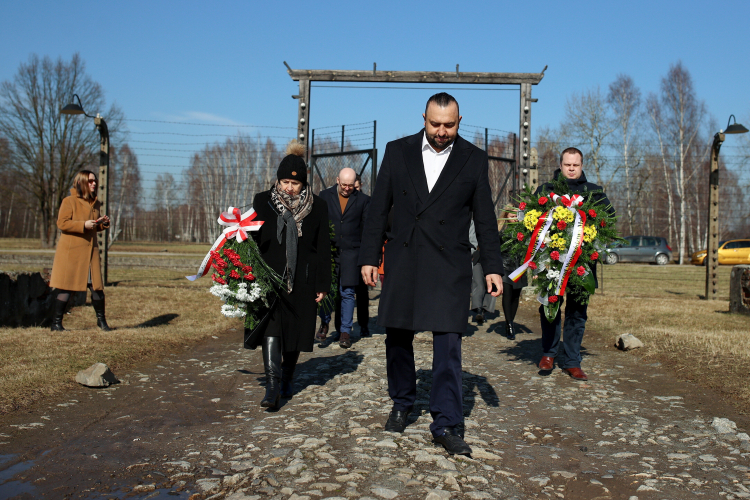
Brzezinka, 26.02.2026. Dyrektor Centrum Historii i Kultury Romów Władysław Kwiatkowski podczas uroczystości upamiętnienia 83. rocznicy pierwszej deportacji Romów do niemieckiego obozu Auschwitz. Fot. PAP/Jarek Praszkiewicz

Międzynarodowa konferencja „Romowie i Sinti – między pamięcią historyczną a współczesnością”, której organizatorami są m.in. polskie MSZ i Rada Europy, odbędzie się w listopadzie w Oświęcimiu – podali współorganizatorzy z Muzeum Auschwitz.

„Konferencja odbędzie się w Muzeum Auschwitz 24 i 25 listopada. Na zgłoszenia uczestnictwa czekamy do 27 września” – podało oświęcimskie muzeum.

Celem konferencji będzie refleksja nad pamięcią historyczną, w szczególności dotyczącą zagłady Romów i Sinti w czasie II wojny. „Spotkanie będzie także okazją do spojrzenia na to, jak pamięć kształtuje tożsamość i w jaki sposób wpływa na zbiorowy obraz przeszłości wśród mniejszości romskich w Europie. Będzie ono także platformą wymiany wiedzy i doświadczeń ekspertów zajmujących się między innymi przeciwdziałaniem uprzedzeniom i dyskryminacji mniejszości romskiej oraz edukacją na jej rzecz” – wskazało Muzeum Auschwitz.

W programie znajdują się wykłady o prześladowaniu Romów i Sinti w nazistowskich Niemczech, pamięci o zagładzie, a także o powojennej narracji dotyczącej tej tragedii. Zaplanowano kilka paneli dyskusyjnych, między innymi o obrazie zagłady Romów i Sinti w pamięci i kulturze, czy też, w jaki sposób doświadczenie zagłady wpływa na współczesną tożsamość zbiorową i indywidualną.

Uczestnicy spotkają się z autorami monografii „Romowie i Sinti w KL Auschwitz”. Warsztaty poświęcone będą temu, jak uczyć bez reprodukowania stereotypów.

Muzeum Auschwitz do udziału zaprasza osoby zainteresowane tematyką – zarówno edukatorów, muzealników i pracowników Miejsc Pamięci, jak i wszystkich, dla których ważna jest refleksja nad historią Romów i Sinti. Językami konferencji będą angielski oraz polski. Organizatorzy zapewniają tłumaczenie symultaniczne.

Osoby zainteresowane mogą do 27 września wypełnić formularz dostępny w internecie: https://docs.google.com/forms/d/e/1FAIpQLSfDwdSVs9aKfwLrPZUBmKbjvmgk1wPzYl1lHg-Xj2CpaUTlAA/viewform?usp=sharing&ouid=114572187839139461841. Udział w konferencji jest nieodpłatny. Liczba miejsc jest ograniczona, a o udziale decydowała będzie kolejność zgłoszeń. Informacja o rekrutacji zostanie ogłoszona do 2 października.

Organizatorami wydarzenia są: Międzynarodowe Centrum Edukacji o Auschwitz i Holokauście w Muzeum Auschwitz, Ministerstwo Spraw Zagranicznych, Rada Europy, a także Fundacja „W Stronę Dialogu” oraz Biuro Instytucji Demokratycznych i Praw Człowieka.

Do niemieckiego obozu Auschwitz pierwsi Romowie zostali przywiezieni w lipcu 1941 roku. W początkach 1943 roku w Auschwitz II-Birkenau został utworzony „obóz cygański”. Między 26 lutego tegoż roku a 21 lipca kolejnego do Zigeunerlager deportowano blisko 21 tys. osób. Został on zlikwidowany w nocy z 2 na 3 sierpnia 1944 roku. Ogółem w Auschwitz zginęło 21 tys. Romów. Pod względem liczby ofiar stanowią oni trzecią grupę – po Żydach i Polakach. W wyniku prześladowań i terroru w czasach istnienia III Rzeszy śmierć poniosła połowa populacji romskiej, zamieszkującej obszary okupowane przez Niemców. (PAP)


Zawartość publikowanych artykułów i materiałów nie reprezentuje poglądów ani opinii Reunion’68,
ani też webmastera Blogu Reunion’68, chyba ze jest to wyraźnie zaznaczone.
Twoje uwagi, linki, własne artykuły lub wiadomości prześlij na adres:
webmaster@reunion68.com