Archive | 2014/12/15

Turecka gościnność dla terroryzmu arabskiego

Turecka gościnność dla terroryzmu arabskiego

Burak Bekdil

Tłumaczenie: Małgorzata Koraszewska
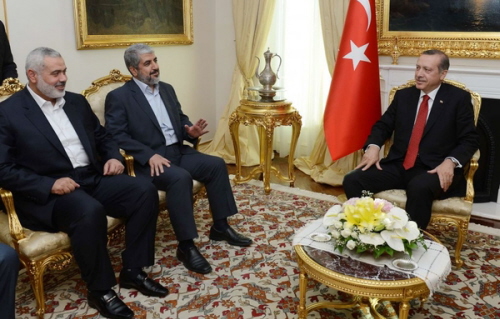

Prezydent turecki (wówczas premier) Recep Tayyip Erdogan, po prawej, spotyka się z przywódcami Hamasu, Chaledem Maszaalem (w środku) i Ismailem Haniją 18 czerwca 2013 r. w Ankarze w Turcji. (Zdjęcie: Biuro pracowe premiera Turcji)

Prezydent turecki (wówczas premier) Recep Tayyip Erdogan, po prawej, spotyka się z przywódcami Hamasu, Chaledem Maszaalem (w środku) i Ismailem Haniją 18 czerwca 2013 r. w Ankarze w Turcji. (Zdjęcie: Biuro pracowe premiera Turcji)

W 2004 r. obecny prezydent Turcji (ówczesny premier) Recep Tayyip Erdogan określił Izrael mianem „państwa terrorystycznego”. Dwa lata później gościł Chaleda Maszaala, przywódcę Hamasu. Nawiązując do doświadczenia Turcji z partiami islamistycznymi, włącznie z własną, Erdogan powiedział: “Wybór ludzi (przy urnach wyborczych) powinien być respektowany”. Erdogan, mówiąc o zwycięstwie wyborczym Hamasu w Gazie, najwyraźniej chciał legitymizować Hamas i terroryzm.

Świadomie jednak pominął znaczącą różnicę między Hamasem a tureckimi partiami islamistycznymi: Hamas jawnie propaguje przemoc, podczas gdy partie tureckie działają w ramach polityki demokratycznej.

Osiem lat po wizycie Maszaala w Turcji, Hamas koordynuje swoje działania z logistycznym wsparciem z centrum dowodzenia w Stambule – fakt, który wyraźnie irytuje nawet Autonomię Palestyńską [AP], „partnera w rządzie” na terytoriach palestyńskich.

Turcja udziela także gościny Salahowi al-Aruri, dowódcy Hamasu, którego AP oskarża o wiele zamachów na cele izraelskie.

Według mediów izraelskich, Szin Bet ma dowody, że śmiertelne zamachy na Izraelczyków były planowane w kwaterze głównej Hamasu w Stambule. Tureccy dyplomaci nieprzekonująco temu zaprzeczają. Według doniesień, Izrael zwrócił się do NATO i rządu amerykańskiego, by podjęli kroki przeciwko wspieraniu organizacji terrorystycznej przez Turcję.

Właśnie Aruri przyznał 20 sierpnia, kiedy przemawiał na Światowej Konferencji Mędrców Islamskich w Turcji, że Hamas zorganizował „heroiczną akcję przeprowadzoną przez Brygady al-Kassam [militarne skrzydło Hamasu], w której pojmano trzech osadników z Hebronu”. Trzej nastoletni chłopcy zostali porwani i zamordowani przez agentów Hamasu, które to wydarzenie rozpoczęło spiralę przemocy, a ta z kolei doprowadziła do 50-dniowej wojny w Gazie latem tego roku.

Większość obserwatorów zachodnich wyjaśnia na ogół aferę miłosną Erdogana z Hamasem realpolitik i pragmatyzmem – że Turcja stara się zdobyć regionalne znaczenie polityczne w narodach arabskich przez ustawienie się w roli potężnego obrońcy „sprawy palestyńskiej”. Autor niniejszego sądzi jednak, że za tą aferą miłosną jest także „historia indoktrynacji”.

Jednym z najbardziej wpływowych filozofów i pisarzy, który inspirował tureckich islamistów pod koniec lat 1960. i na początku 1970. był Nurettin Topcu (1909-1975). Jego dzieła miały olbrzymi wpływ na wyłaniającą się klasę dżihadystów tureckich, którzy zebrali się pod parasolem Tureckiego Narodowego Związku Studentów (MTTB, w tureckim akronimie). Teorie Topcu i innych myślicieli stanowiły podstawę tego, co później stało się znane jako “synteza turecko-islamska” czyli po prostu turecki islam polityczny. Według Topcu: „Islam jest duszą/sercem Turka i tureckością jego ciała”. Jednym z najbardziej entuzjastycznych członków MTTB był Erdogan.

W przemówieniu z 2010 r. Erdogan mówił o Topcu, wraz z kilkoma innymi pisarzami, jako o „wielkim myślicielu”. W tym samym roku, w innym przemówieniu, Erdogan powiedział, że Topcu był „zwierciadłem tego kraju”. Niedawno w wywiadzie Erdogan wyliczył 11 nazwisk „największych pisarzy w historii osmańskiej i tureckiej”. Jednym z nich był Topcu.

Dzisiaj ośrodek kulturalny i wiele szkół, także w Ankarze i w Stambule, dumnie nosi nazwisko tego filozofa. W tym roku wiceminister otworzył szkołę polityczną nazwaną imieniem Nurettina Topcu. W zeszłym tygodniu szychy rządowe i biurokraci zorganizowali dyskusję panelową pod tytułem “Mistrz Nurettin Topcu a nasza sprawa edukacyjna”.

Czytaj dalej tu: Turecka gościnność dla terroryzmu arabskiego


twoje uwagi, linki, wlasne artykuly, lub wiadomosci przeslij do: webmaster@reunion68.com



The forgotten Jews who fought the Nazis

The forgotten Jews who fought the Nazis

Itzchak Tessler


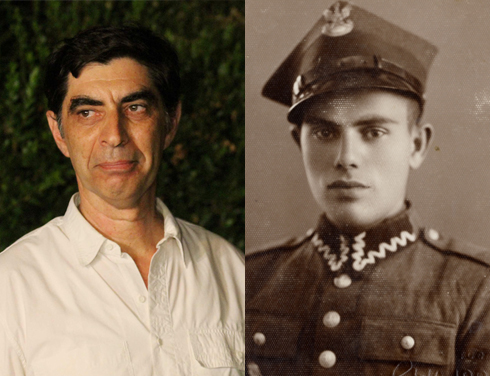
Dr. Simha Goldin and his father, a Polish soldier who was taken captive by the Soviet Army (Photos: Ido Erez, the Goldstein-Goren Diaspora Research Center at Tel Aviv University)

Dr. Simha Goldin and his father, a Polish soldier who was taken captive by the Soviet Army (Photos: Ido Erez, the Goldstein-Goren Diaspora Research Center at Tel Aviv University)

About 250,000 Jewish soldiers were killed while fighting for Allies’ armies, 36,000 received awards of excellence from US Army and 160,000 were awarded citations from Red Army. So how did 1.5 million Jews who fought in World War II sink into oblivion?

There is not a single student in the Israeli educational system who doesn’t learn about the Jewish Brigade and about Hannah Szenes and her friends. The bravery of the 5,000 Brigade soldiers should be praised and admired, but the truth is that it’s just a drop in the ocean of Jewish blood which was shed on the front, vis-à-vis the Nazis.

About a million and a half Jews fought as part of the Allies’ armies. They stood out both because their number was much higher than their relative percentage in the countries they came from, and because of the huge number of losses they suffered.

According to different estimates, about 250,000 Jews were killed while fighting for the Allies’ armies. In addition, a relatively high number of Jews received medals of honor.

Dr. Shimha Goldin, the son of a Polish soldier who was taken captive by the Soviet Army, and the father of Lieutenant Hadar Goldin who died as a hero in Operation Protective Edge, decided to initiate a conference which would give the Jewish fighters in World War II all the respect they deserve.

“My father was a Polish soldier who was captured by the Russian army during the war, and that’s what saved his life,” he says.

Read more: The forgotten Jews…


twoje uwagi, linki, wlasne artykuly, lub wiadomosci przeslij do: webmaster@reunion68.com


POLIN: A Light Unto the Nations

POLIN: A Light Unto the Nations

By David G. Roskies


Barbara Kirshenblatt-Gimblett

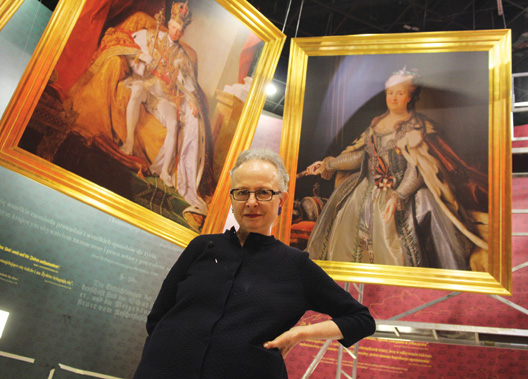
Barbara Kirshenblatt-Gimblett before portraits of foreign emperors who ruled Poland. (Courtesy of Arkadiusz Dybel.)

How is it that the largest public building to go up in Poland since that country regained its freedom, the first museum to tell the story of Poland from beginning to end, goes by the name of POLIN? Po lin, or “rest here,” is what the first Jews who arrived in the 10th century are said to have declared. The more official, descriptive name of the shiny new 16,000 square meter building is the Museum of the History of Polish Jews, whose official opening I attended in Warsaw, October 28–30.

The museum began as the brainchild of the director of the Association of the Jewish Historical Institute of Poland, Grażyna Pawlak, who was invited to attend the opening of the United States Holocaust Memorial Museum in 1993. What was needed now, she realized, was not another memorial museum in Poland; Poland itself was a Holocaust memorial. What Poland needed, rather, was a museum dedicated to Jewish life. What followed, over the next 21 years, under the adroit leadership of Jerzy Halbersztadt, was a public-private partnership that eventually included the Ministry of Culture and National Heritage, the city of Warsaw, private foundations, individual philanthropists, both Jewish and Christian, the Republic of Germany, and the Kingdom of Norway. A total of $54 million was raised for the construction of the building and another $43 million for the core exhibition, enormous sums anywhere and unprecedented in the new Poland.

The original designers of the museum had drawn up an “Outline of the Historical Program and Master Plan,” but the time for central planning and familiar stories, neatly broken down into historical periods and punctuated by ideological schisms, had long since passed. More pressing than any academic scruples about master narratives was the fact that such an approach couldn’t possibly succeed in speaking to the museum’s prospective visitors, who would include Poles from high-school age to senior citizens, Israelis and Jews from across the globe, casual foreign tourists, and pilgrimage groups to the death camps.

By the time Barbara Kirshenblatt-Gimblett was appointed to head the Academic Team of the Core Exhibition of the POLIN Museum in 2006, she had already redefined the way museums represented the Jewish past. Where once upon a time, pride of place was given to Torah scrolls and breastplates, spice boxes, Kiddush cups, candelabra, Torah pointers, and other sacred paraphernalia of the Jewish faith, Kirshenblatt-Gimblett curated an exhibition for The Jewish Museum of New York called “Fabric of Jewish Life” that focused exclusively on textiles, most of them produced by women. Where Roman Vishniac, on instructions from his employer, had once selected only those photos of Polish Jews that portrayed them as “persecuted, pious and poor” (as she once told a reporter for Ha’aretz), in Image Before My Eyes: A Photographic History of Jewish Life in Poland, 1864–1939, Kirshenblatt-Gimblett produced a counter-album with Lucjan Dobroszycki that stressed the diversity and urbanity of their subjects. And where once, at the New York World’s Fair in 1939, Jews created a Palestine Pavilion to stake a claim for national sovereignty and to generate foreign investment, now, in the 21st century, Kirshenblatt-Gimblett instructed her team to “think Expo” and create a multimedia narrative exhibition that would demonstrate the centrality of Jews to Polish history—to turn their dimly remembered story, she said, into something you can touch, hear, rub, erase, pull out, disassemble, walk through, climb up, get lost in, and, above all, experience from more than one perspective.

Read more: POLIN: A Light Unto the Nations


twoje uwagi, linki, wlasne artykuly, lub wiadomosci przeslij do: webmaster@reunion68.com