
Archive | September 2015

Why Israel fails to confront Lithuania over the Holocaust

Why Israel fails to confront Lithuania over the Holocaust

Efraim Zuroff


Lithuanian nationalists clubbing Jewish Lithuanians to death – Kovno, Lithuania June 27, 1941 ( Archive )
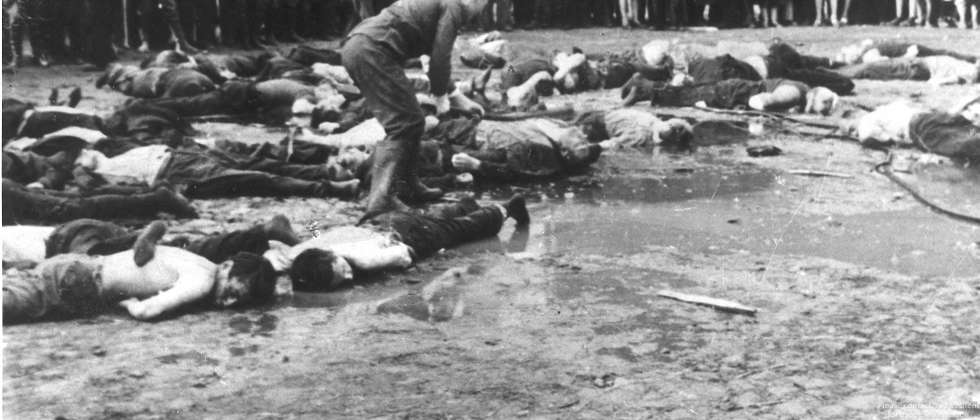
Lithuanian nationalists clubbing Jewish Lithuanians to death - Kovno, Lithuania June 27, 1941 ( Archive )

Last week Israelis who hail from Lithuania gathered at Yad Vashem to commemorate the annihilation of their communities during the Holocaust. This year, the event was marked by the participation of visiting Lithuanian Prime Minister Algirdas Butkevicius, who delivered the keynote address.

As a close follower of Lithuanian-Jewish relations for the past quarter of a century, I was curious how the Prime Minister would deal with pressing issues, such as the highly significant role played by Lithuanians in Holocaust crimes as well as contemporary anti-Semitism. I was also curious as to how our government might attempt to influence him on these questions. And while one might naturally assume that the practical issues would be the most urgent, in Lithuania’s case it is actually the historical questions which pose the thorniest problems and the greatest threat to Jewish interests in the long run.

Thus, the most important problem at the moment is the ongoing efforts of Lithuanian governments to minimize the role of Lithuanian Nazi collaborators in Shoa crimes, including the nearly total annihilation of Lithuanian Jewry (96.4%), the murder of tens of thousands of Jews in Belarus and of thousands of Jews deported to Lithuania. These are clearly reflected in the failure of every single government to punish a single hitherto unpunished Lithuanian war criminal, including any of the more than a dozen deported there from the United States. In addition, a list of 2,055 local perpetrators compiled by the government’s Center for Genocide and Resistance Research Center three years ago, which only names a small number of the criminals, has been suppressed, rather than being acted upon.

These efforts also include the promotion of the 2008 Prague Declaration, the manifesto of the “double genocide” theory which posits the canard of equivalency between Communist and Nazi crimes, and denies the Holocaust its justified status as a unique case of genocide. This false symmetry also emphasizes the role of Jewish Communists as a contra to the crimes committed by local Nazi collaborators, and has led to attempts to prosecute Jewish Soviet anti-Nazi partisans on trumped up charges of war crimes, and the glorification of anti-Communist fighters despite their participation in Shoa crimes. Even worse, the declaration calls for a joint memorial day for all the victims of totalitarian regimes, which if ever accepted, will no doubt replace International Holocaust Remembrance Day. The practical issues which should have been on the agenda are the plans to build a convention center on the grounds of an ancient Jewish cemetery in Vilna, and the refusal of the mayors of Vilna [Vilnius] and Kovno [Kaunas] to ban neo-Nazi marches held every Independence Day.

Yet despite the importance of these issues, the only “Jewish” subject discussed by Israeli officials with Prime Minister Butkevicius was the plan to build a convention center on the grounds of the original Vilna Jewish cemetery. In fact, according to a JTA interview with the Lithuanian leader, Prime Minister Benjamin Netanyahu gave his blessing to the construction project. Leaving aside the wisdom of this decision, the question is why Israel has consistently failed in recent years to adequately represent Jewish interests regarding Holocaust memory, the narrative of World War II, and anti-Semitism in dealings with the Baltic countries, and especially Lithuania, which undoubtedly has been the worst offender.

The answer apparently lies in one of the paradoxes of current Israeli relations with the post-Communist democracies of the European Union, which have been much more sympathetic to Israeli political positions on the Middle East than their Western European counterparts. Thus these countries were granted a green light to rewrite the history of the Shoa and World War II, and not pressured in regard to local anti-Semitism. Thus, Lithuanian PM Butkevicius can stand at Yad Vashem and proclaim that his duty is to ensure that the truth about the Holocaust will never be concealed; he can thus claim in an interview with the Jerusalem Post that “there is no equation between these two types of crimes”, and no Israeli minister or official will respond, despite the fact that Lithuania has done more than any other country to distort the history of the Shoa and the role of its nationals.

Israel obviously needs all the political support it can get, but the time has come for it to stop acting like a hopelessly weak country and start defending the Jewish interests it always claims to represent. At this point in time, Lithuania which is justifiably scared that it might well be the next Russian conquest, needs Israel far more than we need them, and there is nothing wrong with forcefully raising these issues, especially with our friends. Luckily, there will be another opportunity to do so during the upcoming visit of Lithuanian President Grybauskaite.


authorEfraim Zuroff
is the chief Nazi-hunter of the Simon Wiesenthal Center and director of its Israel Office. His most recent book is “Operation Last Chance; One Man’s Quest to Bring Nazi Criminals to Justice.” His website is: www.operationlastchance.org and he can be followed on Twitter @EZuroff


twoje uwagi, linki, wlasne artykuly, lub wiadomosci przeslij do: webmaster@reunion68.com



Shanghai opens park to honor its 20,000 Jewish Holocaust refugees

Shanghai opens park to honor its 20,000 Jewish Holocaust refugees

By Brian Schaefer


Memorial in Chinese city’s Qingpu district pays tribute to those who fled Nazi Germany and found safety in the Far East

Officials open the Jewish Memorial Park at the Fushouyuan cemetery in Shanghai, China, Sept. 6, 2015. (Courtesy of Dong Jun/ShanghaiDaily.com via JTA)


JTA — Beginning in 1938, as Jewish persecution by the Nazis went into high gear, approximately 20,000 Jewish refugees fled to Shanghai, one of the few safe havens in the world that did not require a visa. On Sunday, a Jewish Memorial Park was opened at the Fushouyuan cemetery in that city’s Qingpu district in their honor.

Israeli Consul-General Arnon Perlman, speaking at the dedication, said it is very important “to remember the friendship between China and Israel and between Shanghai and Israel.” On a patch of newly laid grass, a Star of David made of stone forms the centerpiece of the park and serves as the base of a sculpture of interlocking stones with another Star of David, and a menorah, at its center.

One of the stones pays tribute to Dr. Ho Feng-Shan, the Chinese consul general of Vienna during the war, who defied orders and issued over 3,000 visas to Austrian Jews to allow them to travel to China (while visas were not required to enter Shanghai, they were required to leave Austria).

The mostly German and Austrian Jews who came to Shanghai in the late ‘30s and early ‘40s joined another several thousand Jewish residents who had made the country their home in the previous 50 years, either as merchants or to escape Russian pogroms.

Life in Shanghai was marked by its own political tensions and hardships, but Chinese residents welcomed the Jewish refugees.

“If we were thirsty, [the Chinese] gave us water,” recalled Jerry Moses, who arrived in the city as a child with his family, one of the lucky few to escape Germany. “If we were hungry, they gave us rice cakes. As bad as we had it, they had it worse. And they felt bad for us.”


Refugees in Shanghai during World War II. (screen capture:YouTube/HongKongHeritage)


Following the Battle of Shanghai in 1937, the Japanese occupied the city. In 1941, under pressure from their German allies, they consolidated Jewish refugees into what became known as the Shanghai Ghetto in the Hongkou district.

Since the end of the World War II, and with the establishment of the People’s Republic of China in 1949, the Jewish population declined significantly as many relocated to North America, Israel and Australia

But there have been several recent efforts to bring awareness to the city’s Jewish history. In 2007, the Shanghai Jewish Refugees Museum opened on the site of the former Ohel Moshe Synagogue, which had recently been restored.

Earlier this year, the museum applied to have the neighborhood that housed Jewish refugees during the war designated as a UNESCO heritage site. And last month, the White Horse Cafe, which originally opened in 1939 and was a popular gathering spot for Jewish refugees, reopened across the street from the refugee museum and was designed using the cafe’s original blueprints.

Ron Klinger, the grandson of the cafe’s founder, who immigrated to Australia following the war, attended the opening. “My parents often told me that while in Shanghai, they never encountered any hostility, any anti-Semitism or any unfriendliness from the Chinese people,” he said.


twoje uwagi, linki, wlasne artykuly, lub wiadomosci przeslij do: webmaster@reunion68.com


Znaki zapytania Shlomo Sanda

Znaki zapytania Shlomo Sanda

Ula Rybicka


israel-shlomo-sand-dlaczego-przestalem-byc-zydem-spojrzenie-izraelczyka-ksiazka-dialog (2)

Zacznijmy od końca, czyli od oświadczenia Shlomo Sanda: „Ponieważ źle znoszę fakt, że prawo izraelskie narzuca mi przynależność do jakiejś fikcyjnej wspólnoty etnicznej, a jeszcze gorzej – konieczność prezentowania się reszcie świata jako członek klubu wybranych, przeto oświadczam, że chcę podać się do dymisji i przestać uważać siebie za Żyda”. Cytat ten pochodzi z książki zatytułowanej „Dlaczego przestałem być Żydem. Spojrzenie Izraelczyka”. Shlomo Sand jest profesorem historii na Uniwersytecie Tel Awiwu, a także autorem głośnych publikacji: „Kiedy i jak wynaleziono naród żydowski” oraz „Kiedy i jak wynaleziono Ziemię Izraela”. Jego rodzice byli polskimi Żydami, a cała rodzina przeniosła się do Jafy w 1948 roku.

Wielokropek

W swej najnowszej książce autor bada kontinuum osobowości żydowskiej z perspektywy dziejowej, by móc odszukać cechy łączące świeckich Żydów żyjących w diasporze. Wyraźnie jednak zastrzega: „Nie piszę dla antysemitów (…). Piszę dla tych wszystkich, którzy zadają sobie pytania o początki i metamorfozy żydowskiej tożsamości, o nowoczesne formy jej przejawiania się i o reperkusje polityczne wynikające z takiej bądź innej jej definicji”.

Podążając za logiką autora oraz przykładami znakomitych twórców z tegoż kręgu kulturowego, rzeczywiście mam problem ze znalezieniem wspólnych cech w dorobku – przykładowo – Stefana Zweiga, Allena Ginsberga i Serge’a Gainsbourga. Historyk pyta więc wprost: jaki sposób życia charakteryzuje Żydów świeckich? I czy w ogóle istnieje twórcza kultura żydowska? Tym samym nasuwają się pytania także o to, w jaki sposób niematerialna kultura przodków wpływa na nasze życie i twórczość, czy i jak nami kieruje lub co nam pozostawia w spadku. Esej także skłania do refleksji nad odwiecznie zawikłanymi relacjami jednostki z kulturą, kultury z tradycją i tradycji z przeszłością.

Czytając manifest Sanda, czujemy, jak bardzo autor nie chce być tym, kim go stworzono. Wykształcone dziecko postmodernizmu buntuje się przeciw zastanym wartościom i definicjom, chce sam tworzyć się według własnych reguł. Jednak pragnienia autora szybko rozbijają się o metaforyczną ścianę płaczu, ponieważ redefinicja oraz reinterpretacja żydowskości stoi w opozycji do tego, co w judaizmie jest filarem – niezmienności i tradycji.

Myślnik

W „Dlaczego przestałem być Żydem” podążamy tropem współczesnej myśli filozoficznej, którą autor bezpardonowo zderza z tradycją judaizmu. Kryzys tożsamości oraz procesy emancypacji i indywidualizacji stanowią punkt wyjścia wszystkich rozważań Sanda. To sztandarowe zagadnienia filozofii postmodernizmu, które w zestawieniu z oświeceniowymi ideałami równości, wolności i braterstwa wyglądają naprawdę rewolucyjnie, lecz już dziś nikogo nie szokują. Na kartach książki rozgrywa się zatem batalia, którą stacza ze sobą Żyd z Izraelczykiem, przeszłość z przyszłością, religia z laickością.

Sand umiejętnie zmienia kierunek rozważań dotyczących życia w Izraelu, przenosząc punkt ciężkości na wewnętrzne pęknięcia w strukturze kraju. W świetle powszechnej krytyki decyzji politycznych niepokojącym zjawiskiem dla jedności narodu okazuje się wewnętrzny bunt osób żądających rekonstrukcji społecznej. Jednocześnie trudno nie przyznać im racji, gdyż postulaty świeckości Izraela są w istocie uzasadnione dla obywateli demokratycznego państwa.

Niezgoda i niechęć do przestrzegania zasad wiary zmuszają autora do świeckiego życia, nie potrafi on jednak do końca odnaleźć się na tym terytorium. Sprzeciw zarówno wobec tradycji, jak i wobec współczesnej sytuacji Żydów skazuje go na banicję. Jak sam oświadcza, warunki społeczno-polityczne w Izraelu nie pozwalają mu na odnalezienie dla siebie miejsca. Mam wrażenie, że historyk bardzo chciałby narysować nową mapę oraz zdefiniować alternatywną przestrzeń życiową niewierzących Izraelczyków. Z jednej strony – to jego pragnienie: chęć, by nazwać nienazwane, jest nad wyraz utopijne, lecz z drugiej strony, kiedy czytam ten manifest, to przypomina mi się myśl Jerzego Szackiego, że utopia nie jest tym, co nie może istnieć; utopia jest po prostu tym, co jeszcze nie istnieje.

Wykrzyknik

Retorycznie doskonały esej, który z założenia miał być wywrotowy, okazuje się dość przewidywalny. Sięgając po książkę, zdajemy sobie sprawę z tego, do jakich konkluzji zaprowadzi nas autor. Jestem jednak zdania, że kluczowa dla tej lektury staje się wędrówka przez bezdroża, w której uczestniczymy wraz z pisarzem. Szeregi wątpliwości Sanda stają się na chwilę naszymi wątpliwościami i dzięki nim pojawia się refleksja, co tak naprawdę stanowi o tym, kim jesteśmy lub kim pragnęlibyśmy zostać.

Być może największą wartością eseju „Dlaczego przestałem być Żydem” jest właśnie uniwersalizm zagadnień podejmowanych przez historyka. Zwątpienie, poszukiwanie oraz kreacja tożsamości są bez wątpienia podstawowe we współczesnej myśli filozoficznej. Ta problematyka nie jest jednak nowa, gdyż pytania o to, skąd przybywamy, kim jesteśmy i dokąd zdążamy od wieków skutecznie spędzają sen z powiek.

Autor zamyka swe rozważania, przywołując słowa Teodora Herzla, jednego z twórców syjonizmu, co początkowo wydaje się dość prowokującym zabiegiem. Czytamy: „Jeżeli czegoś naprawdę chcesz, nie będzie to legendą”. Po niezliczonych znakach zapytania pisarz na końcu książki dobitnie stawia nie kropkę, lecz wykrzyknik. ∎

20 sierpnia 2015 – kultura / CHIDUSZ 17 – 04/2015


twoje uwagi, linki, wlasne artykuly, lub wiadomosci przeslij do: webmaster@reunion68.com


Iceland’s New Antisemitic Threshold – A Psychiatric Illness?

Iceland’s New Antisemitic Threshold – A Psychiatric Illness?

avatar Shimon Samuels


An image from Snorri Asmundsson’s YouTube clip played
to the background of ‘Hatikva.’ Photo: Screenshot

Iceland is more than its tourist posters of geysers, volcanoes, the singer Bjork and the Northern Lights. It has now stretched antisemitism to new outer limits, rendering it almost a psychiatric disorder.

An Icelandic “artist,” Snorri Asmundsson, has posted a YouTube clip to the background of Israel’s natural anthem, HaTikva (The Hope), featuring a woman in a burqa pulled out of the frame by a man wearing a star of David armband, transvestites lampooning Israel’s Eurovision contest singer, Dana International, and two Down’s Syndrome young men dressed as orthodox Jewish Hassidim.

Asmundsson, apparently challenges accusations that his clip is antisemitic, by weirdly arguing that such claims would be construed as collectively offending LBGT transsexuals and the handicapped.

When I was invited to address the dozen, mainly Lutheran, members of the Icelandic – Israel Friendship group in Reykjavik in 1986, there were very few Jews residing in Iceland. Today they number less than one hundred and several fear to be publicly identified.

Already, at that time, the group was concerned at the growing number of Arab students at the University developing into an anti-Israeli lobby.

They spoke of the 1934 establishment of the Iceland Nazi Party and the 1930’s deportation of Jewish fugitives from Nazi Germany. The high-point came after the Anglo-American occupation in 1941, aimed to block an Axis invasion that would have controlled the Atlantic sea-routes. 1941-1945 saw over 2,000 Jewish soldiers billeted in Iceland.

In 1998, the Wiesenthal Centre’s Efraim Zuroff forced public attention to Icelandic hospitality granted Estonian Nazi collaborator, Ewald Mixon, better known to Icelanders as Edward Hinriksson,a football goalee with two sons playing in the national team. His death and government procrastination relieved the authorities of bringing him to justice.

The 2003 marriage of Israeli-born, British diamond heiress Dorrit Moussaieff, to Iceland’s – no friend of Israel – President Olafur Ragnar Grimsson, was hoped to improve the relationship. The First Lady, however, stayed away from Jewish contacts and has now, reportedly, resumed her residency in London.

Following the 2008 bank crashes,perhaps in the context of seeking Arab financial relief, Moussouef was accused as being “part of a Jewish conspiracy”. Perhaps seeking Muslim bloc support for a non-permanent seat on the UN Security Council, the government became ever more anti-Israel An opinion poll marked 70 percent of the 320,000 Icelanders as pro-Palestinian and only 30 percent as pro-Israel.

The Gaza operations saw solidarity rallies, as elsewhere in Europe, brandishing antisemitic slogans and imagery. A bicycle-shop in Reykjavik posted a warning: “Jews Unwelcome.”

Now Iceland, so proud of its Althing, Europe’s first Parliament and its ostensible concern for the oppressed – is the first country to host a new and sickening threshold in antisemitism: the conflation of “Jew,” “Zionist,” “Trans-sexual” and “Down’s Syndrome” – thereby belittling the cause and the rights of each.

Is this new emanation a political stratagem or a mental illness? If the latter, there may still be hope for a psychiatric cure.


twoje uwagi, linki, wlasne artykuly, lub wiadomosci przeslij do: webmaster@reunion68.com



POLAND BEFORE AND AFTER WWII GDNASK WARSAW KRAKOW 1946 TRAVELOGUE 75734

POLAND BEFORE AND AFTER WWII GDNASK WARSAW KRAKOW 1946 TRAVELOGUE 75734

PeriscopeFilm PeriscopeFilm


Made in the immediate post-WWII era by famed filmmaker Julien Bryan, POLAND THE COUNTRY AND ITS PEOPLE shows the nation of Poland as it emerged from the war, with the nation digging itself out of the ruins of conflict and trying to re-establish itself. The film can in some ways be seen as an appeal to the American people and the West for assistance in assuring that the nation would be permitted to be free, after six long years of terrible struggle. Unfortunately the hopeful sentiments echoed in the narration would soon by crushed by the Communist party and Soviets.

The film is notable for showing many scenes of agriculture and commerce from before and after WWII, including shots of the Polish peasantry and their handicrafts, religious ceremonies, dancing, and more. Poland at this time was a life of many different cultures, including mountain people and groups with rich tradition, some of whom were eradicated during the German occupation. At the 8 minute mark, a group of Ukranians who lived in Poland — one of many minorities in the nation — are shown. The Jews, who were decimated by the persecutions of the German forces, are discussed at the 8:40 mark and following. As the narrator solemnly remarks at the 9:40 mark, few of the Jewish people seen in the film remained alive at the end of the war.

Gydnia, Gdansk, Warsaw, Krakow, Danzig and other cities are seen in the film.

Julien Hequembourg Bryan (1899-1974) was an American photographer, filmmaker, and documentarian. He is best known for documenting the daily life in Poland, Soviet Union, and Nazi Germany between 1935 and 1939. After fleeing Poland in 1939, he returned to Poland in 1946. As part of an official UNRRA delegation he revisited Gdańsk and Warsaw. His footage of recently destroyed Gdańsk, seen in this film, is probably the first post-war film shot in that city. Bryan was honored with „Zasłużony dla Kultury Polskiej” (“Merit for Polish culture”) during his last visit in Poland (1974) for showing the truth about the Invasion of Poland.


twoje uwagi, linki, wlasne artykuly, lub wiadomosci przeslij do: webmaster@reunion68.com