 Sowiecko-palestyńskie kłamstwo
Judith Bergman łumaczenie: Małgorzata Koraszewska
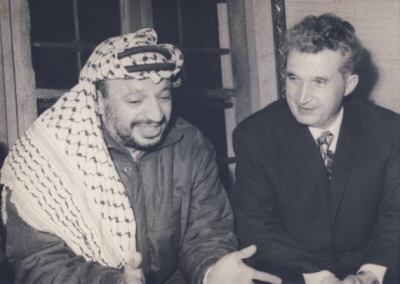
Jaser Arafat (po lewej) z przywódcą rumuńskim Nicolae Ceausescu
podczas wizyty w Bukareszcie w 1974 r. (Zdjęcie: Romanian National
History Museum)
Niedawne odkrycie, że Mahmoud Abbas, prezydent Autonomii Palestyńskiej (PA), był szpiegiem KGB w Damaszku w 1983 r., media głównego nurtu zbyły jako “ciekawostkę historyczną” – tyle tylko, że ta wiadomość przyszła w chwili, kiedy prezydent Władimir Putin próbował zorganizować nowe rozmowy między Abbasem a premierem Izraelskim Benjaminem Netanjahu. Jak można się było spodziewać, Autonomia Palestyńska natychmiast odrzuciła tę wiadomość. Funkcjonariusz Fatahu, Nabil Szaath zaprzeczył, by Abbas kiedykolwiek był agentem KGB i nazwał to twierdzenie “kampanią oszczerstw”.
Odkrycie to, jak najdalsze od „ciekawostki historycznej”, jest aspektem jednej z wielu części zagadki o pochodzeniu XX- i XXI- wiecznego terroryzmu islamskiego. To pochodzenie jest niemal zawsze zaciemniane i zamazywane w marnie skrywanych usiłowaniach przedstawienia pewnej narracji o przyczynach współczesnego terroryzmu, potępiając wszystkie sprzeczne z tą narracją dowody jako „teorie spiskowe”.
Nie ma nic spiskowego w tym najnowszym ujawnieniu. Pochodzi z dokumentu z archiwum Mitrochina w Churchill Archives Center w University of Cambridge w Wielkiej Brytanii.
Wasilij Mitrochin był wysokim funkcjonariuszem w Radzieckim Wywiadzie Zagranicznym, później zdegradowanym do roli archiwisty KGB. Podejmując niezmierne ryzyko, spędził 12 lat starannie kopiując dokumenty KGB, które inaczej nigdy nie byłyby dostępne (archiwum zagranicznego wywiadu KGB pozostaje zamknięte dla publiczności mimo upadku Związku Radzieckiego). Kiedy Mitrochin uciekł z Rosji w 1992 r., przywiózł ze sobą do Wielkiej Brytanii skopiowane dokumenty. Odtajnione części archiwum Mitrochina przedstawił publiczności profesor z Cambridge, Christopher Andrew, który razem z uciekinierem radzieckim napisał The Mitrokhin Archive (opublikowane w dwóch tomach). Archiwa Mitrochina doprowadziły, między innymi, do odkrycia wielu szpiegów KGB na Zachodzie i gdzie indziej.
Niestety, historia pełnego zakresu wpływów i operacji dezinformacyjnych KGB jest znana w znacznie mniejszym stopniu niż powinna, biorąc pod uwagę olbrzymi wpływ, jaki KGB miało na sprawy międzynarodowe. KGB prowadziło wrogie akcje przeciwko NATO jako całości, przeciwko dysydentom wewnątrz bloku radzieckiego i organizowało wywrotowe operacje w Ameryce Łacińskiej i na Bliskim Wschodzie, których efekty odczuwane są do dnia dzisiejszego.
Ponadto KGB było niezmiernie aktywnym graczem w tworzeniu tak zwanych ruchów wyzwolenia w Ameryce Łacińskiej i na Bliskim Wschodzie, ruchów, które następnie rozwinęły się w zabójczy terroryzm – jak udokumentowano w, między innymi, The Mitrokhin Archive, jak również w książkach i artykułach Iona Mihaia Pacepy, najwyższego rangą funkcjonariusza komunistycznego, który kiedykolwiek uciekł z bloku radzieckiego.
Pacepa był szefem wywiadu zagranicznego Rumunii i osobistym doradcą Nikolae Ceausescu, zanim w 1978 r. uciekł do Stanów Zjednoczonych. Pacepa współpracował z CIA, by obalić komunizm, przez ponad 10 lat. CIA określiła jego współpracę jako „ważny i unikatowy wkład dla Stanów Zjednoczonych”.
W wywiadzie z 2004 r. dla FrontPage Magazine, Pacepa powiedział:
KGB, które miało zamiłowanie do organizacji “wyzwolenia”, wymyśliło OWP. Była Narodowa Armia Wyzwolenia Boliwii, stworzona przez KGB w 1964 r. przy pomocy Ernesto “Che” Guevary … KGB stworzyło także Demokratyczny Front Wyzwolenia Palestyny, który przeprowadził wiele zamachów bombowych… W 1964 r. pierwsza Rada OWP, składająca się z 422 przedstawicieli palestyńskich wybranych przez KGB, zatwierdziła Palestyńską Kartę Narodową – dokument, który został napisany w Moskwie. Także Palestyńskie Przymierze Narodowe i Palestyńska Konstytucja narodziły się w Moskwie przy pomocy Ahmada Szukariego, agenta wpływu KGB, który został pierwszym przewodniczącym OWP…
W “Wall Street Journal” Pacepa wyjaśnił, jak KGB stworzyła postać Arafata – lub, jak powiedzielibyśmy to dzisiaj, jak skonstruowali dla niego narrację:
Był egipskim burżujem, którego KGB zamieniło w oddanego marksistę. KGB szkoliło go w szkole operacji specjalnych w Bałaszycha na wschód od Moskwy i w połowie lat 1960. postanowiono przygotować go na przyszłego przywódcę OWP. Najpierw KGB zniszczyło oficjalne dokumenty narodzin Arafata w Kairze i zastąpiło je fikcyjnymi dokumentami, stwierdzającymi, że urodził się w Jerozolimie, a więc był Palestyńczykiem.
Jak pisał historyk Robert S. Wistrich w A Lethal Obsession, wojna sześciodniowa rozpętała długą, intensywną kampanię Związku Radzieckiego delegitymizacji Izraela i ruchu samostanowienia żydowskiego, znanego jako syjonizm. Zrobiono to w celu naprawienia szkód wyrządzonych prestiżowi Związku Radzieckiego przez porażkę jego arabskich sojuszników zadaną przez Izrael:
Po 1967 r. ZSRR zaczął zalewać świat nieustanną falą propagandy antysyjonistycznej… Tylko nazistom w ciągu dwunastu lat u władzy udało się stworzyć taki trwały strumień sfabrykowanych oszczerstw jako instrumentu ich polityki krajowej i zagranicznej[1].
Do tego celu ZSRR użył wiele kluczowych pojęć z propagandy nazistowskiej, by opisać pokonanie agresji arabskiej przez Izrael, z których kilka lewica zachodnia używa nadal w odniesieniu do Izraela: „praktykujący ludobójstwo”, „obozy koncentracyjne” i „Herrenvolk”, oczywiście dorzucili do tego rasizm.
Ponadto w świecie arabskim ZSRR prowadził międzynarodową kampanię oszczerstw. W 1972 r. Związek Radziecki rozpoczął operację “SIG” (Sionistskije Gosudarstwa, czyli “Rządy syjonistyczne”) w celu przedstawienia Stanów Zjednoczonych jako “aroganckiego i wyniosłego lenna żydowskiego, finansowanego przez żydowskie pieniądze i kierowanego przez żydowskich polityków, którego celem jest podporządkowanie sobie całego świata islamskiego”. Blok radziecki wysłał do świata islamskiego około 4 tysiące agentów uzbrojonych w tysiące egzemplarzy starego, carskiego fałszerstwa, Protokołów mędrców Syjonu. Według szefa KGB, Jurija Andropowa w relacji Pacepy:
świat islamski był czekającą płytką Petriego, w której mogliśmy hodować zjadliwy szczep nienawiści do Ameryki, który wyrósł z bakterii myśli marksistowsko-leninowskiej. Antysemityzm islamski jest głęboki… Musieliśmy tylko powtarzać nasze tematy – że Stany Zjednoczone i Izrael są “faszystowskimi, imperialno-syjonistycznymi krajami” finansowanymi przez bogatych Żydów. Islam miał obsesję na punkcie okupacji jego terytoriów przez niewiernych i był niezmiernie podatny na nasz opis Kongresu USA jako pazernego organu syjonistycznego, chcącego zamienić świat w lenno żydowskie.
Już w 1965 r. ZSRR formalnie zaproponował w ONZ rezolucję, która potępiłaby syjonizm jako kolonializm i rasizm. Chociaż Sowietom nie udało się to przy pierwszej próbie, okazało się, że ONZ jest niesłychanie wdzięcznym odbiorcą sowieckiej bigoterii i propagandy; w listopadzie 1975 r. wreszcie uchwalono Rezolucję 3379 potępiającą syjonizm jako „formę rasizmu i dyskryminacji rasowej”. Po tym nastąpiło niemal dziesięciolecie usilnej propagandy sowieckiej, skierowanej do Trzeciego Świata, w której Izrael przedstawiano jako konia trojańskiego zachodniego imperializmu i rasizmu. Ta kampania była zaprojektowana tak, by zbudować poparcie sowieckiej polityki zagranicznej w Afryce i na Bliskim Wschodzie[2]. Inną taktyką było nieustanne porównywanie w mediach radzieckich Izraela z Republiką Południowej Afryki (i to jest pochodzenie fałszywego oskarżenia o „apartheid”).
Nie tylko Trzeci Świat połykał całą tę sowiecką propagandę na surowo. Robiła to także zachodnia lewica i kontynuuje propagowanie jej po dziś dzień. Właściwie, szkalowanie kogoś, kimkolwiek jest, jako rasisty, stało się główną bronią lewicy wobec tych, z którymi się nie zgadza.
Częścią taktyki sowieckiej w izolowaniu Izraela było uczynienie OWP „szacowną” organizacją. Według Pacepy to zadanie przypadło rumuńskiemu przywódcy, Nicolae Ceausescu, który osiągnął niesłychany sukces propagandowy, przedstawiając Zachodowi brutalne rumuńskie państwo policyjne jako „umiarkowany” kraj komunistyczny. Nic nie mogło być dalsze od prawdy, jak to ostatecznie ujawnił w 1989 r. proces przeciwko Nicolae Ceausescu i jego żonie, Elenie, który zakończył się ich egzekucją.
Pacepa napisał w “Wall Street Journal”:
W marcu 1978 r. po cichu sprowadziłem Arafata do Bukaresztu, by przekazać mu końcowe instrukcje, jak ma zachowywać się w Waszyngtonie. „Po prostu musisz udawać, że zerwiesz z terroryzmem i że uznasz Izrael – raz za razem, raz za razem” – powiedział mu Ceausescu… Ceausescu był w euforii wobec perspektywy, że zarówno Arafat, jak i on sam mogą zgarnąć Pokojową Nagrodę Nobla za ich fałszywe pokazywanie gałązki oliwnej.
… Ceausescu nie dostał Pokojowej Nagrody Nobla. Ale w 1994 roku Arafat dostał ją – wszystko dlatego, że doskonale odgrywał rolę, jaką mu daliśmy. Przekształcił swoją terrorystyczną OWP w rząd na wygnaniu (Autonomię Palestyńską), zawsze udając, że wzywa do zatrzymania terroryzmu palestyńskiego, podczas gdy pozwalał mu na niepohamowane działanie. Dwa lata po podpisaniu Porozumień z Oslo, liczba Izraelczyków zabitych przez palestyńskich terrorystów wzrosła o 73 %.
W książce Czerwone horyzonty Pacepa relacjonuje, co Arafat powiedział podczas spotkania z nim w kwaterze głównej OWP w Bejrucie, w czasie, kiedy Ceausescu starał się uczynić go „szacownym” bojownikiem:
Jestem rewolucjonistą. Poświęciłem całe życie sprawie palestyńskiej i zniszczeniu Izraela. Nie zmienię się i nie pójdę na kompromis. Nie zgodzę się na nic, co uznaje Izrael jako państwo. Nigdy… Ale zawsze jestem gotowy spowodować, że Zachód pomyśli, że chcę tego, co Brat Ceausescu chce, bym zrobił[3].
Propaganda znakomicie utorowała drogę terroryzmowi, wyjaśnił Pacepa w „National Review”.
Generał Aleksander Sacharowski, który stworzył strukturę wywiadu komunistycznej Rumunii, a potem awansował na szefa całego wywiadu zagranicznego ZSRR, często pouczał mnie: “W dzisiejszym świecie, kiedy broń jądrowa uczyniła, że siła militarna jest przestarzała, terroryzm powinien stać się naszą główną bronią”.
Radziecki generał nie żartował. Tylko w 1969 r. było 82 porwań samolotów na świecie. Według Pacepy większości tych porwań dokonała OWP lub związane z nią grupy, wszystkie wspierane przez KGB. W 1971 r., kiedy Pacepa odwiedził Sacharowskiego w jego gabinecie na Łubiance (kwaterze głównej KGB), generał przechwalał się: „Porywanie samolotów to mój wynalazek”. Al-Kaida porwała samoloty 11 września 2001 r., kiedy użyli samolotów do rozwalenia budynków.
Gdzie więc w tym wszystkim pasuje Mahmoud Abbas? W 1982 r. Mahmoud Abbas studiował w Moskwie w Instytucie Badań Wschodnich Akademii Nauk ZSRR. (W 1983 r. został szpiegiem KGB.) Tam napisał pracę doktorską, opublikowaną po arabsku jako Druga strona: tajne związki między nazizmem a kierownictwem ruchu syjonistycznego. Zaprzeczał w niej istnieniu komór gazowych w obozach koncentracyjnych i kwestionował liczbę ofiar Holocaustu przez nazwanie liczby sześciu milionów zabitych Żydów „fantastycznym kłamstwem”, a równocześnie obwiniał samych Żydów o Holocaust. Promotorem jego pracy doktorskiej był Jewgienij Primakow, który później został ministrem spraw zagranicznych Rosji. Także po uzyskaniu doktoratu Abbas zachowywał ścisłe związki z kierownictwem sowieckim, armią i członkami sił bezpieczeństwa. W styczniu 1989 r. został mianowany współprzewodniczącym Palestyńsko-Radzieckiego (a potem Rosyjsko-Palestyńskiego) Komitetu Roboczego dla Bliskiego Wschodu.
Kiedy obecny przywódca Arabów palestyńskich był akolitą KGB – którego machinacje kosztowały życie tysięcy ludzi na samym tylko Bliskim Wschodzie – nie można zbywać tego jako zaledwie „ciekawostkę historyczną”, nawet jeśli dzisiejsi opiniotwórcy woleliby sprawę zignorować przez takie potraktowanie.
Chociaż Pacepa i Mitrochin wygłosili ostrzeżenia wiele lat temu, niewielu ludzi chciało ich wysłuchać. A powinni.
[1] Robert S. Wistrich, ‘A Lethal Obsession’ (2010) p 139.
[2] Robert S. Wistrich, ‘A Lethal Obsession’ (2010), p 148.
[3] Ion Mihai Pacepa, ‘Red Horizons’ (1990) p 92-93.
 Judith Bergman
Izraelska autorka, publicystka i badaczka. Studiowała nauki polityczne oraz prawo na The London School of Economics.
twoje uwagi, linki, wlasne artykuly, lub wiadomosci przeslij do: webmaster@reunion68.com


 Telewizja Ponidzie