Archive | 2025/08/23

Tak, antysyjonizm to antysemityzm

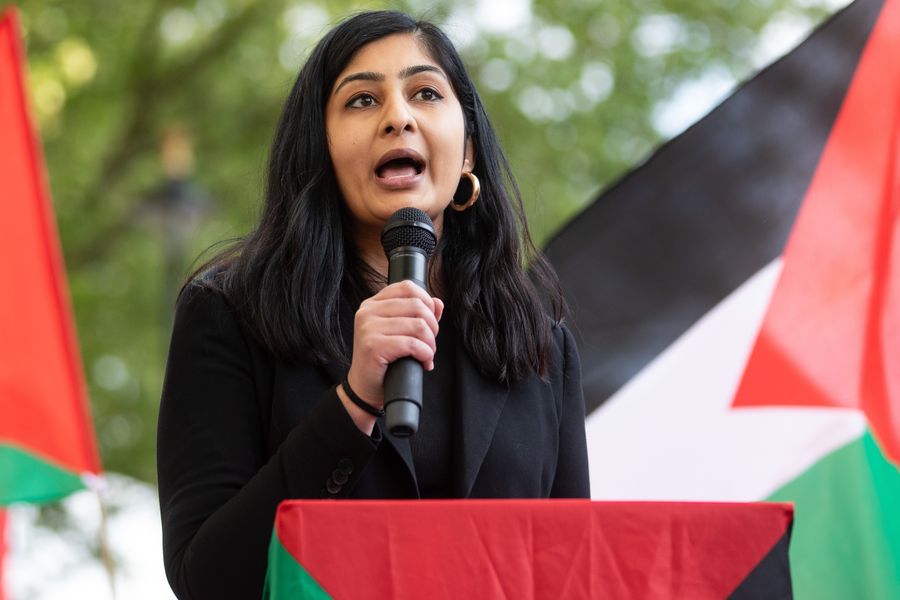
Zarah Sultana, była posłanka brytyjskiej Partii Pracy. (Zrzut z ekranu)


.

Tak, antysyjonizm to antysemityzm

Brendan O’Neill


Czy krytykowanie Izraela jest antysemickie? Oczywiście, że nie. Żadne państwo na świecie nie powinno być chronione przed krytyką czy wręcz szyderstwami ze strony obywateli świata.

Ale czy jest antysemityzmem wściekać się na Izrael dzień w dzień? Myśleć wyłącznie o nim? Pozwolić, by to małe państwo zajmowało każdą twoją myśl? Nazywać je wyjątkowo barbarzyńskim, wręcz demonicznym, państwem pałającym krwiożerczą żądzą jak żadne inne? Marzyć o jego zniszczeniu? Tydzień w tydzień maszerować po ulicach, krzycząc o jego unicestwieniu? Nazywać jego obywateli ludobójczymi potworami i szaleńcami? Drwić z nich, odwołując się do eksterminacji ich przodków, nazywając ich „nazistami”? Tak skupić się na wymazaniu tego jednego państwa, że całe twoje polityczne „ja” zostaje zredukowane do tego chorego celu, i z dumą określasz siebie mianem „antysyjonisty”?

Tak. Tak, to jest antysemityzm. Jeśli obsesyjnie skupiasz się na żydowskiej ojczyźnie, jeślinie nawidzisz żydowskiego patriotyzmu bardziej niż jakiegokolwiek innego, jeśli z radością skandujesz o śmierci żołnierzy żydowskiego państwa i fantazjujesz o jego brutalnym wymazaniu „od rzeki do morza” – to masz problem z Żydami. I musimy powiedzieć to głośno.

Debata o antysyjonizmie i antysemityzmie to jedna z najbardziej irytujących dyskusji naszych czasów. Znów się zaogniła w tym tygodniu po wywiadzie, jakiego Zarah Sultana udzieliła New Left Review. To była posłanka Partii Pracy, obecnie niezależna, która tworzy nową partię polityczną razem z Magicznym Dziadkiem z brytyjskiej, wyczerpanej lewicy, Jeremym Corbynem. Pochwaliła jego przywództwo w latach 2015–2020, ale wbiła też kilka szpilek. Powiedziała, że zbyt łatwo „uległ” definicji antysemityzmu przedstawionej przez Międzynarodowy Sojusz na rzecz Pamięci o Holokauście (IHRA). A to było złe, bo IHRA „utożsamia [antysemityzm] z antysyjonizmem”.

Najpewniej chodzi jej o stanowisko IHRA, że niektóre formy atakowania Izraela przekraczają granicę między polityczną krytyką a czymś mroczniejszym i bardziej podejrzanym. Na przykład używanie „symboli i obrazów związanych z klasycznym antysemityzmem”, takich jak „oskarżenia Żydów o zabicie Jezusa”, do „charakteryzowania Izraela lub Izraelczyków”. Dla mnie to brzmi rozsądnie. Sam widziałem transparent na jednej z demonstracji „pro-palestyńskich” z napisem: „Zabili Jezusa, teraz zabijają Palestyńczyków” – każdy, kto zaprzecza, że to brutalny przykład nienawiści wobec Żydów, jest albo głupcem, albo kłamcą.

IHRA wskazuje też, że podejrzane jest porównywanie „współczesnej polityki Izraela” do polityki nazistów. I znowu – to brzmi rozsądnie. Nie chcę, żeby kogokolwiek za to cenzurowano czy anulowano, ale nie zmienia to faktu, że takie porównania są ewidentnie oparte na uprzedzeniach. Modna dziś praktyka nazywania Gazy nowym warszawskim gettem, wojny z Hamasem – nowym holokaustem, a Netanjahu – nowym Hitlerem, ma jeden, jedyny cel: ranić Żydów, odwołując się do wspomnień niemal całkowitej zagłady ich narodu; zawstydzać ich poprzez zestawienia z potworami, przez które kiedyś sami byli zagazowani.


Sultana oberwała trochę na X. Niektórzy nazwali ją antysemitką. Odpowiedziała ostro: „Wasze oszczerstwa tym razem nie zadziałają” – napisała. I dodała stanowczo: „Antysyjonizm to nie antysemityzm.” Ostrzegła swoich oskarżycieli, żeby „załatwili sobie prawników”. Chętnie przyjmuję, że Sultana nie jest antysemitką. Mam nadzieję, że ona i jej nowa partia okażą innym podobną uprzejmość i powstrzymają się od oskarżeń o „islamofobię”. W przeciwnym razie – kto wie – może sami będą musieli „załatwić sobie prawników”. Ale jeśli chodzi o antysyjonizm, to po prostu się myli. Dla niektórych z nas jest całkowicie jasne, że ta dziwaczna, gorączkowa ideologia, która trzyma w żelaznym uścisku umysły młodych i intelektualistów, to w wielu przypadkach po prostu antysemityzm w woke’owej masce.

Zostawmy Sultanę i przyjrzyjmy się szerszej izraelofobicznej nienawiści, która od pogromu Hamasu z 7 października 2023 r. wybuchła na Zachodzie niczym gorączka. Nic nie jest bardziej obłudne niż lewicowi radykałowie i liberalni publicyści mówiący: „Krytykowanie Izraela to nie antysemityzm”, bo przecież nie o krytykę tu chodzi. Mówimy o ślepej nienawiści do Izraela. O histerii. O fantazjowaniu o jego unicestwieniu. O dzikim, obłąkanym przekonaniu, że Izrael to najbardziej mordercze państwo na świecie – a może i w historii – i że sprawuje ogromną władzę nad służalczymi państwami Zachodu. To nie jest krytyka – to rodzaj szaleństwa, opartego na ohydnym przekonaniu, że żydowskie państwo to najbardziej nikczemne, najbardziej krwawe i najbardziej podstępnie wpływowe państwo na Ziemi.


Pokażcie mi inny ruch „antywojenny”, który nie tylko domaga się zakończenia wojny, ale również końca istnienia całego państwa. „Nie chcemy dwóch państw / Chcemy ’48!” – krzyczą owinięci w kefije fanatycy z amerykańskich elitarnych uczelni, sygnalizując, że chcą powrotu do 1948 roku – czyli czasów sprzed powstania współczesnego Izraela. W skrócie: zniszczyć to parszywe państwo. Które inne państwo określa się mianem „świń Ziemi”, „wyjątkowo morderczego”, „państwa-szlamu”, „nowych nazistów”? Wobec którego innego państwa roztacza się wizje całkowitej zagłady przez tę nieświętą koalicję radykalnych islamistów, wzywających do powrotu armii Mahometa, by zabiła ostatniego Żyda, i lewicowych aktywistów, wrzeszczących „Od rzeki do morza”?

I wskażcie choć jedno państwo – tylko jedno – którego nie tylko działania są krytykowane, ale którego samo prawo do istnienia jako państwo jest nieustannie kwestionowane. „Jebać syjonizm”, krzyczą demonstranci. Syjonizm to „rak tej planety”, mówią. Zniszczyć „syjonistyczny twór”, wyją tłumy – jakby to było coś normalnego; jakby to było normalne, by publicznie wzdychać do wymazania państwa zamieszkanego przez dziewięć milionów ludzi. Dopóki nie zobaczę setek tysięcy rozwścieczonych ludzi na ulicach Zachodu, skandujących „Jebać turecką państwowość” albo „Zniszczyć pakistański twór”, nie przyjmę żadnych tłumaczeń, że antysyjonizm to „po prostu krytyka Izraela”. Nie – jeśli twoim jedynym celem jest obalenie i wymazanie projektu żydowskiej państwowości, nie dziw się, że ktoś nazwie cię antysemitą.


Krytyka? Proszę was. Doszliśmy już do takiego punktu, że trudno mi nawet wyobrazić sobie, jak wyglądałaby „krytyka Izraela”. Bo jej nie widać. Widać tylko dziką, podszytą przemocą nienawiść do Izraela, która dawno opuściła sferę geopolitycznej analizy i całkowicie przeniosła się w przestrzeń uprzedzeń. Wszystko, co kiedyś mówiono o Żydach – że kochają przelewać krew, że zabijają dzieci, że mają nieograniczoną władzę, że są rakiem ludzkości – dziś mówi się o żydowskim państwie. Niektórzy mogą uznać, że to czysty przypadek – ja do nich nie należę.


Zawartość publikowanych artykułów i materiałów nie reprezentuje poglądów ani opinii Reunion’68,
ani też webmastera Blogu Reunion’68, chyba ze jest to wyraźnie zaznaczone.
Twoje uwagi, linki, własne artykuły lub wiadomości prześlij na adres:
webmaster@reunion68.com

UN-Backed Famine Watchdog Quietly Changed Standards, Easing Way To Declare Famine in Gaza


.

UN-Backed Famine Watchdog Quietly Changed Standards, Easing Way To Declare Famine in Gaza

Adam Kredo


The Integrated Food Security Phase Classification used a different metric for Gaza than it has used for other conflict zones, changing its rules to make it possible to declare a famine in the Strip

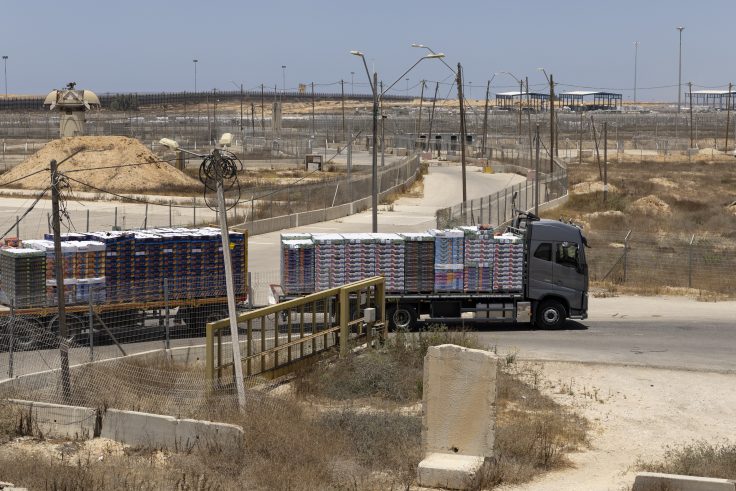
A truck loaded with humanitarian aid moves into the Gaza Strip (Amir Levy/Getty Images)

The U.N.-affiliated watchdog group that recently declared a “worst-case scenario of famine” in Gaza quietly changed one of its key reporting metrics while doing so, making it easier to formally declare that there is a famine in the Hamas-controlled territory.

The Integrated Food Security Phase Classification (IPC)—a network of Western governments, the United Nations, and nonprofit groups—determined in a July 29 report “the worst-case scenario of famine is currently playing out in the Gaza Strip,” claiming that “mounting evidence shows that widespread starvation, malnutrition, and disease are driving a rise in hunger-related deaths.” Media outlets like the New York TimesNPRCNN, and ABC News relied on the IPC report to claim that Israeli policies have led to mass starvation, with the Times stating that “months of severe aid restrictions imposed by Israel on the territory” have caused a famine “across most of Gaza.”

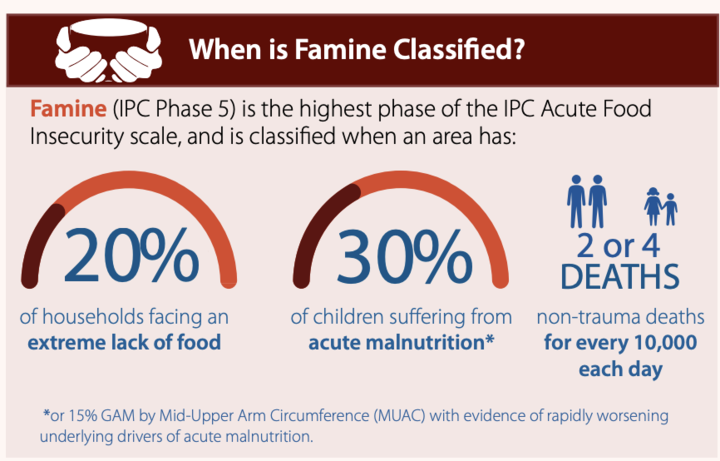
Unlike previous IPC reports on the humanitarian situation in Gaza, the July report includes a metric—known as mid-upper arm circumference (MUAC)—the agency has not historically used when issuing a “famine classification,” its most dire determination. The report also includes a lowered threshold for the proportion of children who must be considered malnourished for the IPC to declare a famine, down to 15 percent from 30 percent. The 15 percent threshold had previously been used to indicate a famine was likely.

Aid workers traditionally conduct detailed weight and height measurements to determine whether a child is suffering from acute malnutrition. MUAC, by contrast, consists only of a child’s arm circumference, a measurement that can be done more quickly and is considered less precise. In its past Gaza reports, the IPC has said it would declare famine after finding that 30 percent of children in an area are suffering from acute malnutrition using their weight and height measurements. In the recent Gaza report, the IPC said it would declare famine if it found that 15 percent of children were suffering from acute malnutrition using their arm circumference measurement and if the agency found unspecified “evidence of rapidly worsening underlying drivers.”

The “pretty big shift” in standards, one veteran aid industry insider told the Washington Free Beacon, suggests the IPC is “lowering the bar, or trying to make it easier for the famine determination to be made.”

The IPC report revealed that shift through a small statement attached to an asterisk under a graphic titled, “When is Famine Classified?” It cited the MUAC metric, which is commonly collected in conflict settings but not meant to replace the more detailed measurements when determining famine.

Indeed, the IPC itself considers weight and height measurements as its primary indicator of malnutrition, according to a source familiar with the organization’s methodology. Its July report directs readers who want “further information on how the IPC classifies Famine” to a “Famine Fact Sheet” that makes no mention of MUAC. And its technical manual makes clear the organization can only issue an official “famine classification” once it establishes “reliable data” on acute malnutrition using weight and height measurements or one other metric that is not MUAC.

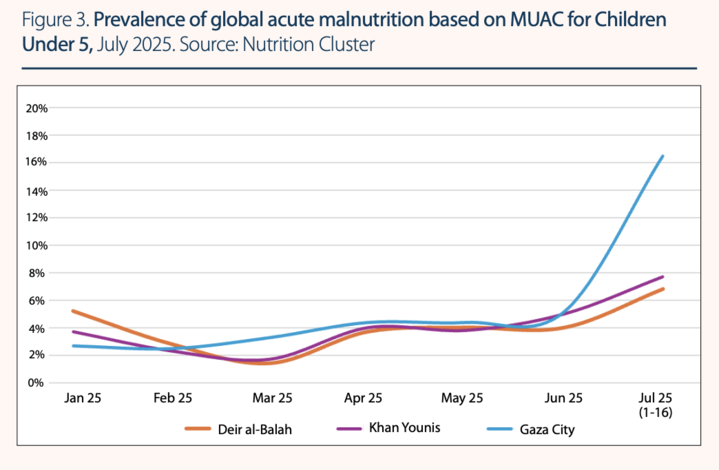
That did not stop the organization from using the metric to determine acute malnutrition levels in the Gazan cities of Deir al-Balah, Khan Younis, and Gaza City. A chart included in the notice shows less than 8 percent of children in Deir al-Balah and Khan Younis suffer from acute malnutrition “based on MUAC.” That figure is 16.5 percent in Gaza City, just above the new 15-percent threshold but well below the 30-percent level the IPC traditionally uses.

The organization’s decision to change its practices and rely on a 15-percent MUAC metric for its most recent Gaza report caught some veteran aid workers by surprise.

“If this is what you are considering, it is an issue,” one veteran aid practitioner told the Free Beacon. “If you’re planning to make a famine declaration based off the 15-percent MUAC, we as practitioners would say that’s an issue.”

The aid worker pointed to previous “famine classifications” the IPC issued in Sudan and Somalia in 2024 and 2011, respectively. In Somalia and certain regions of Sudan, IPC used the 30-percent malnourishment threshold as shown through weight-and-height measurements to declare famine. It used arm circumference measurements to establish malnutrition in other parts of Sudan, but those measurements exceeded the 30-percent threshold, not the 15-percent one cited in the most recent Gaza report.

“In all of the famines that have been declared, they’ve been using the 30-percent global malnutrition measurement, most of which have been based on the weight-for-height metric—which, again, is much harder to collect, much more burdensome, and it’s 30 percent,” the source said. “So, this asterisk that’s been added for Gaza essentially says that they’re going to allow a 15-percent global malnutrition rate measured by MUAC.”

“I think many people would say it’s like lowering the bar or making it more possible, essentially, to declare whatever it is that they’re going to declare.”

In addition to the amended standards, the IPC’s July report states that “over 20,000 children have been admitted for treatment for acute malnutrition between April and mid-July, with more than 3,000 severely malnourished.” It also says Gazan hospitals “have reported a rapid increase in hunger-related deaths of children under five years of age, with at least 16 reported deaths since 17 July.”

Those statements, the report’s “references” section shows, are based on “internal documents” from sources that are “not publicly available,” making it impossible for outsiders to vet their credibility. Raw data the IPC assesses often comes from the Hamas-controlled Gaza Health Ministry (GHM) and other terror-linked aid organizations. One of the primary humanitarian aid groups feeding data to the IPC, for example, is Ard el Insan, which works closely with the GHM and has faced allegations that it serves as a front for the terror group.

The IPC did not respond to a request for comment on its methodology and changes noted in the July Gaza alert.

Richard Goldberg, a former White House and National Security Council staffer in both Trump administrations who spent a decade performing humanitarian aid oversight on Capitol Hill, told the Free Beacon the IPC standards are another example of U.N. malfeasance.

“If you keep pulling the thread here, you start to understand this is one of the greatest frauds ever perpetrated on the world,” said Goldberg, who now serves as a senior adviser at the Foundation for Defense of Democracies think tank. “There is no famine in Gaza—the data thresholds don’t support that claim—and yet we have the United Nations changing the rules to fit the desired political outcome.”


This piece has been updated to include additional and clarifying information on the IPC’s famine classification process.


Zawartość publikowanych artykułów i materiałów nie reprezentuje poglądów ani opinii Reunion’68,
ani też webmastera Blogu Reunion’68, chyba ze jest to wyraźnie zaznaczone.
Twoje uwagi, linki, własne artykuły lub wiadomości prześlij na adres:
webmaster@reunion68.com

IDF OKs war’s next stage, Gaza City in sights


.

IDF OKs war’s next stage, Gaza City in sights

JNS Staff


Hundreds of thousands of residents to be evacuated from the city.

IDF Chief of Staff, Lt. Gen. Eyal Zamir in the Gaza Strip, Aug. 17, 2025. Credit: IDF.

The military has approved plans for the next stage of the war in Gaza, and “will continue striking until Hamas is defeated, with the hostages constantly in our sight,” Israel Defense Forces Chief of Staff Lt. Gen. Eyal Zamir said on Sunday.

During a visit to IDF Southern Command headquarters in Beersheva, Zamir said that the military would “soon” move to the next stage of “Operation Gideon’s Chariots, “during which we will continue to deepen the damage against Hamas in Gaza City until its defeat.

“Gideon’s Chariots,” he continued, has achieved its goals: “Hamas no longer possesses the capabilities it held before the operation—we have struck it hard.”

Zamir, who was accompanied on his visit by senior officers, said “the current campaign was “another layer in a long-term, planned strategy with a multi-arena perspective aiming to strike all elements of the axis, first and foremost Iran.”

According to Israel’s Army Radio on Sunday morning, the plan is to besiege Gaza City, with the aim of gaining control of it by Oct. 7, two years to the day from the devastating Hamas attack that sparked the war.

The operation will reportedly require at least four divisions, including the 98th, 36th and 162nd Divisions. Additional reserve brigades will also be called up, involving tens of thousands of reservists.

Hundreds of thousands of residents will be required to evacuate Gaza City. Gaza’s current humanitarian zones do not have enough space to house the new evacuees, so the IDF will vacate certain areas it currently controls to make room for them, according to Army Radio.

Israel, through COGAT, the Israeli Defense Ministry unit that handles civilian affairs in the Gaza Strip, will supply tents to the evacuees, Army Radio said.

The aid will pass through the Kerem Shalom Crossing to the southern Gaza Strip, in cooperation with the United Nations and international organizations, according to the report.

The IDF has already begun operating in Gaza City’s southwestern Zeitoun quarter, targeting explosives, gunmen and terrorist infrastructure above and below ground, the army reported on Friday.

On Friday, during a meeting with the IDF’s General Staff Forum, Zamir endorsed “the central concept for the plan for the next stages” in the war, the army said.

Prime Minister Benjamin Netanyahu has insisted that Israel will not occupy the Strip, saying the expansion of the war is aimed at destroying Hamas and freeing the local population from its regime of terror.

On Thursday night, Netanyahu again outlined conditions for ending the fighting, including the full disarmament of Hamas; the return of all 49 remaining hostages, alive or dead, taken on Oct. 7, 2023, and of the remains of Lt. Hadar Goldin, taken in 2014; the demilitarization of the entire Strip; security control of Gaza by the IDF; and establishing “an alternative civilian administration” in the enclave.

On Aug. 7, the Security Cabinet decided by a “decisive majority” to approve Prime Minister Benjamin Netanyahu’s plan to expand the war effort by gaining control of Gaza City.

However, the government’s decision immediately came under criticism from one of its coalition members, the more hawkish Religious Zionism Party.

Its chairman, Finance Minister Bezalel Smotrich, said the operation was not about seizing control of Gaza (roughly 25% of the Strip remains unconquered), which he supported, but was instead merely an attempt to pressure Hamas to return to the negotiating table over the release of the remaining hostages, of whom only 20 are believed to be alive.


Zawartość publikowanych artykułów i materiałów nie reprezentuje poglądów ani opinii Reunion’68,
ani też webmastera Blogu Reunion’68, chyba ze jest to wyraźnie zaznaczone.
Twoje uwagi, linki, własne artykuły lub wiadomości prześlij na adres:
webmaster@reunion68.com