Archive | 2025/08/24

Czy Radosław Sikorski jest bolszewikiem?

[ Minister Radosław Sikorski chce mieć… własną miejscowość. Ma się nazywać Dwór Chobielin. Wniosek o utworzenie wsi już złożył. Burmistrz Szubina jest „za”, bo nie chce ministrowi robić na złość… ]


.

Czy Radosław Sikorski jest bolszewikiem?

Andrzej Koraszewski


Minister Spraw Zagranicznych RP powiedział w moim imieniu w Hadze, że jego ministerstwo ogłasza sprzeciw wobec budowania mieszkań przez Żydów. Minister nie wyjaśnił, kto w tych mieszkaniach ma mieszkać, ani dlaczego budowanie mieszkań przez Żydów wywołuje jego gwałtowny sprzeciw. Portal „Do Rzeczy” cytuje słowa ministra przekazane na Twitterze/X:

“Izraelscy ministrowie deklarują, że chodzi o uniemożliwienie powstania państwa palestyńskiego. Skoro tak, to powstaje pytanie, co przewidują dla milionów Palestyńczyków, za których odpowiadają jako władza okupacyjna w Gazie i na Zachodnim Brzegu Jordanu.”

Zacznijmy może od tego, że 25 maja br. tenże minister Sikorski oznajmił, że Polska „uznaje państwowość Palestyny od kilkudziesięciu lat”. (To prawda, Polska uznaje państwowość Palestyny od 1988 roku i żaden minister spraw zagranicznych RP po upadku komunizmu nie zaproponował cofnięcia tego uznania.)

30 lipca br. powiedział: — „Uważam, że Izrael nadużył siły, był sprowokowany, ale nadużył siły i dzisiaj nie wiadomo, co jeszcze próbuje osiągnąć i czy to, co robi, w ogóle prowadzi do tego celu” — mówi Radosław Sikorski w podcaście „Raport Międzynarodowy”.

Na jakiej podstawie są te mniemania i czym się różnią od dywagacji przeciętnego bywalca piwiarni? O jakim celu peroruje nasz minister i jak poważne ma powody, żeby wprowadzać ludzi w błąd? Cel Izraela definiowany był wielokrotnie i to bardzo jasno: odebranie władzy Hamasowi nad mieszkańcami Gazy, zniszczenie Hamasu jako siły militarnej, uwolnienie zakładników. Zapamiętanie tego nie powinno być trudne nawet dla ministra RP.

Możemy się zastanawiać, czy Sikorski, który pełnił funkcję wiceministra spraw zagranicznych już w roku 1998 w rządzie Jana Olszewskiego i trzykrotnie był ministrem spraw zagranicznych w rządach Donalda Tuska, może nie znać treści Porozumień z Oslo? Otóż porozumienia te nie zabraniają Izraelczykom budowania mieszkań ani dla Arabów, ani dla Żydów na terenach spornych. Jeśli Sikorski zna te Porozumienia (a powinien, z racji swoich obowiązków ministra), to świadomie i z premedytacją posługuje się mętnym i kłamliwym językiem. Izrael nie okupuje Judei i Samarii (Zachodniego Brzegu), a budowanie mieszkań nie było ani nie jest przeszkodą do rozwiązania dwupaństwowego. Przypomnijmy fakt, że przeszkodą tą jest statut Organizacji Wyzwolenia Palestyny, wielokrotna odmowa własnej państwowości, a przede wszystkim odmowa wyrzeczenia się terroru przez władców uznawanego przez Polskę państwa Palestyna.

Minister Sikorski nie jest aż tak naiwny, żeby o tym wszystkim nie miał zielonego pojęcia. Minister wie również, że wieloletnie wstrzymanie budowy osiedli na terenach spornych nie przybliżyło państwowości palestyńskiej ani o krok, wie, co pisał prezydent Clinton o Arafacie, wie, że w Porozumieniach z Oslo strona palestyńska zobowiązała się do wspólnej walki z terroryzmem, ale płaci terrorystom i ich rodzinom za akty terroru; wie, że Izrael nie tylko nie popełnia ludobójstwa, ale nawet ONZ wypowiada się na ten temat niewyraźnie, zaś Międzynarodowy Trybunał Sprawiedliwości orzekł o „możliwości popełnienia ludobójstwa w czasie przyszłym”, a nie o jego popełnieniu. Pojęcie okupacji jest również nadużyciem — i minister doskonale o tym wie. Tak więc, używając mętnego języka, minister Sikorski świadomie wprowadza społeczeństwo w błąd. W Hadze zrobił to jako statysta w chórze europejskich polityków, ponieważ radziecka terminologia i radziecka propaganda nie tylko przetrwały Związek Radziecki, ale stały się głównym nurtem zachodniej polityki. Minister dobrze wie, z kim walczy Izrael, a jego wypowiedź nie ma nic wspólnego z elementarną przyzwoitością; Radosław Sikorski wie jednak, że przyzwoitym człowiekiem być nie warto, bo to się nie opłaca.

Nie, budowa osiedla mieszkaniowego nie blokuje rozwiązania dwupaństwowego. Rozwiązanie dwupaństwowe zostało zablokowane przez strony odmawiające pokojowego współistnienia z Izraelem. W Autonomii Palestyńskiej to blokowanie miało inną otoczkę werbalną po arabsku, a inną po angielsku. Jeśli idzie o Gazę i Hamas — tam nikt niczego nigdy nie ukrywał.

Minister wie również, że cała strategia walki o „państwo Palestyna” została zaplanowana w Moskwie. Ale ponieważ dziś karierę polityczną robi się na powtarzaniu komunistycznych kłamstw, minister Sikorski nie ma nic przeciwko manipulowaniu faktami, żeby w Hadze brzmieć jak Hiszpan czy Norweg, a w domu jak człowiek szanujący narodową tradycję.

Trzydzieści lat temu Radosław Sikorski odbudował zrujnowany dworek pod Bydgoszczą. Cały teren ogłosił strefą zdekomunizowaną. Zapomniał jednak o własnej głowie.

A swoją drogą — ciekaw jestem, czy ktoś może mi przypomnieć, jak często ministerstwa spraw zagranicznych różnych krajów zajmują się protestami w sprawie budowania osiedli mieszkaniowych? Minister powiedział jednak pół prawdy. Istotnie, zarówno władze Izraela, jak i zdecydowana większość izraelskiego społeczeństwa przestały wierzyć w możliwość rozwiązania dwupaństwowego. Gdyby minister miał za zadanie publicznie odpowiedzieć, dlaczego tak się stało, prawdopodobnie bylibyśmy świadkami wyjątkowo zabawnego krętactwa ze strony tego politycznego karierowicza.


Zawartość publikowanych artykułów i materiałów nie reprezentuje poglądów ani opinii Reunion’68,
ani też webmastera Blogu Reunion’68, chyba ze jest to wyraźnie zaznaczone.
Twoje uwagi, linki, własne artykuły lub wiadomości prześlij na adres:
webmaster@reunion68.com

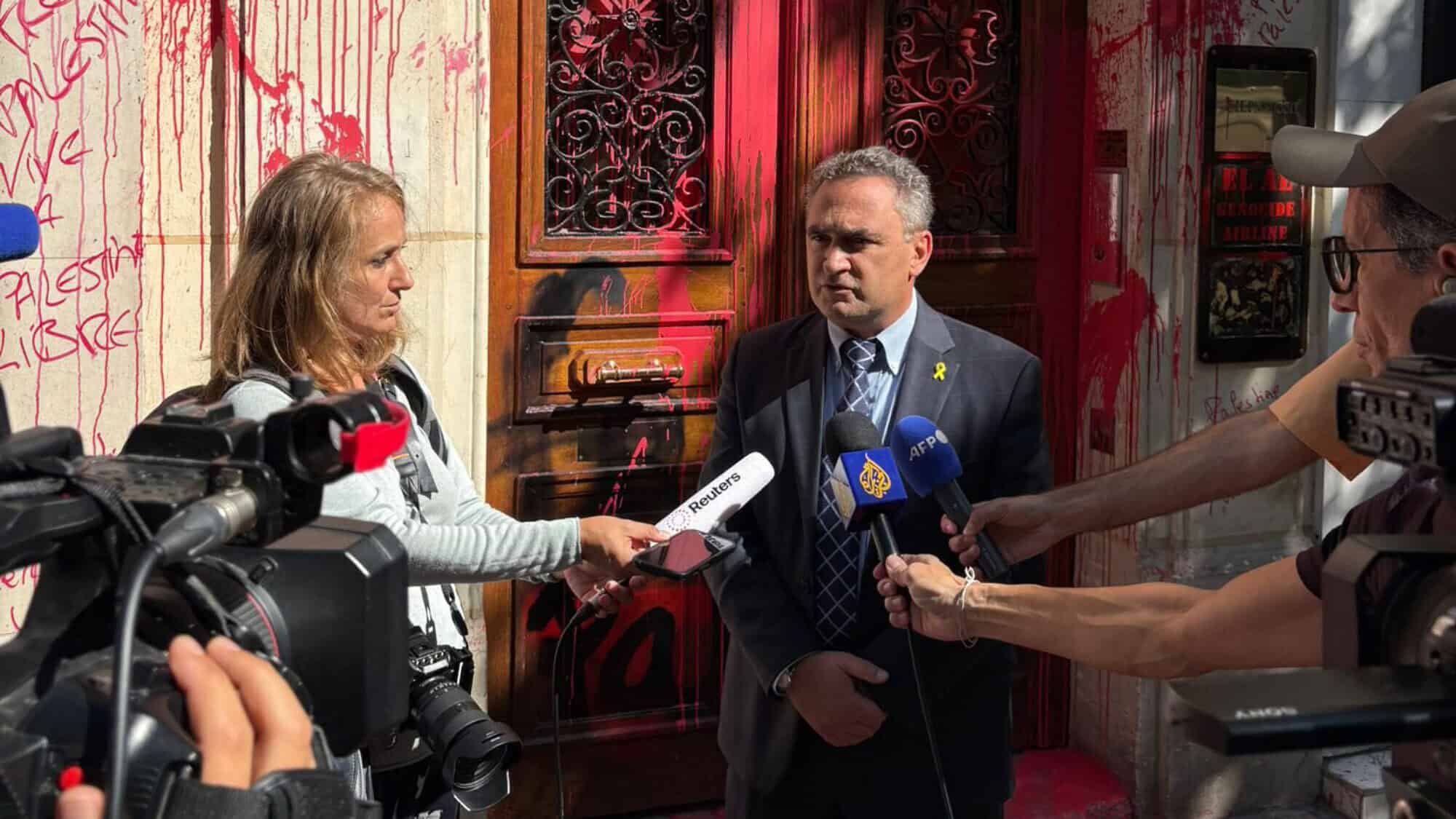

Israel’s man in Paris on bilateral relations and the state of Jews in the French Republic


.

Israel’s man in Paris on bilateral relations and the state of Jews in the French Republic

Amelie Botbol


Ambassador to France Joshua Zarka speaks to JNS about antisemitism, aliyah and the Jerusalem-Paris relationship.

Joshua Zarka was born in Paris in 1964 to a family of Tunisian immigrants. The family made aliyah to Jerusalem in 1975. Today, Zarka is the ambassador of Israel to France.

Relations between France and Israel have grown increasingly strained since July 24, when President Emmanuel Macron announced that Paris intends to recognize a Palestinian state at the United Nations General Assembly in September. The move, later echoed by the United Kingdom, Canada and Australia, drew sharp criticism in Jerusalem.

On Aug. 3, Israeli Foreign Minister Gideon Sa’ar condemned Macron for referring to Palestinian terrorists imprisoned in Israel as “hostages” and equating them with Israelis held captive in Gaza. Macron made the comments during a June 14 press conference in Paris.

Tensions deepened earlier this month when the Israeli embassy in Paris urged the French Foreign Ministry to address delays in renewing stay permits for El Al security staff. Media reports suggested the holdup—going back more than six months—was a form of pressure on Israel over its war against Hamas, which France has called to end.

The French ambassador to Israel, Frédéric Journès, further inflamed controversy last week, saying the conduct of the Gaza war had fueled antisemitism by giving “real antisemites” an opening to exploit public anger.

In response, Israeli Ambassador to France Joshua Zarka said a sharply worded letter Prime Minister Benjamin Netanyahu sent to Macron on Tuesday stemmed directly from Journès’s statement. “We cannot stand calmly accused of being the reasons for our misery,” Zarka told JNS. “Claiming that someone because of their choice of clothing is responsible for rape—that’s unacceptable completely.”

Antisemitic incidents have surged in France since Hamas’s Oct. 7, 2023, massacre.

At the annual dinner in July of CRIF, the umbrella group of French Jewish institutions, French Prime Minister François Bayrou catalogued centuries of attacks against Jews and denounced antisemitism as a “delirious, murderous beast” that has now assumed the face of radical Islamism. “There can be no balance in the Middle East until Israel is recognized by its neighbors and protected from the nuclear fire of those who have never ceased to proclaim their sole obsession and intention to destroy it,” he said.

Meanwhile, antisemitic incidents continue to mount. On Aug. 14, vandals felled a memorial olive tree dedicated to Ilan Halimi, a Parisian Jew tortured to death in 2006. Less than a week later, nine Jewish-owned cars in the Alpine town of Châtel were spray-painted with “Free Palestine.”

“French Jews do not feel safe today in France,” Zarka told JNS.

While noting French authorities are making efforts, he said the scale of antisemitic incidents is overwhelming. “There is a very big fear today among the Jewish community. … Jews in France are not just theoretically speaking of aliyah, they are contemplating it very seriously.”

In the interview, Zarka said Macron’s Palestinian statehood push, the rise in French aliyah, and the lack of an effective response to antisemitism all point to a troubling trend.

Still, he insisted, emigration is not the ultimate solution: “Jews should be able to live safely and without fear anywhere in the world. The answer is not aliyah. Aliyah is an option for all Jews but the answer is fighting antisemitism—fighting it with education, fighting it with response to antisemitic acts.”

JNS: The French ambassador to Israel said that the rise of antisemitism is extremely worrying and has intensified due to the manner in which the fighting in Gaza has been conducted, as this has allowed “real antisemites” to exploit the animosity of the war to ignite the wave of antisemitism that we are experiencing today everywhere. What do you say to him?

Joshua Zarka: That exact statement was made a few days ago. I believe that the letter that I was sent yesterday [Tuesday] by the Prime Minister [Netanyahu] to President Macron is a result of that unfortunate statement. We cannot stand calmly being accused of being the reasons for our misery. Claiming that someone because of their choice of clothing is responsible for rape, that’s unacceptable completely.

Q: Do you think the French government is taking the Israeli criticism seriously? 

A: Yes they are. I know they are taking it seriously. I am getting phone calls and messages and I have been interviewed time and again about the statements and criticisms that come out of Jerusalem toward the French government.

Yes, they are taking it very seriously. If the question is are they taking it seriously and going to act accordingly? That’s a different question. They are taking it very seriously. Unfortunately, I am not sure that it is going to influence their policies.

Q: What do you think prompted Macron to announce recognition of a Palestinian state in September at the UNGA?

A: I think it’s a mixture of concerns about the state of the street in Paris. I think the president has a concern about what he defines as the Arab street. There is a growing influence or growing unrest among the French, mainly but not only those of Maghrebian origin, because of the importation of the conflict between us and the Palestinians.

He is very much concerned about the influence that the conflict could have in France, and therefore, he likely thought that making such a statement could help him domestically. I think it is a question of him wanting to basically invent himself internationally because of the fact that he has very low support domestically. And maybe he truly believes that he has something to contribute to making things better, when in fact what he does contributes to the instability, to destabilizing the Middle East with his initiatives.

Q: Do you think France has a problem with its Muslim population? 

A: That’s a very broad question. France has a very big problem generally speaking with immigration. A problem that they have been having for many years and are trying to solve. I wouldn’t define it as a problem with the Muslim population. It’s a problem with immigration in general, and I think this problem is a problem you can see in different countries including in the United States. There are different ways of dealing with it.

Q: The French government may say one thing, but are there things going on behind the scenes that tell a different tale?

A: What gives me hope is the fact that there is very large support among the French population for Israel. I am getting a lot of support from different parts of the French political establishment that are very critical of the policy of the president. France is a friendly country. We have a very big difference currently with the policy of the president when it comes to a Palestinian state, but it doesn’t mean that France is not still a friendly country.

Q: What is the general sentiment among Jews in France today?

A: There is significant fear within the French Jewish community due to the sharp rise in antisemitism. Jews do not feel safe today in France.

I am not saying that France is not doing anything about it. What I am saying is that the volume of antisemitic acts in France is such that it is becoming almost impossible for the French Republic to deal with it properly. There is great fear today within the Jewish community about the situation on the ground. Today, Jews in France are not just speaking of aliyah theoretically, they are considering it very seriously. 

Q: Do you think that there is going to be an influx of aliyah in the coming years, and would you recommend that? 

A: There is an influx of aliyah. As an Israeli ambassador, I will always recommend for Jews to make aliyah. I myself, I’m an oleh chadash [new immigrant]. I was born and grew up in France, I made aliyah when I was 12 years old. So yes, I will always recommend it.

Do I think that it’s the only solution? No. Jews should be able to live safely and without fear anywhere in the world. The answer is not aliyah; aliyah is an option for all Jews but the answer is not aliyah, the answer is fighting antisemitism, fighting it with education, fighting it with a response to antisemitic acts, and so on. 

Q: What do you think will happen in the next French election? 

A: It’s too early to say. I will say that the next French elections are going to be critical for the stability and the future of France.

Q: Israeli Diaspora Minister Amichai Chikli has advocated forging closer ties with far-right parties. Do you think this is a good approach?

A: I think we should be able to and we should speak to all those parties that are willing to speak to us and are not by definition antisemitic. Does it mean that we have to get our support only from certain groups, no. As an ambassador, I speak and I should be able to speak to anybody from French politics who is willing to speak with me.

Q: What do you think can be done to reverse the trend? 

A: First of all, we have to deal with those who are financing antisemitism, and that’s Qatar and countries similar to Qatar like Iran and Turkey. It’s not something that can be done in one day. Education, education, education. That’s basically it.

There are people in France and even in the United States and anywhere in the world who believe that Jews have horns. That’s education. There are people who are financing conspiracy theories for people to believe that Jews have horns. So we have to fight the financing of antisemitism, and we have to fight it on the education front.


Zawartość publikowanych artykułów i materiałów nie reprezentuje poglądów ani opinii Reunion’68,
ani też webmastera Blogu Reunion’68, chyba ze jest to wyraźnie zaznaczone.
Twoje uwagi, linki, własne artykuły lub wiadomości prześlij na adres:
webmaster@reunion68.com


Amid Rising Antisemitism, American Jews Make Aliyah to Israel Seeking Safety, Community, Impact


.

Amid Rising Antisemitism, American Jews Make Aliyah to Israel Seeking Safety, Community, Impact

Ailin Vilches Arguello


Olim gather at JFK Airport in New York, preparing to board Nefesh B’Nefesh’s 65th charter flight to Israel. Photo: The Algemeine

NEW YORK/TEL AVIV — Confronted with rising antisemitism and unease in the United States, a growing number of American Jews are choosing to make aliyah, embracing the risks of war in the Middle East for the chance to build new lives and foster meaningful communities.

On Wednesday, 225 new olim arrived in Tel Aviv on the first charter aliyah flight since the Hamas-led invasion of and massacre across southern Israel on Oct. 7, 2023.

Aliyah refers to the process of Jews immigrating to Israel, and olim refers to those who make this journey.

Nefesh B’Nefesh (NBN) — a nonprofit that promotes and facilitates aliyah from the US and Canada — brought its 65th charter flight from New York, which The Algemeiner joined.

Founded in 2002, NBN helps olim become fully integrated members of Israeli society, simplifying the aliyah process and providing essential resources and guidance.

In partnership with Israel’s Ministry of Aliyah and Integration, the Jewish Agency for Israel, Keren Kayemeth, and the Jewish National Fund, NBN has helped nearly 100,000 olim build thriving new lives in Israel.

Shawn Fink is one of the 225 people who embarked on the life-changing journey earlier this week, leaving Cleveland, Ohio, with his wife, Liz, and their son.

For Fink and his family, making aliyah was driven not only by their love for Israel and desire to build a new community, but also by the escalating threats and uncertainties facing Jewish communities abroad since the outbreak of the war in Gaza.

“Mostly, we were frustrated with the direction the United States is taking, and the rise in antisemitism was a major concern for us,” Fink told The Algemeiner.

Like many countries around the world, the US has seen an alarming rise in antisemitic incidents and anti-Israel sentiment since the Oct. 7 atrocities.

According to the latest data issued by the FBI, hate crimes perpetrated against Jews increased by 5.8 percent in 2024 to 1,938, the largest total recorded in over 30 years of the federal agency’s counting them.

A striking 69 percent of all religion-based hate crimes that were reported to the FBI in 2024 targeted Jews, who constitute just 2 percent of the US population, with 2,041 out of 2,942 total such incidents being antisemitic in nature. Muslims were targeted the next highest amount as the victims of 256 offenses, or about 9 percent of the total.

Fink explained that the increasing costs of living a Jewish life in the US — from education to kosher food — weighed heavily on his family’s decision to make the move to Israel.

While they first considered making aliyah five years ago, Fink and his family had to put the plans on hold for personal reasons — returning to the idea only in the past few months when the timing finally worked in their favor.

“We started planning it seriously in November and began the entire process with Nefesh B’Nefesh,” Fink told The Algemeiner. “It’s been a nonstop whirlwind ever since.”

For them, the current war did not stop their plans, but it did influence the cities they explored for their new home.

“The war really reinforced for us the importance of supporting Israel and our community,” Fink said. “By making aliyah, we felt we could do even more to help.”

Even though it is difficult to leave behind family and close friends, they look forward to reconnecting with friends in Israel, making new connections, and building a vibrant new community.

“Making aliyah in less than six months has been a whirlwind. I’d encourage anyone considering it to give themselves at least twice as much time, double the budget, and be prepared for plenty of unexpected starts and stops along the way,” Fink told The Algemeiner.

Nefesh B’Nefesh provides assistance to families throughout their entire aliyah journey, offering guidance before relocating and continued support once in Israel.

The Israeli government also complements these efforts with resources and financial incentives to help newcomers settle and ease their transition into their new lives.

“Once the ticket is finally in your hand and you’re waiting to board the plane, you realize that all the challenges and obstacles along the way were worth it,” Fink said.

Veronica Zaragovia was also one of the 225 olim who joined the flight earlier this week.

Similarly to Fink and his family, Zaragovia decided to make aliyah, driven not just by her love for Israel, but also by the increasing challenges of being Jewish abroad and the hope of making a meaningful impact by serving her community.

From Florida, she embarked on the journey alone, excited for all the new opportunities and possibilities that awaited her in her new home.

“I want to take pride in being Jewish and in Israel — that’s why I’m making aliyah,” she told The Algemeiner, reflecting on the move she has been planning for the past two years.

“It’s a huge concern for me that in some places in the US, I can’t — or maybe shouldn’t — wear my Star of David necklace,” she said. “I don’t feel that Jews can be fully safe anywhere in the country. The rise in antisemitism has been truly shocking and deeply concerning.”

Zaragovia, who worked as a journalist in the US, said her love for storytelling and uncovering the truth played a key role in her decision to make this move.

“After Oct. 7, I felt that the way my colleagues and other journalists were covering Israel was wrong and unfair,” she said.

“As someone whose career is built on facts and truth, I didn’t see that reflected in their reporting. That’s why I decided to make a difference by being there myself,” she continued.

Rather than deterring her decision to make a change, Zaragovia explained that the current war only reinforced it.

“It became clear that I needed to go, be there with my people, and make a difference through my work,” she said. “I couldn’t have done this without Nefesh B’Nefesh. They’ve been incredible, guiding me every step of the way from start to finish.”


Zawartość publikowanych artykułów i materiałów nie reprezentuje poglądów ani opinii Reunion’68,
ani też webmastera Blogu Reunion’68, chyba ze jest to wyraźnie zaznaczone.
Twoje uwagi, linki, własne artykuły lub wiadomości prześlij na adres:
webmaster@reunion68.com