Archive | 2025/08/26

Ambasada Izraela w Polsce: W Gazie nie ma głodu. Zobaczcie nagrania z restauracji i bazarów

Propagandowy film z miasta Gaza (Fot. Ambasada Izraela/YouTube)


.

Ambasada Izraela w Polsce: W Gazie nie ma głodu. Zobaczcie nagrania z restauracji i bazarów


Marta Urzędowska; Joanna Sosnowska


[ webmaster cytat: “Google uznaje reklamy polityczne” – a czy ten artykul i cala Wyborcza to nie najleprzy przyklad REKLAMY POLITYCZNEJ? ]


Ambasada Izraela opublikowała nagrania, na których pokazuje restauracje w Strefie Gazy serwujące lokalne przysmaki i świetnie zaopatrzone bazary. Twierdzi, że to “autentyczne ujęcia sceny kulinarnej w mieście Gaza” dowodzące, że w enklawie nie ma głodu.

– Autentyczne ujęcia sceny kulinarnej w mieście Gaza, lipiec 2025 – zapowiada lektor w filmie, jaki kilka dni temu zamieściła ambasada na swoim oficjalnym kanale na YouTube. 

Uśmiechnięci kucharze zagniatają ciasto. „Twierdzenie, że w Gazie jest głód, to kłamstwo”

Jako pierwsza pokazana jest restauracja „Hotdog” w dzielnicy Zejtun miasta Gaza. Miejscowy kucharz zachwala podawane na miejscu przysmaki – calzone z mięsem, z warzywami i kałamarnicą: „wszystko przepyszne”.

Na filmie widać uśmiechniętych pracowników zagniatających ciasto na kolejne dania, podrzucających placki w górę, wyraźnie dobrze się bawiących przy pracy.

Kolejny lokal to „Al-Manakisz” w dzielnicy Ar-Rimal, gdzie na krótkiej migawce widzimy delektujących się miejscowymi przekąskami klientów. Kolejne ujęcie zatytułowano „lody pistacjowe, dzielnica Zejtun”. Widać na nim tłum klientów lodziarni. Dalej kawiarnia „Estekana” w dzielnicy Ar-Rimal, przed którą dwóch roześmianych pracowników zaprasza do wejścia. Wreszcie ostatni fragment niespełna minutowego filmu to powrót do pierwszej restauracji „Hotdog”, gdzie trzech mężczyzn przy stoliku z uśmiechem zjada miejscowe specjały.

.
Na tym migawki z lokali się kończą, film kończy się napisem: „W Gazie nie brakuje jedzenia. Każde inne twierdzenie jest kłamstwem”.

Drugie nagranie: Na bazarach mnóstwo jedzenia. „Stronnicze media kłamią”

Film o restauracjach w Gazie nie jest jedynym, jaki ambasada Izraela w Polsce opublikowała, by pokazać, że Palestyńczycy w enklawie nie głodują. W poniedziałek rano (25.08) wrzuciła kolejne nagranie, tym razem z bazarów.

„Cyniczni politycy i stronnicze media kłamią. Zdjęcia nie kłamią, to są prawdziwe nagrania z targowisk spożywczych Gazy, lipiec-sierpień 2025 – mówi lektor. Na opublikowanych migawkach widać ludzi robiących zakupy na zatłoczonym bazarze pełnym pomidorów, bakłażanów i innych warzyw i owoców.

Są też ujęcia, na których widać kebab, słodycze, worki z chlebem.

“Trzeba oddzielić prawdę od kłamstw. W Gazie jest jedzenie”

– czytamy na końcu filmu.

Nagrania izraelskiej ambasady to żaden wyjątek. W sieci są inne miejsca, gdzie można oglądać podobne filmy, pokazujące, jak dobrze i dostatnio żyje się w Strefie Gazy. Na przykład w izraelskim portalu Gazawood.com można poczytać o organizowanych na miejscu hucznych weselach, imprezach z grillem, świetnie wyposażonych sklepach czy czekoladowych fontannach.

ONZ: W Gazie panuje już nie niedożywienie, a głód

W Strefie Gazy od dwóch lat trwa wojna rozpętana atakiem Hamasu na Izrael z jesieni 2023 r., podczas którego palestyńscy terroryści zabili 1,2 tys. osób, a 250 porwali do Gazy. W odpowiedzi izraelska armia prowadzi na miejscu naloty i inwazję lądową, w których zginęło ponad 62 tys. osób.

Według ONZ, Światowej Organizacji Zdrowia, dużych światowych organizacji broniących praw człowieka, a nawet ważnych izraelskich NGO-sów Izraelczycy wpędzili Gazę w ruinę, a jej mieszkańców – w katastrofę humanitarną. W ostatnich dniach ONZ potwierdziła, że w samym mieście Gaza panuje już nie skrajne niedożywienie, ale głód. Izraelskie władze od miesięcy blokują większość pomocy humanitarnej, wpuszczając jej na miejsce jedynie niewielkie ilości, dystrybuowane w trudno dostępnych i pilnie strzeżonych przez armię ośrodkach, gdzie co rusz dochodzi do incydentów, w których czekający na paczki z pomocą Palestyńczycy giną.

Izraelskie władze od początku wojny uparcie zaprzeczają, jakoby miejscowi Palestyńczycy głodowali, przekonują, że nie blokują wpuszczania na miejsce pomocy humanitarnej, a ewentualne cierpienia miejscowych cywilów to wina terrorystów z Hamasu.

Ponieważ Izrael nie wpuszcza na miejsce międzynarodowych mediów, nie da się w niezależny sposób sprawdzić, czy opisane w nagraniach lokale rzeczywiście funkcjonują i jak dokładnie wygląda na sytuacja w restauracjach czy na bazarach Gazy. Jednak nie ma powodu podejrzewać, że lokale nie istnieją – w Strefie Gazy zniszczona jest zdecydowana większość budynków, ale nie wszystkie, na miejscu nadal istnieją nieliczne sklepy, restauracje i bazary, gdzie można coś zjeść albo zrobić zakupy. Jednak – jak zgodnie alarmują, również w rozmowach z “Wyborczą”, eksperci z organizacji pomocowych – jedzenia jest drastycznie mało, a ceny najbardziej podstawowych produktów żywnościowych są tak wysokie, że pozostają one niedostępne dla zdecydowanej większości mieszkańców enklawy.

Czy reklamy naruszają regulamin YouTube’a?

To już kolejna reklama wykupiona przez Ambasadę Izraela. Pod koniec lipca promowano film, według którego to ONZ (a nie Izrael) odpowiadał za to, że do Gazy nie docierają transporty jedzenia. 

Zarówno poprzednie, jak i obecne reklamy według klasyfikacji Google są polityczne — przedstawiają “propagowanie idei politycznych”. 

Google uznaje reklamy polityczne (obok reklam alkoholu, treści objętych prawem autorskim, leków o zdrowia) za “wrażliwe”, a to oznacza, że może nałożyć na nie pewne ograniczenia. 

Google zastrzega, że takie reklamy: 

  • nie będą pokazane wszystkim użytkownikom,
  • nie będą pokazywane we wszystkich lokalizacjach,
  • w niektórych (niesprecyzowanych) przypadkach trzeba będzie spełnić dodatkowe wymagania. 

“Wspieramy odpowiedzialną reklamę polityczną i oczekujemy, że wszystkie reklamy i serwisy reklamowe będą zgodne z lokalnymi przepisami dotyczącymi kampanii i wyborów, obowiązującymi na wszystkich obszarach, do których są kierowane” – pisze Google w wytycznych dla reklamodawców.

Każdą reklamę — także tę — można zgłosić do usunięcia. Aby to zrobić, należy wypełnić ten formularz.

Nie oznacza to jednak, że reklama zostanie usunięta. Nasz fotoreporter Rafał Wojciechowski zgłaszał film ambasady Izraela i dostał następującą odpowiedź:

“Postanowiliśmy nie usuwać tej reklamy produktowej. Ustaliliśmy, że reklama nie narusza zasad Google, które zabraniają publikowania określonych treści i stosowania określonych praktyk szkodzących naszym zdaniem użytkownikom i całemu ekosystemowi internetu”. 


Redagowała Ludmiła Anannikova


Zawartość publikowanych artykułów i materiałów nie reprezentuje poglądów ani opinii Reunion’68,
ani też webmastera Blogu Reunion’68, chyba ze jest to wyraźnie zaznaczone.
Twoje uwagi, linki, własne artykuły lub wiadomości prześlij na adres:
webmaster@reunion68.com


Neuer: How Hamas Controls UNRWA From Within


.

Neuer: How Hamas Controls UNRWA From Within

Pelle Zackrisson


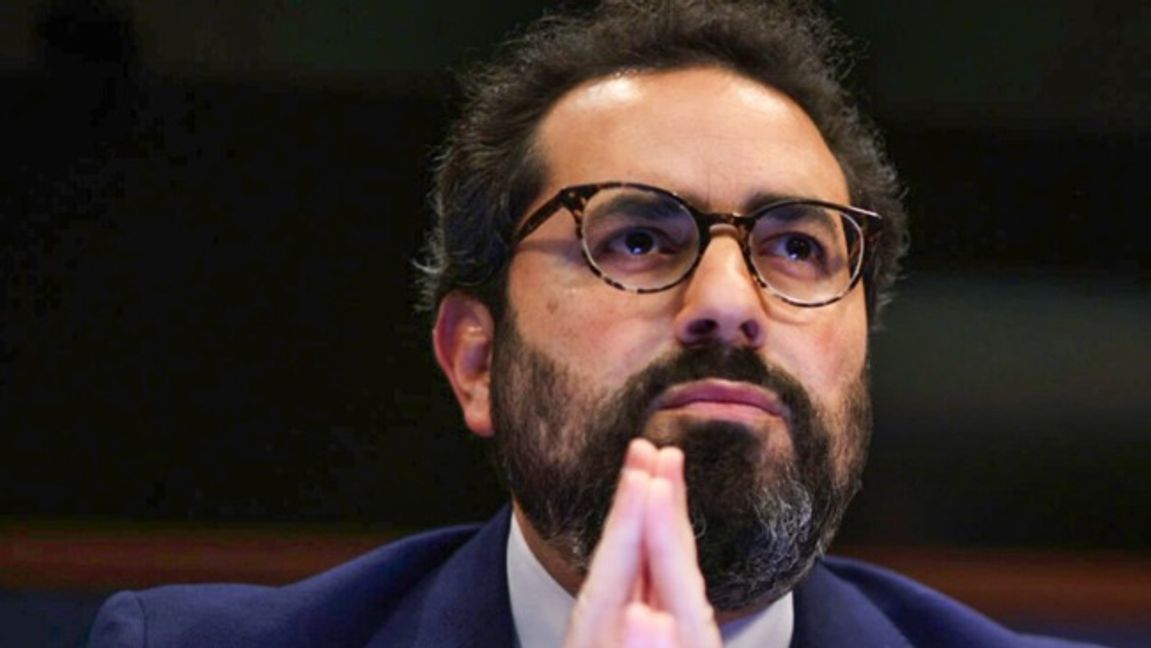
UN Watch Executive Director Hillel Neuer has spent years covering UNRWA. Photo: Press image

In an exclusive interview with Bulletin, UN Watch chief Hillel Neuer reveals how the Muslim terrorist organization Hamas has taken over the UN agency UNRWA, thanks Sweden for cutting funding, and dismisses Social Democrat ally Palestinian President Mahmoud Abbas as a peace partner.

A Hamas terror chief was in charge of 2,000 UNRWA teachers. Norway’s current foreign ministry official Leni Stenseth traveled to Gaza to apologize to the now-deceased terror leader Yahya Sinwar. And 90 percent of Hamas terrorists who participated in the October 7 massacre were educated in UNRWA schools.

These revelations come from an interview with Hillel Neuer, executive director of the watchdog organization UN Watch. Neuer had strong ties to Sweden through his friend Per Ahlmark, former leader of the Liberal Party who died in 2018. Ahlmark served as European co-chair of UN Watch for 20 years, and the organization annually awards the Per Ahlmark Award for moral courage.

”Per was my friend. I went to Stockholm for his 70th birthday celebration and he used to fly to Geneva for our events. Each year we give out the Per Ahlmark Award to people who have moral courage,” Neuer said.

He praised the Swedish government’s decision to stop funding UNRWA.

”I want to commend the Swedish government. My understanding is that in December the government announced they would no longer give money to UNRWA but instead increase aid to Palestinians through other agencies. That was the right decision,” Neuer said.

Hamas Controls UNRWA

Neuer described how Hamas has infiltrated UNRWA, the UN’s special refugee agency for Palestinians, which Sweden has funded with billions over the years.

”Fathi Sharif was Hamas leader in Lebanon, UNRWA teacher, principal and head of 2,000 teachers. When Israel eliminated him last year, Hamas announced that their leader had been killed. It wasn’t like Sharif was hiding [his Hamas membership] — he had pictures with Hamas leaders all over his Facebook,” Neuer said.

Sweden has been one of UNRWA’s largest donors for decades. Is there any separation between UNRWA and Hamas in Gaza?

”In Gaza they’ve taken over completely. They control the staff union with 13,000 employees. The head of UNRWA’s union sits on Hamas’s political bureau. He’s one of the few who survived — over half of the political bureau has been eliminated by Israel. He fled to Turkey a few years ago.”

”UNRWA’s own legal advisor said that 90 percent of Gazans are alumni of UNRWA schools. That means 90 percent of the barbaric murderers who raped and murdered on October 7 [attended] UNRWA schools,” Neuer said.

UN Watch has documented UNRWA’s indoctrination of Palestinian children for decades. What does it look like?

”We’re releasing a report next month showing that UNRWA’s education system is completely infiltrated by Hamas. We’ve interviewed children who say they learned to kill Jews. They all want to become Hamas fighters. The message in schools is that Gaza is not your home — your home is there, and they point to Israel. They call it the ’right of return’ but it means October 7.”

West kowtowing to Hamas

One example of how Western countries submit to terrorists, according to Neuer, is when Leni Stenseth, then UNRWA’s deputy chief and now an official in Norway’s foreign ministry, traveled to Gaza to apologize to Yahya Sinwar — the architect of the October 7 massacre.

”An UNRWA official admitted on Israeli TV that IDF strikes were precise. Hamas kicked him out, he was no longer welcome in Gaza. Stenseth drove from Amman to Gaza, met Sinwar and apologized for the official’s ’indefensible’ statements. She now leads Norway’s foreign ministry and campaigns for UNRWA,” Neuer said.

UNRWA chief Philippe Lazzarini reportedly met with terror groups in Beirut last May and reached an agreement allowing Hamas to maintain control over UNRWA schools, according to UN Watch.

Fatah Not a Peace Partner

Sweden’s Social Democrats and the left are pushing for Sweden to resume funding. What do you say to them?

”They have to answer to the evidence. We have hundreds of pages of documentation on our website with screenshots of UNRWA teachers praising jihad terrorism. If they care about Palestinian children, why do they let Hamas terrorists be their teachers and principals for decades?”

Is Fatah and its leader Mahmoud Abbas — the Social Democrats’ sister party — a legitimate peace partner?

”The best thing you can say about Fatah is that they’re not Hamas. But there’s not much more to say than that. Abbas is in his twentieth year of his four-year term. He’s a dictator who tortures those who dare to oppose him. He denies the Holocaust and says the Jews deserved it.”

Abbas’s government continues the ”pay for slay” policy where terrorists and their families receive compensation for attacks against Israelis.

”Fatah doesn’t want their own state either. When they were offered 97 percent of the land they wanted, [former leader] Arafat responded with an intifada with hundreds of suicide bombings. They also want Israel’s destruction,” Neuer said.


Pelle Zackrisson är chefredaktör och ansvarig utgivare för Bulletin. Han har tidigare bland annat jobbat inom Mittmedia (numera Bonnier Local News), på Sveriges Radio, Riks och Nyheter Idag.


Zawartość publikowanych artykułów i materiałów nie reprezentuje poglądów ani opinii Reunion’68,
ani też webmastera Blogu Reunion’68, chyba ze jest to wyraźnie zaznaczone.
Twoje uwagi, linki, własne artykuły lub wiadomości prześlij na adres:
webmaster@reunion68.com


What Voltaire Would Say About Recognizing a Palestinian State Today


.

What Voltaire Would Say About Recognizing a Palestinian State Today

Pini Dunner


Israel’s Ambassador to the United Nations Gilad Erdan holds a picture of Hamas’ leader in Gaza Yahya Sinwar, as he addresses delegates during the United Nations General Assembly in New York City, US, May 10, 2024. Photo: REUTERS/Eduardo Munoz

The 18th century produced countless geniuses who changed how we think in so many ways. Not least among them was François-Marie Arouet, better known by his pen name Voltaire. Like countless other savants in that era, he excelled at multiple disciplines – including history, philosophy, politics, and literature. 

But most of all, Voltaire is remembered for his sharp wit. One of his most famous quips was about the Holy Roman Empire, the loose confederation of principalities and dukedoms in what later became Germany. “This agglomeration which calls itself the Holy Roman Empire,” he said, “is in no way holy, nor Roman, nor an empire.”

Voltaire had little patience for pomposity and pretension, and his description of the Holy Roman Empire — a sprawling, lumbering political entity that dominated Central Europe for centuries — cut straight to the bone. 

It wasn’t holy — it was made up of competing Christian denominations, and the Church had long since lost control over its many local rulers. It wasn’t Roman — the connection to ancient Rome was tenuous at best, a grandiose title masking the reality of a Germanic confederation. And it certainly wasn’t an empire — it was a disorganized patchwork of feuding duchies and city-states that barely hung together under a distant elected emperor. 

Which is why Voltaire’s line is so memorable: it captured, in one withering sentence, the absurdity of dressing up a dysfunctional, fragmented mess as something it plainly was not.

Which brings us to the present day, and the latest diplomatic fad sweeping Western capitals: recognition of a Palestinian state. In the past few weeks alone, Britain, France, Australia, and Canada have all rushed to declare that “Palestine” should now be treated as if it is a real, functioning country.

But here’s the problem: it isn’t. As Voltaire might have said, there is no state — and frankly, there is no Palestine. According to the 1933 Montevideo Convention, a state must have four things: defined borders, a functioning government, a coherent judiciary and military, and a permanent population. Palestine has none of them. What it does have is a fractured leadership divided between a corrupt, un-elected Palestinian Authority in Ramallah and a genocidal terror regime in Gaza.

And yet, astonishingly, rather than confronting the nightmare reality that Palestinian national aspirations are being driven by an absolutist bunch of thugs — a murderous death cult that unleashed the worst massacre of Jews since the Holocaust — world leaders have chosen to reward them by indulging in the fantasy of Palestinian statehood. And make no mistake: when the Palestinians say “Palestine,” they mean all of Israel, not just Gaza and the West Bank.

Incredibly, October 7th has become a kind of twisted diplomatic success for Hamas and its international cheerleaders. A bloody terrorist rampage has been transformed into a Willy Wonka golden ticket at the United Nations, while foolish Western governments cower in the face of Islamic minorities and progressive loudmouths in their own countries. It is the international equivalent of applauding an arsonist by handing him the keys to the fire station — and then wondering why the fires keep spreading.

History offers us plenty of examples of phantom “states” that were recognized — or kind of recognized — despite having none of the attributes of genuine statehood. Take Biafra, for instance. In 1967, the Igbo people in southeastern Nigeria declared independence. For three brutal years, Biafra functioned as a shadow state, fighting a bloody war with Nigeria that left millions dead. 

A handful of countries recognized Biafra, but most of the world did not. And even those who toyed with the idea of recognition knew, deep down — or maybe not so deep down — that Biafra was never going to be a viable state. When it collapsed in 1970, the recognition evaporated as if it had never been offered.

Then there’s Transnistria — a sliver of land wedged between Moldova and Ukraine, which declared independence in 1990. It’s thirty five years later, and Transnistria still parades itself as a state: it has its own flag, an army, border controls, postage stamps, and even its own currency. 

In fact, on paper, it looks far more like a real state than “Palestine” ever has. And yet — crucially — no one recognizes it. Because the world understands that Transnistria is just a Russian-backed invention, a geopolitical puppet masquerading as a country.

Which brings us back to “Palestine.” Like Biafra, it has no prospect of surviving the test of time. Like Transnistria, it is just a figment of its own fantasy and the political considerations of others. It’s totally absurd for such an entity to be recognized as a state. 

If anything, by the usual standards of statehood, Disneyland has a stronger claim to sovereignty than Palestine. It has borders, border checks, its own security personnel, and a coherent government in the form of the Disney corporation. If the world is in the business of recognizing make-believe kingdoms, at least Disneyland delivers joy and entertainment — instead of terror tunnels and mayhem.

Parshat Re’eh contains a sobering warning that echoes down to our own time. Moses tells the Jewish people (Deut. 13:2): “If a prophet or a dreamer arises among you and gives you a sign or a wonder, and the sign comes to pass, but then he says, ‘Let us go after other gods,’ you must not listen to him.” 

The Torah’s message is chillingly clear: appearances can deceive. Someone might come along and dazzle us with something that seems legitimate. But in the final analysis, legitimacy is not determined by wishful thinking. What matters is fidelity to truth.

The classical commentaries drive this point home. The Ramban notes that the Torah presents us with a scenario in which the false prophet’s “wonder” actually happens. He predicted it, and it came to pass. And yet, the acid test is not that it happened, but whether the prophet’s message aligns with eternal truth. If it does not, the wonder is not a wonder, it is a distraction. 

Rabbi Obadiah Sforno sharpens this even further: the false prophet’s “achievement” dazzles the crowd in the moment, but it has no enduring substance. The appearance of success collapses the instant you measure it against what is real and lasting.

Malbim adds a more unsettling twist. He explains that such deceptions are not accidents, but a Divine test: will people cling to principle when they are confronted with a fake wonder, or will they be seduced by its allure? 

It’s an uncomfortable question. Will the spectacle of international recognition – the pageantry of parliaments, diplomats, and foreign ministers standing before TV cameras declaring their recognition of “Palestine” – really deliver? It sure looks like progress. But in reality, it is a lie — a false prophecy that leads people astray, away from moral clarity and toward disaster.

Rav Samson Raphael Hirsch constantly taught that the Torah is our safeguard against the fashions of the age, when hollow trends dress themselves up as timeless morality.

That’s exactly the point. The false prophet doesn’t look like a villain. On the contrary, he speaks the language of hope and righteousness. But he is a villain, spreading poison and destruction. So it is with “Palestinian statehood,” which is presented as a historical justice, but in reality is the epitome of terror, corruption, and wanton bloodshed.

By endorsing something that does not exist, the West is in effect falling into the trap of a false prophecy. Seduced by the theatrics of recognition, they are ignoring the truth that what they are doing strengthens terror and undermines their own credibility. They have mistaken illusion for substance — and that, says the Torah, is the very definition of a false prophet. 

As Voltaire himself put it, “Illusion is the first of all pleasures.” It’s time for the West to open their eyes and wake up from their dream.


The author is a rabbi in Beverly Hills, California


Zawartość publikowanych artykułów i materiałów nie reprezentuje poglądów ani opinii Reunion’68,
ani też webmastera Blogu Reunion’68, chyba ze jest to wyraźnie zaznaczone.
Twoje uwagi, linki, własne artykuły lub wiadomości prześlij na adres:
webmaster@reunion68.com