
Archive | 2025/08/13

RABIN JONATHAN SACKS – Komentarz do parszy Wa-jikra

Powołanie [Komentarz rabina Sacksa do parszy Wa-jikra]

RABIN JONATHAN SACKS
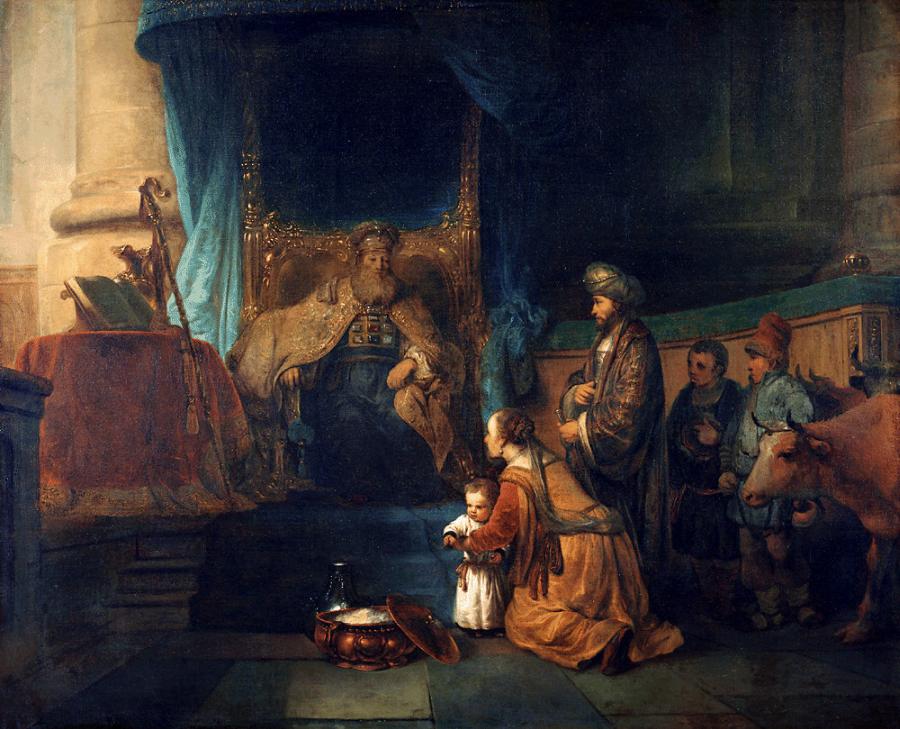

Matka Samuela ofiarowuje dziecko kapłanowi Elemu. Obraz holenderskiego malarza Gerbranda van den Eeckhouta (około 1665 r.). /Fot. Wikipedia

PARSZA WA-JIKRA  – 17 MARCA 2018/ 1 NISAN 5778

Nigdy nie miałem ambicji, aby zostać rabinem. Na uniwersytecie studiowałem ekonomię, a później filozofię. Fascynowali mnie też słynni brytyjscy prawnicy: legendarny Edward Marshall Hall, Rufus Isaac czy Frederick Edwin Smith. Studia rabinackie ukończyłem dość późno, nie planując dalszej kariery z nimi związanej, a jedynie chcąc zgłębić dziedzictwo swojej religii.

Wszystko zmieniło się w styczniu 1978 roku. Był to mój drugi ważny jechidut (audiencja) u Rebego Lubawicz. Wydarzenie to całkowicie zweryfikowało mój stosunek do zawodu i życia. Ku mojemu zdziwieniu, Rebe zawetował wszystkie moje zawodowe plany – karierę akademicką, zostanie prawnikiem, ekonomistą, a nawet rabinem w Stanach Zjednoczonych. Moim zadaniem miało być kształcenie innych rabinów. W Wielkiej Brytanii było ich za mało i moją misją miało być zmienienie tego stanu rzeczy.

Ważne było, abym nie tylko został rabinem wspólnoty, ale również zapewnił uczniom możliwość przysłuchiwania się moim kazaniom. Nadal słyszę w głowie słowa Rebego, który wypowiada angielskie słowo „kazanie” z wyraźnym rosyjskim akcentem. Zaplanował nawet dokładnie, gdzie powinienem pracować. Miała to być London School of Jewish Studies, najstarsze seminarium rabinackie angielskojęzycznego świata.

Tak też zrobiłem. Pracowałem tam jako nauczyciel, a później dyrektor. Następnie – również po konsultacji u Rebego – podjąłem się pełnienia roli naczelnego rabina Wielkiej Brytanii, za co dziękuję nie tylko jemu, ale również mojej żonie, Elaine. Kiedy się pobieraliśmy, nie przypuszczaliśmy, że uda mi się zajść tak daleko, a Elaine nie wiedziała, że wychodząc za mnie, pisze się na bycie żoną naczelnego rabina. Bez jej stałego wsparcia, nigdy nie udałoby mi się osiągnąć tak wiele.

Opowiadam tę historię nie bez powodu. Chcę na swoim przykładzie pokazać różnicę między darem, a powołaniem, między tym, w czym jesteśmy dobrzy, a tym, do czego jesteśmy wezwani. Te dwie rzeczy bardzo się od siebie różnią. Poznałem wielu bardzo dobrych sędziów, którzy byli jednocześnie wspaniałymi pianistami. Wittgenstein uczył się inżynierii lotnictwa, a całe życie poświęcił filozofii. Ronald Heifetz studiował medycynę i kształcił się na muzyka, aby w końcu założyć Szkołę Przywództwa Publicznego, będącą częścią Szkoły Administracji Rządowej im. Kennedy’ego na Uniwersytecie Harvarda. Możemy być dobrzy w wielu dziedzinach, ale tylko poczucie misji i powołania naprawdę nas ukierunkowuje i nadaje życiu sens.

Takie znaczenie ma słowo otwierające parszę na ten tydzień, które jest jednocześnie hebrajskim tytułem całej księgi: Wa-jikra, „I wezwał”. Jeśli dobrze przyjrzymy się pierwszemu wersowi parszy, zauważymy, że jego konstrukcja jest nieco dziwna. W tłumaczeniu czytamy: „I wezwał Mojżesza, i rzekł do niego Wiekuisty z przybytku zboru, w te słowa”. Pierwsza fraza wydaje się być zbędna. Skoro napisano w Torze, że do Mojżesza przemówił Bóg, po co dodawać „I wezwał”?

Otóż wezwanie Mojżesza miało miejsce wcześniej niż padły słowa Boga. One były jedynie uściśleniem. Wezwanie zaś było naznaczeniem misji, zupełnie tak jak wtedy, kiedy Mojżesz po raz pierwszy został powołany przez Boga, który objawił mu się w gorejącym krzewie. Mojżesz podjął się wtedy zadania, które miało zdefiniować jego życie i nadać mu cel – wyprowadzenia ludzi z niewoli i przewodzenia im w wędrówce do wolności w Ziemi Obiecanej.

Dlaczego zatem Mojżesz zostaje powołany po raz drugi? Prawdopodobnie ma z tym związek fakt, że księga Wa-jikra właściwie Mojżesza nie dotyczy. Nadana przez mędrców nazwa trzeciej księgi Tory brzmiała Tora Kohanim, „prawo kapłanów” (stąd łacińska nazwa Leviticus, która dosłownie oznacza „dotycząca Lewitów”, potomków Lewiego). Mojżesz jednak nie był kapłanem, była to rola jego brata, Aarona. Bóg zdaje się więc mówić do Mojżesza: również i to zadanie należy do ciebie; nie jesteś kapłanem, ale to przez ciebie ujawniam Moje prawa, łącznie z prawami kapłańskimi.

Może nam się wydawać, że idea powołania istnieje we wszystkich kulturach. Tak nie jest. Wybitny niemiecki socjolog Max Weber (1864-1920) zauważył, że idea powołania, tak fundamentalna dla społecznej etyki Zachodu, w rzeczywistości ma swój początek w religii, gdzie oznacza zadanie wyznaczone przez Boga.

Ten koncept zrodził się na potrzeby Biblii hebrajskiej. W tekstach innych kultur komunikacja między ludźmi i ich bogami była znikoma. Idea Boga, który naznacza człowieka na swojego pomocnika i emisariusza była rewolucyjna, a właśnie na niej opiera się judaizm.

Historia Żydów zaczyna się od wezwania Abrahama, aby opuścił dom swojego ojca. Później Bóg powołuje Mojżesza i proroków. W mistycznej wizji Izajasza wyjątkowo obrazowo przedstawiony jest Bóg zasiadający na tronie, otoczony przez śpiewające anioły: „Wtedy usłyszałem głos Pana mówiącego: Kogoż mam posłać, i któż Nam pójdzie? I rzekłem: Oto jestem, poszlij mnie!” (Izajasz 6:8).

Jedną z najbardziej wzruszających opowieści o powołaniu jest historia Samuela. Jego matka obiecała Bogu, że jeśli tylko obdaruje ją synem, odda go na służbę do świątyni. Pewnej nocy, kiedy młody Samuel rzeczywiście został przekazany do Szilo, gdzie służył kapłanowi Elemu, usłyszał w nocy głos wołający jego imię. Myśląc, że wzywa go Eli, pobiegł sprawdzić, czego od niego chce. Ten jednak wyprowadził go z błędu i oznajmił, że to nie on go wzywał. Sytuacja powtórzyła się to jeszcze dwa razy, po czym Eli zrozumiał, że to Bóg wzywa chłopca. Doradził Samuelowi, aby następnym razem, kiedy usłyszy głos, odpowiedział: „Mów, o Wiekuisty! Albowiem sługa Twój słucha” (1 Ks. Samuela 3:9). Chłopcu nie przyszło nawet do głowy, że to sam Bóg wzywa go do wypełnienia zadania, a tak właśnie było. W ten sposób rozpoczęła się jego misja jako proroka, sędziego i tego, którego zadaniem było namaszczenie dwóch pierwszych królów Izraela – Saula i Dawida (1 Ks. Samuela 3).

Więcej proroków nie było wezwanych przez Boga, a historia profetyzmu kończy się w okresie Drugiej Świątyni. Mimo to idea powołania pozostaje żywa dla wszystkich, którzy wierzą w Bożą Opatrzność. Każdy z nas jest inny, a swoim wyjątkowym zestawem talentów i zdolności możemy wzbogacić świat. To, że znajdujemy się w określonym miejscu i czasie, z określonymi możliwościami nie jest przypadkowe. Bóg już wyznaczył nam zadanie i wzywa nas do jego wypełnienia.

Nikt tak nie przyczynił się do przywrócenia tej idei do życia jak ocalały z Zagłady psychoterapeuta Viktor Frankl. Jako więzień w Auschwitz postanowił sobie, że będzie podtrzymywał w ludziach wolę życia poprzez pokazywanie im, że muszą przetrwać, bo wciąż mają do wypełnienia misję. W ten sposób dawał im powód, aby pozostać przy życiu do zakończenia wojny.

PRENUMERATA

Frankl uważał, że powołanie przychodzi z zewnątrz. Pytanie, które według niego człowiek powinien sobie zadać, nie brzmiało „czego ja chcę od życia?”, ale „czego życie chce ode mnie?”. W swojej książce Nieuświadomiony Bóg cytuje wyznanie jednego ze swoich studentów, niegdyś leczonego z powodu choroby psychicznej, który w liście pisze: „Ale w ciemności odnalazłem poczucie celu, własnej misji w świecie. Wiedziałem, tak jak wiem i teraz, że musiałem, choćby z jakiegoś najbardziej błahego powodu, zostać przy życiu. Jest coś, czego tylko ja mogę dokonać i niezmiernie ważne jest, żebym właśnie ja to zrobił… W osamotnionej ciemności ‘nory’, w której zostałem porzucony przez człowieka, znalazł mnie On. On tam był, nawet kiedy nie znałem Jego imienia. Bóg był tam ze mną”.

Natan Szaranski miał podobne odczucia czytając Psalmy w więzieniu, w którym zamknęło go KGB. Opisuje je w książce Fear No Evil.

Frankl wierzył, że „każdy człowiek tworzy coś wyjątkowego, a każda sytuacja w życiu jest niepowtarzalna. Konkretne zadanie człowieka odnosi się do tej wyjątkowości i niepowtarzalności”[1]. Istotą tego zadania jest, jak twierdził, fakt, że samo ono siebie przewyższa. Pochodzi z zewnątrz świadomości i rzuca nam wyzwanie, aby nasze życie polegało na czymś więcej niż ochronie własnych interesów. Aby jednak odkryć, co jest naszym zadaniem, musimy zrozumieć, że nasze życie ma znaczenie i cel.

Jak odkryć więc swoje powołanie? Zmarły niedawno Michael Novak twierdził[2], że ma ono cztery cechy charakterystyczne. Po pierwsze, powołanie jest inne dla każdego. Po drugie, do rzeczy, do których jesteśmy powołani, mamy talent. Po trzecie, wypełnianie go, daje nam radość i nową energię. Po czwarte, nie możemy się spodziewać, że objawi nam się od razu. Możliwe, że przemierzymy wiele dróg, zanim znajdziemy tę właściwą.

Novak cytuje Logana Pearsalla Smitha, który powiedział: „Sprawdzianem powołania jest miłość do ciężkiej pracy, którą wkładamy w jego wypełnianie”. Wszystkie prawdziwe osiągnięcia wymagają karkołomnych przygotowań. Najbardziej znaną teorią jest ta, która mówi, że aby cokolwiek opanować, należy spędzić przy tym około dziesięciu tysięcy godzin intensywnej pracy. Czy jesteśmy gotowi zapłacić taką cenę? To nie przypadek, że Wa-jikra rozpoczyna się wezwaniem. Księga ta opisuje przecież rytuał składania ofiar, a powołanie wiąże się z poświęceniem. Jesteśmy skłonni do poświęceń, gdy czujemy, że konkretna rola lub zadanie jest tym, do czego jesteśmy przeznaczeni.

To idea, która może zmienić nasze życie. Każdemu z nas Bóg wyznaczył zadanie: pracę do wykonania; życzliwość do pokazania; dar do obdarowania; miłość do dzielenia się nią; samotność, w której możemy przynieść ulgę; ból, który możemy uleczyć; czy złamane życie, które możemy naprawić. Rozpoznanie tego zadania i usłyszenie wołania Boga stanowi o sensie i celu naszego życia. Gdy odnajdziemy to, do czego robienia mamy predyspozycje, a przy tym będzie to istotna, wymagająca podjęcia misja, możemy być pewni, że właśnie do niej wzywa nas Bóg.


[1] Viktor Frankl, The Unconscious God, Simon & Schuster, Nowy Jork 1975, s. 57.

[2] Michael Novak, Business as a Calling, Free Press, 1996, s. 17-40.

Tłumaczenie: Jolanta Różyło © CHIDUSZ 2018


Zawartość publikowanych artykułów i materiałów nie reprezentuje poglądów ani opinii Reunion’68,
ani też webmastera Blogu Reunion’68, chyba ze jest to wyraźnie zaznaczone.
Twoje uwagi, linki, własne artykuły lub wiadomości prześlij na adres:
webmaster@reunion68.com


The ‘Right of Return’ Isn’t a Right — It’s a Means to Attack Israel


.

The ‘Right of Return’ Isn’t a Right — It’s a Means to Attack Israel

Micha Danzig


Palestinians pass by the gate of an UNRWA-run school in Nablus in the West Bank. Photo: Reuters/Abed Omar Qusini.

In the wake of the October 7th massacre and the war Hamas launched from Gaza, one might expect Western democracies to reassess their assumptions about the Israeli–Palestinian Arab conflict. Instead, countries like Ireland, Spain, Norway, and Canada are rushing to unilaterally “recognize” a Palestinian Arab state — a move they claim is a step toward peace.

But there is a fatal contradiction at the core of this effort, one that goes almost entirely unexamined: the Palestinian demand for a “right of return.” It is this demand — not settlements, not borders, not Jerusalem — that has repeatedly scuttled any possibility of a negotiated peace.

That’s because this so-called “right” is not a call for compromise. It is a weaponized fantasy, designed to eliminate the world’s only Jewish state through a back-door diplomatic conquest. It is not about coexistence — it is about replacement. And in backing a Palestinian “state” whose leadership still strenuously clings to this demand, Western governments are not promoting peace. They are underwriting the continuation of war by other means.

In the obsessive international discourse around the Israeli–Palestinian conflict, “right of return” has become a sort of incantation. Palestinian officials brand it a moral imperative. NGOs declare it a human right. And diplomats in Brussels and Ottawa parrot it as a required ingredient for peace.

But this “right of return” is not about justice or reconciliation. It is not even about return. It is a carefully constructed euphemism for a population-based dismantling of Israel — a strategy to undo what conventional warfare failed to accomplish between 1947 and 1973.

It’s the idea that the Jewish State — the only one among the 195 nations on Earth — should agree to import millions of hostile foreign nationals, the descendants of refugees from a war started by five Arab armies and multiple Arab militias openly trying to annihilate it. All while the actual Arab nations that initiated the war continue to hold most of these “refugees” in permanent limbo, denied citizenship and rights in their countries for more than 75 years.

This is not a peace plan. It’s the slow-motion implementation of the PLO’s 1964 charter, which never contemplated statehood beside Israel — but rather statehood instead of Israel.

The phrase “right of return” originates in UN General Assembly Resolution 194, passed in 1948 at the tail end of the first Arab war to annihilate Israel. That resolution was non-binding, conditional, and explicitly stated that refugees must “wish to live at peace with their neighbors” to be considered for return.

It was intended for individual refugees, not for their descendants — and certainly not as a vehicle to reverse Israel’s existence.

But for decades, Palestinian leaders have mutated this non-binding suggestion into an inherited, irrevocable, and universal “right” — not just for those displaced by the war the Arab League started in 1948, but for their grandchildren, great-grandchildren, and even great-great-grandchildren, most of whom have never seen Israel, never lived in Israel, and whose ancestors often fled at the behest of Arab leaders who promised that Israel would soon be destroyed.

Their goal isn’t to return to homes that no longer exist. It is to settle in sovereign Israel — in places like Haifa, Jaffa, and Ashkelon, not Ramallah or Gaza — to end Israel’s Jewish majority and destroy the Jewish state from within.

Those who advocate for this demographic conquest often argue: “But Israel has a Law of Return. Why shouldn’t Palestinians?”

The comparison is not only false — it’s intentionally deceptive.

Israel’s Law of Return enables Jews — members of an indigenous people who were exiled, persecuted, and nearly annihilated over the course of two millennia — to return to the sovereign state within their ancestral homeland.

Critically, Israel’s Law of Return does not seek to displace anyone. It does not call for Jews to “return” to Baghdad, Sana’a, or Warsaw. It does not challenge another state’s sovereignty. It merely provides a refuge and a home within Israel’s own borders.

The Palestinian “right of return” is the opposite: a demand that millions of non-citizens — people who are not from the State of Israel — be granted entry, not into a future Palestinian state, but into Israel itself.

The Palestinian “right of return” is often framed as if it conforms to international norms. But no such norm exists. Many countries — including Greece, Italy, Ireland, Germany, and Poland — have “right of return” laws, granting citizenship or immigration priority to descendants of former citizens or ethnic diasporas.

But all these programs apply to descendants returning to their own current sovereign state. No Greek descendant has the “right to return” to Smyrna (now Izmir in Turkey). No Italian descendant has the right to “return” to Istria or Dalmatia (now part of Croatia and Slovenia). No family of a German refugee from Königsberg (now Kaliningrad, Russia) has the right to “return” and alter Russian demographics.

Only in the case of Israel is a concocted “right” weaponized to try and erase a sovereign country altogether.

Modern history is replete with population transfers: Hindus and Muslims displaced during the Partition of India; Greeks and Turks exchanged en masse after the fall of the Ottoman Empire; Jews ethnically cleansed from Arab states between 1940 and 1965 — nearly 1,000,000 forced from places like Baghdad, Tripoli, and Cairo, their property stolen and their histories in those lands practically erased.

The descendants of these refugees do not claim a right to “return.” No international body insists that they should. And no one pretends that peace or even justice requires it.

So why is the world still entertaining the delusion that five generations of Palestinians — most born in Syria, Lebanon, Jordan, North America, or Brazil — must be able to “return” to Tel Aviv?

Palestinian leaders, from the Grand Mufti of Jerusalem Haj Amin al-Husseini to Mahmoud Abbas, have always viewed Israel as a temporary aberration, not a neighbor. Abbas has declared repeatedly: “I will never recognize the Jewishness of the State of Israel.”

This fantasy of return is how the war, which Haj Amin al-Husseini’s violent rejectionism lost in 1948, is being kept alive in diplomatic lobbies and UN chambers.

That’s why Palestinian leaders rejected Ehud Barak’s peace offer in 2000 and Ehud Olmert’s in 2008. Both offered a contiguous Palestinian state in nearly all the so-called “West Bank” and Gaza. Both offered shared control of Jerusalem. And both were answered with “no” — because they required Palestinian leaders to give up the “right” to flood Israel with millions of non-citizens.

There is no “right” to undo another nation’s existence. There is no international principle that compels one people to surrender sovereignty so that their state can be destroyed — a state created as a haven for a people nearly annihilated, and after a defensive war they won.

Until the Palestinian leadership abandons this claimed “right of return,” there will be no peace and certainly no two-state solution. Because the refusal to abandon this made-up “right” means they don’t want two states. It means they want one. And they want the Jewish state to vanish.

Pretending otherwise is not peacemaking. It’s dangerous enabling — designed to ensure the conflict never ends.


Micha Danzig is a current attorney, former IDF soldier & NYPD police officer. He currently writes for numerous publications on matters related to Israel, antisemitism & Jewish identity & is the immediate past President of StandWithUs in San Diego and a national board member of Herut.


Zawartość publikowanych artykułów i materiałów nie reprezentuje poglądów ani opinii Reunion’68,
ani też webmastera Blogu Reunion’68, chyba ze jest to wyraźnie zaznaczone.
Twoje uwagi, linki, własne artykuły lub wiadomości prześlij na adres:
webmaster@reunion68.com


After 47 Years of Failure, It’s Time to End UNIFIL


.

After 47 Years of Failure, It’s Time to End UNIFIL

Yoni Tobin


FILE PHOTO: A UN peacekeepers (UNIFIL) vehicle is seen next to piled up debris at Beirut’s port, Lebanon October 23, 2020. Photo: REUTERS/Mohamed Azakir/File Photo

The United Nations certainly has a funny definition of the word “interim.”

Forty-seven years after its creation, the United Nations Interim Force in Lebanon (UNIFIL) is still around, despite clearly failing to fulfill its mission to restore peace to Lebanon’s border with Israel. The United States should veto the Force’s mandate renewal this month, and end the UNIFIL disaster.

UNIFIL has proven, over the course of decades, its failure to achieve any semblance of its stated purpose. UNIFIL was created in 1978, during the chaotic Lebanese Civil War, to try to stabilize Lebanon and prevent broader spillover.

However, even in peacetime, the force has suffered from the worst of the shortcomings associated with other UN peacekeeping forces around the world: inefficiency and unaccountability; serial inaction; and susceptibility to corruption. Though UNIFIL’s political superiors deny it, a former UNIFIL commander admitted these realities.

Even though UNIFIL saw its mandate strengthened by UN Security Council Resolution 1701 in the wake of the 2006 Second Lebanon War, its track record only got worse after the fact. Despite being granted permission by the UN to take “all necessary action” to disarm Hezbollah in southern Lebanon, UNIFIL did nothing of the sort.

When Israeli forces entered southern Lebanon in late 2024, they found Hezbollah weapons in roughly 1 in every 3 houses, and according to a former Israeli official, Israeli troops uncovered more anti-tank missiles in an average Lebanese village than in all of Gaza.

Despite claiming to regularly patrol and act across southern Lebanon, UNIFIL passively allowed Hezbollah to evolve from a major threat to Israel, to a borderline existential one. With Iranian help, the terror group grew its arsenal from roughly 15,000 rockets and missiles in 2006, to approximately 150,000 in 2023.

Hezbollah increased its rocket arsenal tenfold, put many of these capabilities intentionally underneath civilian buildings, and built dozens of military bases along the Lebanon-Israel border — much of it in full view of UNIFIL facilities. UNIFIL, by its own account, was routinely stymied in its patrols by Hezbollah.

UNIFIL cannot plead ignorance to its failure to counteract Hezbollah activity. According to Israeli officials, UNIFIL perpetually ignored Israel’s specific requests — based on detailed intelligence on Hezbollah activity — to act.

This inaction explicitly contravened UNIFIL’s mandate to maintain security and disarm non-state actors in southern Lebanon.

Then, following Hezbollah joining Hamas in waging war on Israel in October 2023, UNIFIL’s serial refusal to carry out its mission played right into Hezbollah’s hands.

Using its classic human shield strategy, Hezbollah launched dozens of projectiles at Israel from within several hundred feet of UNIFIL facilities. By doing so, Hezbollah was able to directly complicate Israel’s operations — given Israeli reluctance to risk hitting UN facilities — and coax the all-too-willing UN into rebuking Israel when it did operate against Hezbollah near UN posts.

Furthermore, even the charitable view that UNIFIL’s inaction was due to risk-aversion is increasingly in doubt.

Last November, Hezbollah admitted that they bribed UNIFIL peacekeepers to gain access to UN facilities and equipment. This should perhaps come as little surprise given the force’s composition — by even the narrowest definitions, as JINSA has noted, roughly one-third of its current contingent are peacekeepers from countries that routinely criticize or actively boycott Israel.

Why would anyone expect a peacekeeper from, say, Malaysia, to risk their life against Hezbollah?

UNIFIL’s perennial inaction causes another subtle, but significant, problem by preventing Lebanon from assuming full responsibility for its own security. With its current political leadership openly expressing a willingness — and its military increasingly demonstrating an ability — to crack down on Hezbollah, Lebanon should finally carry the counterterrorism baton in its own country. UNIFIL should simply get out of the way, and end the pretense that it’s helping.

In UNIFIL’s stead, the United States should work with partners and allies to strengthen the entity that can, and should, take primary responsibility for Lebanon’s security: Lebanon. While working to rid the Lebanese military of any remnants of Hezbollah influence and infiltration, US and partner countries should work to build up the Lebanese Armed Forces (LAF).

The LAF, newly emboldened from Israel’s campaign against Hezbollah and Lebanon’s new and improved political leadership, is making strides towards uprooting Hezbollah’s terror activity nationwide. This progress, while still requiring close US oversight, carrots — and, if necessary, sticks — is encouraging.

Like so many international agencies, UNIFIL is a weak entity with strong self-preservation instincts. That is why the United States should step in and do the job itself when UNIFIL comes up for its annual mandate renewal vote at the United Nations Security Council this month.


Yoni Tobin is a senior policy analyst at the Jewish Institute for National Security of America (JINSA).


Zawartość publikowanych artykułów i materiałów nie reprezentuje poglądów ani opinii Reunion’68,
ani też webmastera Blogu Reunion’68, chyba ze jest to wyraźnie zaznaczone.
Twoje uwagi, linki, własne artykuły lub wiadomości prześlij na adres:
webmaster@reunion68.com