Archive | September 2025

IDF kills head of Hezbollah’s ‘Sinai Outpost’ in Lebanon


IDF kills head of Hezbollah’s ‘Sinai Outpost’ in Lebanon

JNS Staff


The Israeli military also targeted and killed a terrorist in Hezbollah’s elite Radwan Force.

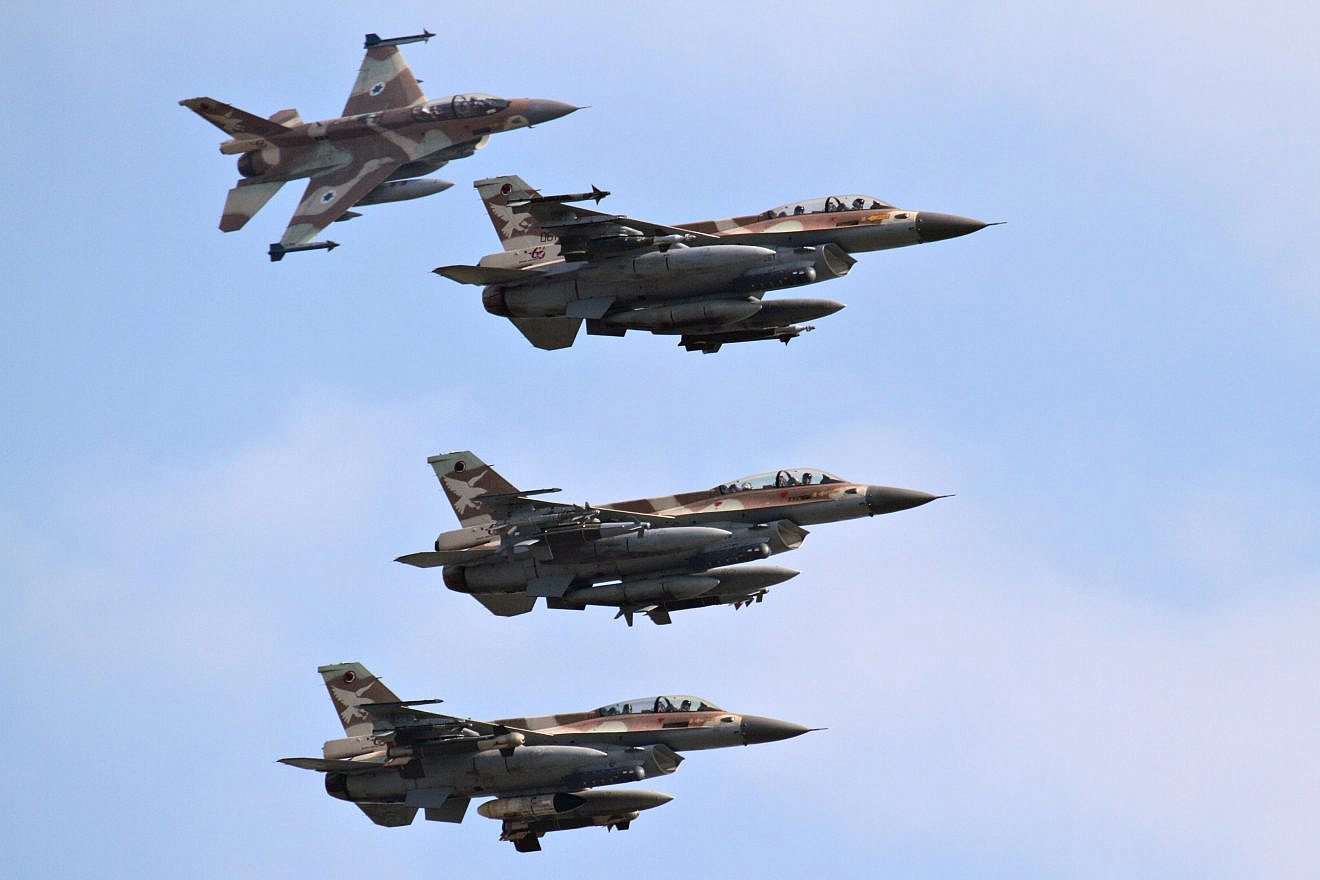
Israeli Air Force jets. Credit: Maj. Ofer via Wikimedia Commons.

The Israel Defense Forces said on Friday it carried out an airstrike in Southern Lebanon that killed Ammar Hayel Qutaybani, the commander of Hezbollah’s “Sinai Outpost.”

The military added that a separate strike in the Tebnine area of Southern Lebanon targeted and killed a terrorist in Hezbollah’s elite Radwan Force.

According to the IDF, both terrorists were involved in efforts to rebuild the Iranian-backed proxy’s terror infrastructure.

Overnight Thursday, the IDF also struck a vessel used by Hezbollah to gather intelligence on Israeli forces off the coast of Naqoura in Southern Lebanon.

“These activities constitute violations of the understandings between Israel and Lebanon,” the military said, referencing the Nov. 27, 2024, ceasefire agreement that ended more than a year of war between the IDF and Hezbollah.

“The IDF will continue to operate to remove any threat to the State of Israel,” added the statement.

Earlier on Thursday, the Israeli military launched a series of strikes against Hezbollah targets in Lebanon, after warning residents of buildings in Mays al-Jabal, Kfar Tebnit and Dibbin to evacuate for their safety.

The attacks targeted arms storage facilities used by the Radwan Force, which for years trained to seize Israeli communities under a plan known as the “Galilee Invasion.”

Also on Thursday, the IDF announced the elimination of a senior Hezbollah weapons dealer in Baalbek, northeast of Beirut, in Lebanon. Hussein Saifo Sharif directed terrorists in Syrian territory to plan attacks against Israel.

The situation in Lebanon remains volatile following the end of the truce with Beirut on Feb. 18. Hezbollah began launching missiles and drones at the Jewish state a day after the Hamas-led massacre on Oct. 7, 2023.

Although Jerusalem has withdrawn most of its ground forces since the war ended, it still controls five strategic positions in Southern Lebanon. Israeli officials have stated that the IDF will retain control of these areas until the Lebanese army demonstrates it can maintain security there.

Lebanese Foreign Minister Youssef Raggi said last week that the country’s armed forces will have fully disarmed Hezbollah in Southern Lebanon within three months.


Zawartość publikowanych artykułów i materiałów nie reprezentuje poglądów ani opinii Reunion’68,
ani też webmastera Blogu Reunion’68, chyba ze jest to wyraźnie zaznaczone.
Twoje uwagi, linki, własne artykuły lub wiadomości prześlij na adres:
webmaster@reunion68.com


France Set to Recognize Palestinian State Despite Majority of Citizens Opposing the Move, New Survey Shows


France Set to Recognize Palestinian State Despite Majority of Citizens Opposing the Move, New Survey Shows

Ailin Vilches Arguello


French President Emmanuel Macron at the Elysee Palace in Paris, France, Sept. 15, 2025. Photo: REUTERS/Benoit Tessier/Pool

More than 70 percent of the French people oppose President Emmanuel Macron’s plan to recognize a Palestinian state at the United Nations General Assembly next week, according to a new study that highlights strong public opposition to the contentious diplomatic move.

A survey conducted by the French Institute of Public Opinion (IFOP) on behalf of the Representative Council of Jewish Institutions of France (CRIF), the main representative body of French Jews, found that only 29 percent of French citizens support Macron’s initiative.

On Monday, France is expected to recognize a Palestinian state at the UN General Assembly in New York, with a handful of other Western countries — including the United Kingdom, Canada, and Australia — poised to follow suit.

However, the majority of the French people oppose the immediate recognition of a Palestinian state, with 71 percent rejecting any recognition before the release of all remaining Israeli hostages still held in Gaza and the surrender of Hamas, according to the newly released survey.

The study also examined how this diplomatic initiative and the ongoing war in Gaza have fueled the ongoing surge of antisemitism and anti-Israel sentiment across France.

Nearly 70 percent of the French people view antisemitic incidents as a serious threat, not only to French Jews but to the society as a whole, the survey found.

Meanwhile, according to the data, 19 percent of French citizens consider it acceptable to target Jews due to the conflict in Gaza, with the figure rising to 31 percent among those aged 18 to 24.

France has faced sharp criticism from Israeli and US officials who oppose recognizing a Palestinian state, warning that such a move would only reward terrorism, hinder Gaza ceasefire negotiations, and embolden Hamas, the Palestinian terrorist group that has ruled the enclave for nearly two decades.

Israel is reportedly considering multiple retaliatory measures in response to Macron’s move, including accelerating West Bank annexations, closing the French consulate in Jerusalem, and seizing French-owned sites in Israel, such as the Sanctuary of the Eleona — a Christian pilgrimage destination.

For his part, Macron has pushed back against criticism of France’s decision to recognize a Palestinian state, arguing that it is a necessary step to counter Hamas.

“The objective of Hamas has never been to make two states, and especially two states as we propose … they want to destroy Israel,” Macron said in an interview with Israeli broadcaster Channel 12. “The recognition of a Palestinian state is the best way to isolate Hamas.”

The French leader has argued that this move is the only way to bring peace and stability to the region, noting that the terrorist group has never supported a two-state solution to resolve the Israeli-Palestinian conflict and would likely oppose a Palestinian state since it would have no governing role.

“Hamas is just obsessed with destroying Israel,” Macron told US television network CBS in an interview. “But I recognize the legitimacy of so many Palestinian people who want a state … and we shouldn’t push them toward Hamas.”

However, the Palestinian terrorist group has repeatedly praised such plans to recognize a Palestinian state as “the fruits of Oct. 7,” citing the Hamas-led invasion of and massacre across southern Israel on Oct. 7, 2023, and its aftermath as the reason for increasing Western support.

France’s expected move has also sparked strong reactions across the country, amid an already tense and hostile climate.

CRIF has repeatedly denounced the recognition of a Palestinian state, calling it “a moral failing, a diplomatic error, and a political danger,” and warned that it would exacerbate antisemitism amid a surge in anti-Jewish hate crimes since the Oct. 7 atrocities.

Far-right leader Marine Le Pen has also condemned the initiative, accusing Macron of supporting it “purely for electoral reasons.”

Meanwhile, France’s left-wing opposition welcomed Macron’s decision, with Olivier Faure, leader of the Socialist Party, calling on mayors to raise the Palestinian flag over town halls on Monday.

However, Interior Minister Bruno Retailleau asked prefects, the government’s local representatives, not to follow through with such gestures, citing the principle of neutrality in public services and warning that violations would be referred to administrative courts.

“There are enough divisive issues in the country without importing the conflict in the Middle East,” the French diplomat wrote in a post on X.

Several French town halls have been forced to take down Palestinian flags following court rulings.


Zawartość publikowanych artykułów i materiałów nie reprezentuje poglądów ani opinii Reunion’68,
ani też webmastera Blogu Reunion’68, chyba ze jest to wyraźnie zaznaczone.
Twoje uwagi, linki, własne artykuły lub wiadomości prześlij na adres:
webmaster@reunion68.com


Gorączka skarg i zażaleń


Gorączka skarg i zażaleń

Paul Finlayson


Przemysł Podtrzymywanego Cierpienia: Gdzie nadzieja umiera, a listy płac żyją dalej

Ach, dobre intencje — wieczna kryjówka łajdaków. Nakazuje się nam, z żałobną powagą, oceniać świat przez pryzmat „dobrych intencji”. Jakby dobroczynność była duchowym majonezem — rozsmarowywanym na rzeczywistości, by zamaskować smród rozkładu.

Ale ludzkim postępowaniem nie kierują „intencje”. Rządzą nim bodźce — te twarde, lśniące motywy zachowań, które nigdy nie śpią. Zerwijcie szlachetne dekoracje z dobroczynności i działań organizacji non-profit, a znajdziecie nie altruizm, lecz najpewniejszy mechanizm działania: własny interes.

Ten korowód jest dobrze znany: tęczowa miłość, ocalenie klimatu, pojednanie z ludnością rdzenną, likwidacja nienawiści. Każda z tych misji spowita jest w moralne szaty, a kolorowe broszury pełne są wzruszających przymiotników.

Ale zadajcie pytanie — to, którego nie wypada szeptać przy koktajlach — ile z tych organizacji przetrwałoby, gdyby rzeczywiście rozwiązały problemy, z którymi rzekomo walczą?

Odpowiedź jest tak oczywista: te szlachetne machiny cnoty rozpadłyby się natychmiast — niczym katedra z papier-mâché podczas ulewy — gdyby ich święte krzywdy naprawdę zostały położone do grobu.


Biznes Rasy

Nie wystarczyło, że śmierć George’a Floyda wywołała autentyczne moralne przebudzenie. Trzeba to było opakować, zmonetyzować i spieniężyć. Dziewięćdziesiąt milionów dolarów w darowiznach później, kierownictwo BLM przechadzało się po wartym sześć milionów dolarów domu w Kalifornii — reklamowanym jako „bezpieczną przystań”, a w rzeczywistości jednej z najlepszych nieruchomości w Studio City — by „strategicznie rozważać kwestie opresji” przy cateringu.

Czy pragną rasowej harmonii? Nie bądźcie śmieszni. Harmonia oznaczałaby koniec spłacania kredytu hipotecznego. Oni nie tylko opłakują swoich męczenników — oni modlą się o nowych. Daniel Penny, który obezwładnił agresywnego szaleńca w nowojorskim metrze, został ich kolejnym złowrogim jackpotem. Bodziec jest jasny: rana musi pozostać otwarta, nie wolno dopuścić do jej zabliźnienia — bo blizny nie fundują willi.

Tymczasem przemoc czarnoskórych wobec czarnoskórych — liczbowo znacznie poważniejsza — ledwo się rejestruje. Oburzenie jest wybiórcze. Prawdziwym towarem jest gotówka.

Czy Jesse Jackson lub Al Sharpton — z majątkami odpowiednio 10 i 5 milionów dolarów — pragną rasowego pokoju? Oczywiście, że nie. Rasowe napięcia to ich bankomat. Jackson zbudował imperium Rainbow/PUSH, Sharpton ma swoją posadę w MSNBC. Bez nieustannego konfliktu, byliby emerytami krążącymi na podrzędnych bankietach.

Jak celnie zauważył Douglas Murray, „przemysł krzywdy” musi nieustannie znajdować nowe krzywdy — w przeciwnym razie jego wyznawcy musieliby znaleźć uczciwą pracę.


Zmiana Klimatu: Apokalipsa jako źródło dochodów

Krucjata klimatyczna niczym się nie różni. Zmiana klimatu jest realna, poważna i wymaga przeciwdziałania. Ale umiarkowanie nie przynosi miliardów. Alarmizm — owszem.

Posiadłość Ala Gore’a w Tennessee zużywała kiedyś dwadzieścia razy więcej prądu niż przeciętny amerykański dom. Jego wymówka? Kredyty węglowe — nowoczesne odpusty dla ekologicznych hipokrytów.

Rodzinny odrzutowiec Johna Kerry’ego wyemitował 325 ton dwutlenku węgla w ciągu zaledwie 18 miesięcy, zanim go sprzedał, by uniknąć złej prasy. Ci ludzie głoszą pokutę, popijając szampana w prywatnych samolotach.

Miliardy płyną do organizacji klimatycznych, „księstw badawczych” i zielono nazwanych synekur właśnie dlatego, że narracja oparta jest na nieustannej katastrofie. Gdyby emisje się ustabilizowały albo technologia przyniosła rozwiązanie, nie byłoby powodów do radości — tylko potrzeba ukrycia tego faktu. Strach utrzymuje kurek otwarty. Spokój by go zakręcił.

Pokażcie mi choć jednego wpływowego klimatycznego alarmistę, którego ślad węglowy nie jest dziesięciokrotnie większy od przeciętnego „Kowalskiego” z przedmieść. Nie znajdziecie. Alarmizm się po prostu zbyt dobrze opłaca.


Przemysł Rdzenności

Kanada dorzuca swoją groteskową cegiełkę. Wydatki federalne na usługi dla rdzennych społeczności wzrosły do niemal 32 miliardów dolarów w latach 2024–2025 — ponad trzykrotnie więcej niż dekadę temu. A jednak ubóstwo, uzależnienia i rozpacz trwają. Dlaczego? Bo większość pieniędzy znika w „rdzennym kompleksie przemysłowym” — prawnicy, konsultanci, biurokraci, wodzowie, wszyscy na sześciocyfrowych kontraktach.

Samowystarczalność to wróg; zależność to gwarancja. Im poważniejszy kryzys, tym głośniejsze apele o kolejne miliardy. Młodzież z Pikangikum, z której 70% w trzeciej klasie podstawówki wącha klej, nie korzysta na tym strumieniu gotówki. Zamiast tego są infantylizowani, podczas gdy „obrońcy” zgarniają diety i pozują z łapaczami snów.


Izrael, Palestyna i Wampiry Konfliktu

A dalej mamy dżentelmenów finansistów Hamasu. Khaled Mashaal — miliarder. Ismail Haniyeh — 4 miliardy dolarów. Musa Abu Marzouk — 2–3 miliardy. Yahya Sinwar — kolejne 3 miliardy, choć ku zaskoczeniu nie zabrał ich ze sobą do grobu.

Ich ludzie głodują i giną; oni tuczą się na przemycie, łapówkach i odsprzedaży pomocy humanitarnej. Dla tych wampirów każdy rozejm to katastrofa, każdy pokój to utracony przychód. Pokój to ich bankructwo. Wojna to ich bilans.

Tymczasem zachodnie NGO i „obrońcy” budują swoje budżety na tej samej fali, przekształcając gniew darczyńców w wieczyste kampanie oburzenia. Gniew to zawsze potężne narzędzie zbierania funduszy. Pokój to zawsze zła wiadomość dla biznesu.


Piekielna Lista Płac

Od rezydencji BLM, przez klimatycznych jet-setterów, po brokerów rdzennych zależności i miliarderów Hamasu — zbudowaliśmy całą gospodarkę, w której problem nigdy nie może umrzeć — bo od niego zależy lista płac.

Wyrzeźbcie to w kamieniu jako nowe przykazanie: Błogosławieni wiecznie oburzeni, albowiem ich jest królestwo comiesięcznych darowizn.

Handlarze krzywdą nie leczą ran — oni posypują je solą, śmiejąc się, gdy tłum krzyczy, bo to krzyki sprzedają bilety.

To nie są rzecznicy — to podpalacze. To nie są uzdrowiciele — to grabarze, którzy wystawiają rachunek za wieczną stypę.


Bodźce i Śmierć Sprawczości

Wspólny mianownik jest zawsze ten sam: bodźce, które zatruwają sprawczość. Prawdziwe wzmocnienie oznacza mówienie ludziom, że mogą zmienić swoją przyszłość. Gospodarka krzywdy rozwija się, mówiąc im coś odwrotnego. Zależność jest pielęgnowana. Ofiarność jest nagradzana. Nadzieja jest duszona w zarodku — żeby nie zniszczyła modelu biznesowego.


Skromna Agenda Reform

Co należy zrobić?

  • Mierzmy rezultaty, nie pozory. Oceniajmy organizacje charytatywne według tego, czy problem maleje — a nie budżet rośnie.
  • Analizujmy bodźce. Jeśli instytucja zarabia na krzywdzie — odetnijmy jej finansowanie.
  • Zastosujmy logikę rynku. Sukces powinien oznaczać obcięcie środków, nie ich zwiększenie.
  • Przywróćmy sprawczość. Wzmacniajmy jednostki, a nie infantylizujmy ich.

Końcowe Oskarżenie

Spójrzcie choćby nieco uczciwszym okiem, a zrozumiecie, czemu metafora piekła pasuje tu tak dobrze. To nie są obrońcy, to podpalacze. To nie są uzdrowiciele; to grabarze, którzy wystawiają rachunek za wieczną stypę.

W tych piekłach jedno prawo rządzi wszystkim: krzywda się opłaca. Krzywda kupuje rezydencję, prywatny odrzutowiec, grant rządowy, uśmieszek konsultanta kasującego 500 dolarów za godzinę „facylitacji dialogu”. Prawdziwe rozwiązanie? To koniec interesu. Dlatego, z piekielną pomysłowością, handlarze cierpieniem dbają, by rana nigdy się nie zamknęła, ogień nigdy nie zgasł, a ofiara nigdy nie odzyskała głosu.

Nie wystarczy nazwać tego hipokryzją. Hipokryzja to hołd, jaki występek składa cnocie. To coś gorszego: to wyniesienie krzywdy do rangi trwałej gospodarki, podziemia, w którym diabły śmieją się, gdy z nieba spadają pieniądze jak grad złota.

Bądźmy przynajmniej szczerzy. To nie są kapłani sprawiedliwości. To nie są obrońcy uciśnionych. To księgowi rozpaczy, a ich księgi muszą pozostać na plusie. Gdy płoną ognie, gdy tłum szaleje, gdy dzieci płaczą — oni nie cofają się z przerażeniem. Oni ślinią się z podniecenia. Bo w ich piekielnym rozrachunku każda tragedia to kolejna wypłata.

I właśnie dlatego nadzieja nie znika — nadzieja zostaje uduszona przy narodzinach, żeby nie zepsuć interesu.


Link do oryginału: https://www.freedomtoffend.com/p/the-worst-thing-for-blm-would-be Zdjęcie: dea30ac7-f213-41f7-ab6b-803d4091226e_1024x1536
Freedom To Offend, 6 września 2025 r.


Paul Finlayson – kanadyjski nauczyciel akademicki, wykładowca marketingu na University of Guelph-Humber, od listopada 2023 roku zawieszony i w 2025 roku ostatecznie wyrzucony z pracy w związku z zarzutem uporczywego dementowania kłamstw o Izraelu. Nie jest Żydem, gdyby ktoś pytał.


Zawartość publikowanych artykułów i materiałów nie reprezentuje poglądów ani opinii Reunion’68,
ani też webmastera Blogu Reunion’68, chyba ze jest to wyraźnie zaznaczone.
Twoje uwagi, linki, własne artykuły lub wiadomości prześlij na adres:
webmaster@reunion68.com


UN agency’s data on ‘settler violence’ only available to its partners


UN agency’s data on ‘settler violence’ only available to its partners

Mike Wagenheim


JNS got a rare look at closely-held U.N. information, which critics say is used to claim Jewish attacks against Arabs in Judea and Samaria and Jerusalem are growing.
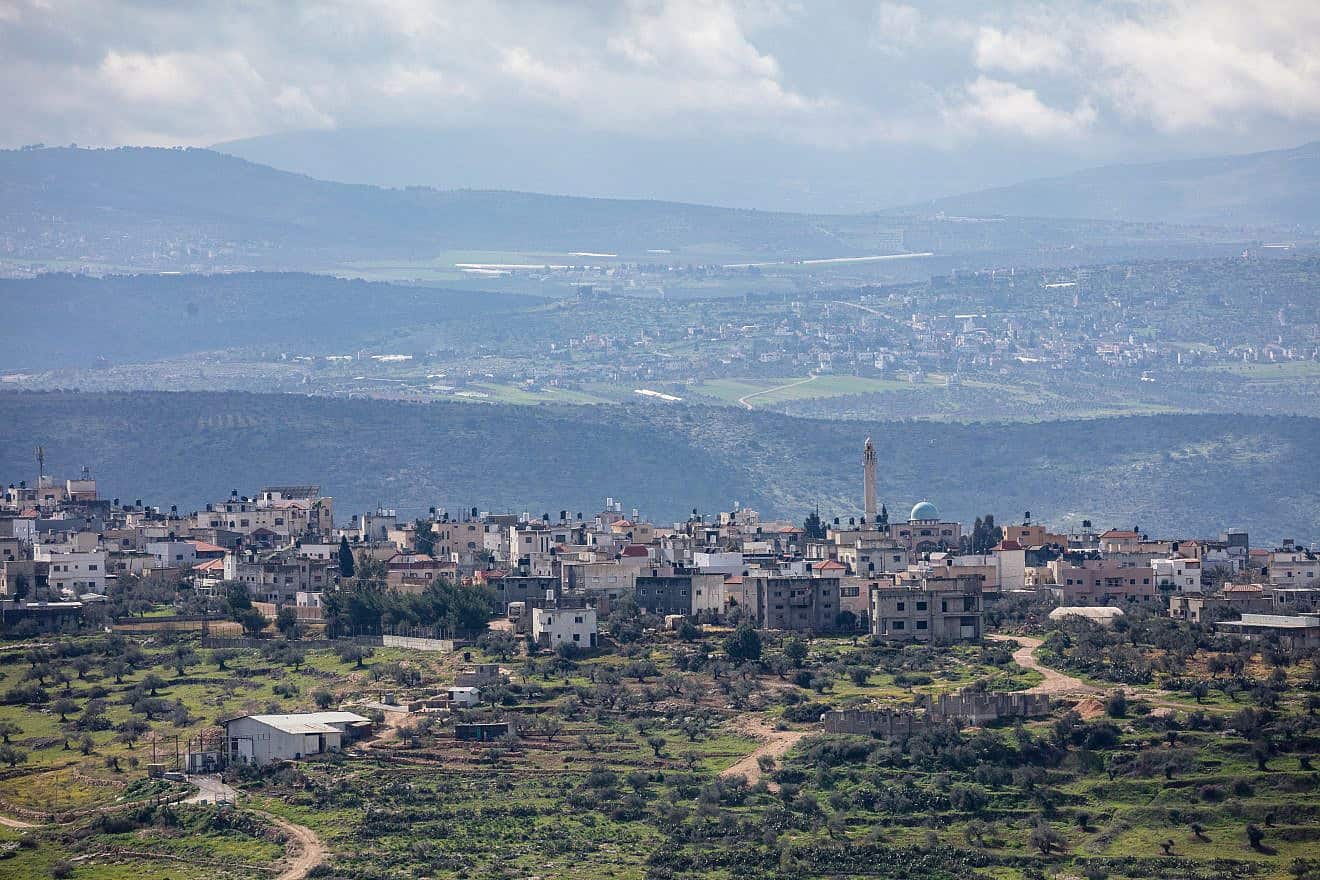
The Judea and Samaria security barrier as seen from Kibbutz Meirav, with Jalbun and Jenin in the background. Photo by Doron Horowitz/Flash90.

The United Nations agency responsible for reporting on Israeli “settler violence” says it only makes its data available to selected organizations, “primarily to protect people’s privacy.”

Regavim, an Israeli nonprofit that is dedicated to protecting Israel’s national lands and resources, issued a report in April titled “False Flags and Real Agendas.”

The analysis cited what it said is flawed and misleading data in the annual report on settler violence published by the U.N. Office for the Coordination of Humanitarian Affairs, or OCHA.

The U.N.  agency relies on poorly-sourced and fraudulent figures, which inflate actual incidents of violence committed by Israelis against Arabs in Judea and Samaria and eastern Jerusalem, according to the report.

The OCHA report claimed that there was a dramatic jump in settler violence during the Israel-Hamas war. Reportedly rising attacks on Arabs led, in part, to U.S. and European sanctions against Jews residing in Judea and Samaria.

The U.N. agency doesn’t share its data publicly, which made it hard for Regavim to analyze it. (OCHA requires a password to access it.)

After JNS sought comment several times from OCHA, Jens Laerke, the agency’s deputy spokesman, said “the data has a degree of personal detail that is needed for partners providing aid, but not for public consumption.”

“In other words, it is primarily to protect people’s privacy,” he said.

Laerke used the example of a burned orchard.

“Partners may use detailed data from OCHA to understand which families depended on that land, how they were affected and what support they may require,” he told JNS. “This level of detail is shared with partners providing aid.”

OCHA makes anonymized statistics available to the public “to allow for trend analysis while protecting people’s privacy,” he said.

Naomi Khan, director of Regavim’s international division, would not say how her group was able to access the OCHA database and compile a report. JNS did not see any personal information in the materials it viewed.

“If only the organizations providing ‘humanitarian aid’ can see the data, and thus critique it, due to privacy concerns, and only the U.N. decides who its ‘partners’ are, we are all outside of this closed tautological circle,” Khan told JNS.

OCHA “positioned itself as the policeman, judge, jury, court stenographer, reporter and PR agent,” she said. “There is no point at which its decisions or judgment can be called into question or even examined. The accused have no recourse.”

Only those with access to the data can see that OCHA repeatedly uses only one source for its data—the Palestinian Authority’s District Coordination and Liaison Office, according to Khan.

The U.N. Agency cites both of the recognized initials for the office—DCO and DCL—making it appear as if they are separate sources, Khan said.

“The bias is baked in, but only laid bare if the sources are revealed,” she told JNS. “The sources are revealed only to ‘partners’—the very same people, more or less, who provide the ‘data.’”

Laerke told JNS that “OCHA’s public statistics on incidents involving settlers only include incidents that result in casualties, property damage or both.”

Its closely held data tells a different story.

Regavim allowed JNS to view its breakdown of the more than 8,000 incidents of settler violence culled from OCHA’s database.

“Buried between the lines is the inescapable conclusion that the State of Israel itself, or its various arms, which continue to provide the lions’ share of most vital forms of ‘humanitarian aid’ to the Palestinian Arabs in Judea and Samaria—drinking water, electricity, food, jobs, medical care—are not ‘partners’ and therefore are not privy to the OCHA data,” she said.

“Nor are they considered reliable sources of reporting on Arab violence,” Khan told JNS. “This is what accounts for the absurd underreporting of Arab violence and the outrageous inclusion of official Israeli activity in Area C in the data.”

The breakdown shows repeated incidents of Israeli government construction and infrastructure work in Area C of Judea and Samaria, which is under full Israeli civil and security control, labeled as settler violence, trespass or property damage.

“While settler violence can in some cases occur in relation to government activities, the latter as such are not classified as settler violence,” Laerke told JNS.

That appeared to contradict the detailed Regavim breakdown that JNS viewed.

“If Israel paves a road in Area C, or puts up electrical poles, or it corrects sewage systems or brings more water delivery systems, they call that settler violence-slash-trespassing,” Khan said.

She drew JNS’ attention to several examples in the OCHA database. “It’s not, of course,” she said. “It’s nonsense.”

Khan also pointed to examples of permitted agricultural work on Israeli state land by Jewish communities, which OCHA classified as settler violence.

Laerke told JNS that OCHA’s “reporting threshold means that OCHA statistics on settler violence doesn’t include incidents where settlers merely visited a site within the occupied Palestinian territory.”

“This threshold is applied equally across all areas of the West Bank, including East Jerusalem,” he said.

That also did not appear to match the Regavim breakdown of OCHA’s database, which includes examples of visits by Jews to Jerusalem’s Temple Mount, Judaism’s holiest site, that were classified as incidents of settler violence, even when no violence was documented.

“Every ascent of the Temple Mount by a non-Muslim is recorded as an incident of settler violence, of storming Al Aqsa,” Khan told JNS.

Those visits accounted for “hundreds” of reported incidents of settler violence, Khan said.


Zawartość publikowanych artykułów i materiałów nie reprezentuje poglądów ani opinii Reunion’68,
ani też webmastera Blogu Reunion’68, chyba ze jest to wyraźnie zaznaczone.
Twoje uwagi, linki, własne artykuły lub wiadomości prześlij na adres:
webmaster@reunion68.com


Israeli Culture Minister Cuts Funding for Film Awards After Palestinian Drama Wins Top Prize, Chosen for Oscars Submission


Israeli Culture Minister Cuts Funding for Film Awards After Palestinian Drama Wins Top Prize, Chosen for Oscars Submission

Shiryn Ghermezian


A scene from “The Sea.” Photo: The Israeli Academy of Film and Television

Israeli Minister of Culture and Sports Miki Zohar said his ministry will pull state funding for Israel’s Ophir Awards, which is the Israeli equivalent to the Oscars, after it awarded a top honor to a film that “defames” Israel’s “heroic soldiers,” he announced on Wednesday.

At this year’s Ophir Awards ceremony on Tuesday night, “The Sea” won best picture, which automatically makes the film Israel’s submission for the 2026 Oscars in the category of best international feature film. The drama, directed and written by Shai Carmeli-Pollak and produced by Baher Agbariya, also won best screenplay, best actor for the 13-year-old Palestinian Muhammad Gazawi, best supporting actor for Khalifa Natour, and best original score. The movie, filmed in Arabic and Hebrew, marks Gazawi’s first acting role.

The Ophir Awards are voted on by the Israeli Academy of Film and Television, a nonprofit organization that is the Israeli version of the US-based Academy of Television Arts & Sciences. It has more than 1,000 members, including filmmakers, producers, content creators, and actors.

“The Sea” follows a 12-year-old Palestinian boy named Khaled, from a village near Ramallah, who gets the opportunity to go the beach for the first time in his life on a class trip to Tel Aviv. When he is forced to return home at a military checkpoint, while his classmates continue on to the beach, Khaled decides to risk his life and dodge Israeli authorities on his solo journey to reach the ocean. “The Sea” premiered at the Jerusalem Film Festival this summer and received support from the Israeli Film Fund.

In a statement on X, Zohar said that after the “pro-Palestinian” film, “which defames our heroic soldiers while they fight to protect us,” won the award for best film at the “shameful” Ophir Awards on Tuesday night, he decided to discontinue funding for the ceremony.

“During my tenure – the citizens of Israel will not pay out of their pockets for a disgraceful ceremony that spits on the heroic IDF soldiers,” he added. “This great absurdity, that Israeli citizens are still paying out of their pockets for the disgraceful Ophir Awards ceremony, which represents less than one percent of the Israeli people – is over. Starting from the 2026 budget, this pathetic ceremony will no longer be funded by taxpayers’ money. The citizens of Israel deserve for their tax money to go to more important and valuable places.”

Several winners on stage at the Ophir Awards ceremony, including Carmeli-Pollak and Agbariya, sported a black T-shirt with a message that called for an end to the Israel-Hamas war and said in Hebrew and Arabic “a child is a child.” Others wore shirts that called for the return of the hostages abducted by Hamas-led terrorists from Israel on Oct. 7, 2023, and talked about the devastation taking place in Gaza during the ongoing war. Acclaimed Israeli director Uri Barbash received a lifetime achievement award at the ceremony, and in his acceptance speech, he condemned actions of the Israeli government and Zohar, pleaded for an end to the war, and called for solidarity between Jews and Arabs.

“It is our sacred duty to bring all the hostages back to their families immediately,” he said. “To end the accursed war and replace the ‘divide and rule’ regime that has declared war on Israeli society!”

Other movies that competed alongside “The Sea” for best film at this year’s Ophir Awards included Nadav Lapid’s “Yes,” “Dead Language” – which made its world premiere at the 2025 Tribeca Film Festival and is an expanded version of the Oscar-nominated short film “Aya” – and Natali Braun’s “Oxygen,” which is about a single mother fighting to pull her son out of military service and his deployment to Lebanon.

Israel has had 10 nominations in the category of best international feature film at the Oscars but has yet to win. The Academy of Television Arts & Sciences will announce on Dec. 16 a shortlist of 15 contenders for the 2026 Oscar for best international feature film. The final list of nominations will be announced on Jan. 22, 2026, and the 98th Academy Awards will take place on March 15, 2026.


Zawartość publikowanych artykułów i materiałów nie reprezentuje poglądów ani opinii Reunion’68,
ani też webmastera Blogu Reunion’68, chyba ze jest to wyraźnie zaznaczone.
Twoje uwagi, linki, własne artykuły lub wiadomości prześlij na adres:
webmaster@reunion68.com