Archive | 2026/07/24

Trump do Saudyjczyków: Umowa nuklearna tylko jeśli uznacie Izrael

Prezydent USA Donald Trump (Fot. REUTERS/Jonathan Ernst)


Trump do Saudyjczyków: Umowa nuklearna tylko jeśli uznacie Izrael

Marta Urzędowska


Donald Trump doprecyzował, że porozumienie nuklearne zawarte w ostatnich dniach z Saudami zależy od uznania przez Rijad państwa Izrael. Jednocześnie w regionie nie ustaje eskalacja – Amerykanin zagroził właśnie Iranowi kolejnym “masywnym atakiem”

Porozumienie nuklearne Waszyngton-Rijad w ostatnią środę (22.07) zostało podpisane przez ministrów ds. energii obu krajów – Chrisa Wrighta i Abd al-Aziza bin Salmana. W dalszej kolejności miało trafić do zatwierdzenia przez Kongres.

Biały Dom: Trump powtarzał Saudom, że muszą uznać Izrael

Następnego dnia Trump dorzucił nowy warunek ostatecznego zatwierdzenia dealu, stwierdzając w swoim serwisie społecznościowym Truth Social, że porozumienie „totalnie zależy od tego, czy Arabia Saudyjska przyłączy się do szanowanych i bardzo udanych Porozumień Abrahama”, czyli serii układów z 2020 r., w których kraje arabskie – Bahrajn, Zjednoczone Emiraty Arabskie, Maroko i Sudan – uznały państwo Izrael.

Ogłaszając zawarcie porozumienia w ostatnią środę, Trump nie wspomniał o takim warunku, choć samo jego postawienie stawia cały układ pod znakiem zapytania. Saudyjczycy wykluczają dziś nawiązanie relacji z Izraelem bez sformułowania jasnego planu utworzenia w przyszłości państwa palestyńskiego.

Jak opisuje „New York Times”, Karoline Leavitt, rzeczniczka Białego Domu spytana na konferencji prasowej dlaczego wcześniej nie wspomniano o tak kluczowym warunku, odpowiedziała, że to prezydent „ostatecznie podejmuje decyzje”. Dodała, że Trump „przy wielu okazjach” wspominał, że Saudowie powinni przystąpić do Porozumień Abrahama.

– Jeśli tego nie zrobią, dealu nie będzie – dodała.

Trump wraca do stanowiska Bidena? Wcześniej deal budził kontrowersje

Choć Biały Dom do dziś nie opublikował treści nuklearnego porozumienia z Saudami, „Wall Street Journal” i „New York Times” pisały jeszcze przed podaniem informacji o jego podpisaniu, że wart dziesiątki miliardów dolarów deal, zawarty na 30 lat, daje Rijadowi możliwość wzbogacania paliwa do reaktorów, a w dalszej perspektywie – rozpoczęcia prac nad bronią nuklearną.

Choć kluczowym punktem porozumienia jest możliwość zbudowania ośrodka wzbogacania uranu, w swoim wpisie w Truth Social Trump dorzucił – nie wyjaśniając szczegółów – że „nie będzie żadnego wzbogacania!”. Kontrowersje w sprawie umowy budził fakt, że do monitorowania realizacji porozumienia i ośrodka wzbogacania nie mieli być dopuszczeni inspektorzy Międzynarodowej Agencji Energii Atomowej.

Informacja o porozumieniu, które wydawało się ostatecznie zatwierdzone, nie spodobała się Izraelczykom. Poprzednio dyskusje o porozumieniu nuklearnym z Saudami, prowadzone jeszcze przez administrację Joe Bidena, zawsze były uzależnione od uznania Izraela. Choć kilka lat temu wydawało się, że nie jest to wykluczone, w 2023 r. w regionie wybuchła wojna rozpoczęta atakiem Hamasu na izraelskie terytoria, w którym zginęło 1,2 tys. osób. W odwecie Izrael zabił ponad 70 tys. Palestyńczyków, co mocno popsuło wizerunek tego kraju w krajach arabskich i uniemożliwiło wszelkie dyskusje o nawiązywaniu z nim relacji.

Dziś, stawiając warunek uznania Izraela przez Saudów, Trump wyraźnie wraca do polityki Bidena.

Netanjahu: Uznanie przez Saudów Izraela byłoby krokiem w stronę pokoju

Doniesienia o nowym warunku postawionym przez Trumpa chwalą Izraelczycy. „Jak wspomniał prezydent Trump, przystąpienie Arabii Saudyjskiej do Porozumień Abrahama byłoby historycznym krokiem naprzód dla pokoju na Bliskim Wschodzie” – stwierdził w oświadczeniu izraelski premier Benjamin Netanjahu.

Izraelczyk nawiązał też do trwającej na Bliskim Wschodzie wojnie USA i Izraela z Iranem, rozpoczętej izraelsko-amerykańską agresją pod koniec lutego b. roku.

„Połączona operacja wojskowa Ameryki i Izraela wymierzona w ludobójczy reżim w Teheranie i stłamszenie przez Izrael irańskiej osi terroru, stworzyły możliwość poszerzenia koła pokoju” – zapewnia Netanjahu.

Jeszcze zanim opublikowano doniesienia, że umowa USA-Arabia Saudyjska nie jest pewna, pojawiały się głosy, że dyskutowanie o ważnym nuklearnym porozumieniu w sytuacji, kiedy Bliski Wschód pogrążony jest w konfliktach, to błąd.

Wojna USA – Iran. Irańczycy odrzucają propozycję rozejmu

Póki co nie zanosi się na uspokojenie sytuacji w regionie. Po rozejmie zawartym w kwietniu i przedłużonym o dwa miesiące w czerwcu, już nie ma śladu. Amerykanie już trzynastą noc z rzędu bombardowali cele wojskowe w Iranie.

Jak podaje amerykańskie dowództwo w regionie, zaatakowano m. in. magazyn dronów na wybrzeżu, by utrudnić Irańczykom atakowanie cywilnych statków płynących cieśniną Ormuz – korytarza transportu ropy naftowej blokowanego przez Iran w ramach odwetu na USA i Izraelu.

Irańskie media podają, że amerykańskie pociski uderzyły też w prowincji Chuzestan, w południowo-zachodnim Iranie.

Jednocześnie pojawiła się informacja, że Irańczycy odrzucili przekazaną za pośrednictwem premiera Iraku Alego az-Zajdiego, nową propozycję zawieszenia broni. Główny negocjator Iranu Mohammad Bagher Galibaf, cytowany w lokalnych mediach, stwierdził, że „nie są potrzebni kolejni mediatorzy”.

– Problemem nie jest przekazywanie wiadomości, problemem jest podejście Ameryki – skwitował.

Trump: Rozważam masywny atak na Iran

Prezydent USA nie kryje frustracji. W czwartkowej rozmowie z portalem Axios ponownie sypie pogróżkami pod adresem Irańczyków.

– Rozważam masywny atak, większy niż kiedykolwiek wcześniej. Jestem blisko podjęcia decyzji, jesteśmy na to gotowi – zapowiedział Trump.

Dodał też, że „Izrael przyłączy się w dwie minuty, jeśli o to poprosi”, ale uściślił jednocześnie, że Amerykanie „nikogo nie potrzebują”.

Sytuacją w regionie niepokoi się ONZ. Sekretarz Generalny Antonio Guterres przestrzegł w czwartek Radę Bezpieczeństwa, że Bliski Wschód spychany jest „na krawędź tego, co niewyobrażalne”.

– Sytuacja wymyka się spod kontroli, region wciągany jest w poszerzający się cykl konfrontacji, jeden kryzys napędza kolejne, jedna eskalacja następną – wyliczał.


Zawartość publikowanych artykułów i materiałów nie reprezentuje poglądów ani opinii Reunion’68,
ani też webmastera Blogu Reunion’68, chyba ze jest to wyraźnie zaznaczone.
Twoje uwagi, linki, własne artykuły lub wiadomości prześlij na adres:
webmaster@reunion68.com

Hamas’s New Leader, Same Old Jihad


Hamas’s New Leader, Same Old Jihad

Khaled Abu Toameh


  • The election is… evidence that efforts to remove Hamas from power have failed.
  • Instead of discussing disarmament, Hamas is discussing succession. Instead of preparing to relinquish power, it is choosing who will govern.
  • Terrorist organizations do not negotiate themselves out of existence.
  • Al-Hayya was Sinwar’s closest associate. He served as Sinwar’s deputy. He helped shape Hamas policy before and after October 7. After the massacre, al-Hayya praised October 7 as “a source of pride for our people… to be passed down from generation to generation.”
  • The election sends a clear message throughout the Middle East: The Iran-led “Axis of Resistance” remains intact.
  • It also explains why al-Hayya’s first public remarks as Hamas leader included thanks to Iran, Hezbollah, the Houthis in Yemen, and the Iraqi Shiite militias. His loyalties are clear.
  • The continued protection afforded to Hamas leaders by terrorist-sponsoring “friends” of Trump, such as Qatar, Turkey and Pakistan, undermines international efforts to combat terrorism.
  • The people paying the highest price remain the Palestinians living in the Gaza Strip. Instead of rebuilding homes, reconstructing schools, restoring hospitals, and creating jobs, Hamas is holding leadership elections. Its priorities could not be clearer. Its leaders are busy securing their own political future while ordinary Palestinians continue living amid destruction.
  • The election of al-Hayya should finally end the fantasy that Hamas may evolve into a political movement willing to coexist peacefully with Israel. It should also end the illusion that negotiations alone will persuade Hamas to disarm.
  • Allowing Hamas to survive politically after October 7 would send a message to terrorist organizations and the Iranian regime: that committing mass murder carries no lasting consequences, and that even after one of this century’s worst terrorist atrocities, its perpetrators can simply elect a new leader and carry on as before.

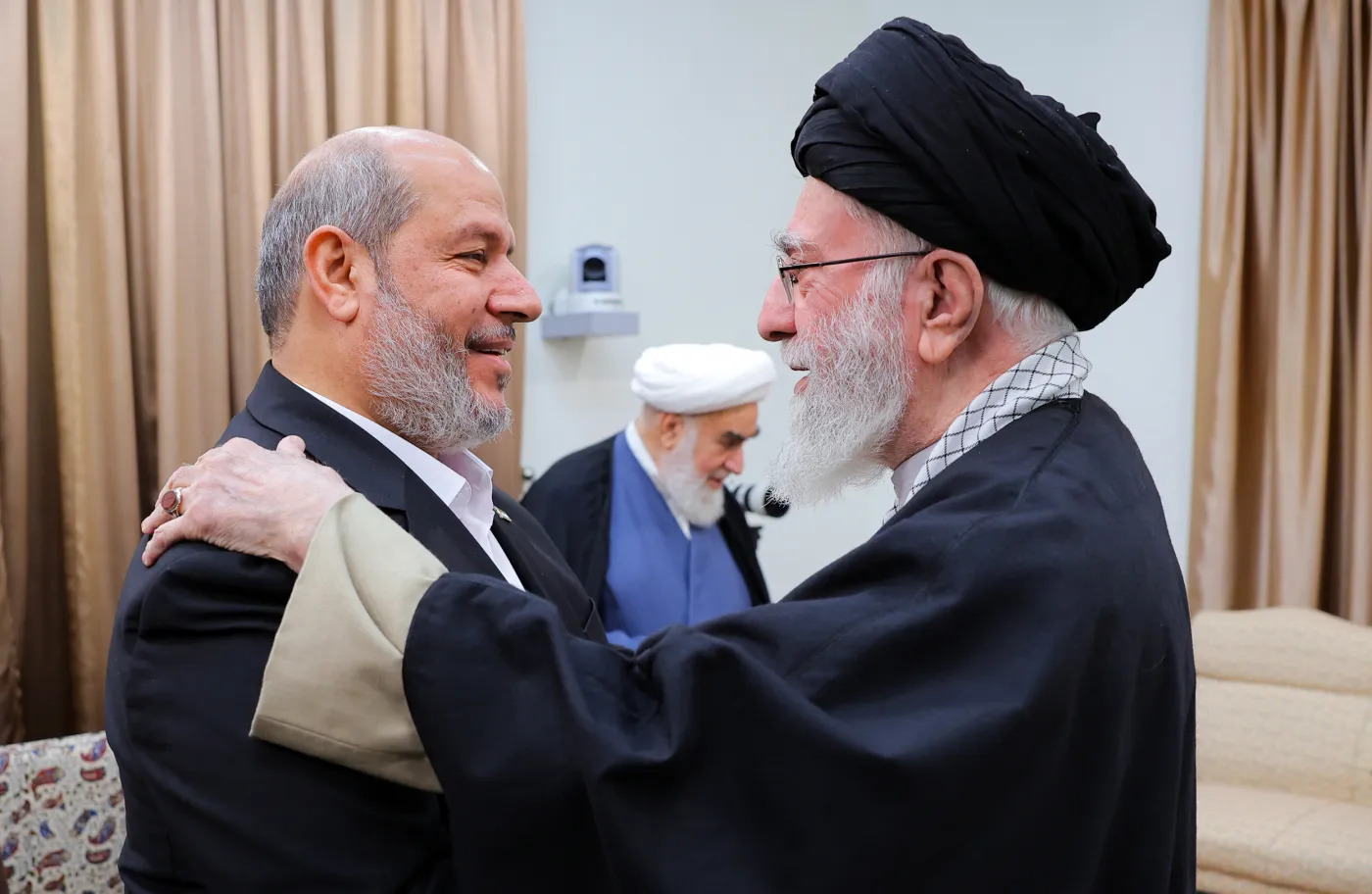
Hamas’s election of Khalil al-Hayya demonstrates that the terrorist group remains sufficiently organized to manage internal political affairs while continuing to rule much of the Gaza Strip and dictate the lives of more than two million Palestinians. Pictured: Al-Hayya meets with Iran’s then Supreme Leader Ayatollah Ali Khamenei in Tehran on February 8, 2025. (Image source: Office of the Iranian Supreme Leader)

Nearly three years after the October 7, 2023 massacre – the deadliest attack against Jews since the Holocaust – the Iran-backed terrorist group Hamas has calmly elected a new head of its “Political Bureau.”

This simple fact should alarm everyone who believed that the terrorist organization had been defeated or dismantled.

Organizations that have been defeated do not hold orderly leadership elections. Organizations that have ceased to exist do not choose successors, debate candidates, and prepare for the future. Hamas does.

Its election of Khalil al-Hayya demonstrates that the terrorist group remains sufficiently organized to manage internal political affairs while continuing to rule much of the Gaza Strip and dictate the lives of more than two million Palestinians.

The election is therefore not merely an internal Hamas matter. It is evidence that efforts to remove Hamas from power have failed.

Instead of preparing to surrender its weapons or dissolve itself after the atrocities of October 7, Hamas is preparing for its future. Holding internal elections means that Hamas expects to remain a permanent player in Palestinian politics.

This completely contradicts any expectation that Hamas will eventually disappear from the Gaza Strip. More than seven months after US President Donald J. Trump’s 20-point peace plan called for the demilitarization of the Gaza Strip, the terrorist group remains intact.

Instead of discussing disarmament, Hamas is discussing succession. Instead of preparing to relinquish power, it is choosing who will govern.

The election of al-Hayya also exposes the failure of current American strategy. For months, the Trump Administration and its “Board of Peace” have continued believing that negotiations could somehow persuade Hamas to disarm voluntarily. What has happened is the opposite.

Hamas never intended to disappear. It never intended to surrender its weapons. It never, as its internal election proves, intended to leave the Gaza Strip. Terrorist organizations do not negotiate themselves out of existence.

The assumption that al-Hayya is more pragmatic than his predecessor, the late Yahya Sinwar (the mastermind of the October 7 massacre) is dangerously misleading. Changing from military fatigues to a business suit does not transform a terrorist into a statesman.

Al-Hayya was Sinwar’s closest associate. He served as Sinwar’s deputy. He helped shape Hamas policy before and after October 7. After the massacre, al-Hayya praised October 7 as “a source of pride for our people… to be passed down from generation to generation.”

Those are not the words of a moderate. Al-Hayya has never renounced Hamas’s 1988 charter calling for Israel’s elimination. He also never apologized for the murder, rape, torture and kidnapping of Israeli civilians – and he has consistently rejected demands that Hamas disarm.

His election signals not change but continuity.

Perhaps the biggest winner is Iran’s regime. Al-Hayya has long maintained close relations with the Iranian regime and the Islamic Revolutionary Guard Corps (IRGC). His victory over Khaled Mashaal consolidates the influence of Hamas’s most pro-Iran faction.

Iran, despite repeated declarations that Hamas had been weakened, therefore retains one of its most valuable terrorist proxies. The election sends a clear message throughout the Middle East: The Iran-led “Axis of Resistance” remains intact.

It also explains why al-Hayya’s first public remarks as Hamas leader included thanks to Iran, Hezbollah, the Houthis in Yemen, and the Iraqi Shiite militias. His loyalties are clear.

Another troubling question: Why is al-Hayya still living safely in Qatar? Why do senior Hamas officials continue enjoying sanctuary in Qatar and Turkey? At least 43 American citizens were among those murdered on October 7, while another 12 were taken hostage to the Gaza Strip. Al-Hayya was one of the leaders of Hamas on October 7. Why has Washington not demanded his extradition? If Hamas leaders planned attacks that killed Americans, why are they still free?

The continued protection afforded to Hamas leaders by terrorist-supporting “friends” of Trump, such as Qatar, Turkey and Pakistan, undermines international efforts to combat terrorism.

The people paying the highest price remain the Palestinians living in the Gaza Strip. Instead of rebuilding homes, reconstructing schools, restoring hospitals, and creating jobs, Hamas is holding leadership elections. Its priorities could not be clearer. Its leaders are busy securing their own political future while ordinary Palestinians continue living amid destruction.

Hamas repeatedly insists that Palestinian suffering is a necessary sacrifice. Its leaders celebrate martyrdom while living comfortably abroad. This is precisely the mentality that Sinwar embraced. Al-Hayya has recently echoed the same rhetoric:

“We tell the occupiers that we are the owners of a cause. Neither the killing of our children nor the martyrdom of our leaders will frighten us or instill fear in our hearts.”

The election of al-Hayya should finally end the fantasy that Hamas may evolve into a political movement willing to coexist peacefully with Israel. It should also end the illusion that negotiations alone will persuade Hamas to disarm.

Instead, the election confirms that Hamas remains committed to the same ideology, alliance with Iran, and strategy of perpetual jihad (holy war) that produced the October 7 massacre. A terrorist organization that can calmly elect a new leader nearly three years after committing one of the worst atrocities in modern history is not collapsing. It is adapting.

That is why Hamas has no place in Gaza’s future – not as a government, not as a political party, and certainly not as an armed movement.

Allowing Hamas to survive politically after October 7 would send a message to terrorist organizations and the Iranian regime: that committing mass murder carries no lasting consequences, and that even after one of this century’s worst terrorist atrocities, its perpetrators can simply elect a new leader and carry on as before.


Khaled Abu Toameh is an award-winning journalist based in Jerusalem.


Zawartość publikowanych artykułów i materiałów nie reprezentuje poglądów ani opinii Reunion’68,
ani też webmastera Blogu Reunion’68, chyba ze jest to wyraźnie zaznaczone.
Twoje uwagi, linki, własne artykuły lub wiadomości prześlij na adres:
webmaster@reunion68.com


‘It Was An Honor to Play for Y’all’: NBA Champion Karl-Anthony Towns Attends Jewish Fundraiser


‘It Was An Honor to Play for Y’all’: NBA Champion Karl-Anthony Towns Attends Jewish Fundraiser

Shiryn Ghermezian


New York Knicks NBA player Karl-Anthony Towns speaks during the “Kings of New York’ discussion panel on day 3 of the Fanatics Fest NYC 2026, held at the Javits Center, New York, NY, July 18, 2026. Photos: by Anthony Behar/SipaUSA

New York Knicks center Karl-Anthony Towns attended a fundraiser on Monday night in New York City in support of the Jewish organization Chazaq, which aims to provide Jewish children, particularly those from the Bukharian community, the opportunity to have a Torah education.

The NBA champion and Dominican American athlete addressed attendees and told them it was “an honor to be able to play for y’all and represent what this city is.” He thanked the crowd for welcoming him and allowing him to share a meal with them, and also mentioned his late mother, who died in 2020 from COVID-19, and the values of love that she taught him. At the fundraiser, which took place at Reserve Cut in Manhattan, the Chazaq organization gave Towns a gift promoting its “speak no evil” anti-bullying campaign.

A native of Edison, New Jersey, the athlete’s appearance at the Chazaq fundraiser comes a little more than a month after the Knicks’ NBA championship win on June 13 against the San Antonio Spurs.

In 2023, Towns posted a message on social media in honor of International Holocaust Remembrance Day.


Zawartość publikowanych artykułów i materiałów nie reprezentuje poglądów ani opinii Reunion’68,
ani też webmastera Blogu Reunion’68, chyba ze jest to wyraźnie zaznaczone.
Twoje uwagi, linki, własne artykuły lub wiadomości prześlij na adres:
webmaster@reunion68.com