Archive | August 2025

Shock Poll: Does the Silent Majority in Australia — and Beyond — Actually Exist?

Shock Poll: Does the Silent Majority in Australia — and Beyond — Actually Exist?

Michael Gencher


Car in New South Wales, Australia graffitied with antisemitic message. The word “F***” has been removed from this image. Photo: Screenshot

On July 29, 2025, a national poll in Australia delivered a deeply unsettling message: perhaps the “silent majority” that we believed in for so long — those decent, fair-minded Australians who would reject antisemitism when it crossed a line — was never really there to begin with.

The survey revealed that just 24% of Australians hold a positive view of Jews, while 28% express negative views, and the rest are indifferent or unsure.

This is not the fringe — it is the center. And it lands after two years of unrelenting escalation, during which antisemitic incidents in Australia have surged by over 300%. Synagogues have been firebombed. Jewish businesses have been attacked. Marches in our cities have featured chants glorifying terror and calling for the annihilation of the Jewish State.

For the past two years, we’ve watched the unthinkable become normalized — and still, the silence has persisted. We reassured ourselves that when things got bad, or worse, Australians — quiet, pragmatic, egalitarian — would draw a line. We believed that behind the chaos of social media and the radicalism of campus protests, there was a steady, principled middle who would never let hate take hold. But perhaps we were wrong. Or perhaps we simply misread the signs.

We saw moments that encouraged hope: political leaders condemning antisemitism after high-profile incidents; universities adopting or referencing definitions of antisemitism — though often watered down, selectively applied, or lacking enforcement; and a few faith and community leaders standing shoulder to shoulder with Jewish communities in symbolic gestures of unity. We mistook these signals as proof that the mainstream was with us — that the loudest voices did not represent the majority.

But those signs were often just that — symbolic. Many condemnations were performative. Institutional policies were rarely enforced. And while we heard reassurances from officials that “most Australians reject hate,” we now know they didn’t have the data to back it up.

So why did we believe?

The truth is that the idea of a silent majority is emotionally powerful. It reassures us that we are not alone. It suggests that while antisemitism may be loud, decency is quietly stronger. It gives us permission to believe in the goodness of our neighbors, even when the evidence is thin. It tells us that democracy will self-correct, that morality will prevail in the end.

But increasingly, that belief feels more like a coping mechanism than a reality. We’ve clung to it without data, without proof, and — if we’re honest — without election results to support it. Because the alternative is terrifying: the alternative is that the center is not asleep, but absent.

And if the silent majority doesn’t exist — if it never did — what then?

It means that antisemitism isn’t just being ignored; it’s being tolerated. It means that when politicians offer symbolic recognition of a Palestinian state while Hamas still holds hostages and preaches genocide, they are not defying their electorate — they may be reflecting it. It means that when university encampments promote terror and intimidate Jewish students, and administrators do nothing, it’s not cowardice — it may be calculated silence. It means that we are not surrounded by quiet allies, but by people who either don’t care or don’t know.

It also means that we can no longer wait for “them” to speak up.

This isn’t just happening in Australia. Across the Western world, the same pattern is emerging. In Canada, antisemitism on campuses is surging, and the government now flirts with symbolic recognition of a Palestinian state — not as part of peace negotiations, but as a political signal. In Ireland, Spain, Norway, and the UK, similar moves have rewarded those who glorify terror while ignoring those who seek dialogue. In the United States, antisemitism reached record highs last year, with Jewish students and communities increasingly ostracized for daring to speak the truth.

These are not isolated developments — they are part of a deeper pattern: the moral center is shrinking, and the hateful fringes are being normalized.

At StandWithUs Australia, we fight back with facts, with education, and with pride. We equip students and communities to speak up for truth, to push back against hatred. But we cannot do this alone. We are a small community. And now, more than ever, we need others to stand publicly — not silently — with us.

Because if the silent majority was ever real, now is the time to speak. And if it remains silent now, then we must confront the hardest truth of all: that it was never there to begin with.

In that case, the path forward changes.

We must stop seeking quiet affirmation and instead build loud, unignorable support. We must shift from trusting that others will step up, to ensuring that we are strong enough to lead. We must teach, advocate, organize, and call out moral cowardice for what it is — whether it comes from universities, governments, media, or community leaders.

Because if we’ve learned anything from the past two years, it’s that silence isn’t safety.

And comfort, no matter how convincing, is not the same as courage.


Michael Gencher is executive director StandWithUs Australia, an international nonpartisan education organization that supports Israel and fights antisemitism.


Zawartość publikowanych artykułów i materiałów nie reprezentuje poglądów ani opinii Reunion’68,
ani też webmastera Blogu Reunion’68, chyba ze jest to wyraźnie zaznaczone.
Twoje uwagi, linki, własne artykuły lub wiadomości prześlij na adres:
webmaster@reunion68.com


Wysłannik Trumpa przyjedzie do Gazy. Sprawdzi dlaczego Palestyńczycy giną, czekając na pomoc

Palestyńczycy niosą pomoc humanitarną otrzymaną od wspieranej przez Stany Zjednoczone Fundacji Humanitarnej dla Gazy (GHF) w centralnej części Strefy Gazy, 1 sierpnia 2025 r. (Fot. REUTERS/Stringer)


Wysłannik Trumpa przyjedzie do Gazy. Sprawdzi dlaczego Palestyńczycy giną, czekając na pomoc

Marta Urzędowska


Specjalny wysłannik Donalda Trumpa, Steve Witkoff, odwiedzi dziś ośrodki dystrybucji żywności w Strefie Gazy prowadzone przez powołaną z inicjatywy Izraela szemraną organizację Gaza Humanitarian Foundation. Pod centrami fundacji zginęło już co najmniej tysiąc czekających na pomoc Palestyńczyków.

Steve Witkoff, główny negocjator administracji Donalda Trumpa w sprawie rozejmu między Izraelczykami i Hamasem, w czwartek przyleciał do Izraela.

Jak opisuje AP, spotkał się z premierem Benjaminem Netanjahu, by porozmawiać o możliwym zawieszeniu broni i sytuacji humanitarnej w Strefie Gazy. Ta jest dramatyczna – ONZ i organizacje pomocowe alarmują w ostatnich dniach, że na miejscu trwa klęska głodu wywołana wojną i izraelską blokadą, która sprawia, że na miejsce dociera za mało pomocy.

W Strefie Gazy od blisko dwóch lat trwa wojna rozpoczęta przez Hamas atakiem na Izrael z jesieni 2023 r., podczas którego zginęło 1,2 tys. osób, a 250 porwano do Gazy. W odpowiedzi izraelska armia prowadzi na miejscu działania wojenne, w których zginęło ponad 60 tys. osób, a enklawa została zrównana z ziemią.

ONZ: Palestyńczycy są mordowani pod ośrodkami z pomocą

W piątek Witkoff, razem z ambasadorem USA w Izraelu Mike’m Huckabee, wjedzie do Gazy, gdzie odwiedzi ośrodki Gaza Humanitarian Foundation (GHF), w których Palestyńczycy dostają paczki z jedzeniem.

Organizacja budzi duże wątpliwości światowych ekspertów od pomocy humanitarnej, bo zastąpiła sprawdzony, zgodny z międzynarodowymi standardami, system pomocy świadczonej wcześniej przez ONZ. Przekonując, że to jedyny sposób by Hamas nie rozkradał pomocy, Izraelczycy zlikwidowali setki oenzetowskich ośrodków, gdzie wcześniej dystrybuowano pomoc i zbudowali cztery duże, prowadzone przez GHF.

Palestyńczycy, przesiedleni w wyniku izraelskiej ofensywy, chronią się w namiotach w mieście Gaza, 1 sierpnia 2025 r. Fot. REUTERS/Dawoud Abu Alkas

Przy czym Izraelczycy nie informują, jak dokładnie działa fundacja, kto ją finansuje i kto dostarcza dziś pomoc – wiadomo jedynie, że to prywatni, głównie amerykańscy donatorzy. A pomoc rozdawana jest w otoczeniu izraelskiej armii i amerykańskich ochroniarzy.

ONZ od początku dystansuje się do tej formy pomagania, przekonując, że jest sprzeczna z zasadą bezstronności, zmilitaryzowana i niebezpieczna. Ponieważ ośrodków jest mało, Palestyńczycy muszą pokonywać duże odległości, by do nich dotrzeć, na miejscu gromadzą się wielkie tłumy, a izraelska armia bywa, że otwiera do nich ogień. W ostatnich tygodniach w serii groźnych incydentów w pobliżu ośrodków zginęło już tysiąc osób.

Choć armia powtarza, że oddaje wyłącznie strzały ostrzegawcze, oenzetowskie Biuro Wysokiego Komisarza ds. Praw Człowieka stwierdziło, że „większość tych zabójstw została popełniona przez izraelskie siły zbrojne”.

Witkoff skontroluje ośrodki dystrybucji GHF

Choć Amerykanie od początku przyklasnęli pomysłowi Izraela, by zastąpić pomoc świadczoną przez ONZ i powołać GHF, dziś najwyraźniej są zaniepokojeni, szczególnie, że – jak informował “New York Times” – większość docierającej na miejsce pomocy pochodzi od amerykańskich donatorów. Po doniesieniach z ostatnich dni, że pod ośrodkami fundacji zginęło kolejnych kilkadziesiąt osób, Trump ogłosił, że śle na miejsce swojego człowieka. Witkoff sprawdzi, co się dzieje w centrach dystrybucji.

Amerykańska administracja w ostatnich dniach nieco zmieniła stanowisko w kwestii pomagania w Gazie. Choć Trump nadal murem stoi za Izraelem, w ostrych komentarzach odniósł się do sytuacji humanitarnej na miejscu. Stwierdził wprost, że nie zgadza się ze słowami izraelskiego premiera, który przekonywał, że „w Gazie nie ma głodu”.

– Owszem, jest, widzę w telewizji dzieci, one wyglądają na głodne. Izrael ma wpuścić na miejsce pomoc – domagał się Amerykanin w ostatni poniedziałek.

Z kolei w czwartek stwierdził, że sytuacja w Gazie jest „czymś okropnym”. Jednak tego samego dnia, krótko po tym, jak Witkoff wylądował w Izraelu, amerykański prezydent napisał w mediach społecznościowych: „Najszybszym sposobem zakończenia kryzysu humanitarnego w Gazie jest poddanie się Hamasu i zwolnienie zakładników!”.

Witkoff rozmawiał też o rozejmie. Hamas zgodzi się na ostrzejsze warunki?

Reuters podaje, powołując się na ważnego izraelskiego urzędnika, że podczas spotkania w Izraelu rozmawiano nie tylko o sytuacji humanitarnej, ale też o rozejmie.

Amerykanin ustalił z Izraelczykami, że warunki ewentualnego zawieszenia broni muszą być inne, niż wcześniej planowano. Zamiast uwolnienia niektórych zakładników Hamas ma zwolnić wszystkich i zgodzić się na pełne rozbrojenie, a cała Strefa Gazy ma zostać zdemilitaryzowana.

Przy wcześniejszych negocjacjach Hamas zdecydowanie odrzucał opcję rozbrojenia i zapowiadał, że zakładników, których nadal przetrzymuje ok. 20, będzie zwalniał stopniowo. Nie jest jasne, czy organizacja zmieniła stanowisko.


Zawartość publikowanych artykułów i materiałów nie reprezentuje poglądów ani opinii Reunion’68,
ani też webmastera Blogu Reunion’68, chyba ze jest to wyraźnie zaznaczone.
Twoje uwagi, linki, własne artykuły lub wiadomości prześlij na adres:
webmaster@reunion68.com


The backroom politics behind Keir Starmer’s decision to recognize ‘Palestine’

The backroom politics behind Keir Starmer’s decision to recognize ‘Palestine’

Ben Cohen


The notion that Israel’s fate should be held hostage to domestic fissures within other countries is offensive, and another reason to dismiss the mudslide of Palestinian state recognition as performative nonsense.

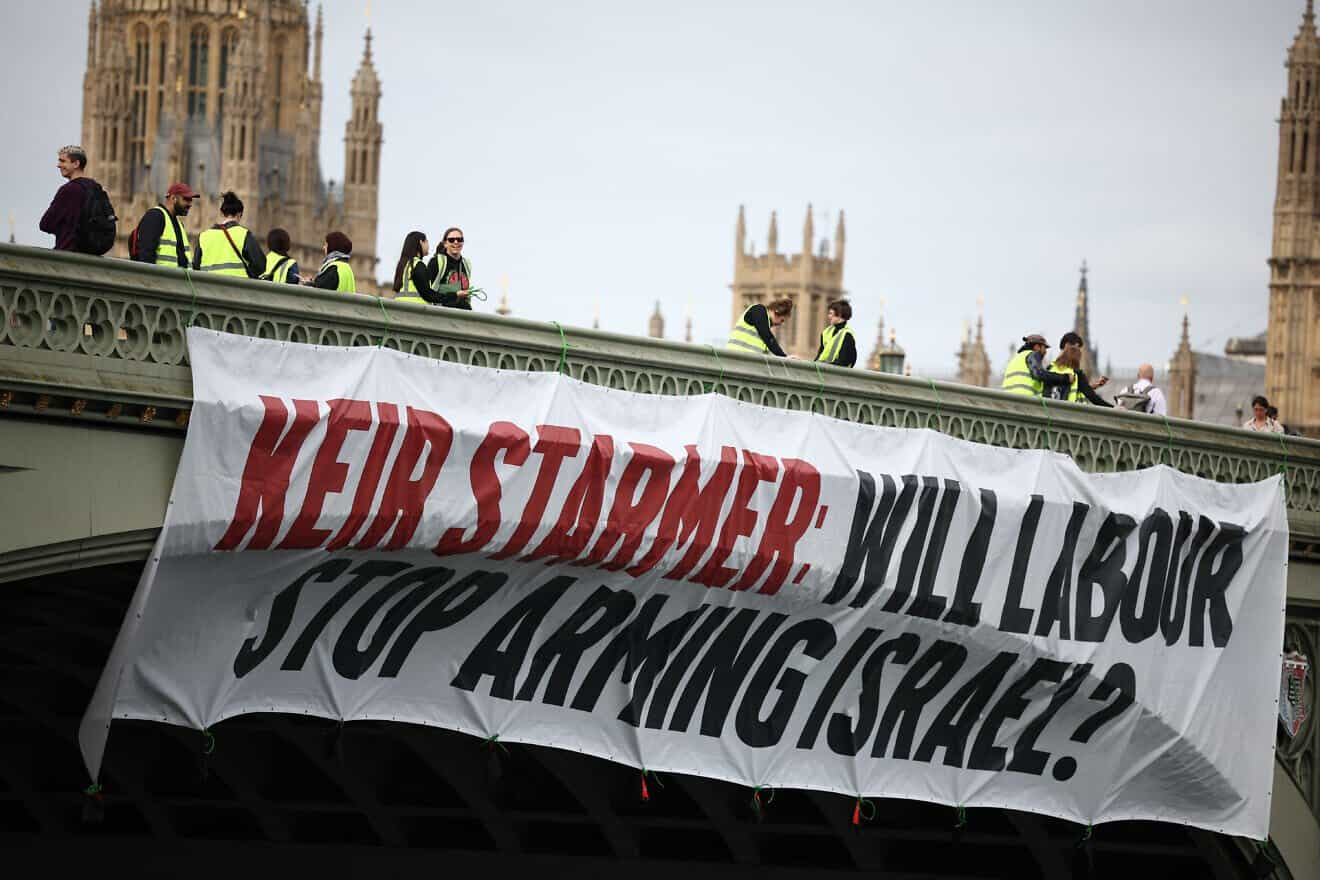
A banner reading “Keir Starmer: Will Labour Stop Arming Israel?” is hung over the side of Westminster Bridge in front of the Palace of Westminster, home to the Houses of Parliament, during early morning rush hour in London on June 3, 2024. Photo by Photo by Henry Nicholls/AFP via Getty Images.

One year after being elected as Britain’s prime minister, Sir Keir Starmer looks increasingly isolated and alone.

His positive approval ratings in the wake of his victory have sunk to their lowest level so far amid a slew of domestic crises and social issues—around immigration, cuts in benefits, unrest in the National Health Service, sluggish economic growth, a deteriorating law and order situation, and much else.

But during what the London Times has described as the prime minister’s “summer of pain,” Starmer has faced his one of his biggest challenges on an issue that makes literally no difference to the paychecks of British voters, the quality of the schools their children attend, the efficiency and responsiveness of their health service, or any other aspect of their daily lives. That issue is the war in Gaza.

Sad to say, this is likely the first time that a foreign war with no British boots on the ground has become a wedge issue in domestic British politics. Other, more terrible wars past and present— such as the current Russian aggression against Ukraine, the most pressing security threat and moral challenge facing both the United Kingdom and European continent—have led to furrowed brows and hand-wringing, but they haven’t really impacted voting intentions. The fundamental reason for this difference—that the aggressors in this case are smeared as “Jewish colonists” ethnically cleansing an indigenous non-Jewish population—will probably be the subject of a future column. Why are so many voters in Britain and elsewhere vexed and angry about the plight of children in Gaza, ignoring the fact that Hamas uses them as human shields while skillfully exploiting the images of their suffering, yet shamefully silent on the fate of the thousands of Ukrainian children abducted by Vladimir Putin’s regime?

But back to Starmer. His anxiety that his continuing refusal to label Israel’s war against Hamas a “genocide” will cost him support was a major factor in his ill-advised announcement that the United Kingdom will recognize a Palestinian state by the time the U.N. General Assembly meets in September, unless Israel declares a unilateral ceasefire and gets on board with a two-state solution (which, in these febrile conditions, isn’t going to happen.)

Since that announcement, much attention has been paid to the international context around it. Of special importance here is France’s decision to recognize an independent Palestinian state, which prodded Starmer in the same direction, as well as the leaders of other countries from Canada to Malta.

Less attention has been devoted to the more immediate circumstances around Starmer. Despite him taking action against the antisemitism that plagued his ruling Labour Party under his predecessor Jeremy Corbyn, including turfing Corbyn out of the party’s ranks, its “Palestine First” wing has become increasingly assertive over the past year.

Over the last fortnight, the noise from this crowd has swelled against the background of viral images of hungry children in Gaza, buoyed further by polls showing that more than half of British voters oppose Israel’s “aggression” and that nearly half want the creation of a Palestinian state. Growing numbers of cabinet ministers pushed Starmer to announce British recognition, with one of them inadvertently acknowledging the emptiness of the gesture by telling The Guardian, “We say that recognizing Palestinian statehood is a really important symbol that you can only do once. But if not now, then when?”

As more than 100 Labour members of parliament signed a cross-party letter to Starmer urging the same, media coverage of the issue depicted the premier as an outlier morphing into an outcast, struggling to impose his view that “Palestine” should only be granted recognition as part of a peace process with Israel. With the scent of rebellion in the air, one Labour Parliament member told Politico that Starmer was “all words—no action, no further sanctions.” Another claimed, presciently as it turned out, “I don’t think people will settle for anything less than recognition now.”

Outside of Labour, Starmer faces a threat from the “Green Left” coalition of Islamists and Socialists, most immediately through the Independent Alliance, a parliamentary grouping formed by Corbyn following his expulsion from Labour. Alongside Corbyn are five other independent MPs, all elected last year and all of them Muslim, whose platforms centered on the war in the Gaza Strip and alleged Islamophobia inside the Labour Party. The grouping is now focused on becoming a new far-left political party, having been joined by Zarah Sultana, originally elected as a Labour MP, whose antisemitism-inflected barbs against Israel are widely covered in British media outlets.

According to the Times, the new formation “has the potential to do real damage to Labour.”

Why? “The Corbyn pitch is simple—the ‘mass redistribution of wealth and power’ and an end to the ‘genocide’ in Gaza,” the paper argued. “For those on the left disenchanted with Starmer after the compromise of a hugely challenging first year in power, it may prove to be irresistible.”

Nigel Farage, the roguish leader of the right-wing populist Reform Party, certainly hopes so; if a far-left party is “able to organize sufficiently and field large numbers of candidates, it will help us enormously,” he said.

The notion that Israel’s fate should be held hostage to the domestic fissures within other countries is offensive on its face, and is another good reason to dismiss the mudslide of Palestinian state recognition as performative nonsense that will never sway Israel nor feed a single child in Gaza. If it has any importance at all, that lies in what it tells us about the influence on British politics, and perhaps the domestic politics of those other countries that have opted to reward Hamas by recognizing a Palestinian state, of Hamas apologists.

Yet in the case of Britain, there is an additional, historical consideration. The 1917 Balfour Declaration supporting the establishment of a Jewish “national homeland” in what was then Mandatory Palestine—one of the greatest and most consequential moves in British diplomatic history—is now seen by many as an additional mark of shame on Britain’s imperial legacy. In many ways, Starmer’s move is compensation for that document, which is held up by Hamas supporters as “Exhibit A” in what they present as the Zionist “colonization” of Palestine. The apologia surrounding a decision more than a century old feeds the notion that Israel is an illegitimate state, the reward given to Jewish colonizers by a devious, manipulative empire run from London.

The irony here is that, for all the opprobrium that Starmer has understandably attracted from supporters of Israel, he remains a bulwark against the more extreme positions advocated by members of his cabinet and backbench Labour parliamentarians, such as expelling the Israeli ambassador and imposing sanctions against the Jewish state. Israeli diplomacy and Israel’s advocates abroad must therefore confront the same strategic dilemma: should they try to influence Europe, which has long seemed like a losing battle, or should they concentrate efforts on keeping the United States on board?

How that is resolved will impact Israel’s global standing for the coming decade, at least.


Ben Cohen is a senior analyst with the Foundation for the Defense of Democracies (FDD) and director of FDD’s rapid response outreach, specializing in global antisemitism, anti-Zionism and Middle East/European Union relations. A London-born journalist with 30 years of experience, he previously worked for BBC World and has contributed to Commentary, The Wall Street Journal, Tablet and Congressional Quarterly. He was a senior correspondent at The Algemeiner for more than a decade and is a weekly columnist for JNS. Cohen has reported from conflict zones worldwide and held leadership roles at the Anti-Defamation League and the American Jewish Committee. His books include Some of My Best Friends: A Journey Through 21st Century Antisemitism.


Zawartość publikowanych artykułów i materiałów nie reprezentuje poglądów ani opinii Reunion’68,
ani też webmastera Blogu Reunion’68, chyba ze jest to wyraźnie zaznaczone.
Twoje uwagi, linki, własne artykuły lub wiadomości prześlij na adres:
webmaster@reunion68.com

French Authorities Halt Gaza Evacuations After Palestinian Student Expelled Over Viral Antisemitic Posts

French Authorities Halt Gaza Evacuations After Palestinian Student Expelled Over Viral Antisemitic Posts

Ailin Vilches Arguello


Anti-Israel demonstration supporting the BDS movement, Paris France, June 8, 2024. Photo: Claire Serie / Hans Lucas via Reuters Connect

French authorities have halted evacuations from Gaza after a Palestinian student was expelled from the prestigious Sciences Po Lille and placed under investigation, following the viral circulation of hundreds of antisemitic posts praising Nazi leader Adolf Hitler and calling for the murder of Jews.

The incident drew widespread condemnation and public outrage, prompting French ministers to demand answers and call for an investigation into how the Gazan student was allowed into the country in the first place.

On Friday, French Foreign Minister Jean-Noël Barrot announced that all further evacuations from Gaza would be suspended pending the completion of the investigation into the student’s background.

After receiving a scholarship, 25-year-old Nour Atalla, a Palestinian from Gaza, arrived in the country in early July to begin her master’s degree in law and communications this fall at the Institute of Political Science in Lille, northern France.

Barrot confirmed that discussions are ongoing about the student’s possible return to Gaza, making clear that she must leave the country pending the investigation’s outcome.

“She has no place at Sciences Po, nor in France,” the top French diplomat said.

On Thursday, local authorities reported that a criminal investigation is underway into Atalla, with the public prosecutor in Lille confirming the case was opened for “apology of terrorism, apology of crimes against humanity using an online public communication service.”

Barrot admitted lapses in the screening process that allowed her entry and has mandated a comprehensive review of everyone evacuated from Gaza to France.

“The security checks, carried out by the French services and Israeli authorities, did not detect the antisemitic content,” the French diplomat said.

Atalla is one of 292 Gazans admitted to the country following a court ruling that opened the door for Gazans to seek refugee status based on their nationality.

She was offered a place at Sciences Po Lille University based on “academic excellence” and following a recommendation by the French consulate in Jerusalem.

On Wednesday, the university announced it had revoked Atalla’s enrollment after hundreds of her past antisemitic and violent social media posts went viral, sparking widespread condemnation from political leaders and members of the local Jewish community.

In several of these posts, she glorified Hitler, praised Hamas’s Oct. 7, 2023, massacre across southern Israel, called for the execution of Israeli hostages and the killing of Jews, and expressed support for terrorist organizations such as Hamas and Hezbollah.

In one post, Atalla shared a video of Hitler giving a speech about Jews, writing, “Kill their young and their old. Show them no mercy … And kill them everywhere.”

In another post shared on Oct. 7, 2023, the day of the deadliest massacre of Jews since the Holocaust, she wrote, “We must do everything we can to match the bloodshed — as much as possible.”


Zawartość publikowanych artykułów i materiałów nie reprezentuje poglądów ani opinii Reunion’68,
ani też webmastera Blogu Reunion’68, chyba ze jest to wyraźnie zaznaczone.
Twoje uwagi, linki, własne artykuły lub wiadomości prześlij na adres:
webmaster@reunion68.com


Izrael Sztern

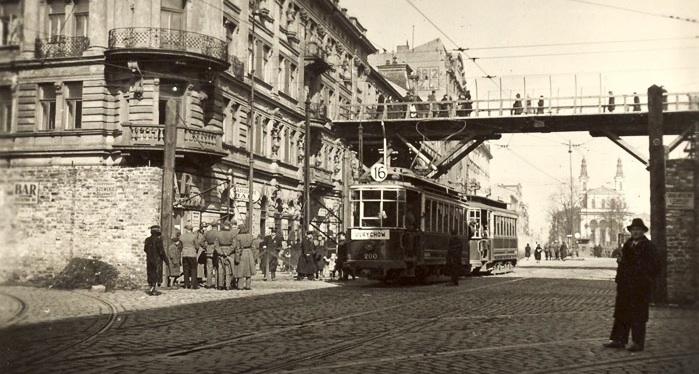
 Kładka w getcie znajdująca się u zbiegu Żelaznej i Chłodnej, fot. Żydowski Instytut Historyczny


Izrael Sztern


Bella Szwarcman-Czarnota,
[kwiecień 2013]


Ojciec przyszłego poety był mełamedem (nauczycielem w chederze), jednak umarł wcześnie, a ciężar utrzymania rodziny spadł na matkę. Zarabiała wypiekiem ciast i z tak ciężko zarobionych pieniędzy utrzymywała trzech synów i swojego starego ojca. W cyklu wierszy Szterna “Ostrolenke” powracają sceny z najuboższej dzielnicy miasta – Piaski – w której mieszkali tacy biedacy, jak on sam. Sztern uczył się w chederze, a jako wyjątkowo zdolny młodzieniec kontynuował naukę w słynnych jesziwach – w Łomży i w Słobódce.

W latach I wojny światowej przebywał w Wiedniu, zapewne chciał uniknąć poboru do carskiej armii. W późniejszych latach wyjechał do kibucu w Warszawie, i w stolicy już pozostał do końca swoich dni.

Poeta i krytyk literacki Melech Rawicz opisuje Szterna jako człowieka, który miał zawsze pretensje – do siebie samego i do całego świata. Śmiał się rzadko i dziwił się tym, którzy to czynią. (“Majn leksikon“, t. III).

Pół dnia się modlił, a kolejne pół dnia studiował święte księgi w bejt midraszu. Zazwyczaj chadzał do chasydów Nachmana z Bracławia, na ulicę Dzielną, ale też bywał często wśród litwackich pietystów – na ulicy Sapieżyńskiej. Ale ani tu, ani tam, nie czuł się u siebie. W Związku Pisarzy i Dziennikarzy Żydowskich na Tłomackiem 13 pojawiał się z rzadka. Może najlepiej czuł się wśród gości Hilela Cejtlina, wydawcy ukazującego się w jidysz dziennika “Der Moment“.

Sztern tworzył wyłącznie w języku jidysz, a jego wiersze i eseje publikowane były przez pisma reprezentujące wszystkie możliwe barwy polityczne i światopoglądowe: “Literarisze bleter“, “Chaliastre“, “Ringen“. Publikował również w bundowskiej “Folkscajtung“. Nie oznacza to jednak, że miał lewicowe poglądy. Miał jednak z pewnością serce po lewej stronie: cierpiący, głodujący, zwykli ludzie pracy – to o nich pisał najczęściej. Co więcej, to oni w jego oczach byli wywyższeni.

“Bogactwo – powiada Sztern w eseju “Brojt un poezje” (“Chleb i poezja”) z 1938 roku, który śmiało można uznać za credo poety – nadaje zewnętrzny blask, bieda – promienieje od środka […]. To oni, biedni i głodni, którym potrzeba niewiele, najgłębiej rozumieją poezję. […] Nie myślcie, że biedny, który żyje, jest martwy – tylko żuje i przełyka “.

Sztern sam żył w ubóstwie, głodował – potrafił przeżyć cały dzień o skórce od chleba. Doświadczenie głodu było dlań fundamentalne. Nic zatem dziwnego, że często chorował, a szpital był jego domem. I trudno powiedzieć nawet, że to był drugi dom, bo zazwyczaj mieszkał kątem, przy jakiejś rodzinie chasydzkiej. W szpitalu odzyskiwał spokój, jedynie tu mógł zbliżyć się do ludzi – współtowarzyszy w chorobie. Widział w nich “gotowość do świętości”, Bożą iskrę, a od tej iskry rozpalała się jego poezja. Tak powstały w 1923 roku jego “Szpitol lider” (“Wiersze szpitalne“).

W kwestiach materialnych był Sztern abnegatem. Młody pisarz Mosze Grossman wspomina, jak pewnego razu towarzyszył Szternowi w wędrówce po ulicach żydowskiej Warszawy.

“Nosił stare, znoszone i wyblakłe ubranie, jego buty i oblicze były jednakowo zmęczone, znoszone, pokryte zmarszczkami i zakurzone. Tylko oczy były po dziecięcemu błyszczące, jak na początku Stworzenia, z iskrą silnej wiary. Szedł kołysząc się ku przodowi, jak w religijnej ekstazie, niczym posłaniec, obcy, gość z bardzo daleka”.

Jakieś tragiczne wydarzenie naznaczyło jego młodość – jeśli wierzyć Melechowi Rawiczowi. Pozostawiło trwały ślad, pogłębiło mizantropię Szterna. Nie mogło jednak w sposób znaczący zmienić jego postawy wobec życia. Jeszcze we wczesnej młodości pisał: “Mój smutek zwiesza się z drzew / nie sięgając nigdy ziemi”.

Żył w przeczuciu, iż nadchodzi czas “czarnego deszczu”. Również dla niego. I ta pora nadeszła. Znalazł się w getcie, o czym najobszerniej zaświadczyła Rachela Auerbach w powojennym szkicu “A bojm in geto” (“Drzewo w getcie“).

“nawet wśród wykorzenionych i wyczerpanych przybyszy z prowincji, którzy stanowili większość klienteli kuchni [Auerbach prowadziła w getcie kuchnię dla literatów, a potem i innych przy ul. Leszno 40], Sztern wyróżniał się swoim przerażająco zaniedbanym wyglądem. […] Dół jego palta był w strzępach […]. Jego twarz bywała ogolona rzadko, na ogół pokrywała ją twarda, czarna szczecina. Z tego, co pamiętam, pod paltem nie miał marynarki, a jego brzuch dziwnie sterczał. Zapytałam [poetę] Josefa Kirmana, który zasugerował, że ponieważ kieszenie palta były oderwane, Sztern nosił swoje najcenniejsze rzeczy pod podszewką – książkę, którą czytał, tomik wierszy Rilkego czy Kasprowicza i swoje własne [koszerne] naczynie do obmywania rąk zgodnego z wymogami religii”.

W “Kronice getta warszawskiego” Emanuela Ringelbluma czytamy o Szternie z tego okresu:

“Cichy, skromny, prawdziwy ‘mąż sprawiedliwy’ […] nie miał pojęcia, jak zdobyć jakieś wsparcie i paczki żywnościowe. Zachowywał się jak niewinny gołąbek i głodował”.

Dużo później Kirman, tuż przed Pesach 1942 roku, zawiadomił Rachelę Auerbach, że Sztern jest bliski śmierci i przebywa w mieszkaniu na rogu Pawiej i Smoczej. Poetę udało się odratować. Dzięki pobytowi w centrum dla uchodźców przy ul. Leszno 14 – administrator zezwolił na ustawienie łóżka dla pisarza w kancelarii – Sztern zaznał krótkiego wytchnienia. Z okna pokoju na drugim piętrze kamienicy przylegającej do kościoła ewangelickiego widać było okryty kwiatami kasztanowiec. Auerbach poprosiła wówczas poetę: “Napisz mi wiersz o tym drzewie kwitnącym w samym środku getta”.

Sztern napisał w getcie wiele wierszy, a wieczory odbywające się w kuchni, zwane Trzecimi Posiłkami Pisarzy [trzeci posiłek – ostatni posiłek przed końcem szabatu], na których przemawiał i czytał swoje utwory, gromadziły tłumy. Doświadczenie getta odmieniło poetę, który przedtem stronił od ludzi. “Stał się przystępny i społecznie czynny. W pełnej napięć atmosferze żydowskiego przeznaczenia i ludzkiego cierpienia Sztern czuł się na właściwym miejscu. Stąd czerpał potężną inspirację”.

Kiedy się zaczęły akcje wysiedlania z getta, Szternowi udało się zrazu ukryć w tzw. szopie Hoffmanna. Jednak najprawdopodobniej w czasie którejś kolejnej selekcji został schwytany i wysłany do Treblinki. Zdaniem Racheli Auerbach nastąpiło to w sierpniu 1942 roku; podobne przypuszczenie wyraził Ringelblum, dodając: “Jego rękopisy zginęły razem z nim”.

Sztern nie zabiegał nigdy o wydanie swoich utworów w formie książki. Zapewne dlatego, że nie był człowiekiem zaradnym, a może nie dbał o to. Dopiero po wojnie jego przyjaciele, przede wszystkim poeta H. Lejwik zajęli się edycją jego twórczości – zbiór wierszy i esejów ukazał się w Nowym Jorku w 1955 roku. Zbieranie zapisanych czy wydrukowanych w formie ulotnej utworów Szterna trwa.

Twórczość Szterna w jidysz wraz z przekładami na angielski publikowana jest na stronie www.yisroelshtern.org.


Zawartość publikowanych artykułów i materiałów nie reprezentuje poglądów ani opinii Reunion’68,
ani też webmastera Blogu Reunion’68, chyba ze jest to wyraźnie zaznaczone.
Twoje uwagi, linki, własne artykuły lub wiadomości prześlij na adres:
webmaster@reunion68.com