Archive | 2025/12/17

Instytut Strat Wojennych rozpoczął prace nad liczeniem strat wyrządzonych przez Sowietów

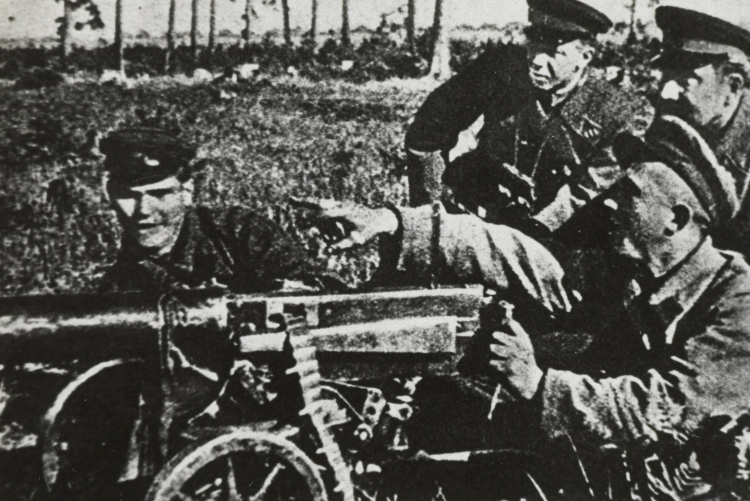
Wrzesień 1939 r.: Wojska sowieckie zajmują wschodnie tereny Polski/Źródło: polona.pl


Instytut Strat Wojennych rozpoczął prace nad liczeniem strat wyrządzonych przez Sowietów

gab/ lm/


Instytut Strat Wojennych rozpoczął prace nad liczeniem strat wyrządzonych Polsce przez Sowietów – poinformował w Lublinie szef instytutu Bartosz Gondek. Naukowcy będą katalogować straty m.in. gospodarcze, terytorialne, infrastrukturalne. Mamy o czym przypominać, mamy co liczyć – powiedział.

Zastępca szefa Kancelarii Prezesa Rady Ministrów Jakub Stefaniak na wtorkowym briefingu w Lublinie poinformował, że Instytut Strat Wojennych rozpoczyna prace nad katalogowaniem strat, które wyrządzili Sowieci. – Nikt w Polsce nie ma monopolu na historię. Dzisiaj zmieniamy niejako podejście Instytutu Strat Wojennych do tematów historycznych. To nie ma być broń i oręż polityczny, bo to nie przynosi żadnych efektów – zaznaczył Stefaniak.

W jego opinii jest to też próba wywołania pewnego rodzaju dyskusji. – Być może będzie to preludium do tego, żeby rozpocząć dyskurs czy nie warto jednak rozpocząć starań o partycypowanie w pieniądzach, które są zamrożone jako aktywa rosyjskie dzisiaj w krajach Unii Europejskiej – mówił Stefaniak.

Dyrektor Instytutu Strat Wojennych Bartosz Gondek zwrócił uwagę, że straty wyrządzone Polsce w trakcie II wojny światowej przez Niemcy liczone są już od 80 lat. Inaczej jest – jak wyjaśnił – w przypadku strat powstałych wskutek działalności Związku Sowieckiego. – To jest temat, którego najpierw do ’89 roku nie można było poruszać. Potem przez krótki czas udawało się o pewnych rzeczach rozmawiać, a od 1997-98 r. było coraz trudniej – dodał.

Naukowcy będą badać straty w poszczególnych dziedzinach, m.in. infrastrukturze, przemyśle, rolnictwie, sztuce. Wkrótce ukaże się – jak podał dyrektor – pierwszy zeszyt źródłowy ukazujący, jak „sowieckie komisje ukrywały swoją działalność, wrzucając to w straty ogólne”. Kolejny zeszyt poświęcony będzie stratom w leśnictwie. – Opublikujemy nasz półrocznik Studia i materiały, które będą całkowicie przeznaczone tematyce strat wojennych w kontekście Rosji sowieckiej – zapowiedział Gondek.

Zapytany o szacunkową skalę strat wyrządzonych przez Sowietów przekazał, że jest ostrożny w tej kwestii. – Szacowało się, że same straty wojenne w wyniku agresji 17 września przeliczane są bardzo wstępnie na około 600 miliardów, ale to jest kropla w morzu – stwierdził szef ISW.

Naukowców – jak dodał – będzie interesować okres od 17 września 1939 r. do lat 90. XX wieku, czyli symbolicznego opuszczenia Polski przez oddziały północnej grupy wojsk sowieckich. – Mamy o czym przypominać, mamy co liczyć – zaznaczył Bartosz Gondek.

17 września 1939 r., łamiąc polsko-sowiecki pakt o nieagresji, Armia Czerwona wkroczyła na tereny II Rzeczypospolitej. Sowiecka napaść na Polskę była realizacją układu podpisanego w Moskwie 23 sierpnia 1939 r. przez ministra spraw zagranicznych III Rzeszy Joachima von Ribbentropa oraz ludowego komisarza spraw zagranicznych Związku Radzieckiego Wiaczesława Mołotowa, pełniącego jednocześnie funkcję przewodniczącego Rady Komisarzy Ludowych. Konsekwencją sojuszu dwóch totalitaryzmów był rozbiór Polski. (PAP)


Zawartość publikowanych artykułów i materiałów nie reprezentuje poglądów ani opinii Reunion’68,
ani też webmastera Blogu Reunion’68, chyba ze jest to wyraźnie zaznaczone.
Twoje uwagi, linki, własne artykuły lub wiadomości prześlij na adres:
webmaster@reunion68.com

Sydney’s wake-up call: When antisemitism turns deadly


Sydney’s wake-up call: When antisemitism turns deadly

Danny Danon


What happened on Bondi Beach the first night of Chanukah should shock the conscience of the nation and demand more than just words of sympathy.

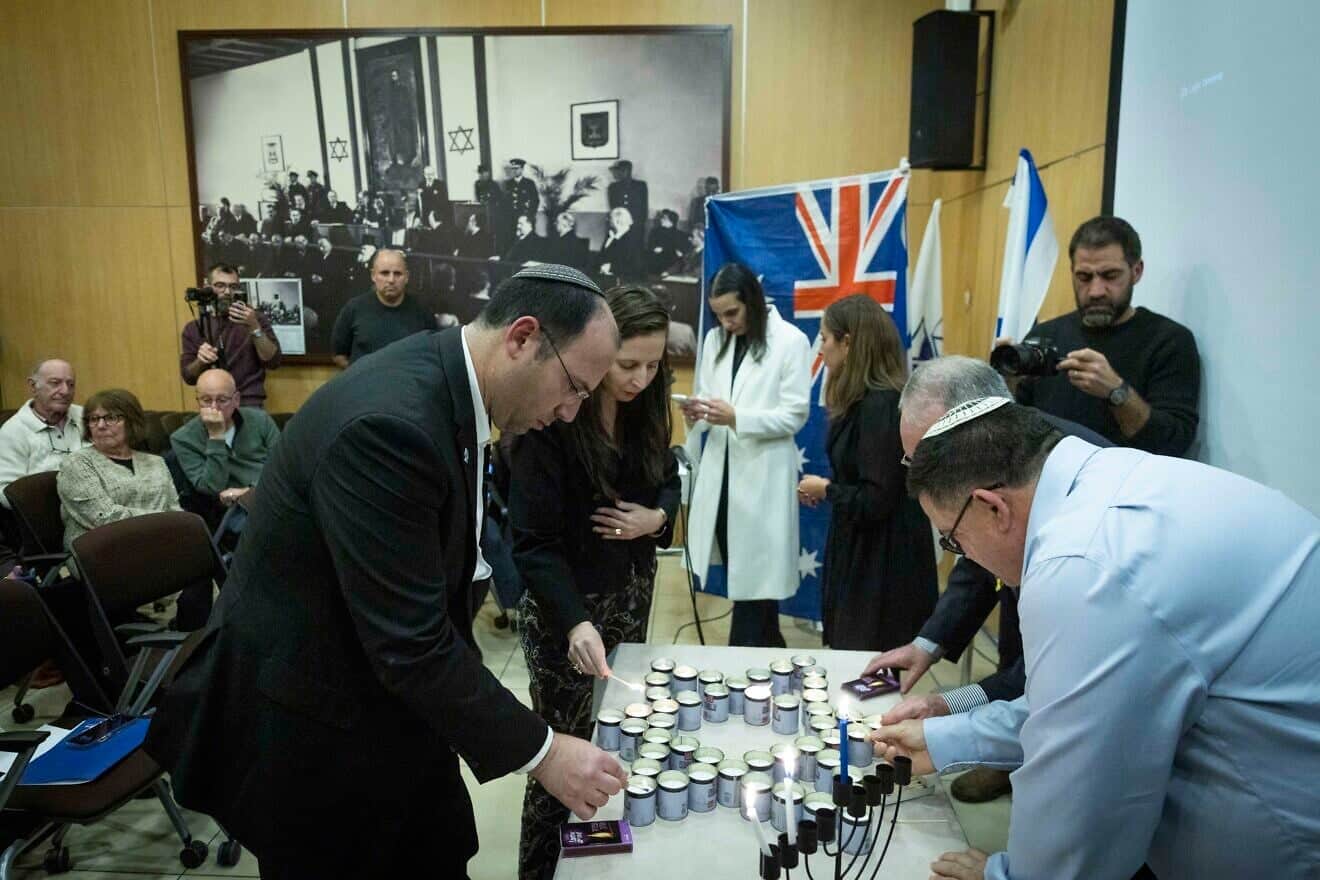
People attend a ceremony, held at the World Zionist Organization (WZO) building in downtown Jerusalem, in memory of victims of a mass shooting on Dec. 14 during a Chanukah celebration on Bondi Beach in Australia, Dec. 15, 2025. Photo by Chaim Goldberg/Flash90.

The terrorist attack on a Chanukah celebration at Sydney’s Bondi Beach has brought a long-simmering fear into brutal reality. Jews gathering to mark the “Festival of Lights” were targeted simply for who they are. This was not random violence. It was a cruel act of antisemitic hatred—an attack on human dignity, and on the values of peace and coexistence that Australia, like all democracies, claims to cherish.

My heart is with the victims, the injured and their families, and with Jewish communities in Australia and around the world who are grieving and feeling profoundly vulnerable. What happened in Sydney should shock the conscience of the nation and demand more than just words of sympathy.

This violence did not emerge from a vacuum.

In the days immediately following the Hamas-led massacre in southern Israel on Oct. 7, 2023, in which some 1,200 people were murdered and 251 others were kidnapped in plain sight and dragged into Gaza, a Jewish bakery in Sydney was defaced with an inverted red triangle, a symbol increasingly used to glorify attacks on Israelis and Jews. It was an early warning sign. What followed over the next 16 months, as the war against the terrorist organization in Gaza ensued, was an avalanche: arson attacks on kosher restaurants and the firebombing of the Adass Israel Synagogue in Melbourne, graffiti, threats and open hate speech directed at Jewish institutions and individuals across Australia.

The scale has been so severe that the head of Australia’s primary intelligence agency publicly stated that Jew-hatred had become his top concern in terms of threat to life. That is an extraordinary and damning assessment for a country that prides itself on tolerance and social cohesion, and that is home to one of the largest numbers of Holocaust survivors left in the world.

Sunday’s attack at Bondi confirmed what many Australian Jews have been saying quietly, and sometimes loudly, for more than a year—that they no longer feel safe in the country they believed would protect them.

Australia’s Jewish population is small, with around 150,000 people in a nation of 27 million, but it is deeply woven into the fabric of Australian life. Roughly a third live in Sydney’s eastern suburbs, including Bondi, the very area that has become a focal point for both Jewish life and antisemitic attacks. Parents now hesitate before taking their children to daycare. Jewish schools operate behind heightened security. Community events take place under the shadow of fear.

The government has not been entirely blind to this reality. Last year, Australia appointed its first-ever special envoy to combat antisemitism. But appointments alone cannot reverse a toxic, radical trend in which incitement has been allowed to flourish. Chanting “Globalize the intifada” and “From the river to the sea, Palestine will be free” are not harmless slogans or legitimate political critiques. They are calls that normalize violence, erase Jewish self-determination and dehumanize Jews. They are not expressions of free speech in any moral sense, and they can lead to bloodshed.

The numbers tell the story starkly. In the year up until Sept. 30, there were roughly 1,600 antisemitic incidents recorded—about three times higher than in any year prior to Oct. 7. These were not just offensive words. They included a childcare center in Sydney that was firebombed and smeared with antisemitic graffiti, and the shocking case of two public hospital nurses dismissed after being filmed boasting that they would refuse treatment to Israeli patients.

Israel, for its part, expects its democratic partners to do more than express outrage after tragedy strikes. The expectation of the Australian government is clear: to act decisively against antisemitic incitement, to enforce the law without fear or favor and to restore a public culture in which Jews are not demonized or targeted.

We live in dark days, but as the message of Chanukah shows, light, hope and humanity will prevail. That message must now be matched by concrete action in Australia itself.

Because protecting Jewish life is not a favor to one community. It is a test of the moral strength of the nation as a whole.


Ambassador Danny Danon is Israel’s Permanent Representative to the United Nations.


Zawartość publikowanych artykułów i materiałów nie reprezentuje poglądów ani opinii Reunion’68,
ani też webmastera Blogu Reunion’68, chyba ze jest to wyraźnie zaznaczone.
Twoje uwagi, linki, własne artykuły lub wiadomości prześlij na adres:
webmaster@reunion68.com


The People of Forever Are Not Afraid


The People of Forever Are Not Afraid

Liel Leibovitz


After another massacre, Jews are reminded of a truth our enemies never grasp: History belongs to those who refuse to disappear

Alex Woz / Tablet

Like so many Jews, I was woken up in the early morning today to news of the massacre in Bondi Beach, Australia. Like so many Jews, I personally knew people who were hurt in the attack. And like so many Jews, I grieved for the victims and raged as public officials who cheered on the policies that made the attack possible rushed to publish sanctimonious denunciations, as if they had failed to understand that the shooting was precisely what was meant by “Globalize the intifada.”

But amid the profound sadness and the righteous indignation, one timeless truth mustn’t be forgotten: We Jews are going to be just fine.

Attack us, as Hamas did Israel on Oct. 7, 2023, and you’ll soon discover that Jewish blood is no longer cheap. For more details, kindly consult with Yahya Sinwar, Hassan Nasrallah, or the gentlemen in charge of Iran’s nuclear program.

We’ll continue to grow stronger because we draw our courage and our resolve from that ancient covenant that charges us, always and forever, to spread God’s light.

Try to scare us away from being Jewish—as the marauders attempting a pogrom outside Manhattan’s Park East Synagogue did recently, chanting “Make them scared” as they violently harassed Jews attempting to enter the building—and you’ll discover that you’ve accomplished just the opposite. The formerly loosely committed among us are now walking around with enormous Star of David necklaces, and the Simchat Torah Challenge, which encourages Jews to come together and read the weekly Torah portion together, drew tens of thousands of members and is growing exponentially. These are two anecdotes; there are many more.

We’ll mourn the dead, we’ll comfort the afflicted, we’ll carry on. It’s been millennia now; we’ve gotten good at it. And we’ll continue to grow stronger because we draw our courage and our resolve from that ancient covenant that charges us, always and forever, to spread God’s light and love to a benighted, blood-soaked world. Our great prophet Micah captured the mission statement perfectly long ago: “They shall sit every man under his vine and under his fig tree; and none shall make them afraid: for the mouth of the Lord of Hosts hath spoken it.”

And yet, in each generation, some clearly fail to get the memo, believing instead that it’s possible to make them—us, the Jews, and with us, the entire world—afraid by means of brute force. How does that work out? A brief history lesson tells the story.

Rome, the former empire that showed us no mercy, is now a sweaty, smoggy city depending on tourist dollars to survive.

Spain, birthplace of the Inquisition, has let in some 600,000 migrants a year since 2022 and now faces the highest unemployment rate on the continent.

England, having been the first to expel the Jews in 1290, now arrests people for making true statements on social media while turning a blind eye to the mass rape of its own daughters by gangs of vicious migrants slowly devouring the country.

France, Germany, Canada, Australia—it’s the same story everywhere you look. A West too weak to define, let alone defend, its own values, and hordes of marauders settling in and reshaping the culture in their violent, hateful image.

So don’t worry about us. Worry about Sydney, Toronto, Paris, and the other former capitals of culture and innovation that are now drowned by waves of angry savages cheering on murder and sowing chaos and violence. Worry about the kind folks in Germany who let in hundreds of thousands of Muslims in the name of multicultural benevolence, only to be told that they may no longer enjoy their Christmas markets because their new neighbors may feel inclined to blow them up, shoot them up, or ram them with cars. Worry about the politicians who continue to take suicidal symbolic steps, like recognizing “Palestine” or prattling on about “Islamophobia,” even as they drain their nations of their freedoms and securities.

Almost immediately after the shooting in Sydney, some on social media took to sharing the famous photograph of a menorah in a window in Kiel, Germany, in 1931, with the Nazi flag hanging from the facade of the party’s regional headquarters across the street. The photo is indeed worth a thousand words: Hanukkah has never been a holiday of passive faith. It commemorates a moment when Jews refused to surrender their identity to those who demanded conformity. Hanukkah teaches that Jewish survival is not rooted in denial of danger, but in the courage to affirm who we are anyway.

Nearly a century later, we still light menorahs with joy and conviction, whereas the Nazi flag and those who believed in it are all gone. Nearly a century later, the Jewish state leads the way in everything from innovation to birthrates to happiness, while the birthplace of Goethe and Schiller finds its fertility in free fall, its politics in turmoil, and its future darkened by violent invaders who despise its culture and show it no fealty or gratitude.

Today’s Nazis will soon meet a similarly grim ending, their green-red-white-and-black flag tossed to the same dustbin of history as the swastika. Let the savages ululate their blood libels as they always have. Let them accuse the Jews of whatever they want. The people of forever aren’t afraid.


Liel Leibovitz is editor-at-large for Tablet Magazine and the host of its weekly podcast Rootless and its daily Talmud podcast Take One.


Zawartość publikowanych artykułów i materiałów nie reprezentuje poglądów ani opinii Reunion’68,
ani też webmastera Blogu Reunion’68, chyba ze jest to wyraźnie zaznaczone.
Twoje uwagi, linki, własne artykuły lub wiadomości prześlij na adres:
webmaster@reunion68.com