Archive | 2025/12/07

Izrael zostaje w Eurowizji. Hiszpania, Irlandia, Holandia i Słowenia rezygnują

Protest przed studiami RTE (Radio Telefis Eireann), irlandzkiej telewizji publicznej, wzywający do bojkotu Konkursu Piosenki Eurowizji 2026 przez Irlandię, jeśli w konkursie wezmą udział przedstawiciele Izraela, 1 listopada 2025 r. (Fot. REUTERS/Clodagh Kilcoyne)


Izrael zostaje w Eurowizji. Hiszpania, Irlandia, Holandia i Słowenia rezygnują

Emilia Dłużewska


Izrael będzie mógł wziąć udział w nadchodzącej Eurowizji – zdecydowała Europejska Unia Nadawców. Na pewno rezygnują z niej Holandia, Irlandia, Słowenia i Hiszpania. Kto jeszcze?

Spór o dopuszczenie Izraela do udziału w nadchodzącej edycji Eurowizji trwa od miesięcy.

Muzycy, widzowie i aktywiści domagali się wykluczenia tego kraju z konkursu ze względu na ludobójcze działania Izraela w Strefie Gazy. Nie byłaby to decyzja bezprecedensowa – po inwazji na Ukrainę w 2022 r. z Eurowizji błyskawicznie wyrzucono Rosję.

Przedstawiciele części europejskich krajów od miesięcy zapowiadali, że jeśli Izrael będzie mógł wystawić swojego reprezentanta, zrezygnują z udziału w Eurowizji. Takie deklaracje złożyły Irlandia, Holandia, Słowenia i Hiszpania. Wszystkie cztery podtrzymały je w czwartek wieczorem, już po tym, jak organizator Eurowizji, Europejska Unia Nadawców (EBU), potwierdził, że Izrael weźmie udział w konkursie.

Yuval Raphae podczas wielkiego finału Konkursu Piosenki Eurowizji 2025 w Bazylei w Szwajcarii, 17 maja 2025 r. Fot. REUTERS/Denis Balibouse

Ostateczna decyzja była wynikiem głosowania, jakie w czwartek odbyło się w Genewie. Pod głosowanie nie poddano samego uczestnictwa Izraela, lecz zmiany wprowadzone w regulaminie konkursu. Jak wyjaśnia portal Eurovision World, mają one ograniczyć skuteczność zorganizowanych kampanii wspierających kandydatów, “zwłaszcza prowadzonych przez rządy lub państwowe agencje”.

W czwartek spytano członków Europejskiej Unii Nadawców, czy uważają zmiany za wystarczające, by kolejna edycja odbyła się zgodnie z planem. Większość z nich odpowiedziała “tak”. To oznacza również, że udział w konkursie mogą wziąć wszystkie państwa, które uczestniczyły w nim do tej pory. W tym Izrael.

“Znaczna większość naszych Członków zgodziła się, że nie ma potrzeby dalszego głosowania nad listą uczestników i że przygotowania do Eurowizji 2026 będą nadal przebiegać zgodnie z planem, z dodatkowymi zabezpieczeniami” – czytamy w oświadczeniu EBU.

Jak dodaje organizator, nadawcy z poszczególnych państw mają teraz oficjalnie potwierdzić uczestnictwo w konkursie. Pełna lista uczestników ma pojawić się jeszcze przed świętami.

Eurowizja 2026. Czy Polska weźmie udział w konkursie?

Czy Eurowizja 2026 odbędzie się tylko bez wspomnianych czterech krajów? To okaże się w najbliższych tygodniach. O wykluczenie Izraela wnioskowali też m.in. przedstawiciele Islandii. 27 listopada zarząd RÚV (mediów publicznych Islandii) skierował w tej sprawie oficjalne pismo do EBU. Prezes Stefán Jón Hafstein stwierdził, że decyzja o ewentualnym bojkocie zostanie podjęta po głosowaniu w Genewie.

Polskim przedstawicielem w EBU jest telewizja TVP. Jej władze nie zajmowały dotąd stanowiska. W połowie września ministra kultury, Marta Cienkowska, mówiła jednak w radiu TOK FM: “Bardzo bym nie chciała, żeby to było wydarzenie polityczne. Natomiast wypowiem swoje osobiste zdanie: uważam, że nie powinniśmy brać udziału w Eurowizji, jeśli będzie w niej brał udział Izrael”.

Póki co Telewizja Polska zakończyła przyjmowanie zgłoszeń od potencjalnych kandydatów. Lista muzyków zakwalifikowanych do preselekcji będzie znana 14 stycznia.

70. jubileuszowy Konkurs Piosenki Eurowizji odbędzie się w Wiener Stadthalle w Wiedniu: 12 i 14 maja (półfinały) oraz 16 maja 2026 roku (finał).


Redagował Krzysztof Nowak

Emilia Dłużewska – Zaczynała w warszawskiej “Wyborczej”, od 2017 r. w dziale Kultura. Pisze o popkulturze, sztukach wizualnych, książkach, feminizmie, języku i przemianach obyczajowych. Autorka książki “Jak płakać w miejscach publicznych”.


Zawartość publikowanych artykułów i materiałów nie reprezentuje poglądów ani opinii Reunion’68,
ani też webmastera Blogu Reunion’68, chyba ze jest to wyraźnie zaznaczone.
Twoje uwagi, linki, własne artykuły lub wiadomości prześlij na adres:
webmaster@reunion68.com


Merz in Israel for first visit as German chancellor


Merz in Israel for first visit as German chancellor

JNS Staff


The European leader said following a meeting with Israeli President Isaac Herzog in Jerusalem that his country “will always stand by your side.”

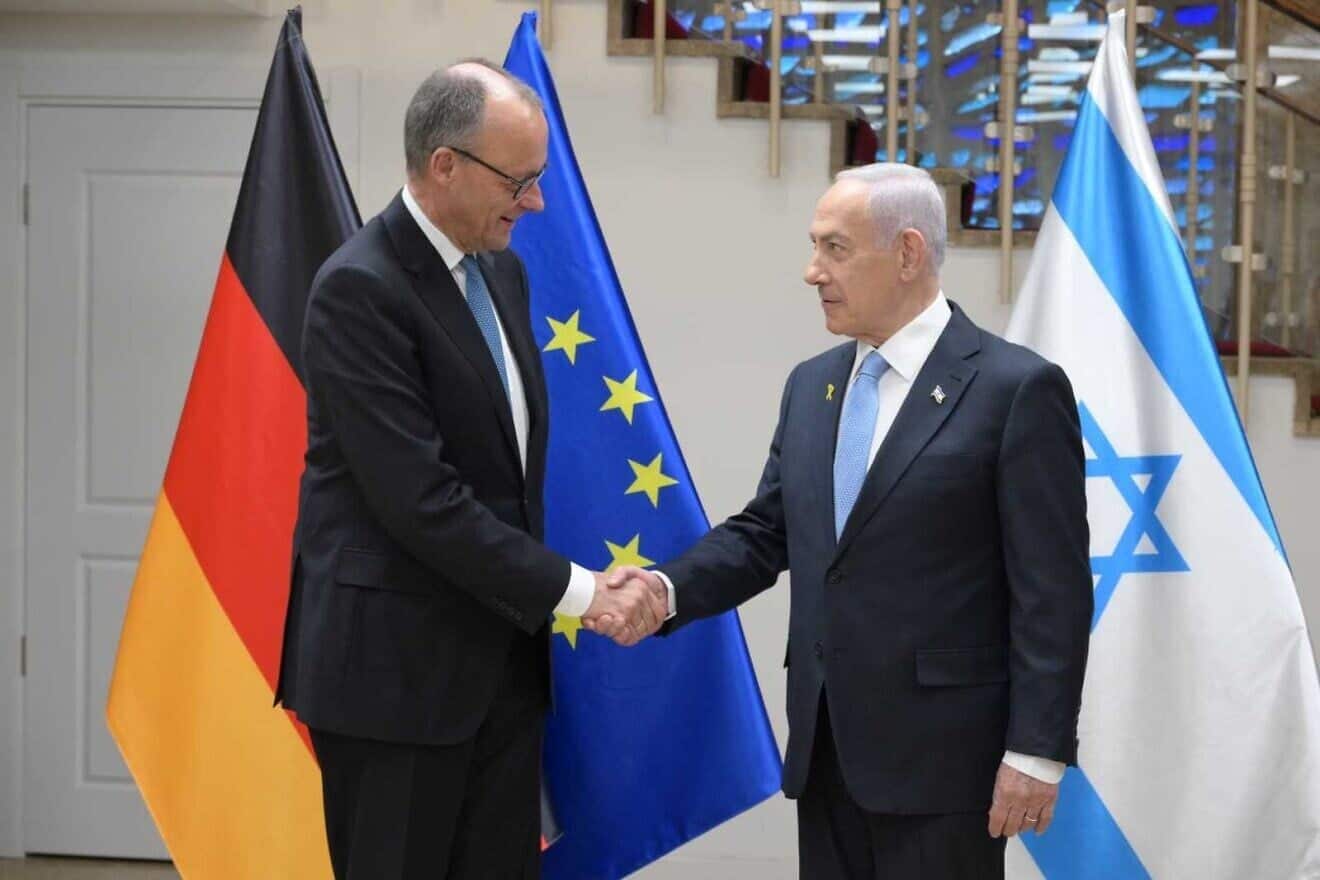
German Chancellor Friedrich Merz meets with Israeli Prime Minister Benjamin Netanyahu at the Prime Minister’s Office in Jerusalem, Dec. 7, 2025. Photo by Amos Ben-Gershom/GPO

German Chancellor Friedrich Merz met with Israeli Prime Minister Benjamin Netanyahu at his office in Jerusalem on Sunday after arriving in Israel on Saturday night for his first visit to the Jewish state since the conservative party leader took office in May.

President Isaac Herzog hosted Merz on Saturday at his official residence in the Israeli capital on Saturday, with Herzog following their meeting calling the two countries “true friends” and strategic allies.

“During our meeting this evening, we discussed the importance of implementing President [Donald] Trump’s plan, approved by the United Nations Security Council, and emphasized that Hamas must be removed from Gaza and disarmed,” Herzog stated. “In addition, Hamas must uphold the agreement and release the last remaining Israeli hostage still being held in Gaza, Ran Gvili.”

He added: “We also discussed ways to further deepen our vital partnership, in the hope of a better future.”

Writing in Hebrew on X, Merz said that “I come here with deep faith and as a friend of Israel, @Isaac_Herzog. We will always stand by your side. The very fact that our countries established diplomatic relations within such a short time after the Holocaust remains a miracle, as does the fact that the friendship between us has deepened so profoundly.”

Israeli Foreign Minister Gideon Sa’ar met the 70-year-old leader of the Christian Democratic Union on the Ben Gurion Airport tarmac when he landed after a brief stop in Jordan, calling the chancellor a “friend,” describing Germany as an “important partner,” and saying bilateral relations between Berlin and Jerusalem are “on an upward trend.”

“This trend is reflected in the removal of the partial embargo, Germany’s clear opposition to all types of boycotts against Israel, and its abstention at the UN from supporting the extension of UNRWA’s mandate,” said Sa’ar.

“Last week, an Israeli Arrow battery for defense against ballistic missiles was deployed in Germany for the first time. Germany is an important friend, and I am convinced that the Chancellor’s visit will contribute to the strengthening of the special relations between the countries,” the minister continued.

Merz wrote on X Saturday night that “the ceasefire in Gaza is stabilizing. Now we must successfully move into the second phase. This means permanently removing the basis for Hamas’s terror and ensuring that the precarious humanitarian situation of Gaza’s civilian population improves quickly and noticeably.”

Hours before taking off to Israel, Merz spoke by phone on Saturday with Palestinian Authority head Mahmoud Abbas and urged him to implement “urgently necessary reforms” in the P.A., AFP reported.

The P.A. could “play a constructive role in a post-war order,” German government spokesman Stefan Kornelius was cited as saying.

Merz expressed support for the Trump administration’s peace plan for the Mideast, welcoming what the German leader called the P.A.’s “cooperative attitude,” AFP reported.

The chancellor added that Berlin still views a two-state solution as the ultimate path toward peace and security for Israelis and Palestinians alike, the government spokesperson said.

Merz spoke with Netanyahu on Nov. 16, shortly after declaring in a speech that Berlin must “stand with Israel” as part of a renewed “Western alliance.”

A day earlier, Merz referenced Israel in a speech to the Junge Union Deutschlands—the youth wing of his Christian Democratic Union party—in Rust, near Stuttgart in western Germany.

“The position of the Federal Republic of Germany must be clear, where we stand. In the Western alliance,” said Merz. “At Israel’s side, dear friends. I have not forgotten that,” he added, to thunderous applause.

Successive German governments have described a commitment to Israel’s security as a core principle of their foreign policy, rooted in the legacy of the Nazi regime’s near annihilation of European Jewry. At the same time, Berlin has funneled millions of dollars to Palestinian and other organizations that work to undermine Israel’s legitimacy and oppose Jewish statehood.

Germany’s government has adopted a friendlier posture toward Israel than many other European countries since Hamas’s Oct. 7, 2023, massacre.

However, there have been tensions as exemplified by Merz announcing a ban on exporting “offensive” weapons to the Jewish state on Aug. 8, hours after Netanyahu’s Cabinet voted to expand the Israel Defense Forces’ operations against the Hamas terror group.

On Dec. 3, Israel Defense Ministry officials handed over the first operational Arrow 3 missile defense system to the German Army at a ceremony at a German Air Force base near Berlin.

The development “marks a significant step in implementing the defense export contract signed between the two nations approximately two years ago, and is considered the largest defense export deal in Israel’s history,” according to an Israeli Defense Ministry statement.


Zawartość publikowanych artykułów i materiałów nie reprezentuje poglądów ani opinii Reunion’68,
ani też webmastera Blogu Reunion’68, chyba ze jest to wyraźnie zaznaczone.
Twoje uwagi, linki, własne artykuły lub wiadomości prześlij na adres:
webmaster@reunion68.com


Africa Becomes Center of Global Terrorism Amid ISIS Revivals, Al Qaeda Alliances


Africa Becomes Center of Global Terrorism Amid ISIS Revivals, Al Qaeda Alliances

David Swindle


Islamic State – Central Africa Province released documentary entitled “Jihad and Dawah” covering group’s campaigns in northeastern Democratic Republic of Congo and battles against Congolese and Ugandan armies. Photo: Screenshot

Both independent analysts and the United States government have identified rising Islamist terrorist threats across Sub-Saharan Africa as a growing concern, now positioning the region at the center of attention regarding global jihadist terrorism.

Gen. Dagvin Anderson, commander of US Africa Command (AFRICOM), has started a series of visits to African partners, starting with Ethiopia, Somaliland, and Puntland.

“The whole reason I came here is because we have shared threats,” Anderson said. “I’m not new to this region; I understand what the issues are, and we’re here to help empower our African partners to address these threats in a united way.”

Just last week, AFRICOM coordinated with the government of Somalia to strike Islamic State (ISIS) and al-Shabaab targets.

“As we face the growing security threats, including the rise of terrorist activities in East Africa, the Sahel, and West Africa’s coastal regions, the collective efforts are more important than ever,” Anderson said. “Together we can build a more prosperous and secure future for the United States, for Africa, and most importantly, for our children.”

Anderson’s trip came after the Combating Terrorism Center at West Point released a report last month showing that, last year, 86 percent of all terrorism-related deaths occurred in just 10 countries, with seven of them in Africa and five in the continent’s Sahel region.

The report explained how the Sahel — a belt that runs across the African continent and is also called the Sahelian acacia savanna — dominates the map of terrorism deaths today.

“Where once the global terror threat was concentrated in the Middle East and North Africa, today it is centered in the Sahel, specifically in the tri-border region between Burkina Faso, Mali, and Niger,” the report’s four authors wrote before noting that, according to the 2025 Global Terrorism Index, the region comprised more than half of all terrorism-related deaths last year.

“The data shows that while countries such as Pakistan, Afghanistan, Syria, Somalia, and Nigeria have been largely steady when it comes to significant impact by terrorism over recent years, Sahelian countries (Burkina Faso, chief among them) have experienced a steep increase,” the analysts assessed. “In 2023 and 2024, Burkina Faso was most impacted by terrorism globally.”

Regarding the specific groups responsible for these slayings in the Sahel, the Africa Center for Strategic Studies primarily blamed an al-Qaeda-affiliate, Jama’a Nusrat ul-Islam wa al-Muslimin (JNIM), which it identified as being responsible for 83 percent of deaths in the region.

In August, a report from the Observer Research Foundation argued that “the African continent remains the principal theater of global jihadist activity.”

Colin Clarke and co-author Anoushka Varma, both of the Soufan Group, described the threat of JNIM. The group “has entrenched its position as the deadliest terrorist group in the Sahel, escalating attacks across Burkina Faso, Mali, and Niger, while making inroads into Benin, Ghana, and Togo — countries that had largely avoided jihadist violence until now,” they wrote. “In the first half of 2025, JNIM claimed to have carried out at least 280 attacks in Burkina Faso — double the number recorded during the same period in 2024 — and was responsible for approximately 8,800 fatalities across the Sahel that year.”

Another region of the continent drawing the concern of counter-terrorism analysts is the Horn of Africa (HOA), where the West Point researchers identified the “critical case” of the “the triangular confluence that has developed between the Houthis, al-Qaeda in the Arabian Peninsula (AQAP), and al-Shabaab.”

Despite the Houthis being backed by Shi’ite Iran and operating primarily out of Yemen, the West Point report noted that “there is even evidence that the Houthis have collaborated with Islamic State Somalia [a Sunni group], coordinating on intelligence and procurement of drones and technical training.”

Clarke and Varma also explained the unique threats operating in the HOA in their analysis, explaining that “both the Islamic State-Somalia Province (IS-Somalia) and al-Qaeda’s Somali affiliate, al-Shabaab, remain key drivers of regional instability.”

In April 2025, they wrote, al-Shabaab “launched a renewed offensive in Middle Shabelle, regaining territorial control not seen since the Somali federal government’s counteroffensive in 2022.” The analysts also identified that “IS-Somalia has attracted foreign fighters from Ethiopia, Djibouti, Kenya, and even among the Somali diaspora in the West.”

In addition to the increased violence in the HOA and Sahel African regions, two other alarming trends in terrorism that West Point’s researchers named are the wide involvement of Iran with organized crime gangs and the decreasing ages of first-time terrorist suspects.

The report stated that over the last five years, Iran has conducted 157 foreign operations, with 22 involving criminal groups and 55 involving terrorist groups. These range from “Hell’s Angels gang members in Canada to the Kinahan Cartel in Ireland.”

Likewise, the age range of terrorism offenders has transformed.

The authors stated that many analysts have identified “a new wave of extremism among children” and that “across Europe as a whole, nearly two-thirds of Islamic State-linked arrests in 2024 involved teenagers. This included the infamous August 2024 plot by three males aged 17 to 19 targeting a Taylor Swift concert in Vienna, Austria.”

In 2024, the United Kingdom reported that 20 percent of its terrorism suspects were legally classified as minors.


Zawartość publikowanych artykułów i materiałów nie reprezentuje poglądów ani opinii Reunion’68,
ani też webmastera Blogu Reunion’68, chyba ze jest to wyraźnie zaznaczone.
Twoje uwagi, linki, własne artykuły lub wiadomości prześlij na adres:
webmaster@reunion68.com