Archive | 2025/12/25

“Wiedzieliśmy, że to koniec. Szeptem pożegnaliśmy się z dziećmi”. Izraelczycy wspominają atak Hamasu

Osoba trzymająca izraelską flagę pośród kurzu, gdy helikopter z uwolnionymi zakładnikami, przetrzymywanymi w Strefie Gazy od czasu śmiertelnego ataku Hamasu z 7 października 2023 r., został uwolniony wraz z innymi w ramach wymiany więźniów i zakładników oraz porozumienia o zawieszeniu broni między Izraelem a Hamasem. Samolot startuje z Reim w..


“Wiedzieliśmy, że to koniec. Szeptem pożegnaliśmy się z dziećmi”. Izraelczycy wspominają atak Hamasu

Marta Urzędowska


Izraelczycy, którzy przeżyli bestialski atak Hamasu z 7 października 2023 r., kiedyś wierzyli w pokój z Palestyńczykami. Dziś nie mogą znieść arabskiego, nie współczują głodnym dzieciom w Gazie, nie są w stanie wybaczyć ani zapomnieć.


Korespondencja z Izraela

– Kiedy zaczynają wyć syreny, zwykle mamy do dwunastu sekund, żeby dojść do schronu, dlatego w Izraelu właśnie w schronach robimy pokoje dziecięce. Dzieci przecież nie dobudzę w kilka sekund – zaczyna swoją opowieść Barak Morag, który oprowadza grupę dziennikarzy po kibucu Nir Oz na południu Izraela, kilometr od granicy ze Strefą Gazy.

Kibuc uważa się za osiedle lewicowych liberałów. Dziesiątki jasnych domków tonie w zieleni. Między nimi panuje jednak ponura cisza, w wielu ogródkach powiewają żółte flagi, na drzwiach domów przyklejono plakaty z twarzami byłych mieszkańców.

Dziś prawie nikt tu nie mieszka.

Terroryści z Hamasu, którzy 7 października 2023 r. zaatakowali Izrael, zabijając 1,2 tys. osób, 250 porywając do Gazy i rozpętując w enklawie wojnę, w której zginęło 70 tys. Palestyńczyków, w Nir Oz spędzili kilka godzin. Na miejscu było ich kilkuset. Zaatakowali z trzech stron, zabili blisko pięćdziesiąt osób, porwali 76 mieszkańców osiedla, z których 14 zmarło w niewoli.

Dom rodziny Bibas jest teraz smutnym miejscem

– Nie lubię podchodzić pod ich dom, czuję się jak intruz. Słyszeliśmy, jak zabierali ich terroryści. Cieszyli się, puszczali głośną arabską muzykę – wspomina Barak. Jest wysoki, szczupły, nosi brodę, opowiada bardzo spokojnie, często się uśmiecha.

Dom, pod który nie lubi podchodzić, należał do jego sąsiadów, rodziny Bibas. To stąd terroryści zabrali młodą mamę i dwójkę rudowłosych maluchów – niemowlę i kilkulatka. Z Gazy wrócili po wielu miesiącach w metalowych trumnach. Dziś ich dom jest smutnym miejscem. Na drzwiach wiszą podniszczone zdjęcia dzieci, na podwórku rowerek i plastikowy dziecięcy domek.

Barak nie chce wejść na taras Bibasów. Za to chętnie, choć ponad dwa lata temu przeżył tu koszmar, prowadzi do swojego domu.

Tablice z wizerunkami Yardena, Shiri, Ariela i Kfira Bibasów znajdujące się przy wejściu do ich domu w kibucu Nir Oz. Upamiętnia to ofiary śmiertelnego ataku Hamasu na południowe społeczności Izraela, do którego doszło 7 października 2023 r. w kibucu Nir Oz w południowym Izraelu, 6 października 2025 r. Shiri Bibas i dzieci zginęły w niewoli, a Yarden Bibas został zwolniony po 484 dniach. Fot. REUTERS/Amir Cohen

– O 6.29 usłyszeliśmy rakiety, ale myśleliśmy, że to zwykły alarm. Poszliśmy do dzieci. Dwa tygodnie wcześniej moja żona uparła się, żeby zamontować u dzieci zasuwkę. Nie wiedziałem po co, przecież schrony mają chronić przed rakietami, nie ludźmi – wspomina.

Zasuwka była w użyciu wiele godzin. Terroryści weszli do kibucu przed godz. 7 rano, izraelska armia dotarła tam po godz. 14. – Żołnierze nie musieli wystrzelić ani jednej kuli, terroryści odeszli czterdzieści minut wcześniej. Porwanych zabrali do Gazy, przed ich domami powiewają żółte flagi – pokazuje Barak. Równie smutno wyglądają naklejki na skrzynkach pocztowych: czerwone to te, których właściciele zginęli, czarne – zostali porwani.

– Terroryści włamali się do 217 domów, większość spalili. Nie weszli tylko do sześciu – opowiada Barak. – Moje dzieci, Gaja i Inad, miały wtedy siedem i cztery lata. Na początku najbardziej martwiliśmy się, że syreny ich obudzą i już nie zasną. Jednak już po kilku minutach zrozumieliśmy, że to nie jest zwykła eskalacja. A po kilkunastu kolejnych, że w Nir Oz są terroryści – relacjonuje.

Atak Hamasu na Izraelczyków. “Zrozumiałem, że moje życie się skończyło.”

Dalsza opowieść Baraka brzmi jak najgorszy koszmar rodzica. – Siedzieliśmy po ciemku, bo okiennica była zamknięta, czekaliśmy. Po godz. 8 obudziły się dzieci, powiedzieliśmy im, że jest trochę zamieszania, ale zaraz przyjdą żołnierze i będzie dobrze – opowiada.

– Kiedy o 9.30 sąsiedzi zaczęli pisać, że terroryści są już w domach, spojrzeliśmy na siebie z żoną, wiedzieliśmy, że to koniec. Żona weszła z córką na piętrowe łóżko, przykryły się kołdrą. Ja skuliłem się na małym łóżku synka, zakryłem go swoim ciałem, chciałem, żeby najpierw zastrzelili mnie – relacjonuje Barak.

– O 10.02 usłyszeliśmy, że są w domu. Rozmawiali po arabsku. Zaczęli szarpać drzwi do pokoju dzieci.

Zrozumiałem, że moje życie się skończyło. Dzieci nic nie mówiły, nie płakały, tylko patrzyły na nas.

Nigdy nie zapomnę oczu mojego synka, kiedy terroryści plądrowali dom, próbowali wyłamać drzwi, krzyczeli, że spalą nas żywcem. Siedzieliśmy w milczeniu. Szeptem pożegnaliśmy się z dziećmi, przeprosiliśmy je, że nie zdołaliśmy ich ochronić – opowiada lekko drżącym głosem.

Na miejscu zostały zabawki i książki. „To już nie są te same dzieci”

Po kolejnych kilku minutach terroryści odeszli. Wrócili po chwili podpalić dom. – Usłyszeliśmy płomienie. Jedyne. co mogliśmy zrobić, to zasłaniać dzieciom buzie, położyć pod drzwiami koc. Nie mogliśmy otworzyć okna, bo nie wiedzieliśmy, gdzie są terroryści. Dzieci ciągle zasypiały, kiedy je budziliśmy, wymiotowały na czarno. W końcu nie miałem wyboru, uchyliłem okno, ale nie okiennicę, czekałem, żeby w razie czego przytrzasnąć terroryście palce – opowiada.

Czekali tak do godz. 14, potem usłyszeli głosy mówiące po hebrajsku. Przybyli izraelscy żołnierze.

– Dopiero wtedy moja żona i dzieci zaczęli krzyczeć. Żołnierze wyciągnęli ich przez okno. Gaja mdlała, nie była w stanie utrzymać się na nogach, a synek nagle zniknął nam z oczu. Byliśmy przerażeni, a on poszedł na werandę sąsiadów pobawić się zabawką ich synka – wspomina.

W schronie-pokoju dzieci nie zmienili nic, na półkach stoją książki i zabawki, jest tak, jak w dniu ataku. Nie chcieli nic ze sobą zabrać. – Moje dzieci dzisiaj chodzą do szkoły, mają przyjaciół. Ale to już nie są te same dzieci, tak jak my nigdy nie będziemy tymi samymi ludźmi, jak przed atakiem terrorystów – dodaje.

Barak zawsze był za pokojem. Uważał, że Palestyńczycy, tak jak Izraelczycy, zasługują na dobre życie, ale obecnie nie ma dla nich empatii. Stracił ją.

– Patrzę na zniszczoną Strefę Gazy, na te głodne dzieci i nic nie czuję. Żałuję, że tak się zmieniłem

– dodaje smutno Barak, patrząc na widoczną kawałek za płotem Gazę.

Mazal: Party is over. Terroryści polowali na imprezowiczów

Mazal ma 36 lat i dziesięcioletniego synka. Jej rodzice przenieśli się do Izraela z Etiopii. Przed atakiem hamasowców studiowała architekturę i design, lubiła koncerty i imprezy taneczne. Ucieszyła się, kiedy usłyszała, że tym razem Nova – jej ulubiony festiwal – będzie w pobliżu jej wioski, tuż przy granicy ze Strefą Gazy.

Mężczyzna zapala menorę w trzecią noc żydowskiego święta Chanuka, w miejscu, gdzie odbywał się festiwal Nowa, gdzie uczestnicy imprezy zostali zabici i porwani podczas ataku Hamasu 7 października 2023 r. w Reim w Izraelu, 16 grudnia 2025 r. Fot. REUTERS/Ronen Zvulun

– Tam był parkiet do tańca, tu scena, tam siedział didżej – pokazuje. – A tu, gdzie stoję, wśród drzew, mieliśmy namioty. Było po godz. 6 rano, poszłam do namiotu po ciemne okulary, chciałam zrobić zdjęcia ze wschodem słońca – mówi powoli, jakby z wysiłkiem.

– Nagle usłyszeliśmy syreny i zobaczyliśmy rakiety nad Gazą. To nie było nic szczególnego, pomyśleliśmy nawet: „Może będzie tych rakiet kilka, a potem wrócimy do tańca”. Ale rakiet było więcej, niż zwykle, zrozumieliśmy, że party is over, to koniec imprezy. Ludzie wsiadali w samochody i ruszali drogą do pobliskich miejscowości, Beri i Reim, ale oni już tam czekali – Mazal zawiesza głos.

Dziś już wie, że drogi wyjazdowe obstawili terroryści. W pobliżu można odwiedzić miejsce, gdzie złożono setki zniszczonych samochodów. Niektóre w przedniej szybie mają dziury po kulach, są i zupełnie zwęglone.

Hamasowcy nie planowali ataku na festiwal. Ale kiedy przekroczyli granicę, zobaczyli samochody, usłyszeli muzykę. Najpierw otoczyli teren festiwalu, obstawili drogi wyjazdowe, dopiero potem przypuścili atak.

Setki terrorystów przez kilka godzin polowało na młodych Izraelczyków. Zabijali, gwałcili, porywali. Zamordowali blisko czterysta osób, kilkadziesiąt porwali do Gazy. – Nie mieliśmy dokąd uciec, tu jest całkiem płasko, jest mało drzew – pokazuje Mazal.

Na miejscu Novej znajdują się setki drewnianych stojaków. Na nich plakaty młodych, uśmiechniętych imprezowiczów ze słowami od ich rodziców, rodzeństwa, przyjaciół. Pisali o tym, kim byli zamordowani, jak kochali życie. Pod ich zdjęciami ułożone są kwiaty, czasem i znicze.

“Wołałam Dani, Danielle, ale ona nie żyła.” Miała 22 lata

Mazal na festiwal przyjechała z trojgiem przyjaciół. Żadne z nich nie przeżyło. Opowiada, że najpierw chowali się za samochodami, myśleli, że na miejscu jest może kilku terrorystów. Na nagraniach, które pokazuje, słychać strzały, krzyki policjantów i hamasowców. – Nie wiedzieliśmy, czy lepiej zostać w samochodach, czy próbować uciekać, wszędzie wokół ludzie krzyczeli, płakali – wspomina.

Kobieta w końcu doczołgała się do większego dołu, wtedy ktoś uderzył ją kolbą w tył głowy, pokazuje dużą białą bliznę. Straciła przytomność, ocknęła się zalana krwią. – Nie ruszałam się, udawałam martwą, wokół były ciała, słyszałam, jak terroryści mówią po arabsku. W pewnym momencie poczułam, jak ktoś przysuwa się blisko do mojej twarzy. Wtedy znowu zemdlałam – relacjonuje. Kiedy odzyskała przytomność, obok zobaczyła Danielle, swoją 22-letnią przyjaciółkę. – Wołałam Dani, Danielle, ale ona nie żyła – opowiada.

Mazal nie mogła zostać tam, gdzie leżała, bo terroryści podpalili okoliczne krzaki. Ryzykując życiem, wybiegła na drogę. Schowała się w jednym z samochodów, skulona z tyłu i przykryta kocem, przeczekała resztę ataku.

Co jakiś czas słyszała, jak ktoś podchodzi do auta, rozmawiając po arabsku.

– Nie mogę znieść tego języka. Nie chcę ich słyszeć, nie chcę na nich patrzeć, nie chcę mieć z nimi nic wspólnego. Nigdy nie wybaczę, nie zapomnę

– wylicza powoli z ponurą determinacją.

Daniel, wnuk Polaka z Nir Oz porwanego przez Hamas. „W Gazie bili cywile, nie terroryści”

Jesienią 2023 roku Odet Lipschitz miał 83 lata, ogród kaktusowy i polskie obywatelstwo. W latach 60. założyli kibuc Nir Oz. – Dziadek zawsze był za pokojem. Pracował dla Lekarzy bez Granic w Rwandzie, walczył o prawa Palestyńczyków, Beduinów, woził chore dzieci z Gazy do szpitali w Izraelu – wylicza jego wnuk Daniel.

– W latach 80. spotykał się z palestyńskimi liderami w Gazie. Był pierwszym izraelskim dziennikarzem, który rozmawiał z Jaserem Arafatem. Kiedy Hamas w 2005 r. przejął władzę w Gazie, był przerażony. Przekonywał, że dżihadyści nie mogą rządzić dwoma milionami ludzi – wspomina.

Pokojowe nastawienie nie pomogło Odedowi 7 października 2023 r. Kiedy w kibucu pojawili się terroryści, jeszcze o 8 rano dzwonił do siostry do Hajfy – był spokojny, wierzył, że zaraz zjawi się izraelska armia.

Odeda terroryści wywlekli ze schronu, jego żonę Jochevet zawinęli w dywan, bo nie chcieli jej dotykać. Po 64 małżeństwa ostatni raz widziała męża leżącego na plecach i krwawiącego pośród swoich ukochanych kaktusów.

Jochevet hamasowcy wrzucili na motocykl, po pięciu minutach była w Gazie. – Opowiadała, że najgorsze było to, że zwykli ludzie, cywile podbiegali, żeby ją uderzyć. Potem terroryści wepchnęli ją do tunelu, było ciemno, wilgotno, szło jej się ciężko, bo była boso, ale nie pozwolili jej odpocząć – relacjonuje wnuk.

Izraelscy żołnierze w tunelu, w którym, według izraelskiego wojska, bojownicy Hamasu trzymali ciało izraelskiego oficera Hadara Goldina, w Rafah w Strefie Gazy, 8 grudnia 2025 roku. Goldin zginął podczas wojny izraelsko-palestyńskiej w 2014 roku. Jego szczątki zwrócono w listopadzie w ramach zawieszenia broni między Izraelem a Hamasem. Fot. REUTERS/Nir Elias

Babcia opowiedziała mu, że kiedy doszli do ukrytego w tunelu pomieszczenia dla zakładników, wszystko było gotowe, wykafelkowane, na miejscu były urządzenia do mierzenia poziomu tlenu i woda. Widać było, że terroryści szykowali to latami. Od pierwszego dnia głodzili zakładników – dostawali małą pitę, jednego ogórka i odrobinę sera na cały dzień.

Jochevet wyszła po 17 dniach, jej mąż zmarł w niewoli. – Kiedy babcia była w tunelu, trzeciego dnia przyszedł Jahja Sinwar – opowiada Daniel. Sinwar był szefem Hamasu w Gazie i głównym organizatorem ataku, którego później zabili Izraelczycy. – Babcia powiedziała mu, żeby się wstydził, jak może porywać dzieci, starych ludzi. Nie odpowiedział, spuścił głowę i wyszedł – dodaje.

Równie bestialsko terroryści zaatakowali w pobliskim Kfar Aza, leżącym 2 km od granicy z Gazą. – Mój brat, Neta Epstein był z dziewczyną w mieszkaniu, kiedy usłyszeli terrorystów – opowiada żołnierka Rona, kiedy siedzimy w biurze rzecznika izraelskiej armii w Tel Awiwie. – Czekał przy drzwiach z nożem, ale terroryści nie weszli, tylko wrzucili granat. Neta rzucił się na niego, tego nauczyli go w wojsku. Zginął, ale uratował swoją dziewczynę, bo choć hamasowcy podpalili ich mieszkanie, udało jej się uciec – mówi Rona. Dodaje: – Mój brat miał 22 lata, nie chciał być bohaterem. Chciał żyć.

– Najsmutniejsze jest to, że w Kfar Aza zawsze wierzyliśmy w pokój. Co roku organizowaliśmy festiwal latawców. Puszczaliśmy je w kierunku Strefy Gazy.

Właśnie 7 października przypadał dzień puszczania latawców, ale rano przyszli terroryści – dodaje.

Rona przekonuje, że nie chowa urazy do izraelskich Arabów, nie przeszkadza jej arabski na ulicach, dalej robi zakupy w arabskich wioskach. – Przecież nadal mają najlepsze pomidory – uśmiecha się.


Redagowała Iwona Görke


Zawartość publikowanych artykułów i materiałów nie reprezentuje poglądów ani opinii Reunion’68,
ani też webmastera Blogu Reunion’68, chyba ze jest to wyraźnie zaznaczone.
Twoje uwagi, linki, własne artykuły lub wiadomości prześlij na adres:
webmaster@reunion68.com


Like the left, the conservative big tent won’t exclude antisemites


Like the left, the conservative big tent won’t exclude antisemites

Jonathan S. Tobin


Vice President JD Vance had an opportunity to establish some boundaries at the Turning Point USA AmericaFest. He specifically chose not to.

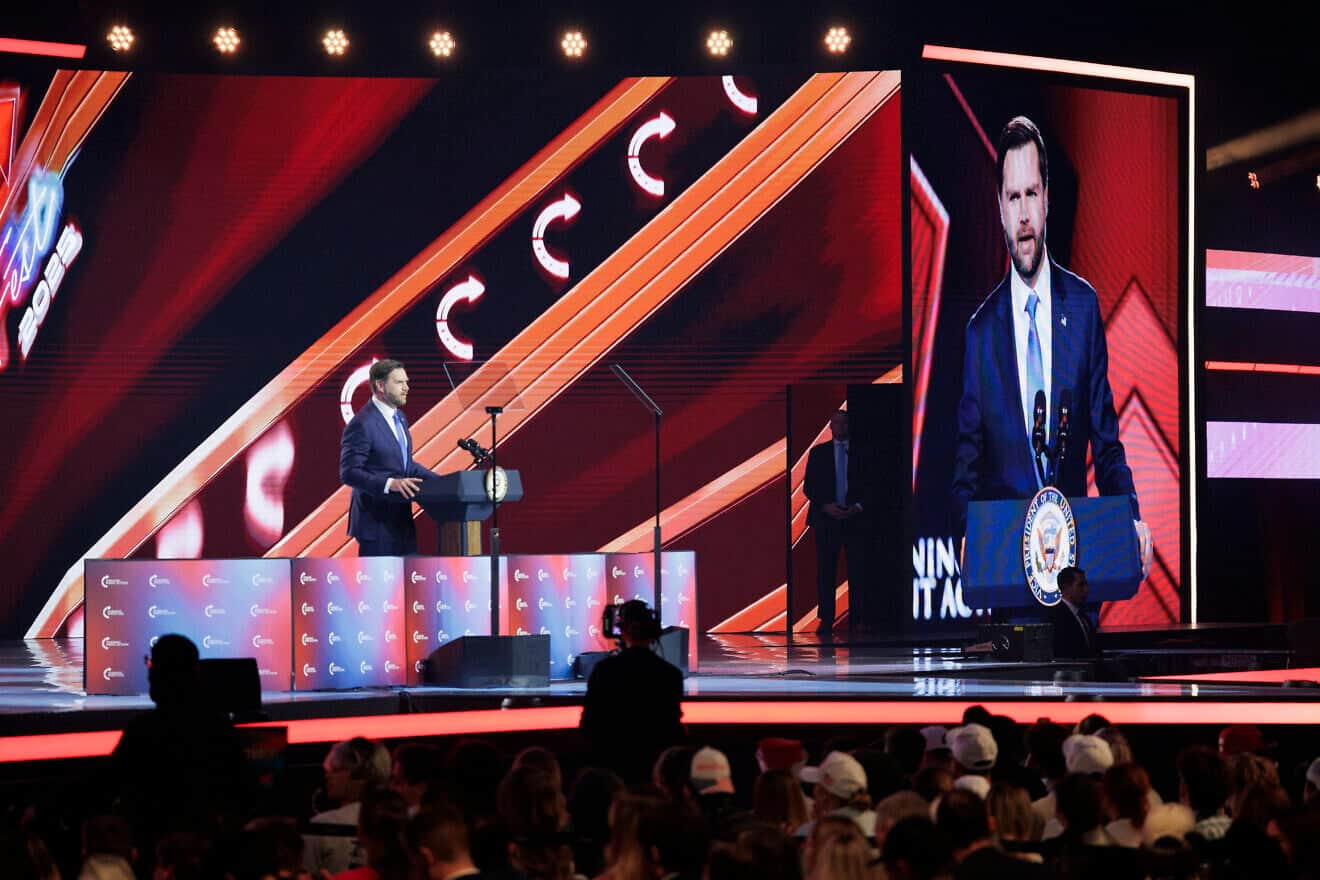
U.S. Vice President JD Vance speaks on the final day of Turning Point USA’s annual AmericaFest conference at the Phoenix Convention Center in Arizona on Dec. 21, 2025. Photo by Caylo Seals/Getty Images.

Perhaps at a different moment in time, the headlines about Vice President JD Vance’s concluding speech at the Turning Point USA AmericaFest conference last weekend in Phoenix, Ariz., would have centered on his avowal that “We have been, and by the grace of God, we always will be, a Christian nation.”

But that wasn’t the case.

Not even the most critical liberal outlets like The New York Times or The Washington Post, both of which could be expected to trash anything he said, led their coverage with reporting about that aspect of his remarks. Perhaps readers were outraged about him using the phrase “Christian nation”; still, however off-putting it may be for many Jews, I don’t feel that’s a threat to minority religious groups. Either way, the media outlets were right to highlight something else.

WrestleMania with podcasters

That’s because the truly significant aspect of the vice president’s address wasn’t about elements of its core, in which he spoke about his beliefs on conservative, religious and family values, and the flawed, amoral vision of the political left that he opposes. Important though that was, the headlines got it right. The most newsworthy aspect concerned his belief that the conservative coalition that he and President Donald Trump lead is one that should draw no lines in the sand about antisemitism or any other form of pathological extremism.

And that is something that should worry not just Jewish Republicans or conservatives, but everyone who cares about the future of America.

The context was crucial. Until Vance’s remarks closed out the conference, the TPUSA event was, as columnist Jim Geraghty put it, “WrestleMania with podcasters.”

Rather than a fake show with cartoonish good guys and villains, it was a contest in which advocates, like commentator Ben Shapiro, for a conservative movement that set boundaries to exclude hate-mongers and Jew-baiters, were arrayed against their opponents. Shapiro was given his say in one session. But the following day, former Fox News host Tucker Carlson, who now articulates anti-Jewish tropes and platforms internet stars like the neo-Nazi “groyper” Nick Fuentes and other Holocaust deniers, was allowed to answer him.

Political commentator Megyn Kelly also had her time in the spotlight when she, too, criticized Shapiro. Kelly refused to go along with any approach that might set some limits or boundaries on discourse within mainstream conservatism, such as those that might consign mad conspiracy theorists and antisemites like Candace Owens to the fever swamps of either the far right or far left. She seemed genuinely outraged by the notion that thought leaders should be judgmental about such voices, rather than treating them as having just as much validity as those of less insane people.

No gatekeeping

That opposition to “gatekeeping” under any circumstances was in no small measure a reaction to efforts of leftists to silence any opposition to radical ideas about race. That includes those in the Black Lives Matter movement, as well as the Biden administration’s effort to collude with Silicon Valley oligarchs to censor critics of its COVID-19 practices and other policies.

Nor are confrontations new at TPUSA. The assassination of its late founder, Charlie Kirk, in September cast a pall on a conservative movement that often convened debates about the issues, including those concerning Israel.

But in the months since his death, Kirk’s belief in giving a hearing to divergent views and opposing censorship has been twisted into something else entirely. Largely because of the furor that followed Carlson’s hosting of Fuentes, the right is now expected to accept a new standard. Open racism, antisemitism and Holocaust denial, as well as even the most maniacal conspiracy theories about Kirk’s death, mixed in with traditional tropes of Jew-hatred, are now considered open for debate. The vilest ideas are being presented as something conservatives should agree to disagree about rather than reject out of hand.

If scoring was involved in this set-to—as if it were a debate between serious persons—Shapiro won hands down. His evisceration of both Carlson and Kelly was masterly. He termed the former’s chummy interview of Fuentes as “an act of moral imbecility” and called out the latter’s hypocrisy and cynicism. Moreover, Carlson’s decision to not merely feebly answer Shapiro’s critique but to also harp on his belief that conservatives are too harsh on Islamists, like his pals in Qatar and other Muslim Brotherhood-based supporters of Hamas terrorists, went over like a lead balloon to the live audience, which responded with silence.

Yet any thought that Shapiro’s rational point of view might prevail at TPUSA were dispelled by Vance’s speech.

Vance picks a side

Faced with a serious, growing breach within the coalition that elected Trump last year and which he hopes will enable him to succeed to the presidency in 2028, Vance picked a side. And it was the one that did not seek to establish any limits that might exclude those who have articulated antisemitism or, like Carlson, are at war with the idea of a Judeo-Christian heritage, which is the foundation of political conservatism.

Directly addressing the issue spoken about by Shapiro and Carlson, Vance made it clear that he stood on the side of the latter.

“I didn’t bring a list of conservatives to denounce or to deplatform, and I don’t really care if some people out there—I’m sure we’ll have the fake news media—denounce me after this speech,” he said. “But let me just say, the best way to honor Charlie is that none of us here should be doing something after Charlie’s death that he himself refused to do in life. He invited all of us here. Charlie invited all of us here for a reason. Because he believed that each of us—all of us—had something worth saying, and he trusted all of you to make your own judgment. And we have far more important work to do than canceling each other.”

Though he didn’t say so explicitly, his vision of a conservative big tent is obviously one that seems to include the “groypers” who follow Fuentes and think that his neo-Nazi beliefs are normative. It seems to also include those who, like Carlson and Owens, are “just asking questions” when they spew blood libels and other lies about Israel and the Jews.

While he pre-emptively put down any criticism of this stand as the product of the “fake news media,” you don’t have to be a critic of Vance or Trump to see the problem here.

I’ve cheered Vance’s ability to articulate and push for a “national conservative” agenda that offered an alternative to both an out-of-touch GOP establishment and to the left, as I did when he was first tapped for the vice presidency. I did so again in February when he defended democratic values. In a controversial speech, he rightly took European nations to task for their efforts to shut down criticism of open-border immigration policies that are destroying the national identities of those nations and allowing Islamists to mainstream antisemitism there.

A deliberate choice

In Phoenix, he had a chance to distinguish his national conservative vision from the views of Fuentes and Carlson, who seem to have a lot more in common with left-wing antisemites and anti-Zionists like New York City mayor-elect Zohran Mamdani than with Trump or other conservatives these days.

It wouldn’t have taken much to do so.

He could have easily added a throwaway line about opposing Jew-hatred in all forms without changing any other element in the address. In his list of the administration’s core agenda and accomplishments, he could have also merely mentioned the importance of the U.S.-Israel alliance to the president’s “America First” foreign policy, as he did in a speech last year, even if it was only in the context of boasting of its success in dealing a blow to Iran’s nuclear threat in June.

But he didn’t. And there’s no avoiding the conclusion that such language was deliberately omitted.

That reflects a belief on his part about who should be inside the GOP’s big tent. It seems to include those on the far right who cheer Carlson’s cheerful platforming of anyone willing to bash or lie about Israel or deny the Holocaust, regard mad theories put forth by Owens as catnip to their conspiratorial appetites or even regard Fuentes’s neo-Nazi bad boy act as mirroring their own insecurities and prejudices.

Such people may not reflect Vance’s own personal beliefs, which revolve around a vision of faith and identity that contains some serious truths about the need for America to reject the toxic vision of the political left. But by passing on a golden opportunity to draw a line in the sand between his ideas and those of right-wingers who share the left’s hatred for Jews, he’s telling us that he wants their votes

They don’t welcome everybody

Let’s be clear that the braying of Carlson and Kelly about the evils of gatekeeping is patently insincere. Neither one of them—or Vance, for that matter—would welcome anyone into the conservative tent who supported the woke catechism of diversity, equity and inclusion. Nor would they be comfortable with advocates of gender ideology that would allow biological males to use women’s bathrooms, compete against girls in sports, or permit the chemical castration or life-altering surgeries on children and teenagers. Nor would they cheerfully line up alongside supporters of abortion, open borders or the policies of criminal-friendly prosecutors who have been elected with the help of leftist philanthropist George Soros.

Those are boundaries that they believe in. They just don’t think the same sort of lines should be drawn to exclude Jew-haters and people who support the elimination of the one Jewish state on the planet or the genocide of its people.

And that’s a Republican coalition in which no Jewish or non-Jewish conservative who opposes antisemitism can ever truly feel at home.

The same cannot be said for his rhetoric about America as a “Christian nation.” As he explained in his TPUSA speech, acknowledging that America’s secular political tradition has its roots in the country’s religious faith does not exclude non-Christians. Western civilization is under assault from the political left, and defending it means standing up for the Judeo-Christian heritage that is its foundation.

Failing the Western tradition

While secular Jewish liberals feel threatened by any public expression of faith, they are wrong to see it as a danger to Jewish life. To the contrary, it is the left’s new secular woke religion—as we have seen in the two years since the Hamas-led terrorist attacks in southern Israel on Oct. 7, 2023—that is the primary contemporary engine of antisemitism.

But by not seeking to exclude those on the right that are mimicking the Jew-hatred of the left, Vance is failing not just the Jews but the cause of the West that is so dear to him.

Will there be political consequences for taking such a position?

One would think that a Republican Party that can’t appeal to the political center, which abhors extremism, would be hard put to repeat Trump’s 2024 success in 2028. Conservatives thrived in the past when they came together behind a creed that was called “fusionism,” in which disparate factions that reflected diverse ideas about economics and foreign policy rallied behind whoever was, in William F. Buckley’s classic take, “the most electable conservative” available. But that approach clearly excluded extremists and antisemites—something that Buckley, the writer and publisher who more or less founded modern American conservatism, made sure of.

Don’t underestimate Vance

Clearly, Vance sees a greater danger to his ambitions if he were to distance himself from his friend Carlson or tell the groypers to go back into the holes from which they have emerged.

Nor should he be underestimated. As he showed in his Phoenix speech, he is someone who can combine Trump’s populist instincts with intellectual depth the president lacks, along with a polished orator’s skill in rallying the voters to his side. The process by which the GOP field will be cleared for him may have already begun, with U.S. Secretary of State Marco Rubio already indicating that he won’t oppose Vance and with Kirk’s widow, Erika Kirk, endorsing him.

But if Vance is prepared to proceed in the coming years as the leader of a conservative coalition that welcomes the groypers that sends a chilling signal to Jews and the majority of American voters who support Israel and oppose such bigotry. A similar message has already been sent to the country by the Democratic Party, whose intersectional base has embraced toxic left-wing ideas that promote hatred for Israel and grant a permission slip for antisemitism.

Given the Trump administration’s principled fight against antisemitism in American education and its historic support for Israel, many Jews were coming to see the GOP as their natural ally. But if Vance’s message, in which the administration sees no enemies on the right, truly reflects the future of the Republican Party—and it may well—that potentially leaves those who care about halting the post Oct. 7 surge in antisemitism and reaffirming the alliance with Jerusalem without a political home in 2028.


Jonathan S. Tobin is editor-in-chief of the Jewish News Syndicate, a senior contributor for The Federalist, a columnist for Newsweek and a contributor to many other publications. He covers the American political scene, foreign policy, the U.S.-Israel relationship, Middle East diplomacy, the Jewish world and the arts. He hosts the JNS “Think Twice” podcast, both the weekly video program and the “Jonathan Tobin Daily” program, which are available on all major audio platforms and YouTube. Previously, he was executive editor, then senior online editor and chief political blogger, for Commentary magazine. Before that, he was editor-in-chief of The Jewish Exponent in Philadelphia and editor of the Connecticut Jewish Ledger. He has won more than 60 awards for commentary, art criticism and other writing. He appears regularly on television, commenting on politics and foreign policy. Born in New York City, he studied history at Columbia University.


Zawartość publikowanych artykułów i materiałów nie reprezentuje poglądów ani opinii Reunion’68,
ani też webmastera Blogu Reunion’68, chyba ze jest to wyraźnie zaznaczone.
Twoje uwagi, linki, własne artykuły lub wiadomości prześlij na adres:
webmaster@reunion68.com

Britain’s new far-left party may be Jeremy Corbyn’s undoing


Britain’s new far-left party may be Jeremy Corbyn’s undoing

Ben Cohen


For a new generation of activists, the former Labour Party leader is something of a fossil, no matter his common bond of anti-Israel sentiment.

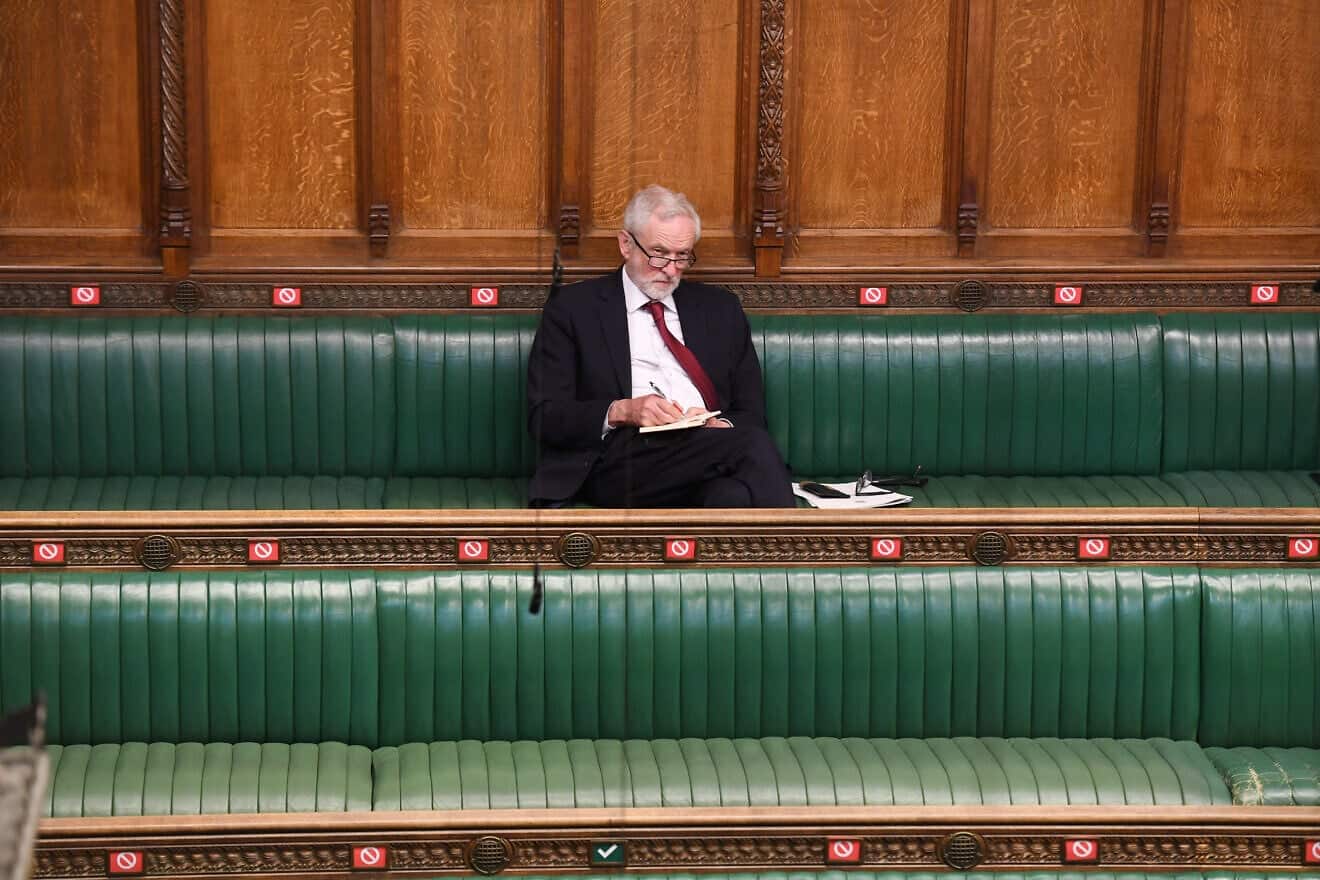
British Member of Parliament Jeremy Corbyn, April 22, 2020. Credit: U.K. Parliament/Jessica Taylor, Creative Commons via Wikimedia Commons.

Like a stubborn stain that clings to your shirt no matter how many times you venture to the dry cleaners, Jeremy Corbyn, the former leader of the ruling Labour Party in the United Kingdom, refuses to disappear.

Not a few pundits believed that with Corbyn’s expulsion from the Labour Party in 2024 over his continuing denial of the antisemitism scandals that plagued his term, he would fade into obscurity. But he continues to sit in the House of Commons as a Member of Parliament in an independent alliance with four Islamist colleagues who were recently elected in heavily Muslim constituencies on anti-Israel platforms.

Last weekend, Corbyn was in the city of Liverpool, England, for the inaugural conference of Britain’s latest far-left experiment, known as “Your Party.” In theory, at least, the launch of a new vehicle for the far left should fill critical observers with dread, particularly at a time when extremists are making deepening political strides in an unhappy, polarized Britain. What we saw in Liverpool, however, was more like a form of comedy.

Delegates, who were decked out in the sorts of colors you would normally encounter in a bowl of Froot Loops, yelled and squabbled over procedure. Their voices echoed awkwardly throughout a cavernous hall that organizers claimed would fill with more than 13,000 activists, yet attracted only about 2,500. No decisions—on the name of the new party, on its leadership structure, on who was permitted to actually attend the conference and who wasn’t—were reached without acrimony. For many of those watching the debates or catching clips on social media, it was all deliciously reminiscent of the famed scene in Monty Python’s 1979 comedy “Life of Brian,” where the Judean People’s Front sit in an amphitheater showering abuse on the People’s Front of Judea.

In truth, we should not be at all surprised that Your Party’s first conference will be remembered for its recriminations and infighting. This has been the party’s story since its conception earlier this year. Ironically, the most immediate victim may be Corbyn himself.

Now in his mid-70s, Corbyn is no longer the cherished leader who was serenaded with chants of “Oh, Jeremy Corbyn” at the Glastonbury music festival in 2017. For a new generation of activists, he is something of a fossil. His bid to lead the party, as well as his opposition to the collective leadership model that was eventually adopted, was coldly rejected by the conference. His very public rift with the other key figure in Your Party—the far-left Member of Parliament Zarah Sultana, who resigned from Labour in July—has done him no favors. Increasingly, Corbyn is presented within Your Party circles as an intemperate, elderly white man trying to muzzle the voice of a young Muslim woman.

Official portrait of British Member of Parliament Zarah Sultana, July 23, 2024. Credit: Jessica Taylor via Wikimedia Commons.

Some of the issues dividing Corbyn from Sultana are internal, stemming from her decision over the summer to announce the party’s formation without his signoff, along with her funneling of more than $1 million in supporter donations into a bank account under her control. Some of them are more overtly political, getting to the heart of what still divides the secular revolutionary left from the Islamists it has so enthusiastically made common cause with. As the Your Party delegates were rudely reminded last weekend, Islamists—whether they are Hamas terrorists or members of the British parliament—believe that there are only two genders, male and female, and that the latter must always be subordinate to the former. Despite declaring herself a proud Muslim, on this question, Sultana is firmly in the secular camp, which holds that there are multiple genders, a message reinforced by multiple speakers from the podium.

In addition, and this is really quite incredible, several of the delegates in Liverpool accused Corbyn, who turned the Labour Party into a living hell for its Jewish supporters, of not being sufficiently inimical toward Zionism. Again, this dispute is rooted in a generational pivot. For boomer leftists like Corbyn, it has been routine to include boilerplate condemnations of Jew-hatred alongside their declared hostility to Zionism. For this new generation, the term “antisemitism” is abruptly divorced from its past, understood only as a suspicious construct designed to censor pro-Palestinian voices by reinforcing supposedly Zionist notions of “Jewish privilege,” thus perpetuating “Jewish supremacy.” This trend has been particularly marked since the Hamas pogrom in Israel on Oct. 7, 2023.

As well as being denounced as a crypto-Zionist, Corbyn failed to win the leadership of Your Party. Instead, delegates chose a laughably unwieldy collective leadership structure that excludes serving parliamentarians from the top roles on its executive committee. Corbyn also failed to prevent members of far-left sects like the Socialist Workers’ Party from joining Your Party, in another victory for Sultana, though one she may well end up regretting when these same sects inevitably turn their ire upon her.

Corbyn’s predicament is another example of how, as an 18th-century French writer put it amid the bloodshed that followed the overthrow of the Bourbon monarchy, “the revolution devours its children.” In his case, it is perhaps fitting that his latest difficulties emanate from the objections of his ostensible supporters and not from those inside and outside the British Jewish community, who have long opposed his pro-Hamas, anti-NATO, pro-Russian policies and his indulgence of the most vicious antisemites.

Your Party’s current hero is the 34-year-old mayor-elect of New York, Zohran Mamdani, who was hailed by Sultana for having secured a win “in the very heart of Empire,” thereby ensuring that “a new politics emerges.” Like Sultana, Mamdani comes from the ranks of the far left. Both of them are likely to discover in the coming years that their erstwhile comrades will try to grasp them in a bear hug, lest they be tempted to make the sorts of compromises needed to govern effectively.

Still, what unites these quarrelsome leftists is an unshakeable commitment to the Palestinian cause and a determination to make “Palestine” the standout issue in a package that also includes environmentalism, wealth redistribution and rejecting efforts to defend against Russian and Chinese destabilization efforts as “militarism” and “imperialism.” If history is any guide, then Your Party will go the same way as other initiatives in Britain to create a left-wing party outside Labour’s environs—straight into its trash bin.

Even so, as we’ve learned bitterly over the last two years, the far left doesn’t need to be in government to make life miserable, particularly for Jewish communities. They can do exactly that from their perches in the universities, municipal government, national legislatures and non-governmental organizations. Judging by the antics in Liverpool, Your Party may well be headed for organizational and electoral catastrophe, but beware. Its spirit will live on.


Ben Cohen is a senior analyst with the Foundation for the Defense of Democracies (FDD) and director of FDD’s rapid response outreach, specializing in global antisemitism, anti-Zionism and Middle East/European Union relations. A London-born journalist with 30 years of experience, he previously worked for BBC World and has contributed to Commentary, The Wall Street Journal, Tablet and Congressional Quarterly. He was a senior correspondent at The Algemeiner for more than a decade and is a weekly columnist for JNS. Cohen has reported from conflict zones worldwide and held leadership roles at the Anti-Defamation League and the American Jewish Committee. His books include Some of My Best Friends: A Journey Through 21st Century Antisemitism.


Zawartość publikowanych artykułów i materiałów nie reprezentuje poglądów ani opinii Reunion’68,
ani też webmastera Blogu Reunion’68, chyba ze jest to wyraźnie zaznaczone.
Twoje uwagi, linki, własne artykuły lub wiadomości prześlij na adres:
webmaster@reunion68.com