Archive | 2025/12/21

Gazowa umowa Izraela z Egiptem. Handel energią da pokój na Bliskim Wschodzie?

Platforma wiertnicza Chevron Offshore lub platforma mieszkalna do wydobywania ropy naftowej i gazu na morzu (Fot. Shutterstock)


Gazowa umowa Izraela z Egiptem. Handel energią da pokój na Bliskim Wschodzie?

Andrzej Kublik


Wciągu 15 lat amerykański koncern Chevron ze swoich złóż u brzegów Izraela sprzeda Egiptowi gaz za 35 mld dol. Po przepychankach z USA premier Izraela Benjamin Netanjahu zatwierdził największy w historii Izraela kontrakt na eksport gazu.

“Ta umowa znacząco wzmacnia pozycję Izraela jako regionalnego mocarstwa energetycznego i przyczynia się do stabilności w naszym regionie. Zachęca również inne firmy do inwestowania w poszukiwania gazu na wodach wyłącznej strefy ekonomicznej Izraela” – powiedział premier Izraela Benjamin Netanjahu ogłaszając zatwierdzenie kontraktu na eksport gazu do Egiptu.

Na podstawie tej umowy izraelska spółka NewMed Energy, której głównym udziałowcem jest amerykański koncern Chevron, w ciągu 15 lat sprzeda Egiptowi 130 mld m3 gazu. To surowiec wydobywany z położonych przy brzegach Izraela gigantycznych złóż gazu Lewiatan, które w zeszłej dekadzie odkryli Amerykanie.

.

To największy w historii Izraela kontrakt na eksport gazu. Jego wartość oszacowano na niemal 35 mld dol., czego ponad połowa (18 mld dol.) w postaci podatków i opłat zasili budżet Izraela.

Pod presją Trumpa

Towarzyszący premierowi Izraela na konferencji prasowej minister energii Eli Cohen zachwalał umowę jako “historyczną chwilę” dla Izraela chociaż zaledwie kilka tygodni wcześniej zablokował ją. Twierdził wtedy, że nie ma pewności, czy Izrael dostanie “uczciwą zapłatę” za swój surowiec, i czy realizacji umowy nie spowoduje zbyt szybkiego wyczerpania izraelskich złóż.

W odpowiedzi na decyzję ministra Cohena wizytę w Izraelu odwołał Chris Wright, sekretarz energii USA. Nic dziwnego, bo w zawarcie gazowej umowy był zaangażowany Donald Trump.

Kontrakt na eksport gazu izraelska spółka koncernu Chevron podpisała z Egiptem jeszcze w sierpniu, kiedy toczyły się jeszcze negocjacje o pokoju w Gazie. W tych negocjacjach prowadzonych pod patronatem USA, Egipt odgrywał rolę kluczowego pośrednika między Izraelem a Hamasem, terrorystyczną organizacją walczącą o niepodległość Palestyńczyków.

Jednocześnie relacje Egiptu z Izraelem pozostawały napięte od czasu ataku Hamasu na Izrael w październiku 2023 r. Według dziennika “Axios” Donald Trump uważał, że korzystny dla Izraela i Egiptu kontrakt gazowy poprawi relacje między tymi państwami.

Bliskowschodni “gaz za pokój”

Handel gazem w przeszłości sprzyjał stabilizacji na Bliskim Wschodzie.

Gdy w 1978 r. prezydent Egiptu Anwar as-Sadat i premier Izraela Menachem Begin podpisali umowę pokojową, jej gospodarczym fundamentem była umową w sprawie dostaw po niskiej cenie egipskiego gazu do Izraela. Umowa ta zyskała nazwę “gaz za pokój”. I przez kilka dekad branża gazowa Izraela rozwijała się dzięki surowcowi z Egiptu.

Sytuacja radykalnie zmieniła się, gdy w 2010 r. amerykańska firma Noble Energy (przejęta potem przez Chevron) odkryła u brzegów Izraela złoże Lewiatan o zasobach szacowanych nawet na 650 mld m3 gazu. Z dnia na dzień przed Izraelem, który do tego czasu był całkowicie zależny od importu gazu, otworzyła się szansa na całkowite pokrycie zapotrzebowania na ten surowiec z rodzimych złóż, a także na zarobek na eksporcie gazu.

Pierwszy kontrakt na eksport gazu Izrael zawarł w 2016 r. z Jordanią i ta umową ułatwiła sfinansowanie eksploatacji złóż Lewiatan, rozpoczęte w grudniu 2019 r. A miesiąc później Izrael podpisał umowę na eksport do Egiptu w ciągu dekady 60 mld m3 gazu. Obecnie ten surowiec zaspokaja 10 do 15 proc. zapotrzebowanie Egiptu.  Podpisana teraz umowa zapewni Egiptowi zwiększenie i przedłużenie dostaw z Izraela.

W przeszłości spekulowano, że Egipt będzie pośredniczyć w eksporcie izraelskiego gazu w postaci skroplonego surowca LNG. Egipt ma zakłady do skraplanie gazu, wykorzystywane dotąd do eksportu LNG wytwarzanego z egipskich złóż. Jednak w ostatnich latach ten biznes skurczył się, bo zapotrzebowanie na gaz w Egipcie rośnie, a tamtejsze złoża wyczerpują się.


Redagowała Patrycja Maciejewicz


Zawartość publikowanych artykułów i materiałów nie reprezentuje poglądów ani opinii Reunion’68,
ani też webmastera Blogu Reunion’68, chyba ze jest to wyraźnie zaznaczone.
Twoje uwagi, linki, własne artykuły lub wiadomości prześlij na adres:
webmaster@reunion68.com

The Gaza War: The Lament of the Foreign Journalists and Why Hamas Suddenly Wants Them There


The Gaza War: The Lament of the Foreign Journalists and Why Hamas Suddenly Wants Them There

Bassam Tawil


  • Since 2007, Hamas had been imposing restrictions on foreign journalists. In 2011, the BBC reported that foreign journalists “must now apply [to Hamas] five days in advance in order to work” in the Gaza Strip.
  • According to the report, Hamas asked some foreign journalists to sign forms saying that if they published any items critical of the terror group, then local Palestinian journalists they worked with would be held responsible.
  • “The Palestinian authorities in the West Bank and Gaza are arresting, abusing, and criminally charging journalists and activists who express peaceful criticism of the authorities. The crackdown directly violates obligations that Palestine recently assumed in ratifying international treaties protecting free speech.” — Human Rights Watch, August 29, 2016.
  • The journalists who did visit were not able to see how Hamas and other Palestinian terror groups were transforming the beautiful Gaza Strip into one of the largest bases for Jihad and terrorism in the Middle East.
  • Even if they had seen such activities, they would not have filed reports about them, thanks to Hamas’s restrictions and threats.
  • The foreign journalists who are presently crying that they want to enter the Gaza Strip will face exactly the same threats, restrictions, and harassment by Hamas. They will be permitted to write only stories that depict the Palestinians as victims of Israel, not of the terrorist group Hamas. They will probably comply, telling themselves that lying-by-omission will at least grant them “access.”
  • Journalists who allow themselves to be intimidated by Hamas or any other party will never be able to report with any credibility.

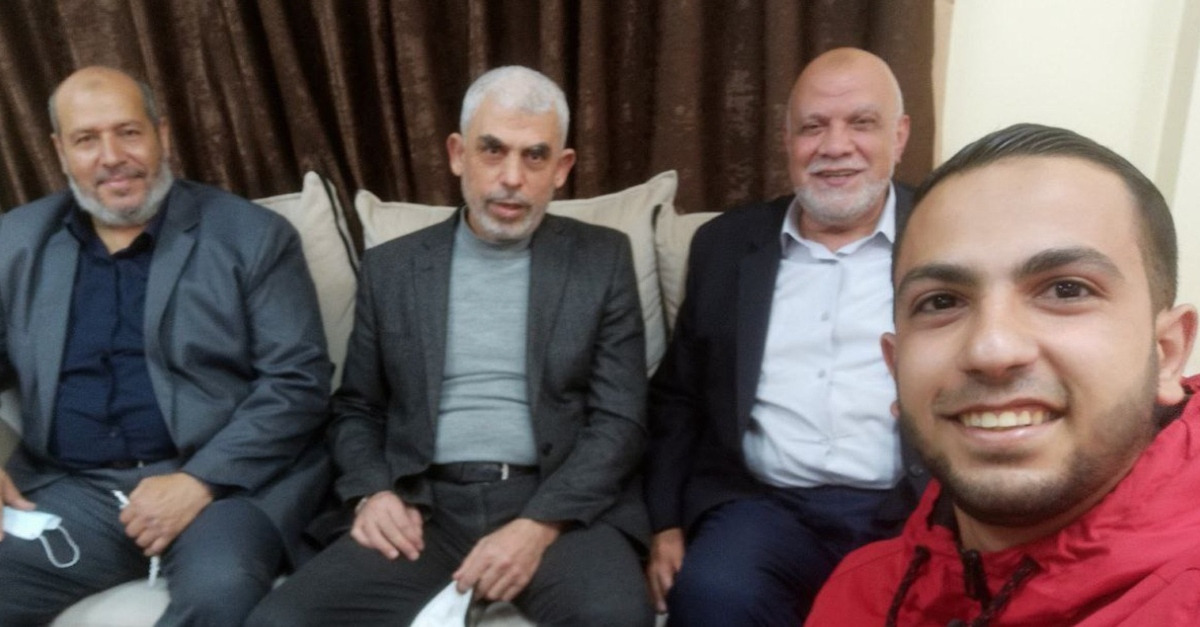
Hamas now wants foreign journalists to come to the Gaza Strip. The terror group needs the journalists to spread its anti-Israel propaganda. Most of the foreign journalists now complaining that Israel is not allowing them into Gaza did not bother to report about nearly 20 years of Hamas crackdowns on their colleagues and human rights activists. Pictured: The late Anas Al-Sharif (R), who commanded a Hamas rocket-launch squad in Gaza while employed as a “journalist” by Qatar’s Al-Jazeera TV news network, smiles for a selfie with senior Hamas officials, including the late Hamas leader Yahiya Sinwar (2nd from left). Photo by Anas al-Sharif

Foreign journalists in Israel are upset. Israel has prevented them from entering the Gaza Strip since the beginning of the war, which began with the Hamas-led invasion of Israel on October 7, 2023. A spokesman for the Foreign Press Association in Israel recently urged authorities to “lift restrictions without delay, allowing all journalists to work securely and without fear or hesitation” in the Gaza Strip.

Before the war, the journalists now complaining that Israel is not allowing them to enter Gaza were able to visit there anytime they liked.

Mostly, however, the foreign journalists chose not to go there. Perhaps they did not think they could come back with an “interesting story,” meaning one that could criticize Israel. Reminder: Israel fully withdrew from the Gaza Strip in 2005.

As far as the journalists were apparently concerned, after Hamas seized control of the Gaza Strip in a violent coup against the Palestinian Authority in 2007, there was nothing to cover. They also might have been afraid to enter an area ruled by Hamas terrorists.

When foreign journalists were allowed into Gaza, we heard no complaints — no complaints when Hamas imposed restrictions on their work inside Gaza, and no complaints when Hamas waged a brutal crackdown on Palestinian and Arab journalists, human rights activists, and political rivals.

Since 2007, Hamas had been imposing restrictions on foreign journalists. In 2011, the BBC reported that foreign journalists “must now apply [to Hamas] five days in advance in order to work” in the Gaza Strip.

According to the report, Hamas asked some foreign journalists to sign forms saying that if they published any items critical of the terror group, then local Palestinian journalists they worked with would be held responsible.

In addition to the restrictions, Hamas also arrested and tortured Palestinian journalists and political activists. In 2017, Amnesty International reported:

“At least 12 activists and journalists were detained and questioned over comments and caricatures posted on social media deemed critical of Hamas authorities. Amnesty International also gathered evidence suggesting at least one of the activists was tortured and otherwise ill-treated in custody including being beaten, blindfolded, and forced into stress positions for prolonged periods.”

Most of the foreign journalists now complaining that Israel is not allowing them into the Gaza Strip did not bother to report about the Hamas crackdown on their colleagues and human rights activists.

In 2016, a Human Rights Watch (HRW) report noted:

“The Palestinian authorities in the West Bank and Gaza are arresting, abusing, and criminally charging journalists and activists who express peaceful criticism of the authorities. The crackdown directly violates obligations that Palestine recently assumed in ratifying international treaties protecting free speech. In Gaza, Hamas authorities detained and intimidated an activist who criticized the government for failing to protect a man with a mental disability; a journalist who posted a photograph of a woman looking for food in a garbage bin; and a journalist who alleged medical malpractice at a public hospital after a newborn baby died.”

Again, most of the foreign journalists chose to ignore Hamas’s campaign of intimidation against Palestinian journalists and human rights activists. Many of the foreign journalists, in fact, habitually turn a blind eye to human rights violations committed by Palestinians against their own people. Instead — a long tradition among the foreign press — they search for stories that reflect negatively on Israel. They seem to believe it is their duty to side with the underdog, the Palestinians, and run cover for their crimes against humanity.

All of that is precisely why Hamas now wants foreign journalists to come to the Gaza Strip. The terror group needs the journalists to spread its anti-Israel propaganda.

According to the news outlet Ynet, a study released this week by the Meir Amit Intelligence and Terrorism Information Center revealed that “about 60 percent of the people described as journalists or media workers who were killed during the war in the Gaza Strip were Hamas operatives or members of other terror groups.”

“Hamas leaders have repeatedly said that the media front is as important as the military one…. The study highlighted the widespread use of dual roles in Gaza, where media workers simultaneously serve as armed operatives. This pattern was especially evident in cooperation between Hamas and the Qatar based Al Jazeera network….. [I]ntelligence and documents seized in Gaza that confirmed the affiliation of several Al Jazeera journalists with Hamas and Palestinian Islamic Jihad. In October last year, the IDF published information identifying six Al Jazeera journalists in Gaza as members of the two terror groups.”

Foreign journalists also always had an opportunity to enter the Gaza Strip directly from Egypt, through the Rafah border crossing, especially before the war. Israel had abandoned the Egypt-Gaza border crossing nearly 20 years ago, leaving it under the exclusive control of Hamas and the Egyptian authorities. Many foreign journalists, however, chose not to travel to Gaza, probably — or because — there was nothing “bad” to report there about Israel.

Today, we know that the majority of the foreign journalists who did enter the Gaza Strip over the past two decades had no access whatsoever to Hamas’s vast network of terror tunnels or to its massive military infrastructure. The journalists who did visit were not able to see how Hamas and other Palestinian terror groups were transforming the beautiful Gaza Strip into one of the largest bases for Jihad and terrorism in the Middle East.

Even if they had seen such activities, they would not have filed reports about them, thanks to Hamas’s restrictions and threats.

“Press freedom violations by Hamas during the war have been vastly underreported,” the Committee to Protect Journalists (CPJ) detailed on May 15, 2025.

“The Palestinian Journalists Syndicate (PJS) often documents Hamas attacks on the media internally, without publicizing them, for fear of reprisals. In other cases, PJS staff hear about events secondhand as journalists are too scared to report them.”

PJS head Nasser Abu Bakr told CPJ:

“There are major violations committed by the Hamas government and group against journalists. The violations range from summonses, interrogations, phone calls, threats, sometimes beatings and arrests, to harassment, publication bans, interference with content, and surveillance.”

The foreign journalists who are presently crying that they want to enter the Gaza Strip will face exactly the same threats, restrictions, and harassment by Hamas. They will be permitted to write only stories that depict the Palestinians as victims of Israel, not of the terrorist group Hamas. They will probably comply, telling themselves that lying-by-omission will at least grant them “access.”

Journalists who allow themselves to be intimidated by Hamas or any other party will never be able to report with any credibility.


Bassam Tawil is a Muslim Arab based in the Middle East. His work is made possible through the generous donation of a couple who wish to remain anonymous. Gatestone is most grateful.


Zawartość publikowanych artykułów i materiałów nie reprezentuje poglądów ani opinii Reunion’68,
ani też webmastera Blogu Reunion’68, chyba ze jest to wyraźnie zaznaczone.
Twoje uwagi, linki, własne artykuły lub wiadomości prześlij na adres:
webmaster@reunion68.com


In Pre-Recorded Message, Rob Reiner Encourages Holocaust Survivors to Be Resilient


In Pre-Recorded Message, Rob Reiner Encourages Holocaust Survivors to Be Resilient

Shiryn Ghermezian


Rob Reiner speaking in a pre-recorded message that was shared during the Claims Conference’s International Holocaust Survivors Night 2025. Photo: Screenshot

Famed Jewish Hollywood director Rob Reiner encouraged Holocaust survivors to “be resilient” in a video he recorded before he was killed that was shown for the first time on Thursday as part of The Claims Conference’s 9th annual International Holocaust Survivors Night.

Reiner and his wife, Michele, were found dead on Sunday at their home in Los Angeles. Their 32-year-old middle son, Nick Reiner, has been charged with two counts of first-degree murder in connection with the stabbing of his parents and is being held without bail. Reiner co-starred in the sitcom “All in the Family” before becoming the famous director behind movies such as “This Is Spinal Tap,” “Spinal Tap: The End Continues,” “Stand by Me,” “The Princess Bride,” “When Harry Met Sally…” and “A Few Good Men.”

The Claims Conference, known officially as the Conference on Jewish Material Claims Against Germany, is a nonprofit organization that, according to its website, seeks to “secure material compensation for Holocaust survivors around the world.”

In his message for the Claims Conference event, Reiner began by talking about his personal connection to the Holocaust. His wife’s mother survived Auschwitz while her extended family was murdered in the Nazi death camp. Reiner’s aunt was also in Auschwitz.

“If ever we needed to be resilient, it’s now,” Reiner said in his message. “We’re living in a time now where what’s happening in our country is scary and reminiscent of what we’ve seen happen in the past, and we just hope that we can all survive this and that we can hold on to our democracy. Let’s be resilient.”

Greg Schneider, executive vice president of the Claims Conference, said Reiner started working with the annual International Holocaust Survivors Night a few years ago. “He understood the importance of remembering the Shoah and honoring Holocaust survivors,” Schneider explained, using the Hebrew term for the Holocaust. “Shoah remembrance was deeply personal to Rob Reiner. Rob and Michele, we will carry on your values of acting with honesty, integrity, knowledge and education.”

The annual virtual event by the Claims Conference celebrates Holocaust survivors around the globe, while also honoring them for their sacrifice and contributions to the world. The special livestream program features a menorah lighting ceremony at the Western Wall in Israel and this year’s virtual event was co-hosted by actor and director Noah Emmerich, whose credits include “The Americans,” “The Truman Show,” and “Beautiful Girls.”

The livestream also paid tribute to Holocaust survivor Alex Kleytman, who was among the victims murdered on Sunday in the antisemitic attack at a Hanukkah celebration in Sydney, Australia.

Seventeen Holocaust survivors from around the world spoke during the Claims Conference event, including survivors from The Netherlands and South Africa, and the theme of this year’s program was resilience. The livestream also featured celebrity guests such as Barbra Streisand, Billy Crystal, Julianna Margulies, Jason Alexander, Tovah Feldshuh, Debra Messing, Mayim Bialik, and Patricia Heaton. There were musical performances from Grammy and Tony Award winner Barry Manilow and the New York-based a cappella singing sensation, Six13. Footage was also shown from a concert and ceremony by Yad Vashem, Israel’s memorial to the Holocaust, to honor Holocaust survivors, with music originally arranged by 105-year-old Auschwitz survivor and conductor László Roth.

Crystal was among a group of Reiner’s close friends in Hollywood, including Albert Brooks, Larry David, and Martin Short, who issued a joint statement following Reiner’s death. They remembered him as “not only a great comic actor” but also “a master storyteller” who drew on everything he learned from his father, famed actor Carl Reiner, and his mentor Norman Lear, the legendary producer who created and cast Rob in “All in the Family.”

“Going to the movies in a dark theater filled with strangers having a common experience, laughing, crying, screaming in fear, or watching an intense drama unfold is still an unforgettable thrill. Tell us a story audiences demand of us,” the statement said, as cited by The Associated Press. “There is no other director who has his range. From comedy to drama to ‘mockumentary’ to documentary, he was always at the top of his game. He charmed audiences. They trusted him. They lined up to see his films.”

They also said in part that his “comedic touch was beyond compare” and that “to be in his hands as a film maker was a privilege but that is only part of his legacy.”

“Rob was also a passionate, brave citizen, who not only cared for this country he loved; he did everything he could to make it better and with his loving wife Michele, he had the perfect partner,” the statement said. “Strong and determined, Michele and Rob Reiner devoted a great deal of their lives for the betterment of our fellow citizens … They were a special force together-dynamic, unselfish and inspiring. We were their friends, and we will miss them forever. There is a line from one of Rob’s favorite films, ‘It’s a Wonderful Life,’ ‘Each man’s life touches so many other lives, and when he isn’t around, he leaves an awful hole, doesn’t he?’ You have no idea.”


Zawartość publikowanych artykułów i materiałów nie reprezentuje poglądów ani opinii Reunion’68,
ani też webmastera Blogu Reunion’68, chyba ze jest to wyraźnie zaznaczone.
Twoje uwagi, linki, własne artykuły lub wiadomości prześlij na adres:
webmaster@reunion68.com