
Archive | 2025/12/29

Kto krzyczy, a kto rządz


Kto krzyczy, a kto rządzi

Anna Grabowska


Grudzień nie przyniósł ciszy. Przyniósł za to zmianę formy, powiedziałabym z przekąsem – na “baśniową”. Ulice Europy nie są już wypełnione takim tłumem, jak jeszcze kilka miesięcy temu, kiedy masowe demonstracje były codziennym rytuałem, a politycy liczyli kroki pod presją ulicy. Ale to nie znaczy, że protesty zniknęły. One zmalały, rozproszyły się, stały się punktowe i coraz częściej przeniosły się w miejsca symboliczne: pod kościoły, katedry, ratusze. W przestrzeń, gdzie łatwo grać na emocjach, gdzie jedno hasło wystarczy, by wywołać moralne wzruszenie albo oburzenie. I właśnie tam, także w Stanach Zjednoczonych, pojawiają się transparenty głoszące, że Jezus Chrystus był Palestyńczykiem. To zdanie samo w sobie mówi bardzo dużo o stanie debaty. Nie jest to pomyłka ani brak wiedzy. To jest świadome przepisanie historii, próba wyrwania Jezusa z jego żydowskiego świata i użycia go jako narzędzia w bieżącym konflikcie politycznym. Kiedy nawet historia chrześcijaństwa staje się rekwizytem propagandy, wiadomo, że nie chodzi już o fakty, tylko o emocje i symbole.

Bo ta wojna przeniosła się przede wszystkim do języka. Do dyskursu. Do tego, jak się o niej mówi, jak się ją opisuje, jak się ją sprzedaje w mediach i w Internecie. We Francji widzę to szczególnie wyraźnie w wypowiedziach części polityków lewicy (LFI). To, co potrafią pisać w mediach społecznościowych i mówić w publicznych wystąpieniach, często przekracza granice zwykłej krytyki. To nie jest już spór o politykę rządu Izraela. To jest stały strumień oskarżeń, sugestii i insynuacji, które żyją własnym życiem. Padają słowa o intencjach, systemowym złu, celowych działaniach, bez dowodów, bez precyzji, i tradycyjnie bez odpowiedzialności. A potem to krąży w sieci, powielane tysiące razy, aż przestaje być opinią, a zaczyna funkcjonować jako fakt, o którym “wszyscy wiedzą”.

Ten język ma realne konsekwencje. Bardzo szybko przestaje dotyczyć państwa czy instytucji, a zaczyna uderzać w Żydów jako ludzi. W osoby prywatne. W studentów, wykładowców, artystów, dziennikarzy, zwykłych użytkowników Internetu. Wystarczy żydowskie nazwisko, gwiazda Dawida w profilu, izraelska flaga albo zwykła odmowa powtarzania obowiązującej narracji. Hejt nie dotyczy tylko “instytucji”. Dotyczy ludzi. Komentarze, nagonki, wykluczenia z wydarzeń, presja środowiskowa, bojkoty personalne – to wszystko stało się codziennością w sferze internetowej i coraz częściej także poza nią. I dzieje się przy milczącym przyzwoleniu tych, którzy jeszcze niedawno deklarowali walkę z mową nienawiści.

Równolegle wojna toczy się w obrazach. Media społecznościowe zalewają filmiki i zdjęcia, które mają poruszać do łez: kobiety brodzące w wodzie, dzieci rzekomo stojące po pas w śniegu w Gazie, opowieści o mrozie i „zimowej apokalipsie”. Tyle że Gaza leży w strefie klimatu śródziemnomorskiego. W grudniu temperatury wynoszą tam około osiemnastu stopni. Bywają deszcze, chłodne noce, ale nie ma śniegu i nie ma mrozów. To są fakty elementarne. Te obrazy nie są błędem. Są narzędziem. Mają wywołać szok i wyłączyć myślenie. Algorytmy nie sprawdzają prognozy pogody. Algorytmy premiują emocje.

A teraz spójrzmy na to, co dzieje się poza ekranem.

Hamas nie zniknął. Hamas wykorzystuje czas rozejmu do odbudowy władzy. W Gazie wraca jego aparat państwowy: policja Hamasu znów patroluje ulice, działają sądy, ministerstwo spraw wewnętrznych publikuje komunikaty, administracja reguluje handel i dystrybucję pomocy. To nie jest chaos. To jest porządkowanie przestrzeni władzy.

Pod ziemią trwa odbudowa skrzydła zbrojnego. Naprawiane są tunele, reorganizowane struktury dowodzenia, wyznaczani nowi dowódcy, rekrutowani nowi ludzie – coraz młodsi. Kluczową postacią tego procesu był Raad Saad, odpowiedzialny za regenerację wojskowych zdolności Hamasu. Został zabity w trakcie tej działalności. To nie był epizod. To był dowód, że odbudowa była realna i zaawansowana. Po nim rolę tę przejmuje Mohammed Odeh, dotychczasowy szef wywiadu wojskowego Hamasu. W kierownictwie Gazy pojawia się też nazwisko Izz al-Din Haddada, a politycznym łącznikiem z zagranicą pozostaje Khalil al-Hayya.

Równolegle Hamas przygotowuje zmianę przywództwa. Po śmierci Yahyi Sinwara trwa proces wyboru nowego szefa biura politycznego, który faktycznie kieruje całą organizacją. Najczęściej wymienia się dwa nazwiska: Khalila al-Hayyę i Khaleda Mashala. Ten drugi bywa przedstawiany jako „bardziej polityczny”, „bardziej pragmatyczny”. To złudzenie. Niezależnie od nazwiska nie ma mowy o rozbrojeniu, uznaniu Izraela ani porzuceniu przemocy. To jest zmiana twarzy, nie zmiana celu.

W tle trwają też działania w Judei i Samarii. Strzelanina przy punkcie kontrolnym Hashmonaim. Dzień wcześniej śmiertelny atak w Dolinie Jezreel. Sprawca, Ahmad Abu al-Roub z Qabatiya, przebywał w Izraelu nielegalnie; zatrzymano osoby z jego zaplecza logistycznego. To pokazuje ciągłość konfliktu. On nie „zamraża się” tylko dlatego, że w Europie zmienia się temat dnia.

I wreszcie pomoc humanitarna. Wbrew obiegowym hasłom pomoc do Gazy płynie. Przez Kerem Shalom, Rafah, Zikim, innymi korytarzami. Setki ciężarówek dziennie. Każda kontrolowana, skanowana, czasem opóźniana. To nie jest „totalna blokada”. Jednocześnie Gaza otrzymuje ogromne środki finansowe – setki milionów euro rocznie, miliardy od początku konfliktu, także z Unii Europejskiej i systemu ONZ. Problem polega na czymś innym: skoro Hamas jest realną władzą na miejscu, to kontroluje wtórny obieg tej pomocy. Kto dostaje, kto rozdziela, kto na tym buduje lojalność. Gaza nigdy nie była systemem jednokorytarzowym. Obok oficjalnych przejść istnieje sieć tuneli i nieformalnych kanałów. To jest mechanika władzy, nie teoria spiskowa.

Na tym tle szczególnie rażące są komunikaty Lekarzy bez Granic. Organizacji, która w nazwie ma „granice”, a w praktyce prowadzi kampanię niemal wyłącznie skoncentrowaną na Gazie. Apele, zbiórki, alarmy – na Facebooku, Twitterze, Instagramie – wciąż w jednym kierunku. Tymczasem Sudan, Jemen, Nigeria, kraje Afryki, gdzie ludzie naprawdę umierają masowo z głodu, nie zajmują porównywalnego miejsca w zachodniej wyobraźni. Nie dlatego, że tam nie ma tragedii. Ale dlatego, że nie ma prostego moralnego spektaklu. Nie ma jednego wygodnego winnego. Nie ma Izraela.

To jest selektywna empatia. I ona niszczy wiarygodność nawet najlepszych intencji.

I teraz punkt zasadniczy.

Kiedy politycy lewicy wygłaszają moralne tyrady, kiedy w Internecie linczuje się Żydów, kiedy organizacje humanitarne trąbią na jednostronny alarm, kiedy media żyją obrazkiem – Hamas nie krzyczy. Hamas liczy. Odbudowuje policję, sądy, administrację, tunele, dowództwo. Zmienia nazwiska, nie ideologię. Zmienia twarze, nie cele.

To jest zasadnicza asymetria tej wojny: jedni krzyczą, drudzy rządzą. Jedni produkują emocje, drudzy produkują władzę. Jedni żyją w świecie obrazków, drudzy w świecie struktur.

Największym zwycięstwem Hamasu nie są rakiety. Nie są tunele. Największym zwycięstwem Hamasu jest to, że Zachód zgodził się nie patrzeć na fakty, tylko na narracje. Że oddał język tym, którzy krzyczą najgłośniej. Że zaakceptował sytuację, w której Żyd znów musi tłumaczyć się z cudzych zbrodni, a przemoc znajduje usprawiedliwienie w „kontekście”.

Historia nie rozlicza intencji.

Historia rozlicza skutki.

A skutki są takie, że kiedy jedni krzyczą, Hamas rządzi.


Źródła:

https://www.ynetnews.com/article/byjwmdpm11x

https://www.ynetnews.com/article/byctvgtmbe

https://www.ynetnews.com/article/hy600ydnxwx

https://x.com/i/status/2002151705400783361

Anna Grabowska – urodzona i mieszkająca we Francji wspaniała syjonistka z solidnymi polskimi i żydowskimi korzeniami. Autorka udzieliła pozwolenia na publikację niektórych wpisów z jej Facebooka w „Listach z naszego sadu”.


Zawartość publikowanych artykułów i materiałów nie reprezentuje poglądów ani opinii Reunion’68,
ani też webmastera Blogu Reunion’68, chyba ze jest to wyraźnie zaznaczone.
Twoje uwagi, linki, własne artykuły lub wiadomości prześlij na adres:
webmaster@reunion68.com

Netanyahu’s high-stakes holiday visit to Mar-a-Lago


Netanyahu’s high-stakes holiday visit to Mar-a-Lago

Alex Traiman


The Israeli prime minister’s meeting with the U.S. president will determine the next phases of war and peace.

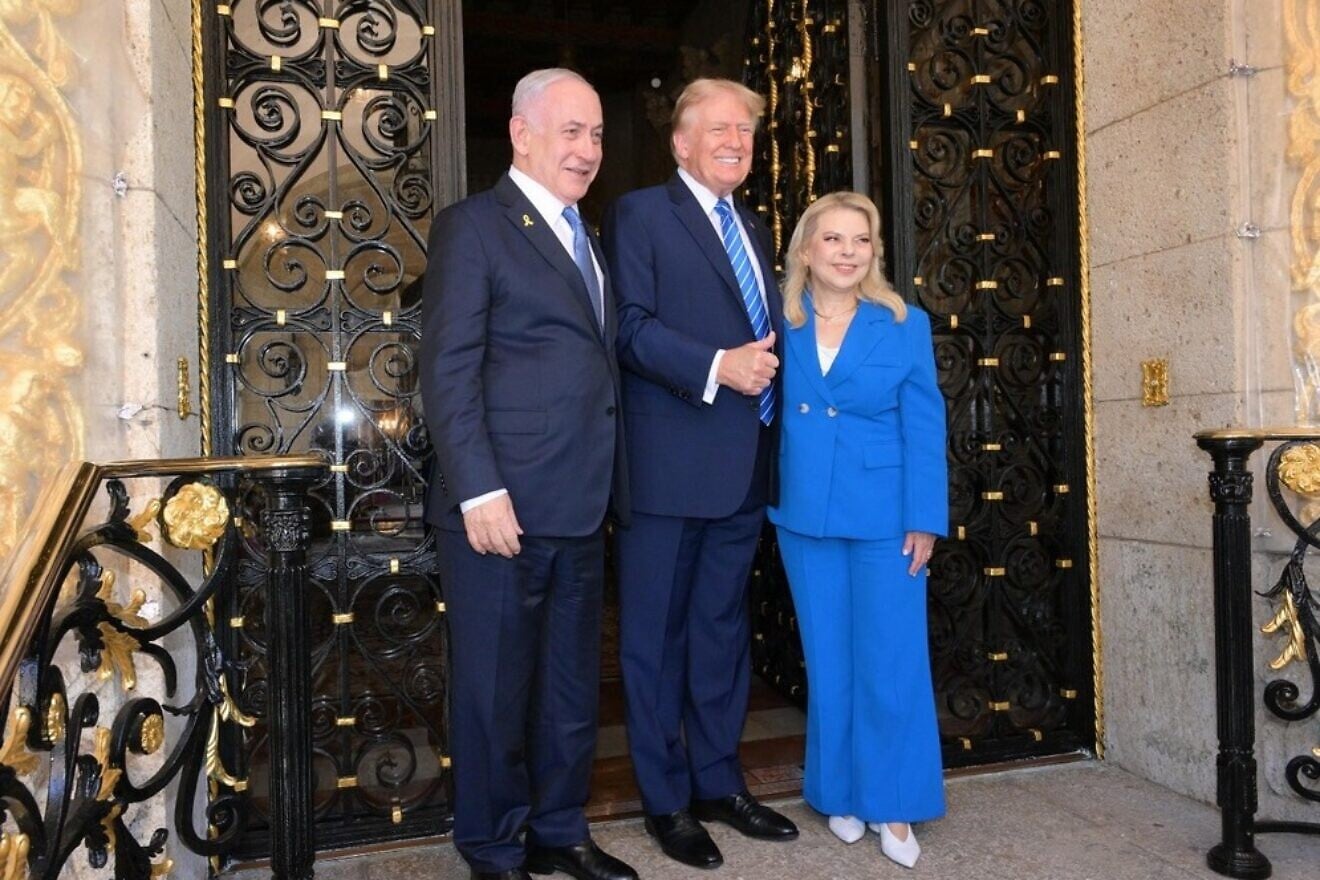
Israeli Prime Minister Benjamin Netanyahu and his wife, Sara, meet Donald Trump at Mar-a-Lago in Palm Beach, Fla., on July 26, 2024. Photo by Amos Ben-Gershom/GPO.

Israeli Prime Minister Benjamin Netanyahu is traveling to the United States this week to meet with U.S. President Donald Trump at Mar-a-Lago in Florida.

The prime minister can hope to get some downtime with his wife, Sara, after two years of leading a difficult war, and testifying in an ongoing corruption trial that has been unraveling, all while leading a fragile coalition in one of the world’s most complex democracies.

There are not many places Israel’s embattled prime minister can travel to since the International Criminal Court issued warrants for his arrest. A visit to the luxurious Trump-owned club at Mar-a-Lago represents as close to a holiday vacation destination as possible.

Yet the essence of the trip is not rest and relaxation. As is most always the case on diplomatic missions to meet an American president, this visit is a high-stakes one.

Reports over the past several weeks have suggested that the prime minister will seek permission to renew attacks against the Islamic Republic of Iran. Yet these reports come from the same journalists, citing so-called anonymous senior sources, who have been attempting to sour the relationship between Trump and Netanyahu. So many of these reports over the past few years have proven to be false. 

That said, the situation with Iran is serious. There are indications that Iran is attempting to rebuild its ballistic missile arsenal as quickly as possible. More complicated than assembling the missiles themselves is rebuilding the missile launchers. As the 12-day war last June raged on, Israel managed to take out more than 50% of Iran’s launch capacity, creating a significant bottleneck.

As Iran struggles to rebuild its missile arsenal, Israel is restocking its missile defense systems.

Additionally, since the war ended, Israel has likely been working covertly to subvert Iran’s Islamic clerical regime and help prepare the groundwork for the domestic overthrow of the Islamic Republic.

Yet Iran is not the only item on Netanyahu’s agenda. Hezbollah continues its attempts to regroup after Israel’s stunning military achievements against it.

Israel succeeded in pushing Hezbollah away from the Israeli border and severely degraded the terror organization’s missile-launching capacity. According to some estimates, that capacity was reduced by as much as 80%.

Yet efforts by the Lebanese army to complete the disarmament of Hezbollah are proving unsuccessful. Israel has been striking with increasing regularity against Hezbollah’s growing violations of the ceasefire agreement signed on Nov. 27, 2024.

Trump would like to see Israel enter into some kind of normalization agreement with Lebanon, but for that to happen, Hezbollah will need to put down its arms or face harsh consequences.

Whether Israel will receive a green light to restart hostilities remains to be seen.

The situation in Syria also remains unstable. A little more than a week ago, the United States conducted its own military strikes in Syria in response to Islamic State-affiliated terrorists killing three American military personnel there. Some have suggested that the terrorists were not only linked to ISIS, but also to former Al-Qaeda terrorist turned president of Syria, Ahmed al-Sharaa, also known by his nom de guerre, Abu Mohammad al-Jolani.

Trump has lifted sanctions against Syria in the hopes of bolstering Al Jolani and bringing Syria into the Saudi and American orbits. Yet there is little indication that the new president can control his forces to protect the many minorities who have been routinely massacred since the fall of former president Bashar Assad. The U.S. president may be running out of patience with al-Jolani.

At the same time, Trump would also like to see Israel enter into some sort of formal defense agreement with Syria.

Yet the most important front to be discussed between the two allies will be Gaza. It has been three months since Israel and Hamas signed the comprehensive 20-point plan to return all remaining Israeli hostages and end hostilities.

Israel withdrew from parts of the Gaza Strip, and currently controls 53% of the territory. Hamas has released all of the living hostages and has been slowly returning the remains of other hostages. At the time of publication, only one body, that of Ran Gvili, remains in the Strip.

Yet Hamas continues to cling to power in the western 47% of Gaza. It has been reestablishing control of the remaining territory by attacking the clan leaders that Israel had been working with in an attempt to create localized leadership alternatives to Hamas.

Trump would like to see the ceasefire agreement transition to Phase 2. This includes the establishment of the “Board of Peace,” chaired by the American president himself. While it remains unclear which countries will join the board, recent reports have suggested that Italy, Germany, Britain, Turkey, Qatar and Egypt could all participate.

Equally important is the possible establishment of an international stabilization force (ISF) to uphold the ceasefire in Gaza. The composition of the stabilization force is a matter of great debate. Turkey is prepared to send troops, but while America is open to the idea, Turkey’s participation in the ISF is a complete non-starter for Israel.

U.S. Secretary of State Marco Rubio recently stated that the mandate of the ISF remains undefined. It is not clear whether ISF troops would engage Hamas directly. If not, the fear is that the ISF will only prevent Israel from striking Hamas leadership and terrorists despite continued ceasefire violations.

Netanyahu has vowed that Hamas will be completely defeated and disarmed, and that the Gaza Strip will be completely demilitarized. Rubio has seconded those calls.

Yet for Israel, there is a growing fear that the United States is prepared to give in to the calls of Qatar, Turkey and Egypt for Hamas to be left intact in nearly half of Gaza.

Instead of anyone else being able to successfully disarm Hamas, Netanyahu hopes for the Israel Defense Forces to be given the green light to launch renewed counterterrorism operations in Gaza.

Trump and his advisers—son-in-law Jared Kushner, and U.S. special envoy to the Middle East and close friend Steve Witkoff—would like to see the tenuous ceasefire hold and hope to advance a modern rebuilding project within the coastal enclave. They dream of a Dubai-style metropolis to be built on the rubble of Gaza.

The trio believes, along with Qatar, that if Gaza were to receive a heavy dose of upward mobility, those who incited against Israel for many years would drop their terror campaign and genocidal ambitions. Israel is not convinced.

Furthermore, Israel is distrustful of Qatar. While the United States has classified Qatar as an important ally, Israel sees the wealthy Gulf state as an enemy nation that houses Hamas leaders and is ultimately trying to protect the Sunni terror organization.

Qatar, Turkey and Egypt all pushed Hamas to accept Phase 1 of the ceasefire agreement and return all the hostages. However, they are apparently uninterested in advancing to Phase 2, which calls for the complete disarmament of Hamas and the demilitarization of the Gaza Strip.

What Qatar wants instead is further Israeli withdrawal, and for the rebuilding effort in Gaza to begin. Qatar is trying to convince Trump that Hamas will change its stripes once given the economic incentive to do so.

The idea that the terror organization that has the destruction of Israel as a major tenet of its charter will suddenly turn into a peaceful entity is absurd.

For Netanyahu himself, the stakes are high as Israel is entering an election season, with polls scheduled for the end of October 2026, but with the possibility of early elections.

The last thing Netanyahu wants is for the opposition and prime ministerial hopefuls to be able to claim that he failed to finish the war, and that his calls for total victory were just wishful thinking. Netanyahu desperately wants to finish the job, to conclusively win the war, and to carry that military victory into the upcoming elections.

While Netanyahu and his first lady could use some time to recharge their batteries, the prime minister will need to be on top of his game this week. As he has done so many times in the past, he will need to advance Israel‘s interest, even when that interest may not be perfectly aligned with the will of the American president.

Netanyahu will need to use all his statesmanship, balanced by his genuine friendship and alliance with the president, who has been the greatest friend of Israel to ever sit in the White House.

If he succeeds, he will get to enjoy a few precious moments of much-needed respite in between the political, legal, diplomatic and military battles that only he can simultaneously manage.


Alex Traiman is the CEO and Jerusalem bureau chief of the Jewish News Syndicate (JNS) and host of “Jerusalem Minute.” A seasoned Israeli journalist, documentary filmmaker and startup consultant, he is an expert on Israeli politics and U.S.-Israel relations. He has interviewed top political figures, including Israeli leaders, U.S. senators and national security officials with insights featured on major networks like BBC, Bloomberg, CBS, NBC, Fox and Newsmax. A former NCAA champion fencer and Yeshiva University Sports Hall of Fame member, he made aliyah in 2004, and lives in Jerusalem with his wife and five children.


Zawartość publikowanych artykułów i materiałów nie reprezentuje poglądów ani opinii Reunion’68,
ani też webmastera Blogu Reunion’68, chyba ze jest to wyraźnie zaznaczone.
Twoje uwagi, linki, własne artykuły lub wiadomości prześlij na adres:
webmaster@reunion68.com

Netanyahu on trial: Case 4000 unravels as witness exposes alleged suppression of exculpatory evidence


Netanyahu on trial: Case 4000 unravels as witness exposes alleged suppression of exculpatory evidence

Alex Traiman


This is no longer merely a trial of a prime minister. It has become a trial of the system that brought him to the dock.

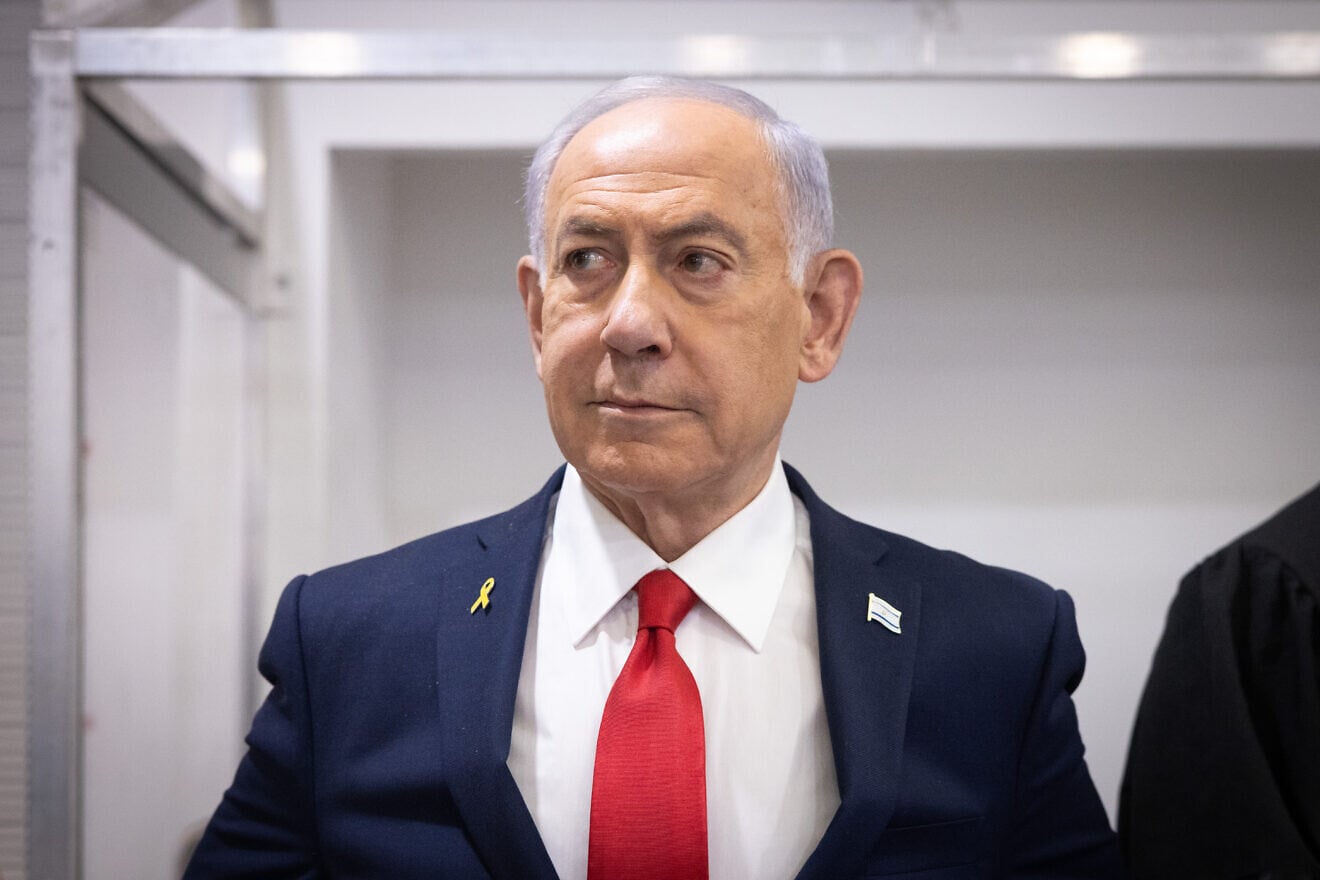
Israeli Prime Minister Benjamin Netanyahu in the Tel Aviv District Court, before the start of his testimony in the trial against him, Oct. 28, 2025. Photo by Miriam Alster/Flash90.

Case 4000—the most serious and consequential of the criminal cases against Israeli Prime Minister Benjamin Netanyahu—has long been portrayed by prosecutors as the centerpiece of their corruption allegations. Yet testimony heard this week in the Jerusalem District Court has intensified claims by Netanyahu’s allies that the case is not merely weak, but compromised by investigative misconduct.

According to Likud spokesman Guy Levy, testimony delivered on Tuesday by Ron Solomon, a serving senior investigator in the Israel Police’s signals intelligence (SIGINT) unit, revealed evidence of intentional suppression of exculpatory material, alteration of professional findings and continued investigative activity even after indictments were filed—all in service of sustaining a narrative that was unraveling under its own weight.

The flagship case and why it mattered most

Among the three cases against Netanyahu—Cases 1000, 2000 and 4000—Case 4000 has always been regarded by prosecutors as the most severe. Unlike the others, it alleged a direct quid pro quo: that Netanyahu, while serving as communications minister, advanced regulatory decisions favorable to Bezeq, Israel’s largest telecom company, owned by Shaul Elovitch, in exchange for favorable coverage on the Walla news site.

Central to that theory is an alleged meeting between Netanyahu and Shlomo Filber, the former director general of the communications ministry, who signed a deal to become a state’s witness in 2018, during his first week in office. The prime minister has consistently denied that such a conversation ever took place.

On the witness stand, Solomon testified that cell phone location data never placed Filber together with Netanyahu at the time of the alleged meeting. According to his testimony, the police had assembled a detailed chronology early in the investigation, demonstrating that the meeting did not occur.

That data, Solomon said, was transferred to the prosecution.

According to Levy, the significance is unmistakable: The prosecution allegedly knew that the foundational claim of the meeting was false, yet indicted Netanyahu anyway while withholding the contradictory location evidence from the defense and the court.

If correct, this would amount to concealment of exculpatory material, misrepresentation to the court and the filing of indictments based on claims known to be untrue.

From ‘favorable coverage’ to ‘exceptional responsiveness’

Solomon’s testimony also addressed the prosecution’s shifting theory regarding media coverage.

Initially, prosecutors alleged that Netanyahu received positive coverage from Walla. During pre-indictment hearings before then–Attorney General Avichai Mandelblit, the defense demonstrated that the coverage was frequently hostile, inconsistent and often negative.

Faced with that reality, the prosecution rebranded the allegation as “exceptional responsiveness” or unusually preferential treatment.

Solomon testified that he was tasked with reviewing Walla’s coverage of Netanyahu’s controversial Election Day 2015 statement warning that Arab voters were turning out “in droves.”

His findings contradicted the prosecution’s narrative. Walla was the third outlet to report the statement, later published a follow-up article debunking Netanyahu’s claim, and framed its coverage in a sharply hostile tone, including accusations of racism from opposition leaders.

Solomon testified that he had submitted these findings to the commander of the police’s financial crimes unit—only to be instructed to delete the information supporting Netanyahu’s position.

According to Solomon, the directive came from above, under guidance from the prosecution.

The big picture

The developments in Case 4000 come against the backdrop of the other cases against Netanyahu, each of which the defense and Likud officials describe as increasingly tenuous.

In Case 1000, prosecutors allege that Netanyahu and his family received gifts, such as cigars, champagne and even a Bugs Bunny doll, valued at approximately $230,000 over many years from wealthy acquaintances. The prosecution concedes there was no specific quid pro quo, arguing instead that accepting gifts constituted a breach of trust because it might have compromised Netanyahu at some undefined future point.

In Case 2000, Netanyahu is accused of discussing a possible quid pro quo with Arnon (“Noni”) Mozes, publisher of Yediot Achronot, under which Netanyahu would advance legislation restricting the free distribution of the pro-Netanyahu daily Israel Hayom in exchange for more favorable coverage. The prosecution openly acknowledges that the quid pro quo never occurred, yet argues that the mere conversation constitutes a criminal breach of trust.

A broader pattern of alleged misconduct

Likud spokesman Levy argues that when viewed together, the cases reflect an unprecedented legal theory: criminal liability without demonstrated corruption, benefit or outcome. The picture that emerges is not of an investigation following evidence, but of evidence being reshaped to fit a predetermined conclusion.

Likud officials further allege that evidence in the cases was illegally collected and then selectively leaked to the media during consecutive election cycles, shaping public opinion and influencing electoral outcomes. They also point to the use of state witnesses who, they claim, were subjected to intense pressure and threatened with severe consequences unless they provided testimony aligning with the prosecution’s theory.

These claims remain contested, but Solomon’s testimony, Levy argues, lends new credibility to longstanding allegations of investigative overreach.

The pardon question

Against this backdrop, Netanyahu recently requested a presidential pardon from Israeli President Isaac Herzog, who possesses the constitutional authority to bring the proceedings to an end.

Supporters of the move argue that after years of political paralysis, repeated elections and deep social division, a pardon would serve the national interest regardless of one’s view of Netanyahu himself.

The issue gained international attention after U.S. President Donald Trump sent a letter to Herzog urging him to grant a pardon, describing the case as politically driven and destabilizing.

Whether Herzog will act remains unclear. But after Solomon’s testimony, pressure on the prosecution—and on Israel’s political leadership—to address the legitimacy of the proceedings is likely to intensify.

A case on trial

Ultimately, the court will determine the weight of Solomon’s testimony and the credibility of the allegations surrounding it. Yet one conclusion is already evident: The case once billed as the prosecution’s strongest is now the one most visibly unraveling.

As Levy put it, Case 4000 is no longer merely a trial of a prime minister. It has become a trial of the system that brought him to the dock.


Alex Traiman is the CEO and Jerusalem bureau chief of the Jewish News Syndicate (JNS) and host of “Jerusalem Minute.” A seasoned Israeli journalist, documentary filmmaker and startup consultant, he is an expert on Israeli politics and U.S.-Israel relations. He has interviewed top political figures, including Israeli leaders, U.S. senators and national security officials with insights featured on major networks like BBC, Bloomberg, CBS, NBC, Fox and Newsmax. A former NCAA champion fencer and Yeshiva University Sports Hall of Fame member, he made aliyah in 2004, and lives in Jerusalem with his wife and five children.


Zawartość publikowanych artykułów i materiałów nie reprezentuje poglądów ani opinii Reunion’68,
ani też webmastera Blogu Reunion’68, chyba ze jest to wyraźnie zaznaczone.
Twoje uwagi, linki, własne artykuły lub wiadomości prześlij na adres:
webmaster@reunion68.com